Love Is the Answer (Romans 13:8-14)

Reconciliation by Josefina de Vasconcellos

Let love be your only debt! If you love others, you have done all that the Law demands. In the Law there are many commands, such as, “Be faithful in marriage. Do not murder. Do not steal. Do not want what belongs to others.” But all of these are summed up in the command that says, “Love others as much as you love yourself.” No one who loves others will harm them. So love is all that the Law demands.

You know what sort of times we live in, and so you should live properly. It is time to wake up. You know that the day when we will be saved is nearer now than when we first put our faith in the Lord. Night is almost over, and day will soon appear. We must stop behaving as people do in the dark and be ready to live in the light. So behave properly, as people do in the day. Don’t go to wild parties or get drunk or be vulgar or indecent. Don’t quarrel or be jealous.Let the Lord Jesus Christ be as near to you as the clothes you wear. Then you won’t try to satisfy your selfish desires. (Contemporary English Version)

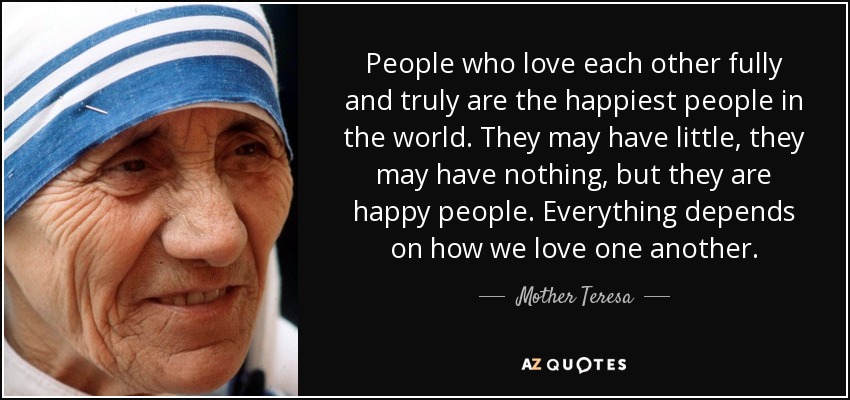
No matter the question about law, love is the answer.

There is one singular obligation that Christians have toward both the Church and others in the world: Love. The highest expression of love transcends not only the Law of Scripture, but also the law of the land around us. The unifying principle and perfect summation of law is to love your neighbor as yourself.

Love is one of those things that is not to be checked-off of some personally contrived list of things to do for the day, as if once we do our one good deed for the day, the rest of the day is ours.

No, love is the entirety and the ultimate goal of God’s continuing guidance and instruction for us throughout every day. Love also goes well beyond avoiding hurting another; love is constantly on the lookout for ways to express itself in others’ lives.

Can you imagine how much the U.S. Department of Justice would change overnight if it adopted this biblical command to have love at the center of every single decision it makes?

The love that has been given to us, from the Lover our souls, is meant to be practical, persistent, and pervasive. Love begins with seeing others and valuing them, even if they are very different from ourselves (i.e. the immigrant, the homeless, the mentally ill, etc.)

And that love is expected to grow into a concern of practical care. Love helps carries another’s back-breaking burden. Love seeks to support and advocate, to be generous and willing to sacrifice on behalf of the others. Love not only is to undergird the Law of Scripture, but it is also meant to be the base from which the law of the land is built.

“Love is a human dynamic of wrapping one’s self around another person or thing and deeply investing in it with the core of one’s being.” Nijay Gupta

At the least, and at it’s core, love is a deep human propensity toward bonding with another. For example, giving a plastic bottle of water to a homeless person is a good deed, but love seeks connection and relationship.

My late brother-in-law had a practice, when walking to work, of stopping and sitting down with a homeless person nearly every day. He brought two brown bags with him, so that he could share the other. They would sit and talk. The person was seen, acknowledged, listened to, and loved.

What we most need to grasp about the Apostle Paul and his instructions to all the churches is that the primary aspect of every Christian is to know God’s love for the world, especially its people. When that happens, God’s redeeming and transforming work comes through Christians who love – which then returns to God and loves God.

Hate has no place in God’s agenda for the people of this world. This is why Paul takes pains to point out the angry, fearful, and hateful things we are not to do, as well as the love we are to do.

But God demonstrates his own love for us in this: While we were still sinners, Christ died for us. (Romans 5:8, NIV)

Distance and detachment are the soil of hate. Anything that tries to separate us as humans has a distinct smell of fire in the air.

Love has kind and civil speech behind it. Love is a discourse between people. Love is not some sort of coldhearted need that we grit our teeth doing. I admit that love is not my first thought whenever watching the news about the current U.S. President and his Cabinet, because there is a lot of fire around its golden calf.

Yet, my response is to connect with God, and to have connections with all sorts of people, no matter what their politics and thinking are. And, yes, I can do it all in love. When you consistently pray for anyone every day for a long time, it’s hard to hate them, even though you still detest their words and actions.

To keep up dialogues with others in a political camp that is, to me, dangerous helps me to wonder “What happened to them to have such a stance?” instead of “What’s wrong with this crazy mind?” The combination of heart, will, and action serves me well; that’s because this is what love involves.

Thank God! Once you were slaves of sin, but now you wholeheartedly obey this teaching we have given you. (Romans 6:17, NLT)

The Apostle Paul’s theology is thoroughly conceived and proclaimed in love; and he used a cluster of terms to talk about the great love that he himself experienced and wanted others to experience, as well. Words such as “grace,” “faith,” “compassion,” “mercy,” and “kindness” are all ways of speaking the nuances of God’s love and the Christian’s love for neighbor.

Although Paul gets a lot of talk amongst Christians concerning faith, justification, and redemption, the very heart of all of it all is that Christ’s atonement was conceived in love within the Holy Trinity of Father, Son, and Spirit.

Love is the real distinguishing mark of Christ-following and Spirit-filled churches and Christians. Anything less is neither following in the steps of Jesus, nor possessing the Lord’s given Spirit. If you find God, then you have found love, and vice versa.

Finally, love is such a large dynamic force that we have a lifetime opportunity of growing our hearts as big as our heads. If we come to see that we don’t want to harm others or fantasize about their undoing, then we know we’re on the right track toward putting our spiritual effort into the development of love.

You will be doing the right thing if you obey the law of the Kingdom, which is found in the scripture, “Love your neighbor as you love yourself.” (James 2:8, GNT)

Holy God, you call us to righteousness and light. Teach us the undivided law of love, so that we may love people even as you do, love you with all our will and strength, and find our freedom in blessed loving speech and service to others, taught to us in word and deed by our Lord Jesus Christ. Amen.

On the Importance of Hospitality (3 John 9-12)

A mosaic of the Apostle John, at the Monastery of St. John the Theologian, in Patmos, Greece

I have written something to the church, but Diotrephes, who likes to put himself first, does not welcome us. So if I come, I will call attention to what he is doing in spreading false charges against us. And not content with those charges, he refuses to welcome the brothers and sisters and even prevents those who want to do so and expels them from the church.

Beloved, do not imitate what is evil, but imitate what is good. Whoever does good is from God; whoever does evil has not seen God. Everyone has testified favorably about Demetrius, and so has the truth itself. We also testify for him, and you know that our testimony is true. (New Revised Standard Version)

I believe in an egalitarian world. Ideally, humanity is meant to live in equity with one another. Humility, meekness, and gentleness are to be the inner dispositions of a person’s life.

These virtues work themselves out in being concerned for the common good of all, laboring toward just and righteous ways of living for everyone and sharing our lives, as well as our resources, with each other. Viewing one another as equals inevitably leads to gracious hospitality.

However, in a world of power disparities, and privileged inequities, are attitudes of seeking attention, a perceived need to always win and be first, and tight-fisted control of authority and money. The common good of all persons is scaled back to be the concern for the common good of some. There is a failure to regard the weak, poor, and vulnerable as legitimate members of the community.

The Apostle John wrote his short succinct letter in a concern that the church may be following a leader who was taking them down a bad path – a road leading to injustice where power and privilege remain with a few, and perhaps even one. John’s plainspoken exhortation was to judge rightly between what is good and bad, and then imitate the good while forsaking the bad.

Hospitality is the true litmus test between the good and the bad.

An openness to the stranger, the immigrant, the migrant, the alien, the foreigner, the newcomer, and the outsider characterizes authentic fellowship.

Being closed to such persons and having a xenophobic bent to others who are different is the mark of unwelcoming and inhospitable people.

Hospitality serves others, whereas being inhospitable cajoles others to serve our needs.

Jesus, the Lord of all, did not come to this earth for people to serve him. Christ came to serve others, and to give his life to save many people (Matthew 20:28; Mark 10:45; John 13:1-17). We are to imitate the loving service and radical hospitality of the Lord Jesus. He is our example. We are to imitate Christ.

We must have both orthodoxy (right belief) and orthopraxy (right practice). Both go together like a hand in a glove. Good actions are the result of good and proper beliefs. The following are some thoughts about this nexus between belief and practice:

  • Hospitality (literally “love of the stranger”) is a way of life fundamental to orthodox Christianity, based in the person and work of Jesus
  • God is hospitable and loves the outsider, welcoming them into the dance of the Trinity, and provides for them; our human hospitality is to reflect this divine welcome
  • Hospitality means extending to another a kindness typically reserved for family or friends
  • The teaching of the New Testament emphasizes the practice of hospitality (Luke 14:12-14; Matthew 25:31-46)
  • The consistent witness of church history is to lift up and hold Christian hospitality.

“Whatever person you meet who needs your aid, you have no reason to refuse to help them.”

John Calvin

This was no mere theoretical advice for Calvin, whose ministry center of Geneva, Switzerland swelled with French Huguenot refugees fleeing persecution. Calvin, always the theologian, grounded his understanding of hospitality in the divine:

“We should not regard what a person is and what they deserve but we should go higher – that it is God who has placed us in the world for such a purpose that we be united and joined together. God has impressed the divine image in us and has given us a common nature, which should incite us to provide one for the other.”

John Calvin
  • Hospitality is a practice which integrates both respect and care. St. John Chrysostom warned his congregation to show “excessive joy” when offering hospitality to avoid shaming the recipient of care.
  • Biblical hospitality does not need to know all the details of someone’s life before extending care. If Christ forgave and healed those who injured him, how could we neglect even a starving murderer? 
  • True hospitality involves a face-to-face relationship of encouragement and respect – not just a distant giving of alms. Hospitable persons pay attention to others and share life with them.
  • The great twin concerns of hospitality are universalizing the neighbor and personalizing the stranger. One reason why many of the rich have little sympathy for the poor is because they seldom visit them. Hospitality depends on us recognizing our commonalities with strangers rather than our differences.
  • This is how we evaluate our hospitality: Did we see Christ in them? Did they see Christ in me?

Hospitable God:

Give us eyes to see the deepest needs of people.

Give us hearts full of love for our neighbors as well as for the strangers we meet.

Help us understand what it means to love others as we love ourselves.

Teach us to care in a way that strengthens those who are sick.

Fill us with generosity so we feed the hungry, clothe the naked, and give drink to the thirsty.

Let us be a healing balm to those who are weak and lonely and weary by offering our kindness to them.

May we remember to listen, smile, and offer a helping hand each time the opportunity presents itself. And may we conspire to create opportunities to do so.

Give us hearts of courage to risk loving our enemy.

Inspire us to go out of our way to include outsiders.

Help us to be welcoming and include all whom you send our way.

Let us be God’s hospitality in the world. Amen.

Love for Others (Romans 13:8-14)

Let no debt remain outstanding, except the continuing debt to love one another, for whoever loves others has fulfilled the law. The commandments, “You shall not commit adultery,” “You shall not murder,” “You shall not steal,” “You shall not covet,” and whatever other command there may be, are summed up in this one command: “Love your neighbor as yourself.”Love does no harm to a neighbor. Therefore love is the fulfillment of the law.

And do this, understanding the present time: The hour has already come for you to wake up from your slumber, because our salvation is nearer now than when we first believed. The night is nearly over; the day is almost here. So let us put aside the deeds of darkness and put on the armor of light. Let us behave decently, as in the daytime, not in carousing and drunkenness, not in sexual immorality and debauchery, not in dissension and jealousy. Rather, clothe yourselves with the Lord Jesus Christ, and do not think about how to gratify the desires of the flesh. (New International Version)

The first eleven chapters of Paul’s letter to the Roman Church focuses on the nature of the gospel, that is, the good news of God’s unconditional love for us in Christ.  In order to love others, we must first grasp the truth that God loves you as if you were the only person on earth. 

The Father’s mercy and kindness reached to such a length as to send the Son to woo people in love back to God. It is through Christ’s life, death, resurrection, ascension and glorification that there is forgiveness of sins and new life for those who, by faith, trust in Jesus for deliverance.

This is what the Bible calls “grace.”  It is a steadfast committed love that seeks out others for no other reason than that they need help.  And this is both the foundation and the motivation for Christian love. It is always open season on love.

Whenever you see the phrase “one another” in the New Testament, it is talking about fellow Christians. And whenever there is the phrase “the other,” “others,” or “fellowman,” the Bible is talking about outsiders, that is, non-believers. 

Therefore, Paul’s vision for the church is that it should love all people, without exception.  So, we need to do away with any kind of notion of the church being like a country club that caters to members who pay their dues. Instead, let’s stick with biblical metaphors for Christians such as being light instead of dark; or wearing clean clothes instead of dirty clothes, meaning to live holy lives in order to exhibit a holy love toward outsiders.

We know we are supposed to love; this is not a new message. None of us will walk away saying, “Well, that was new! I’ll be! The Bible actually says I am supposed to love other people!” Yet, at the same time, we all know there is a lack of love in this old fallen world, and sometimes even in Christ’s church. 

When author John Shore did research for a book titled, I’m OK – You’re Not: The Message We’re Sending Non-Believers Toward Christianity, to his surprise the over-and-above response he got from those outside of the faith was, “Why do Christians hate us so much?”

Over the past several years I have actually “de-friended” several of my brothers and sisters in the faith from Facebook because their postings were so often filled with hate toward “the other.” Feeling justified to hate another person does not come from the New Testament Scriptures. We, as Christians, owe the world our love, not our hate. 

Everyone needs a friend. Everybody needs relationships. All people are created in the image of God and, therefore, deserve the dignity of conversation and relationship rather than being looked at as a “project” or overlooked just because they are different or don’t fit in. 

According to Paul’s message, we cannot really love one another in the church or love the other if we continually indulge our old sinful nature. Like wearing a set of dirty clothes, we are to take off our selfish sinful desires, and put on the new clean clothes of God’s love in Christ. If we are giving love, then there is no room to give dissension or jealousy. If we commit to exercising our spiritual gifts, given by God, there is not enough time in the day to think about how to gratify our sinful impulses.

In loving our neighbor, we won’t break any commandments concerning murder, theft, adultery, coveting, lying, or dishonoring anyone. In other words, we won’t do anything unloving. This is not a matter of gritting our teeth and pushing ourselves to accomplish love by trying harder. Rather, it’s a matter of receiving love so that we can give love. 

We are to be in a continual rhythm of life that receives and gives. Giving without receiving is a one way road to burnout and leads to an inability to love; receiving without giving is to stockpile grace and results in unloving words and actions.

Another potential hindrance to a life of love has to do with the law or keeping the rules. The law is good; yet, law has its limits – it cannot change a life; only love can do that. The law must serve love of God and neighbor, and not the other way around. The law must bow to the demands of love. 

In Charles Dickens’ classic, A Christmas Carol, Ebeneezer Scrooge was a law-abiding citizen, and when faced with the needs of those less fortunate, old Scrooge appealed to the law. He saw no need for loving actions or loving words when there were already poor houses, relief organizations, and prisons in operation. It’s like saying today that I am a tax-paying, law-abiding citizen and have no obligation to the other. 

This brings us back to relationships. It’s easy to say people need to work harder and not be lazy when we are not in a relationship with anyone who is in need. Furthermore, it can be easy to indulge our sinful nature when we believe that we have earned the right through our law-abiding selves to speak ill of “the other,” and even to a brother or sister in Christ.

Paul’s response to this attitude is instilling a sense of urgency to love. The Day of the Lord is much nearer now than it was when Paul penned these words! God will not settle for anything less than the transformation of the world. Instead of giving us a three-ring binder full of organizational charts for how to change the world, Paul saw that nothing will ever change without basic human kindness and a concern of relating in love to others. 

Our task, as followers of Christ, is to engage in the tedious and patient construction of souls through loving words and actions over an extended period of time. We need to take a sort of Christian Hippocratic Oath: To do no harm to our neighbor, but to do everything within our power to love them. Paul’s vision for us is to love one another in the church; and, to love others in the world.

Within the Roman church, there were both Jews and Gentiles. They were to love one another. Paul wanted the Jews to get out of their exclusive Jewish-only group and love Gentiles; he wanted Gentiles to get out of their Gentile-only ghetto and love Jews. They were to have a shared vision together of loving each other so that they could collectively love others in the city of Rome. 

One of the reasons this was so hard for them, is that they had differing understandings of how to live the Christian life and how to worship together. The only way they could overcome their obstacles was by understanding each other by interacting and listening to one another. More than that, Paul wanted them to champion each other, to encourage one another by letting go of their personal preferences. In this way, they had a better chance at loving each other, and thus, loving the surrounding culture.

Genuine love does not meet needs in order to get something back from the other. True Christian love seeks the other’s best interests, just because God has shown unconditional love to us. Whenever we keep thinking about what others can do for us, we are not operating out of the reserves of grace that God first showed us. But if we consistently receive love from God, we can then give love to others.

When growing up, our moms would say to us that if there is a kid on the playground playing by him/herself, go play with that kid; and, if you see a kid getting bullied or picked on, stand up for that kid. Those two pieces of parental wisdom can serve the church well. When we see lonely people, or even groups who are by themselves, go interact with them and love them. When we see individuals or particular groups of people getting bullied, stand up for them.

Our guiding principle is love. The hour has come to wake up and have eyes to see the people all around us in need of grace so that we can be long on the love of God, deep in our love for each other, and wide on love for others in the world.

Lord God, make us instruments of your love. Help us see every circumstance as an opportunity to grow in love. May we then take this love to others through being patient, kind, gentle, blessing instead of cursing, and quick to forgive. May we take no pleasure in criticizing others, but in being gracious, as is our Lord Jesus Christ, in whose name we pray. Amen.

1 Peter 1:17-2:1 – Real Love Is…

Since you call on a Father who judges each person’s work impartially, live out your time as foreigners here in reverent fear. For you know that it was not with perishable things such as silver or gold that you were redeemed from the empty way of life handed down to you from your ancestors, but with the precious blood of Christ, a lamb without blemish or defect. He was chosen before the creation of the world but was revealed in these last times for your sake. Through him you believe in God, who raised him from the dead and glorified him, and so your faith and hope are in God.

Now that you have purified yourselves by obeying the truth so that you have sincere love for each other, love one another deeply, from the heart. For you have been born again, not of perishable seed, but of imperishable, through the living and enduring word of God. For,

“All people are like grass,
    and all their glory is like the flowers of the field;
the grass withers and the flowers fall,
    but the word of the Lord endures forever.”

And this is the word that was preached to you.

Therefore, rid yourselves of all malice and all deceit, hypocrisy, envy, and slander of every kind. (New International Version)

Love makes the world go round. The cycle of life brings an end to all things. Yet, the permanence of love has always existed, and will never cease to exist. (1 Corinthians 13:8-13)

Biblical godly love comes not because we first loved God, but because God first loved us and gave his Son, Jesus Christ, as an atoning sacrifice for our sins. (1 John 4:7-12)

So, the Christian’s faith and hope are completely grounded in the person and finished work of Jesus. People are so valuable to God that we were purchased from the slavery auction block with the costliest price ever: the precious blood of Jesus. 

To know this love of God in Christ, to be thoroughly captured and enraptured by it, results in a profound and deep love for others. And I’m not just referring to a nice touchy-feely love, but also a steadfast love which is committed to love regardless of what another person says or does.

Love is wonderful. But that doesn’t mean its easy. Being on the receiving end of love is a beautiful thing. Giving love, however, can sometimes get dicey.

You see, although we Christians really do believe that everything in life and ministry centers around the grace and love of God in Christ, our boots-on-the-ground loving sometimes seems compromised and conditional. That’s because it’s easy to love those who love us back. Yet, what if our love is not reciprocated or requited?

This situation brings us face-to-face with our own selves. The painful reality is that we all discover that our love is sometimes, maybe oftentimes, dependent on an assurance that we will be loved in return.

There is perhaps no more transcendent and glorious thing than mutual love. However, what happens when only one of the persons is able to give love? What do we do when grace is our only option, when we must choose to love, knowing that love won’t have a response?

Christians everywhere must come to the point of giving the same kind of love that God shows to us in Christ. We need to decide that grace is going to be our lifestyle. It comes down to this: It simply doesn’t matter what condition the other person is in. It doesn’t matter what another is going to say, or not say. Nothing on the other party’s side doesn’t matter. It…just… doesn’t… matter.

What really matters is our own loving another person deeply from the heart, regardless and in spite of everything else. That, my friends, is real Christian love.

“Love your enemies. Let them bring out the best in you, not the worst. When someone gives you a hard time, respond with the supple moves of prayer, for then you are working out of your true selves, your God-created selves. This is what God does. He gives his best—the sun to warm and the rain to nourish—to everyone, regardless: the good and bad, the nice and nasty. If all you do is love the lovable, do you expect a bonus? Anybody can do that. If you simply say hello to those who greet you, do you expect a medal? Any run-of-the-mill sinner does that.”

Jesus (Matthew 5:43-47, MSG)

Since we are redeemed people; since we have acknowledged the truth of Christ’s redemptive events of crucifixion and resurrection; since we are recipients of God’s great love to us in Jesus; we all must make the decision to live our lives full of grace and love, no matter what.  As God’s redeemed people, purchased by the precious blood of Christ, we will love one another unconditionally.

Unfortunately, over time, many Christians slowly become disconnected from this fountain of grace and love. It is likely that, at some past point, they were deeply touched by a gracious encounter with Jesus Christ. They found peace, love, and joy. Minds were swept up in the awe and wonder of God. Hearts were deeply moved for a few hours, days, or weeks. 

But then, there was a return to the routine grind of daily existence. Gradually, the demands of work and family took over. Jesus began to be treated like some old friend from another town whom we dearly loved in years past but have just lost track of. 

Of course, it was unintentional.  We simply allowed circumstances to drift us apart. We became preoccupied with something else. Now, we find ourselves with a low level irritation, frustrated with others and unable to love as we ought. We become what the late author Brennan Manning called “Christian agnostics” – people who do not deny Jesus, but just ignore him.

If your days are trivial and hectic…

If the clock determines what you do…

If you are numb to the news and headlines around you…

If you are all jangled and jittered by life’s circumstances…

If phones and computers and gadgets rule your day…

If there is little room for responding to humanity humanely…

If you have settled into a comfortable piety and a well-fed virtue…

If you have grown complacent and lead a practical life…

Then you need to be touched again by the grace and love of God in Christ by treating Jesus as if he were your very best friend as well as the awesome Son of God.

We are all still here walking on this earth because none of our failures and lack of faith have proved terminal.  We are here today because of God’s radical grace. 

The forgiveness of God is a gratuitous liberation from guilt and regret. It is an extreme amnesty. Through looking in the mirror, and seeing personal sinfulness, we amazingly end up encountering the merciful love of the redeeming God. 

The grace of God says to us, “Hush, child, I don’t need to know where you’ve been or what you’ve been up to; just let me love you.” 

When we have experienced that kind of love, we are then finally able to love one another deeply from the heart.  It is a new life of love, the kind of love that comes from God – an unconditional love that is permanent and will never go away – it is imperishable.

Therefore, as Christians loved by Christ and belonging to God:

  • We will not just show love when we are assured that we will be loved in return.
  • We will not just wait for others to show love to us first.
  • We will not expect to reach some higher level of knowledge or spirituality in order to be gracious and loving.
  • We will simply love with the love given to us by Jesus.
  • We will love with a gracious, sacrificial, vulnerable, and desperate kind of love. 

It is the kind of love that is like the waiting room in a hospital burn unit. Many years ago, I spent some time with a person in such a waiting room after her brother had been severely burned in a farm accident. In the waiting room we were all strangers. Yet, there was a loving vulnerability to our being together. I sat watching and waiting with anguished people, listening to their urgent questions: Will my husband make it? Will my child walk again even she survives? How do you live without your companion of thirty years? 

The burn unit waiting room is different from any other place in the world. And the people who wait are different. They can’t do enough for each other. No one is rude. The distinctions of race and class melt away. Each person pulls for everyone else. Vanity and pretense vanish. No one is embarrassed about crying or asking tough questions. In that moment their whole world is focused on the doctor’s next report. If only it will show improvement.

Everyone intuitively knows that loving someone else is what life is all about. 

By God’s amazing grace we will all learn to live like that without having to learn it the hard way in a place of intense anxiety and suffering.

Christ’s resurrection is not some flash-in-a-pan – it has staying power – it is real and permanent. Christ is the Christian’s hope of living a new life of gracious unconditional love. 

Jesus actually expects more failure from you than you expect from yourself. And he gives grace. So, all of our failures to love as we ought can be laid before Jesus because there is grace that covers it all – a deep love that forgives, redeems, and makes new.

Hallelujah. Thank you, Jesus.