How Can Young People Keep Their Lives Pure? (Psalm 119:9-16)

How can young people keep their lives pure?
    By obeying your commands.
With all my heart I try to serve you;
    keep me from disobeying your commandments.
I keep your law in my heart,
    so that I will not sin against you.
I praise you, O Lord;
    teach me your ways.
I will repeat aloud
    all the laws you have given.
I delight in following your commands
    more than in having great wealth.
I study your instructions;
    I examine your teachings.
I take pleasure in your laws;
    your commands I will not forget. (Good News Translation)

Every historical age, and every generation of people has its own struggles. Of course, the challenges vary widely depending on who you ask – young adults of different races, income levels, and geographic locations often have different concerns or prioritize the same concerns differently.

Young people today have particular challenges concerning money, school, violence, sex, climate change, social media, and many other issues. And they face them in different ways than I had to deal with them (back when I was considered young).

Yet, no matter the struggle, nor the concern, the ability to remain set apart for godly purposes is perhaps the main challenge for a spiritual young person. How can a young person keep their life pure?

The psalmist asked the question, and gave a straightforward answer: By obeying God’s commands.

Knowing the answer, however, is only part of attaining and maintaining purity of life. One must put in the hard work necessary to achieve it and hold onto it. And the psalmist helps out with that, as well.

An engagement with the following spiritual practices is how the young person can live into obedience to God and be pure. It’s necessary to frame them as “I will” statements, so that we continually understand that these spiritual practices are vital, and not optional, to a successful life of purity.

I Will Put Energy Into Prayer

It’s one thing to throw up a few prayers in the heat of the moment. But it’s an altogether different thing to devote oneself to prayer and intentionally put the time and energy into praying.

Devote yourselves to prayer, being watchful and thankful. (Colossians 4:2, NIV)

Let there be no excuses in developing a robust prayer life – with the content of those prayers including petitions to avoid falling into disobedience.

I Will Hold God’s Word In My Heart

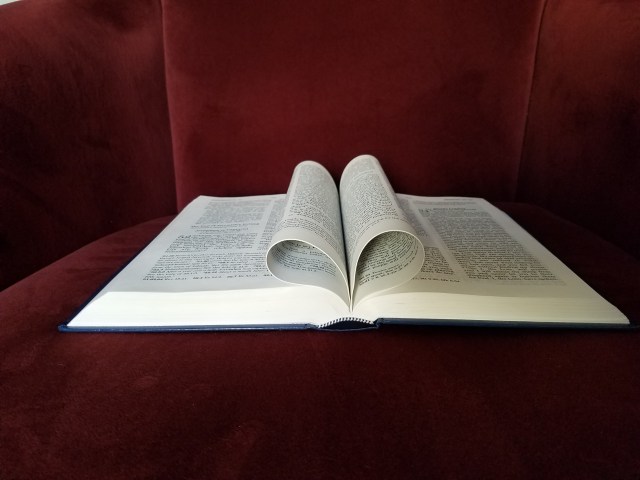
This is the primary means of keeping sin at bay and maintaining purity and holiness. The Scriptures are meant to be read, ingested, meditated upon, ruminated on, contemplated, and lived. Bibles are not intended to adorn coffee tables; they are designed for their contents to be known.

We can only hold what we have. To keep God’s Word in the heart, it must be taken into that heart.

I have hidden your word in my heart, that I might not sin against you. (Psalm 119:11, NLT)

I Will Praise God

Praise to God arises organically whenever we truly take in the words of God. That’s because God’s Word is life. Praising the Lord is a consistent theme throughout Holy Scripture, as people experience the grace and goodness of God.

I will praise you, Lord!
    You always do right.
I will sing about you,
    the Lord Most High. (Psalm 7:17, CEV)

I’ve thrown myself headlong into your arms—
    I’m celebrating your rescue.
I’m singing at the top of my lungs,
    I’m so full of answered prayers. (Psalm 13:5-6, MSG)

I Will Repeat Aloud God’s Word

It’s a good thing to read the Bible and know the commands of God. It’s an even better thing to read, out loud, and read it more than once.

“…Ezra the priest brought the Law before the assembly, which was made up of men and women and all who were able to understand. He read it aloud from daybreak till noon… in the presence of the men, women and others who could understand. And all the people listened attentively to the Book of the Law.” (Nehemiah 8:2-3, NIV)

Ezra Reads the Law to the People, by Bernadette Lopez

This, in fact, is how we actually get God’s Word impressed on our minds and into our hearts. It’s important for Scripture to move from our short term memory into our long term memory. Then, we can draw from it, especially in those times when we need immediate wisdom or comfort or help.

Just as praise is organic, so God’s Word can spontaneously come out of us – that is, if we have prepared ourselves by filling up the soul to the full of Scripture. Then, helpful words and theology begin to overflow out of us, and benefits everyone.

I Will Delight in Obedience

Submission doesn’t come naturally to most people; it requires intentional development. We need a plan for getting the commands of God inside us. Then they can be familiar to us. And we can follow those commands with all the grace and ability the Lord grants us.

This is more than woodenly following some rules. Keeping to the letter of the Law only engages the mind. The heart needs to be involved, as well. We must also keep the spirit of the Law. And that can happen by learning to delight in obeying God.

Trust in the Lord and do good;
    dwell in the land and enjoy safe pasture.
Take delight in the Lord,
    and he will give you the desires of your heart…

The Lord makes firm the steps
    of the one who delights in him;
though he may stumble, he will not fall,
    for the Lord upholds him with his hand. (Psalm 37:3-4, 23-24, NIV)

I Will Study God’s Word

Learning to delight in God’s commands logically leads toward wanting to examine those commands more closely, to take a good hard look at the biblical teachings available to us.

We don’t necessarily need to become Bible scholars in order to study. We just need the desire and a way to take a closer examination at Scripture. A good way to begin is engaging in a practice known as Lectio Divina.

Lectio Divina is an ancient Latin term which means “spiritual reading.” It is to read Holy Scripture not just to know its contents, but to experience its power to restore, heal, transform, and draw close to God. 

This is a simple way to prayerfully read the Bible, meditate on its message, and listen for what God may be saying for us to do. The goal is to become more Christ-like.

Lectio Divina is based upon reading a selected text of Scripture three times. Each reading is followed by a period of silence after which we respond to God with what we are hearing as we listen.

First Reading

During the first reading, read the text aloud twice. Read slowly and carefully. The purpose of the first reading is to hear the text and listen for a word, phrase or idea that captures your attention. Focus your attention on it, repeating it within your mind several times.

Second Reading

During the second reading, read the text again. This time, focus your attention on how the selected word, phrase or idea speaks to your life. What does it mean for you today? How is Christ, the Word, speaking to you about your life through this word, phrase or idea? After reading, observe a period of silence, then express a brief prayer to God.

Third Reading

Read the text again. This time, focus on what God is calling you to do or to become. Experiencing God’s presence changes us. It calls us to something. During this final reading, focus on what God is calling you to do or to be. Again, observe a period of silence, then pray to God about what you believe you are being called to do or to be.

I Will Take Pleasure in God’s Word

It is probably a foregone conclusion, that when we commit our energy to prayer, hold the Word near and dear to our heart, praise God, speak aloud the words of God, delight in and study divine instruction, we will find ourselves enjoying every moment of it – and living a pure and holy life.

We will discover that God takes pleasure in us. This enjoyment of God over us is so compelling and gracious, that it’s almost as if we cannot help but reciprocate with praise, adoration, and devotion to holiness of life.

There is no arm-twisting in this realm of enjoyment. No need to gin-up motivation, nor to try and get obedience and purity out of others.

The sooner we all learn that the world truly spins on an axis of mercy, the quicker folks will realize a better way to live than endless rules and pronouncements.

For the Lord is always true to the basic divine character of pure steadfast love through what is right, just, and good. Amen.

Luke 6:6-11 – Every Day is Meant for Doing Good

On another Sabbath, Jesus went into the synagogue and was teaching, and a man was there whose right hand was shriveled. The Pharisees and the teachers of the law were looking for a reason to accuse Jesus, so they watched him closely to see if he would heal on the Sabbath. But Jesus knew what they were thinking and said to the man with the shriveled hand, “Get up and stand in front of everyone.” So, he got up and stood there.

Then Jesus said to them, “I ask you, which is lawful on the Sabbath: to do good or to do evil, to save life or to destroy it?”

He looked around at them all, and then said to the man, “Stretch out your hand.” He did so, and his hand was completely restored. But the Pharisees and the teachers of the law were furious and began to discuss with one another what they might do to Jesus. (New International Version)

Lectio Divina is an ancient Latin term which means “spiritual reading.”  It means to read Holy Scripture not just to know its contents, but to experience its power to restore, heal, transform, and draw close to God.

Lectio Divina is a simple way to prayerfully read Scripture, meditate on its message, and listen for what God may be saying for us to do. It can be done privately, or with a small group of people. The goal is to become more Christ-like.

Lectio Divina is based upon reading a selected text of Scripture three times. Each reading is followed by a period of silence after which each person is given the opportunity to briefly share what they are hearing as they listen to God (if done in a group).

For today’s Gospel lesson, I invite you to give it three different readings, as is common to a Lectio Divina approach:

  1. In the first reading, read the text aloud slowly and carefully. Listen for a word, phrase or idea that captures you attention. As you recognize a word, phrase or idea, focus your attention on it, repeating it several times.
  2. In the second reading, focus your attention on how the selected word, phrase or idea speaks to your life right now. What does it mean for you today? How is Christ speaking to you about your life through this word, phrase or idea?
  3. In the third reading, focus on what God is calling you to do or to become. Experiencing God’s presence changes us. It calls us to something. What is that something?

So, here are my reflections from reading today’s Gospel lesson three times:

  1. In my first reading, the phrase “watched him closely” stood out to me. As I sat and pondered this phrase, I thought about how there are always people watching us. How I live my life, and what I say, are continually on display. Mostly, this is a good thing, because I believe that modeling an authentic and devout life to Christ is important. Yet, whenever someone is watching us closely, in the sense of continually looking over our shoulder, or scrutinizing every word and action so as to find fault, this is a very bad thing.
  2. In my second reading, I hear God speaking to me about how Jesus experienced this bad sort of watching, and yet, he did not let it deter him from doing good and following through on what is right by healing a man on the Sabbath. In fact, Christ confidently had the man with the shriveled hand stand up in front of everyone. He wanted the entire congregation, including those who were watching him with judgmental eyes, to see exactly what he was doing. Jesus neither healed him quietly nor waited till after the synagogue service was over; he was very open about what was happening.
  3. In my third reading, I felt Jesus beside me – not looking for something to correct or chastise me about – but rather putting his arm around my shoulder, knowing exactly what it feels like to be the object of criticism, scorn, and malevolent plotting against. I sense my solidarity with Christ, my union with him, believing that nothing can separate me from the love of God in Christ, my Savior and Lord, who always has my back. I hear Jesus graciously calling me to stand firm and openly do what is good and right, every day, no matter who is watching or why they are watching.

Today’s Gospel lesson shows us Christ’s disapproval of those who focus so narrowly on the traditions and laws of religion that they end up losing sight of God’s message.

For the Christian, the message is a gospel of grace, not condemnation. Jesus challenges the legalistic way of keeping the Sabbath holy by asking a penetrating question: “Is it lawful to do good on the Sabbath rather than to do evil, to save life rather than to destroy it?”

By showing compassion to the man with the withered hand, Jesus points us to a way of holiness that’s a whole lot more than keeping the law and performing rituals.

By healing the man, Jesus teaches us to respond to God’s call to do good and save lives. Traditions should never interfere with our compassion for those in need.

“If anyone, then, knows the good they ought to do and doesn’t do it, it is sin for them.”

James 4:17

If you haven’t already done so, give the Lectio Divina a healthy try – because God is always speaking to us; we just need to be still and silent in order to hear.

Lord Jesus Christ, Son of God, have mercy on me, and grant me your peace. Amen.

Psalm 119:97-104 – God the Teacher

I deeply love your Law!
    I think about it all day.
Your laws never leave my mind,
    and they make me much wiser
    than my enemies.
Thinking about your teachings
    gives me better understanding
    than my teachers,
and obeying your laws
makes me wiser
    than those
    who have lived a long time.
I obey your word
    instead of following a way
    that leads to trouble.
You have been my teacher,
    and I won’t reject
    your instructions.
Your teachings are sweeter
    than honey.
    They give me understanding
    and make me hate all lies. (CEV)

We live in a wonderful, complex, beautiful, broken, and upside-down world. The information we access, the choices we make, and the networking we engage in all require a great deal of wisdom.  Throw into the mix the reality that most things rarely go as we plan, and you have a recipe for disappointment and/or frustrating anger.  So, is there a path, a way of approaching this world that can help us navigate all its twists and trials?  Yes, there is a light through it all. Today’s psalm informs us how to proceed.

Wisdom in the Old Testament is the ability to take revealed truth and put it into concrete daily practice. So then, a life marked by the love and study of God’s Word brings both right living and enjoyment. God is our teacher and faithfully guides us into grateful living through his promises and commands. We can put ourselves in a position to sit at the master’s feet and receive gracious instruction for life.

Lectio Divina is one way of doing just that: allowing God to teach us through his Holy Word. Lectio Divina is an ancient Latin term which means “spiritual reading.”  It means to read Holy Scripture not just to know its contents, but to experience its power to restore, heal, transform, provide wisdom, and draw close to God. 

Lectio Divina is a simple way to prayerfully read the Bible, meditate on its message, and listen for what God may be saying for us to do.  It can be done privately, or with a small group of people.  The goal for the Christian is to become more Christ-like.

Lectio Divina is based upon reading a selected text of Scripture three times. Each reading is followed by a period of silence after which each person is given the opportunity to briefly share what they are hearing as they listen to God (if done in a group).

First Reading

During the first reading, read the text aloud twice. Read slowly and carefully. The purpose of the first reading is for each person to hear the text and to listen for a word, phrase or idea that captures their attention. As group members recognize a word, phrase, or idea, they are to focus their attention on it, repeating it within their minds several times.

Second Reading

During the second reading, read the text again. This time, listeners are to focus their attention on how the selected word, phrase or idea speaks to their life that day. What does it mean for you today? How is Christ, the Word, speaking to you about your life through this word, phrase, or idea? What is Christ, the Word, speaking to you about your life through this word, phrase, or idea? After the reading, a brief period of silence is observed and then group members share briefly what they have heard.

Third Reading

Read the text again. This time, listeners are to focus on what God is calling them to do or to become. Experiencing God’s presence changes us. It calls us to something. During this final reading, focus on what God is calling you to do or to be.  After the third reading, there is a period of silence, then group members share what they are being called to do or to be.

The psalms, especially Psalm 119, are meant to be read over-and-over again, to be used for prayer, worship, and study. Devoting ourselves to the psalms and grafting them into our lives is one of the best practices we can do to live a healthy and happy spiritual life.

Almighty God extend your goodness to me according to your Holy Word. Teach me knowledge and good judgment because I trust your commands. I seek to obey your wondrous Word. You are good, and what you do is always good. Teach me your decrees through Jesus Christ my Lord in the wisdom of your Holy Spirit. Amen.