All Saints Day (John 11:32-44)

The Forerunners of Christ with Saints and Martyrs, by Fra Angelico, 15th century

When Mary came where Jesus was and saw him, she knelt at his feet and said to him, “Lord, if you had been here, my brother would not have died.” When Jesus saw her weeping and the Jews who came with her also weeping, he was greatly disturbed in spirit and deeply moved. He said, “Where have you laid him?” They said to him, “Lord, come and see.” Jesus began to weep. So the Jews said, “See how he loved him!” But some of them said, “Could not he who opened the eyes of the blind man have kept this man from dying?”

Then Jesus, again greatly disturbed, came to the tomb. It was a cave, and a stone was lying against it. Jesus said, “Take away the stone.” Martha, the sister of the dead man, said to him, “Lord, already there is a stench because he has been dead four days.” Jesus said to her, “Did I not tell you that if you believed you would see the glory of God?” So they took away the stone.

And Jesus looked upward and said, “Father, I thank you for having heard me. I knew that you always hear me, but I have said this for the sake of the crowd standing here, so that they may believe that you sent me.” When he had said this, he cried with a loud voice, “Lazarus, come out!” The dead man came out, his hands and feet bound with strips of cloth and his face wrapped in a cloth. Jesus said to them, “Unbind him, and let him go.” (New Revised Standard Version)

Every year on the Christian Calendar, the Church commemorates the saints who have gone before us. This day provides an opportunity to acknowledge the spiritual reality that contemporary believers stand on the shoulders of those who lived and died before us. Those saints of yester year deserve our recognition.

Since many believers know little about Christian history, it is good to take the time and reflect on the contributions of our spiritual ancestors. Our own personal spiritual growth isn’t just something we did on our own; we owe a lot to the saints who preceded us, and made it possible for us to know Christ.

In our Gospel lesson for today, Mary’s brother Lazarus had died. She was distraught and mourned her loss. Jesus reminded Mary that physical death is not the end; it is a temporary move to a higher plan of existence, until we all share in the final resurrection of the dead together as believers.

Although dead, the saints we recognize and remember can still speak to us, making significant contributions to our lives. All sorts of books, including Holy Scripture, have timeless reminders of how to live in this world. And, for some Christian traditions, the saints of long ago still maintain a real interaction with us in the present.

Times may change, yet the basic nature of people does not. The saints of the past have incredible wisdom for us, if we will but listen.

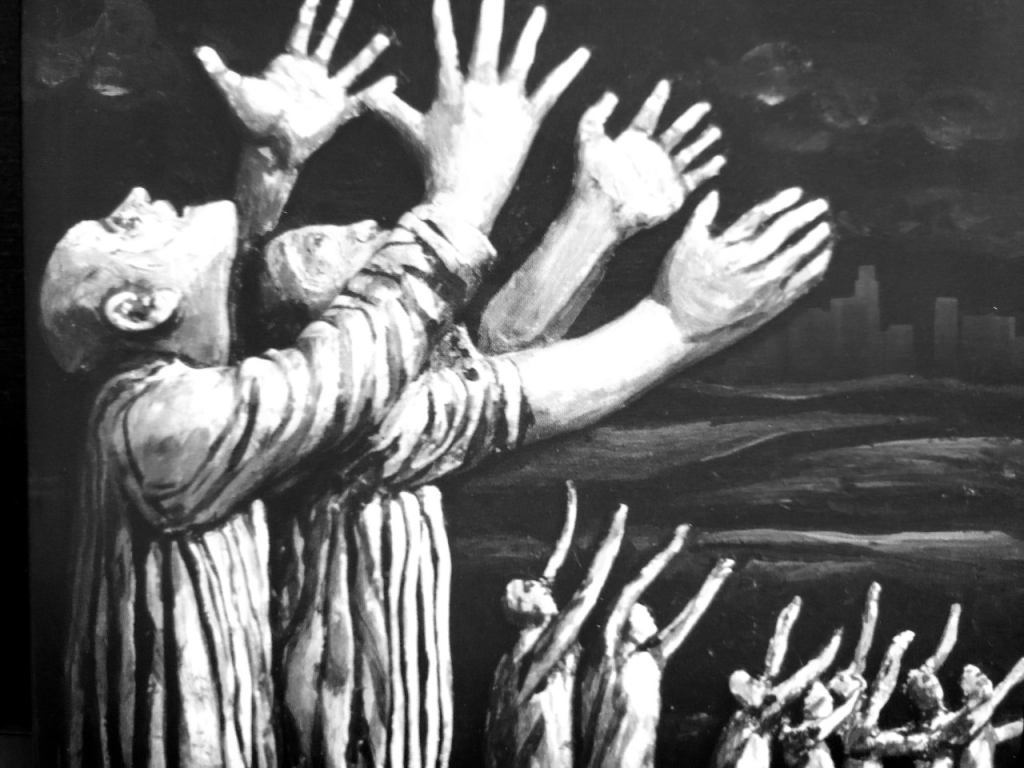
The Raising of Lazarus, by John Reilly (1928-2010)

In this way, Lazarus serves as an example of one who has a unique, powerful, and compelling testimony. He speaks, not only actually in his post-resurrection awakening by Jesus, but also virtually in speaking to us through the text and from his historical and heavenly place.

The presence and testimony of Lazarus was incredibly real enough for the religious leaders to begin plotting Christ’s demise; and even planning to kill Lazarus, because of his powerful testimony.

There is a place for grief and tears, and a place for joy and celebration. It seems that too much of our present time is given to the lament which comes from loss. The death and then resurrection of Lazarus by Jesus is a foretaste of Christ’s return.

We, along with all of the saints of bygone eras, will share together in a great resurrection at the end of time.

The author of Hebrews understood this, and spoke about the saints’ anticipation. Even though their lives were often characterized by adversity and suffering, they were able to exercise patience and perseverance, knowing there is something better ahead, along with us:

Some faced jeers and flogging, and even chains and imprisonment. They were put to death by stoning; they were sawed in two; they were killed by the sword. They went about in sheepskins and goatskins, destitute, persecuted and mistreated—the world was not worthy of them. They wandered in deserts and mountains, living in caves and in holes in the ground.

These were all commended for their faith, yet none of them received what had been promised, since God had planned something better for us so that only together with us would they be made perfect. (Hebrews 11:36-40, NIV)

Death is our enemy. Each one of us will succumb to it. Even Lazarus, although dead and then raised to life, ended up dying again. Yet he, along with us, shall be raised immortal.

Until that glorious time, we need to keep going and enduring in this life. We are mortals, subject to all that mortality means for us. Death is that ever-present specter that continually lingers in the background of everyone’s life. The reality of death can upend us, either through the bereavement of loved ones, or through anxious thoughts of our own impending death.

Although Christ has won the war against our old enemy, the fight, however, is not yet over. We need to keep up a future orientation, as Jesus did, and as the faithful saints of the past did.

The risen Lord shall not only cry with us, but shall wipe away every tear, and make it so that we will never be put to shame.

This makes the Christian recognition of All Saints Day not only a remembrance of the past, but also a way of viewing the future. Let us, then, join with all the saints in looking forward to the day of Christ, and letting that perspective shape how we live today.

Beloved God, you deal with us kindly and in steadfast love. You lift up those bent over with heavy burdens, and sustain the weak and oppressed. Release us from our present anxious fears, so that we who hold fast to your commandments, may honor you with faith and patience for all that you have done for us, and will do for us; through Jesus Christ our Lord, in the power of the Holy Spirit. Amen.

What Does God Want? (John 11:1-45)

The Raising of Lazarus, by Rembrandt, c.1632

Now a man named Lazarus was sick. He was from Bethany, the village of Mary and her sister Martha. (This Mary, whose brother Lazarus now lay sick, was the same one who poured perfume on the Lord and wiped his feet with her hair.) So the sisters sent word to Jesus, “Lord, the one you love is sick.”

When he heard this, Jesus said, “This sickness will not end in death. No, it is for God’s glory so that God’s Son may be glorified through it.” Now Jesus loved Martha and her sister and Lazarus. So when he heard that Lazarus was sick, he stayed where he was two more days, and then he said to his disciples, “Let us go back to Judea.”

“But Rabbi,” they said, “a short while ago the Jews there tried to stone you, and yet you are going back?”

Jesus answered, “Are there not twelve hours of daylight? Anyone who walks in the daytime will not stumble, for they see by this world’s light. It is when a person walks at night that they stumble, for they have no light.”

After he had said this, he went on to tell them, “Our friend Lazarus has fallen asleep; but I am going there to wake him up.”

His disciples replied, “Lord, if he sleeps, he will get better.” Jesus had been speaking of his death, but his disciples thought he meant natural sleep.

So then he told them plainly, “Lazarus is dead, and for your sake I am glad I was not there, so that you may believe. But let us go to him.”

Then Thomas (also known as Didymus) said to the rest of the disciples, “Let us also go, that we may die with him.”

On his arrival, Jesus found that Lazarus had already been in the tomb for four days. Now Bethany was less than two miles from Jerusalem, and many Jews had come to Martha and Mary to comfort them in the loss of their brother. When Martha heard that Jesus was coming, she went out to meet him, but Mary stayed at home.

“Lord,” Martha said to Jesus, “if you had been here, my brother would not have died. But I know that even now God will give you whatever you ask.”

Jesus said to her, “Your brother will rise again.”

Martha answered, “I know he will rise again in the resurrection at the last day.”

Jesus said to her, “I am the resurrection and the life. The one who believes in me will live, even though they die; and whoever lives by believing in me will never die. Do you believe this?”

“Yes, Lord,” she replied, “I believe that you are the Messiah, the Son of God, who is to come into the world.”

After she had said this, she went back and called her sister Mary aside. “The Teacher is here,” she said, “and is asking for you.” When Mary heard this, she got up quickly and went to him. Now Jesus had not yet entered the village, but was still at the place where Martha had met him. When the Jews who had been with Mary in the house, comforting her, noticed how quickly she got up and went out, they followed her, supposing she was going to the tomb to mourn there.

When Mary reached the place where Jesus was and saw him, she fell at his feet and said, “Lord, if you had been here, my brother would not have died.”

When Jesus saw her weeping, and the Jews who had come along with her also weeping, he was deeply moved in spirit and troubled. “Where have you laid him?” he asked.

“Come and see, Lord,” they replied.

Jesus wept.

Then the Jews said, “See how he loved him!”

But some of them said, “Could not he who opened the eyes of the blind man have kept this man from dying?”

Jesus, once more deeply moved, came to the tomb. It was a cave with a stone laid across the entrance. “Take away the stone,” he said.

“But, Lord,” said Martha, the sister of the dead man, “by this time there is a bad odor, for he has been there four days.”

Then Jesus said, “Did I not tell you that if you believe, you will see the glory of God?”

So they took away the stone. Then Jesus looked up and said, “Father, I thank you that you have heard me. I knew that you always hear me, but I said this for the benefit of the people standing here, that they may believe that you sent me.”

When he had said this, Jesus called in a loud voice, “Lazarus, come out!” The dead man came out, his hands and feet wrapped with strips of linen, and a cloth around his face.

Jesus said to them, “Take off the grave clothes and let him go.”

Therefore many of the Jews who had come to visit Mary, and had seen what Jesus did, believed in him. (New International Version)

The Raising of Lazarus, by Vincent Van Gogh, 1890

Here’s a Captain Obvious observation:

what God wants, and what we want, is not always the same thing. 

Today’s Gospel story centers around a man named Lazarus, the brother of Mary and Martha. The disciples were familiar with them since they were committed followers of Jesus. 

Their friend Lazarus became deathly ill. Christ and the disciples caught wind of it. Everyone believed Jesus could do something about this. But Jesus stayed put. He didn’t make a move to go to his sick friend. 

After a few days, Lazarus died. It was only then, that Jesus made his move.

The religious authorities in Jerusalem had it out for Jesus. But Jesus decided to go to Bethany and Jerusalem anyway. This made no sense to the disciples. Lazarus was lying dead in Bethany. Going there would put everyone at risk – which is why Thomas uttered the defeatist and dramatic statement, “Let us also go, that we may die with him.”

Yet, they all went. And once they arrived, Christ and his disciples found the grieving sisters. Mary and Martha believed that Jesus was the promised Messiah who would come and save the people. They didn’t understand why Jesus stayed away and didn’t come sooner. 

If Jesus had been there, he could have healed Lazarus. He healed other people, so why not a friend and a brother?

The death of Lazarus seemed to be the end. No one was happy with how things shook-out. Lazarus died. The disciples’ plans were dead. Mary and Martha’s expectations died…

but death is exactly what it takes in to have resurrection.

There’s no such thing as a painless miracle. Death isn’t a pleasant affair. I have been with countless people at the end of life, and I will tell you that, although it’s possible for a death to be peaceful, it’s still ugly business. 

It’s also painful to watch carefully laid and prayed over plans die. It hurts to see a long sought after dream just go up in smoke and die. To see anything or anyone we deeply care about die is gut-wrenching. Yet, in order for a resurrection to occur, there must first be a death.

There cannot be a new life unless there’s an old one. 

Jesus did the impossible by raising Lazarus from death and giving him new life. And the resurrection of Lazarus pointed to an even greater truth: Christ’s own death and resurrection was coming, and it will change everything.

Whenever what we want dies, then we are in a position to ask: So, what does God want? 

God wanted something better than what everybody else wanted. By allowing ourselves to be consumed with what God wants, it turns out to be the very best thing for us, even if it does not quite jive with what I want.

Everyone’s expectations needed to die, along with Lazarus, for the resurrection to become reality. Only then did Jesus act by rising Lazarus from death.

Jesus pointed to himself as the one able to bring life to all that is dead among us. Sometimes:

  • dreams must die so that Jesus can resurrect them to new life, with outcomes far more glorious than you and I could ever imagine
  • plans have to be dead and buried before Jesus will breathe new life into them, making those plans so much more than they could ever have been in our hands.
  • ministries, even churches, need to be dead as a doorknob so that Jesus can resurrect them and give them new life, invigorated with spiritual resurrection power.

If we desire to see the miracle of resurrection, we must die to ourselves – take up our crosses and follow Jesus into the grave so that he can transform our lowly expectations into a glorious new existence. Death does not have the last word because Christ’s resurrection makes it possible for us to have new life. Again, I ask:

What does God want? God wants to raise the dead to life.

Do you believe this? Yes, I believe. Help me in my unbelief.

Follow the path of what God wants and watch what the Lord will do for you.

Psalm 6 – Our Tears Find a Better Way

Please, Lord,
    don’t punish me when you are angry;
    don’t discipline me when you are furious.
Have mercy on me, Lord,
    because I’m frail.
Heal me, Lord,
    because my bones are shaking in terror!
My whole body is completely terrified!
        But you, Lord! How long will this last?
Come back to me, Lord! Deliver me!
    Save me for the sake of your faithful love!
No one is going to praise you
    when they are dead.
Who gives you thanks
    from the grave?

I’m worn out from groaning.
    Every night, I drench my bed with tears;
    I soak my couch all the way through.
My vision fails because of my grief;
    it’s weak because of all my distress.
Get away from me, all you evildoers,
    because the Lord has heard me crying!
The Lord has listened to my request.
    The Lord accepts my prayer.
All my enemies will be ashamed
    and completely terrified;
    they will be defeated
    and ashamed instantly. (Common English Bible)

“Don’t ever discount the wonder of your tears. They can be healing waters and a stream of joy. Sometimes they are the best words the heart can speak.”

William Paul Young, The Shack

Sometimes, even oftentimes, our tears find a better way.

It seems as if many folks don’t know this. Whenever someone is distraught, discouraged, or in the throes of despair, the advice given to them is often unhelpful, and even hurtful.

“You just need to be strong,” “Keep your chin up, I’m sure you have a lot to be thankful for,” and “Don’t cry, everything will work out okay,” are statements which betray we are uncomfortable with tears and are unsure what to do with them in others.

It can also be worse than that, with exhortations which only harm and don’t assist. “Dry up those tears or I’ll give you something to really cry about,” “Being sad and depressed like that is a sin, you know,” and “God wants you to be happy, so just put a smile on your face and fake it until you make it,” are a misuse of words and an abuse of language’s power.

So, I say again: Our tears find a better way.

To hold back our tears, to stuff our sadness and grief, does not make it go away. It’s still in there. And, if left there for too long, will come out sideways in harming others or even ourselves.

Whenever we put away our tears, we’re setting aside God’s most powerful means of healing, health, and wholeness. Tears are the conduit of integrating body and soul, where what’s going on inside is expressed on the outside.

Often, you don’t even need words when you have tears. The presence of the tears themselves becomes a form of language. They’re just there, and they are beautiful. Tears are evidence of brokenness, and more importantly, of healing and of strength, not weakness.

Tears are the body’s release valve for stress, sadness, grief, anxiety, and frustration. Like the ocean, tears are saltwater. They protectively lubricate the eyes, remove irritants, and contain antibodies that fight pathogenic microbes.

Dr. William Frey is a biochemist and an expert on human tears at the University of Minnesota. He states that our bodies produce three kinds of tears: reflex, continuous, and emotional. Each kind has different healing roles. Reflex tears allow the eyes to flush noxious particles when they’re irritated by smoke or exhaust. Continuous tears are produced regularly to keep our eyes lubricated and protected from infection.

Emotional tears were the experience of the psalmist. Whereas reflex tears are 98% water, emotional tears contain stress hormones that get excreted from the body through crying. Emotional crying stimulates the production of endorphins – the hormone necessary for happiness and a decrease of pain.

As the only creatures carrying God’s image and likeness within us, humans alone shed emotional tears. And that’s because God cries.

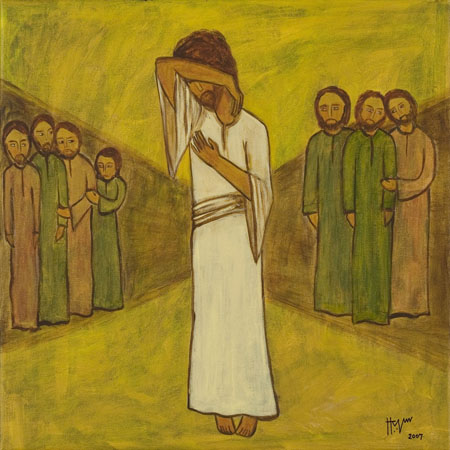
Jesus wept. Real tears. Emotional tears. Tears of genuine feeling and solidarity with the community, lamenting at the death of a dear friend, Lazarus.

“The Teacher is here,” Martha said, “and is asking for you.” When Mary heard this, she got up quickly and went to him. Now Jesus had not yet entered the village but was still at the place where Martha had met him.When the Jews who had been with Mary in the house, comforting her, noticed how quickly she got up and went out, they followed her, supposing she was going to the tomb to mourn there.

When Mary reached the place where Jesus was and saw him, she fell at his feet and said, “Lord, if you had been here, my brother would not have died.”

When Jesus saw her weeping, and the Jews who had come along with her also weeping, he was deeply moved in spirit and troubled. “Where have you laid him?” he asked.

“Come and see, Lord,” they replied.

Jesus wept. (John 11:28-35, NIV)

The Lord Jesus came to the village three days after Lazarus died. He knew exactly what he was about to do: raise Lazarus from the dead in a miraculous resurrection. Yet, he did not come all smiles stating, “Hey, guys, don’t be sad! Watch what I’m going to do!”

No, instead, Christ participated fully in the sisters’ and the community’s grief. Only until he had done this did he proceed to performing the miracle.

The tears, just as much as the resurrection itself, were redemptive.

There was a time, long ago, when the word “loser” meant exactly what the word says – that someone had lost someone. It was a descriptive word recognizing the aching hole in the heart that one experiences from the death of a loved friend or family member.

Now, however, the word “loser” has taken an insidious twist over the years – meaning someone who hasn’t won, somebody who didn’t have what it took to be a winner. It is now a negative term that nobody wants to wear as a moniker, at all.

Perhaps that is one reason why so many people wear plastic smiles, pretend they are strong, and insist on keeping up appearances… And it is killing us with unprecedented numbers of depression, anxiety, and outright despair with nowhere to place it.

Our tears show us a better way. It was the way of the psalmist. It is the way of our Lord. It is the way of life.

You keep track of all my sorrows.
    You have collected all my tears in your bottle.
    You have recorded each one in your book.

Psalm 56:8, NLT

Beloved God, since all communion with You is prayer, my tears are psalms of petition and canticles of praise to You. The prayer You value greatly and always hear is the prayer of my tears; for You are a compassionate and kind God.

Surely, all truly great prayer rises from deep inside and springs spontaneously to the surface in the form of weeping. Perhaps, then, our tears are the purest and best worship of all.

May Your people not be ashamed of their tears; may they flow naturally and freely to You, my Blessed Redeemer. In times of joy or sorrow, blessed be the tears as the holy prayers of our hearts. Amen.

Learning to Grieve Well

grieving well

One day, years ago in a previous church experience, Frank (not his real name) came up to me concerned about a woman in the congregation.  The woman, Daphne (not her real name), had recently had a miscarriage when just beginning her third trimester.  Frank proceeded to tell me that it had been a few weeks since the terrible event of Daphne’s miscarriage, and he had never seen her cry.  Frank was uneasy with this and wanted to go tell her that something was wrong that she wasn’t bawling over her tragedy.

Although I think Frank’s heart was mostly in the right place to have concern, there were a couple of things off about his thoughts.  These few things I’m going to highlight are important to keep in mind.  Whether you are grieving yourself because of some trauma or hard situation, or whether you want to be there to encourage and help another person going through trouble, there are two realities to keep in mind through the hard road of grief.  The first reality is this:

Grief is personal.  No two people grieve in exactly the same way.

Part of Frank’s concern was that he himself had gone through the death of a child, and he had cried much over it.  In fact, he had tears in his eyes just talking to me about something that happened many years ago.  Frank had found that his crying and emotional expressions were a central part of coming to terms with his own child’s death.  So, when Daphne was not responding in the same way as he had, he quickly assumed she was in denial and was not grieving.

The truth was that I was close to Daphne and her family enough to know that she and her husband were very much in grief, and were certainly working through their awful ordeal.  Daphne had never been much of an emotional person, and she found that lots of talking with girlfriends and other women was an important path of healing; and, that having her pastor pray for her and her family and just be around in a spiritual presence reassured her that God was with her.

A few weeks after Daphne’s miscarriage, she was clearly still in the throes of grieving.  I knew her well enough to know that eventually she would have that big cry session.  Daphne was a more reflective person, and her grief was buckets-load more cerebral than Frank, who tended to wear his feelings on his sleeve.  As it turns out, sure enough, two months down-the-road, Daphne’s emotions caught up with her and she had her own very personal big cry session.  This brings me to my second important reality that we must keep in mind….

You cannot put a timetable on grief, especially someone else’s.

Another part of Frank’s concern was actually his own anxiety coming through.  He knew firsthand how hard it is to go through something that you never saw coming and forever changes you.  Through Daphne’s tragedy, Frank was reliving his own nightmare.  If Daphne could get through her grief, hopefully by having a good cry and getting over it, then Frank could move on and not feel so damned uncomfortable himself.  This was, of course, not a conscious reality for Frank.  But that’s what makes grief so complicated.  Other people’s grief really does affect our own lives.  If we are not in touch with our own emotions and the deep hurts within that can be triggered at a moment’s notice, then we project our anxiety and our desire for tidy resolutions onto others who are not ready to be done with their bereavement or their grief.

When we put timetables on others’ grief, it says much more about us than the person grieving.  Statements like, “It’s been two weeks, and she should be over it,” and “When is he going to stop being so depressed?” come from a place inside of the statement-maker that cannot live with other people’s pain and would like it all to be better.  My bet is that such statements belie unresolved grief and hurt from the person making them.

Wise people sit with the emotions of others, and let them feel the full brunt of their feelings.  They don’t try to push emotions off, make the grief-stricken person better, or fix them so that they aren’t unhappy anymore.  The sage person knows that you cannot hurry grief along any more than you can make a turtle do a 4.6 second 40 meter race.  Besides, last I checked, the turtle ends up winning with his slow, yet deliberate pace.

When his good friend, Lazarus, was sick Jesus waited three days before he went to him.  In the meantime, Lazarus died.  Jesus was pressured to get there immediately, to take the fast track, to stop any sort of bereavement that might take place.  But Jesus didn’t let the anxiety of others dictate his Father’s agenda.  Because he operated on his own timetable, a miracle of resurrection proportions occurred (John 11:1-44).  And even when Jesus knew what was going to happen by raising Lazarus, that didn’t stop him from slowing down even more by taking the time to grieve and sit with others’ in their grief.  “Jesus wept,” was a genuine heartfelt response to the folks around him, as well as an authentic display of his own personal grieving over his friend’s passing.

jesus wept

What’s more, Lazarus’ sisters, Mary and Martha, never responded the same way to circumstances.  Whereas Mary wanted to be close to Jesus, Martha chose to work-out her frustrations in the kitchen.  Trying to pigeon-hole someone into a nice-and-neat grief to-do list never ends well for anyone.

So, how are we to grieve well when tragedy or trauma happens?  I’ve already hinted at it, but I’ll now give it to you plainly with two more realities….

You need to sit with your emotions.

When hard times come, our natural human reflexive response is to want to get away from the grief.  Feeling hard stuff hurts.  No one likes pain.  But feel we must.  Ignoring how we feel only puts emotions on hold – it doesn’t take them away.  Emotions must be felt deeply, usually over a long period of time for most people.  No one ever just “gets over” the death of a child or any other trauma.  It forever changes you.  Feeling angry, out-of-control, powerless, depressed, mentally and/or physically pained, and a whole host of other emotions can come flying at you like razor-blade arrows aimed at your heart.  Go ahead and feel them, feel them all.

Also, let others feel them, as well.  It isn’t anybody’s job to fix another person in grief.  You and I don’t heal people – that’s God’s job.

Your emotions will make a comeback in the future.

Just like the example of Frank, your emotions can get triggered by another’s grief, or even when you least expect it with seeing, hearing, or smelling something that reminds you of what you have lost.  Just because you grieved, and even grieved well, back there in the past doesn’t mean that it is a one-and-done affair.  Nope.  Not even close.  The feelings associated with that hard thing in your past can come back at the drop of a hat.  It’s okay.  Go ahead and feel them again.  Don’t short-circuit the emotions.  Coming to grips with trauma and hurt takes a lifetime of dealing with.  That’s not a popular message today; but it is certainly a true one.

I myself have had to learn the hard way that having a detached Mr. Spock-like approach to trauma only compounds the trouble.  I might not always be in touch with my emotions, but that doesn’t mean I don’t feel deeply.  Sometimes I need to slow down and stop long enough to feel, instead of running away from my heart.

Trauma, tragedy, and hard circumstances forever change us.  We can never go back to the way things were.  But, over time, we can learn to pay attention to our emotions, acknowledge them, and live with them as guides and friends rather than as unwanted guests.