The Time Is Ripe (Galatians 4:1-7)

What I am saying is that as long as an heir is underage, he is no different from a slave, although he owns the whole estate. The heir is subject to guardians and trustees until the time set by his father. So also, when we were underage, we were in slavery under the elemental spiritual forces of the world. 

But when the set time had fully come, God sent his Son, born of a woman, born under the law, to redeem those under the law, that we might receive adoption to sonship. Because you are his sons, God sent the Spirit of his Son into our hearts, the Spirit who calls out, “Abba, Father.” So you are no longer a slave, but God’s child; and since you are his child, God has made you also an heir. (New International Version)

The three greatest persons in biblical history – Abraham, Moses, and Jesus – are connected. God entered into a covenant with Abraham and promised to bless everyone on the earth through his progeny. God gave Moses the Law as a sort of school teacher and guide, alongside Abraham’s covenant. God fulfilled the covenant promise in Jesus. Thus, everyone who is led and tutored toward Christ, inherits all of God’s promises.

Under the Law

The Apostle Paul, speaking to a group of new believers who were confused about the relation between the Law and Christ, helped them understand with a metaphor. It’s like a boy who is the heir to a great estate. Someday, it will all be his. But now, he’s too young to possess it. So, during his childhood, he’s subject to trustees who oversee the estate, and teachers who instruct him in how to actually use the wealth once he actually inherits it.

While the boy is in the middle of the guidance, he’s not in control of much, just like the servants on the estate. The child will remain in this state until his time comes, until the date in which his father says he can take possession of the inheritance.

Before Christ, people were under the Law. They were heirs to God’s great kingdom promises. Yet, they needed the Law to guide and instruct them until it was time for them to receive the inheritance. Much like a present day kid in school, they see themselves in a sort of bondage, even though it’s a necessary part of their lives.

It’s bondage in the sense that the Law, the schoolmaster, has no power or ability to give the inheritance nor to save them from their current condition. In other words, the Law is good, yet lacks the potency to actually deliver one from sin, death, and hell.

What’s more, the elemental spirits of the age, namely Satan and his wicked spirits, wormed their way into the process of guidance and twisted the Law for their own advantage, to keep people in bondage. Just as the guardian of the boy may mistreat him in ways his father never intended, so the devil has exploited the Law in order to have it be a tyrannical presence over people.

Whereas God intended the Law to reveal humanity’s sin and drive them to a Savior, evil uses the Law to shame people and drive them to despair. The Law was meant for good, to be a gracious leading of people to the Messiah; yet Satan co-opted the Law to bring condemnation to folks and keep them under his insidious thumb.

In Christ

But when the time was ripe, God sent the Son so that people would be done with their guardians and inherit divine promises. To use yet another metaphor, when the scaffolding on a building has served it’s intended purpose in construction, it’s taken down; it’s no longer needed. It would be weird if the shiny new building were erected, and the owner decided to keep the scaffolding beside the structure.

The Law of Moses had done its work of preparing people for Christ. So, God sent Jesus, the Son, to redeem humanity, to transform slaves into sons and daughters. The Lord adopted us and granted us full rights as children of the King.

Christ redeemed us from the curse of the Law by becoming a curse for us—because it is written, Everyone who is hung on a tree is cursed.

Galatians 3:13, CEB

Jesus is uniquely qualified to be such a Redeemer of humanity. He is God’s Son, born of a human mother. Therefore, as both divine and human – the God Man – Jesus is the person for whom all the covenant promises of God have their fulfillment.

In the past God spoke to our ancestors many times and in many ways through the prophets, but in these last days he has spoken to us through his Son. He is the one through whom God created the universe, the one whom God has chosen to possess all things at the end. He reflects the brightness of God’s glory and is the exact likeness of God’s own being, sustaining the universe with his powerful word. After achieving forgiveness for the sins of all human beings, he sat down in heaven at the right side of God, the Supreme Power. (Hebrews 1:1-3, GNT)

In Christian trinitarian theology, God is Three in One, the Holy Trinity. God sent the Son into the world, of which believers celebrate the incarnation of Christ each year at Christmas. God sent the Spirit into our hearts; and from that place we cry “Abba! Father!” The Spirit testifies with our own spirit that we are truly adopted children of God. (Romans 8:15-16)
The Spirit is like the seal on a document, proving that our inheritance papers are all in order. And, much more than that, the Spirit also does this sealing work with affection. Christianity is not merely a legal transaction; it’s an experience of grace and love in which we enter into a new life, free from bondage, and alive to all the possibilities that humanity was originally meant for.

Both our status and our sensibilities are changed. It happens because of God’s good grace and purpose, fulfilled in Christ and impressed on us by the Spirit.

Conclusion

The French philosopher and writer, Blaise Pascal (1623-1662), once said that there is a God-shaped vacuum in the heart of each person which needs to be filled:

“There was once in man a true happiness, of which all that now remains is the empty print and trace. This he tries in vain to fill with everything around him, seeking in things that are not there the help he cannot find in those that are, though none can help, since this infinite abyss can be filled only with an infinite and immutable object; in other words by God himself.” Blaise Pascal, Pensées

If we want to find happiness, satisfaction, and goodwill, then the empty void within us creatures and within the systems and the cultures we create, needs to be filled with our Creator.

The Christian season of Advent is an appropriate time to reconnect with the infinite and the immutable. The time is ripe to be filled not only with love and goodness, but with the very source of Love itself.

May it be so, to the glory of God.

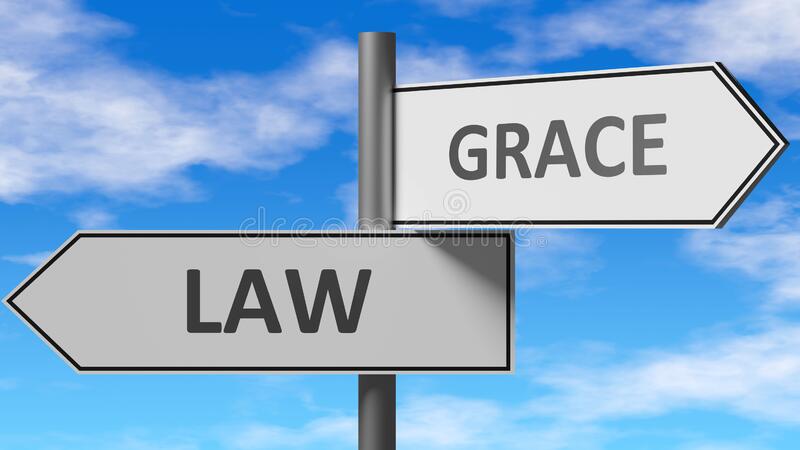
Galatians 3:15-22 – Law and Grace

Brothers and sisters, let me take an example from everyday life. Just as no one can set aside or add to a human covenant that has been duly established, so it is in this case. The promises were spoken to Abraham and to his seed. Scripture does not say “and to seeds,” meaning many people, but “and to your seed,” meaning one person, who is Christ. What I mean is this: The law, introduced 430 years later, does not set aside the covenant previously established by God and thus do away with the promise. For if the inheritance depends on the law, then it no longer depends on the promise; but God in his grace gave it to Abraham through a promise.

Why, then, was the law given at all? It was added because of transgressions until the Seed to whom the promise referred had come. The law was given through angels and entrusted to a mediator. A mediator, however, implies more than one party; but God is one.

Is the law, therefore, opposed to the promises of God? Absolutely not! For if a law had been given that could impart life, then righteousness would certainly have come by the law. But Scripture has locked up everything under the control of sin, so that what was promised, being given through faith in Jesus Christ, might be given to those who believe. (New International Version)

If the Apostle Paul were living in our day, I’m pretty sure he could have his own reality show, if he wanted. Paul is a terribly interesting man. Within church circles, his adventures are legendary. 

One of the most interesting things about Paul is his piercing intellect and flawless rhetoric. Today’s New Testament lesson has Paul taking on a Galatian heresy. Maybe we could call it “Law and Grace: SFU (Special Faith Unit).”  

The folks who were holding to the law were reminded by Paul that the promise to Abraham was a contract or covenant made by God that was binding, permanent, and divinely ratified. The law, on the other hand, was not – it was designed to be in effect for a specific amount of time, temporary, and only bound the people of God until the promise was fulfilled in Christ.

So, why in the world was there a law to begin with if it is no longer in effect? 

Paul said the law was added because of transgressions. It was as if God’s people were precocious and disobedient little children who needed some firm boundaries and rules in order to keep them safe and lead them to the time when they would grow to maturity. 

My friends, stop thinking like children. Think like mature people and be as innocent as tiny babies.

1 Corinthians 14:20, CEV

With the arrival of adulthood, there is no longer any need for the law.

The law was never designed to be permanent. So, when Christians cling to a rules-based faith, they are showing their immaturity. They need to grow up and embrace the permanent reality of living in the Spirit. 

Although you should have been teachers by now, you need someone to teach you an introduction to the basics about God’s message. You have come to the place where you need milk instead of solid food. Everyone who lives on milk is not used to the word of righteousness, because they are babies. But solid food is for the mature, whose senses are trained by practice to distinguish between good and evil. (Hebrews 5:12-14, CEB)

We must press on toward spiritual maturity, not being simpletons who embrace the law as if it were the actual faith itself. Instead, we need to pursue an adult faith – one which is thoroughly permeated and bathed in grace.

Grace is the permanent and pervasive reality that governs everything Christians are to do and say. Grace cannot be earned, only accepted, not achieved, but only given by God. 

Until we can grasp this fundamental truth of Christianity, the Christian life will never make sense. Only until we release our expectations of rules and let go of our orienting around law will we discover the liberation of a grace-filled existence.

Jesus said, “In a word, what I’m saying is, Grow up. You’re kingdom subjects. Now live like it. Live out your God-created identity. Live generously and graciously toward others, the way God lives toward you.” (Matthew 5:48, MSG)

We spread the message about Christ as we instruct and teach everyone with all the wisdom there is. We want to present everyone as mature Christian people.

Colossians 1:28, GW

The believer’s task is to grow in the grace and knowledge of our Lord Jesus. That happens not through the law but by grace – utilizing the God given gifts of faith, hope, and love.

Gracious God, you saved me through Christ alone by faith alone. Now help me to live by grace alone as the highest and greatest truth operative in the universe and in the kingdom of God. Amen.

Psalm 19 – The God We Can Know

The heavens keep telling
    the wonders of God,
    and the skies declare
    what he has done.
Each day informs
    the following day;
    each night announces
    to the next.
They don’t speak a word,
    and there is never
    the sound of a voice.
Yet their message reaches
    all the earth,
    and it travels
    around the world.

In the heavens a tent
    is set up for the sun.
It rises like a bridegroom
    and gets ready like a hero
    eager to run a race.
It travels all the way
across the sky.
    Nothing hides from its heat.

The Law of the Lord is perfect;
    it gives us new life.
His teachings last forever,
    and they give wisdom
    to ordinary people.
The Lord’s instruction is right;
    it makes our hearts glad.
His commands shine brightly,
    and they give us light.

Worshiping the Lord is sacred;
    he will always be worshiped.
All his decisions
    are correct and fair.
They are worth more
    than the finest gold
    and are sweeter than honey
    from a honeycomb.

By your teachings, Lord,
    I am warned;
    by obeying them,
    I am greatly rewarded.
None of us know our faults.
    Forgive me when I sin
    without knowing it.
Don’t let me do wrong
    on purpose, Lord,
    or let sin have control
    over my life.
Then I will be innocent,
    and not guilty
    of some terrible fault.

Let my words and my thoughts
    be pleasing to you, Lord,
    because you are my mighty rock
    and my protector. (CEV)

Today’s psalm is a celebration of God’s self-revelation. Through both nature and law, the Lord has graciously made the divine life known to humanity. What’s more, God’s moral and ethical teachings provide insight for living a good life. This is for the common good of all persons.

The vision of the psalm is of a personal God, not an abstract deity who is aloof from creation. Through both land and law, there is the Lord of life, desiring humanity to know the divinity which infuses it all and has people’s best interests continually at the forefront of providence and goodwill.

The created world witnesses to God. Creation manifests the glory of its Creator. Each creature and every created thing have the capacity to acknowledge and declare their Originator. That which has no mouth can speak. Those with no vocal cords have a voice. We can hear them, that is, if our ears are open to listen. The creation is not God. Yet the created world and order knows the Lord so intimately that it sometimes seems as if the sun, the trees, the mountains, and the meadows are divine. The divine stamp is there, testifying with mysterious words to a glorious God who desires to be known.

So, the Lord graciously gave us law. God’s righteous and good law flows seamlessly from God’s good character. Law is the divine medium for humanity, a guide for human life toward thriving and flourishing on God’s good earth. We were put on this planet with instructions on how to get along on it. It is when we throw out the rulebook and improvise that we tend to get into all kinds of trouble.

“Knowing God is more important than knowing about God.”

karl rahner

Even when we as people dig our own graves and fall into them, God is there. Grace is available for the asking, redeeming the wayward life. Deliverance is a real possibility, to set us aright again, and restore us to our full luster as people created in the image of God. Law and land converge to guide into grateful living, into the wisdom of dealing rightly in all things.

Wisdom in the Old Testament is the combination of knowledge and practice. It is the application of God’s self-revelation to concrete situations in life. We live wisely when we get to know the sovereign God of creation and use the Lord’s revealed mores and ethos as our guide in daily experiences.

We need God’s gracious revealed law. It’s not just for theology nerds or spiritual eggheads; God’s law is for everyone – the learned and the unlearned. Every one of us needs the guidance and direction of God’s Holy Word, and the careful application of it to all our circumstances. That’s wisdom.

You and I are shaped and formed as godly people as we allow God’s Word to awash us and seep into our souls.  Reading this psalm out loud slowly and contemplatively more than once is an opportunity to let our common ordinary experiences transform into divine appointments.

Clean the slate, God, so we can start the day fresh! Keep me from stupid and idiotic sins, from thinking I can take over your work. Then I can start each day sun-washed, scrubbed clean of sin’s awful grime. Let me not be found in the dominion of darkness but bask in the glorious light of your glory. Accept both my words and my life when I place them on the morning altar, O God, my Rock, my Deliverer, my Redeemer, my All. Amen.

Romans 3:21-31 – 8 Words That Can Change Your Life

Statue of Martin Luther in Dresden, Germany

But now, apart from law, the righteousness of God has been disclosed, and is attested by the law and the prophets, the righteousness of God through faith in Jesus Christ for all who believe. For there is no distinction, since all have sinned and fall short of the glory of God; they are now justified by his grace as a gift, through the redemption that is in Christ Jesus, whom God put forward as a sacrifice of atonement by his blood, effective through faith. He did this to show his righteousness, because in his divine forbearance he had passed over the sins previously committed; it was to prove at the present time that he himself is righteous and that he justifies the one who has faith in Jesus.

Then what becomes of boasting? It is excluded. By what law? By that of works? No, but by the law of faith. For we hold that a person is justified by faith apart from works prescribed by the law. Or is God the God of Jews only? Is he not the God of Gentiles also? Yes, of Gentiles also since God is one; and he will justify the circumcised on the ground of faith and the uncircumcised through that same faith. Do we then overthrow the law by this faith? By no means! On the contrary, we uphold the law. (NRSV)

Five-hundred years is a long time. It was that long ago when Martin Luther posted his 95 Theses on the Wittenberg Church door in Germany. It sparked the flame of Reformation, a legacy we still live with today.  Protestant Christians have a rich spiritual heritage in acknowledging and affirming the veracity of Holy Scripture and its central message of Christ’s good news of salvation.

Eight words changed Martin Luther’s life, changed the course of history and Christianity, and can change our lives, too.

Law

The role of the law is neither to save nor sanctify but to reveal the true state of our hearts. The law can only condemn; it cannot save. Obedience is important yet cannot be done by sheer willpower. Deliverance does not come by turning over a new leaf; that approach only gets one caught in cycle of regret, promising not to do it again, and then returning to it. Law makes us feel the great weight of our darkness. We need to feel and know what that darkness really is….

Sin

Sin means missing the mark, falling short. We must face what sin really is, without sugar-coating it.  We tend to think of sin as some terrible action like assault or murder, yet sin is primarily thought of in Scripture as attempting to de-throne God with a replacement. You and I need to be realistic about the bad news of sin before we can ever receive the good news of forgiveness. Forgiveness will be elusive until we admit what we have done, or not done, something that warrants needing to be forgiven. Moving forward in hope can only happen when we possess…

Righteousness

Righteousness means right relationships; unrighteousness means broken relationships. Blessed are those who hunger and thirst for right relationships. Like illegal aliens who cannot make themselves citizens, God grants us spiritual amnesty because we cannot make ourselves legal or righteous. Through righteousness God has made it possible for us to live in harmony. Holding onto bad relationships is like a dog returning to its vomit; there is no need for it because God has given us…

Justification

This term is a picture of the court of law. It is a metaphor communicating that righteousness comes because God justified us, that is, did for us what the law could not do – God sent his Son to be a substitute for us. We cannot justify ourselves by obeying the law or simply by being sorry. Without the next word, we will wallow in our guilt because we need this for our justification to really live…

Faith

Faith is a gift given by God. We are unable to generate faith within ourselves because sin estranges us from God. We need divine action. God’s righteousness can only become operative through faith. We must hold out our hands and receive a gift to possess it. We must come to the end of ourselves to exercise faith. We need to see that sin is bad enough to have made life unmanageable and that we have dug a hole too deep to get out of by ourselves. If one thinks they can handle it, then they are going back to the law, living in denial and not by faith.  We also need…

Grace

Faith must have an object, and that object is the cross of Christ. It is grace which gives faith and saves us. Our denial is so great about our sin that we cannot reach out to God unless God acts. Even while we were sinners, Christ died for us. Opening the gift given to us, we find that we are given…

Redemption

Redemption is a word referring to a slave market. We are slaves to sin. We need someone to purchase our freedom. The blood of Christ paid for my sin. Jesus bought me through his death. Jesus has taken care of the sin issue through…

Propitiation

“Sacrifice of atonement” is the meaning of propitiation. It is the satisfaction of God’s wrath against sin.  Because God loves, God has wrath – God is not okay with sin running amok in this world. We are forgiven through the blood of Christ. We are free to live into the gracious joyous life of God in Christ. Yet not all of us do so. For example:

If the institution that gave me my car loan came along and forgave or satisfied the debt I have on my car, it would be weird if I kept making loan payments. But that is what many people keep doing with their lives because they do not really believe they are forgiven and loved by God. We think God is constantly upset or, at least, agitated with us since we screw-up so often. So, we live by law hoping that God will applaud our sincerity and our effort, wishing that everything will be okay. But everything will not be okay with that approach because God wants our faith, not our promises to be better. The Lord asks us:

Do you trust me?  Do you trust me to deliver you from your sin?  Do you trust me to work out the situation that you have made a mess of on your own?  Do you trust me to provide for you everything you need? 

Live into your spiritual heritage. Do not return to the law. Bask in the gracious gift of your freedom in Christ.  Live and enjoy Jesus because you have been made righteous, justified, and redeemed through the precious blood of Jesus Christ.

Almighty God, to whom all hearts are open, all desires known, and from whom no secrets are hid: Cleanse the thoughts of our hearts by the inspiration of your Holy Spirit so that we may perfectly love you, and magnify your holy Name in a worthy manner, through Jesus Christ our Lord. Amen.