Love Never Fails

“When we ask whether someone is a good man, we are not asking what he believes, or hopes, but what he loves.” St. Augustine

I believe there are few things in life which have sustainability and permanence, things which make the world go ‘round. Love is one of them; maybe even the greatest of them.

Love Language

And yet, in the English language, we really only have one word for “love.” That strikes me as curious and interesting.

I enjoy language and languages, as well as the use and smithing of words. One observation I’ve made about language is that any particular society, culture, or nation has several words for whatever is important or valuable to them.

For example, Indonesia has seven different words for the one English word “rice.” Since rice is so vital to the life of the people, it makes sense that they have several words to bring out all of the various nuances of “rice.”

By contrast, the West simply places adjectives in front of “rice” when needed (i.e. white or brown or jasmine). So, what does it say about us, about me and my fellow Americans, when we have only one word for “love?”

We certainly have plenty of words for “money.” It does little good to even use the word “money” unless one is speaking in very general terms. Americans make liberal use of words like “stocks and bonds,” “cash,” “checking and savings accounts,” etc. We even have several words for institutions which handle money: banks, savings and loans, credit unions, and mutual organizations.

Indeed, what does it say about us that we have a plethora of words for money? What’s more, in contrast to our one word for “love,” what does this tell us about Western society in general?

No wonder that American society has a love problem. Even when we borrow words for love from other languages, we seem to transform it into something else.

The Greek word “phileo” is engrafted into many of our English words such as philosophy (love of wisdom); philanthropy (love of humanity); or Philadelphia (brotherly love).

Often the last thing on our minds about the city of Philadelphia is an association with love; philanthropy is widely understood as being generous with one’s money (there it is again!); and few people think of love when describing philosophy.

Please know that it’s not my purpose to rant about American culture. I just want us to think about how we tend to use the word, and the implications of that use.

Oftentimes, I find that my own understanding of the word tends to be in contrast with so many other uses of “love.”

St. Augustine and Love

I admit to being influenced most heavily by St. Augustine and Holy Scripture. Augustine was enamored with love. That’s likely because he knew what it felt like to be on the outside of God’s redeeming love in Christ. For Augustine, love explains everything. Love is to be our true nature, and the proper direction of everything we say and do in this world, insisted Augustine.

Augustine, of course, derived his understanding from Jesus – especially from the New Testament Gospels:

“Love the Lord your God with all your heart and with all your soul and with all your mind.’ This is the first and greatest commandment. And the second is like it: ‘Love your neighbor as yourself.”

Matthew 22:37-39, NIV

Unless there is love, we go nowhere – which is precisely what seems to be happening in our world today. Apart from love, there are no social problems which can be alleviated; no wars which will stop; and no rights and respect extended to particular people. Without love, peace and happiness are nothing but a pipe dream.

It is imperative that we have a robust understanding and practice of love. If we don’t, I believe that we are ruined, no matter how savvy or powerful we are.

Designed For Love

People are designed for love; it is our very purpose. And if we go against our basic inherent design, it will be like disrespecting gravity itself by walking off the roof of the house in the wrongheaded belief that I won’t get hurt.

Fullness of life (and fullness of any religious practice) comes only through love. In Christianity, it is clearly understood that God is Love with a capital “L.” Thus, we were created in love, stamped with the image of God’s love, and expected to love one another.

Love is so ubiquitous throughout the Bible that listening to a biblical sermon on love every day for the rest of your life would not exhaust love’s height, depth, breadth, and width within Scripture.

It is an understatement to say that love is the goal of religion, the purpose for being, and the best expression of human community.

For in Christ Jesus neither circumcision nor uncircumcision has any value. The only thing that counts is faith expressing itself through love. (Galatians 5:6, NIV)

For the entire law is fulfilled in keeping this one command: “Love your neighbor as yourself.” (Galatians 5:14, NIV)

Love does no harm to a neighbor. Therefore love is the fulfillment of the law. (Romans 13:10)

Love never fails. (1 Corinthians 13:8, NIV)

And this is my prayer: that your love may abound more and more in knowledge and depth of insight… (Philippians 1:9, NIV)

The thing about love is that it can either get choked-out, or it can flourish. Love gets suppressed by attaching ourselves to things rather than people. This is a gross misuse of our capacity for love. A radical detachment from stuff may be necessary in order to gain relational connection.

On the other hand, by learning to direct our love toward God and neighbor (and, by the way, our neighbor is everyone we encounter) we begin to discover the peace of being in sync with the way the universe is wired.

We need salvation from our own worldly self. For it is this false self which the devil can so easily deceive and woo us from attachments to God and neighbor. In other words, we must be saved from ourselves, because left to ourselves, there is no hope for us.

To be lost is to be fooled by my own ego that the false self is the true self. To live and love in God is the essence of the true self.

That means humility, gentleness, peaceful relations, mercy, and purity characterize us. If it doesn’t, we’ve been fooling ourselves by believing that peace can only be achieved through unconditional winning; and that I am not responsible for my neighbor’s welfare and well-being.

Here’s a little test of where you might be in your false self/true self, and in your actual ability to love: The more importance you attach to your own ideas, your own abilities, and your own work, the more you will find yourself building up the very idea of you. This inevitably comes out by condemning other people and becoming judgmental of most things they do. If we are continually critical of others, we have lost sight of love.

The true self, however, recognizes and remembers that I am made in the image and likeness of God; that God is my very reason for existence; and that, therefore, love is my true identity because God is Love.

That’s right. Love is your genuine true character, deep down. The late Trappist monk, Thomas Merton, got it right when he said:

“If I do anything or think anything or say anything or know anything that is not purely for the love of God, it cannot give me peace, or rest, or fulfillment, or joy.” Thomas Merton, Seeds of Contemplation

This is one reason why it’s so important to love my neighbor. Since God’s love is truly within me, hardwired into my very existence, this love can come to you and me from any person, any direction, any time.

Love comes not only directly from God, but also indirectly by means of the jewel of love placed within the other person I am encountering.

For it is only in love that we at last can become real. If we feel unworthy of love, we will probably feel that other persons are not worthy of it either. This is where hate is born, and why it manifests itself so hideously in a politics of hate where large groups of people are simply labeled as “monsters” or “evil.”

But that’s really only a projection of how the person feels about themselves. And the only way out of it for the hateful person is to know that they are loved – irrespective of one’s worth.

If and when we become out of sorts, it is best to come back to love. Which means returning to my first and original love, God; and to the love that I actually have for the people in my family and my life.

Maybe it’s high time we start inventing all sorts of new words for love in the English language. Because, after all is said and done, Love never fails.

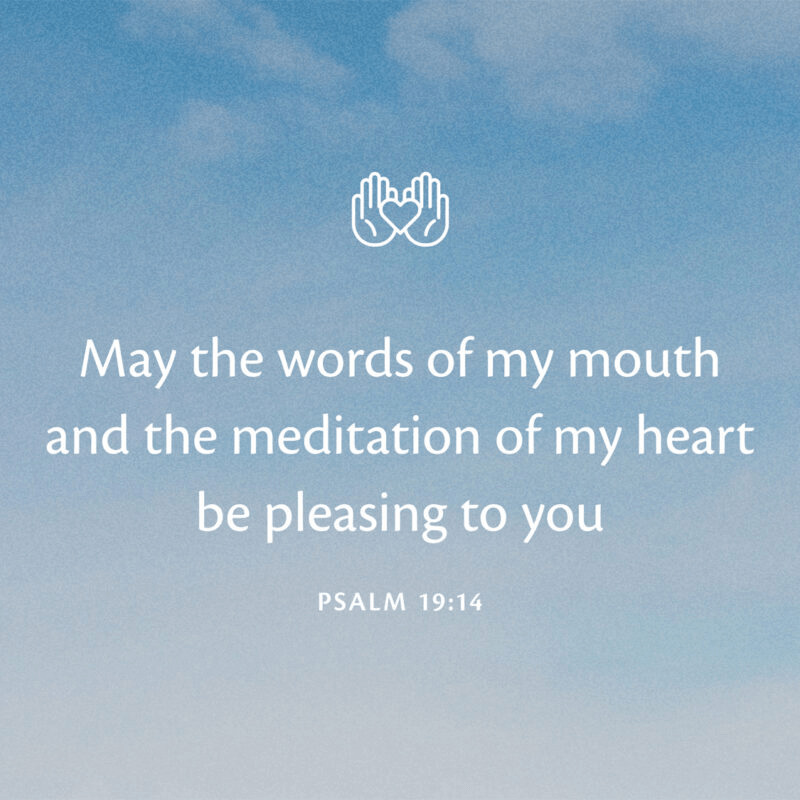
The Heart of Words (Matthew 12:33-37)

A good tree produces good fruit, and a bad tree produces bad fruit. You can tell what a tree is like by the fruit it produces. You are a bunch of evil snakes, so how can you say anything good? Your words show what is in your hearts. Good people bring good things out of their hearts, but evil people bring evil things out of their hearts. I promise you on the day of judgment, everyone will have to account for every careless word they have spoken. On that day they will be told they are either innocent or guilty because of the things they have said. (Contemporary English Version)

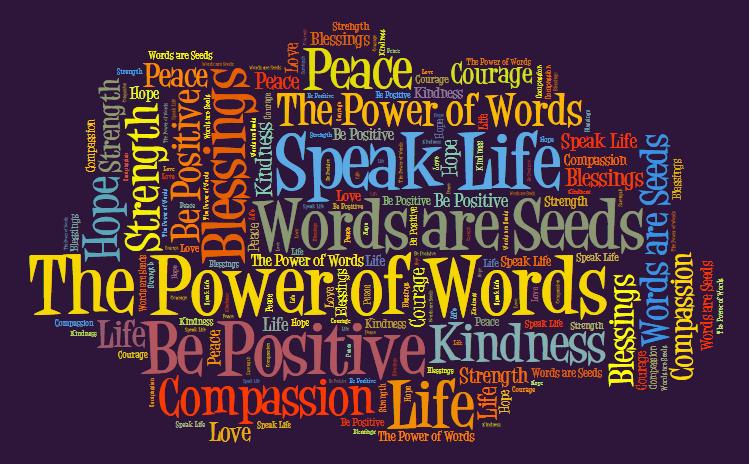
Words are important. They have meaning and power.

Our speech is the outward demonstration of what is really within the heart. There really isn’t any room to believe that a constant stream of gossip, backbiting, slander, and negative comments is anything but coming from a heart of evil. The person who speaks such words is not a loving, gracious, merciful person. Conversely, the person who continually encourages, uplifts, and seeks to be positive, reflects a deep heart of love for others.

Therefore, simply altering our speech when we’re around particular people is not the point; and it does no good. That kind of talking only breeds hypocrisy and is two-faced. Instead, the place to aim is the heart because that’s where the words come from. And the way to truly renovate a heart is to sub-contract the project to Jesus.

The people we typically hang-out with the most are the people that most influence our attitudes and our speech. 

So, if we spend copious amounts of time with Jesus, it’s inevitable that our hearts will become more like his heart, and thus, our words will be in alignment with the words and ways of Christ. Be rooted in Christ and the fruit of the tree will demonstrate it.

I always find public confessions on TV to be a rather disingenuous affair. Typically, celebrity apologies only take shape when one has been caught saying something and are called on the carpet. Then, when the apology comes, it’s predictably odd and incongruent, with the person saying something to the tune of, “I’m sorry if I hurt anybody by what I said. Saying that really wasn’t me. I’m not really like that.”

Well, apparently you are. It came out of your mouth. Jesus said that out of the overflow of the heart the mouth speaks. The words we say out loud betray what is truly inside us.

Jesus used the metaphor of a tree to illustrate his point. If the roots, the trunk, and the branches are good and healthy, then you can be sure the tree will produce good healthy fruit. However, if the tree is diseased, or infested with insects and rotting from the inside out, then no one can expect anything other than bad fruit, not fit to consume.

If the fruit is bad, the tree is bad. If the words are hateful, sarcastic, passive-aggressive, manipulative, conniving, racist, hurtful, ignorant, mean, unjust, foolish, and either subtly or overtly abusive, then the person has a dark heart and is need of redemption, not excuses.

Conversely, if the words are affirming, encouraging, loving, compassionate, gentle, caring, direct, helpful, peaceful, kind, giving hope and life, then there is a good heart behind it.

Yes, bad hearts can parrot good words. However, those words are not genuine but mere rote recitations to achieve some sort of personal agenda. And, of course, good people will occasionally say dumb or hurtful words. In such times, let it be a reminder that we all have some shadowy places within our hearts – and that we must depend on God’s grace to enlighten those dark spaces.

Let’s observe patterns, rather than focusing on isolated events where either good or bad words were said. A consistent pattern of invalidating another’s experiences or feelings; intimidating or threatening others; dismissing or discounting someone’s input; or being unnecessarily blunt, are all major red flags pointing to a severe heart issue.

Evil exists in the world. And if we are not vigilant to the power of language, wickedness can easily smack us upside the head when we aren’t looking.

The heart cannot be concealed forever. Eventually, the virtuous person will be shown as such by the stream of gracious speech which pours forth from the heart, as if it were living water for others to drink and enjoy. Their words reflect their good character.

The wicked person, however, cannot keep the bad words down. Those vile words sit in the soul, poisoning and making the person ill. Then, all of a sudden, the evil words come up and out with a great vomitous heave and spew impurity and unholiness all over the innocent. Their words betray their foolish and poor character.

Every tree that does not bear good fruit will be cut down and thrown into the fire. The wicked heart will not be able to speak ill of others with impunity forever. They will be called to account for their abusive words, whether overtly violent, or subtly undermining.

The righteous heart, however, shall experience divine pleasure and reward, as if the careful construction of helpful and building up words wins first-prize at the great heavenly fair.

The good person loves and does not hate. They are so far from harming anyone that they even pray and wish well for their enemies. They pray for blessings on those who curse them. There is an honest striving to speak good words to everyone, regardless of who they are.

The upright heart thinks the best of everyone and holds nothing over someone else’s head. Such a good heart condemns no one, leaving all judgment to God alone. It is patient with the most exasperating of people, praying they might come to their senses and become spiritually healthy.

The righteous are able to use their speech to admonish their neighbor with care and affection. They freely forgive, happily give, liberally encourage, and use their tongue to speak words of life. Indeed, their speech is wise, humble, full of grace, and above all, loving.

Almighty God, to you all hearts are open, all desires known, and from you no secrets are hid: Cleanse the thoughts of our hearts by the inspiration of your Holy Spirit so that we may perfectly love you, and worthily magnify your holy Name; through Christ our Lord. Amen.

Psalm 29 – The Power of Language

Praise the Lord, you heavenly beings;
    praise his glory and power.
Praise the Lord’s glorious name;
    bow down before the Holy One when he appears.

The voice of the Lord is heard on the seas;
    the glorious God thunders,
    and his voice echoes over the ocean.
The voice of the Lord is heard
    in all its might and majesty.

The voice of the Lord breaks the cedars,
    even the cedars of Lebanon.
He makes the mountains of Lebanon jump like calves
    and makes Mount Hermon leap like a young bull.

The voice of the Lord makes the lightning flash.
His voice makes the desert shake;
    he shakes the desert of Kadesh.
The Lord’s voice shakes the oaks
    and strips the leaves from the trees
    while everyone in his Temple shouts, “Glory to God!”

The Lord rules over the deep waters;
    he rules as king forever.
The Lord gives strength to his people
    and blesses them with peace. (Good News Translation)

“Language is the blood of the soul into which thoughts run and out of which they grow.”

Oliver Wendell Holmes

I have always felt comforted during thunderstorms. Having grown up in the Midwest of America, strong thunderstorms are a given every summer. When my daughters were small children and frightened by the loud clap of thunder, I routinely said to them, “That’s just God letting us know he is powerful and watching over us.”

God spoke and stirred up a storm… So, they cried out to the Lord in their distress, and God brought them out safe from their desperate circumstances. God quieted the storm to a whisper; the sea’s waves were hushed. (Psalm 107:25, 29-30, CEB)

Yet, there is even more going on in today’s psalm than a reminder of God’s glory and power throughout creation. God’s very voice is the source of all the power.

In the beginning, God created the heavens and the earth – with words. The Lord Almighty spoke the entire world into existence. God’s words are generative, that is, the speech of God creates and gives life. When God’s voice goes forth, things happen.

God said, “Let the waters under the sky come together into one place so that the dry land can appear.” And that’s what happened. (Genesis 1:9, CEB)

God generously gives through speech.

Yes, the mechanism of God’s provision for us is language. The Lord creates, gives, sustains, and blesses us creatures through language. Out of all creation, humans are the only creatures formed in the image and likeness of God with the power of connection through speech.

God said, “Now we will make humans, and they will be like us. (Genesis 1:26, CEV)

Not only are we as people capable of speech, but we also have the ability and the capacity to form our own generative words. We have the God-given means to give life with how we use our power of language.

“Life and death lie in the power of language”

Helen Keller

I believe we all intuitively know this is true. As we reminisce the history of our lives, we can observe events where another’s words impacted us so significantly that it was as if they gave us the gift of life. We never forgot those words.

Unfortunately, we also have had times when another’s words cut us emotionally and it felt as if a part of us died. We remember those as well, and they hold us back in our own life-giving speech to ourselves and others.

“The godless destroy their neighbors by their words, but the righteous are saved by their knowledge.” (Proverbs 11:9, CEB)

We must listen to the voice of the Lord. God’s speech neither disappoints nor destroys. God’s Word is eternal life. The better we listen to God, the better we can have the generative power of words to provide life for others.

It only takes a cursory look at Holy Scripture to realize that words are powerful and are to be used with great care. We are all to continually develop the craft of wordsmithing so that we might ascribe to the Lord the glory due his name, as well as bless the world.

“As a tree gives fruit, healing words give life, but dishonest words crush the spirit.” (Proverbs 15:4, NCV)

The language we use—spoken and written words, sign language, facial expressions, bodily gestures, singing—helps us understand ourselves and lets us create relationships with others. Our words give us the power to describe our past, define our present, and dream of our future. 

“Words from wise people are like water bubbling up from a deep well—the well of wisdom.” (Proverbs 18:4, ERV)

We adults may balk at the notion that words are anything more than a creative expression. Yet, as I believe is typical with most things, children are closer to the kingdom of God than us bigger folk. Kids effortlessly make connections between words and reality – whereas older people barely have an idea this even occurs.

My grandson once remarked, when I was talking to him about being cautious at the playground, “How am I supposed to meet new people if I can’t talk to strangers?”

“When I asked my son (5 years old) how his day was, he said it was awesome. I asked him what made it so awesome – his response was ‘because I wanted it to be.’” – Tanya Niedzwiecki (Huffington Post, November 2015)

The voice of the Lord exhibits a mighty God who has the power to create and recreate with but a word.

As people in God’s likeness, our words are powerful tools to be used with wisdom and care. Our speech allows us to praise God and encourage one another. Even more, the use of language enables us to speak into existence new realities for ourselves and others.

May our words bring forth hope and blessing to a world in need of healing.

Mighty God, the Lord who is King and all powerful, I am overwhelmed before such awesome majesty, and my response to your voice is reverent worship through Jesus Christ, your Son, my Lord, who lives and reigns with you and the Holy Spirit, one God, now and forever. Amen.

Psalm 29 – The Power of Words

Ascribe to the Lord, O heavenly beings,
    ascribe to the Lord glory and strength.
Ascribe to the Lord the glory of his name;
    worship the Lord in holy splendor.

The voice of the Lord is over the waters;
    the God of glory thunders,
    the Lord, over mighty waters.
The voice of the Lord is powerful;
    the voice of the Lord is full of majesty.

The voice of the Lord breaks the cedars;
    the Lord breaks the cedars of Lebanon.
He makes Lebanon skip like a calf,
    and Sirion like a young wild ox.

The voice of the Lord flashes forth flames of fire.
The voice of the Lord shakes the wilderness;
    the Lord shakes the wilderness of Kadesh.

The voice of the Lord causes the oaks to whirl,
    and strips the forest bare;
    and in his temple all say, “Glory!”

The Lord sits enthroned over the flood;
    the Lord sits enthroned as king forever.
May the Lord give strength to his people!
    May the Lord bless his people with peace!
(New Revised Standard Version)

I have always felt comforted during thunderstorms. Having grown up in the Midwest of America, strong thunderstorms are a given every summer. When my daughters were small children and frightened by the loud clap of thunder, I said to them, “That’s just God letting us know he is powerful and watching over us.”

God spoke and stirred up a storm… So, they cried out to the Lord in their distress, and God brought them out safe from their desperate circumstances. God quieted the storm to a whisper; the sea’s waves were hushed. (Psalm 107:25, 29-30, CEB)

Yet, there is even more going on in today’s psalm than a reminder of God’s glory and power over all creation. God’s very voice is the source of all the power. In the beginning God created the heavens and the earth – with words. The Lord Almighty spoke the entire world into existence. God’s words are generative, that is, the speech of God creates and gives life. When God’s voice goes forth, things happen.

God said, “Let the waters under the sky come together into one place so that the dry land can appear.” And that’s what happened. (Genesis 1:9, CEB)

The way God gives is through speech. Yes, the mechanism of God’s provision for us is words. This means language is vitally important. The Lord creates, gives, sustains, and blesses us creatures through language. Out of all creation, humans are the only creatures formed in the image and likeness of God.

God said, “Now we will make humans, and they will be like us. (Genesis 1:26, CEV)

People, then, are capable of speech. Even more, we as people with the ability of language have the capacity to form our own generative words. We have the God-given means to give life with our speech.

“Life and death lie in the power of language.”

Helen Keller

I believe we all intuitively know this is true. As we reminisce the history of our lives, we can observe events where another’s words impacted us so significantly that it was as if they gave us the gift of life. We never forget those words. We also have had times when another’s words cut us emotionally and it felt as if a part of us died. We tend to remember those as well, and they hold us back in our own life-giving speech to ourselves and others.

“The godless destroy their neighbors by their words, but the righteous are saved by their knowledge.” (Proverbs 11:9, CEB)

It is necessary for us to listen to the voice of the Lord. God’s speech does not disappoint or destroy. God’s Word is eternal life. The better we listen to God, the better we can have the generative power of words to provide life for others.

It only takes a cursory look at Holy Scripture to realize that words are powerful and are to be used with great care. We are all to continually develop the craft of wordsmithing so that we might ascribe to the Lord the glory due his name as well as bless the world.

“As a tree gives fruit, healing words give life, but dishonest words crush the spirit.” (Proverbs 15:4, NCV)

The language we use—spoken and written words, sign language, facial expressions, bodily gestures, singing—helps us understand ourselves and lets us create relationships with others. Our words give us the power to describe our past, define our present, and dream of our future. 

“Words from wise people are like water bubbling up from a deep well—the well of wisdom.” (Proverbs 18:4, ERV)

We adults may balk at the notion that words are anything more than a creative expression. Yet, as I believe is typical with most things, children are closer to the kingdom of God than us bigger people. Kids effortlessly make connections between words and reality whereas us older folks barely have an idea this even occurs. My grandson once remarked when I was talking to him about being cautious at the playground, “How am I supposed to meet new people if I can’t talk to strangers?”

“When I asked my son (5 years old) how his day was, he said it was awesome. I asked him what made it so awesome – his response was ‘because I wanted it to be.’”

Tanya Niedzwiecki (Huffington Post, November 2015)

The voice of Lord exhibits a mighty God who has the power to create and recreate with but a word. As people in God’s likeness, our words are powerful tools to be used with wisdom and care. Our speech allows us to praise God and encourage one another. Even more, the use of language enables us to speak into existence new realities for ourselves and others. May those words bring forth hope and blessing to a world in need of healing.

Mighty God, King all powerful, I am overwhelmed before such awesome majesty, and my response to your voice is reverent worship through Jesus Christ, your Son, my Lord, who lives and reigns with you and the Holy Spirit, one God, now and forever. Amen.