


The Lord said to Moses and Aaron, “Separate yourselves from this assembly so I can put an end to them at once.”
But Moses and Aaron fell face down and cried out, “O God, the God who gives breath to all living things, will you be angry with the entire assembly when only one man sins?”
Then the Lord said to Moses, “Say to the assembly, ‘Move away from the tents of Korah, Dathan and Abiram.’”
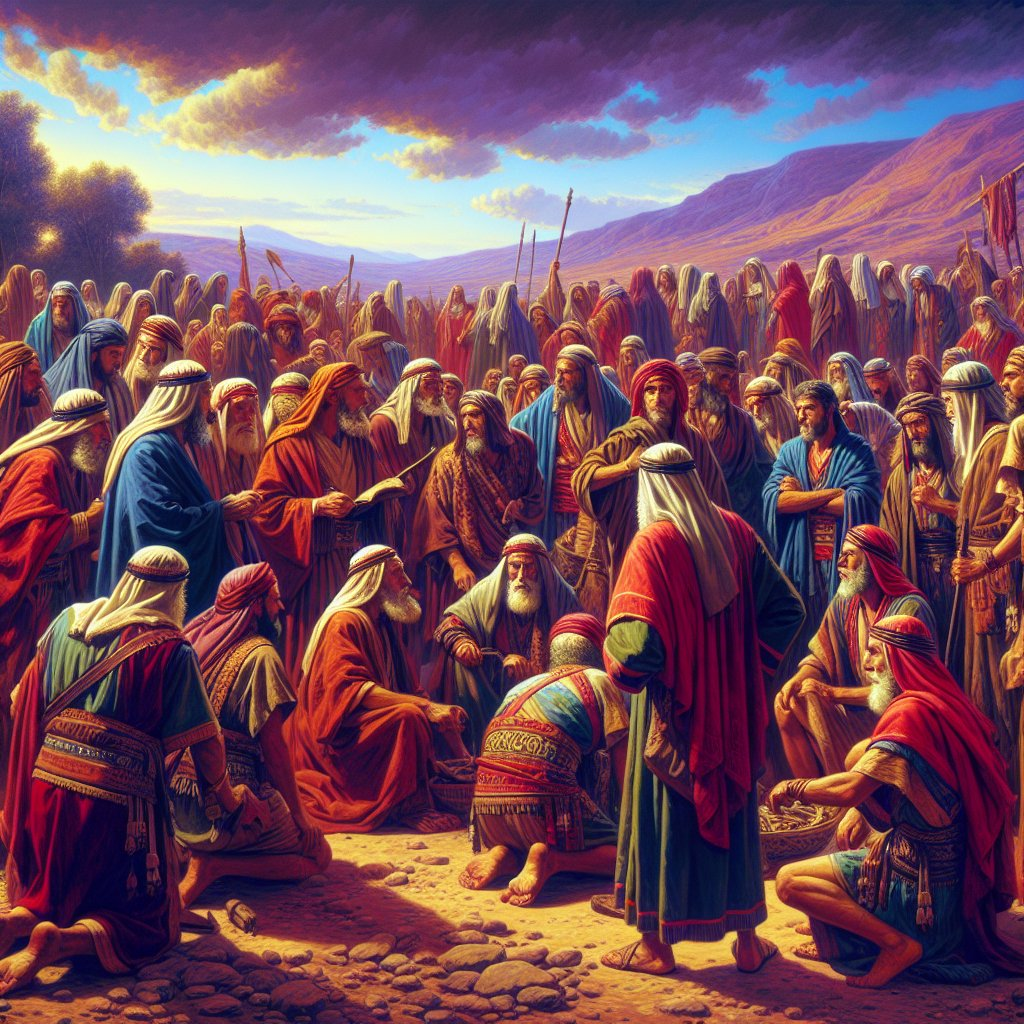
Moses got up and went to Dathan and Abiram, and the elders of Israel followed him. He warned the assembly, “Move back from the tents of these wicked men! Do not touch anything belonging to them, or you will be swept away because of all their sins.” So they moved away from the tents of Korah, Dathan and Abiram. Dathan and Abiram had come out and were standing with their wives, children and little ones at the entrances to their tents.
Then Moses said, “This is how you will know that the Lord has sent me to do all these things and that it was not my idea: If these men die a natural death and suffer the fate of all mankind, then the Lord has not sent me. But if the Lord brings about something totally new, and the earth opens its mouth and swallows them, with everything that belongs to them, and they go down alive into the realm of the dead, then you will know that these men have treated the Lord with contempt.”
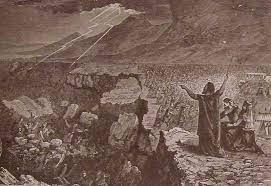
As soon as he finished saying all this, the ground under them split apart and the earth opened its mouth and swallowed them and their households, and all those associated with Korah, together with their possessions. They went down alive into the realm of the dead, with everything they owned; the earth closed over them, and they perished and were gone from the community. At their cries, all the Israelites around them fled, shouting, “The earth is going to swallow us too!”
And fire came out from the Lord and consumed the 250 men who were offering the incense. (New International Version)

Rebellion in the community was afoot. There were certain Levite leaders who rejected the leadership of Moses, and especially Aaron. They failed to discern that these men were God’s appointed leaders.
On the surface of things, Korah the ringleader, put the matter in a pious sounding way by presenting Moses and Aaron as against democracy. He insisted that all the community is holy, so therefore, Moses and Aaron were exalting themselves over everyone else.
It becomes apparent, however, that Korah and the other Levites were with him to gain the priesthood. It was the age-old play for power and authority. At the least, the rebels were ungrateful for their own place in the religious system that God, not Moses, had set up.
Moses responded by having Korah and his followers act like priests. He had them come to the tent of meeting with censers to burn incense before the Lord. Then, they could clearly find out whether God would accept their priestly service, or not.
The entire camp, of course, showed up, looking like the townspeople in an old Western movie. The Sheriff and the gunslinging bandit, in the street, about to duel each other.
Since the Lord is a big God, the Lord showed up big.
Yahweh’s glory appeared, threatening to exterminate everyone, townspeople included. Clearly, God had had enough of the people’s continual grumbling and their incessant rebellious spirit.
To demonstrate, once and for all, which side of things God is on, the Lord caused a singular disaster to occur – which had never happened before or since. The ground opened up and the earth literally swallowed up the rebels’ households and all who were with them in the rebellion.
As for the 250 men who were challenging Moses and Aaron with their censers in hand, were seen for who they were: Rebels against God. The little fires in each of their censers erupted into great flames of fire which completely consumed them. They were dead on the spot.
That experience clarified forever who was supposed to be doing the priestly service in Israel.
Although today’s Old Testament lesson is one of the more famous (or infamous) stories of divine judgment in the Bible, it seems to me that perhaps we might focus a bit more on the grace which existed with Moses and Aaron.
After all, if we want to see humanity’s better angels, then let’s talk about them.
I’m not really sure if I would have the humility and wisdom of Moses and Aaron to be concerned for the entire community in such a suspenseful and vitriolic situation. And yet, the two of them appealed to God for mercy on the nation. As a result, it was only the 250 men and their households who experienced condemnation.
There will always be persons like Korah and his followers on this earth. No matter where we go, and no matter how much we may try to avoid them, they’ll show up. And we will have to deal with them.
At such a point, we certainly have a biblical warrant for praying great imprecatory (judgmental) prayers upon them, just as the psalmist did many times.
And there is nothing wrong with our feelings of anger, that is, unless we allow that anger to come out sideways and add to the problem.
Yet, we really do have other options, which is what I think Jesus was getting at with his followers when he said:
“You’re familiar with the old written law, ‘Love your friend,’ and its unwritten companion, ‘Hate your enemy.’ I’m challenging that. I’m telling you to love your enemies. Let them bring out the best in you, not the worst. When someone gives you a hard time, respond with the supple moves of prayer, for then you are working out of your true selves, your God-created selves. This is what God does. He gives his best—the sun to warm and the rain to nourish—to everyone, regardless: the good and bad, the nice and nasty. If all you do is love the lovable, do you expect a bonus? Anybody can do that. If you simply say hello to those who greet you, do you expect a medal? Any run-of-the-mill sinner does that.
“In a word, what I’m saying is, Grow up. You’re kingdom subjects. Now live like it. Live out your God-created identity. Live generously and graciously toward others, the way God lives toward you.” (Matthew 5:43-48, MSG)
We, of course, see the real stinker that Korah was, along with those who followed him. Yet, we also see the real deal with Moses the leader and Aaron the priest.
In the crucible of a very difficult situation, their true muster came out. They did not try to become judges themselves, nor did they encourage God to raze the entire place and start all over again. Instead, they prayed with humility and wisdom, demonstrating why God had them as leaders over the nation of Israel.
And we are left with the realization that people like you and me will always need to be cognizant and aware to keep developing those virtues of wisdom and humility in our lives.
For there is always a new situation which arises, needing our better angels to show up and handle things well.
O God, you guide the humble in all things, and cause light to bear upon the darkness. Help us, in all of our doubts, uncertainties, and insecurities, to depend upon your grace and ask what you would have us to do. May the Spirit of wisdom save us from foolish choices, so that in your light we can see light, and walking your straight path we may not stumble. Amen.





 Rev. Tim Ehrhardt