1 Corinthians 2:6-16 – Do You Know?

We do, however, speak a message of wisdom among the mature, but not the wisdom of this age or of the rulers of this age, who are coming to nothing. No, we declare God’s wisdom, a mystery that has been hidden and that God destined for our glory before time began. None of the rulers of this age understood it, for if they had, they would not have crucified the Lord of glory. However, as it is written:

“What no eye has seen,
    what no ear has heard,
and what no human mind has conceived”—
    the things God has prepared for those who love him—

these are the things God has revealed to us by his Spirit.

The Spirit searches all things, even the deep things of God. For who knows a person’s thoughts except their own spirit within them? In the same way no one knows the thoughts of God except the Spirit of God. What we have received is not the spirit of the world, but the Spirit who is from God, so that we may understand what God has freely given us. This is what we speak, not in words taught us by human wisdom but in words taught by the Spirit, explaining spiritual realities with Spirit-taught words. The person without the Spirit does not accept the things that come from the Spirit of God but considers them foolishness and cannot understand them because they are discerned only through the Spirit.The person with the Spirit makes judgments about all things, but such a person is not subject to merely human judgments, for,

“Who has known the mind of the Lord
    so as to instruct him?”

But we have the mind of Christ. (New International Version)

Knowledge can be a tricky thing. There is so much to the topic of knowing that we have an entire branch of philosophy, epistemology, which theorizes on how we know ourselves and our world.

The Enlightenment era (18th-century) focused on empirical data, that is, what can be known becomes knowable through the verification of our senses and a scientific process of systematic observation, measurement, and experimentation. In other words, knowledge has to do with the natural, not supernatural, because knowing involves our five senses of sight, hearing, smell, taste and touch.

The Enlightenment project, I believe, severely truncated our personhood. It left us as mere brains on a stick – valuing dispassionate empiricism to the point of devaluing the heart and the gut. For, when all is said and done, there is an immaterial way of knowing, a kind of sixth sense, which can discern truth and reality in a manner that sheer natural evidence cannot.

If we are unaware of this other sense, the spirit, then there is an entire dimension of ourselves and our world that we are unable to discern and know. Grounding our ideas and theories in evidence-based practices is quite important. We need rigorous processes of going beyond opinions and hypotheses to actual tangible evidence. Our world has benefited immensely from the scientific process. And yet, all this is insufficient.

Without a focus on the spiritual, we limit our knowledge and our perceptions of others and the world. And if we ignore our internal epistemic assumptions which are coming from other places than our brain, we can talk and act without knowing why we say and do some things. We can be unsure why we react in particular ways or cannot quite make sense of why we keep overeating or drinking too much or avoiding certain people and places.

In many ways, a major task our earthly life is to keep knowing ourselves better and better. There is a vast inner world that needs exploration, just as much as we need to explore the vastness of our earth and the immense space of the universe.

In science fiction, Star Trek has a way of knowing the seemingly unknowable within us. Vulcans (ironically the most empirical and dispassionate beings in the universe) have a unique ability to perform a “mind meld” which is a technique for the psychic fusion of two minds, permitting unrestricted communication or deep understanding. It is a way of accessing and sharing thoughts and feelings which are obscured or hidden. It is an epistemology that, in actuality, isn’t far from reality.

Nothing is as wonderful as knowing Christ Jesus my Lord. I have given up everything else and count it all as garbage. All I want is Christ and to know that I belong to him. I could not make myself acceptable to God by obeying the Law of Moses. God accepted me simply because of my faith in Christ. All I want is to know Christ and the power that raised him to life. I want to suffer and die as he did, so that somehow I also may be raised to life.

Philippians 3:8-11, CEV

That’s because the people of God, believers and followers of Jesus, have been given the Spirit of God. An unusual, unscientific, and mystical union has taken place in which God’s Spirit joins with our spirit and opens a whole new world to us.

There are some things which can only be known, understood, and verified by the spiritual. Incredibly, Christians are given the very mind of Christ. We enjoy an amazing melding, enabling us to become the people we were always meant to be – forgiving, loving, encouraging people who live and love just like Christ – who is in both our hearts and our heads. This supernatural epistemic way of knowing allows us to see beyond the five senses to a multiverse of senses within ourselves and others.

We can only know what God has freely given us if we have God’s Spirit within us and the mind of Jesus Christ testifying what is good, just, and true. This is a knowing beyond language and explanation. It is knowledge requiring a mind meld between the individual and Christ.

Rather than crucifying and putting to death things (and, God forbid, people) we don’t understand, there is a better way. Explore a different way of knowing. Discover the spirit within. Seek to understand the invisible God. Experience a fuller and richer way of life in Jesus Christ through the enlightening of the Holy Spirit.

Soli Deo Gloria

1 John 5:13-21 – We Know

I write these things to you who believe in the name of the Son of God so that you may know that you have eternal life. This is the confidence we have in approaching God: that if we ask anything according to his will, he hears us. And if we know that he hears us—whatever we ask—we know that we have what we asked of him.

If you see any brother or sister commit a sin that does not lead to death, you should pray, and God will give them life. I refer to those whose sin does not lead to death. There is a sin that leads to death. I am not saying that you should pray about that. All wrongdoing is sin, and there is sin that does not lead to death.

We know that anyone born of God does not continue to sin; the One who was born of God keeps them safe, and the evil one cannot harm them. We know that we are children of God, and that the whole world is under the control of the evil one. We know also that the Son of God has come and has given us understanding, so that we may know him who is true. And we are in him who is true by being in his Son Jesus Christ. He is the true God and eternal life.

Dear children, keep yourselves from idols. (New International Version)

In a world of constant change, the need for people to experience meaning and stability in their lives is more pronounced than ever. 

COVID-19 currently grips the world in a terrible reality of disease, death, and disruption. Just when we think there might be a light at the end of the tunnel, new strains of the virus arise. Meanwhile, life goes on with all it’s typical changes, losses, and devastating natural disasters.

There are people wondering if they will have a job tomorrow – or if they will ever get called back to one. Many parents are anxious about what kind of world their kids will have when they become adults. Others feel adrift in a fast-paced society, glutted with so much news and information that they have little sense of what is real or true. Discouragement and/or depression may seem to never end.

Whenever there are uncertainties all around us, it’s necessary to return to the knowable, to hang our hat on some solid bedrock certainties we are convinced are always there. That’s why the Apostle John wrote his letter, to remind the church of the known and the knowable:

  • “I write these things to you who believe in the name of the Son of God so that you may know that you have eternal life.”
  • “If we know that he hears us—whatever we ask—we know that we have what we asked of him.
  • “We know that anyone born of God does not continue to sin.”
  • “We know that we are children of God.”
  • “We know also that the Son of God has come and has given us understanding, so that we may know him who is true.” 

In English, we have only one word for “know.” Yet, in the ancient Greek of the New Testament there are two different words for “know.” Throughout today’s lesson, the Apostle consistently uses one of those words, then shifts to another at the end. 

All of the “knows” John used refer to an objective knowledge – an information-based understanding which anyone could discover, learn, or know. Then, the Apostle switched to a different word at the end – to know him (Christ) who is true. That particular word has to do with a subjective or experiential knowledge. In other words, it is an inner witness and knowing of objective knowledge.

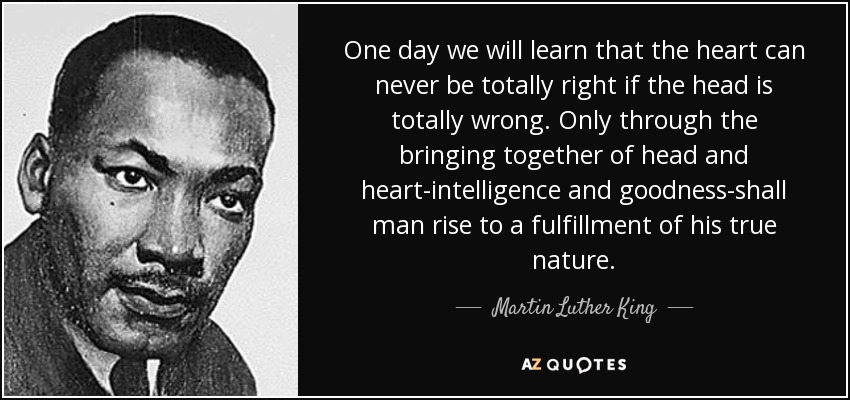
In American society, we frame the distinction between the two words by saying we need to know something in our heart (subjective knowledge) and not only in our head (objective knowledge).

Cerebral understanding, combined with heartfelt experience, results in a new confidence in prayer, a new attitude toward the world, and a new awareness of God. These are the impact of knowing Jesus Christ, and him crucified, risen, ascended, and coming again.

Knowing God takes both the head and the heart. Only being concerned for sound doctrine creates theological eggheads who dispassionately connect with God and others as if they were merely brains on a stick figure. Conversely, only being concerned for how religion makes us feel causes a kind of spiritual schizophrenia which is unstable and constantly seeks for a new or better experience in worship.

Love and obedience are the sacred pathways to personal and corporate knowledge and peace. Whenever the supreme ethic of love takes place in the believer’s life, through receiving it from God and giving it to others, it brings a sense of divine assurance in a sea of worldly uncertainty. 

Security in God will always outdo the insecurities of life.

Loving God, I know that you listen to me. I pray your love and assurance will fill me to such a place that I have peace amidst the vicissitudes of this life. May I rest in Jesus Christ through the work of your Holy Spirit. Amen.

The Way of Peace

Peace is neither merely the absence of conflict nor simply tolerating each other. Peace in Holy Scripture is cooperative fellowship, a harmonious way of living with God and one another based in the person and work of Jesus Christ. Peace is simultaneously a virtue we already possess and an ideal we need to obtain and live into.

In writing to the Church at Philippi, the Apostle Paul strung together several verbs to make it clear how to achieve peace on the practical level. Six of the verbs are in the imperative form, that is, they are commands.  Paul gave these imperatives to the Church because they were in danger of a breakdown in their fellowship. Embedded within Paul’s message is a deep Christian spirituality based in knowing Christ, with an overall message and imperative to keep persevering and not give up on peace or on one another.

  • Stand firm in the Lord. (Philippians 4:1) 

Standing firm in faith is a function of knowing Jesus Christ – an experiential knowledge beyond mere mental acknowledgement (Philippians 3:7-10). Our feet are to be firmly planted and rooted in the soil of Jesus Christ as our highest value and our surpassing greatness over and above anyone or anything else. 

This first command is a bedrock imperative. We cannot really move to the other five imperatives until we ensure our foundation is solid. In other words, there will be no peace in our personal lives or in our corporate life together unless we embrace Jesus as our most precious relationship.

If our god is our stomach and we do not take charge and own our Christian walk through spiritual practices that connect us with Jesus, then peace will be elusive. We must patiently, deliberately, and slowly plod along with Jesus and follow him as our highest priority in every sphere of our lives.

  • Help resolve disagreements. (Philippians 4:2-3) 

Euodia and Syntyche were two prominent women leaders in the Philippian Church. Whatever their differences were, Paul made it clear to them that they must agree and be like-minded concerning the issue. 

This second imperative goes beyond telling two persons to work out their differences; the church was called upon to help do the work of peacemaking. Because peace characterizes the triune God, and Jesus Christ came to achieve peace on our behalf, God’s people are to be peacemakers.

Many differences are resolved with far fewer disagreements when we abide in Christ. If folks immerse themselves in Scripture and in knowing Christ, instead of taking the stance of being right despite any evidence to the contrary, then a lot less peacemaking would even need to take place.

New Testament scholar D.A. Carson has said, “Personal differences should never become an occasion for advancing your party, for stroking bruised egos, for resorting to cheap triumphalism, for trimming the gospel by appealing to pragmatics.  Focus on what unites you: the gospel. Be like-minded; think the same things; agree with one another. Work hard and humbly on these central issues, and in most instances the peripheral matters will take care of themselves. Resolve to pursue like-mindedness with other believers. This will ennoble and strengthen all sides, so that you will never abandon the Christian walk.”

  • Let your gentleness be evident to all. (Philippians 4:4-5) 

The Christian is to have a basic disposition of humility and meekness. There is to be gracious forbearance with others that is publicly observable. Rejoicing in the Lord need not be a command when we are truly pursuing the experiential knowledge of Christ (because joy then just spills out of us). Gentleness is the fruit of a meek and humble spirit, a direct result of knowing the gentle Savior.

A solid building block of conflict intervention and resolution is a humble and gentle spirit – which goes beyond personal holiness. It is being close enough to rub shoulders with others so that the gentleness can be experienced by another. This will sometimes require getting graciously involved in the interpersonal affairs of others. 

Getting involved does not mean dipping into other people’s business with unsolicited advice, angry diatribes, nor taking sides. It means, rather, extending basic human kindness in all affairs of group life, being part of the solution instead of adding to the problem.

  • Do not be anxious about anything. (Philippians 4:6a)

Where disharmony exists, anxiety is not far behind. Worry about the future only obfuscates a way forward. Sometimes anxiety is rooted in our theology. If we fundamentally view God as a stern Being whose chief activity is dispensing disapproval and wrath, then we will likely live with an underlying sense of anxiety and fear of upsetting such a God. Performance-based living comes from trying to pull ourselves up by our spiritual bootstraps to placate a hard-to-please God who is always looking over our shoulder to make sure we do not mess up.

On the other hand, if our theology has God as a loving Being who is pained by the damage sin does to the souls of people, then we become open to the gracious mending of broken spirits. In the Christian tradition, the death of Christ is the ultimate act of love in handling the sin issue once for all. God in Christ did for us what we could do for ourselves.

Chronic spiritual anxiety usually arises from the inability to perceive a generous and hospitable God having our backs and working on our behalf. Knowing God, who is gracious and compassionate, slow to anger and abounding in steadfast love, leads to peace and rest.  This logically leads to the fifth imperative….

  • Present your requests to God (Philippians 4:6b-7) 

Prayer naturally arises from a heart that knows God is listening. Prayers, petitions, and thanksgivings are all congruent actions stemming from an experiential knowledge of God’s grace.

Having the peace of God which transcends all understanding is a beautiful thing. If our theological view is of God playing games with us, holding out a carrot stick we can never quite reach, then peace will be elusive. Conversely, if we have confidence to present our requests to God and have the discipline to slow down long enough to do it, this inevitably leads to peace.

We are to pray about everything, in all circumstances with all kinds of prayers. Spontaneous prayers, written prayers, heartfelt prayers, silent prayers, and loud prayers are all encouraged. We are to pray without ceasing, praying for everyone – for rulers and all those in authority so that we may live peaceful and quiet lives in all godliness and holiness. Pray, then pray some more. If we struggle to pray, perhaps we struggle with our view of God.

  • Put it into practice (Philippians 4:8-9) 

Armed with a vigorous theology, the task of spiritual formation is unlearning harmful theological approaches and discovering new and helpful ways of the Divine. This requires some basic spiritual disciplines of Scripture reading and prayer (both individually and communally), and practices of silence and solitude which put us in a position to connect with God and self.

Conclusion

Healthy spiritual rhythms help us know God and God’s peace. To put the six imperatives into practice, a plan is needed which translates good intentions into good habits. We need a rule of life. God may be opposed to earning salvation but is not opposed to sanctified effort – and effort is necessary for effective spiritual practices.

Do you have a method for being a peacemaker? Are you developing ways for making gentleness evident? Is there a plan in place for avoiding anxiety? What is your agenda for structuring consistent prayer?

Experiencing peace does not spontaneously materialize. Peace occurs through tapping into the spiritual resources we have in Jesus Christ. Realizing practical peace is rolling up our spiritual sleeves and working on the biblical imperatives Paul provided for us. It is everyone’s job, and not only the job of a few. 

May you know the peace of Christ this day.

May you experience God as your refuge and strength.

May God hasten the day when wars shall cease, and poverty and pain shall end so that the earth may know and experience the peace of heaven through Jesus Christ our Lord.  Amen.

Philippians 3:4-14 – On Knowing Christ

Welcome, friends! It is a privilege to be with you on this World Communion Sunday. We gather around Jesus, our highest joy, as Christians unite in the surpassing value of knowing Christ. Click the video below and let us discover together the heartbeat of the Church everywhere…

Let us partake of Christ together in heartfelt worship.

I pray that the Lord Jesus Christ will bless you and be kind to you! May God bless you with his love, and may the Holy Spirit join all your hearts together. Amen.