

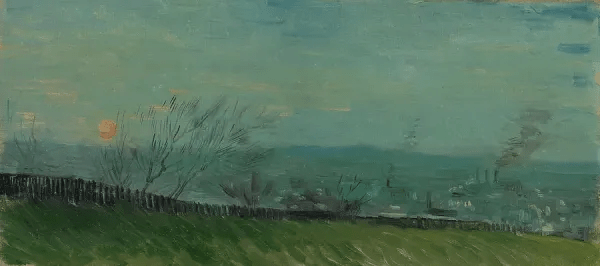
Be patient, therefore, brothers and sisters, until the coming of the Lord.
The farmer waits for the precious crop from the earth, being patient with it until it receives the early and the late rains. You also must be patient.
Strengthen your hearts, for the coming of the Lord is near.
Brothers and sisters, do not grumble against one another, so that you may not be judged. See, the Judge is standing at the doors!
As an example of suffering and patience, brothers and sisters, take the prophets who spoke in the name of the Lord. (New Revised Standard Version)
Patience is a wonderful virtue… unless you’re smack in the middle of circumstances you neither want nor asked for. Then, patience feels a whole lot more like a vice.
It’s easy to be impatient; it takes little to no effort at all. And praying for patience doesn’t help, because you’re prayer actually gets answered; God puts you in one of those unwanted situations.
The Jewish Christians for whom the Epistle of James was addressed were in that weird life-place of enduring hard circumstances. They were struggling with impatience, so much that the believers began cozying up to the rich and powerful to meet their ever-increasing needs. In their misery, they were looking to the very people who were using them and withholding wages from them. (James 2:1-7; 5:1-6)
It seemed as if God was shuffling his divine feet and not getting around to helping the Christians in their difficulty. They gave everything to Jesus and following him, to the point of being willing to suffer for the Name.
Their suffering led to outright persecution. The believers had to flee Judea for Gentile lands to the West (Acts 8:1-3). In their new homes they got double-trouble. Because they were Jews, they were looked at with suspicion. And because they were Christians, the Jewish community didn’t accept them. The believers were truly alone. All they had was Jesus.
It was enough, at least for a while. But it’s one thing to face difficulty, and quite another thing for the trouble to bleed into next week, next month, next year… When is this ever going to end?
Impatience doesn’t help. In fact, it only exacerbates an already agonizing situation. Grumbling and arguing and verbal fights begin to occur. The community starts to fracture. Blaming and shaming slowly replace the love and encouragement they once had together.
Every good thing in life takes time – lots of time! And the best things in life require a lifetime of endurance, perseverance, and patience. In order to keep going and hold onto our spiritual commitment, we need solid examples of patience, and reasonable ways to think about our situations.
I admit that it has been hard for me to be patient, as of late. I’m weary of American politics and the current administration. I’m tired of seeing my family members struggle with health issues day after day – many of them having to endure debilitating and heart-wrenching trials.
And there are some days when I’ve just had it with my own limitations. I can’t do many of the things I used to do, and it’s frustrating to tears to try and do some things that others do effortlessly.
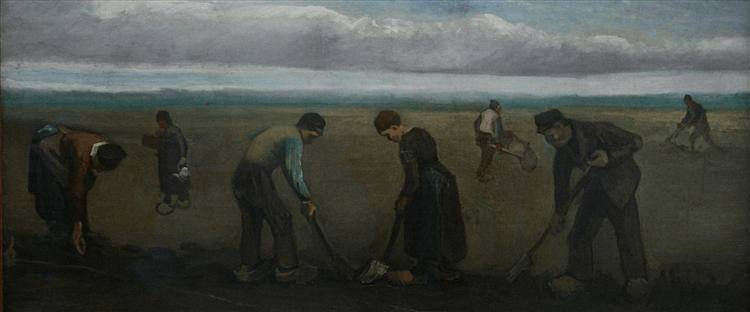
Yet the Scripture reminds me of my days growing up on the farm. Planting and harvesting never happened in a week; it takes months to realize a return on all the hard work done through the Spring and Summer to get to Fall’s mature crop.
I’m also reminded of the biblical prophets who suffered much for their message to the people. Lately, I’ve been reading the prophecy of Ezekiel in the Old Testament. If you have never read Ezekiel, or only read bits of it, you may not realize how incredibly difficult Ezekiel’s life was in serving Yahweh.
The prophet kept up a steady stream of very challenging situations to illustrate the message of judgment he was continually giving. Needless to say, Ezekiel was not always a popular guy. Proclaiming gloom, doom, and death all day every day tends to do that. In one encounter, for month after month, the prophet laid on his side and had to use excrement to light a fire and cook his food every day. God told him to, so that the people would see what was about to happen to them. (Ezekiel 4:1-17)
We have no record of Ezekiel grumbling or talking back to God. He faithfully did all that the Lord commanded him to say and do. He endured all the grumblers around him, and all the grieving people who had been displaced from their homes in Jerusalem.
In every generation, there are people in this world that undergo difficulties and troubles which others could never even imagine. And it’s been going on for millennia. Furthermore, terrible adversity will keep happening… until Christ returns.
Yes, there will be an end to all the suffering. But we may have to persevere to the end of our lives, remaining faithful to our spiritual commitment, and keeping up our love for one another. It won’t be easy to do.
I would be nothing but a hack preacher if I told you that everything will be bunnies and butterflies if you only look to Jesus and have faith. Although there can be joy, even in our mourning, there will always be the need for an agonizing form of patience that continually watches for help, healing, and hope in the return of Christ.
This is why it is so important not to let your own family, church, and faith community break down into fissures of impatience and grumbling.
We must keep our hearts strong. Ironically and paradoxically, that happens through our weakness.
In some ways, I’m weaker than I’ve ever been in my life. Yet, in other ways, I’ve never been stronger. The Trump administration can break me down and mess with my healthcare and my finances… my illness can keep me from ministry that I long to do… and the daily crud of life may redirect me in ways I don’t like… but I can truly say that God is good; God is the strength of my life.
I know that Christmas is coming. I’m looking for the birth of the Savior. I expect to see the angels rejoicing in the sky. I fully look forward to stepping in a few cow pies and horse apples in order to get a glimpse at the baby who changes the world.
Every good thing in life comes with a bit of manure on the shoes. And the best things in life are worth all the hardship one goes through in order to see the glory and majesty of the Divine.
I may not know you, my friend, but please know that I am praying for you. No matter what happens, I can always pray, always watch, always hope, always believe, and always love my neighbor, despite all the hate in this old fallen world.
Be safe. Be strong. Be spiritual. We are all in this life together.
God of joy and exultation, you strengthen what is weak; you enrich the poor and give hope to those who live in fear. Look upon our needs this day. Make us grateful for the good news of salvation and keep us faithful in your service until the coming of our Lord Jesus Christ, who lives forever and ever. Amen.


 Rev. Tim Ehrhardt