Don’t Show Favoritism (James 2:8-13)

Yes indeed, it is good when you obey the royal law as found in the Scriptures: “Love your neighbor as yourself.” But if you favor some people over others, you are committing a sin. You are guilty of breaking the law.

For the person who keeps all of the laws except one is as guilty as a person who has broken all of God’s laws. For the same God who said, “You must not commit adultery,” also said, “You must not murder.” So if you murder someone but do not commit adultery, you have still broken the law.

So whatever you say or whatever you do, remember that you will be judged by the law that sets you free. There will be no mercy for those who have not shown mercy to others. But if you have been merciful, God will be merciful when he judges you. (New Living Translation)

Playing favorites is always a bad thing; you can do great harm in seemingly harmless ways.

Proverbs 28:21, MSG

One of my bedrock foundational unshakable beliefs is that God’s big world spins on the axis of grace. Without grace we would all be living in some nightmarish dystopian novel just trying to survive. Grace is the force which overwhelms and overcomes everything. 

When I was growing up, we had a dog named Sam. Sam loved being on the farm. More than once he tussled with a skunk. In those times, I could barely get close enough to clean him up because he stunk so badly.  Favoritism stinks, and God has a hard time getting close to us when we show partiality to others. God is going to clean us up when smelling the stench of discrimination on us.

Showing favoritism to some over others is evidence the dog is running away from the bath of grace. To develop relationships and interact with people the way God wants us to, we must be free from prejudice.

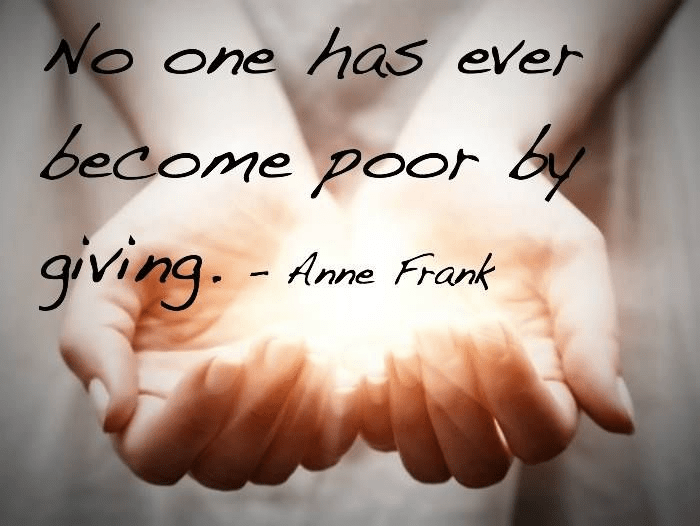
Favoring the rich over the poor stinks because God cares about those trapped in poverty. When Jesus began his ministry, he lifted-up the importance of poor folk by placing himself in the position of extending grace to them:

The Spirit of the Sovereign Lord is on me, because the Lord has anointed me to proclaim good news to the poor. (Isaiah 61:1; Luke 4:18, NIV)

In the Old Testament, there are seven different words for the “poor” because poverty was a pervasive reality (and still is!). The various reasons for poverty range from being born into poverty, being lazy, or being oppressed and/or in slavery.

The types of poor persons run the gamut from simple beggars to the pious and humble poor. These spiritual poor persons were called in biblical times the anawim” (Hebrew עֲנָוִ֣ים). The anawim are humble and gentle folk caught in grinding poverty with no other option but to put their trust in God.

The mistreatment, exploitation, and inattention to the needs of the poor are a chief reason why Holy Scripture is filled with references about how to treat them. The anawim are dear and near to the heart of God:

“Poor persons will never disappear from the earth. That’s why I’m giving you this command: you must open your hand generously to your fellow Israelites, to the needy among you, and to the poor who live with you in your land.” (Deuteronomy 15:11, CEB)

“If you hire poor people to work for you, don’t hold back their pay whether they are Israelites or foreigners who live in your town. Pay them their wages at the end of each day because they live in poverty and need the money to survive. If you do not pay them on time, they will complain about you to the Lord, and he will punish you.” (Deuteronomy 24:14-15, CEV)

Listen to this, you who rob the poor
    and trample down the needy!
You can’t wait for the Sabbath day to be over
    and the religious festivals to end
    so you can get back to cheating the helpless.
You measure out grain with dishonest measures
    and cheat the buyer with dishonest scales.
And you mix the grain you sell
    with chaff swept from the floor.
Then you enslave poor people
    for one piece of silver or a pair of sandals.

Now the Lord has sworn this oath
    by his own name, the Pride of Israel:
“I will never forget
    the wicked things you have done!” (Amos 8:4-7, NLT)

Nothing gets God’s hackles up more than unjust and unfair favoritism which is devoid of mercy and grace toward the poor. It all stinks to high heaven, and when God smells it, divine egalitarian power is not far behind.

It is the poor in spirit with no trust in physical resources who will enter the kingdom of heaven. The humble person gives grace to another, even though the person cannot offer something in return.

It’s easy to be merciful to people who have a deal with you about scratching each other’s backs. However, it is altogether a different thing to be gracious simply because it’s the right thing to do and pleases the heart of God. 

God cares about the condition of our souls and not the balance of our bank accounts. Inattention to the poor and needy only betrays a heart of unjust favoritism – a materialistic heart full of greed. Does money change you?

“Most people are convinced that gaining a lot of money … wouldn’t change who they are as people. Yet, a mounting body of research is showing, wealth can actually change how we think and behave—and not for the better. Rich people have a harder time connecting with others, showing less empathy to the extent of dehumanizing those who are different from them. They are less charitable and generous. They are less likely to help someone in trouble. And they are more likely to defend an unfair status quo. If you think you would behave differently in their place, meanwhile, you are probably wrong: These are not just inherited traits but developed ones. Money, in other words, changes who you are.”

Boston Globe, 2012

The University of Minnesota’s Carlson School of Management found in their research that even the mere suggestion of getting more money makes people less friendly, less sensitive to others, and more likely to view some groups of people as inferior to others. 

Another series of studies from the University of California at Berkley concluded that wealthier people tend to be less compassionate toward others in a bad situation than people from lower-class backgrounds. Their research concluded:

“If you win the lottery and you want to avoid becoming an insensitive jerk, there is a simple solution: Give at least half the money away.” 

Some poor people, as in the days of the Apostle James, are willing to put up with being treated unfairly so they might get a piece of the rich person’s pie. Favoritism ignores the sin in others to gain something from them. God says that is stinking thinking.

Favoritism is a violation of God’s law. The entire law is summed up in two commands: Love God and love neighbor. Favoritism violates our neighbor, and therefore, is sinful disobedience of God. Any needy human we encounter is our neighbor – no matter their social or economic status, their ethnicity, race, gender, or anything that identifies them as different. They are to be helped when we can do so.

We are to speak and act with mercy because we will eventually have to face the Judge. God is always watching us – every word and every action. Judge Jesus will respond to how we have treated each person we encountered and how we talked about other people when they were not around. We will all appear before Christ at the end of the age and must give an account of ourselves. (2 Corinthians 5:10)

Words are important, so they ought to be full of grace, seasoned with salt. Showing mercy instead of favoritism is the way love expresses itself.  Mercy is best given when we have first received it ourselves from God. A heart touched by the grace of the Lord Jesus is one which will stand in the judgment.

We rid ourselves of favoritism’s stench through the cleansing bath of God’s mercy in Jesus Christ. There is grace available if we receive it. God is the expert in transforming lives, renewing minds, and putting to death the pride of favoritism. The work is done with needed grace and compassionate mercy.

So, make it your goal to be a grace-giver, to have a willing heart that seeks to emulate the mercy of Christ. The bath of mercy and grace takes away the stank of prideful favoritism and leaves us with the sweet aroma of love, justice, peace, and joy in the Holy Spirit.

May it be so to the glory of God. Amen.

James 2:1-7 – Favoritism is Foolish

My dear friends, don’t let public opinion influence how you live out our glorious, Christ-originated faith. If a man enters your church wearing an expensive suit, and a street person wearing rags comes in right after him, and you say to the man in the suit, “Sit here, sir; this is the best seat in the house!” and either ignore the street person or say, “Better sit here in the back row,” haven’t you segregated God’s children and proved that you are judges who can’t be trusted?
 
Listen, dear friends. Isn’t it clear by now that God operates quite differently? He chose the world’s down-and-out as the kingdom’s first citizens, with full rights and privileges. This kingdom is promised to anyone who loves God. And here you are abusing these same citizens! Isn’t it the high and mighty who exploit you, who use the courts to rob you blind? Aren’t they the ones who scorn the new name—“Christian”—used in your baptisms? (The Message)
 
Have you ever felt like an outsider?  It is an awkward feeling, isn’t it? 
           
Imagine being a visitor to a church worship service. Picture that you are a just a normal person trying to make ends meet, without much money or resources, and only a few clothes with none of them being very dressy. You have never been to this church before. You pull up in a fifteen year old car that has a few rattles to it and park. 
 
What is going through your mind?… What are you observing?… “Wow, that is a big building! I don’t know anybody here.” You work-up the courage to get out of the car and walk into the building. Your inner dialogue may be, “Where do I go? Will anybody notice me? How am I supposed to act? Are my kids going to be okay?  Where do I sit?” All the things the regular attenders never think about and take for granted are at the forefront your mind. 
 
Not everyone thinks the same and has the same experiences – and that is the point the Apostle James was communicating to the insiders about the marginalized outsiders. 
 
If we are only attentive and aware and care about people who look just like us, think just like us, and act just like us, then we are playing favorites and have become judgmental persons who cannot be trusted with the things of God.
 
That’s a big reason why so many persons in the West today have no desire to be a regular church attender.
           
Showing favoritism is not a good thing. It’s foolish. The word “favoritism” comes from an idiom, “lifting up the face,” that is, taking something merely at face value. To make a biased judgment based only on surface impressions is contra God’s will.
 
Jesus freely associated with people of dubious morality. He went out of his way to hob-nob with hated tax collectors and came into close contact with ostracized lepers.
           
Discrimination of people based on our limited understanding of them is soundly condemned throughout Holy Scripture. 
 
You must neither show partiality to the poor nor honor the rich. You must judge your fellow citizen fairly. (Leviticus 19:15, NET)
 
Prejudice is wrong. (Proverbs 28:21, GNT)
 
I caused everyone to hate and despise you, because you disobeyed me and failed to treat all people alike. (Malachi 2:9, CEV)
 
Times change; God’s heart for the poor never changes. God cares for all kinds of people, not just “insiders.” 
 
The Apostle Peter had to get prejudice of Gentiles out of his heart. He had always assumed they were inferior and needed to be outsiders. It took a series of visions from God for Peter to become woke.
 
“I really am learning that God doesn’t show partiality to one group of people over another. Rather, in every nation, whoever worships him and does what is right is acceptable to him.” (Acts 10:34-35, CEB)
 
All people, without exception, are to be treated well and respected. 
 
Be fair with everyone, and don’t have any favorites. (1 Timothy 5:21, CEV)
 
God soundly condemns favoritism. Whenever we discriminate between people, we render opinions based on outward appearance. Then, there are only insidious motives toward outsiders to be used for one’s own advantage – which is at the heart of all discrimination and segregation.
           
The church James addressed had the mistaken notion that certain persons were better than others because of their ability to contribute to world missions and wield a big influence. 
 
The temptation was to suck-up to the rich. The church needed some stable donors, and not some poor people who were going to drain their already short resources. Showing preferential treatment to the wealthy only made sense to them.
           
But James would have none of it. For him, showing favoritism was sin and reflected a terrible malady of the heart: a divided loyalty between God and the world. 
 
When things got rocky they turned to the rich, instead of coming to the Lord who has unlimited resources. 
 
Wherever you find favoritism, there you will find a divided loyalty between the kingdom of God and the kingdom of Satan.
 
Inattention to the poor and needy might make good fiscal and business sense, but it will result in spiritual death when Jesus comes back to judge the living and the dead. 
 
Blaming poor people for being poor merely takes the attention off one’s own heart and need for repentance.
           
Showing favoritism ought to bring to the surface that we need to re-establish a true, genuine, authentic, and real relationship with Jesus who does not look at us for what we can do for him but loves us just because he wants to. 
 
People who show favoritism and give preferential treatment to certain persons only demonstrate that they are not gracious, merciful, and kind, like God is.
           
In the third century, Brother Lawrence was a deacon in the Church of Rome. According to tradition, Lawrence was in charge of the church’s treasury and its mercy (benevolence) fund. One day the Prefect of the city asked Lawrence to gather up and give him “the wealth of the church.”
 
Lawrence sent back a message: “I do not deny that our Church is rich … and that no one in the world is richer, not even the emperor …. I will bring forth all the precious things that belong to Christ, if only you will give me a little time to gather everything together.” The Prefect agreed, as he dreamed of what he could do with the money, gold, and silver.
 
For three days, Lawrence ran about the city of Rome, collecting the Church’s treasures. But they were not the sort of treasures the greedy Prefect was dreaming of. Instead, Lawrence walked through all the alleys and squares of the city and gathered the church’s real treasure—the poor, the disabled, the blind, the homeless, and the lepers.
 
The people Brother Lawrence gathered into the church included a man with two eyeless sockets, a disabled man with a broken knee, a one-legged man, a person with one leg shorter than the other, and others with grave infirmities. He wrote down their names and lined them up at the entrance to the church. Only then did he seek out the Prefect to bring him to the church.
 
“These are the treasures of the Church of Christ!” Lawrence declared as he presented the ragged crowd to the astonished Prefect. “Their bodies may not be beautiful, but within these vessels of clay they bear all the treasures of divine grace.”
 
The ground is level at the foot of the cross. Jesus was not an upwardly mobile and tech-savvy Jew; he was a king who chose to serve and get into the lives of the poor, the pitiful, the wretched and the marginal folks of society just as he did with the rich and influential. 
 
Getting rid of favoritism only happens whenever we adopt a ministry of mercy toward the poor.
 
Learn. Get to know a family in poverty. Listen to their story. Find out the roots of their situation. See how incredibly resourceful and resilient they are at getting by and how they are helping others.
 
Act. Volunteer at the local food pantry. Deliver meals at Christmas. Do some research on poverty in your area.  Find out what poverty level is and calculate if you could live on that amount. Take a helping vacation or mission trip. Send a needy student to college. Find out what organizations need to help those in poverty. Show respect to everyone who is need.
 
Connect. Do you have any ways of helping people out of poverty? Feel free to share what you have done.
 
Come, Holy Spirit, and open our hearts, minds, and souls to your presence. Grace us with the strength to follow the example of Jesus. May you provide us with a voice to cry out for justice for the poor. Remind us that what we do to the least of those among us, we do to you. Amen.

James 2:14-26 – Faith Is Active

My brothers and sisters, what good is it if people say they have faith but do nothing to show it? Claiming to have faith can’t save anyone, can it? Imagine a brother or sister who is naked and never has enough food to eat. What if one of you said, “Go in peace! Stay warm! Have a nice meal!”? What good is it if you don’t actually give them what their body needs? In the same way, faith is dead when it doesn’t result in faithful activity.

Someone might claim, “You have faith and I have action.” But how can I see your faith apart from your actions? Instead, I’ll show you my faith by putting it into practice in faithful action.It’s good that you believe that God is one. Ha! Even the demons believe this, and they tremble with fear. Are you so slow? Do you need to be shown that faith without actions has no value at all? 

What about Abraham, our father? Wasn’t he shown to be righteous through his actions when he offered his son Isaac on the altar? See, his faith was at work along with his actions. In fact, his faith was made complete by his faithful actions. So, the scripture was fulfilled that says, Abraham believed God, and God regarded him as righteous. What is more, Abraham was called God’s friend. So, you see that a person is shown to be righteous through faithful actions and not through faith alone.

In the same way, wasn’t Rahab the prostitute shown to be righteous when she received the messengers as her guests and then sent them on by another road? As the lifeless body is dead, so faith without actions is dead. (Common English Bible)

There is a difference between intent and impact.

A person may have a sincere and heartfelt intention of wanting to see another have their needs met. Yet, if it is only that, there is no impact on actual offerings of resources, friendship, or help.

Genuine authentic faith is more than mere sentiment and head knowledge. Faith without works does not work. Conversely, a strong robust faith is active and is able to withstand adversity.

The rhetorical questions the Apostle James asked were meant to awake his readers to the reality that true faith is always active – and that inactive faith is not really faith at all.

In his letters to the churches, the Apostle Paul typically talked about the relationship between faith and works before a person converts to Christ, whereas the Apostle James emphasized the role of works after a profession of faith in Christ.

St. James was getting at the heart of how a believer in Jesus ought to live. And he did this by giving an illustration of the relationship between faith and works: If someone is in need and a person expresses a sentimental feeling, even if that feeling is sincere, without backing it up with action – the expression is merely an expression, nothing more. 

If a person asks you for something, give it to him. Don’t refuse to give to someone who wants to borrow from you.

Jesus (Matthew 5:42, NCV)

I once came home after a long day at work on a Valentine’s Day several years ago. I had picked up some flowers at a drive through flower shop. I walked into the door and handed my wife the flowers with an “I love you.”  Then, I sat down in a heap and turned on the television. My dear wife’s response was not so favorable to my sentimental overtures. I did not really put any thought or action behind Valentine’s Day, and she knew it. My words of “I love you” just did not sync with my actions. 

I learned from my experience. I redeemed myself the next year by winning a contest on a local radio station for a spouse’s best love note, and it got read on the air several times throughout the day for my lovely wife to hear. My commitment and actions nicely aligned so that when I said “I love you” at the end of that workday, there was no doubt about it.

Faith requires that actions sync with words. For example, when we say “I will pray for you” it needs to be more than an expression of concern – we need to spend the time and commitment it takes in praying for them.

Upholding justice with words (which is very important) but without translating that language into concrete action which truly helps others, ends up speaking into the wind.

Faith involves emotions yet ought not be limited by them. Faith can neither exist nor survive without deeds. Christian works are not an added extra to faith any more than breathing is an added extra to the body. Both faith and action is needed for the Christian life.

True faith is shown as the genuine article by how it acts in real life situations. Faith is more than a checklist of right beliefs to sign-off on, as if it were some fire insurance policy against hell.

“In God’s eyes our words have only the value of our actions.”

St. Ignatius of Loyola

Frankly, as a Pastor, I have heard some pretty lame justifications over the decades for failing to help others, giving to the poor, involving oneself in justice work, and just plain serving in the church, like, “I’m not wired that way,” “That’s not my gift,” “That’s what we pay you to do,” and the ever-prolific, “This church is not meeting my needs.”

Those in the habit of complaining, without an intent to boots-on-the-ground helping, do not yet have an active faith. Each person is to do their part in serving the common good of all. And we all suffer when that does not happen. Bifurcating faith and action leave us with a bogus faith. 

If faith without action is okay, then so is the entire demonic realm. The glimpses of Satan we get in the Bible lead me to think that the devil has the entire thing memorized and knows it quite well. Yet, knowledge puffs up, whereas love builds up. Information by itself is useless unless it is accompanied by gracious and loving action. (1 Corinthians 8:1)

Salvation is a term Christians are familiar with. In the Christian tradition, it refers to being saved from sin, death, and hell. Sanctification is another term most Christians recognize. It means “to become holy,” or, “to be set apart” for God. Sanctification is not an event but a process.

Whereas saving faith is a gift given without works, sanctifying faith requires a great deal of effort. A lot of energy is expended to live the Christian life. The late Dallas Willard used to often say, “Grace is not opposed to effort, it is opposed to earning. Earning is an attitude. Effort is an action.” 

The Apostle James dealt primarily with the sanctifying faith every Christian needs to exhibit. It’s as if we have been graciously granted a full-ride scholarship to a university (salvation) but now the real work begins (sanctification) to learn, grow, and obtain the degree.

Furthermore, just as a student will surely become discouraged at some point throughout their education and wonder if they ought to drop out, so the Christian will face tremendous adversity and challenge. Indeed, a lot of blood-sweat-and-tears goes into our spiritual studies so that our faith will be strengthened for a lifetime of active loving service.

“Each activity of daily life in which we stretch ourselves on behalf of others is a prayer in action.”

Richard Foster

For example, the Old Testament character Abraham was saved from an empty way of life in a pagan country and given a gift of grace to move to the country God would show him. Abraham did nothing to earn this favor.  God just chose him (Joshua 24:2-3).

Abraham sojourned as a pilgrim throughout the land God gave him, which mirrored his spiritual sojourning and learning to be a follower of God. Abraham faced a monumental test of faith when asked to sacrifice his son Isaac (Genesis 22:1-19).

Abraham’s faith was made complete by what he did. Testing of faith is necessary so that we become mature and complete, not lacking anything (James 1:3-4). The way for authentic faith to develop and grow is in the fiery trial of adversity and hardship. Spiritual maturation, holiness, and a well-rounded faith comes through suffering.

To press the significance of faith and works, the example of the Old Testament character Rahab is highlighted. Rahab was a prostitute who lived in the red-light district of Jericho. St. James was doing something profound and important – he took two extreme examples, one a giant of the faith, and the other an almost overlooked example of faith, to demonstrate we all are candidates for real faith.

Rahab’s faith and actions worked harmoniously. She genuinely believed the city of Jericho was going to be overcome by God’s judgment, and, so, she housed the visiting Israelite spies (Joshua 2:1-11).

Methinks we must expand our understanding of faith to include persons others might exclude. Some may be quick to judge those with dubious lives and backgrounds, as well as the poor and needy. We cannot sanitize Rahab as something other than what she was – and because of her faith she ended up being an ancestor of Jesus himself (Matthew 1:5).

From the standpoint of faith, Abraham and Rahab are on the same level. In Christ’s new egalitarian society, all are welcome, all have equality in God’s kingdom.

Holy and active God, I submit to the adversity you bring as my teacher, and I choose to find solace in your Word and Spirit. With the grace, enablement, and resources you give me, I freely give to others in need, through Jesus Christ my Lord. Amen.