The Ways of Wisdom (Proverbs 30:18-33)

There are four things that are too mysterious for me to understand:

an eagle flying in the sky,
a snake moving on a rock,
a ship finding its way over the sea,
and a man and a woman falling in love.

This is how an unfaithful wife acts: she commits adultery, takes a bath, and says, “But I haven’t done anything wrong!”

There are four things that the earth itself cannot tolerate:

a slave who becomes a king,
a fool who has all he wants to eat,
a hateful woman who gets married,
and a servant woman who takes the place of her mistress.

 There are four animals in the world that are small, but very, very clever:

Ants: they are weak, but they store up their food in the summer.
Rock badgers: they are not strong either, but they make their homes among the rocks.
Locusts: they have no king, but they move in formation.
Lizards: you can hold one in your hand, but you can find them in palaces.

There are four things that are impressive to watch as they walk:

lions, strongest of all animals and afraid of none;
goats, strutting roosters,
and kings in front of their people.

If you have been foolish enough to be arrogant and plan evil, stop and think! If you churn milk, you get butter. If you hit someone’s nose, it bleeds. If you stir up anger, you get into trouble. (Good News Translation)

If there is an overall theme in the wise sayings from this chapter in the Book of Proverbs, it is that we ought to renounce arrogant greed; while at the same time, we should uphold and embrace a humble life of contentment.

The four lists of wisdom address four observations of creaturely ways on this earth: mysterious ways, antisocial ways, instinctive ways, and impressive ways. We are meant to observe that each of these four numbered lists contain wisdom that is available to all of us, that is, if we will but apply the observational understanding to our own lived situations.

Mysterious Ways

The first list observes four invisible ways; the way of the eagle, snake, ship, and man, all leave no trace of where they have been and what they are up to. Thus, their ways are mysterious, causing us to wonder what is really going on with them.

Why is the eagle flying, the snake moving over the rock, the ship navigating the water, and the man interacting with the woman?

We are to apply wisdom to our circumstances, and discern that a single act of one being is, in reality, up for interpretation. We simply do not know why each is doing what they’re doing.

As wise persons, we understand that intentions and motivations vary from person to person, and from one observer to another.

The eagle may be enjoying the spread of his wings and the feel of the wind; or he might be the predator surveying the land to attack an unsuspecting fish or squirrel.

The snake may be seeking to warm himself in the sun, or he could be slithering with malevolent intent.

The ship may be hauling needed goods to bring into port; or it might be moving to pirate others and steal.

And the man may be intending to love a fair maiden; or he might be attempting to seduce her for his own advantage.

The point is that we must be wise and discerning, not always having a singular interpretation or belief about what we are seeing and observing. What at first glance may appear innocuous, may in fact come from a place in the heart of covetous greed, and vice versa.

Antisocial Ways

The second list, dealing with general societal roles, cites four instances of role reversal which turns the social order into antisocial ways that cause trouble in society.

A slave who becomes king may believe that he knows better than the ruler. He probably talked about how he could do a better job. Yet, when given such a responsible position, such a person is way out of their expertise and depth. Statecraft is a real thing; and if one hasn’t been duly trained in it, and had some experience in it, things will go south quickly.

A fool who has all he wants to eat is like the person without any self-control. He goes out to eat at an all-you-can-eat buffet; and it will not end well, especially if it’s done a regular basis.

A hateful woman who gets married is a train wreck waiting to happen. I’m not sure I need to comment on this, because likely you are already covering your eyes, imagining what will happen in such a relationship.

And a servant woman who takes the place of her mistress has perhaps had a fantasy about how easy it is to be in charge and simply tell others what to do. Little does she know how stressful it truly is to be in charge and be the administrator of an entire household. Like the slave becoming a king, she will soon learn that the role she coveted is not all it’s cracked up to be.

All four of these persons do not (yet) have the wisdom to fulfill a role; they need training, experience, and a proper character to do the job. Their limited perspectives, and their foolish character, will lead to disaster.

Instinctive Ways

The third list, dealing with natural instincts, cites four creatures who model survival because of their instincts and wisdom, not their strength.

An ant may be small, and not carry near as much as a bigger creature, yet they have sense enough to diligently work and have everything they need when it is needed.

Rock badgers compensate for any lack of strength by making their home a fortress where a much stronger creature cannot penetrate. They have sense enough to know how to live in safety.

Locusts are many. Even though they have no leader, and are small creatures, they know enough to move together and work together in order to accomplish thriving and flourishing on this earth.

And even though lizards are common, and not all that difficult to catch and possess, nevertheless they can be found in high places. They are taken care of by bigger and greater creatures than themselves.

When any creature lives into their true self, and doesn’t try to be something they are not, their needs are cared for. Humanity could take a big lesson from such small creatures about how to get along in life.

Impressive Ways

The fourth list, dealing with displays of majesty, cites four creatures who are stately in their appearance because of their position, design, and context.

Lions are majestic creatures. Their very appearance and the sound of the male’s roar elicits awe and fear in others. This is an important part of how the lion pride gets around in this world and is able to meet their own needs.

Goats and roosters strut around like the own the place. Their sense of presence and confidence is palpable. If you’re ever around them, you’ll need to match or exceed their level of acting in charge.

Which is precisely what a king does within his realm. Each of these four are an example of taking charge and acting the part that you ought to be playing.

Whereas the earlier list had examples of people who were trying to act a role they weren’t ready for, this list of examples are creatures who are living into the role they need to exhibit, no matter whether they feel brave or competent, or not.

Concluding Ways

The wise person takes the time to observe, listen, and learn from a variety of sources, including all of creation. Everything and everyone can teach us, that is, if we will but put ourselves in a position to learn from them.

The first two lists describe people who covet for more, and are discontent with their situation. The last two lists observe creatures who know their limits and weaknesses, yet nevertheless, have found resilient ways to meet their needs – ways that are consistent with who God created them to be.

So, which way will you go?

Almighty God, I humbly ask that You fill me with the Spirit of wisdom and revelation in the knowledge of You. Open the eyes of my heart to see Truth more clearly. Sharpen my spiritual discernment to distinguish good from evil, good from bad, better from best.

Help me not lean merely on my own finite understanding, but trust wholeheartedly in Your infinite wisdom given to me in creation. May divine wisdom from above flow through me each day in thought, word, and action. Amen.

How Do You Interpret Suffering? (Job 5:8-27)

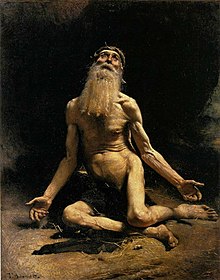
“Job,” by French painter Léon Bonnat, 1880

“But if I were you, I would appeal to God;
    I would lay my cause before him.
He performs wonders that cannot be fathomed,
    miracles that cannot be counted.
He provides rain for the earth;
    he sends water on the countryside.
The lowly he sets on high,
    and those who mourn are lifted to safety.
He thwarts the plans of the crafty,
    so that their hands achieve no success.
He catches the wise in their craftiness,
    and the schemes of the wily are swept away.
Darkness comes upon them in the daytime;
    at noon they grope as in the night.
He saves the needy from the sword in their mouth;
    he saves them from the clutches of the powerful.
So the poor have hope,
    and injustice shuts its mouth.

“Blessed is the one whom God corrects;
    so do not despise the discipline of the Almighty.
For he wounds, but he also binds up;
    he injures, but his hands also heal.
From six calamities he will rescue you;
    in seven no harm will touch you.
In famine he will deliver you from death,
    and in battle from the stroke of the sword.
You will be protected from the lash of the tongue,
    and need not fear when destruction comes.
You will laugh at destruction and famine,
    and need not fear the wild animals.
For you will have a covenant with the stones of the field,
    and the wild animals will be at peace with you.
You will know that your tent is secure;
    you will take stock of your property and find nothing missing.
You will know that your children will be many,
    and your descendants like the grass of the earth.
You will come to the grave in full vigor,
    like sheaves gathered in season.

“We have examined this, and it is true.
    So hear it and apply it to yourself.” (New International Version)

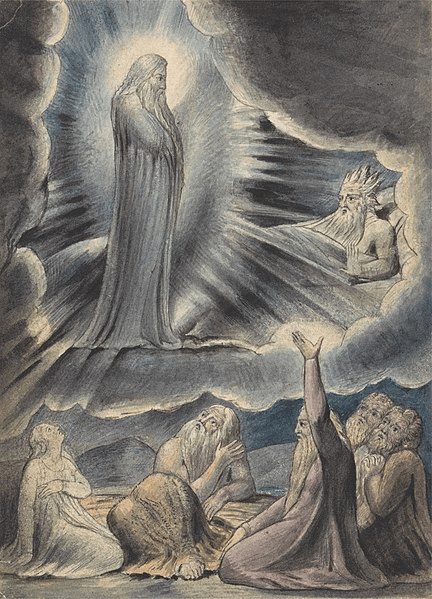
“The Vision of Eliphaz,” by John Linnell (1792-1882)

I personally find it rather annoying whenever someone gives me unsolicited advice. It is especially loathsome when it comes with a lot of useless verbiage which is offered as gospel truth.

Eliphaz was a “friend” of Job – which brings to mind the old adage, “With a friend like that, you don’t need any enemies!” Eliphaz was also full of himself, believing that he had all the answers to Job’s terrible suffering.

The unhelpful speech of Eliphaz became harmful words that cut into Job’s spirit. You see, Job knew with a settled confidence that his personal integrity was intact. Yet, his trouble abounded. We need not, like Eliphaz, rush to the conclusion that something is wrong with the suffering person. It may be the Spirit of God thrusting us into a desert experience to test and approve our faith.

Eliphaz offered one of those tired age-old arguments that bad things only happen to bad people. He came at Job with the inexperience and absurdity of making misguided assumptions. He rhetorically asked if there were ever innocent people who were trashed with trouble, or upright folks who ever got cut off from God? 

The concluding judgment of Eliphaz was bound to be off the mark – believing that some sort of secret sin must surely be the culprit behind Job’s awful misfortune. Certainly, Eliphaz thinks, Job cannot possibly go through such terrible suffering without having done something to anger God.

Times change, but the basic nature of people, not so much. In today’s church and world, the same notions still endure. If I had a quarter for every time I heard crazy comments, like the following, I would be a rich man: 

  • “He’s poor because he is lazy and doesn’t want to work.”
  • “She keeps having chronic health issues. God is punishing her.”
  • “The pandemic is God’s judgment on us for not having the Ten Commandments in our courthouses.”
  • “If you just confess your sin and have faith, you’ll be healed.”
  • “They’re in big trouble. They obviously did something evil.”

On and on the wrong-headed statements continue, ad nauseum.

The Apostle Peter understood how to view trouble in a healthy way. He said we all suffer – both the good person and the wicked. It’s just a matter of whether we will suffer for doing the good and right thing, or suffer because of saying shallow, illogical, and stupid comments that offend God and hurt others. (1 Peter 3:17-18)

Even Christ suffered. And it wasn’t because of his own sin. It was because of ours. Jesus suffered once for sins, the righteous for the unrighteous, that he might bring us to God. 

Since Jesus suffered, the follower of Jesus will suffer. There is a big picture only God sees. Whenever we suffer, there is something going on behind the spiritual scene. We must allow God to do divine work, and then, trust that the Lord bends all human suffering for good and redemptive purposes.

“Where there is no love, pour love in, and you will draw love out.”

St. John of the Cross

So, let’s change the rhetoric. Instead of jumping to judgment, reflexively hop to grace with comments like these:

  • “He has poverty of spirit. He’s blessed and will inherit the kingdom of God.”
  • “She’s in chronic pain. God has allowed her the privilege of suffering in solidarity with her Lord.”
  • “We’re in a pandemic. Here’s a chance for us to live out the Ten Commandments.”
  • “If we confess the world’s sins of pride, hate, and injustice, perhaps God’s mercy will deliver us.”
  • “We’re in a big pickle. No better time than now to grow in grace.”

Where is God? Beside you, quietly and confidently holding you up in your suffering. For me, that’s one of the best ways to interpret hard suffering.

Lord God, I entrust myself to you because you know what you are doing. Thank you for the trials of life which humbles my heart to pray. Do your work in me so that my faith is fortified for a lifetime of service in the church and the world, through Jesus Christ, my Lord. Amen.

Never a Dull Moment (Acts 28:1-10)

Miracle of St. Paul on the Island of Malta, by David Teniers, c.1620

Once safely on shore, we found out that the island was called Malta. The islanders showed us unusual kindness. They built a fire and welcomed us all because it was raining and cold. Paul gathered a pile of brushwood and, as he put it on the fire, a viper, driven out by the heat, fastened itself on his hand. When the islanders saw the snake hanging from his hand, they said to each other, “This man must be a murderer; for though he escaped from the sea, the goddess Justice has not allowed him to live.” But Paul shook the snake off into the fire and suffered no ill effects. The people expected him to swell up or suddenly fall dead; but after waiting a long time and seeing nothing unusual happen to him, they changed their minds and said he was a god.

There was an estate nearby that belonged to Publius, the chief official of the island. He welcomed us to his home and showed us generous hospitality for three days. His father was sick in bed, suffering from fever and dysentery. Paul went in to see him and, after prayer, placed his hands on him and healed him. When this had happened, the rest of the sick on the island came and were cured. They honored us in many ways; and when we were ready to sail, they furnished us with the supplies we needed. (New International Version)

There never seemed to be a dull moment in the life of the Apostle Paul. Throughout his life, he experienced all sorts of extreme circumstances, having survived as if he had the nine lives of a cat.

Once, when in the town of Lystra, Paul had such an impact on the people through his gift of healing, that the crowd believed he must be one of the gods; and they tried to worship him. But when Paul resisted, and a rival group from another town came along and turned the crowd, Paul was stoned and left for dead by the very people who tried to venerate him. (Acts 14:8-20)

So, it’s almost as if today’s New Testament lesson was just another day at the office for the Apostle Paul. After a suspenseful sea voyage, and then the wreck of a Roman prison ship, the drama of Paul’s life just kept going.

One minute, the people on the island in which Paul was shipwrecked were convinced that he’s a murderer, and the next minute they’re ready to assign him as a god. Nobody I’ve ever known can elicit such opposite reactions in such a short period of time – more than once. But that’s our Apostle Paul for you.

Circumstances are circumstances. But the way in which we interpret them is another thing. Take, for instance, the word “change.” For some, change is a wonderful word which brings thoughts of healing and hope. For others, change is a dirty word to be resisted, conjuring up feelings of fear and anxiety.

For one group, never-a-dull-moment is exciting and adventurous. For another group, never-a-dull-moment is nerve wracking and to be avoided at all costs.

Opposite reactions of a group of people comes from the different perspectives of change they see. It isn’t helpful to talk about who is right and who is wrong; the real trick is in how we choose to look at a thing.

I had only one grandparent when I was growing up. My Grandma was seventy-nine years old when I was born, and she lived to be ninety-seven. Even though I always knew her as an old lady, she had a lot of spunk in all ninety-five pounds of her. 

She had an old wooden cutting board in her kitchen. I’m not sure how old it was, but it was likely purchased from Methuselah’s Kitchen Outlet. It was cracked and falling apart. The board had deep furrows in it from the thousands of cuts made on it. Grandma liked her cutting board.

For Mother’s Day one year, my Dad bought her a nice brand new cutting board. And what did my Grandma do?  She put the new board in the back of her cupboard and continued using her nasty old cutting board. 

Whenever my Mom or sisters were in her house and helped her in the kitchen, they were not about to touch that old board; the thing was a bacteria trap. But Grandma didn’t care about bacteria or that it was falling apart. 

My Dad asked her why she did not use her new cutting board. She simply answered, “Oh, it’s much too nice to use.” But we all knew that was Grandma’s way of saying that she liked her nasty old cutting board, didn’t think it was all that bad, and wasn’t getting rid of it.

It seems we all have a bit of Grandma in us, bless her stubborn old heart. We like the way they do things, and really don’t see what another person sees. We don’t see that no one else has an emotional attachment to our cutting board. Sometimes we don’t realize how overwhelming and even intimidating our ways can be for someone else. 

Just imagine being in a new place with people you don’t know. Are you nervous? Does it help to have someone you know bring you and introduce you to people? Is it beneficial to have someone let you know what is happening and what is going on? 

Many years ago, I remember walking into a beautiful new church building, sitting down, and seeing a huge old pulpit that was literally falling apart. Since I’ve been around a lot of churches, I quickly discerned it was likely the old pulpit from the old church building. And, I discovered, it was. But, honestly, I had zero emotional attachment to that pulpit, and it was a distraction because it just looked like a big old ratty collar on a new puppy.

The point is thisOur view of change – whether to do it, or not, to embrace or resist – must be motivated by a solid set of values and a worthy purpose.

Paul put up with a lot, experienced a lot, and never had a dull moment. And he did it without bellyaching. That’s because he was continually focused on his ultimate purpose and values.

Our purpose, like Paul’s, is the Great Commission, to make disciples. (Matthew 28:18-20)

Our values, likewise, are the Great Commandment, to love God and neighbor. (Matthew 22:36-40)

Since our purpose is disciple-making, then we are always to make decisions based upon that standard. Since our values are loving others, then we always know how to go about our purpose.

If any faith community is helping people grow spiritually, then there is no need to change. But if a Christian community has not seen a person come to faith in Christ in the last year, that’s a significant reason to change. If a church has not seen anyone come to Christ in the last five years, then that church is eating meat prepared on a cutting board full of bacteria, and it’s making everyone sick.

Have we taken the old cutting board for granted, and just expect other people to use it if they are in our kitchen? Or do we have a vision, a motivation, and a driving desire to see all sorts of people find new life in Jesus Christ? 

If you don’t like empty seats, or the way things are, then the biblical solution is to change – specifically to change practices, speech, and daily behavior to reach others with the good news of grace. Change, or the lack thereof, for any other reason, is a bad reason to change.

Just so you know, after about a year of sitting in my Grandma’s cupboard, my Dad took out the new cutting board, put it on the kitchen counter and threw away the old board. 

It was about time. Never a dull moment with Grandma around.

Gracious God, we thank you that in love and mercy, you reached out to us. When we were dead in our sins, you sent Jesus to die in our place. Thank you that he humbled himself, even to death on a cross. And thank you that you have a heart that seeks the lost. 

Merciful Lord, please give us hearts that care for people in darkness. Teach us to care for them as you do. Thank you for including us in the mission of reaching other people for your name. Grow us to care for humanity, for the people who haven’t yet come to know and trust in you. Amen.

Hebrews 12:3-17 – Don’t Let Bitterness Take Over

Think about Jesus, who endured opposition from sinners, so that you don’t become tired and give up.

You struggle against sin, but your struggles haven’t killed you. You have forgotten the encouraging words that God speaks to you as his children:

“My child, pay attention when the Lord disciplines you.
Don’t give up when he corrects you.
The Lord disciplines everyone he loves.
He severely disciplines everyone he accepts as his child.”

Endure your discipline. God corrects you as a father corrects his children. All children are disciplined by their fathers. If you aren’t disciplined like the other children, you aren’t part of the family. On earth we have fathers who disciplined us, and we respect them. Shouldn’t we place ourselves under the authority of God, the father of spirits, so that we will live? For a short time, our fathers disciplined us as they thought best.

Yet, God disciplines us for our own good so that we can become holy like him. We don’t enjoy being disciplined. It always seems to cause more pain than joy. But later on, those who learn from that discipline have peace that comes from doing what is right.

Strengthen your tired arms and weak knees. Keep walking along straight paths so that your injured leg won’t get worse. Instead, let it heal.

Try to live peacefully with everyone, and try to live holy lives, because if you don’t, you will not see the Lord. Make sure that everyone has kindness  from God so that bitterness doesn’t take root and grow up to cause trouble that corrupts many of you. 

Make sure that no one commits sexual sin or is as concerned about earthly things as Esau was. He sold his rights as the firstborn son for a single meal. You know that afterwards, when he wanted to receive the blessing that the firstborn son was to receive, he was rejected. Even though he begged and cried for the blessing, he couldn’t do anything to change what had happened. (God’s Word Translation)

Bitterness begins with a seed of resentful anger…

it steadily grows within the soil of antagonism…

then, buds of hostility pop out…

and a devastating crop of corruption, injustice, chaos, and trouble feeds the community with death.

A bitter spirit doesn’t appear overnight.

Something happens, an event for which a person neither wanted nor expected.

And life becomes more difficult and sad.

A change or a loss occurred. It could be anything: a spouse walks out and asks for divorce; a job transfer or termination happens without any warning or discussion; estrangement occurs between friends; the house burns down; a bankruptcy looms in the near future; it’s hard to make ends meet; items are stolen; assault, abuse, and ridicule violate a person, family, or community.

These and a thousand other events happen in this old fallen world. It makes us angry, and rightly so. And yet, if that anger stews within us for too long, and grudges are nursed and coddled, it turns eventually into the bitterness which gives us gangrene of the soul. Then, like a nasty weed, the bitterness spreads and takes over the garden.

Don’t let bitterness take over your garden.

The ancient Hebrew Christians were in danger of losing their resolve and reneging on their commitment to Christ. Their circumstances had been so adverse, for so long, that they just did not have any more fight in them to keep going. 

The believers were losing their faith. They began holding onto grudges and letting go of their spiritual commitment; instead of holding fast to perseverance and discarding their resentments toward others, and even God.

Yes, life was a challenge. But, no, it wasn’t because God didn’t love them or was in some way just mean or capricious. The struggling believers were invited to see their adversity as education by correction in the school of hard knocks. It was a class in faith formation, and many of them were failing it.

God loves us enough to not always make everything a bowl of Cap’n Crunch or a plate full of bacon. The Lord is going to dish up some broccoli and brussels sprouts and expects us to eat it – even if we don’t like it or don’t want to. We aren’t going to have a healthy faith apart from it, and God is just being a good Father.

It isn’t what happens to us that matters; it’s how we interpret what happened to us that makes all the difference.

Hard unwanted circumstances will either make us bitter, or better. They will never leave us the same.

The path to perseverance, healthy interpretations, and keeping the seed of bitterness away is through keeping our minds on Jesus and being kind to one another. Antagonism cannot grow in the soil of grace and mercy.

Sometimes we might forget that Jesus didn’t have it so easy on this earth. He faced ridicule, insults, hardship, and was not born with a silver spoon in his mouth. Eventually, he was tortured and killed, having done nothing wrong and everything right. And there was absolutely no bitterness in his heart about any of it.

If that was the path for our Lord, then it is silly to think that, as Christ’s followers, we should avoid suffering and hardship. 

So, think about Jesus.

Consider him who endured suffering without resentment.

Don’t give up.

Keep your head and your heart in the game.

Feelings of resentful anger, giving up, and getting back at others only brings self-harm and makes life unnecessarily difficult for everyone. Whenever such feelings arise, it is our inner person’s warning that it is time to retreat with God and get a divine perspective on your situation.

Jesus, you are the Suffering Servant who has gone before us and secured deliverance from sin, death, and hell. In the scope of eternity, it is a small thing for me to live for you and face any kind of ridicule and hardship it might bring to me. I only ask to be in solidarity with you in all things. Amen.