Lamentations 3:22-33 – The Need for Lament

The steadfast love of the Lord never ceases,
    his mercies never come to an end;
they are new every morning;
    great is your faithfulness.
“The Lord is my portion,” says my soul,
    “therefore I will hope in him.”

The Lord is good to those who wait for him,
    to the soul that seeks him.
It is good that one should wait quietly
    for the salvation of the Lord.
It is good for one to bear
    the yoke in youth,
to sit alone in silence
    when the Lord has imposed it,
to put one’s mouth to the dust
    (there may yet be hope),
to give one’s cheek to the smiter,
    and be filled with insults.

For the Lord will not
    reject forever.
Although he causes grief, he will have compassion
    according to the abundance of his steadfast love;
for he does not willingly afflict
    or grieve anyone.
(New Revised Standard Version)

We all face situations, at points in our lives, which cause us to grieve. Grief can and does attach itself to any significant change or loss. Bereavement, divorce, surgery, losing a job, bankruptcy, and a host of adverse circumstances are all, understandably, events bringing grief to our lives. They are unwanted events we did not ask for. 

Grief can also attach itself to the positive changes of life, for example, moving to a new house in a new area, an empty nest, getting married, having children, or beginning a new job. These all produce grief, even if that loss and change were chosen, anticipated, or necessary.

The worst way to approach these grief-producing events is to ignore them, minimize them, say they are simply in the past, stuff the feelings down, and just move on. It’s actually unbiblical to take such an attitude because Scripture discerns that we need to lament our losses. We have with Lamentations an entire book of the Bible given to lamenting a grievous loss.

The prophet Jeremiah was called by God to pronounce judgment against Jerusalem. Not only was Jeremiah commissioned to proclaim a very unpopular message, but he was also given a promise that the people would not listen to him, and that Jerusalem would be destroyed with the people being sent into exile – only compounding Jeremiah’s sadness with complicated grief.
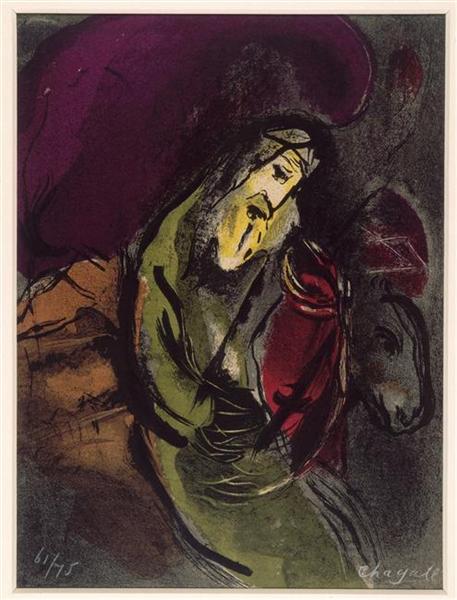
The prophecy of Jeremiah is a long extended message of a melancholy messenger preaching exactly what the Lord wanted him to preach. God’s words came true. The people did not turn from their empty worship and wayward lifestyles. And they persecuted Jeremiah for speaking words of judgment. The Babylonians came and tore down the walls of Jerusalem, decimated the city and the temple, and carried off the people into exile.

Jeremiah, in his grief over the ruined city of Jerusalem, wept and lamented the loss of his hometown and the temple. It was only after an extended lamentation that Jeremiah turned his attention toward the love of God, his compassions becoming new every morning, and the hope of a new existence without Jerusalem at the center of Jewish life.

The hope of love, compassion, and new life comes from first lamenting our losses. There are two popular phrases in our culture that need to be jettisoned altogether when speaking with people experiencing change or loss. These phrases, at the least, are not helpful; and, at worst, compound the anger and sadness:

  1. “Get over it!” can short circuit the grief process and puts grieving people in the awkward position of not seeing the power of lament through to its end of acceptance, resolution, and fresh hope. Far too many people in the world, and even the church, remain stuck in some stage or level of grief, unable to effectively move through their grief because others expect them to be joyful and triumphant when they really feel downright awful – not to mention now guilty on top of it for being sad.
  2. “You have to be strong!” is typically said to people who are in a state of weakness. They can’t be strong. We would never think of telling someone with broken bones to have the strength to walk or even drive anywhere without assistance. We understand they need to heal. Yet, we tell this to people with broken spirits, and then can’t understand why they don’t just bounce back from their emotional stupor. That’s because they can’t. Broken spirits, like broken bones, need time to heal.

Embracing lament is the pathway to knowing compassion and becoming a compassionate person, like Jesus. Wallpapering over our losses without lamenting them is at the root of many, if not most, of emotional problems today. 

Jerry Sittser, a Reformed pastor and professor, wrote an important book entitled, A Grace Disguised: How the Soul Grows Through Loss. Many years ago, he was driving his family’s minivan when a drunk driver crossed the road and hit them head on. In an instant he watched three generations of his family die in front of his eyes: his mother, his wife, and his daughter. Sittser writes:

“Catastrophic loss by definition precludes recovery.  It will transform us or destroy us, but it will never leave us the same….  I did not get over my loved ones loss; rather I absorbed the loss into my life until it became part of who I am. Sorrow took up permanent residence in my soul and enlarged it.”

Jerry Sittser

Nicholas Wolterstorff is a professor emeritus at Yale University. In his book, Lament for a Son, he talks about losing his twenty-five year old son to a mountain climbing accident. He has no explanations – just grief. At one point he expressed a profound insight: 

“Through the prism of my tears I have seen a suffering God. It is said of God that no one can behold his face and live. I always thought this meant that no one could see his splendor and live. But I have come to see that it more likely means that no one can see his sorrow and survive.”

Nicholas Wolsterstorff

We all accumulate many losses over the course of a lifetime. Many are small losses; some are devastating losses. The death of children, disability, sexual assault, abuse, cancer, infertility, suicide, and betrayal are all examples of crushing loss – losses that need to experience lament. 

All these changes are irreversible; we cannot return to how things once were. We must move through the grief by lamenting each loss. And as we lurch ahead, we cling to the words of Jeremiah that because of the Lord’s great love, we are not consumed and swallowed whole from grief, for his compassions never fail. They are new every morning. Great is God’s faithfulness.

So, how do we lament our losses in a healthy way?

  1. Jeremiah remembered his afflictions and his losses. We need to avoid superficial responses to significant events. We must own and feel the pain of the loss before we can begin to see new life.
  2. Jeremiah paid attention to faith, hope, and love. This can only be done if we are alert to the process of grieving. Elizabeth Kubler-Ross was the person who identified the famous five stages of grief: denial, anger, bargaining, depression, and resolution or acceptance. We rarely move neatly through each stage. The important thing is that we get to the place of seeing God’s committed love to us not just in spite of the suffering but because of it.
  3. Jeremiah did not minimize his pain and suffering. We must sit with our pain. Do not dismiss your loss by saying others have it worse, or that it’s nothing. Year after year, many Christians do not confront the losses of life, minimizing their failures and disappointments. The result is a profound inability to face pain. And it has led to shallow spirituality and an acute lack of compassion.
  4. Jeremiah prophesied about how Jesus grieved. His message predicted what Jesus faced in his passion. The prophet Isaiah described Messiah as a man of sorrows and acquainted with grief.  At the tomb of Lazarus, Jesus did not say “Come on everyone, stop all this crying” but wept with the people. When entering Jerusalem, Jesus did not say “too bad guys, I’m moving on without you” but lamented over the city desiring to gather them as a hen does her chicks. On the cross, Jesus did not say “Lighten up everyone; God is good; he will be victorious!” But instead said, “My God, my God, why have you forsaken me?” Hebrews 5:8 tells us that Jesus “learned obedience from what he suffered.”

Grieving is an indispensable part of a full-orbed spirituality and emotional health. Life does not always make sense. There is deep mystery to the ways of God. The Lord is doing patient and careful work inside of each one of us. While he is busy within our souls, we will likely feel lost and disconnected, not seeing the full tapestry of what he is creating. Weariness, loneliness, a sense that prayers are not being heard, and a feeling of helplessness are all common experiences of God’s resetting a broken spirit.

John Milton’s classic piece of literature, Paradise Lost, compares the evil of history to a compost pile – a mixture of decaying food, animal manure, dead leaves, and whatever else you put on it. Yet, if you cover the compost with dirt, after a long while it no longer smells. The soil becomes a rich natural fertilizer and is ideal for growing a garden. 

But you have to be willing to wait, in some cases, years. Milton’s point was that the worst events of history and the evil we experience are compost in God’s overall plan. Out of the greatest wrong ever done, the betrayal, crucifixion, and death of Jesus, came the greatest good – God transformed the stench of evil into good without diminishing the awfulness of that evil.

People who have truly lamented their losses are not hard to spot. They are:

  • More patient with others with an increased capacity to wait on God.
  • Kinder and more compassionate.
  • Lack pretense and are liberated from trying to impress others.
  • Comfortable with mystery, not having to be certain about every theological minutiae.
  • Humble, gentle, and meek. 
  • Able to see God not only in the glorious and victorious, but also in the mundane, banal, and lowly.
  • More at home with themselves and with God. 
  • Equipped to love others as Jesus did.

Maybe we are always running, working, and playing because we are constantly trying to keep grief from catching up to us. Slow down. Let it catch you. Let grief do its deep and powerful work within you.

*Above painting of Jeremiah, the weeping prophet, in the Sistine Chapel by Michelangelo (1475-1564)

**Above painting of Jeremiah by Marc Chagall, 1956

Psalm 130 – Believe, Hope, and Love

I cry out to you from the depths, Lord—

my Lord, listen to my voice!
    Let your ears pay close attention to my request for mercy!
If you kept track of sins, Lord—
    my Lord, who would stand a chance?
But forgiveness is with you—
    that’s why you are honored.

I hope, Lord.
My whole being hopes,
    and I wait for God’s promise.
My whole being waits for my Lord—
    more than the night watch waits for morning;
    yes, more than the night watch waits for morning!

Israel, wait for the Lord!
    Because faithful love is with the Lord;
    because great redemption is with our God!
He is the one who will redeem Israel
    from all its sin.
(Common English Bible)

Throughout church history, the book of Psalms has been used and understood as the Church’s prayer book.  Indeed, the psalms are much more than a collection of beautiful poems, words of assurance, and songs of praise – they are designed and meant to have regular and ongoing use as prayers. And I’m not just talking about the psalms being somebody else’s prayers; they are my prayers and your prayers. 

There are times when words fail us – where we find ourselves between a rock and a hard place and want to pray. Our stress and/or anxiety is so high, we can neither think straight, nor form anything coherent with our mouths. It’s in such times that the psalms present themselves to us as the path forward. 

What’s more, psalms are meant to be spoken out loud and more than once. And I’m not talking about saying them with a quiet mumble or a flat monotone.  No! These precious prayers of Holy Scripture are meant to be declared with full voice and a large amount of flavor!  They are to repeatedly roll off our lips with all the emotional and spiritual gusto which resides within us!  Tears and yelling are both appropriate and encouraged. 

For we do not possess a mere heady faith of thoughts and ideas; we also possess a faith that is robustly heartfelt, and dwells down deep in the gut where our bowels of compassion have their abode. 

Even with a cursory reading of today’s psalm, we can easily observe there’s more going on here than beliefs of faith, hope, and love. 

The psalmist is expressive, clinging to faith with a patient longing for God to make good on divine promises. It is chocked full of emotion, a prayer coming from the depths of the gut. The whole being is involved, and rightly so, because our faith affects the entirety of a person and everyone in the community of the redeemed.

If this psalm resonates with you in any way, let your proclamation of it be with the expanse of feeling inside you. After all, as people created in the image of God, we share God’s own deep sense of love – and love is genuinely love when it is outwardly expressed with a sacred combination of words, actions, and feelings.

Waiting, watching, hoping. We as humans do a lot of that. While we anticipate God’s response, we keep up the praying. We keep reminding God to be God. We encourage others to watch and wait and hope, all the while encouraging ourselves, as well.

Whenever we are stressed, more often than not, we thrash about, like a desperate swimmer in the middle of a lake, just trying to keep his head above water. Yet, the psalm tells us to do the counterintuitive: Don’t do something. Just stay there and relax. Why, in heaven’s name, should I do nothing?

Because the Lord will act.

And that action of God will redeem, renew, refresh, and revitalize. It will be new, like the morning dawn. A fresh day, that will not be like any other day before it.

God does his best saving work in the worst and most impossible of circumstances. We need not fear the overwhelming depths of difficulty and trouble. We can trust the Lord.

Perhaps the most awful of deep holes are emotional – deep depression and/or anxiety – a lostness inside oneself because of mental disorder. In such a dark oblivion, and terrible morass, one tries to survive into another hour, not just another day. Like a watchman waiting for the night to dissipate and dawn to break, there is a longing for God.

Deliverance and rescue seem slim. Hopelessness begins to calcify the spirit. Only love can release the hardening situation; the steadfast love of God is a gentle hammer, picking away at the grief.

This is a love which never gives up.

Today’s psalm begins as a desperate cry for help. It ends with an awareness of the need to trust, hope, and wait….

Blessed Jesus, in the comfort of your love, I lay before you the memories that haunt me, the anxieties that perplex me, the despair that frightens me, and my frustration at my inability to think clearly. Help me to discover your forgiveness in my memories and know your peace in my distress. Touch me, O Lord, and fill me with your light and your hope. Amen.

*Above painting of Psalm 130 by Virginia Wieringa

Hebrews 11:4-7 – Let the Future Shape Your Present

By faith Abel brought God a better offering than Cain did. By faith he was commended as righteous when God spoke well of his offerings. And by faith Abel still speaks, even though he is dead.

By faith Enoch was taken from this life, so that he did not experience death: “He could not be found, because God had taken him away.” For before he was taken, he was commended as one who pleased God. And without faith it is impossible to please God because anyone who comes to him must believe that he exists and that he rewards those who earnestly seek him.

By faith Noah, when warned about things not yet seen, in holy fear built an ark to save his family. By his faith he condemned the world and became heir of the righteousness that is in keeping with faith. (New International Version)

Faith is important. It’s part of us. We are all people of faith – maybe not sharing the same faith – but it is faith, none-the-less.

Belief transcends time. Faith is rooted in the past, experienced in the present, and future-oriented. In Christianity, faith is historically moored to the redemptive events of Christ’s incarnation, life, death, resurrection, and ascension. This historic faith has continuing ramifications into the present time. And it is a faith which believes Christ is coming again to judge the living and the dead.

All of this means our salvation encompasses past, present, and future. So, it is appropriate and accurate to say the Christian has been saved, is being saved, and will be saved. Deliverance from sin, death, and hell was achieved on the cross. We are presently in the process of being delivered from our sinful nature and the effects of a fallen world. And we will be completely delivered at the end of the age when there will be no more disease, death, or grief-stricken crying.

The New Testament brings out all these dimensions of time. Whereas the Apostle Paul tended to continually look back to the past of God’s action in history, the author of Hebrews consistently looks ahead and brings out the future orientation of our faith.

And that is what the great Hall of Faith in chapter eleven of Hebrews is about – giving repeated examples of individuals who transcended their present hard circumstances through realizing what will be eventually coming. All of them acted particular ways in the present time because of what they believed would happen in the future. In other words, people of faith allow their belief in what is coming to shape how they live now in daily life.

Abel took the absolute best of his flock and made it an offering, with the intent of giving God an appropriate gift. Whereas his brother Cain cobbled together some of the leftovers from his vegetable harvest and gave them a nonchalant toss to God. Then, he got upset when God looked with disfavor on it.

Abel’s actions demonstrated the attitude of his heart. His belief and his practice worked together. And the gift he gave to God cost him his life, as Cain was inflamed with anger and killed his brother. Only by looking ahead and seeing that God’s reward is better than anything this world can offer, can we endure hardship.

Enoch focused on pleasing God through his three-hundred year life, knowing he would then enjoy an eternity with the Lord who provides good rewards. Enoch displayed his faith through obedience to God. He believed God existed and that God is good.

Noah, despite the jeering of his neighbors, took one-hundred years of his life to build a big ark, believing without a doubt that God’s judgment was coming. The daily grind of constructing an ark for such a long time was made possible because Noah was looking ahead. His present actions were shaped by his forward thinking faith.

In each individual’s life, their daily actions were a result of their unshakable belief in what was to come.

Faith enables us to persevere patiently through any kind of adversity. Knowing we have a better reward ahead; realizing our present trouble will not last forever; and believing Christ will eventually make all things right in this world which has so much wrong – forms the foundation of our faith in such a way as to buoy us so that we do not drown in a sea of injustice, microaggressions, unhealthy power dynamics, as well as plain old meanness and insensitivity from others.

So, when we face those times which tempt us to get lost or stuck in an ever-enclosing existential angst, take a pause, back up the truck, and see a more expansive big picture view of yourself, your situation, and others. You’ll be glad you did.

Christ be with me, Christ within me,

Christ behind me, Christ before me,

Christ beside me, Christ to win me,

Christ to comfort and restore me.

Christ beneath me, Christ above me,

Christ in quiet, Christ in danger,

Christ in hearts of all that love me,

Christ in mouth of friend and stranger.

Amen.

-Prayer of St. Patrick

2 Corinthians 4:13-5:1 – Do Not Lose Heart

It is written: “I believed; therefore, I have spoken.” Since we have that same spirit of faith, we also believe and therefore speak, because we know that the one who raised the Lord Jesus from the dead will also raise us with Jesus and present us with you to himself. All this is for your benefit, so that the grace that is reaching more and more people may cause thanksgiving to overflow to the glory of God.

Therefore, we do not lose heart. Though outwardly we are wasting away, yet inwardly we are being renewed day by day. For our light and momentary troubles are achieving for us an eternal glory that far outweighs them all. So, we fix our eyes not on what is seen, but on what is unseen, since what is seen is temporary, but what is unseen is eternal.

For we know that if the earthly tent we live in is destroyed, we have a building from God, an eternal house in heaven, not built by human hands. (New International Version)

We all face seasons and circumstances that stretch our faith and press the limits of what we can handle.

We have no promise from Scripture we will avoid trouble. 

Instead, Jesus promises his followers there will be adversity and stressful predicaments. 

The pressures of life can sometimes be so overwhelming, we might lapse into losing heart, either by chiding ourselves for the adversity and wishing things were different, or blaming others for our troubles, and believing that if they would just get their act together, all would be well with my soul. 

The ancient Corinthian Church had a bevy of relational issues and problems. Some they created themselves. Some came from other people. Other issues arose simply by living in a fallen world, surrounded by the effects of ever-present sinful crud. 

Yet, no matter the source or nature of the problem, the Corinthians needed a point of focus to direct their troubled hearts. They needed to be reminded of the grace they possessed in Jesus Christ.

Faith is a gift given by God. It is planted in the heart of the believer so that, over time, it will nurture, grow, and bear spiritual fruit. Out of that belief arises speaking words of hope and love that embrace the work of God in the life of the believer. The Apostle Paul said elsewhere to the Roman Church: 

If you openly declare that Jesus is Lord and believe in your heart that God raised him from the dead, you will be saved. For it is by believing in your heart that you are made right with God, and it is by openly declaring your faith that you are saved. (Romans 10:9-10, NLT)

Christ’s resurrection from death is both a spiritual and a physical reality. If we believe this truth in our hearts, we will be raised both spiritually and physically. Faith in Christ gives shape to the hope that, although we might be experiencing the effects of mortality and the fall of humanity, we are, at the same time, being spiritually renewed day by day. 

The very same afflictions causing our bodies to degenerate and challenging our spirits, are the same means to achieving a glorious, resurrected existence. There cannot be the glory of spiritual and bodily resurrection without a shameful death. Jesus absorbed the shame of the world’s violent ways onto himself so that we might be raised with him. 

However, this does not mean we will never experience difficulty in this present life. In fact, daily spiritual renewal can and does happen through adverse circumstances. There must be suffering before glory, both for Jesus and for us. Deliverance from sin, death, and hell is not an inoculation from trouble. Because it is the troubles of this life which teach us to trust in God, as well as weaning us from everything we previously trusted to deal with those troubles.

“Don’t let your hearts be troubled. Trust in God, and trust in me.”

Jesus (John 14:1, NIV)

So, we need to fix our gaze firmly on the unseen reality of faith and hope. All we see with our physical eyes is temporary. All that is unseen is eternal, especially and namely, God. Therefore, it is imperative we traffic in building heavenly treasure, learning to deal with the intangible and unseen dimensions of life.

We are to allow the physical to serve as a sign and seal of the spiritual realities they represent.

For example, Christians come to the Lord’s Table so that the tangible elements of bread and cup will bolster and fortify our faith with the grace that points to the intangible. The Table is to accomplish for us a spiritual renewal of lifting us up by God’s Spirit and joining us with Jesus. This union with Christ can never be taken away from us, even in death, because we have an eternal building from God which makes this present life look like a camping trip.

When I think of a person who is outwardly wasting away, yet inwardly being renewed, I think of Joni Eareckson Tada. She has been a paraplegic for fifty years, after an accident as a teenager in which she dove into shallow water and broke her neck. Afterwards, lying in a hospital for months unable to move, she had completely lost heart to the point of being suicidal. 

Joni could not even kill herself since she could not physically move. Finally, in her darkest moment, she cried to God with what she says was the most significant prayer she ever prayed: “Lord, if I can’t die, show me how to live.” And God did. Joni’s faith is as strong and robust as anyone’s, despite her infirmity and handicaps. She has learned to embrace her troubles as the means of growing her faith.

The path to accept, cope, and transcend our troubles and afflictions begins with acknowledging them. They only have power over us for ill if we ignore them or put up a false front to hide them. The Apostle Paul was open with the Corinthians about his life: 

We do not want you to be unaware, brothers and sisters, of the affliction we experienced in Asia; for we were so utterly, unbearably crushed that we despaired of life itself. Indeed, we felt that we had received the sentence of death so that we would rely not on ourselves but on God who raises the dead. (2 Corinthians 1:8-9, NRSV) 

Paul faced whippings, beatings, stoning, shipwreck, hunger, poverty, danger, and trouble, not to mention the stress of caring for fledgling churches. Through it all, Paul was transparent, and named his troubles so he could apply the poultice of God’s grace to his afflictions. 

It is our brokenness – not having it all together – which shows the grace of God to others.

Paul consistently described his life and ministry in apparent paradoxes: strength in weakness; glory through shame; life through death; riches through poverty. 

Although we experience the fallen nature of the world, God bends each situation toward divine purposes so that what seems to be our downfall becomes the means to our spiritual renewal.

Therefore, we do not lose heart. 

Holy Scripture encourages us not to give up because of hardship, since those very same troubles are the divine implements used to form us into solid followers of Jesus.

We need some stress. Just like a violin needing its strings adjusted to the right pressure, God will tune us with the right amount of stress we need to produce beautiful melodious music. God is the musician, and we are the instrument, not the other way around. 

We are to interpret our stress as God tuning us for good purposes. The pressure we experience becomes the means of glorious music in daily spiritual renewal for the life of the world.

Believers are being renewed daily into a valuable work of God. The stress and trouble we experience is very real and sometimes quite hard. Yet, we have the hope God will bend each circumstance for good purposes so that, even though we seem to be wasting away on the outside, on the inside those experiences are renewing us. 

When this present life is over, it is not the end; it is just the beginning.

God Almighty, you reign supreme, including over our stress and pressure in this present life. You have brought us in safety to this day. So, preserve us according to your mighty power, so that we might not fall into sin, nor be overcome by adversity. In all the situations of life, whether good or bad, direct us to the fulfilling of your purposes through Jesus Christ our Lord. Amen.