Tuesday of Holy Week (John 12:20-36)

Now among those who went up to worship at the festival were some Greeks. They came to Philip, who was from Bethsaida in Galilee, and said to him, “Sir, we wish to see Jesus.” Philip went and told Andrew, then Andrew and Philip went and told Jesus. 

Jesus answered them, “The hour has come for the Son of Man to be glorified. Very truly, I tell you, unless a grain of wheat falls into the earth and dies, it remains just a single grain, but if it dies it bears much fruit. Those who love their life lose it, and those who hate their life in this world will keep it for eternal life. Whoever serves me must follow me, and where I am, there will my servant be also. Whoever serves me, the Father will honor.

“Now my soul is troubled. And what should I say: ‘Father, save me from this hour’? No, it is for this reason that I have come to this hour. Father, glorify your name.” Then a voice came from heaven, “I have glorified it, and I will glorify it again.”The crowd standing there heard it and said that it was thunder. Others said, “An angel has spoken to him.” 

Jesus answered, “This voice has come for your sake, not for mine. Now is the judgment of this world; now the ruler of this world will be driven out. And I, when I am lifted up from the earth, will draw all people to myself.”He said this to indicate the kind of death he was to die. The crowd answered him, “We have heard from the law that the Messiah remains forever. How can you say that the Son of Man must be lifted up? Who is this Son of Man?” 

Jesus said to them, “The light is in you for a little longer. Walk while you have the light, so that the darkness may not overtake you. If you walk in the darkness, you do not know where you are going. While you have the light, believe in the light, so that you may become children of light.”

After Jesus had said this, he departed and hid from them. (New Revised Standard Version)

We continue to journey with Jesus during this Holy Week, on Tuesday. A mix of both Jews and devout Gentiles made their way to Jerusalem for the Passover festival. It was amongst this group of people that Jesus delivered his final public teaching to the crowd.

There were some Greeks who really wanted to see Jesus, and they saw an opportunity to do so when everyone was gathering at Passover time. They asked some of Christ’s disciples if they could do so, and the word was passed to Jesus. This occasion prompted Jesus to let the disciples know that the time has come for death, and therefore, life.

For those with the eyes to see what was happening, many of the people were being drawn to Jesus, rather than the temple. The Lord Jesus was gathering the nations – foreigners and outcasts – to the holy mountain to meet with him. Salvation would be found in him.

Do not let the foreigner joined to the Lord say,
    “The Lord will surely separate me from his people,”
and do not let the eunuch say,
    “I am just a dry tree.”
For thus says the Lord:
To the eunuchs who keep my Sabbaths,
    who choose the things that please me
    and hold fast my covenant,
I will give, in my house and within my walls,
    a monument and a name
    better than sons and daughters;
I will give them an everlasting name
    that shall not be cut off.

And the foreigners who join themselves to the Lord,
    to minister to him, to love the name of the Lord,
    and to be his servants,
all who keep the Sabbath and do not profane it
    and hold fast my covenant—
these I will bring to my holy mountain
    and make them joyful in my house of prayer;
their burnt offerings and their sacrifices
    will be accepted on my altar,
for my house shall be called a house of prayer
    for all peoples.
Thus says the Lord God,
    who gathers the outcasts of Israel:
I will gather others to them
    besides those already gathered. (Isaiah 56:3-8, NRSV)

Jesus does the work of connecting the disconnected, of bringing together disparate humanity into a needed and peaceful wholeness and integrity. Christ is the ultimate gatherer, fostering get-togethers that bring the opportunity for divine/human connection, as well as the chance for unity and reconciliation between people.

Christ was about to die on behalf of the nations. He was sacrificing himself in order to bring Jews everywhere scattered in diaspora together. And he was giving himself for the sake of Greeks and all sorts of ethnicities, so that both Jew and Gentile might be gathered together as the one people of God. In other words, Jesus Christ offers himself for the life of the whole world.

There was certainly a gathering of people on Palm Sunday with Christ’s triumphal entry. Yet, this was not the event that truly brings everyone together. It is the death of Christ that does that.

Up to this point, on Holy Tuesday, Jesus had already communicated several times in various ways about his upcoming death. (i.e. John 2:20; 3:14-15) On this day he refers to it again through the cryptic language of stating that the hour has come for the Son of Man to be glorified.

Using an agricultural metaphor that surely connected with his hearers, Jesus let the gathered ones know that he is the seed who will fall, and die, yet produce an incredible harvest. He is the one who willingly gives up his soul on behalf of the world. Jesus does this in obedience to his Father’s will.

In fact, Jesus is so sure about his mission as Savior of the world, that he confidently proclaims he will face death without asking for divine deliverance from it.

The confused and divided crowd of people were given a direct voice from heaven. This was not to assure or reassure Jesus, but was for the sake of the gathered folks in Jerusalem. They were provided some light, so that there was some guidance in the midst of the darkness which was about to happen in a few days.

Wanting to see Jesus needs to become more than a desire to meet a celebrity, or to fawn over him as a fan or a groupie following him around. Our ears need unclogging. Our eyesight requires some correction. The crucifixion and resurrection of Jesus will unclog us and correct us.

The darkness will always be around the corner, this side of heaven. And death will persist, too, until Christ returns. Therefore, we must trust that God will bring about life through death. In the darkest of times, a light will illumine the path.

Holy and immortal God, from earliest times you have named us and called us into discipleship. Teach us to follow the One whose light scatters the darkness of our world, so that we may walk as children of the light. Amen.

Tuesday of Holy Week (Psalm 71:1-14)

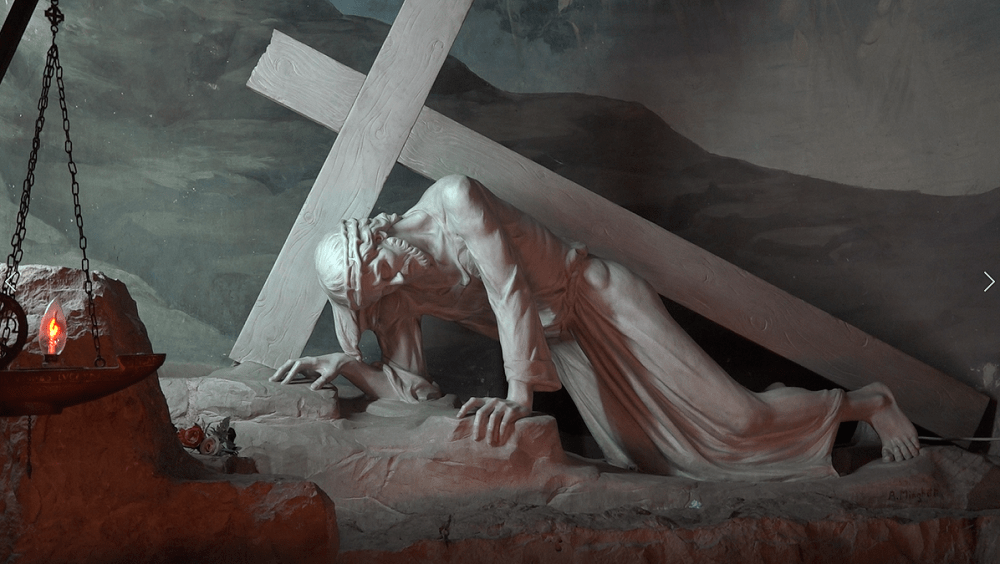
Station 3 of the Stations of the Cross, along the Via Dolorosa in Jerusalem

In you, O Lord, I take refuge;
    let me never be put to shame.
In your righteousness deliver me and rescue me;
    incline your ear to me and save me.
Be to me a rock of refuge,
    a strong fortress to save me,
    for you are my rock and my fortress.

Rescue me, O my God, from the hand of the wicked,
    from the grasp of the unjust and cruel.
For you, O Lord, are my hope,
    my trust, O Lord, from my youth.
From my birth I have leaned upon you,
    my protector since my mother’s womb.
My praise is continually of you.

I have been like a portent to many,
    but you are my strong refuge.
My mouth is filled with your praise
    and with your glory all day long.
Do not cast me off in the time of old age;
    do not forsake me when my strength is spent.
For my enemies speak concerning me,
    and those who watch for my life consult together.
They say, “Pursue and seize that person
    whom God has forsaken,
    for there is no one to deliver.”

O God do not be far from me;
    O my God, make haste to help me!
Let my accusers be put to shame and consumed;
    let those who seek to hurt me
    be covered with scorn and disgrace.
But I will hope continually
    and will praise you yet more and more. (New Revised Standard Version)

Christians take a decided interpretation of seeing Christ in the psalms. For us, we can envision Jesus saying these words of lament in the last days of his earthly life and ministry.

Why lament?

Lament is a significant piece of Lent, and is especially present in these final days of the season, Holy Week. To lament is to offer a public and passionate expression of grief. And it’s not optional but necessary and vital to the Christian experience, not to mention the human condition.

Without lamenting our great losses, our grief comes out sideways, inevitably harming others with our snarky vitriol. Lament gives expression to our deep grief. It enables us to come to grips with what has happened in the past, or happening to us in the present, and within us.

What does it mean to lament?

  • A lament is an expression of personal grief, due to any significant change or loss; it is the normal emotional, spiritual, physical, and relational reaction to that loss.
  • Lamenting is an intentional process of letting go. Relationships, dreams, plans, and people all die. We cannot get them back. Lament helps us find and live into a new identity after the loss or change.
  • Expressing grief through lament is intensely personal; there is no one-size-fits-all. No one else can do our lamentation for us.

How do I lament?

There are many psalms of lament, including our psalm lesson for today. They all have a typical structure to them, including:

  • Addressing God: Crying out for help. Some psalms of lament expand to include a statement of praise or a recollection of God’s intervention in the past. (Psalm 71:1-3)
  • Complaint: Telling God (said with some flavor!) about our problem or experience through a range and depth of emotional, relational, and spiritual reactions to the change or loss. (Psalm 71:4)
  • Confession of Trust: Remaining confident in God despite the circumstances. Beginning to see problems differently. (Psalm 71:5-8)
  • Petition: Proclaiming confidence in God. Appealing to God for deliverance and intervention. Keep in mind that petitioning is not bargaining with God or a refusal to accept loss. Rather, it is a legitimate seeking of help. (Psalm 71:9-13)
  • Words of Assurance: Expressing certainty that the petition will be heard by God. (Psalm 71:14a)
  • Vow of Praise: Vowing to testify in the future to what God will do with praise. (Psalm 71:14b-24)

I encourage and urge you to consider the following spiritual practice in this Holy Week: Set aside some time and craft your own psalm of lament.

Choose an event from your past which created grief for you. It can be recent or from years ago. Using the structure of lament psalms, thoughtfully write out each element as I have outlined it. Then, read it aloud to God. Perhaps even take another step by reading your lament aloud to a trusted family member, friend, or faith leader.

Our grief needs the outlet of lament. Grief which is not expressed ends up sitting heavily in the soul. Eventually, over time, if not acknowledged and spoken aloud, it can easily become putrid and rancid, poisoning our spirit, and compromising our faith.

Sharing your story through lament is biblical, practical, and I insist, necessary. I regularly craft psalms of lament whenever I have events or people who keep sticking with me in my thoughts and in my heart. Here is one example from a few years ago, after a mass shooting in my city:

Lord, in our shock and confusion, we come before you.

In our grief and despair, in the midst of hate,

in our sense of helplessness in the face of violence,

we lean on you. How long, O Lord, must we keep facing this!?

For the families of those who have been killed, we pray.

For the family of the shooter—help us to pray, Lord.

For the communities that have lost members—their anger, grief, fear—we pray.

For the churches striving to be your light in darkness, beyond our comprehension, we pray.

In the face of hatred, may we claim love, Lord.

May we love those far off and those near.

May we love those who are strangers and those who are friends.

May we love those who we agree with and understand,

and even more so, Lord, those who we consider to be our enemies.

Lord, have mercy. Christ, have mercy. Lord, have mercy.

Heal our sin-sick souls, and grant us your peace.

Make these wounds whole, Lord, for you can do it. Amen.

John 12:20-36 – Tuesday of Holy Week

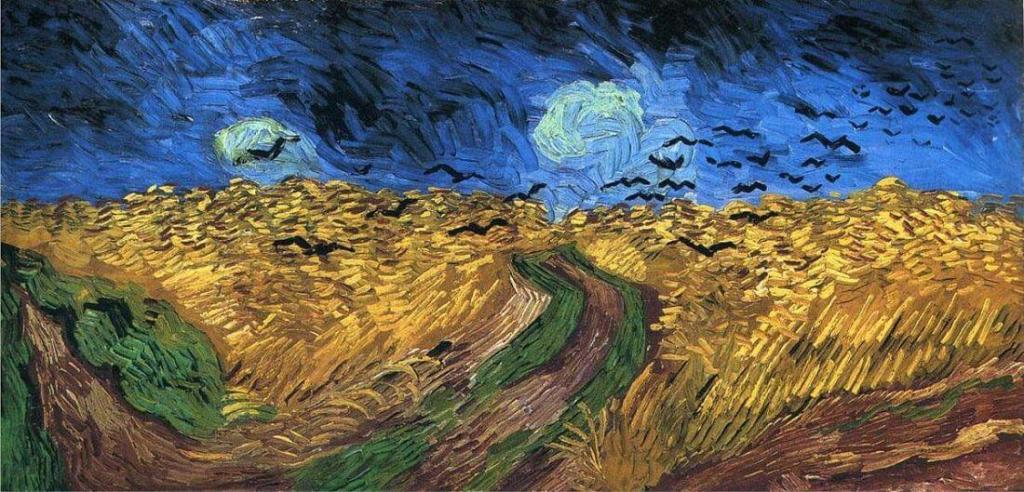
Wheatfield with Crows by Vincent Van Gogh, 1890

Some Greeks were among those who had gone to Jerusalem to worship during the festival. They went to Philip (he was from Bethsaida in Galilee) and said, “Sir, we want to see Jesus.”

Philip went and told Andrew, and the two of them went and told Jesus. Jesus answered them, “The hour has now come for the Son of Man to receive great glory. I am telling you the truth: a grain of wheat remains no more than a single grain unless it is dropped into the ground and dies. If it does die, then it produces many grains. Those who love their own life will lose it; those who hate their own life in this world will keep it for life eternal. Whoever wants to serve me must follow me, so that my servant will be with me where I am. And my Father will honor anyone who serves me.

“Now my heart is troubled—and what shall I say? Shall I say, ‘Father, do not let this hour come upon me’? But that is why I came—so that I might go through this hour of suffering. Father, bring glory to your name!”

Then a voice spoke from heaven, “I have brought glory to it, and I will do so again.”

The crowd standing there heard the voice, and some of them said it was thunder, while others said, “An angel spoke to him!”

But Jesus said to them, “It was not for my sake that this voice spoke, but for yours. Now is the time for this world to be judged; now the ruler of this world will be overthrown. When I am lifted up from the earth, I will draw everyone to me.” (In saying this he indicated the kind of death he was going to suffer.)

The crowd answered, “Our Law tells us that the Messiah will live forever. How, then, can you say that the Son of Man must be lifted up? Who is this Son of Man?”

Jesus answered, “The light will be among you a little longer. Continue on your way while you have the light, so that the darkness will not come upon you; for the one who walks in the dark does not know where he is going. Believe in the light, then, while you have it, so that you will be the people of the light.”

After Jesus said this, he went off and hid himself from them. (Good News Translation)

Today is another step in our journey together with Jesus. The path we are on together leads to a cruel cross. For the past six weeks the Christian has been on a Lenten walk. To keep the long sojourn going, believers focus on spiritual discipline, prayer, and repentance. 

Shadow

Along the way we come face-to-face with the shadow parts of ourselves. We discover that within us there is the pull to hold-on to unhealthy rhythms and habits of life. There is an inner push to arrange our lives with the fragmentation of disordered love.

Our reflexive response to things we do not like about ourselves might be to either use sheer willpower to change, or to try and manage our brokenness – as if we could boss our spiritual selves out of the darkness. However, the problem and the solution are much more radical than we often would like to admit.

While on this journey, Jesus invites us to die to ourselves. The pull and push of sin cannot be managed or willed away – it must be eradicated and completely cut out, like the cancer it is. Transformation and new life can only occur through death. 

A tiny little seed can grow, break the ground, and develop into something which provides sustenance for others.  It does no good to remain a seed in the ground. The little kernel must change beyond it’s current recognition if it is to reach for the sky and become food for the world.

Suffering

Christ is the ultimate example of the one who died to himself and for us. Only through suffering and death did he secure deliverance and freedom from sin, death, and hell. By his wounds we are healed. Through his tortuous death, new life became possible – because there must be a death if there is to be a resurrection; there must be suffering before there is glory.

Through dying to self and following Jesus, a transformative experience happens. As we change, mature, and produce a crop, we bring the kind of spiritual sustenance the world so desperately needs. Following Jesus, leaving all to walk with him, is true repentance and authentic discipleship.

Perhaps you protest, thinking I’m being too forceful or insistent about this Jesus stuff. Yes, you have perceived rightly. Within some corners of Christianity, a wrongheaded notion has developed that believes suffering is not God’s will.

Jesus, however, is insistent that dying to self is necessary. And it hurts like hell. It’s a hard teaching to absorb when you so desperately want things to be rainbows and unicorns. Suffering, whether we like it, or not, is the way of Jesus:

“In the days of his flesh, Jesus offered up prayers and supplications, with loud cries and tears, to the one who was able to save him from death, and he was heard because of his reverent submission.  Although he was a Son, he learned obedience through what he suffered; and having been made perfect, he became the source of eternal salvation for all who obey him.” (Hebrews 5:7-9, NRSV)

We are not above our Master. Christ’s life on this earth, before his crucifixion and death, was marked with suffering. Jesus learned obedience through struggle and adversity. The Lord himself did what he is now asking us to do.

Christ gave himself up to do the Father’s will. Jesus offered loud cries and tears and submitted to what the Father wanted. We must do no less. We don’t get to choose which parts of Christ’s life and teaching we will observe and which ones we won’t, as if Jesus were some spiritual buffet line. 

All who live for Jesus will follow him into the path of suffering, of death to self, and of new life through the power of his resurrection. In Christ’s own words: “Those who love their life will lose it, and those who hate their life in this world will keep it for eternal life.”  We must…

Surrender

We have hundreds, maybe thousands of small decisions every day with the use of our time, our money, our energy, and our relationships. If we have tried to fix what is broken inside of us, we will likely just try to hastily fix the problems and the people in our lives, then move on with getting things done on our to-do list. 

Instead, we have the invitation to surrender. We have the opportunity to create sacred space for solitude and silence, prayer and repentance. Take the time to (in person or virtually) sit with a person in pain and listen.  Reflect on how to use your money for kingdom values. See your life as a holy rhythm of hearing God and responding appropriately.

Sacrifice

Holding-on to our stuff and time is the opposite of sacrifice – it’s avarice. I understand that you and I are not Jesus – our sacrifice and suffering are not efficacious, that is, it doesn’t deliver other people from sin. Only Christ’s death does that. Yet, we are still called to sacrifice:

“I am now rejoicing in my sufferings for your sake, and in my flesh, I am completing what is lacking in Christ’s afflictions for the sake of his body, that is, the church.” (Colossians 1:24, NRSV)

Pleasure is not the summum bonum of life. Our lives are not meant to be lived solely for minimizing pain and maximizing comfort. Jesus has extended the call to view our workplaces, communities, neighborhoods, and families as our mission field of grace to a world in need of basic human kindness and attention – which takes sacrificial love on our part.

Christianity isn’t a religion that’s for people who have neatly packaged theological answers and certainties to all of life’s questions. Rather, Christianity is a dynamic religion of learning to follow Jesus, discovering how to die to self, and struggling to put Christ’s teaching and example into practice. 

The way of Christ is often characterized by a three-steps-forward, two-steps-backward sort of reality. The road is zig-zags with plenty of potholes. Those who don’t struggle are in big trouble. However, those who go through the pain of dying to self for the sake of their Lord, find that the harvest they produce leads to eternal life.

May you struggle well, my friend.

Almighty God, your dear Son did not ascend to joy until he first suffered pain; he did not enter glory before he was crucified. Mercifully grant that we, walking in the way of the cross, may find it as the true way of life and peace, through Jesus Christ, your Son, our Lord. Amen.

John 12:20-36 – Tuesday of Holy Week

cross of christ

Some Greeks who had come to Jerusalem for the Passover celebration paid a visit to Philip, who was from Bethsaida in Galilee. They said, “Sir, we want to meet Jesus.” Philip told Andrew about it, and they went together to ask Jesus.

Jesus replied, “Now the time has come for the Son of Man to enter his glory. I tell you the truth, unless a kernel of wheat is planted in the soil and dies, it remains alone. But its death will produce many new kernels—a plentiful harvest of new lives. Those who love their life in this world will lose it. Those who care nothing for their life in this world will keep it for eternity. Anyone who wants to serve me must follow me, because my servants must be where I am. And the Father will honor anyone who serves me.

“Now my soul is deeply troubled. Should I pray, ‘Father, save me from this hour’? But this is the very reason I came! Father, bring glory to your name.” 

Then a voice spoke from heaven, saying, “I have already brought glory to my name, and I will do so again.” When the crowd heard the voice, some thought it was thunder, while others declared an angel had spoken to him.

Then Jesus told them, “The voice was for your benefit, not mine. The time for judging this world has come, when Satan, the ruler of this world, will be cast out. And when I am lifted-up from the earth, I will draw everyone to myself.” He said this to indicate how he was going to die.

The crowd responded, “We understood from Scripture that the Messiah would live forever. How can you say the Son of Man will die? Just who is this Son of Man, anyway?”

Jesus replied, “My light will shine for you just a little longer. Walk in the light while you can, so the darkness will not overtake you. Those who walk in the darkness cannot see where they are going. Put your trust in the light while there is still time; then you will become children of the light.”

After saying these things, Jesus went away and was hidden from them. (NLT)

We are taking another step in our journey together with Jesus.  That path leads to a cruel cross.  For the past six weeks the Christian has been on a Lenten walk.  To keep the long sojourn going, believers focus on spiritual discipline, prayer, and repentance.  Along the way we come face-to-face with the shadow parts of ourselves.  We discover that within us there is the pull to hold-on to unhealthy rhythms and habits of life, as well as a push to arrange our lives with the fragmentation of disordered love.

Perhaps our reflexive response to things we do not like about ourselves is to either use sheer willpower to change or try and somehow manage our brokenness, as if we could boss our spiritual selves out of darkness.  The problem and the solution are much more radical than we often would like to admit.

The answer as we journey with Jesus is to die to ourselves.  Yes, this is the teaching of our Lord.  Sin cannot be managed or willed away – it must be eradicated and completely cut out, like the cancer it is.  Transformation and new life can only occur through death.  Jesus uses the familiar example of a seed to communicate his point.  A tiny little seed can grow, break the ground, and develop into something which provides sustenance for others.  It does no good to remain a seed in the ground.

dying to self

Jesus did not tell others to do what he himself does not do.  Christ is the ultimate example of the one who died to himself and literally died for us.  Only through suffering and death did he secure deliverance and freedom from sin, death, and hell.  Through his wounds we are healed.  Through his tortuous death a resurrection became possible – and we must always remember that there must be a death if there is to be a resurrection.  Death always comes before there is life.  There must be suffering before there is glory.

Through dying to self and following Jesus, a wonderful growth and transformation can happen.  It is a change, when it matures and produces a crop, which brings the kind of spiritual sustenance the world so desperately needs.  Following Jesus, leaving all to walk with him, is true repentance and authentic discipleship.

Perhaps you think I’m being too forceful, too insistent about this Jesus stuff.  Yes, you have perceived well.  I am being quite single-minded about the need to die to self and live for Christ.  Somehow, within many corners of Christianity, a wrongheaded notion that suffering is not God’s will has wormed its way into many churches.  Jesus, however, is insistent that dying to self is necessary.  And it hurts like hell.  It’s a hard teaching to absorb when you so desperately want things to be rainbows and unicorns.  Yet, the Epistle to the Hebrews makes explicit the way of Christ:

“In the days of his flesh, Jesus offered up prayers and supplications, with loud cries and tears, to the one who was able to save him from death, and he was heard because of his reverent submission.  Although he was a Son, he learned obedience through what he suffered; and having been made perfect, he became the source of eternal salvation for all who obey him.” (Hebrews 5:7-9, NRSV)

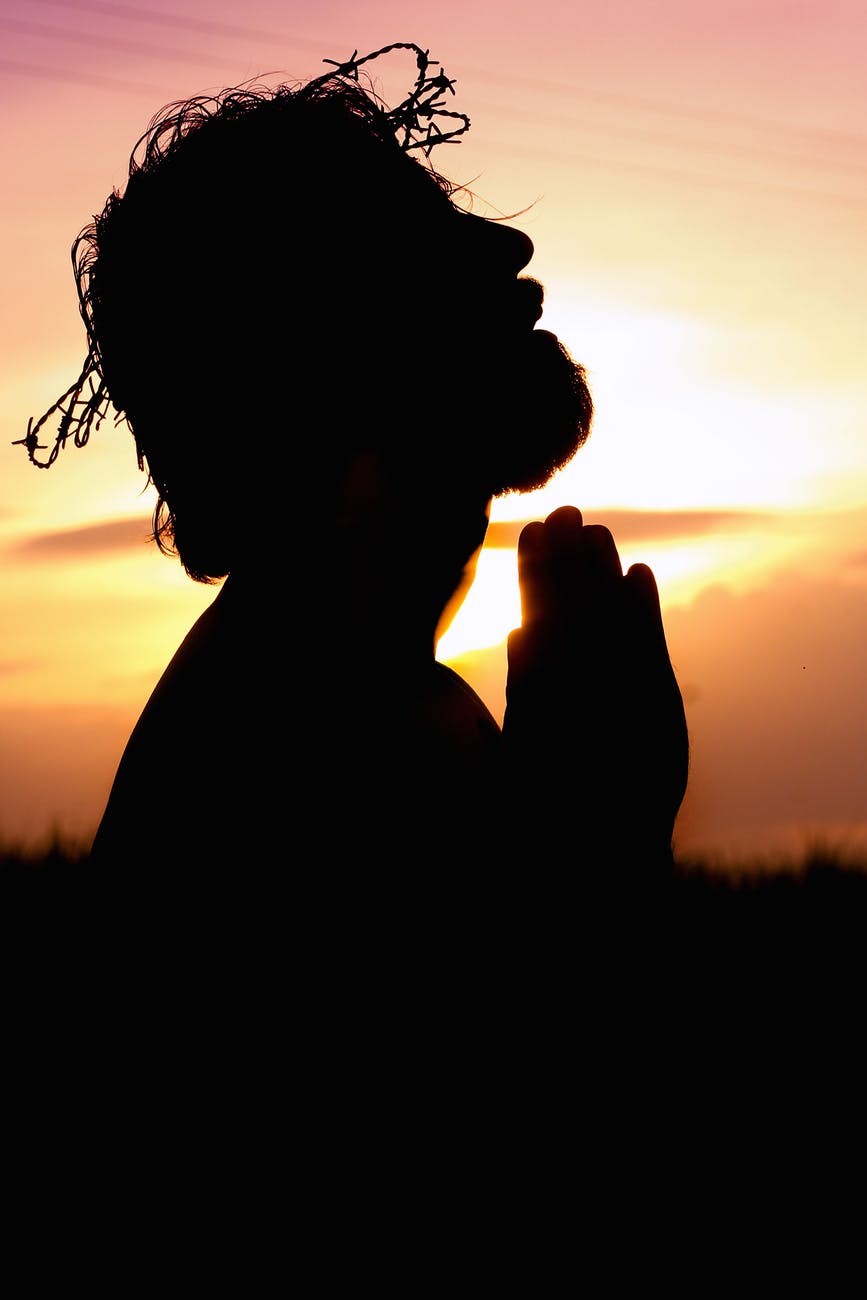
silhouette image of person praying
Photo by Rodolfo Clix on Pexels.com

We are not above our Master.  Even Christ’s life on this earth, before his death and resurrection, was marked with suffering.  Even Jesus learned obedience through struggle and adversity.  Our Lord himself did what he is now asking us to do.  He gave himself up to do the Father’s will.  Jesus offered loud cries and tears and submitted to what the Father wanted.  We must do no less.  We don’t get to choose which parts of Christ’s life and teaching we will adhere to and which ones we don’t need to, as if Jesus were some spiritual buffet line.  All who live for Jesus will follow him into the path of suffering, of death to self, and of new life through the power of his resurrection.  In Christ’s own words from our Gospel reading today: “Those who love their life will lose it, and those who hate their life in this world will keep it for eternal life.”  We must…

Surrender

We have hundreds, maybe thousands of small decisions every day with the use of our time, our money, our energy, and our relationships.  If we have tried to fix what is broken inside of us, we will likely just try to hastily fix the problems and the people in our lives and move on with getting things done on our to-do list.  Instead, we have the invitation to surrender.  We have opportunity to create sacred space for solitude and silence, prayer and repentance.  Take the time to (virtually!) sit with a person in pain and listen.  Reflect on how to use your money in a way which mirrors kingdom values.  Begin to see your life as a holy rhythm of hearing God and responding to what he says.  It takes intentional surrender to do that.

Sacrifice

Holding-on to our stuff and time is the opposite of sacrifice.  In fact, it’s avarice.  Yes, I understand that you and I are not Jesus – our sacrifice and suffering are not efficacious, that is, it doesn’t deliver other people from sin.  Only Christ’s death does that.  Yet, we are still called to sacrifice.  This was the Apostle Paul’s understanding:

“I am now rejoicing in my sufferings for your sake, and in my flesh, I am completing what is lacking in Christ’s afflictions for the sake of his body, that is, the church.” (Colossians 1:24, NRSV)

I’m just going to let you wrestle with that incredible verse and mull it over.  Pleasure is not the summum bonum of life.  Our lives are not meant to be lived solely for minimizing pain and maximizing comfort. Jesus has extended a call to view our workplaces, communities, neighborhoods, and families as our mission field of grace to a world in need of basic human attention.  This takes sacrificial love on our part.

Christianity is not really a religion that’s for people who have put together neat theological answers and tidy packaged certainties to all of life’s questions.  Rather, Christianity is a dynamic religion of learning to follow Jesus, discovering how to die to self, and struggling to put Christ’s teaching and example into practice.  It is a path often characterized by a three-steps-forward, two-steps-backward, and three-steps-forward again kind of reality.  The road is zig-zaggy with plenty of potholes.  Those who don’t struggle are in big trouble.  However, those who go through the pain of dying to themselves for the sake of their Lord, find that the harvest they produce leads to eternal life.

May you struggle well, my friend.

Almighty God, your dear Son did not ascend to joy until he first suffered pain and did not enter glory before he was crucified.  Mercifully grant that we, walking in the way of the cross, may find it as the true way of life and peace, through Jesus Christ your Son our Lord.  Amen.

Click Lead Me to the Cross by Hillsong United to continue contemplating the way of Christ.