Relying on the Presence (Exodus 13:17-22)

When Pharaoh let the people go, God did not lead them on the road through the Philistine country, though that was shorter. For God said, “If they face war, they might change their minds and return to Egypt.” So God led the people around by the desert road toward the Red Sea. The Israelites went up out of Egypt ready for battle.

Moses took the bones of Joseph with him because Joseph had made the Israelites swear an oath. He had said, “God will surely come to your aid, and then you must carry my bones up with you from this place.”

After leaving Sukkoth they camped at Etham on the edge of the desert. By day the Lord went ahead of them in a pillar of cloud to guide them on their way and by night in a pillar of fire to give them light, so that they could travel by day or night. Neither the pillar of cloud by day nor the pillar of fire by night left its place in front of the people. (New International Version)

From a human perspective, God makes some nonsensical decisions in the Bible such as telling Noah to build a big boat in a place with no water; Abraham to leave everything, and later, to sacrifice his son; Moses to stroll into Egypt and tell Pharaoh to let the people go; and, the people to walk through a body of water without getting wet. Indeed, it’s as if God has an odd predilection for making weird requests of people.

Although today’s Old Testament story gives us a glimpse into God’s thinking, the people were not privy to that information. Yes, God’s people were experiencing an unbelievable exodus out of Egypt. Their wildest dreams could not have imagined such a reality as strolling out of slavery having seen not one but a string of miraculous wonders. Yet, God was not done with the miracle thing.

Although many people would really like to see a miracle happen in their lives, rarely do we think about the circumstances we might need to face for that miracle to occur. God typically asks folks to do some outrageous-sounding things to set up the miracle.

An entire nation left Egypt with celebration only to be told to go in a misdirection toward the Promised Land, as if God were somehow geographically challenged. I can imagine that this decision had Moses raising a Spock-like eyebrow and the Israelites wondering if God was off his celestial rocker.

There is, however, a reason why folks like Noah, Abraham, and Moses obeyed instructions that didn’t make sense to them at the time: The Presence of God.

Pillar of Fire, Pillar of Cloud in the Desert, Congregation Beth Emeth, Herndon, VA

It is the personal Presence and power of God which makes all the difference. For God has not promised to create an existence with a zero factor of hardship. God, instead, has created a world that is full, vibrant, and alive with Presence – and a zero tolerance for bullies like Egypt. The uncertainty, doubt, and mystery of the future is thoroughly mitigated with the effusive Presence.

When sitting with patients in the hospital who struggle with the unknown of why they are there and what will become of them (and their families) the last thing I do is try to fabricate reasons so that it makes sense – because it doesn’t, and I’m not going pretend that it does.

Rather, I remind them of what I know: The Presence of God is here. Although God does not go out of the way to give us an easy life, God does, however, go far out of the way to communicate the glorious divine Presence with us.

God kept constant vigil over the ancient Israelites, powerfully seen with the pillar of cloud by day and pillar of fire by night. Nothing was going to happen to the Jewish people without first passing through the mighty hands of God.

Not only do I know God is with us, but I also know the Lord neither slumbers nor sleeps (Psalm 121). When God keeps vigil, God keeps vigil! No smoke or bathroom breaks with God. God’s vigilance is relentless and wondrous, giving assurance to the godly, and terrifying the ungodly.

Once we are out in the wilderness of uncertainty, there is no turning back. And that’s okay – because the Presence of God patrols the area and divinely guards our every move.

For the Christian, the Presence has found its fulfillment in the person of Jesus. Although Christians everywhere serve a risen and ascended Christ, the Divine Presence remains with glorious constancy through the Holy Spirit, the Paraclete, the One who is consistently alongside us, empowering us and advocating on our behalf.

The beautiful theological truth here is that God is both transcendent (far above us) and immanent (intimately close to us) at the same time, all the time. Armed with such a robust theological understanding, trust and confidence come to us without having to resort to ginning up positive thoughts.

Instructions and commands which seem like nonsense? No problem. The Transcendent and Immanent One has the Presence all around it. In between a rock-and-hard-place (or an Egyptian army and a Red Sea)? Not an issue. I willingly place myself there knowing that with the Presence, the miraculous is about to happen.

We need not buck the difficult circumstances. The Presence has got this.

So, then, let us pray for the Church and for the world, and let us thank God for the great Presence: In the power of the Spirit and in union with Christ, we pray to you, Almighty God, and Father. From the rising of the sun to its setting, we pray to you, ever-vigilant Lord, on behalf of those in despair and darkness, that they may find the hope and light of Christ; those in fear of death, that they may find faith through the resurrection of Jesus; prisoners and captives, widows and orphans, and all those who today need a blessed assurance of the Presence; through Jesus Christ, your Son, our Lord, who with you and the Holy Spirit are one God, now and forever. Amen.

Life in the Spirit (Romans 8:1-11)

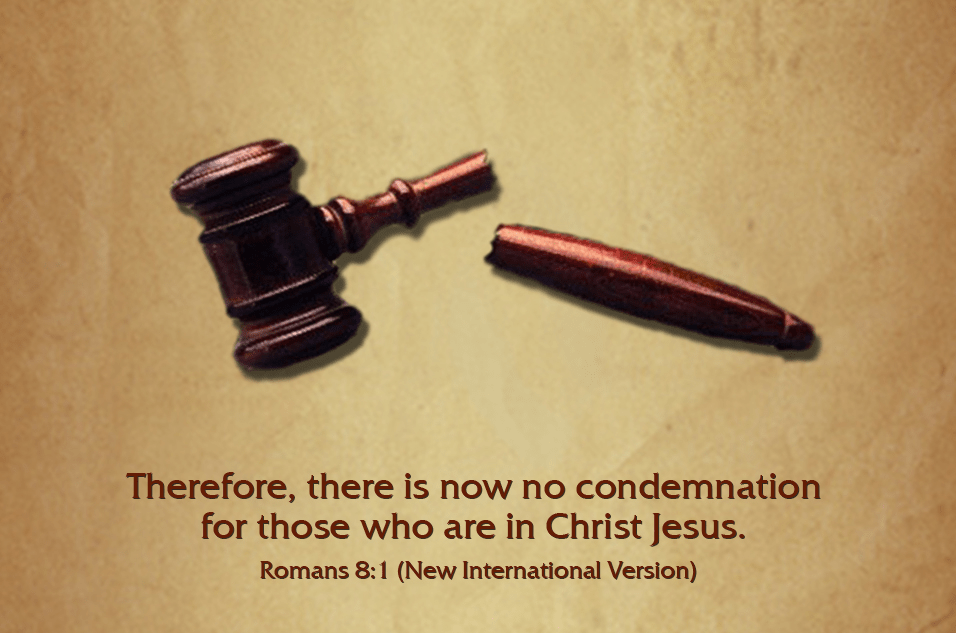
Therefore, there is now no condemnation for those who are in Christ Jesus, because through Christ Jesus the law of the Spirit who gives life has set you free from the law of sin and death. For what the law was powerless to do because it was weakened by the flesh [sinful nature] God did by sending his own Son in the likeness of sinful flesh to be a sin offering. And so he condemned sin in the flesh, in order that the righteous requirement of the law might be fully met in us, who do not live according to the flesh but according to the Spirit.

Those who live according to the flesh have their minds set on what the flesh desires; but those who live in accordance with the Spirit have their minds set on what the Spirit desires. The mind governed by the flesh is death, but the mind governed by the Spirit is life and peace. The mind governed by the flesh is hostile to God; it does not submit to God’s law, nor can it do so. Those who are in the realm of the flesh cannot please God.

You, however, are not in the realm of the flesh but are in the realm of the Spirit, if indeed the Spirit of God lives in you. And if anyone does not have the Spirit of Christ, they do not belong to Christ. But if Christ is in you, then even though your body is subject to death because of sin, the Spirit gives life because of righteousness. And if the Spirit of him who raised Jesus from the dead is living in you, he who raised Christ from the dead will also give life to your mortal bodies because of his Spirit who lives in you. (New International Version)

I feel tremendously privileged to be a Christian and to enjoy the very Spirit of God. The people of God are spiritual people, possessing God’s own Spirit. The Apostle Paul wanted Christians to know the privileges of life in the Spirit, as believers in Jesus.

No Condemnation

There is now no condemnation, no judgment, for us who are in Christ. God has pronounced a verdict, and that decision is final. We have been united to Christ by means of God’s Spirit. Since God condemns neither you nor I, there is no need whatsoever to condemn ourselves or other believers.

Since no condemnation is our reality as Christians, we are to believe this promise of God and swim in its wonderful privilege. Believe that the sin issue has been taken care of once for all through the life and death of Christ. And if you do not feel forgiven, then put yourself in a position to believe. 

It would be silly to go into the bathroom, turn on the shower, and then just stand in the middle of the bathroom without getting under the showerhead. It would be weird because you did not put yourself in a position to actually become clean. You may believe that a shower and using soap and shampoo will make you clean, but if you do not actually avail yourself of the privilege of actually taking the shower, but just stand there and look at it, you will not really be clean. 

We must put ourselves in a position to experience the privilege of knowing our wonderful state of cleanliness (no condemnation) by actually reading the Word of God on a regular basis; by praying in the Spirit on all occasions; by practicing the silence and solitude and other spiritual disciplines necessary to receive the cleansing work of the Holy Spirit.

Two people are declared “married” in a formal wedding ceremony. The couple then works out their shared union together over a lifetime. The minister does not pronounce condemnation at the ceremony; he declares a blessing. Yet, from that point forward, the two people must work on their marriage. They must believe their relationship is important enough to warrant putting themselves in a position to grow together. They will intentionally create date nights and conversations on the couch. They’ll seek to learn, appreciate, and participate in the other person’s interests and life. 

“Grace is not opposed to effort; it is opposed to earning. Earning is an attitude. Effort is an action. Grace, you know, does not just have to do with forgiveness of sins alone.”

Dallas Willard, The Great Omission

Just as we do not marry ourselves and pronounce ourselves a married couple, so we do not save ourselves. However, having a marriage license does not mean there is no effort to be done in the relationship. A marriage is both a legal reality, and a kind of mystical union between two married persons.

It’s a beautiful thing to be in a relationship where there is no condemnation. Because of Jesus Christ we are free to be the people God created us to be – forgiven and no longer burdened by the condemning voices of guilt and shame.

Freedom from Sin and Death

In Holy Scripture, sin is not only a personal struggle but a present ubiquitous reality in the world. The power and presence of sin is found everywhere. There is personal sin, institutional sin, and systemic sin. Because sin is everywhere, death is everywhere. Biblically, death refers to more than physical death because it is also a relational term. Death means relational separation from God. Conversely, life is relational connection with God. 

God did all the action necessary to make the union possible. God sent the Son. God became incarnate. God’s Son became a sin-offering, an atoning sacrifice for our sins. God condemned sin in sinful humanity. God met the righteous requirements of the law. God effects holiness in us by means of the Spirit. 

Rather than saving us from this terrible plight of sin, and then simply telling us to live a holy upright life, God the Father and God the Son sent God the Holy Spirit to indwell us so that we can live like Jesus. Therefore, we must put ourselves in a position to experience life through dwelling in the Scriptures and letting the Spirit and the Word work together to effect practical change in our lives (sanctification, that is, becoming holy). 

Having the Mind of Christ

A problem we all face is that we inhabit a fallen world. Our mindset can easily get screwy. If we want life and peace, we need the mind of Christ and the Spirit. Whatever our minds are occupied with is what determines whether we will have life and peace, or not. 

If the objects of our thoughts, interests, and affections are continually away from Christ and the Spirit, we will experience death, not life. If we put ourselves in a position to indulge the sinful nature (the “flesh”) we will miss real life. An undisciplined mind only leads to relational separation.

The addict knows there are two choices: either life or death. The first of the twelve steps of Alcoholics Anonymous is to admit that I am powerless over alcohol and that my life has become unmanageable.  The second step is to believe that a Power greater than myself can restore me to sanity. The third step is to turn my life and my will over to that Power. So, it is the same for us. 

We are powerless over sin, which will, if left unchecked, lead to death. But in the Spirit (not the alcoholic spirits!) we have life. Sin, like alcohol, is a daily possibility, even after giving my life and my will to God. Yet, there is also the possibility of life. And that hope of life comes with possessing the mind of Christ and the Spirit. 

We have hope that through the Spirit’s power we will overcome the power of choices that lead to death; and instead, embrace choices that lead to life. So, whatever we put into our minds is vitally important. 

The Spirit Indwelling Us

The Spirit is the distinguishing mark of the believer in Jesus. The Spirit opposes the sinful nature and expects us to do the same. There’s no need to try and live the Christian life on our own power when we possess spiritual power. There exists an internal struggle within us that desires to do right but has a compulsion to do otherwise. Yet, the indwelling Spirit gives us victory. Jesus lived the life for us that we could not live. His life, as much as his death, achieved salvation from sin for us. The very same Spirit that helped Jesus live his life, and raised him from death, is the same Spirit whom we possess.

When I was a kid, I remember my grandmother canning preserves. I would sit on a stool in the kitchen and watch her, looking forward to having some grape preserves on my next piece of toast. I once asked her, “Why are you always melting that wax over the fruit?” I didn’t understand how wax could make my toast taste any better. Grandma answered, “The wax seals the jar tightly so the fruit can’t be contaminated. If I didn’t seal it, the fruit would eventually rot.” As an amateur in the canning business, I could see the importance of picking grapes, boiling them, and canning them. But I now know how important sealing and preserving are.

You and I are God’s preserves. God not only chose us, redeemed us, and called us to life in the Son – God also had a plan for preserving us as heirs of eternal life. God gave us the indwelling Spirit so that we can live as we ought, free from sin and doing the will of God through spiritual power working within us. 

I hope today that you have a deep appreciation for the privileges of no condemnation, freedom from sin, possessing the mind of Christ and the power of the indwelling Spirit. And more than that, that you will avail yourselves of this tremendous gift of the Spirit and experience life and peace.

Gracious God, fill us with the knowledge of your will through all spiritual wisdom and understanding. May we live lives worthy of the Lord Jesus and please him in every way; bearing fruit in every good work, growing in the knowledge of God; being strengthened with all power according to your glorious might so that we may have great endurance and patience, joyfully giving thanks to you. For you have rescued us from the dominion of darkness and have brought us into the kingdom of the Son you love, in whom we have redemption, the forgiveness of sins. Amen.

Encourage One Another (1 Thessalonians 3:1-5)

So when we could stand it no longer, we thought it best to be left by ourselves in Athens. We sent Timothy, who is our brother and co-worker in God’s service in spreading the gospel of Christ, to strengthen and encourage you in your faith, so that no one would be unsettled by these trials. For you know quite well that we are destined for them. In fact, when we were with you, we kept telling you that we would be persecuted. And it turned out that way, as you well know. For this reason, when I could stand it no longer, I sent to find out about your faith. I was afraid that in some way the tempter had tempted you and that our labors might have been in vain. (New International Version)

If life were always a bowl of cherries, we would not continually need to be encouraged. But, as you well know, we all need encouragement in order to keep going, be patient, and persevere through the hard slogs of this life.

The Apostle Paul, although sometimes coming across as a driven Type A sort of personality in Scripture, was nonetheless sensitive and attentive to the spiritual and emotional needs of the churches in his care. And because of that concern, he sent his young protégé, Timothy, to encourage the believers in Thessalonica and support them in their efforts to live a faithful life.

Encouragement is a vital practice for all people; it isn’t optional. To need encouragement is not a sign of weakness, any more than needing food is. Ideally, encouragement happens daily, just as much as we need three square meals a day. (Hebrews 3:12-14)

The church is to be a community of mutual support for one another. The world can be a tough, unfriendly, and lonely place. It’s easy to get hurt.

The word “encourage” is a beautiful word (Greek: παρακαλέω and English transliteration: parakaleo). It is actually two words smashed together (compound word) to communicate a wonderful truth. “Para” means to come alongside. It’s a word found in many of our English words (i.e., parachute, paramedic, etc.). The other half of the word, kaleo, means “to call out,” that is, to exhort someone to do something. 

When we put those two words together, parakaleo means to exhort someone to do something by coming alongside them and helping them to do it. Therefore, we do the dual work of saying helpful words and backing it up with helpful actions.

We are to do the patient work of building up and strengthening the faith of each other. Not everything goes according to plan in life; there are unforeseen delays and issues and problems which causes us to find creative work arounds. At other times, we just have to submit to the wait and not become upset or discouraged about it.

When it comes to faith, we are not to give up when things don’t go as we think they should, or as planned. In stressful situations, we must avoid tearing down one another. And we are not to look at other people as objects to be “fixed” when they don’t perform, or do, or say, what we want them to. 

Everyone needs a continual stream of encouragement to keep going so that we do not lose heart or lose hope. If we are in the habit of only pointing out things to others we don’t like, or consistently feel the need to correct people, then we really must say at least five encouraging things for every single complaint. 

“Do you see how everywhere Paul puts the health of the community into the hands of each individual?  Encourage one another and build each other up. Do not then cast all of the burden on your teachers, and do not cast everything on those who have authority over you. You are able to edify one another…. If you are willing, you will have more success with one another than we (pastors) can have. You have been with one another a longer time and know more about one another’s affairs. You are not ignorant of one another’s failings and have more freedom of speech, love, and intimacy. You have more ability than we do to reprove and exhort. I am only one person. You are many. You will be able to be teachers to one another.”

Saint John Chrysostom, 4th century Bishop of Constantinople

We encourage and edify one another with Christ – who is both our example and our substitute. Jesus is our example of leaving the comfort of heaven and coming alongside us in our human condition; he lived the holy life we could not live, and so, is our substitute. 

Jesus came alongside us and taught us how to live by showing the way of love and taking care of the sin issue once for all. After rising from the dead and ascending to heaven, we now have the hope that Christ will return.  Then we will no longer have to deal with the world, the flesh, and the devil dogging us at every turn, seeking to discourage us. 

The three indispensable elements of the Christian life are faith, hope, and love. We need all three in order to be encouraged and strengthened in faith.

For faith to be strong, it needs exercise through continual repetitions of handling hard and challenging circumstances.   

For hope to flourish, we need the confident expectation that God will make good on all divine promises.

For love to abound, it needs to become the very air we breathe. Love is to be so common and routine for us that we put it on every day just as we put on our clothes. We love one another by encouraging each other through meeting needs. We love each other enough to say what needs to be said, and back it up with help so that they will not become discouraged but will persevere and keep going.

The Holy Spirit of God is referred to by Jesus as the Paraclete – the noun form of the word for encouragement.  The Spirit is the one who comes alongside us and teaches us all things by helping us. The Spirit’s work is to sanctify us and make us holy. 

God does not shout commands from heaven; the Lord comes alongside us by means of the Spirit to help us live the Christian life. And that is how believers are to function – pointing one another to Christ, exhorting and helping and edifying each other until the Lord Jesus comes again. 

Almighty God, by your Word you laid the foundations of the earth, set the boundaries of the sea, and still the wind and waves. Surround us with your grace and peace, and preserve us through all the vicissitudes of this life. By your Spirit, lift up those who have fallen, strengthen those who work to rescue or rebuild, and fill us with the hope of your new creation; through Jesus Christ our Lord. Amen.

The Spirit’s Ministry (John 14:25-26)

Jesus said:

“I have spoken these things to you while I am with you. The Companion, the Holy Spirit, whom the Father will send in my name, will teach you everything and will remind you of everything I told you.” (Common English Bible)

“These things I have spoken to you while I am still with you. But the Helper, the Holy Spirit, whom the Father will send in my name, he will teach you all things and bring to your remembrance all that I have said to you.” (English Standard Version)

“I’m telling you these things while I’m still living with you. The Friend, the Holy Spirit whom the Father will send at my request, will make everything plain to you. He will remind you of all the things I have told you.” (The Message)

“All this I have spoken while still with you. But the Advocate, the Holy Spirit, whom the Father will send in my name, will teach you all things and will remind you of everything I have said to you.” (New International Version)

“These things have I spoken unto you, while yet abiding with you. But the Comforter, even the Holy Spirit, whom the Father will send in my name, he shall teach you all things, and bring to your remembrance all that I said unto you.” (American Standard Version)

“These things I have spoken to you, while I am still with you. But the Counselor, the Holy Spirit, whom the Father will send in my name, he will teach you all things, and bring to your remembrance all that I have said to you.” (Revised Standard Version)

“The Holy Spirit is the bond by which Christ unites us to himself.”

John Calvin

We are now in the season of “Ordinary Time” or “Proper Time” in the Church Year. It is “ordinary” in the sense that the Holy Spirit has been given to do the “proper” ongoing work of growing believers in Christ and helping them live into his directives.

The Spirit is our Teacher, cultivating and stirring-up within us all that we need for the Christian life.

As you can see from a few of the various English translations of today’s Gospel verses, there is no uniform rendering of the original Greek word, “Paraclete.” That’s because this word for the Spirit is so rich and full that it’s difficult to encompass what it means with a single English word.

A straightforward literal translation of “Paraclete” needs a phrase rather than a word: “Called alongside for encouragement,” fairly-well translates it. All the various words used in the different versions of the New Testament are accurate – yet they merely bring out one dimension to the understanding of the Holy Spirit’s ministry.

Our needs as followers of Jesus are many – thus requiring a multi-faceted mentoring ministry by the Spirit.

The Spirit was sent to be with Christians continually as their Teacher, reminding them of all Jesus has said and done as the ultimate witness to Christ’s life and ministry.

The role of the Holy Spirit is to provide comfort and aid for Christians, especially in difficult situations; the Spirit helps in a time of need.

The force of “Paraclete” is even more than this because there’s also the dimension of the Spirit being our close companion. Indeed, it is a special friend who stands up for us, advocates on our behalf, gives us remedial teaching, and brings comfort.

The Holy Spirit is motivated (just like the Father and the Son) with love for us, to give whatever we need to live a successful, abundant, and full Christian life.

In whatever situation we face, the Holy Spirit is something of a divine concierge in the middle of adversity who is attentive to every need.

The true difficulty in describing the Spirit’s ministry with us is that the Spirit is God – and no amount of description will adequately get our minds around the Spirit. God is much too big for that. All metaphors, images, and words fall short of genuinely expressing the Spirit’s immense work.

Perhaps a story will better illustrate the Spirit’s nature and work. When my girls were small and I was a financially struggling seminarian, we were one evening down to our last bit of food. Although they thought it was a privilege to eat Wheaties for supper, my wife and I knew the cupboard was now bare. So, we prayed.

As we got up from our knees and started off for bed, there was a knock at our patio back door. We looked at each other wondering who in the world it could be at such a late hour. When I drew the shades, one of our neighbors, a little Puerto Rican woman, was outside holding what appeared to be more than her own body weight in overflowing grocery bags.

I ushered her in and before I could say a word, she said, “I went to bed and had just fallen into a deep sleep. But the Holy Spirit woke me up and told me to take as many groceries as I could carry to you. So, here I am.” In that moment, I knew in my head and felt in my heart a ministry of the Spirit which transcends language.

The next morning our girls learned something about God that they would never get from listening to their Dad’s teaching and preaching. This is a story which gets retold often because it reminds us of how God meets us in our need and how much God cares.

Through such encounters with the Spirit (and I have mercifully been granted many of them!) I begin to understand and appreciate the wisdom of the saints throughout the ages:

“When the grace of the Holy Spirit enters a soul and is established there, it gushes forth more powerfully than any other spring; it neither ceases, dries up, nor is exhausted. And the Savior, to signify this inexhaustible gift of grace, calls it a spring and a torrent; He also calls it gushing water, to indicate its force and impetus.”

St. John Chrysostom

“Trying to do the Lord’s work in your own strength is the most confusing, exhausting, and tedious of all work. But when you are filled with the Holy Spirit, then the ministry of Jesus just flows out of you.”

Corrie Ten Boom

May you know the ministry of the Spirit, inside and out, in all ways and in all circumstances.

A Prayer of St. Augustine:

Breathe in me, O Holy Spirit,
That my thoughts may all be holy.
Act in me, O Holy Spirit,
That my work, too, may be holy.
Draw my heart, O Holy Spirit,
That I love only what is holy.
Strengthen me, O Holy Spirit,
To defend all that is holy.
Guard me, then, O Holy Spirit,
That I always may be holy. Amen.