Keep Wisdom Close (Proverbs 7:1-4)

By Carole Hénaff

My child, keep my words
    and store up my commandments with you;
keep my commandments and live;
    keep my teachings as the apple of your eye;
bind them on your fingers;
    write them on the tablet of your heart.
Say to wisdom, “You are my sister,”
    and call insight your intimate friend. (New Revised Standard Version)

Out of all the words I hear come out of people’s mouths in a day, I don’t think I’ve ever heard someone say something like “Wisdom is my sister.” Indeed, I would argue that wisdom is in short supply these days.

The thing about wisdom is that many people – if they consider wisdom at all – tend to overemphasize one aspect of it over another. For wisdom to truly be wisdom, there must be both a solid body of knowledge and a practical understanding of how to implement learned information into one’s lived daily experience.

The concept of wisdom is truncated whenever one only focuses on book learning and information; or if one solely homes in on individual practice without any instruction.

A truly wise person has a teachable spirit about them, while at the same time, is willing to take the time necessary for action, and reflection on those actions, doing them again and again with learned and helpful information.

If someone tells you something, without any solid evidence to back up their statements, then you are likely hearing a bunch of foolishness, and not wisdom. What’s more, if they are all words and no action, there’s probably nothing worth listening to.

Without a robust evidence-based understanding of a subject, we become vulnerable to every Tom, Dick, and Harry who comes along and makes claims we’d like to hear. Even if it’s a blatant lie, apart from wisdom, we may suck up the bogus information like the bottom of a chocolate shake.

The presence of wisdom is an invitation for all simpletons to come, learn, and get rid of the simplistic ignorance of small personal opinions. Wisdom gives us a rudder to steer the ship of our life; and a map to provide us with direction.

If we eat at wisdom’s table, we shall fill ourselves with abundant life and satisfaction. Then, we will be able to overlook the baloney sandwich of stupidity for the T-bone steak of knowledge.

Wisdom is very much needed in times of temptation. Therefore, the more we are attentive to attaining a sage life, the more we will be able to withstand temptation’s onslaught when it comes to us.

The Teacher of Proverbs makes it clear that none of this is optional nor some sort of suggested teaching. Our Old Testament lesson for today is adamant that we pay attention to these admonitions. The verb “keep” is an inescapable exhortation.

Keeping the Teacher’s commands near to us, as if they were a close relative, is imperative to successful daily living.

Becoming proficient in the ways of the soul is important because the soul thrives on wisdom. Wisdom is soul food. This means we will attend to the small things which keeps our soul engaged and fed.

Carrying out our ordinary activities with mindfulness and a desire to learn is an artful practice which puts us in a position to soak up the wisdom around us.

The emptiness that so many people complain of comes, in part, from ignoring the small things. It puts wisdom way off of our radar. In other words, things like loneliness, boredom, and dissatisfaction come from ignoring one’s soul. The consequence is that wisdom is kept at a distance, and foolishness is allowed to come in and have run of the house.

What’s more, a life out of balance between introverted reading and extroverted activity puts us off kilter, not knowing what direction we ought to go. In this state, we’ll likely never find God’s will in any given situation.

We know we are growing in wisdom whenever loving another becomes more fulfilling than understanding that person.

If we seek wisdom so that we can be free of complexity, confusion, and all mystery, then we’ll never attain it. Instead, we’ll be the wise guy in the room and not the wise sage. Love will be off our radar, and so, wisdom shall be out of reach.

Developing wisdom is no easy endeavor; it’s hard, and requires steadfast commitment. The difficulty of it typically lies in implementing wise choices. That’s because we will inevitably come to a point where discernment tells us that we must let go of something.

And that something we need to let go is our own petty world that we have created. Only when we have made room can we accept a new world order which revolves around wisdom and doing what we can for the common good of all creation.

O God of love, you are the true sun of the world, evermore risen and never going down: We pray you to shine in our hearts and drive away the darkness of sin and the mist of error. We pray that we may, this day and all our lives long, walk without stumbling in the way you have prepared for us, which is Jesus Christ our Lord; who lives and reigns with you and the Holy Spirit, one God in glory everlasting. Amen.

How To Be Honest, Just, and Fair (Proverbs 1:1-7)

Solomon writing Proverbs by Gustave Doré (1832-1883)

The proverbs of Solomon, son of David and king of Israel.

Here are proverbs that will help you recognize wisdom and good advice, and understand sayings with deep meaning. 

They can teach you how to live intelligently and how to be honest, just, and fair. They can make an inexperienced person clever and teach young people how to be resourceful. 

These proverbs can even add to the knowledge of the wise and give guidance to the educated, so that they can understand the hidden meanings of proverbs and the problems that the wise raise.

To have knowledge, you must first have reverence for the Lord. Stupid people have no respect for wisdom and refuse to learn. (Good News Translation)

At the beginning of this year, if you like making new year’s resolutions, or are looking for a good practice to adopt, I have a suggestion: Consider committing yourself to the reading, reflection, and study of the biblical proverbs. At the least, read a chapter of Proverbs every day throughout this month. Since there are 31 chapters, and 31 days in the month of January, you have a guide in what to read every day.

The pursuit of wisdom is a noble aspiration for the New Year. One of the best places to go in that pursuit is the biblical book of Proverbs because it is all about living wisely and not foolishly. To acquire and live by wisdom means learning how to grow in being right, just, and fair in all our interactions and dealings with others.

Honest

“Honest” is “right” or “righteous.” For King Solomon of old, this is a relational term – to be righteous, to have honest and right relationships with God and other people. Righteousness involves experiencing peaceful, harmonious, and fruitful relations. 

For the Christian, right living is to know the wonderful freedom and joy of an unhindered relationship through Jesus Christ in dependence upon the Holy Spirit. When it comes to fellow human relations, a person characterized by righteousness does not, for example, let the sun go down on their anger. It is to know personal peace as well as to be a peacemaker, so that relationships do not remain strained, but enjoy harmony.

Just

“Just” is closely related to “right.” We might tend toward primarily understanding justice as a punitive act – and that is certainly a part of the term. God punishes the wicked with appropriate timing and wisdom; and deals with those who withhold righteousness and love through their uncaring, inattentive, or evil acts. 

Solomon understood justice as mostly concerned with providing a person with the necessities of life. So, for example, if someone is hungry and needs food, or does not have clean water to drink, it is a “just” act for us to provide those critical needs. God is deeply concerned for justice, and expects people to act in this same manner.

Fair

“Fair” is to be egalitarian. Fairness and equity binds righteousness and peace together by avoiding prejudice toward others and their needs. It means to not show favoritism because there is an unshakable belief in the equality of all people, no matter where they are from, what they do, or who they are.

Therefore, if we exercise righteousness and justice exclusively with individuals and groups we like, but ignore others in need, there is no fairness. To give our love and service to all persons without strings attached, or without being concerned to get paid back, is the practice of being fair in everything we do and say.

To live in the way of being honest, just, and fair in all our interactions is to be wise. Conversely, the classic fool is one who judges others, creates discord, and ranks persons according to their own personal standard of who deserves help, and who does not. Trying to have a useful and gracious conversation with a fool is like trying to reason with a toddler – you will get nowhere. 

A good way of pursuing the wise and biblical virtues of honest righteousness, restorative justice, and egalitarian fairness is to ask God to open our eyes to those within our sphere of influence who need both physical and relational needs met. Then, follow through by loving those persons for whom God brings into our lives.

Almighty God, the essence and source of wisdom, you are always right, just, and fair in all things. I praise you for your infinite and abundant wisdom.

Whereas you abound in wisdom, I am lacking. Please help me to grow in wisdom, as I increase in my knowledge and respect of your divine presence.

By means of your Spirit, please increase my depth of insight as I study your Holy Word. Hold me back from leaning on my own understanding and enable me to wholeheartedly embrace the wisdom from above.

Since you are a just God who shows no favoritism, lead me into being like you in my dealings with others through the example of Jesus Christ, in the strength of the Holy Spirit. Amen.

1 Peter 5:1-5, 12-14 – Humble Leadership

To the elders among you, I appeal as a fellow elder and a witness of Christ’s sufferings who also will share in the glory to be revealed: Be shepherds of God’s flock that is under your care, watching over them—not because you must, but because you are willing, as God wants you to be; not pursuing dishonest gain, but eager to serve; not lording it over those entrusted to you, but being examples to the flock. And when the Chief Shepherd appears, you will receive the crown of glory that will never fade away.

In the same way, you who are younger, submit yourselves to your elders. All of you, clothe yourselves with humility toward one another, because,

“God opposes the proud
    but shows favor to the humble….”

With the help of Silas, whom I regard as a faithful brother, I have written to you briefly, encouraging you and testifying that this is the true grace of God. Stand fast in it.

She who is in Babylon, chosen together with you, sends you her greetings, and so does my son Mark. Greet one another with a kiss of love.

Peace to all of you who are in Christ. (NIV)

Humility is the consummate virtue of the believer in Jesus. Apart from humility there is only a lack of authenticity and integrity. With humility there is a recognition of our need for God’s grace, guidance, and peace. Humility opens to us the wide vistas of God’s love and mercy. 

A humble spirit:

  • Makes leadership both possible and bearable (God is in control, not us). 
  • Helps relieve the anxious worries that wash over us (God cares for us).
  • Enables us to resist evil and remain strong in faith (God protects us).
  • Fortifies us to remain steady through suffering (God comforts us).

Genuine spiritual humility places us securely in the merciful arms of God. Furthermore, humility and meekness are what this old fallen world needs, as well, and to which we must reinforce in all our church leadership appointments, national and local political elections, and work staff hires. An abundance of smarts and grit cannot compensate for a lack of humility. God is always in control, and so, syncing our lives with divine providence and care will enable us to be better off.

Yet, humility is one of the hardest virtues to practice because it requires that we willingly put aside pride, ego, and personal agendas to embrace God’s agenda:

God blesses those people who depend only on him. They belong to the kingdom of heaven! (Matthew 5:3, CEV)

Jesus said, “The truth is, you must change your thinking and become like little children. If you don’t do this, you will never enter God’s kingdom. (Matthew 18:3, ERV)

Don’t do anything for selfish purposes, but with humility think of others as better than yourselves. (Philippians 2:3, CEB)

To be a humble leader means to have the intention, focus, and action of seeking God’s will and way in everything. Then, to have the courage to lead others in God’s direction despite resistance and opposition from those who want to follow a different path.

Therefore, our task as spiritual leaders is to pursue hard after God’s direction rather than relying solely upon our base instincts, pragmatic desires, and personal views. Humility provides us a radical openness to God. A meek and gentle spirit enables us to develop an ever-deepening awareness of where God is leading. The Lord is up to something and has plans for our world, our locales, and our faith communities.

We also need to recognize that not everyone is open to God. If our focus is primarily on molding a group of people to be what we want them to be, then we may have become closed to what God wants. This closed spirit comes out in a couple of different ways:

  1. Maintaining tradition at all costs. Living with uncertainty and ambiguity is too much for some leaders, so they stick close to the status quo. Like Abraham, however, we are called to move and change without always knowing where we are going. (Genesis 12:1-5)
  • Getting rid of tradition like there is no tomorrow. To get what they want some leaders focus solely on their own needs and desires without considering those they are called to lead. Like Timothy, we are to hold onto the great deposit of doctrine and heritage given to us and not always be looking for the next new thing to turn things around. (1 Timothy 6:20-21; 2 Timothy 1:13-14)

Humility-based leadership continually consults the divine will and others’ wisdom in a concerted effort to be collaboratively open to God. A humble spirit enables and empowers leaders:

  • To lead from a position of faith, not fear.
  • To seek divine help and resources through a posture of listening. 
  • To practice love in all things to all persons.
  • To make prayer and discernment the foundation of planning.
  • To read Holy Scripture as if life depended on it.
  • To consult and collaborate with others who are like-minded.
  • To honor and respect tradition while holding it with open hands, not closed fists.

If we cultivate a humble attitude and a deep openness to God, along with a determined readiness to move people lovingly and graciously in God’s direction, then amazing things can happen. Let our prayer together be this: 

I am yours, wise God, no matter where you call me to go, what you call me to do, and how you call me to be.  I will seek your will and way as I lead others to do the same through Jesus Christ our Lord in the power and guidance of your Holy Spirit. Amen.

Deuteronomy 5:1-21 – Ten Basic Rules for Life

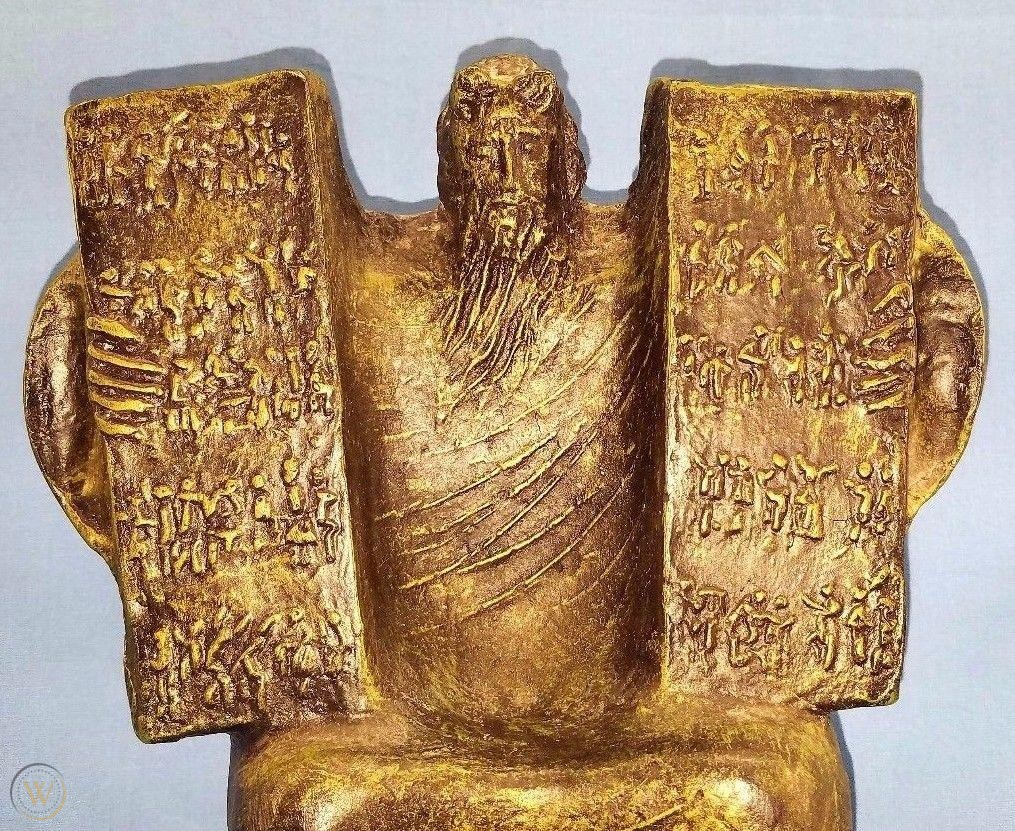
Invitation to the Decalogue by Romanian sculptor Liviu Mocan

Moses called out to all Israel, saying to them: “Israel! Listen to the regulations and the case laws that I’m recounting in your hearing right now. Learn them and carefully do them. The Lord our God made a covenant with us at Mount Horeb. The Lord didn’t make this covenant with our ancestors but with us—all of us who are here and alive right now. The Lord spoke with you face-to-face on the mountain from the very fire itself. At that time, I was standing between the Lord and you, declaring to you the Lord’s word, because you were terrified of the fire and didn’t go up on the mountain.”

The Lord said:

I am the Lord your God, who brought you out of Egypt, out of the house of slavery.

You must have no other gods before me. Do not make an idol for yourself—no form whatsoever—of anything in the sky above or on the earth below or in the waters under the earth. Do not bow down to them or worship them because I, the Lord your God, am a passionate God. I punish children for their parents’ sins—even to the third and fourth generations of those who hate me. But I am loyal and gracious to the thousandth generation of those who love me and keep my commandments.

Do not use the Lord your God’s name as if it were of no significance; the Lord won’t forgive anyone who uses his name that way.

Keep the Sabbath day and treat it as holy, exactly as the Lord your God commanded: Six days you may work and do all your tasks, but the seventh day is a Sabbath to the Lord your God. Don’t do any work on it—not you, your sons or daughters, your male or female servants, your oxen or donkeys or any of your animals, or the immigrant who is living among you—so that your male and female servants can rest just like you. Remember that you were a slave in Egypt, but the Lord your God brought you out of there with a strong hand and an outstretched arm. That’s why the Lord your God commands you to keep the Sabbath day.

Honor your father and your mother, exactly as the Lord your God requires, so that your life will be long and so that things will go well for you on the fertile land that the Lord your God is giving you.

Do not kill.

Do not commit adultery.

Do not steal.

Do not testify falsely against your neighbor.

Do not desire and try to take your neighbor’s wife.

Do not crave your neighbor’s house, field, male or female servant, ox, donkey, or anything else that belongs to your neighbor. (CEB)

Whenever I take my wife’s pooch to our local spacious dog park, he knows he will need to stick to just a few of my basic rules. Although he doesn’t need the leash and is free to roam, he understands not to bark at people or approach them and other dogs without my permission. Those few simple rules are for both his well-being, and others.

We as people are free to live our lives as creatures in God’s image. The Lord has just a few basic rules for us to live by to honor both divinity and humanity, as well as to protect others and ourselves. Most folks know them as “The Ten Commandments.”

The Ten Commandments (The Decalogue or The Ten Words) were given to the ancient Israelites nearly 3,500 years ago. These words have stood the test of time and continue to be understood as a universal standard of morality and relational interactions.

There are hundreds of commands in Holy Scripture – approximately 613 in the Old Testament, and 437 in the New Testament – a whopping 1,050 total commands throughout the entirety of the Bible. So, what, then, makes these Ten so special?  Why do we stick to The Ten Words?

Moses and the Ten Commandments by Italian sculptor Giuseppe Macri (1913-1991)

The reason The Ten Commandments have endured and continue to be learned, spoken, and adhered is that they are foundational commands. Following the Ten Words in the Old Testament are a string of specific commands from God to Moses and then to the people (Exodus 21-23 and Deuteronomy 6-26). Those commands are all a fleshing-out of how to live the basic Decalogue in the Israelites’ context of entering and being in the Promised Land.

In short, every single command of Holy Scripture can be ethically and morally tied back to The Ten Commandments in some way. Whereas many Old Testament laws were given to the Israelites in their ancient Middle Eastern socio-economic culture, The Decalogue was designed to be universal and flexible for every culture and society everywhere, for any time, and every generation.

Therefore, we need to distinguish between The Law (capital “L”) and the law (little “l”). God’s fundamental and foundational ethical Law has always existed and continues to exist – and it is encapsulated in ten short and simple commands which everyone everywhere can obey, whether they are at their jobs, at home, church, or out having fun.

In fact, these ten basic commands are so important that Jesus restated them for us in his Sermon on the Mount (Matthew 5-7). Christ got down to the heart of the commands and let everyone know what it truly means to hold, keep, and obey The Ten Words. For example, Jesus said concerning the seventh command:

“You have heard that it was said to our people long ago, ‘You must not murder anyone. Anyone who murders another will be judged.’ But I tell you, if you are angry with a brother or sister, you will be judged. If you say bad things to a brother or sister, you will be judged by the council. And if you call someone a fool, you will be in danger of the fire of hell” (Matthew 5:21-22, NCV).

It had become easy over the centuries for people to think everything was jim-dandy if they didn’t physically kill anyone. Yet, Jesus knew that well before any person is murdered by another that anger has been nursed through bitter grudges toward another. 

The Ten Words are the very heart of God’s desire for all humanity, and this is precisely why it is important to know and obey them in their full intent. They contain how to relate to God (Commands 1-4); and, how to relate to one another (Commands 5-10).  Jesus would later say, in response to what is the greatest command of all:

“Love the Lord your God with all your heart, all your soul, and all your mind. This is the first and most important command. And the second command is like the first: ‘Love your neighbor as you love yourself.  All the law and the writings of the prophets depend on these two commands.” (Matthew 22:36-40, NCV)

Question and answer 115 of the Heidelberg Catechism, a Confession of Faith crafted by Protestant Reformers in the sixteenth century, addresses a significant issue:

Question: Since no one in this life can obey the Ten Commandments perfectly, why does God want them preached so pointedly? 
Answer: First, so that the longer we live the more we may come to know our sinfulness and the more eagerly look to Christ for forgiveness of sins and righteousness.

Second, so that we may never stop striving, and never stop praying to God for the grace of the Holy Spirit, to be renewed more and more after God’s image, until after this life we reach our goal: perfection.

When all is said and done, grace will have the last word. Yes, none of us will ever perfectly live-out and embody The Ten Words in their entirety all the time. Yet, the grace of God in Jesus Christ does for us what we cannot do for ourselves: deliver us from the realm of sin, death, and hell.

Stuff happens. We often fail to live-into the ways of God for our lives through The Decalogue. However, God, always the hound of heaven, will track us down and mercifully redeem us.

So, embrace The Ten Words. Know them, memorize them, and understand them. Post them on the wall of your office or in your house. Most of all, seek to practice them, obey them, and embody them so that you can enjoy all the freedom of God’s big world.

And you just gotta love it that Johnny Cash once sang about them…