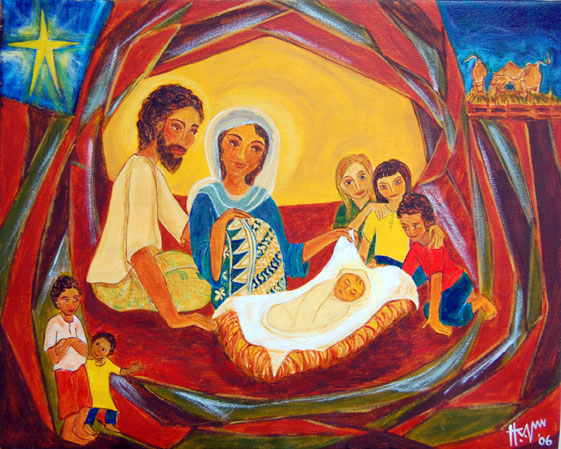
God Is With Us, by Malaysian artist Hanna Varghese, 2006
Now the main point of what we are saying is this: We do have such a high priest, who sat down at the right hand of the throne of the Majesty in heaven, and who serves in the sanctuary, the true tabernacle set up by the Lord, not by a mere human being.
Every high priest is appointed to offer both gifts and sacrifices, and so it was necessary for this one also to have something to offer. If he were on earth, he would not be a priest, for there are already priests who offer the gifts prescribed by the law. They serve at a sanctuary that is a copy and shadow of what is in heaven. Therefore, Moses was warned when he was about to build the tabernacle: “See to it that you make everything according to the pattern shown you on the mountain.” But in fact, the ministry Jesus has received is as superior to theirs as the covenant of which he is mediator is superior to the old one, since the new covenant is established on better promises.
For if there had been nothing wrong with that first covenant, no place would have been sought for another. But God found fault with the people and said:
“The days are coming, declares the Lord, when I will make a new covenant with the people of Israel and with the people of Judah. It will not be like the covenant I made with their ancestors when I took them by the hand to lead them out of Egypt, because they did not remain faithful to my covenant, and I turned away from them, declares the Lord. This is the covenant I will establish with the people of Israel after that time, declares the Lord. I will put my laws in their minds and write them on their hearts. I will be their God, and they will be my people. No longer will they teach their neighbor, or say to one another, ‘Know the Lord,’ because they will all know me, from the least of them to the greatest. For I will forgive their wickedness and will remember their sins no more.”
By calling this covenant “new,” he has made the first one obsolete; and what is obsolete and outdated will soon disappear. (NIV)
Our wait is nearly over. Christmas Day is almost here. The Messiah is coming. I genuinely believe that Jesus is the mid-point of history; everything for all time hinges upon Christ’s incarnation. The most cataclysmic event in the history of the world is a birth. The hopes of humanity are focused, of all things, in a stinky old feeding trough for animals – a manger.
Yes, Christians put a lot of focus on the cross and resurrection. Yet, the incarnation was the signature event of God’s breaking into this world. The inconceivable was conceived. God became human. Nothing would ever be the same again….
Nativity by African artist Joseph Mulamba-Mandangi, 2001
Jesus is our great high priest, the nexus between heaven and earth. All else are only mere shadows of the real Savior. Christ is the hinge upon which our own personal lives turn. The old system of law fades and gives way to the person for whom it all pointed. For the law, as important as it was, has never been able to save. In Christ there is a new covenant established by grace, taking care of the sin issue once for all.
Through the Christ child, all other means of deliverance have become obsolete. No matter how much he washed his hands, Pilate could not wash away his guilt. Despite all our efforts to hide or undo our shame, it will not go away. It is through Jesus that all guilt and shame have been banished. Human iniquity is taken away. All that we have done and left undone is forgiven – our sin is purged forever.
A new age has dawned. A new era has been inaugurated. The miracle of the Nativity explodes with continuing effect throughout history. Its continuing effects can still be felt, two-thousand years later. Nothing will ever undo the power of love and grace which was unleashed in the little town of Bethlehem.
Here is a clear and confident declaration to any and all in despondency or despair, no matter the reasons why: We may feel crushed, dejected, confused, or broken because of this past year’s events; but our salvation depends not on our mood or the constant changing of circumstances. Christ has offered himself once for all. The work is finished. Our faithful high priest is even now interceding for you and me in heaven.
Our faith is grounded not in our pedigree, our position, or our ability to produce but forever in what Christ has done in becoming human on our behalf. See the manger where he lies. Know that salvation is before us. Believe the promise of God.
May this eternal truth be always on our hearts: That the God who breathed this world into being Placed stars into the heavens And designed a butterfly’s wing Is the God who entrusted his life to the care of ordinary people became vulnerable that we might know how strong is the power of Love A mystery so deep it is impossible to grasp A mystery so beautiful it is impossible to ignore.
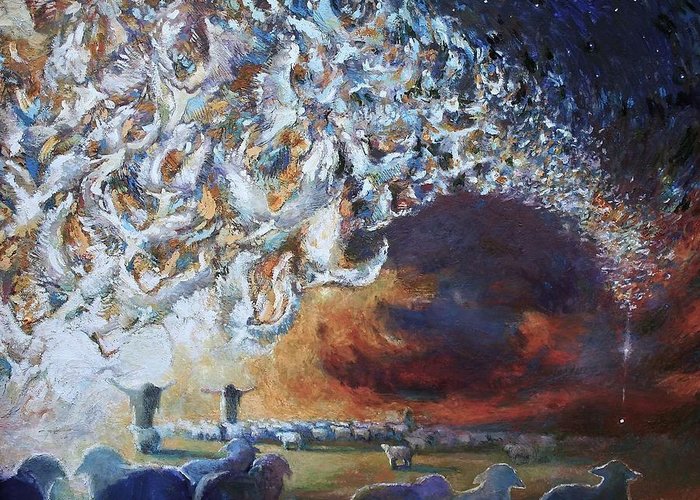
Seeing Shepherds by American painter Daniel Bonnell
There were shepherds living out in the fields nearby, keeping watch over their flocks at night. An angel of the Lord appeared to them, and the glory of the Lord shone around them, and they were terrified. But the angel said to them, “Do not be afraid. I bring you good news that will cause great joy for all the people. Today in the town of David a Savior has been born to you; he is the Messiah, the Lord. This will be a sign to you: You will find a baby wrapped in cloths and lying in a manger.” (Luke 2:8-12, NIV)
When I think of sheer unbounded joy, I think of dogs. My own dog, Max Power, waits every day for me to get home from work. And when I walk through the door, he acts as if he has not seen me in months, wagging his tail so hard that it looks like it will fly off his butt. This is one reason people like dogs so much – their joy brings us joy. It is not a joy that was ever learned in obedience school – it is just built into the relationship.
Genuine joy does not come from getting all the presents we want for Christmas or having everything go our way.
Joy is not a product we can buy at the store. Authentic, real joy is the fruit of meaningful relationships. My dog cares nothing about how much money I have or even if he has the best dog food to eat and a trendy collar to wear; his joy comes from being with me.
The good news of a Savior coming to this earth means God is coming to be with us. This is good news of great joy! We are loved because God is good, not because we are good. And because God is good, and we are a mess of humanity, there is joy that the Lord is coming to save us!
The reason Christ’s birth was good news of great joy to the shepherds is that they were shepherds. Shepherds in the ancient world were generally looked on with contempt. In fact, Egyptians refused to eat with Jews because they were mostly shepherds (Genesis 46:31-34).
Shepherds spent most of their time living with their sheep outdoors, to protect the flock. Shepherds were neither well-dressed nor culturally refined. They mostly smelled like sheep poop. Shepherds also had the notoriety of being drinkers. Because they slept with the sheep, many shepherds passed the time and dealt with the chilly air by taking a nip of alcohol. We do not really know whether most shepherds were drunkards, or not; but we do know they had a bad reputation.
Becoming a shepherd was not a profession a young person aspired to. Nobody took out a student loan to major in shepherding at the University of Jerusalem. King David started out as a shepherd. He was the youngest in the family and got stuck with the job nobody else wanted.
Out of all the persons and people-groups the heavenly angels could have come to announce the birth of Christ, it was shepherds.
This is truly a gospel of grace. The angelic announcement to a bunch of stinky shepherds is profoundly significant. It is important because grace is being shown to the lowliest of society. A lowly Savior, born to a lowly family, and placed in a lowly feeding trough, came to reach the lowly, common, ordinary person.
The Shepherds by Malaysian artist Hanna Varghese (1938-2009)
To have this kind of attention from God Almighty is like the master of a dog walking into the house. We, as the common, ordinary mutts of society, are beside ourselves with joy, feeling privileged to be in the same room as Jesus.
It is only the lowly and humble in heart who will see God and enjoy the Lord’s presence. That is because God opposes the proud but gives grace to the humble. It is why the angels came to the shepherds and not to the religious leaders. It is good news of great joy for all the people.
The gospel is not limited to those who are the most educated, the wealthiest, or from the most prominent of families – it is for everyone.
Yet, even with this good news of grace, many people still live their lives in fear and worry instead of joy. The message seems to only linger on the surface, not getting firmly pressed into minds and hearts.
Even though a Savior is born, we still experience the harshness of a world under the dominion of darkness. We worry about constant disease, financial difficulties, and the daily stresses of life. We fret about dealing with ornery people, hard circumstances, family members who go astray, and the little plastic things on our shoelaces coming off leaving the shoestrings frayed!
Sometimes, we strain our eyes to try and see some joy.
Jesus is the son of David, born in the town of David – both were anointed as kings but had to go through a lot of hardship before realizing their kingships. We live in the time between the two advents of Christ in which God’s kingdom is already here but not yet here. It is a topsy-turvy time characterized by a weird mix of sinner and saint, despair and joy, adversity, and comfort.
Real joy is not found in having every circumstance go our way and having everyone like us, all the time. Joy comes from the gospel of grace, from God coming down and being with us. Being in the presence of the Master makes all the difference. If joy comes from being with God in Christ, then cultivating and practicing the presence of Jesus in our daily lives is important and necessary.
Had the angels come into Bethlehem, a town swelling in numbers of people because of the Roman census, I am not sure anybody would have heard them. The shepherds were away from the noise, out in the quiet solitude of the fields by themselves. So, they were able to hear the message of God when it came.
Noise comes in various forms, both around us and within us. Sometimes we even create noise on the outside so that the boisterous racing thoughts on the inside will get drowned. To be quiet is to be able to listen. To listen is to receive another’s voice.
Receiving the voice of the angels, their message, and their praise to God, is the pathway to joy and the way out of unhappy inner noise.
We need deliverance from our brokenness and unhealthy ways of coping. There is far too much unhappiness in this world. One in every two-hundred teenage American girls cut themselves on a regular basis. More than half of people in the United States with serious depression do not receive or will not get adequate help. Anxiety disorders affect nearly sixty million adults in the United States.
The coming of Jesus Christ into this world makes a difference. God has come to be with us to meet the deepest needs of our lives. The deliverance can be realized as we eagerly anticipate the Master, spend time with him, and allow the Lord’s loving presence and compassionate voice to transform our hearts and change us from the inside-out.
Christianity is not a magic happy pill to swallow; it is a relationship with God which is cultivated and grows over time.
Joy is relational. That means no amount of positive thinking, buying new stuff, or good situations will create joy or sustain it. Christianity offers joy in Jesus – not a cheap sentimental happiness of having every prayer answered or each situation go our way – but the settled joy of God with us through the valleys as well as on the mountain tops.
Neither worry nor fret. Do not be afraid. I bring you good news of great joy that will be for all the people. In the town of David, a Savior is born. He is Christ the Lord. What can I give him, poor as I am? If I were a shepherd, I would bring a lamb. If I were a wealthy man, I would give him frankincense or gold. Yet, what can I give him?…
“Therefore, let all Israel be assured of this: God has made this Jesus, whom you crucified, both Lord and Messiah.”
When the people heard this, they were cut to the heart and said to Peter and the other apostles, “Brothers, what shall we do?”
Peter replied, “Repent and be baptized, every one of you, in the name of Jesus Christ for the forgiveness of your sins. And you will receive the gift of the Holy Spirit. The promise is for you and your children and for all who are far off—for all whom the Lord our God will call.”
With many other words he warned them; and he pleaded with them, “Save yourselves from this corrupt generation.” Those who accepted his message were baptized, and about three thousand were added to their number that day.
They devoted themselves to the apostles’ teaching and to fellowship, to the breaking of bread and to prayer. (NIV)
Imagine we are all standing around in a huge modern-day lobby, ready to listen to Peter. We understand big events like this must be well-organized, so everyone is getting a name tag. But the name tags are given to us with not only our first names; they also include our hidden guilt and shame. People walk up to the registration table. “Name?” “Bob.” “What are you ashamed of, Bob?” “I stole some money from my boss once, and he never found out.” The person takes a marker and writes, Bill: Embezzler.
Next person: “Name?” “Jill.” “Jill, what are you guilty of?” “I deliberately slandered a group of people. I said things that were not true about them because I did not like them.” So, the person writes on Jill’s nametag, Jill: Slanderer. “Name?” “George.” “What kind of guilt and shame are you carrying?” “I’ve been coveting my neighbor’s Corvette… and his wife.” George: Coveter. Person after person comes.
Then, up to the table comes Jesus. “What is your shame, Jesus?” Well, in truth, none. So, Jesus starts walking down the line. He comes to Bob and says, “Bob, give me your name tag,” and puts it on himself. “Jill, give me your name tag.” He puts it on himself. “George, give me your name tag.” It goes on himself.
Soon Jesus is covered with name tags and a bunch of icky shame and awful guilt. Apart from Jesus, we cannot take the name tags off because we cannot shed the labels of who we really are. Christ bore the cross covered with all our guilt and shame attached to him. It was all crucified with him.
When the people of the Apostle Peter’s day understood who Jesus was and what he had done for them, they were deeply troubled in their spirits and their souls were horribly upset. They were cut to the heart with the things they had done which sent Christ to the cross. The crowd’s remorse was so deep and profound that they were beside themselves with spiritual pain and asked Peter,
“What shall we do!?”
Peter called them to “repent and be baptized.” To repent is to have a complete change of mind and heart; it is to express a courageous naming of shame, guilt, and sin. Repentance, then, leads to a 180 degree turn of direction to our lives. Repentance is realizing what we have become, and seeing it is not a good place to be.
Sometimes we lack awareness of how serious our situation really is and how at risk we really are. It may be hard to imagine our offense is bad enough to crucify Jesus. Perhaps we have self-justified our morsels of gossip or our lack of attention to the poor, only choosing to see our hard work and sincere efforts to do good.
For others, the problem with repentance runs deeper, having been raised in a legalistic environment. These folks lug around a guilt-laden backpack that would bend the knees of a mule. And most of the guilt, they realize, is neurotic—not based on any real transgression. Every bad thought and each failure of faith is obsessed over to the point that they cannot shake the pangs of constant shame.
The good news is that the kingdom of God is near. In the name of Jesus Christ there is forgiveness, healing, and new life. If today there is a realization of being in a bad place in your life, whatever that place is, the cross of Christ addresses the deepest needs of your life. What shall we do? Repent and be baptized.
Repentance, baptism, forgiveness of sins, and receiving the Spirit are all linked together in today’s New Testament lesson. Baptism is the sign and seal of God’s promise of forgiveness in Jesus; it visually shows us that God washes away our guilt and shame in the name of Jesus.
Baptism is a different kind of nametag, identifying that we belong to God. One who repents and embraces new life in Jesus Christ de-thrones all other competing lords and identifies as a beloved child of God.
The result of that ancient mass repentance and baptism was that three-thousand people were added to a small church of one-hundred-twenty persons! Since repentance leads to action, the new believers went to work devoting themselves to the apostles’ teaching and orienting their lives completely around Jesus through their constant fellowship together.
Allow me to be a bit more specific about what repentance looks like and does not look like. The prayers of the mildly repentant sound something like this:
“Easy-going God: We have occasionally had some minor errors of judgment, but they’re not really our fault. Due to forces beyond our control, we have sometimes failed to act in accordance with our own best interests. Under the circumstances, we did the best we could. We are glad to say that we’re doing okay, perhaps even slightly above average. Be your own sweet Self with those who know they are not perfect. Grant us that we may continue to live a harmless and happy life and keep our self-respect. And we ask all these things according to the unlimited tolerances which we have a right to expect from you. Amen.”
I like eggs. I eat them nearly every day. Fresh eggs are the best. Sometimes I make an omelet, with, of course, bacon, green pepper, and cheese. When I am making my omelet, if I crack open a rotten egg, I do not go ahead and mix it in with the others in the hope that the other good eggs will overwhelm the rotten one.
Grace can only be grace when we have a true realization of our guilt and shame. Grace is radical. It throws out the rotten omelet altogether and makes a new one so incredibly delicious that we never want to go back to the old way of making them. And it is for everyone who calls on the name of the Lord.
Godly sorrow, like the kind in today’s story, leads to repentance. In the Apostle Paul’s first letter to the Corinthian church, he called them out and insisted they turn from their old way of life. In his second letter, he followed up with this:
I know I distressed you greatly with my letter. Although I felt awful at the time, I don’t feel at all bad now that I see how it turned out. The letter upset you, but only for a while. Now I’m glad—not that you were upset, but that you were jarred into turning things around. You let the distress bring you to God, not drive you from him. The result was all gain, no loss.
Distress that drives us to God does that. It turns us around. It gets us back in the way of salvation. We never regret that kind of pain. But those who let distress drive them away from God are full of regrets, end up on a deathbed of regrets.
And now, isn’t it wonderful all the ways in which this distress has goaded you closer to God? You’re more alive, more concerned, more sensitive, more reverent, more human, more passionate, more responsible. Looked at from any angle, you’ve come out of this with purity of heart. And that is what I was hoping for in the first place when I wrote the letter. (2 Corinthians 7:8-11, MSG)
There are (many) times we need to feel awful before we feel wonderful – awful concerning how much we have hidden our shame and never let it see the purifying light of the gospel – but wonderful of how over-the-top good grace really is, once we have exposed the guilt and let Jesus replace it with God’s mercy.
O merciful God, we bring long-held grudges and recent grievances, and we chew them over, even at the foot of your cross. We tiptoe around chasms of misunderstanding, we pick our way anxiously among stumbling-blocks of language and culture, and blame each other for every misstep, even while singing of your Spirit. We tremble to name the troubles we see in the Church and the world, for fear of our own sins finding us out, for fear that we will become easy targets for everyone’s hostility. Have pity on us, for our hands are not strong enough and our hearts are not big enough to hold all together in love. We beg you to come to us, foolish as we are, downcast and despairing. We beg you to send us a breath of your Spirit with the perfume of resurrection and hope, throughJesus Christ, the Light of the world. Amen.
On the eighth day, when it was time to circumcise the child, he was named Jesus, the name the angel had given him before he was conceived.
When the time came for the purification rites required by the Law of Moses, Joseph and Mary took him to Jerusalem to present him to the Lord (as it is written in the Law of the Lord, “Every firstborn male is to be consecrated to the Lord”), and to offer a sacrifice in keeping with what is said in the Law of the Lord: “a pair of doves or two young pigeons.”
Now there was a man in Jerusalem called Simeon, who was righteous and devout. He was waiting for the consolation of Israel, and the Holy Spirit was on him. It had been revealed to him by the Holy Spirit that he would not die before he had seen the Lord’s Messiah. Moved by the Spirit, he went into the temple courts. When the parents brought in the child Jesus to do for him what the custom of the Law required, Simeon took him in his arms and praised God, saying:
“Sovereign Lord, as you have promised, you may now dismiss your servant in peace. For my eyes have seen your salvation, which you have prepared in the sight of all nations: a light for revelation to the Gentiles, and the glory of your people Israel.”
The child’s father and mother marveled at what was said about him. Then Simeon blessed them and said to Mary, his mother: “This child is destined to cause the falling and rising of many in Israel, and to be a sign that will be spoken against, so that the thoughts of many hearts will be revealed. And a sword will pierce your own soul too.”
There was also a prophet, Anna, the daughter of Penuel, of the tribe of Asher. She was incredibly old; she had lived with her husband seven years after her marriage, and then was a widow until she was eighty-four. She never left the temple but worshiped night and day, fasting and praying. Coming up to them at that very moment, she gave thanks to God and spoke about the child to all who were looking forward to the redemption of Jerusalem.
When Joseph and Mary had done everything required by the Law of the Lord, they returned to Galilee to their own town of Nazareth. And the child grew and became strong; he was filled with wisdom, and the grace of God was on him. (Luke 2:21-40, NIV)
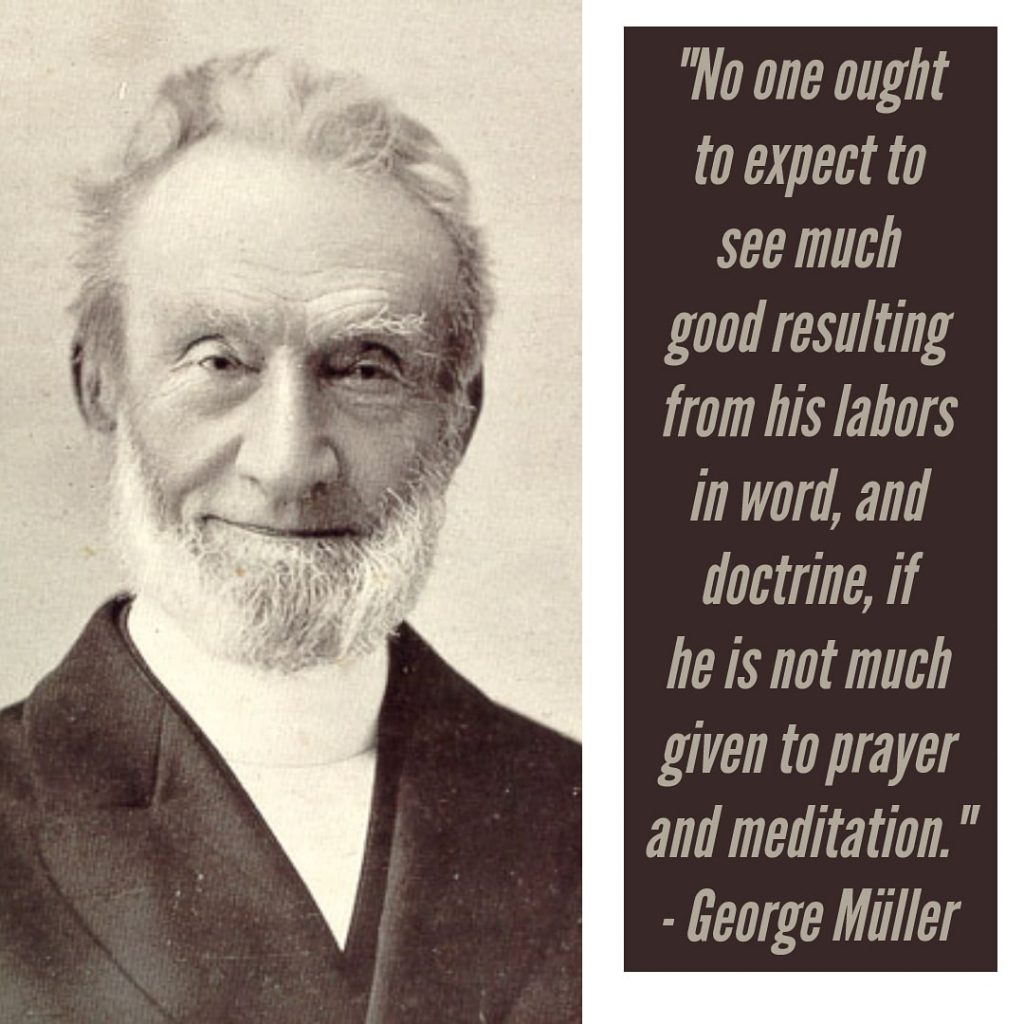
George Mueller (1805-1898) was a man full of hope in God. For sixty-six years he preached in a small chapel in Bristol, England, yet what he is best known for is his orphanage.
After being in ministry for a few years, Mueller became deeply concerned for the street children of the city and decided to start an orphanage. The problem was he had no money. So, with nothing but his hope in Christ he prayed God would provide. For the next sixty-four years, that was how George Mueller operated.
In that course of time, he built an orphanage, where he cared for and educated over eighteen-thousand children; educated over one-hundred-thousand more children in other schools at the Orphanage’s expense; distributed hundreds of thousands of Bibles and tens of millions of religious tracts; supported one-hundred-fifty missionaries; travelled over two-hundred-thousand miles as a missionary himself; and proclaimed the Gospel to over three million people around the world.
In all that time, Mueller never asked for one penny from anyone, his children never missed a meal, and he never had a debt.
We are not all called to be like George Mueller, or even like Simeon and Anna in our Gospel story. However, all of us are called to grab hold of God’s promises with such faith and hope that, even though we may not yet see it realized, we live as though it has already happened. This is what it means to participate with God.
When George Mueller had a need, he pleaded to God and banked on the promise of God. Mueller prayed for more than money; he prayed for individuals, as well. Sometimes he prayed for someone for as long as fifty years. He never stopped praying for anyone or anything until he got his request. That is how convinced George Mueller was that God would answer his prayers.
All the promises of Holy Scripture revolve around Jesus Christ. Jesus is the fulfillment of hope for persons of every nation and ethnicity. Christ is our Redeemer, and his salvation is limitless and includes all kinds of people. Simeon and Anna, despite their age, despite the fact they lived their entire lives without seeing the Deliverer, never lost hope in the promise of God and never gave up praying and looking for the Savior.
Hope in the Bible is not wishful thinking but confident expectation which is grounded in the promises of God. Since all those promises have not yet been fully realized, we must have a quiet confidence and a patient spirit to anticipate the light at the end of the tunnel. Listen to what the Roman church needed to hear about this:
We groan inside as we wait to be adopted and for our bodies to be set free. We were saved in hope. If we see what we hope for, that is not hope. Who hopes for what they already see? But if we hope for what we do not see, we wait for it with patience. (Romans 8:23-25, CEB)
Simeon and Anna gave testimony about the hope of all the earth. We have a moving scene of the old man, Simeon, being led by the Spirit of God to enter the temple and take hold of the baby Jesus and cradle him in his arms. Simeon’s hope is being realized as he declared that this little baby will be the means of salvation for all people.
This salvation comes at a great cost – and all of history hinges on this little child in Simeon’s arms. Will people move toward or away from God? Anna came along and, as the George Mueller of the ancient world, devoted herself constantly to prayer and anticipated the coming of the Messiah. Anna confirmed the testimony of Simeon that this baby is the hope of Israel, the Redeemer of both Jew and Gentile.
Presentation in the Temple by British artist Sylvia Lauder
Today you decided to be here and join me; yet it was more than your own consideration. The Holy Spirit of God, like Simeon of old, led you and I to this place of virtual meeting, perhaps because we long to see our hope realized – to find in the Christ child all we have longed for and have been waiting to see happen in our lives.
God wants us to see Jesus. So, close your eyes, because the hope of all life cannot be seen with human eyes…
See him as a little baby…
See him as he grows with wisdom and favor with both God and others…
See him as he teaches, ministers, and heals the outcast and loves the common person…
See him as he is arrested, beaten, and taken outside of the city…
See them take the hammer and nail his hands and feet to a cross…
See him as you kneel before a terrible cross and watch him die, not for himself, not because he deserved it, but because of the world’s great sin and because humanity has lost their way…
See him as he is placed in the grave…
See him rise from death…
See him ascend to heaven…
See the Lord Jesus Christ in all his glory…
See that he has done all of this for you! Do not lose hope! Do not give up! Search the Scriptures for the promises of God. Grab hold of them and rely on them as if your life depended on it – and it does!
Why did Simeon and Anna not lose hope? How could they remain so devout? Why, over the years and the decades when all seemed dark and despondent, did they not give up searching for the Christ of God?
Because we become just like who we worship.
If we spend all our time, thoughts, and energy on money, we will live and die with whatever the markets are doing…
If we spend all our time, thoughts, energy on our job and our work, we will live and die with our ability to produce and get things done…
If we spend all our time, thoughts, and energy on watching out for ourselves because we believe no one cares, then we will live and die lonely and dejected…
But if we spend our time, use our thoughts, and expend our energy in the hope of all the earth, Jesus, the Savior of the world, then we will experience the deepest needs of our lives being met – we will become like Jesus, showing love, giving grace, and enjoying unhindered relationship with God.
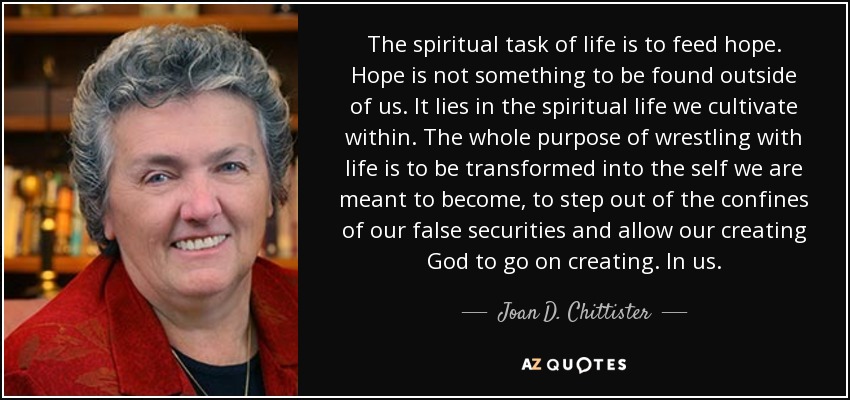
No tragedy can dim the hope that comes from knowing God will walk with you through the valley. Hope is neither cheap, nor easy. Genuine hope typically arises from the ash heap of unfulfilled dreams, messed-up plans, and broken hearts. We often need to experience hopelessness before we can realize hope itself. It is the absence of hope that holds the invitation to forsake old ways and strike out on a new path to find our heart’s truest desire. Author Joan Chittester has wisely said:
“The challenge of hopelessness is the challenge to re-enter humanity, to take our part in it knowing that the lack of hope has much within it to shape our life. Losing hope leads us to understand that misfortune is not failure. It is at most simply a digression through life intended to make us reassess our course, our goals, and our aspirations.”
Indeed, hopelessness need not lead to despair. The profound lack of hope is ironically what reawakens and rekindles hope within us. It is the process of reassessment that is the opportunity to hope again with a sharper and a greater assurance of hope – to create space in becoming fully alive to the hope that has always been there – maybe just underneath all of life’s accumulated stuff.
For me, hope rekindles when I withdraw to a quiet place, either sitting down in my favorite chair or walking along a secluded wooded path. I allow and encourage the sixth sense of faith and imagination to inform my other five senses. This helps my heart to enlarge, the empty places of my soul to be filled with the hope of Christ. It is in this inner place, where our hearts join the heart of God, that we find an alternative way to the true hope for which we have been striving for so long to realize.
For the grace of God has appeared that offers salvation to all people. It teaches us to say “No” to ungodliness and worldly passions, and to live self-controlled, upright and godly lives in this present age, while we wait for the blessed hope—the appearing of the glory of our great God and Savior, Jesus Christ, who gave himself for us to redeem us from all wickedness and to purify for himself a people that are his very own, eager to do what is good. (Titus 2:11-14, NIV)
We have a sure and certain hope which presently now shapes our lives as we wait patiently. Just as we await a coming vaccine and deliverance from COVID-19 which presently now forms our living with masking, social distancing, and sheltering in place – so we look forward to the coming of our glorious Savior and the realization of our salvation in its fullness. Meanwhile, much like Simeon and Anna, we presently now devote our lives to prayer and wait….








 Rev. Tim Ehrhardt