A Divine Calling (Jeremiah 1:4-10)

The Prophet Jeremiah by Marc Chagall, 1960

The Lord gave me this message:

“I knew you before I formed you in your mother’s womb.
    Before you were born I set you apart
    and appointed you as my prophet to the nations.”

“O Sovereign Lord,” I said, “I can’t speak for you! I’m too young!”

The Lord replied, “Don’t say, ‘I’m too young,’ for you must go wherever I send you and say whatever I tell you. And don’t be afraid of the people, for I will be with you and will protect you. I, the Lord, have spoken!” Then the Lord reached out and touched my mouth and said,

“Look, I have put my words in your mouth!

Today I appoint you to stand up
    against nations and kingdoms.
Some you must uproot and tear down,
    destroy and overthrow.
Others you must build up
    and plant.” (New Living Translation)

“Don’t let anyone think less of you because you are young. Be an example to all believers in what you say, in the way you live, in your love, your faith, and your purity.”

St. Paul to St. Timothy (1 Timothy 4:12, NLT)

I write to you, young people,
    because you are strong
    and the word of God abides in you,
        and you have overcome the evil one. (1 John 2:14, NRSV)

Young Jeremiah had an unusual calling from the Lord. It wasn’t to reach thousands with a life-giving message of hope and encouragement; the call was to declare destruction to an unjust people who believed they were fine, thank you very much.

It was a calling that would have been a huge challenge for the most seasoned of veteran prophets. But God called the young Jeremiah. This was his first crack at being a prophet of the Lord; and it was a doozy of a call!

Yet, when it comes to God’s call, age really means nothing. That’s because the Lord equips whomever the Lord wants to empower. Young or old makes no difference. All that’s needed is a willingness to submit to the voice of divine calling.

And to Jeremiah’s credit, the lengthy prophecy bearing his name in the Bible is a testament to his sense of call and straightforward obedience to it.

There is, and always has been, a divine/human cooperative in the world. God, of course, could do everything without humanity’s assistance. But it’s never been that way. Throughout the entirety of Holy Scripture, the Lord calls and empowers people for service.

On the one hand, this may seem like some strange convergence which, on the surface, is sure to end in some screw-ups and failure. Yet, on the other hand, this cooperation between Creator and creature gives people, at the least, a sense of ownership in the world; and, at the most, a powerful opportunity to bless the world with divine gifts of speaking and service.

Although Jeremiah was called to (mostly) pronounce doom, it’s first and foremost a message of justice. The Lord is concerned for the common good of all persons, not just some. Yahweh is not about to be forever idle whenever certain segments of humanity go rogue and harm their fellow sisters and brothers with unjust ways.

The Prophet Jeremiah by Marc Chagall, 1968

What’s more, the Lord delights in using people whom society at large might deem less than usable.

Now remember what you were, my friends, when God called you. From the human point of view few of you were wise or powerful or of high social standing. God purposely chose what the world considers nonsense in order to shame the wise, and he chose what the world considers weak in order to shame the powerful. He chose what the world looks down on and despises and thinks is nothing, in order to destroy what the world thinks is important. (1 Corinthians 1:26-28, GNT)

If God can use a donkey to communicate a message, then it’s likely that the Lord can enable any person on earth to speak words of justice – no matter if they’re young, uneducated, or underprivileged – and make the older, educated, and privileged look like jack asses. (Numbers 22:22-35)

For Christians everywhere, every believer has been called by God to proclaim the gospel of grace. The Word has come to us in Christ, in the flesh (John 1:14). Jesus is the primary and ultimate revelation of God’s Word to us.

God has also set the Church apart to serve as proclaimers of God’s Word to the nations. The Great Commission and the Great Commandment summarize our call to ministry. (Matthew 22:37-40; 28:19-20)

Yahweh’s intentional purpose was for Jeremiah to proclaim God’s word. That’s also God’s intentional purpose for the Church; the Lord puts God’s words in the church’s mouth. Christians proclaim the Word, which we know most fully and experience most personally in Jesus Christ.

With our words, perspectives, attitudes, relationships, and actions, God’s Word flows through us to the world. As believers, we know that gospel proclamation will accomplish God’s purposes.

We trust that God is empowering us to effectively proclaim God’s words with effectiveness so that all the earth may be renewed and blessed.

Most High God, you knew each of us before we were ever born. And so, you know us better than we know ourselves. Your divine power is already there, deep within us. As you call forth that power, enable us to respond with submission, obedience, and willingness to speak words of justice, love, and grace to a world in need of hope and betterment, through Jesus Christ, the Word made flesh, in the strength of the Holy Spirit. Amen.

Be Courageous (Joshua 1:1-9)

After the death of Moses the servant of the Lord, the Lord spoke to Joshua son of Nun, Moses’s assistant, saying: 

“My servant Moses is dead. Now proceed to cross the Jordan, you and all this people, into the land that I am giving to them, to the Israelites. Every place that the sole of your foot will tread upon I have given to you, as I promised to Moses. From the wilderness and the Lebanon as far as the great river, the River Euphrates, all the land of the Hittites, to the Great Sea in the west shall be your territory. 

No one shall be able to stand against you all the days of your life. As I was with Moses, so I will be with you; I will not fail you or forsake you. 

Be strong and courageous, for you shall lead this people to possess the land that I swore to their ancestors to give them. Only be strong and very courageous, being careful to act in accordance with all the law that my servant Moses commanded you; do not turn from it to the right hand or to the left, so that you may be successful wherever you go. 

This book of the law shall not depart out of your mouth; you shall meditate on it day and night, so that you may be careful to act in accordance with all that is written in it. For then you shall make your way prosperous, and then you shall be successful. I hereby command you: Be strong and courageous; do not be frightened or dismayed, for the Lord your God is with you wherever you go.” (New Revised Standard Version)

Freedom came to the ancient Israelites; they were delivered from their cruel Egyptian bondage. Then, they wandered through the desert for forty years; and, after the death of their leader Moses, were poised to enter the Promised Land. 

However, it was going to be no cakewalk. There were pagan peoples entrenched in the land. It would be a huge feat to conquer their territory. Joshua, the young aide-de-camp of Moses, now leader of the people, would be the one to go before them in battle. Understandably, Joshua was likely nervous, maybe even downright scared. 

So, the Lord came to Joshua. God told him to be strong and courageous, to not be afraid to claim the divine promise of the land. 

The path to success for Joshua – as well as all God’s people – is not by the physical sword but by the sword of the Lord, the Word of God. 

The Lord was plainspoken about the need to intimately know the Law given to the people and to continually meditate upon it. Being careful to do everything written within it, Joshua would find both the courage and the wisdom to lead the people to victory.

It still remains true for all God’s people that faithful knowledge, sage wisdom, and careful adherence to Holy Scripture comes through meditation upon its contents. 

There is a great need amongst believers to continually ruminate on God’s Word. We live on a broken planet, filled with all sorts of adversity, hardship, difficulty, and challenge to living a committed spiritual life. And so,

we may sometimes wonder how to address and deal with it all; our problems might seem as large as taking the Promised Land. 

The place to begin is by going to the Word of God – not so much in an anxious, hasty, or impatient question-and-answer sort of way which looks for a quick response; but instead, in a slow, deliberate, contemplative way. 

Lasting and genuine spirituality, as well as a sense of settled success, comes not only through acknowledging the importance and integrity of Scripture; one must know it’s contents, and allow it’s wisdom to saturate the soul through consistent and continual meditation.

Scripture memorization is a discipline worth pursuing. Having large chunks of the Holy Bible in our minds and hearts helps us in the crucible of challenging situations and adverse circumstances. 

What’s more, when doing the everyday pedantic and tedious work, we can engage our minds in the practice of contemplation on those verses we have committed to memory. Meditation on God’s Word is a necessary practice if we want to have success in living a genuinely well-rounded life.

Courage and meditation are a package deal. Bravery and contemplation are meant to be wed together. One rarely comes without the other – which means the realization of our good dreams, for both us and the world, needs the practice of Scripture meditation.

God Almighty, my delight is in your law, and on it I meditate day and night. (Psalm 1:2)

O how I love your law! It is my meditation, my food and drink, all day, every day. (Psalm 119:97)

I will meditate on your precepts and honor your ways in all I do and say. (Psalm 119:15)

I am determined to lift my hands to your commandments, which I love; and I will meditate on your statutes. (Psalm 119:48)

I look forward to the wee hours of the night because it provides me the space and the quiet to meditate on your word. (Psalm 119:148)

In fact, I meditate on all your doings through both day and night; I ponder and consider the works of your hands. (Psalm 143:5)

Amen.

Pay Attention to the Word (2 Peter 1:16-21)

For we did not follow cleverly devised stories when we told you about the coming of our Lord Jesus Christ in power, but we were eyewitnesses of his majesty. He received honor and glory from God the Father when the voice came to him from the Majestic Glory, saying, “This is my Son, whom I love; with him I am well pleased.” We ourselves heard this voice that came from heaven when we were with him on the sacred mountain.

We also have the prophetic message as something completely reliable, and you will do well to pay attention to it, as to a light shining in a dark place, until the day dawns and the morning star rises in your hearts. Above all, you must understand that no prophecy of Scripture came about by the prophet’s own interpretation of things. For prophecy never had its origin in the human will, but prophets, though human, spoke from God as they were carried along by the Holy Spirit. (New International Version)

The Bible is a set of living documents. It breathes with a revitalizing and reliable message about Jesus Christ.

Rather than being merely an ancient book to be displayed as some sort of museum artifact on a coffee table, Holy Scripture has demonstrated amazing resilience of use and pertinence throughout the ages.

Millions of people have discovered it’s riches; and have found the Bible’s message of knowing Christ and him crucified, died, risen, and coming again as their hope and salvation. Indeed, God’s Word to people is a gracious revealing of God to humanity so that all persons may reconnect with divinity.

The earthly ministry of Christ had eyewitnesses and earwitnesses. The witness above all witnesses was the Most High who audibly affirmed Jesus with a voice from heaven:

“This is my dearly loved Son, who brings me great joy.” (Matthew 3:17, NLT)

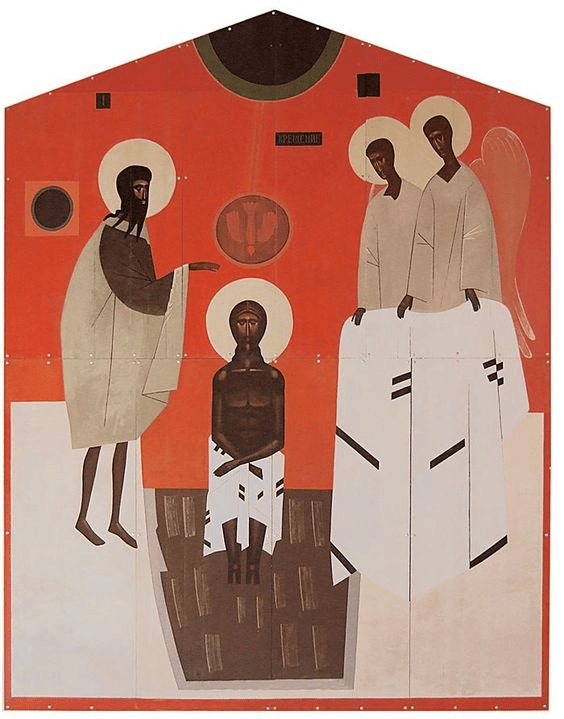
Baptism of Christ, by Vitaly Melnichuk, 2009

Christianity is a religion of the book. Scripture unites us with believers across the world and throughout history. The Bible is to the Christian what weights and barbells are to a bodybuilder. 

The people of God need Holy Scripture, God’s Word, in order to spiritually grow and become mature. Christian character formation cannot truly occur apart from the continuous repetitions of reading the text of Scripture, and letting it build strength into the muscles of the soul.

Scripture is a powerful unifying force within the life of God’s people. We may not all explain every Bible verse in exactly the same way (hence the many different Christian traditions) but believers share a common desire to honor, apply, and obey God’s Word. Ultimately, a passion to listen, talk about, and apply God’s Word brings believers in Jesus together, rather than separates us. 

Perhaps because the average American household today has at least three or four Bibles, we take for granted the availability of God’s Word. It is always at our fingertips, on our smartphones and computers. Yet, because it is always present and available, we may let the busyness and business of life keep us from paying attention to it. 

A commitment to reading and listening to Holy Scripture ought not be done quickly or mechanically, and certainly not half-heartedly. For the Word to penetrate and seep into our souls, we must take the time to listen carefully and slowly.

A first century rabbi, Akiva, once noticed a tiny stream trickling down a hillside, dripping over a ledge on its way toward the river below. Below was a massive boulder. The rock bore a deep impression. The drip, drip, drip of water over the centuries had hollowed away the stone. Rabbi Akiva commented, “If mere water can do this to hard rock, how much more can God’s Word carve a way into my heart of flesh?”

Water flowing over a rock, all at once, leaves it unchanged. It is the slow but steady impact of each small droplet, year after year, decade after decade, that completely reforms the stone.

O how we desire quick answers to our questions! Yet we must take the time to prayerfully listen and reflect on God’s Word and allow it to do it’s work on us and in us. Truth is revealed over many days, months, and years. Big splashes aren’t usually God’s way of doing things. Instead, the slow drip of careful study, contemplative prayer, and meditative reflection, day after day, year after year, shapes us and spiritually forms us into the likeness of Christ.

Thus, a patient, humble, and teachable spirit is necessary. Sometimes the Bible is not apparently relevant. We oftentimes need others to help us and to encourage one another to stick with reading and learning, even when we aren’t sure about what it is saying. 

Rightly interpreting Scripture happens in community, both in present local churches and small groups and in the community of saints who have gone before us. It doesn’t occur in isolation.

Always an appropriate response to hearing God’s Word is to address and the problems of others and the issues of our day. That’s because God is not just concerned about you and me, but about other people, as well. 

What do you suppose would happen if we all committed to carefully reading and listening and meditating, even memorizing God’s Word on a daily basis? Would it transform our worship? Make a difference in our relationships? Change how we do life together?

Attention, people of God and of the Book! God is our God, the One and only!

Love the Lord your God with your whole heart:

Love God with all that is in you; love the Lord with all you’ve got! 

Write these foundational commands I’ve given you on your hearts. Get them inside of you. Then, get them inside your children. 

For this to happen, talk about God’s Word at home when you are eating supper together and when you are working or playing with each other. Start your day with God’s Word when you get up in the morning and end your day with God’s Word when you go to bed at night. 

Put God’s Word on your refrigerator and your car’s dashboard; have it on your smartphones and let it be available to you anywhere and anytime. Use every opportunity you have to incessantly chatter about God’s Holy Word.

(Deuteronomy 6:4-9, contemporary paraphrase)

Pay attention to the Word made flesh and the written Word proclaimed. It makes all the difference.

Our Great Physician, Your Word is like alcohol – when poured on an infected wound, it burns and stings, but only then can it kill germs. If it doesn’t burn, it doesn’t do any good. 

Father, we are all hungry baby birds this morning. Our heart-mouths are gaping wide, waiting for you to fill us. A cold wind seems to have chilled us. Wrap us in the blanket of your Word and warm us up. 

Lord, we find your Word like cabbage. As we pull down the leaves, we get closer to the heart. And as we get closer to the heart, it is sweeter.

–Daily Prayers of Haitian Christians, translated by Eleanor Turnbull (1924-2020) missionary to Haiti for over 50 years

The Necessity of Mentoring Relationships: Paul, Tom, and Timothy (2 Timothy 3:10-15)

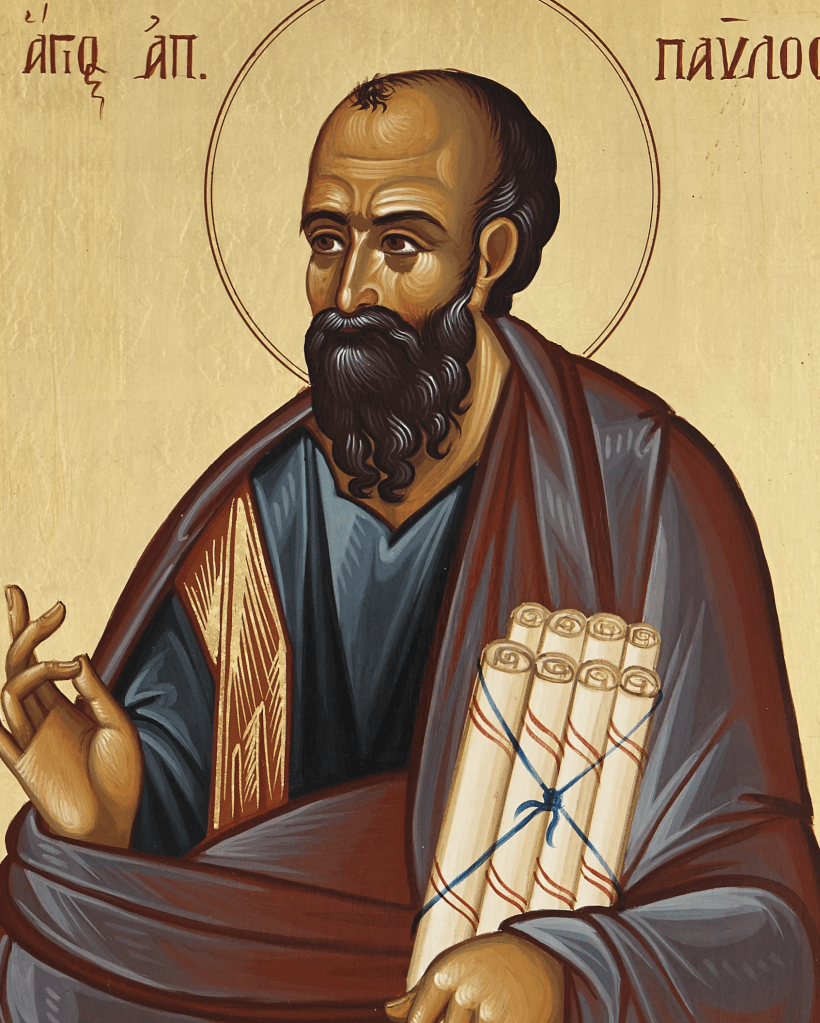
Orthodox icon of St. Paul
Orthodox icon of St. Timothy

You’ve been a good apprentice to me, a part of my teaching, my manner of life, direction, faith, steadiness, love, patience, troubles, sufferings—suffering along with me in all the grief I had to put up with in Antioch, Iconium, and Lystra. And you also well know that God rescued me! Anyone who wants to live all out for Christ is in for a lot of trouble; there’s no getting around it. Unscrupulous con men will continue to exploit the faith. They’re as deceived as the people they lead astray. As long as they are out there, things can only get worse.

But don’t let it faze you. Stick with what you learned and believed, sure of the integrity of your teachers—why, you took in the sacred Scriptures with your mother’s milk! There’s nothing like the written Word of God for showing you the way to salvation through faith in Christ Jesus. (The Message)

Paul and Timothy had a special relationship. Paul, the Apostle and mentor in the faith; and Timothy, the apprentice.

Together, they saw it all – and experienced it all. And through it all, the Christian tradition was passed on because of Paul’s purposeful mentoring of others, especially Timothy, by both verbal teaching and life example. In this, Paul helped set Christianity on a trajectory of modeling the words and ways of Jesus.

Faith is a gift given by God through Scripture and faithful people – and then received by us. Christianity is designed for community; it is not merely a solitary affair between the individual and God. Anyone trying to go it alone in the Christian life will soon discover they are overwhelmed and in over their heads with trouble.

Contemporary pastoral ministry still needs to follow in the footsteps of the Apostle Paul. Just one of the many reasons why churches in the West are in such decline is that Christian leaders are not intentionally focused to passing-on a solid body of teaching, along with a consistent example of how to put it into practice, through close relationships.

Anyone who has been in the pastoral ministry gig for a long time, remaining consistent and faithful, has most certainly had a good spiritual teacher and guide shepherding them through their Christian experience. A good long ministerial life isn’t happenstance; it’s the result of a solid foundation through a Paul-and-Timothy sort of relationship.

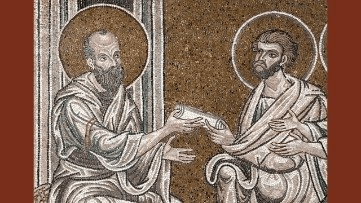
Mosaic of Paul and Timothy, Cathedral of Monreale, Sicily, Italy

By God’s grace, I’ve had several persons influence my life in profound ways in such a relationship. One of the earliest and longest was with Tom – a campus minister on my university who built into my life as an undergraduate and a very young Christian. We remained connected and became good friends for nearly four decades until his untimely death.

Tom knew what he was doing with me. To this day, even with multiple academic degrees and many professional ministry experiences, I attribute most of what I know about Christian faith and practice as simply saying and doing what I saw Tom say and do. And, I might add, Tom consistently saw my true self, even when I didn’t see it myself.

A good model in the faith has the same qualities and insights as the Apostle Paul of old. For example, here are just a few of the important things I learned from Tom:

  • Christian ministry is interpersonal; time must be spent with others, getting to know them and building relationships. Doing pastoral ministry from afar is an oxymoron. From what we know of Paul, at times he had a team of up to seventy persons following him around on missionary endeavors.
  • There are always going to be charlatans and bad apples around. Don’t simply ignore them. Confront them in grace and truth. I still remember a time when I went along with Tom, not knowing where we were going or what he was up to. In retrospect, he probably knew I would bolt if I caught wind of what he was about to do. We went to the dorm room of a believer whom Tom flat-out confronted on his talking and living being inconsistent with his professed Christianity. My eyes got huge when Tom said, “In the name of Jesus Christ I rebuke you and I call you to repent.” This was said in a gracious and conversational tone, not in anger, which communicated concern and love for this individual student.
  • Develop relationships. And the best way of doing this is by having the Timothy tag along with the Paul. Tom continually brought me along to whatever he was doing, whether it was a weekend retreat he was leading, or going to the grocery store. We cannot learn from others if we aren’t around them, and Tom understood this better than most. As a result, I learned more than lessons; I learned a life.
  • It’s not about me. Tom never took himself too seriously. And because of that, I observed him never becoming overwhelmed or obsessing over the trouble he would sometimes get into. In fact, he typically welcomed the trouble whenever he saw it was not of his own making.
  • Openness and vulnerability are necessary. More than once, Tom strolled into a bible study with me and some other guys, flopped down and said, “Man, I really blew it today…” and then went on to explain some boneheaded thing he did. We unpacked the entire situation together. Not once do I ever recall Tom trying to look like the perfect Christian leader. He embraced who he was and was always willing to shine the light on the shadowy places of his heart.
  • Holy Scripture is central to Christian life and ministry. Inevitably, Tom’s question to us, after describing his bonehead move, was to ask, “What are you learning in God’s Word? Do you have any encouragement for me?” On a daily basis, without fail, Tom asked this question of me: “So, what is God teaching you in the Word?”

Through both Holy Scripture and the significant relationships I’ve had throughout my life, I can confidently state that there are two indispensable elements to effective Christian ministry:

  1. It must be firmly grounded in objective theory derived from God’s Word.
  2. It must be intentionally practiced with subjective experience derived from interpersonal relationships.

Objective theory without lived practice leads to being puffed-up with knowledge and no love – because love requires people. And subjective experience without a grounded theory is nothing but a form of spiritual A.D.D. in which whatever shiny thing we see grabs our attention.

I always considered Tom as my spiritual father (and his wife as a dear spiritual mother!). They have shown me not only how to live the faith, but also how to be a spiritual father myself. And as a result, my own dear wife and I have many spiritual children scattered throughout the country.

This is the consummate Christian: Coming to faith by God’s grace, mediated to us through actual flesh-and-blood people; being taught and mentored in that faith by proven Christians; and then, simply saying and doing what you have seen and heard from holy leaders and Holy Scripture.

It’s not rocket science. It’s not abstract art. It’s a life. It’s relationships. And it’s absolutely necessary in order for both the church and the world to be blessed.

But he’s already made it plain how to live, what to do,
    what God is looking for in men and women.
It’s quite simple: Do what is fair and just to your neighbor,
    be compassionate and loyal in your love,
And don’t take yourself too seriously—
    take God seriously. (Micah 6:8, MSG)

Soli Deo Gloria. Amen.