God (Psalm 147:12-20)

Extol the Lord, O Jerusalem!
    Praise your God, O Zion!
For he strengthens the bars of your gates;
    he blesses your children within you.
He grants peace within your borders;
    he fills you with the finest of wheat.
He sends out his command to the earth;
    his word runs swiftly.
He gives snow like wool;
    he scatters frost like ashes.
He hurls down hail like crumbs—
    who can stand before his cold?
He sends out his word and melts them;
    he makes his wind blow, and the waters flow.
He declares his word to Jacob,
    his statutes and ordinances to Israel.
He has not dealt thus with any other nation;
    they do not know his ordinances.
Praise the Lord! (New Revised Standard Version)

The psalmist portrays a God who is clearly in control of all things. This is the Lord God almighty, who is the Creator, and is sovereign over the entire world.

God has no need for bluster, or to leverage knowledge in order to get things done. With only a word, the weather changes completely, and people are invited to participate in the divine will for this earth.

There is no creature, and no human on this earth, who has such power and authority, sovereignty and control, over everything and everyone as God.

Because of God’s great power, the Lord is able to extend gracious and providential care for those who put their hope in God’s steadfast love. Such grace and love of divine blessing is the means for Israel’s praise of Yahweh in the psalm.

The grandest blessing of them all is the gift of the “word.” God’s word of command is what sets in motion all of the natural processes of this earth. It is the divine word that gives and sustains life on this planet.

The same divine word which has been gifted in order for the waters to abundantly flow and the wind to continually blow, is the word given to Israel in the laws and commands for the people.

This gift of word is a wonderful privilege, given to the nation of Israel in the Old Testament. It is what makes them a peculiar people, recipients of the divine will. It is a word of guidance for the covenant people of God.

And that divine word is the primary reason for the human word to respond in praise by extoling the awesome might and mercy of God.

Please understand that today’s psalm is profoundly theological. In other words, it is all about God. We humans and the creation are mentioned and talked about within the psalm, yet all of it is in the context of God’s activity in the world, of God’s actions in history.

The things which God does among us and in this world is a theological reflection, in and of itself. Let me say it another way: God does what God is.

God didn’t simply do some wondrous act in the past. The Lord didn’t merely console and heal someone at some time. Rather, God is constantly binding up the brokenhearted; continually casting down the wicked; and consistently demonstrating steadfast love through right, good, and just actions, all the time.

There is a never a time when God is not God, being holy, loving, and good; and therefore, God’s eternal actions are a non-stop working of justice and righteousness in this old fallen world.

Evil, of course, is continually at work, as well. But we are not talking about opposing powers which are equal to each other. Justice and love will eventually swallow up wickedness and evil.

This is the hope that undergirds the psalmist, and it is the reason that the faithful keep persevering and offering their praise, adoration, and thanksgiving to the God who never slumbers nor sleeps, but is always watching over the righteous.

God’s wisdom and power is matchless. It is impossible for any one of us, or even all of us collectively, to count and number all the stars in the universe. But God can. And God even has them all named, because they all belong to God.

Neither you nor I could ever number the raindrops that fall on our roof in just a few minutes. Yet, God can. And the Lord can count the grains of sand on a beach and the hairs on every head (or in some cases, every hair on a guy’s back).

We humans number in the billions on this earth. Yet, God knows us all by name. And God’s perfection is near and intimate, not distant and remote.

I don’t know about you, my friend, but my encounters with God are nothing like a virtual Zoom meeting. My interactions with the God of the universe are close, intimate, and caring, just as a mother with her newborn baby.

Therefore, matters of renewal, restoration, and even resurrection are not problems for the God of the psalmist. Widows are comforted and rejoice. The poor are lifted up, and not ruined by their poverty.

The confused, the disordered and disoriented, the discouraged and discombobulated, are all held in the hands of the God who knows their confusion and will take care of them.

I might not understand; and, in fact, the older I become, I’ve discovered that the less I actually know. But I believe. I trust God. I do this, daily, because the Lord has demonstrated to me over and over again that God is trustworthy and has the ability to bend everything in this world for redemptive purposes.

That is the sort of God I serve – that the psalmist serves. And this faith, hope, and love is what I want for you, as well, my friend.

Life is too short and precious to squander it, and to flounder in disbelief. So, just listen; and take as much time as you need to hear the word, and experience the presence of life that is around you, and right in front of your face.

Dearest and most gracious Lord:

I thank you for the gift of life, the rising sun, and the promise of the seasons.

I give you thanks for my family and friends and the gifts they share; for my home and all its comforts within; for the abundance you give me and my willingness to share it with others.

I offer my gratitude to you for granting me wisdom, and the ability to listen; for acceptance of the challenges that I face every day; for strength and courage to act for justice and peace.

Most of all, I thank you for the knowledge that, without you, I have nothing; and with you, I possess all things, and have everything I need. Amen.

Finding the Book of the Law (2 Kings 22:1-10)

Josiah was eight years old when he became king, and he reigned in Jerusalem thirty-one years. His mother’s name was Jedidah daughter of Adaiah; she was from Bozkath. He did what was right in the eyes of the Lord and followed completely the ways of his father David, not turning aside to the right or to the left.

In the eighteenth year of his reign, King Josiah sent the secretary, Shaphan son of Azaliah, the son of Meshullam, to the temple of the Lord. He said: “Go up to Hilkiah the high priest and have him get ready the money that has been brought into the temple of the Lord, which the doorkeepers have collected from the people. Have them entrust it to the men appointed to supervise the work on the temple. And have these men pay the workers who repair the temple of the Lord—the carpenters, the builders and the masons. Also have them purchase timber and dressed stone to repair the temple. But they need not account for the money entrusted to them, because they are honest in their dealings.”

Hilkiah the high priest said to Shaphan the secretary, “I have found the Book of the Law in the temple of the Lord.” He gave it to Shaphan, who read it. Then Shaphan the secretary went to the king and reported to him: “Your officials have paid out the money that was in the temple of the Lord and have entrusted it to the workers and supervisors at the temple.” Then Shaphan the secretary informed the king, “Hilkiah the priest has given me a book.” And Shaphan read from it in the presence of the king. (New International Version)

Imagine the Book of the Law, the covenant code given to Moses and handed down to the people over the centuries, was simply lost. And nobody missed it.

God’s Law was neglected and not consulted for such a long time, that it was forgotten, hidden within the Temple of the Lord. No wonder there was such a string of kings before Josiah that were labeled as doing evil in the sight of the Lord.

It’s quite difficult to follow God’s Law if you don’t know what it is.

King Josiah hears the Book of the Law, by Julius Schnorr von Carolsfeld (1794-1872)

Today’s Old Testament lesson is a cautionary story of what happens when an entire people drift so far from the commandments of God, that they are ignorant about what is most important for them as a nation.

Josiah, contrary to the kings before him, did what was right. The spirit of old King David was still there. The desire to know God and God’s law was still within the line of David’s progeny.

Because the many kings before Josiah were negligent to the things of God, the Temple had fallen into a terrible state of disrepair. Much like an old abandoned Victorian house from another century, one could only imagine what the grandeur of place was once like.

King Josiah decided that the house of the Lord needed a lot of attention and tender loving care. So he commissioned the priests to ensure that skilled workers would bring the building back to life again. The place would once again, Josiah reasoned, be the sign of God’s presence amongst the people.

Then, lo and behold, once the repairs and restoration began, Hilkiah the high priest went to Shaphan the secretary and told him that, while engaging in the cleanup and the work, the Book of the Law (which was literally a large scroll) was discovered.

The very Torah of God had been lost, and then was discovered by accident when renovating the Temple. It seems inconceivable that such important documents could be unaccounted for.

I suppose it’s possible that the previous King Manasseh – a nasty guy who worshiped other gods – may have wanted it destroyed. So perhaps it was hidden by some priest.

It seems, however, that the Torah scroll was simply unused, then forgotten, and thus, eventually lost.

It apparently was gone long enough that Shaphan the secretary seemed clueless as to what it actually was. The scroll was like some sort of antique object that no one uses anymore, as if it were an old cuckoo clock, or a vintage hand crank pencil sharpener.

Almost in passing, while Shaphan was reporting about the progress of the repairs, he mentioned that the Book of the Law, the Torah, had been found in the Temple. He nonchalantly presented it, like a nice old novelty item to gawk over. But then he proceeded to open the scroll, and read its contents aloud to King Josiah….

Hearing the words of the law – the ordinances, commands, and precepts of God – would undo Josiah and set him on a grand project of thorough reformation within the nation of Judah.

Little did the inhabitants of Judea know, however, that God had already set in motion a plan for events which would change Jewish history forever. And it was coming because generations of people had ignored the justice, righteousness, and goodness which God intended for them to follow.

When purposeful ignorance goes on for too long, even when a people makes a concerted effort to change and do what they should have been doing all along, sometimes that effort is too little, too late. And many will suffer the consequences of their past failures.

Instead of worrying about what the world is coming to, and what it might become tomorrow, today is the day to make the choice to do justice, to love mercy, and to walk humbly with your God.

What are you waiting for!?

God of faithfulness, your servant Josiah restored your holy words to a people longing for your guidance. Help us learn your Scriptures so that we might carry your words in our hearts, in our words and in our actions. Amen.

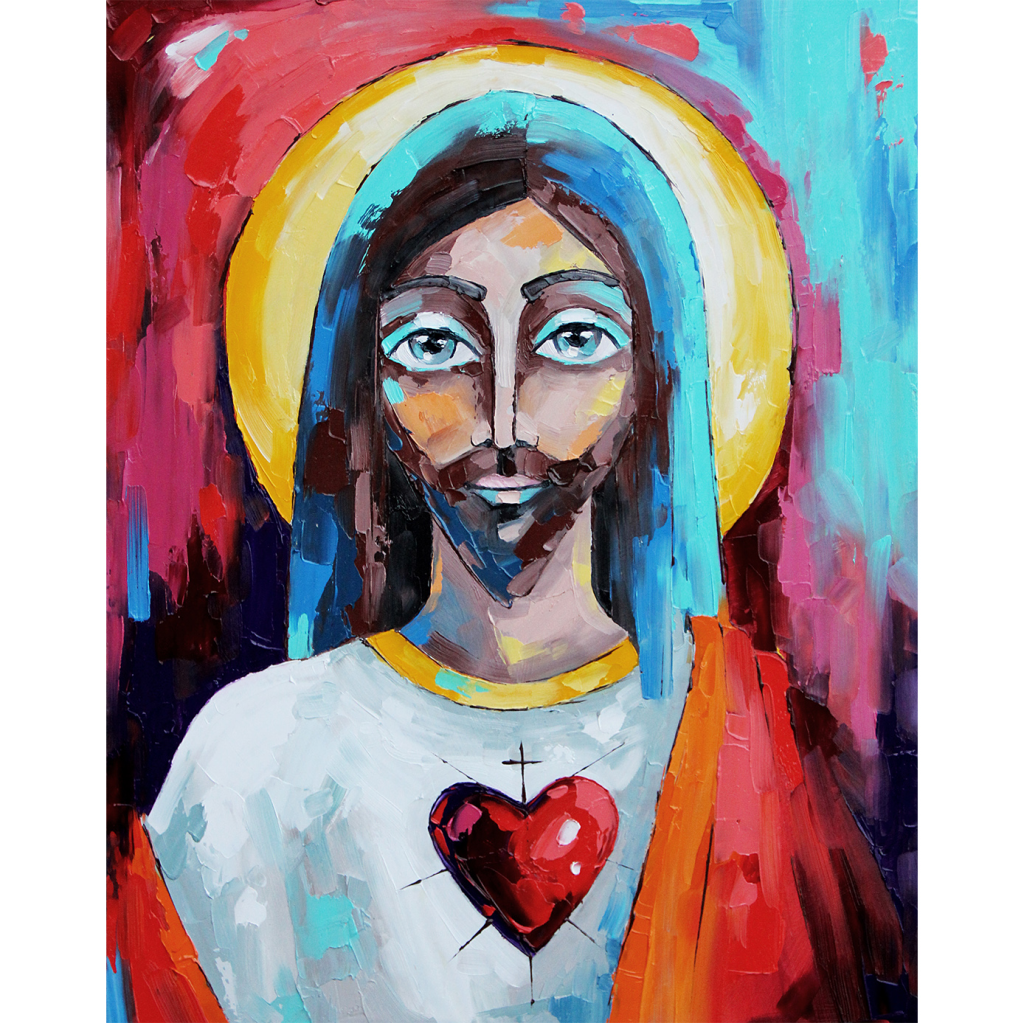
From the Heart (Mark 7:9-23)

Art by Anna Startseva

Then he said, “You skillfully sidestep God’s law in order to hold on to your own tradition. For instance, Moses gave you this law from God: ‘Honor your father and mother,’ and ‘Anyone who speaks disrespectfully of father or mother must be put to death.’ But you say it is all right for people to say to their parents, ‘Sorry, I can’t help you. For I have vowed to give to God what I would have given to you.’ In this way, you let them disregard their needy parents. And so you cancel the word of God in order to hand down your own tradition. And this is only one example among many others.”

Then Jesus called to the crowd to come and hear. “All of you listen,” he said, “and try to understand. It’s not what goes into your body that defiles you; you are defiled by what comes from your heart.”

Then Jesus went into a house to get away from the crowd, and his disciples asked him what he meant by the parable he had just used. “Don’t you understand either?” he asked. “Can’t you see that the food you put into your body cannot defile you? Food doesn’t go into your heart, but only passes through the stomach and then goes into the sewer.” (By saying this, he declared that every kind of food is acceptable in God’s eyes.)

And then he added, “It is what comes from inside that defiles you. For from within, out of a person’s heart, come evil thoughts, sexual immorality, theft, murder, adultery, greed, wickedness, deceit, lustful desires, envy, slander, pride, and foolishness. All these vile things come from within; they are what defile you.” (New Living Translation)

There is nothing inherently wrong with tradition. Ideally, traditions are helpful ways of remembering and maintaining the values that are important to us.

Yet, what can happen over time is that the tradition itself can become equal to the value we hold to; and eventually, the tradition can become more important than the value it is supposed to remind us of.

In the worst case scenario, the tradition is kept, and the value is forgotten and lost. Whenever that happens, traditions easily become weaponized to protect our interests while harming others. And that is a phenomenon Jesus wanted nothing to do with.

So, Christ affirmed and upheld the essential purpose of the Torah (scriptural law) as the foundation of morality to live justly and righteously in the world. Keeping Torah, therefore, is a matter of inner motives, and intents of the heart, rather than external compliance to ritualized traditions.

Unfortunately, the outward form had supplanted the inward disposition of the heart. Purity then became a matter of observable rituals, and defilement a matter of failing to do the ritual properly. And the original values behind the rituals were lost – which caused souls to become lost, and other people victimized by religious traditions.

Whether one is ritually clean or unclean is not ultimately determined by material objects; it is, instead, determined by the state of the heart.

Art by Andy Perez

In other words, no outward ritual can ever really make a person clean or unclean, pure or impure, spotless or polluted. Inner transformation is what scrubs a person clean and makes them pure.

Ritual traditions, and even scriptural law itself, is unable to effect a transformative change.

Torah can require purity, cleanness, and moral uprightness; but it cannot affect a metamorphosis. We need something other than traditions, rituals, and laws to bring true and sustainable transformation of life.

I say that it is time to hear and observe Jesus. Millions of people throughout history, and up to the present time, have found in Christ (and not in Christian rituals, traditions, church codes, nor in a political Christendom) the answer and the key to what life is really all about.

Again, there is not a problem with our human traditions per se, but with traditions replacing Torah and the word of God.

Jesus gave an example of just such a contradiction between religious tradition and divine law: According to tradition, if a person makes a vow concerning their property and/or possessions as a gift to God at the temple, then those assets cannot be used to support that person’s parents in their old age.

Christ pointed out that this clearly contradicts the command to honor your father and mother. Ironically, the very tradition that was supposed to purify became the means to contamination – because the tradition forbids the person from obeying the command of God.

In a word picture that everyone could understand, Jesus explained that impurity and defilement have to do with what passes through the heart, not the bowels.

People obey or disobey the Ten Commandments due to the state of their heart, and not whether they keep every detail of traditional washing of the hands and body.

People lack virtue not because they fail to do human traditions; but because of what is in their hearts.

This is why Jesus, in his Sermon on the Mount, gets to the heart of why people break commands. For example:

  • The outward act of murder is a result of the inward anger of nurturing bitterness in the heart. (Matthew 5:21-22)
  • The physical act of adultery is the culmination of dozens of mental adulteries which originated in the heart. (Matthew 5:27-28)

Everything that harms and hurts is sourced in the heart, and not in failing to keep a tradition.

Furthermore, the Gospel writer Mark, added the very interesting parenthetical comment that in speaking this way, Jesus meant to declare that all foods are clean; there is nothing eaten that can make us impure.

That may not seem remarkable to most people, but to Jews this statement is cataclysmic and revolutionary. Levitical law details the separating of clean and unclean food, for the purpose of distinguishing the Israelites from all the other surrounding nations. (Leviticus 11:43-44; 20:24-26)

Holding to food laws, and traditional hand washings when it comes to eating, are a way of preserving religious identity and national identity. Jesus had no intention of doing away with Jewish identity, but he very much intended to do away with maintaining practices that keep strict separation from other people.

In other words, Christ was opening the way for ministry to Gentiles. He wanted to bring connection where there was deep division. He wanted the world to know God.

This gets at the “heart” of true religion. Distinctiveness as God’s people does not necessarily nor ultimately come by observing particular traditions; it comes primarily through purity of heart.

And the means of bringing purity of any kind, comes through love. Love always makes a way and finds connections. Love is the sine qua non mark of God.

Traditions infused with love, point people to God, and let them know that they belong.

But traditions for tradition’s sake, repel people, and communicate to them that they don’t belong, and should go away and not pollute the pure ones.

This approach of Jesus toward the religious leaders raises for me several probing questions:

  1. What is the true state of your heart?
  2. Are you aware of your own heart’s dark shadows?
  3. In what sort of direction is your heart inclined to speak and act?
  4. Does encouragement or criticism typically arise from your heart?
  5. Is love the compass of your heart, or does bitterness give you direction?
  6. Will you acknowledge your need of a savior? Will you ask for help?

Blessed God and Father of our Lord Jesus Christ: Make us quick to listen, and slow to speak, so that the Word implanted in our hearts may take root to nourish all of our living. And may the the Word within us overflow into speech and action which blesses the world. Amen.

Spiritual Growth (2 Peter 3:14-18)

So then, dear friends, since you are looking forward to this [a new heaven and a new earth] make every effort to be found spotless, blameless and at peace with him. Bear in mind that our Lord’s patience means salvation, just as our dear brother Paul also wrote you with the wisdom that God gave him. He writes the same way in all his letters, speaking in them of these matters. His letters contain some things that are hard to understand, which ignorant and unstable people distort, as they do the other Scriptures, to their own destruction.

Therefore, dear friends, since you have been forewarned, be on your guard so that you may not be carried away by the error of the lawless and fall from your secure position. But grow in the grace and knowledge of our Lord and Savior Jesus Christ. To him be glory both now and forever! Amen. (New International Version)

When it comes to Christianity – the Christian life and church ministry – the value and necessity of spiritual growth within individual believers and local churches is of vital importance. 

We were created by God, who made us in the divine image and likeness. That is, we were formed as spiritual people. Every one of us carries within ourselves a God-given spirit; it is a vital part of who we are.

Therefore, we must recognize that the area of our greatest value, potential, fruitfulness, and life fulfillment will be in the realm of the spiritual. 

If we deny our inherent spirituality, whether in thought or in practice, we will inevitably become confused. This then, sets us up for failure, because our basic nature is one of being spiritual persons.

Nothing is more valuable for us than spiritual growth, and the provision God has made for us to experience this growth.

There is a verse tucked away at the end of Peter’s second epistle that states for us to grow in the grace and knowledge of our Lord and Savior Jesus Christ. Grace and knowledge are important words that both point to Jesus. 

“Grace” refers to all the benefits of redemption for us through the person and work of Christ.

“Knowledge” denotes all the benefits of God’s revelation to us in Jesus Christ.

Here is a simple, yet profound, observation of the text: The word “grow” is a command; it is not optional. It’s not something to maybe think about doing when we get around to it. God insists that we spiritually grow.

God has made every provision for our spiritual growth. What’s more, we have been given the ability as a redeemed believer, and as a redeemed community, to grow spiritually. 

So then, each and every believer in Jesus Christ, as well as every local church, must face their own personal responsibility to obey this scriptural exhortation. To do otherwise is to live outside of God’s will.

Sticking with the Apostle Peter’s words, here is another verse of importance which relates to our spiritual growth: 

Like newborn babies, crave pure spiritual milk, so that by it you may grow up in your salvation. (1 Peter 2:2, NIV) 

We are to seek the Word of God with the same kind of intensity that a newly born baby will seek for food. As babies, my kids were barracudas when it came to feeding time; they took their eating seriously, and with a lot of gusto. That same desire for feeding must be present with us as Christians and churches. When the command of Peter is obeyed, and made a priority in our life, then we will grow.

Like any good thing in our lives, there are potential problems, along with the benefits. A significant downside, when pursuing spiritual growth, is that we all have a disease-like force in our lives. There exists within us a destructive tendency of lethargy and passivity toward spiritual things.

It’s rather ironic that people who confess Jesus as Lord, and are convinced about their Christianity, can be so doggone nit-picky about trivial matters which don’t really contribute much of anything to their spiritual growth.

And the trivial things only distract us from feeding upon the Word of God, and consuming the Bread of Life. We cannot – we must not – go on living like this and expect to be successful in the Christian life.

If we are going to grow spiritually, we must be about the business of speaking the truth in love – which results in us growing up into people who embody the words and ways of Jesus. (Ephesians 4:15) 

We are to have an aggressive application of the truth in our speech and our actions, which then impacts our daily faith walk with Jesus. 

The way we grow up spiritually, whether personally or corporately, is through practicing the truth of Holy Scripture – which requires reading it, learning it, and knowing it better than we know our own back door.

Our priorities, goals, and values need to reflect a solid commitment to fulfill scriptural truth in daily life. In that vein, let us ask ourselves some penetrating questions:

  • Have we humbled ourselves before God and confessed the things we have done, and the things we have left undone, when it comes to God’s revealed will?
  • Have we humbled ourselves before one another as believers, and in the church, asking for prayer?
  • Have we read the Bible on the subject of spiritual growth, and followed its teachings, so that we can know the joy and love God has for us?
  • Would we be lethargic and passive about treating a physical cancer in our lives?

God the Father and God the Son have conspired together to give believers God the Holy Spirit for our spiritual growth. The blessed Holy Trinity – the God whom Christians serve – has gifted us the Spirit, so that we might come into close fellowship with the Lord Jesus. 

Once we begin to obey the Scripture in this area of practicing biblical truth, we will experience spiritual growth and the joy of the Lord. 

However, if we allow ourselves to remain lethargic and apathetic concerning spirituality, we will not become our true selves. We must choose to make a biblical response to God, to one another, and to ourself. 

Spiritual growth is not a matter of personal willpower that can be achieved by our own efforts. Instead, we must face our spiritual condition, and seek help within the community of the redeemed, the church. Then, spiritual growth will become a reality.

Gracious heavenly Father, the God of all mercy, thank you for adding another day to my life. I dedicate both my soul and my body to serving you with a right spirit and a holy life. Strengthen me in this life, so that I may grow in grace, and in the knowledge of your Son, my Savior, Jesus Christ, who with you and the Holy Spirit are one God, now and forever. Amen.