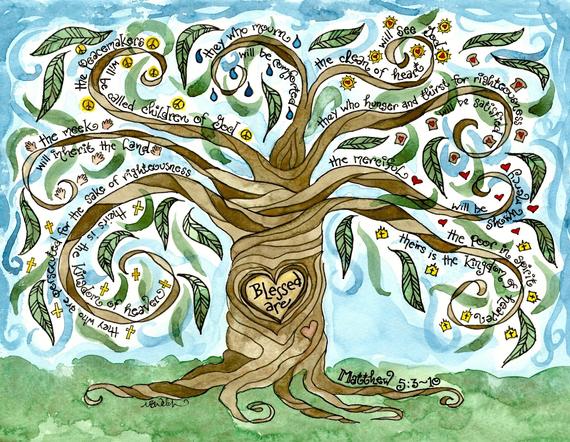
What is Your View of God? (Psalm 33:1-12)

God’s Love… by Hope G. Smith

Rejoice in the Lord, O you righteous.
    Praise befits the upright.
Praise the Lord with the lyre;
    make melody to him with the harp of ten strings.
Sing to him a new song;
    play skillfully on the strings, with loud shouts.

For the word of the Lord is upright,
    and all his work is done in faithfulness.
He loves righteousness and justice;
    the earth is full of the steadfast love of the Lord.

By the word of the Lord the heavens were made
    and all their host by the breath of his mouth.
He gathered the waters of the sea as in a bottle;
    he put the deeps in storehouses.

Let all the earth fear the Lord;
    let all the inhabitants of the world stand in awe of him,
for he spoke, and it came to be;
    he commanded, and it stood firm.

The Lord brings the counsel of the nations to nothing;
    he frustrates the plans of the peoples.
The counsel of the Lord stands forever,
    the thoughts of his heart to all generations.
Happy is the nation whose God is the Lord,
    the people whom he has chosen as his heritage. (New Revised Standard Version)

One of the reasons I adore the biblical psalms is that they present a majestic God who is full of goodness and steadfast love. The Lord’s very character is disposed toward justice and righteousness. Every word of God comes from this place of control and compassionate care.

I agree with the psalmist’s view of God because it resonates with my own experience. I have found that the God of the Psalms is high above all creation as the sovereign ruler, as well as intimately close as a friend.

The words, then, which proceed from the mouth of God are always just, right, good, fair, and loving. If God’s basic character is love, then everything God says and does comes from love. And that is precisely why I am completely devoted to this Lord.

Believers can sing a new song and revel in the Lord’s presence because they discern that everything comes down to God. That is, the way we view God is the way we will live our lives. 

For example, if we tend to see God as a stern Being whose main activity is to continually rebuke and punish people for their sin, then we will live with a constant sense of guilt and anxiety for fear of angering such a God. We will invariably live a performance-based life trying to pull ourselves up by our spiritual bootstraps in order to please or placate such a God who is always looking over our shoulder to make sure that we do not mess up.

That’s a miserable life, indeed! This is why many people internally say to themselves, “To hell with it!” and live in outright rebellion against a God who seems not to care a wit about their happiness. 

The cruelties of this world seem only to be God mocking their abysmal failure at being decent people. It would be like telling my grandson with epilepsy to stop having seizures, as if my love for him is dependent on him being seizure-free. Most people would consider it abusive for a parent or grandparent to yell at a kid for having seizures. With that kind of view of God, I wouldn’t want to know him either. And if that’s the sort of god you’re buying into, you need a new god.

But, on the other hand, if we understand God as a loving parent who is pained by the damage guilt and shame has done to the souls of people, then we are open to seeing the grace of God coming to set broken spirits right again.

With Christianity, the death of Christ is the ultimate act of love in taking care of the sin issue once for all. God in Christ did for us what we could do for ourselves; he gave his life so that we could live as we were intended to live: enjoying God and God’s creation forever.

In this view of God, the task of spiritual formation is one of constantly replacing destructive understandings of God with the kind of thoughts of God that filled the mind of Jesus himself. 

And the only good way of doing that is through the basic spiritual disciplines of Scripture reading and prayer, hearing the words of God. In order to listen well, we engage in practices of silence and solitude, as well as praise and celebration, that helps us connect with God’s Word. 

The grand redemptive story of the Bible is that the steadfast love of God has found its apex and fulfillment in the incarnation, life, death, resurrection, and ascension of the Lord Jesus. Therefore, all of Holy Scripture is to be viewed through these lenses of the grace of God in Christ. It is a very different picture than the one of an indifferent God.

Seeing God from the perspective of grace brings a joyous way to live because it views God as generous and hospitable. From such an angle, the logical and appropriate response is one of gratitude. 

All false gospels have at their core a kind of you-are-bad-try-harder approach. Preachers of such an ilk only rail against people as being scum buckets of sin and offer no real hope of transformation in Christ. It promotes a grace-less religion, and it is nothing less than biblical malpractice.

I take heart that if we have trouble seeing God as we ought, or experience difficulty viewing life as it is meant to truly be lived, we can ask God to give us wisdom. And the promise connected to that encouragement to pray is that God will give generously to all without finding fault and it will be given to them. (James 1:5)

In the psalmist’s view of God, prayer is not a chore but a delight; service is not drudgery but a willing response; reading Scripture is not a mandatory exercise but a wonderful practice of knowing God better; and praise organically erupts from the depths of our being, because we have spiritual eyes to see that everywhere we look, the whole earth is filled with the steadfast love of God.

Bless us with Love, O Merciful God;
That we may Love as you Love!
That we may show patience, tolerance,
Kindness, caring and love to all!
Give me knowledge; O giver of Knowledge,
That I may be one with my Creator and all creation!
O Compassionate One, grant compassion to us;
That we may help all people in need!
Bless us with your Love, O Lord.
Bless us with your Love. Amen.

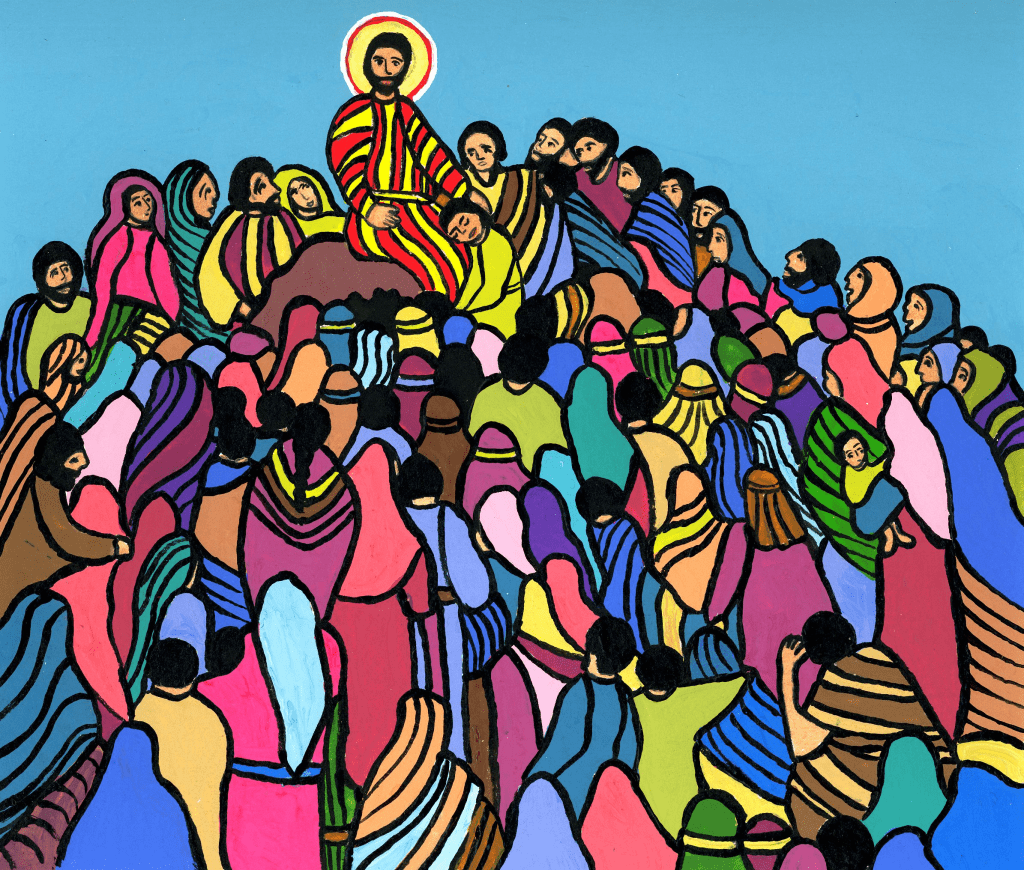
Christ’s Beatitudes (Matthew 5:1-12)

Sermon on the Mount by Gisele Bauche

When Jesus saw the crowds, he went up the mountain, and after he sat down, his disciples came to him. And he began to speak and taught them, saying:

“Blessed are the poor in spirit, for theirs is the kingdom of heaven.

“Blessed are those who mourn, for they will be comforted.

“Blessed are the meek, for they will inherit the earth.

“Blessed are those who hunger and thirst for righteousness, for they will be filled.

“Blessed are the merciful, for they will receive mercy.

“Blessed are the pure in heart, for they will see God.

“Blessed are the peacemakers, for they will be called children of God.

“Blessed are those who are persecuted for the sake of righteousness, for theirs is the kingdom of heaven.

“Blessed are you when people revile you and persecute you and utter all kinds of evil against you falsely on my account. Rejoice and be glad, for your reward is great in heaven, for in the same way they persecuted the prophets who were before you. (New Revised Standard Version)

God’s Law (The Ten Commandments) was given on a mountain. That Law was restated and reframed on a mountain by Jesus in his Sermon on the Mount.

I believe that arguably one of the most important and impactful portions of Holy Scripture are the Beatitudes of Jesus, which serve as the foundation to all of Christ’s teaching.

Christ’s Beatitudes are not simply a random collection of pithy phrases from Jesus on what constitutes approval and blessing from God. They intentionally build upon each other and describe the nature of true righteousness.

The Poor in Spirit

Spiritual poverty, not wealth, is the spiritual base to the Christian life. Most of the original crowd listening to Jesus thought they were on the outside of the kingdom, on the margins of true religion. But Jesus told them they have a place in God’s reign as poor and pitiable people.

To be “poor in spirit” is to be a spiritual beggar who recognizes they have nothing to offer God. It is seeing oneself, one’s sin, and one’s life as spiritually bankrupt apart from God.

Beggars have neither the leverage nor the ability to strike deals with anybody; and so, they do one thing: beg continually.

The proud person would never be caught begging for anything. Yet, the humble spiritual beggar constantly prays because they need God. They discern that without God there is no hope. The kingdom of heaven belongs to the penitent and not to the proud.

The Mourners 

Mourning is the emotional response of acknowledging one’s spiritual poverty. 

Grief and lament have a central place in Christian theology and life. To avoid it, work around it, or short-circuit its process is to refuse Christ; there is no righteousness apart from mourning over sin. Crying, weeping, and even intense tears are important and necessary.

To experience personal grief over one’s sins and the sins of the church and the world is a Beatitude of Jesus. You neither need position, power, privilege, nor pedigree to be a mourner. All can mourn. This is the door by which we enter the kingdom of God.

The Meek

A meek and gentle spirit is the result of realizing poverty of spirit and practicing lament.

At the heart of what it means to be meek is a spirit of non-retaliation. Whenever we are flat on our backs before God, there is no place to look but up. Thus, there is no ability to look down on others.

To be meek is to be broken and moldable before God. A meek person takes personal responsibility for their attitudes and actions. The meek have no need to retaliate, even when egregiously wronged, because they fully entrust themselves to God alone who judges the living and the dead.

Ironically, brokenness is the path to righteous wholeness.

The Hungry and Thirsty

Only those who know their poverty of spirit, personally grieve over sin, and are gentle, end up longing for righteousness.

The desire for righteousness is a recognition that without God I will not make it. I cannot be righteous without Jesus. Simply put, righteousness is a right relationship with God and others.

Those who hunger and thirst for God’s righteousness know they cannot make things right by themselves; they need God’s help.

If we think we can live most days of our lives without God, we do not yet know true righteousness. People who understand their great need for Jesus are easy to spot. They crave and devour God’s Word as their daily food; and they cannot stop blabbering on about Jesus.

There are three practices of living that arise from being filled with God’s righteousness: mercy, purity, and peacemaking. These Beatitudes cannot be conjured up by our own will; instead, they organically grow within us and are freely expressed because of what God is doing in our lives.

You cannot force them any more than you can force a stalk of corn to grow on your terms. Rather, you work with the unforced rhythms of God’s grace and allow righteousness to take root in you.

Down below in the soil, spiritual poverty, mourning, and humility germinate. Then, when the plant breaks the soil and flowers, it produces mercy, purity, and peace-making.

The Merciful 

Mercy begins with a heart that seeks to be generous; it is a loving response to someone or a group of people in misery. We accept them and help them because we ourselves have been there.

The merciful person looks for ways to come alongside others and help, rather than pile expectations and burdens on others without mentoring them in the ways of God.

The Pure In Heart

Purity also results from true righteousness. A stalk of corn might look good, but if you shuck it and it’s filled with worms, it’s not worth much. Legalistic righteousness is concerned to look good; it’s obsessed with performance, perfection, and possessions.

Conversely, the righteousness of God fills our hungry hearts and makes us pure and holy, set apart for good use.

The Peacemakers 

Those who make peace intentionally put themselves in the middle of trouble because they want to live righteously with the mercy and purity that God has provided for them.

Peace is realized through peacemakers. It seems we all desire peace, and yet, peacemakers are hard to come by. It’s a tough gig. To achieve peace, one must first be at peace with God and self – which is why we need the cross of Jesus Christ.

The Persecuted 

Living righteously, as presented by Jesus, tends to bring persecution; and the persecuted consider it a small price to pay for realizing God’s justice in the world.

Folks who are offended by even slight criticisms are usually the ones who are privileged and in power. They have not yet learned the ways of Jesus. Pettiness is nothing more than a sign of unrighteousness.

Yoking up with Jesus, following him, and living into his words and ways has always been risky and dangerous. The Beatitudes of Jesus are not characteristics that lead to power, prestige, or possessions, but likely just the opposite.

“The Beatitudes, spoken with the community of Jesus’ disciples in view, are paradoxes – the standards of the world are turned upside down as soon as things are seen in their right perspective, which is to say, in terms of God’s values, so different from those of the world. It is precisely those who are poor in worldly terms, those thought of as lost souls, who are truly fortunate ones, the blessed, who have every reason to rejoice and exult in their suffering. The Beatitudes are promises resplendent with the new image of the world and humanity inaugurated by Jesus.”

Pope Benedict XVI

Truly righteous persons become living Beatitudes; they are walking, talking blessings to the world. They abide with Christ and are witnesses to a subversive, yet wonderful, way of life, where the last are first and the greatest are the least.

O Lamb of God, that takes away the sins of the world, have mercy upon me.

O Lamb of God, that takes away the sins of the world, have mercy upon me.

O Lamb of God, that takes away the sins of the world, grant me your peace.

Jeremiah 33:14-16 – Longing for Justice and Righteousness

Jeremiah by Marc Chagall, 1956

The Lord said:

I made a wonderful promise to Israel and Judah, and the days are coming when I will keep it.

I promise that the time will come
when I will appoint a king
    from the family of David,
a king who will be honest
    and rule with justice.
In those days,
    Judah will be safe;
Jerusalem will have peace
and will be named,
   “The Lord Gives Justice.” (Contemporary English Version)

Jeremiah is known as “the weeping prophet.” From the very beginning of his prophetic ministry, Jeremiah was given a message that Jerusalem and Judah would experience God’s wrath and be exiled to a foreign country. 

The prophet Jeremiah was faithful to his calling. Yet, he loved his homeland, and it grieved his heart to know that everything familiar around him would be either altered or destroyed. All would change because God’s judgment was coming.

The Lord gave Jeremiah an unpopular message, especially since Judah was enjoying a time of abundance, economic stability, and relative freedom from war. No one took Jeremiah seriously. Initially, when Jeremiah began to spread his message of gloom and doom, he was perceived as a kook, and no one took him seriously. 

But Jeremiah did not let up. The eye-rolling turned into annoyance, and then, over time, contempt. Judah’s king and the governing officials tried to silence Jeremiah as being subversive and unpatriotic. As a result, Jeremiah was imprisoned several times.

Jeremiah, in today’s Old Testament lesson, is under house arrest. The city of Jerusalem is under siege by the Babylonian army. Jeremiah’s prophecy is knocking at the door….

But the people are not listening, believing they’ll be delivered by God for two reasons:

1) They see the Babylonians are evil pagans who do not recognize the One true God, so, obviously, God would never use such an ungodly army to overthrow the people of God, right!?

2) They have the temple and the true worship of God, and God would never let the temple be desecrated, right!? 

So, the people of Jerusalem felt immune from any kind of terrible judgment, as if being God’s people with God’s temple would ward-off any disaster.

The siege against Jerusalem lasted over two years. During that time, the people of Jerusalem went from cocky and confident to having a very rude awakening. Horrible disaster was upon them. At their lowest point, with barely any food, and atrocities occurring throughout the city, Jeremiah’s word from God was a message of grace. 

The people would not be delivered from their inevitable fate. Yet, God would not wipe them off the map and destroy them forever. There is coming a day when there will be a Deliverer, a just and right Savior from the line of the greatest Israelite king ever, David.

The hardest reality for Jerusalem’s people to accept was that their way of life would never be the same again. It would forever change. Although they continued to practice all the rituals of the temple system and worship, over the generations it had simply become a rabbit’s foot for them – as long as they did their duty, they could walk away and do whatever they wanted. And they did.

That approach got God’s attention. Divine wrath came through the most unlikely of instruments: the pagan Babylonians led by the arrogant King Nebuchadnezzar.

The transition from one way of life to another was excruciating. 

Oftentimes change happens and it’s out of our control. However, what is within our influence is how we make the transition from the previous reality to the new reality. 

A biblical way to deal with difficult changes and transitions is by focusing on God’s promises. There are two pairs of the promise we have within the prophecy of Jeremiah: judgment and grace; justice and righteousness. 

“Justice and righteousness was never meant to be the work of only one person, or one part of society. It should be the foundation of how everyone stewards their lives, as well as an integral, normal part of all of society. Every aspect of this world needs God’s justice and righteousness.”

Jessica Nicholas

By looking ahead with hope to the new future of what God is doing and will accomplish, we then come to grips with present troubles.

Judgment and Grace

All of the Old Testament prophetic books have a rhythm of judgment and grace. The promise God gave to the people through Jeremiah was that judgment was coming; and, that grace would follow on its heels.

Proclaiming only a message of judgment without grace brings despair, death, and hell; there is hopelessness. Conversely, only speaking of grace apart from judgment is oxymoronic – it doesn’t exist because there is no need for grace if there is no judgment; grace is an undeserved mercy given freely by God in the face of our sinful selves.

The siege of Jerusalem was terribly horrific. The details are too graphic to mention. Even the most pious of believers who believed Jeremiah’s message were completely aghast at the level of cruelty and violence done to God’s people.

At the people’s darkest hour, the message of grace came to them….

Justice and Righteousness

A safe, secure, just, and peaceful future will be provided by God. The Lord will not forget the people. Better days are coming. A king will arise. His rule will be just and right, providing protection, peace, and prosperity. God’s people were to keep their heads up looking toward that future in order to help them now in the present.

This requires patience. They must wait.

While waiting, the people need to live in the way God intended before all this terror happened. They are to uphold justice and live righteously because that’s what the coming king is all about.

Justice and righteousness are often paired together in the Old Testament. They’re really two sides of the same coin. We may often think of justice in the punitive sense of giving lawbreakers what they deserve. Yet, biblical justice has more to do with giving someone what they need and deserve to live and thrive as human beings. 

To act justly means to provide essentials like clean drinking water, a safe environment, food to eat, a place to sleep, etc. Righteousness is the relational element to justice. To be righteous means to have right relationships, to connect with people, to move toward them and provide them with all the relational things that people need like respect, dignity, friendship, hospitality, fellowship, etc.

Justice and righteousness go together. Justice without righteousness is at best, impersonal, and, at worst, condescending. Righteousness without justice is a dead faith that wishes well but never delivers. Together, however, justice and righteousness brings love, peace, harmony, well-being, and human flourishing because all the basic necessities of life, physical and relational, are met in abundance.

This is what is meant in the Old Testament when Israel is referred to as “a land of milk and honey.”

Conclusion

For Christians, the time of abundance is here, in Christ. Yet, it’s not here in its fullness. We anticipate, wait, and hope for the Second Coming of our Savior and King. While we exercise patience, we long for better days. A true Advent spirit is a deep longing for justice and righteousness because King Jesus is just and right.

So, what do you long for today? 

I long for justice.

I long for broken spirits to be made right, for people’s healing of both body and soul. I long for the day when children with epilepsy will have no more seizures. I long for the day when individuals and families will not have to contend with cancer anymore. I long for the day when there will be no more depression, anxiety, mental illness, or dementia. I long for the day when people will be free of addictions. I long for the day when there will be no more sex trafficking, death from malnutrition, grinding poverty, corrupt governments, whole families and communities torn by the ravages of diseases, refugees with no place to call home, and devastating natural disasters. 

I long for righteousness.

I long for the day when women and girls across the globe will not be abused and become the victims of disordered power. I long for the day when nations, ethnicities, races, and everyone everywhere will no longer hate each other. I long for every individual to know forgiveness. I long for people to experience the exhilaration of new life in Christ. I long for my community to hear and believe the gospel. I long for peace, harmony, unity, equity, and an egalitarian spirit.

I long for God’s benevolent rule to come in all its fullness, freedom, joy, prosperity, peace, and happiness. I long for Christ’s coming! And I long to be doing justice and righteousness when Jesus arrives!

Maranatha, come Lord Jesus!

Matthew 6:25-33 – Do Not Worry

“Therefore, I tell you, do not worry about your life, what you will eat or drink; or about your body, what you will wear. Is not life more than food, and the body more than clothes? Look at the birds of the air; they do not sow or reap or store away in barns, and yet your heavenly Father feeds them. Are you not much more valuable than they? Can any one of you by worrying add a single hour to your life?

“And why do you worry about clothes? See how the flowers of the field grow. They do not labor or spin. Yet I tell you that not even Solomon in all his splendor was dressed like one of these. If that is how God clothes the grass of the field, which is here today and tomorrow is thrown into the fire, will he not much more clothe you—you of little faith? So do not worry, saying, ‘What shall we eat?’ or ‘What shall we drink?’ or ‘What shall we wear?’ For the pagans run after all these things, and your heavenly Father knows that you need them. But seek first his kingdom and his righteousness, and all these things will be given to you as well.” (New International Version)

Jesus cares both about what we do, and why we do it. That’s because he cares about our whole selves – our physical needs and our emotional/spiritual needs. In our anxiety about the future, Jesus guides us toward a non-anxious presence for our daily lives.

We all know what worry is. It’s that unsettling feeling in the pit of your gut about what’s going to happen tomorrow. Whenever we worry, we display an inability to see beyond our own little world. Worry bogs us down and saps our faith. Our worry is significant enough to warrant Jesus repeating the command to not worry six times. And he gives six reasons why:

Life is more than food and clothes.

When we are beset with worry, we need a big picture view of what’s going on. Being overly concerned about how the necessities of life are going to be met, we need a reminder that God cares for life itself, including us. If God cares about life, which is so valuable, he will sustain us with what we need to live that life.

God cares for the birds in creation. 

People are the apex of God’s creation. And, since God cares for every other creature on this earth, and sustains their lives, God will certainly care for us, as well.

Worry begins to melt and be replaced by faith, not when we try and work up feelings of trust, but when we take the time to observe creation – watching the birds and seeing how God takes care of them. Birds don’t worry; they just enjoy God’s providence. Birds work hard, but they aren’t farmers who plant and harvest. Yet, God sustains them. So, if God will provide for small creatures that don’t plan to avoid starvation, how much more will God sustain you!?

Worry accomplishes nothing. 

Worry is like a rocking chair; it gives you something to do but doesn’t get you anywhere. Worry is simply unhelpful.

Don’t worry about the world coming to an end today. It is already tomorrow in Australia.

Charles M. Schulz

God cares for the flowers and grass in creation. 

God clothes the flowers better than we ever could dress ourselves (which is what my daughters have told me for years). Jesus specifically identifies flowers and grass because they illustrate a short and precarious lifespan. Christ’s logic is from the lesser to the greater: If God cares for something as fragile and temporary as flowers and grass, how much more will God care for you?

Jesus links worry with a small faith. We have expectations in life about how things ought to go. If those expectations are grounded in God’s promises, then whenever adverse circumstances come, we will likely respond with peace and trust. However, if we are anticipating the future to turn out a particular way, then the worry sets in. 

While we worry, we begin taking matters into our own hands. If the situation goes against our expectations, then we start to question if God is good or not, or if the Lord really has our best interests at mind. We must not tether ourselves to a specific outcome, rather, we need to rely on God’s care for us, no matter what the outcome will be.

Your heavenly Father knows your needs. 

Unlike the ancient pagan deities who were aloof, fickle, and did not pay much attention to people, God is always watching us, always attentive, always knowing our every need. Pagan worshipers keep worrying about whether the gods will really care, or not.

However, with God there is no need for worry because we know the Lord has our backs and is trustworthy. Just as my girls used to jump from the stairway in a leap of faith because they knew for sure Dad was going to catch them, so also your heavenly Father is a reliable God.

The necessities of life will be given to you. 

God’s business is to provide for our necessities; our business is to seek first God’s kingdom and God’s righteousness. 

The verb form of “seek” is a continuous action of seeking. We are to daily seek God’s kingdom and submit to Christ’s lordship. We are to continually pray for God’s kingdom to come and bring all the world under the gracious authority of Christ.

We need to keep seeking social, political, cultural, institutional, and ecclesiastical reform because God cares about it all coming under Christ’s lordship. Continually seeking God’s kingdom means we dethrone wealth and possessions as our first pursuits, and instead seek heavenly treasure as defined by Jesus.

We are to continually seek God’s righteousness by seeking peace where there is discord; forgiveness when others sin against us; mercy instead of judgment; right relations with people in our family, at work, in the neighborhood, and in the church. 

The will of God is clearly stated: Seek first the kingdom of God and God’s righteousness.

Conclusion

If we are busy with kingdom business, there is then no room for worry. Anxious fretting sets in whenever we are diverted from seeking the kingdom. There’s no need for worry about tomorrow because I am busy today doing God’s will.

So, how then do we overcome worry?

  1. Confess and renounce worry. Call worry for what it is: a lack of faith.
  2. Observe creation. Take regular walks in nature. See all the flora and fauna around you. Perceive how God cares for all of it – and you.
  3. Get to know the God of the Bible. Spending time with God increases our faith and reliance upon the Lord. Knowing that he is trustworthy, increases our faith. Engaging in the spiritual practices of prayer, giving, and fasting build our trust in God.
  4. Seek first God’s kingdom and righteousness. Busy yourself with kingdom pursuits, instead of worry.

May God’s blessing rest on you, as you value what Jesus values, and as you seek the Lord with all your heart, soul, mind, and strength.