Sensing the Impossible (Exodus 3:1-15)

The Burning Bush, by Yoram Raanan

Now Moses was tending the flock of Jethro his father-in-law, the priest of Midian, and he led the flock to the far side of the wilderness and came to Horeb, the mountain of God. There the angel of the Lord appeared to him in flames of fire from within a bush. Moses saw that though the bush was on fire it did not burn up. So Moses thought, “I will go over and see this strange sight—why the bush does not burn up.”

When the Lord saw that he had gone over to look, God called to him from within the bush, “Moses! Moses!”

And Moses said, “Here I am.”

“Do not come any closer,” God said. “Take off your sandals, for the place where you are standing is holy ground.” Then he said, “I am the God of your father, the God of Abraham, the God of Isaac and the God of Jacob.” At this, Moses hid his face, because he was afraid to look at God.

The Lord said, “I have indeed seen the misery of my people in Egypt. I have heard them crying out because of their slave drivers, and I am concerned about their suffering. So I have come down to rescue them from the hand of the Egyptians and to bring them up out of that land into a good and spacious land, a land flowing with milk and honey—the home of the Canaanites, Hittites, Amorites, Perizzites, Hivites and Jebusites. And now the cry of the Israelites has reached me, and I have seen the way the Egyptians are oppressing them. So now, go. I am sending you to Pharaoh to bring my people the Israelites out of Egypt.”

But Moses said to God, “Who am I that I should go to Pharaoh and bring the Israelites out of Egypt?”

And God said, “I will be with you. And this will be the sign to you that it is I who have sent you: When you have brought the people out of Egypt, you will worship God on this mountain.”

Moses said to God, “Suppose I go to the Israelites and say to them, ‘The God of your fathers has sent me to you,’ and they ask me, ‘What is his name?’ Then what shall I tell them?”

God said to Moses, “I am who I am. This is what you are to say to the Israelites: ‘I am has sent me to you.’”

God also said to Moses, “Say to the Israelites, ‘The Lord, the God of your fathers—the God of Abraham, the God of Isaac and the God of Jacob—has sent me to you.’

“This is my name forever,
    the name you shall call me
    from generation to generation. (New International Version)

Moses with the Burning Bush, by Marc Chagall, 1966

The burning bush is one of those iconic objects and familiar stories in Holy Scripture. The experience of Moses changed both his life and the lives of all the Israelites then and now.

Having spent the first forty years of his life as a darling in the Egyptian court, then the next forty years far from that life on the backside of the desert with a bunch of sheep, it is an understatement to say Moses did not expect or ever envisioned encountering God in a burning bush. The impossible has no possibility…. Or, does it?

That incredible encounter engaged the senses of Moses:

  • the paradoxical sight of seeing fire in a bush that isn’t burning up
  • the smells of sheep, the outdoors, and perhaps, even of fire
  • hearing the call of God from within the bush
  • spiritually and emotionally tasting the attentive justice of God
  • removing the sandals to touch and feel the grounding of sacred space

The story comments on the senses of God, as well. Even though God is Spirit and is worshiped as such, God is alive with his own sensations:

  • seeing the approach of Moses, and the misery of the Israelites
  • the smell of injustice wafting into God’s nostrils with a stench that brought a strong divine reaction
  • hearing the cries of suffering
  • anticipating the savory taste of showing mercy and justice together
  • touching Moses in such a profound way that he and the Israelites would never be the same

Through it all, the close identification between God and God’s people is expressed. The Lord feels the humiliation and pain of the Israelites and vows to uproot them from the Egyptian factory farm of slavery and plant them firmly into rich Promised Land soil. And what God promises to do, God has the authority and power to make good on.

An impossible situation, Moses thinks. How can hundreds of years of backbreaking bondage to a national force so mighty that nothing can be done about it, be broken? Who am I, Moses, to face such odds?

Ah, but God specializes in systems of oppression and miserable people. It is the Lord’s abilities which conquer the mightiest of foes and can extend mercy to the lowest and the least powerful. The entire situation is ripe for divine intervention and supernatural wonders to occur.

God will make a way where there seems to be no way. God works in ways which transcend our senses.

  • Where we are blind, God gives sight
  • Where we are deaf, God opens our ears with the sound of justice
  • When our taste buds are shot with the gruel of poverty, God causes our tongues to dance with the zest of mercy
  • When our nerve endings are raw from cruel bondage, God touches us with freedom
  • Where our nostrils have become accustomed to the smell of death, God’s aroma of life awakens us to new hope

My friends, I believe with all my heart that you already intuitively know deep in your spirit that the impossible is possible with God. It is never a question of God’s ability, but of God’s timing. God is able – and the Lord works the impossible in its proper time so that justice and mercy will have their full effect.

God of the impossible: I believe. Help me in my unbelief.

God of mercy: I receive. Help me in my denial.

God of justice: I accept. Help me in my rejection.

God of all time: I endure. Help me in my impatience.

God of All: I submit. Help me in my rebellion.

God of power and of might: I trust. Help me in my distrust.

God of our Lord Jesus Christ: I follow. Help me in my wandering.

God of the nations: Yes, you know that I love you. Yes, Lord, you know I love you. Lord, you know all things, and you know that I love you. So, yes, I will answer your call to go. Help me in my sending. Amen.


Justice for All (Matthew 12:15-21)

When Jesus became aware of this [a plot to kill him] he departed. Many followed him, and he cured all of them, and he ordered them not to make him known. This was to fulfill what had been spoken through the prophet Isaiah:

“Here is my servant, whom I have chosen,
    my beloved, with whom my soul is well pleased.
I will put my Spirit upon him,
    and he will proclaim justice to the gentiles.
He will not wrangle or cry aloud,
    nor will anyone hear his voice in the streets.
He will not break a bruised reed
    or quench a smoldering wick
until he brings justice to victory.
    And in his name the gentiles will hope.” (New Revised Standard Version)

Saying the words, “I love you” is important. And it’s also significant how we say it. If our tone of voice is monotone and our affect flat, then the incongruence between the words and the manner in which they are said will leave our love unrequited. If, however, our tone is soothing and excited and our face beaming as if starstruck, then the love expressed will likely be received, and stick.

Christians have a message of love to the world. It’s a message of Jesus Christ and his love for humanity. Both the content of our message and the way we communicate it are vitally significant.

For if the words we don’t match our tone of voice and affect, then love is not what we convey. Yet, if we have been profoundly and meaningfully touched by the love of God in Christ, then that love will not be constrained; it shall find a way to express itself with appropriate mannerisms.

The way in which Christ proclaimed his message, testified that he was, indeed, the promised Savior and the rightful Ruler for God’s world.

The message of Jesus was proclaiming justice to the nations. The disciple Matthew used a quote from the prophet Isaiah to explain the reason why Jesus withdrew, and told people not to make him known. This was a curious act for a Messiah, to say the least. 

After all, we might believe Jesus should loudly proclaim who he is and what he is doing. Human ingenuity might say he ought to be advancing, not retreating – getting his name out with some notoriety in a slick marketing message so that people will come running into the kingdom of God! 

But Jesus goes a different direction. Matthew (quoting the prophet Isaiah) made it clear who Jesus is and what he is all about. Jesus is God’s servant. Jesus is God’s beloved Son with whom he is well-pleased. The Holy Spirit came on him in his baptism. Jesus became a teacher of justice to the nations, that is, to gentiles, to all kinds of people – even the ones we do not like. 

I personally find it strange that some Christian folk think justice is something which is not part of the Gospel, as if it were nice, but optional. They might believe it’s important to engage in some sort of social justice toward the downtrodden, but want to put it on a secondary shelf. Speaking the message is primary to them, as if we could or should separate the message from the messenger.

Yet, we can no more divide the good news of forgiveness in Christ from social justice any more than we can neatly separate the cross and resurrection. All of it is redeeming work; it all goes together.

In the kingdom of God, all things and all people are to be redeemed and come under the Lordship of Christ. And the practice of justice is central to making redemption a reality for humanity.

He has told you, O mortal, what is good,
    and what does the Lord require of you
but to do justice and to love kindness
    and to walk humbly with your God? (Micah 6:8, NRSV)

Mercy and justice go together like corn on the cob and butter, and like pork ribs with barbeque sauce (I’m from Iowa, after all!). Kindness and mercy refers to God’s unconditional grace and compassion. Justice treats all people with equity, without any favoritism.

Biblical justice is not primarily punishment for wrongdoing; it gives people their rights – and this concept is overwhelmingly taught in Holy Scripture – over 200 times in the Old Testament alone. Jesus Christ’s back to the Bible movement rightly emphasized justice.

God loves and defends the weak, the poor, and the powerless:

He gives justice to the oppressed
    and food to the hungry.
The Lord frees the prisoners.
    The Lord opens the eyes of the blind.
The Lord lifts up those who are weighed down.
    The Lord loves the godly.
The Lord protects the foreigners among us.
    He cares for the orphans and widows,
    but he frustrates the plans of the wicked. (Psalm 146:7-9, NLT)

We, as God’s people, are to share the Lord’s passion for justice:

Speak out on behalf of the voiceless,
    and for the rights of all who are vulnerable. (Proverbs 31:8, CEB)

“Cursed is anyone who obstructs the legal rights of immigrants, orphans, or widows.” All the people will reply: “We agree!” (Deuteronomy 27:19, CEB)

Since believers are justified by faith in Christ, we bring justice to our communities, in both word and deed, by advocating for the least, the lost, the last, and anyone else without social or economic power in this world.

We are to use our voice for both us and for those who have no voice. The voice of justice is the voice of action.  To be concerned for the justice of God is to actively work for God’s rule and reign to enter every inch of this world, to penetrate every nook and cranny of our homes, neighborhoods, and schools. 

“If you are a Christian, and you refrain from committing adultery or using profanity or missing church, but you don’t do the hard work of thinking through how to do justice in every area of your life – you are failing to live justly and righteously” Tim Keller, Generous Justice

The Christian life is much more than avoiding sin; it’s about actively pursuing God’s will through words and acts of justice on behalf of the needy. Jesus came to this earth to proclaim justice, and, as his followers, he expects us to do it, too. For this to happen, we must overcome our prejudices toward anybody unlike us so that we will stand with the weak, the poor, the oppressed, the lowly, and the pained, all around us.

The probing question for all of us is: Am I able to see the image of God in someone different from me?

Jesus did. Christ will not quarrel or cry out; no one will hear his voice. That is, Jesus is gentle, humble, and meek. He did not look for dramatic confrontations with others, but instead went quietly about his Father’s business. 

Jesus was no bullhorn guy, loudly proclaiming his message on a street corner. Instead he interacted with and ministered to the lowliest people of society who had no power and nothing to give in return. Jesus did everything to connect with them, and not to avoid them.

Along the Jordan River in Israel, reeds grew by the millions, in Christ’s day. They had little value because there were so many of them. Reeds were used to make baskets, pens, flutes, and a variety of other things. A perfect reed is fragile, and a bruised one is useless. 

The reference that God’s servant will not break a bruised reed, means that Jesus will treat the weak with sensitivity. A smoldering wick is also not worth much; if it’s damaged, you just get another one. A contemporary example might be a paper clip; it’s not worth much to us, and a damaged one we simply discard and use another. 

The point is: Jesus handles hurting people with care. Society’s poor, disadvantaged, and struggling will not be callously overlooked and tossed aside by Jesus.

Jesus Christ discovered his own island of misfit toys. He then demonstrated to the world that are a needed part of society. Small wonder, then, that droves of the lowliest people throughout history have come to Jesus, placing their hope in him.

For we do not have a high priest who is unable to sympathize with our weaknesses, but we have one who has been tempted in every way, just as we are – yet was without sin.  Let us then approach the throne of grace with confidence, so that we may receive mercy and find grace to help us in our time of need. (Hebrews 4:15-16, NIV)

Our help is in the name of Lord who made heaven and earth. May you find Christ, God’s servant, as your anchor and hope in the world. Amen.

The Struggle Within (Romans 7:15-25)

I do not understand what I do. For what I want to do I do not do, but what I hate I do. And if I do what I do not want to do, I agree that the law is good. As it is, it is no longer I myself who do it, but it is sin living in me. For I know that good itself does not dwell in me, that is, in my sinful nature. For I have the desire to do what is good, but I cannot carry it out. For I do not do the good I want to do, but the evil I do not want to do—this I keep on doing. Now if I do what I do not want to do, it is no longer I who do it, but it is sin living in me that does it.

So I find this law at work: Although I want to do good, evil is right there with me. For in my inner being I delight in God’s law; but I see another law at work in me, waging war against the law of my mind and making me a prisoner of the law of sin at work within me. What a wretched man I am! Who will rescue me from this body that is subject to death? Thanks be to God, who delivers me through Jesus Christ our Lord! So then, I myself in my mind am a slave to God’s law, but in my sinful nature a slave to the law of sin. (New International Version)

We can relate to the Apostle Paul. We, along with him, have said to ourselves many times, “I don’t understand why I act the way I do. I don’t do what I know is right. I do the things I hate.” 

Paul’s experience of uneasiness, his existential angst because of the struggle within, is a timeless description of our common human condition. There are times we seem completely unable to follow our conscience and do what’s right. It can be maddening, even to the point of experiencing a continual low-level discouragement or depression which underlies almost everything we do.

The prescription for dealing with this mental, emotional, and spiritual malady does not include the law. That’s right. Putting our willpower and effort into obeying commands gets us nowhere. Even if we obey laws and rules and commands for a time, our efforts eventually break down. We fail to do what we want, and end up doing just the opposite.

In all fairness, the law is good, not bad; it just doesn’t have the capacity to transform us. The law’s purpose is to show us how bad off we really are in this world, to give us an awareness of our true condition, so that we will seek help. 

We humans are a bundle of contradictions, doing good, then bad, and flip-flopping back and forth – all with great frustration. In such a miserable condition, what then shall we do? Who will help us? Is there anyone to save us from our plight?

Sheer willpower and obedience will not help us; it won’t work. It will only give us a false hope. Any success in using willpower only deludes one into believing they have the answer… until they yet fall again into the pit of their own inner darkness. But the good news is that there is a Savior, a Redeemer, a Rescuer who has the will and the power to deliver us from our predicament.

The grace of God in Christ is the operative power that changes lives, not the law. Freedom from the tyranny of our “should’s” and our misplaced desires comes from Christ’s forgiveness through the cross. 

Like a lover enamored with his beloved, our desires become oriented toward Jesus for his indescribable gift to us. That is the strength of grace. Transformation is relational; it is found in a person, not a program. And the only person and relationship which has the ability to change us is, I believe with all my heart and mind, the Lord Jesus Christ.

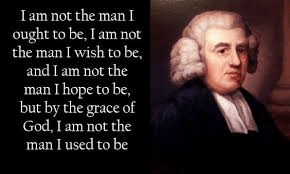
Why? Because I myself have been transformed and changed by such a relationship with Christ. I, along with the hymn writer John Newton, can say, “I once was lost but now am found, was blind but now I see.”

“Self-help” for all the good it really can do, is in many ways an oxymoron. We need a Savior to help us, and we need a community of people who encourage us. And even if we can do it ourselves today, that may not (and eventually will not) be true of us tomorrow. None of you got this far in life on your own – and you will continue to need God and others going forward.

Love must be completely sincere. Hate what is evil, hold on to what is good.Love one another warmly as Christians, and be eager to show respect for one another. Work hard and do not be lazy. Serve the Lord with a heart full of devotion. Let your hope keep you joyful, be patient in your troubles, and pray at all times. Share your belongings with your needy fellow Christians, and open your homes to strangers. (Romans 12:9-13, GNT)

We have an incredible capacity for good and vast internal resources within us. And yet, we too often lack awareness of this reality, for which we can tap into. When it comes to an outright metamorphosis, we need a new heart – and we can no more simply decide to change our lives any more than we can perform heart transplant surgery on ourselves.

People need the Lord.

Whenever the foundation of a house is about to crumble, it won’t do to rearrange the living room furniture and do a bit of spruce up painting. We deceive ourselves if we believe that all our efforts at landscaping the property and having a great curb appeal will do the trick. If the foundation crumbles, and the house implodes, all efforts at curb appeal won’t matter.

Jesus is our cornerstone. Without him, we are at risk, about to fall and without hope. With him, true restoration and renewal happens. And then, when the house is repaired and in order, we set about the task of being good stewards and maintaining and caring for the wonderful changes which were made.

Freedom from a dilapidated soul and misplaced energies to consistent times of peace and contentment, calmness and confidence, satisfaction and settled peace, comes by growing ever closer to the Savior who exudes all those qualities, and more. For the Lord not only saves and delivers; he also sanctifies and encourages.

In Christ, the uneasiness and unsettling experience – the existential angst – becomes a thing of the past because of the grace of merciful deliverance and continual help.

Saving God, I thank you for delivering me from sin, death, and hell through your Son, the Lord Jesus. May your Holy Spirit apply the work of grace to my life every day so that I can realize practical freedom from all that is damaging and destructive in my soul. Amen.

Praise and Prayer (Psalm 86:11-17)

Teach me your way, Lord,
        so that I can walk in your truth.
    Make my heart focused
        only on honoring your name.
I give thanks to you, my Lord, my God,
    with all my heart,
    and I will glorify your name forever,
    because your faithful love toward me is awesome
    and because you’ve rescued my life
        from the lowest part of hell.

The arrogant rise up against me, God.
    A gang of violent people want me dead.
    They don’t give a thought for you.
But you, my Lord,
    are a God of compassion and mercy;
    you are very patient and full of faithful love.
Come back to me! Have mercy on me!
    Give your servant your strength;
    save this child of your servant!
Show me a sign of your goodness
    so that those who hate me will see it and be put to shame—
        show a sign that you, Lord,
        have helped me and comforted me. (Common English Bible)

Psalms are prayers. And today’s prayer is from David, a guy who knew what it was like to have evil men hate him and pursue taking his life, through no fault of his own. 

I don’t know about you, but, although I have never faced adversity to such a degree as David, I do know something about people who, to put it bluntly, just flat-out hate my guts. It is not a good feeling, and it can be terribly draining emotionally and even spiritually. 

Having disrespectful and rude people who talk behind your back (and sometimes even to your face) is in direct contrast to who God is.

Who is God? What is God’s character?

God is described by David as merciful and gracious, slow to anger and abounding in steadfast love and faithfulness. Whereas insolent people objectify others and do not seek their best interests, God always acts in accord with a basic divine character of love and grace. 

Based upon the nature of God, we can choose to cry out, just like David did, to show us a sign of God’s favor. We can pray for God to provide us with some tangible communication of divine love, given on our level, so that we can grasp and understand it.

For we all, at various points in our life, need help and comfort through hardship and adversity.

Be assured that God hears the cries of the godly. The Lord notices ungodliness and injustice, and will do something about it. 

At the same time we are receiving divine guidance and help, we can trust God to address the insolence that exists around us and toward us.

Why can we trust God? What is the basis of such faith?

Seven times in the psalm, David refers to Yahweh as my Lord. And three times David refers to himself as your servant. This is a relationship – Lord to servant, Creator to creature – and it means the servant can cry out to his Lord and can confidently expect a positive response to his cry.

It is the nature and character of God to be attentive and answer God’s people.

The Lord is merciful and gracious,
    slow to anger and abounding in steadfast love.

Psalm 103:8, NRSV

Because of the divine/human relationship, David can call boldly to God, confident of God’s will and of God’s power to help. The gang of violent people who had it out for David also have no regard for God. So, David is emboldened to pray for divine favor, while at the same time, praying against those that despise him.

Yahweh, the God of David, can deliver us from the lowest parts of hell itself, because God is the expert on deliverance from the worst places that humanity finds themselves in. And so, the Lord is the One who is worthy of praise. Eventually, this reality will ultimately be recognized by all nations.

“Great and amazing are your deeds,
    Lord God the Almighty!
Just and true are your ways,
    King of the nations!
Lord, who will not fear
    and glorify your name?
For you alone are holy.
    All nations will come
    and worship before you,
for your judgments have been revealed.” (Revelation 15:3-4, NRSV)

Praise and petition go together like a hand in a glove. David freely praises God with thanksgiving for the divine character and saving actions – while at the same time, he offers fervent prayer, based upon the understanding that God is good.

David’s impassioned petition is this: Teach me your way, Lord, so that I will walk in truth; and give me an undivided heart to keep on honoring and praising your name. David longed for a completely focused heart on God and God’s will for his life.

“Hear, O Israel: The Lord is our God, the Lord alone. You shall love the Lord your God with all your heart, and with all your soul, and with all your might.” (Deuteronomy 6:4-5, NRSV)

In those times when we feel as if we are between a rock and a hard place, wanting to remain positive, yet also acknowledging life’s crud, we can come to Psalm 86 and adopt it as our own prayer for the day…

Train me, God, to walk straight;
    then I’ll follow your true path.
Put me together, one heart and mind;
    then, undivided, I’ll worship in joyful fear.
From the bottom of my heart I thank you, dear Lord;
    I’ve never kept secret what you’re up to.
You’ve always been great toward me—what love!
    You snatched me from the brink of disaster!
God, these bullies have reared their heads!
    A gang of thugs is after me—
    and they don’t care a thing about you.
But you, O God, are both tender and kind,
    not easily angered, immense in love,
    and you never, never quit.
So look me in the eye and show kindness,
    give your servant the strength to go on,
    save your dear, dear child!
Make a show of how much you love me
    so the bullies who hate me will stand there slack-jawed,
As you, God, gently and powerfully
    put me back on my feet. (The Message)