Be Merciful (Jonah 4:1-11)

Jonah was really upset and angry. So he prayed:

Our Lord, I knew from the very beginning that you wouldn’t destroy Nineveh. That’s why I left my own country and headed for Spain. You are a kind and merciful God, and you are very patient. You always show love, and you don’t like to punish anyone.

Now let me die! I’d be better off dead.

The Lord replied, “What right do you have to be angry?”

Jonah then left through the east gate of the city and made a shelter to protect himself from the sun. He sat under the shelter, waiting to see what would happen to Nineveh.

The Lord made a vine grow up to shade Jonah’s head and protect him from the sun. Jonah was very happy to have the vine, but early the next morning the Lord sent a worm to chew on the vine, and the vine dried up. During the day the Lord sent a scorching wind, and the sun beat down on Jonah’s head, making him feel faint. Jonah was ready to die, and he shouted, “I wish I were dead!”

But the Lord asked, “Jonah, do you have the right to be angry about the vine?”

“Yes, I do,” he answered, “and I’m angry enough to die.”

But the Lord said:

You are concerned about a vine that you did not plant or take care of, a vine that grew up in one night and died the next. In that city of Nineveh there are more than 120,000 people who cannot tell right from wrong, and many cattle are also there. Don’t you think I should be concerned about that big city? (Contemporary English Version)

Fear and anger go hand in hand. The fear of what sort of evil might happen often leads a person toward angry vitriol, even violence.

I once dealt with a woman who was so upset with her husband that she was literally shaking with anger. There was a time when her husband had been abusive, but thankfully, he gave his life to God, changed, and became a loving person. 

The thing that was so upsetting for the wife is that God saved her husband without punishing him for all the abuse he had dished out. She wanted some divine payback! The woman was actually furious about God showing grace and compassion.

This is not a novel or new experience. In the ancient world, the Assyrians were notorious for their brutality toward conquered peoples. They thought up forms of torture as a creative past-time. It was a violent culture, full of inhumane practices, and soldiers who were the scourge of the Middle East.

The violent ways of the Assyrians caught the notice of God. Divine judgment was hanging over the capital of the Assyrian Empire, Nineveh. So, God told the prophet Jonah to go and give the powerful empire a message of impending doom. (Jonah 1:2)

Jonah did not immediately obey God. However, he eventually went to Nineveh (after the infamous being in the belly of a great fish for three days and nights). The result was a great repentance of sin from the Assyrian people. 

The entire city turned from their evil ways. God saw this mass repentance and relented from sending disaster. Instead of destroying the city, with all its inhabitants and animals, the Lord was merciful and spared them. After all, God delights in seeing humility and the courage to admit evil and turn from it.

But Jonah had a serious problem with God’s grace toward the Assyrians. He was so upset and angry about the whole affair, that he wanted to die. Jonah was actually annoyed and greatly displeased by God’s goodness. Jonah wanted justice; he was looking for judgment. The last thing he wanted was divine mercy toward the very people who were experts at killing Jews. 

Yet, we must come to grips with the reality that God’s grace is so massive that it even extends to some of the most evil people in history. And Jonah wanted no part of that sort of theology.

God asked Jonah twice, “Do you have a right to be angry?” Jonah wanted destruction and pay-back for all the sin of the Assyrians. But God searches our hearts and exposes our expectations. Often, when those expectations do not happen, we are disappointed and become angry, even livid over the lack of retribution from God.

God wanted Jonah to share the same heart of mercy. And God still desires God’s people to have a heart that has grace and compassion, even in the face of terrible evil. Sometimes, God calls us to do what we least want to do in order to reveal what is really in our own hearts.  

Hating people to the point of wanting nothing but destruction upon them does nothing to bring about the righteous life that God desires. In Christian understandings, the blood of Jesus Christ has the power to bring healing and hope, even to the worst of sinners.

Whenever our fears turn to anger and we believe that God should bomb evil people off the face of the earth… or if we think our neighbors might be harboring ill-intent just because they are of a different race, ethnicity, or religion… or if we harbor bitterness because of real evil present in this world and want at least a little payback; then, we are no better than Jonah.

We end up looking just as ridiculous as Jonah, sitting at the edge of the city, pouting like a little kid.

Let’s grow up and rise above the current rancor that exists in so many places. Be concerned for the billions of people on this earth who need a merciful divine intervention and the grace of repentance that leads to new life. 

Pray for your enemies. Do good works for those who oppose you. Gain a bigger for the nations of the world. Remember what is really important in life. 

Any fool can rant and rave with anger against another; but the wise and gracious follower of God patiently and carefully prays and acts in ways that brings mercy and grace to others.

Merciful God, your presence of love in this world is truly amazing. Despite the real existence of evil on this earth, your grace cuts through it all and has the last word. Work in my life in such a way that fear is done away with and sinful anger vanishes, to be replaced with the love of Jesus Christ. Amen.

A Sacred Service Announcement (Psalm 117)

Praise the Lord, all you nations.
    Praise him, all you people of the earth.
For his unfailing love for us is powerful;
    the Lord’s faithfulness endures forever. (New Living Translation)

The Lord is God of the nations – and not only of you and me – whether they recognize it, or not.

All nations, not just the good ones, are invited to praise the Lord. Everyone is encouraged to glory in the love and faithfulness they see.

Since God is present, faithful, just, right, good, loving, and gracious – all the time – those very same dynamics are continually operating in God’s big world. Just as the storm clouds rain on both the righteous and the wicked, and just as the sun shines over every nation and people group on the earth, so the Lord’s great love is a powerful force which encompasses the entire world.

God’s faithfulness and steadfast love never ends. Let that sink in…. Ruminate on it for a bit…. 

What does it mean? How does it work itself out? Is God faithful to me? 

As a Pastor and Chaplain, I can tell you that one of the most difficult things I see people struggling with is if God can really do things in their lives like he does in other people’s lives. 

Many times, we have a strong faith for other people – that God will forgive, heal, help, and show up in their lives. Yet when it comes to me personally, it becomes an entirely different thing. My faith is like a wet noodle. We wonder if anything can really change. *Sigh*

Just as we hear public service announcements, it is good to hear the sacred service announcements which are just as important. We need our spiritual awareness raised so that we can make some behavioral changes and adjustments.

We need the reminder, and continual announcement, that God makes good on divine promises. The Lord will accomplish all the decrees and promises made, no matter how long ago they were uttered.

It certainly might seem like God is strolling through the park, burning away precious time, being agonizingly slow in moving on our behalf. 

But know this: As it is in heaven, so shall it be on earth. The sovereign Lord of all creation doesn’t only work in other places amongst other people. Jesus is presently building his church and the gates of hades shall not prevail against it. (Matthew 16:18)

There is no handwringing, nail-biting, or eye-rolling in heaven. The Lord is sovereign and limitless, and so, reaches into every geographical locale amongst every people group – and does it all with love.

I know God is a healer because I have seen him heal. I know the Lord is a deliverer because I’ve been delivered. I know God is a provider because I see the Lord’s merciful abundance every day. All this, and more, is reason to offer praise, glory, and honor to the great Sovereign who is worthy of it.

From all that dwell below the skies,
Let the Creator’s praise arise;
Let the Redeemer’s name be sung
Through every land by every tongue.

Eternal are Thy mercies Lord;
Eternal truth attends Thy Word;
Thy praise shall sound from shore to shore
Till suns shall rise and set no more.

– Isaac Watts, From All That Dwell Below the Skies

Since God can and does work everywhere, the Lord will show up in your life and your family and your church and your community, just like what has been happening throughout all eras, in all places, and in all times.

If you are waiting and watching for that to happen, perhaps the most appropriate response is to praise God for what is going to happen. Have some vision to look ahead, give thanks ahead of time, and praise the Lord for the incredible work of saving, healing, teaching, growing, and transforming that will occur in Christ through the power of the Holy Spirit. 

It isn’t just for others; it is for you, my friend. How will you trust him today?

Let every nation praise you, Lord,
each with its different tongue;
in every language learn your word,
and let your name be sung.

Let our unceasing songs now show
the mercies of our Lord;
and make succeeding ages know
how faithful is your word.

Your mercy reigns through every land;
your grace is spread abroad;
forever firm, your truth shall stand.
We’ll praise our faithful God!

– Isaac Watts (1674-1748)

How to Cope with Trials of Faith (James 1:2-11)

Consider it pure joy, my brothers and sisters, whenever you face trials of many kinds, because you know that the testing of your faith produces perseverance. Let perseverance finish its work so that you may be mature and complete, not lacking anything. If any of you lacks wisdom, you should ask God, who gives generously to all without finding fault, and it will be given to you. 

But when you ask, you must believe and not doubt, because the one who doubts is like a wave of the sea, blown and tossed by the wind. That person should not expect to receive anything from the Lord. Such a person is double-minded and unstable in all they do.

Believers in humble circumstances ought to take pride in their high position. But the rich should take pride in their humiliation—since they will pass away like a wild flower. For the sun rises with scorching heat and withers the plant; its blossom falls, and its beauty is destroyed. In the same way, the rich will fade away even while they go about their business. (New International Version)

Where do you turn when unwanted circumstances leave you wondering how to cope?

The Apostle James, no stranger to adversity and stressful situations, likened our position in hard situations as faith being on the witness stand, put to the test. Faith is being examined and cross-examined. And it must stand the test. 

Our attitude toward such trials, in all their varied forms, determines whether we will become upset, hard-hearted, and calloused, or, come through having our faith confirmed with newfound peace and joy.

Christians are to view their adverse situations as an opportunity for their faith in Christ to develop and grow.

Rejoice in the midst of trials

Telling someone to consider their tough situation as pure joy is a really hard pill to swallow. 

James, however, was looking to fortify the believers’ faith. Whenever we get a cut or a laceration, the first thing needed is to apply peroxide to the wound so there will be no infection from the injury. It might seem insensitive because peroxide applied to an open wound, frankly, hurts like hell. Yet it must happen. It’s a necessary part of healing. 

The Apostle cared enough about the people to tell them what they needed to hear, up front. Without a positive, godly, and wise perspective on their difficulties, their faith would fail. Infection would set in and destroy the fledgling church.

Suffering is a significant part of the Christian life. God never promised that life would be or should be all cupcakes and unicorns. 

In fact, Christ promised just the opposite – that everyone who wants to live for Jesus in this present broken world will have a hard time of it. It’s not a matter if you will face the testing of your faith, but of whenever you face trials.

The good news is that adversity can become our teacher. We can learn patient endurance, which is necessary to the development of our faith. Spiritual growth only matures through the testing of faith through adversity.

These troubles come to prove that your faith is pure. This purity of faith is worth more than gold, which can be proved to be pure by fire but will ruin. But the purity of your faith will bring you praise and glory and honor when Jesus Christ is shown to you.

1 Peter 1:7, NCV

Faith is not a neutral or static thing. Faith is active and dynamic. It’s always either developing or degenerating.  Without spiritual peroxide, faith degenerates and becomes rancid. Eventually, gangrene sets in, and an amputation will happen. To avoid this, we need to learn how to experience joy in the middle of hard things.

Faith is challenging, and often hard. Yet, even within the pain, faith is incredibly invigorating and joyful.

Do not avoid trials

We need perseverance. Only through endurance is spiritual maturity realized. Let your hard situation do its necessary work. Immature people avoid hard things and instead put their energy into keeping up appearances.

Conversely, the mature person perseveres through the test and trial of faith. They understand that there must be pressure for spiritual maturity to occur.

God is looking to do something beautiful in our lives. So, if we constantly run away and do not deal with our hard situations, there will never be a pearl. It takes about ten years for a pearl to form in an oyster in the ocean.  Observing an oyster every day, you never notice any movement is happening. But it’s there.

In the Christian life, the consistent daily choices over a long period of time (perseverance) form the eventual beauty.

Pray for wisdom in the trials

Ask God for wisdom to see the adverse circumstance from a different angle – of its positive good, and for what God is accomplishing in and through it. The truth is, God is developing within people a strong vibrant faith, if we allow it.

Within a hardship, it does little good to ask, “Why is this happening to me?” It is much better to ask, “Why is this trial here for me? What can I learn from it?”

With no meaningful prayers, there is no meaningful wisdom for our circumstances.

Believe God is good no matter the trial

God is not mean, but generous. The Lord gives with no questions asked, and without giving us a hard time about our situation. Yet, there is a condition….

We must believe – that God is good, answers prayer, and gives wisdom. We may doubt a lot of things. Yet we are always to be secure in the knowledge that God has our best interests at heart. This is why there can be joy and perseverance, even when everything around us is going to hell.

Christians in humble circumstances actually have a high position because their poverty enables them to be open to God; and the pressures of poverty lead them to rely on God’s enablement and provision.

Whenever you find yourself with few material possessions; work hard but struggle to keep food on the table; and find it difficult to pay the bills – then, you are stripped of the illusion of independence and are left vulnerable before God. Trust isn’t optional, but absolutely necessary for survival.

Will we pour our lives into things, or into people?

Will we look for ingenuity and technical solutions in order to make our budgets budge, or will we come to God?

Will we define success as worldly wealth, or will we define success as acting justly, loving mercy, and walking humbly with our God?

Do not trust in wealth during a trial

In the midst of hard times, those who love the Lord Jesus are realize their true position and draw strength from it. Yet, for those who do not trust God alone but trust in their wealth and resources, things will not end well.

“Watch out! Guard yourself against all kinds of greed. After all, one’s life isn’t determined by one’s possessions, even when someone is very wealthy.” Then he told them a parable: “A certain rich man’s land produced a bountiful crop. He said to himself, What will I do? I have no place to store my harvest! Then he thought, Here’s what I’ll do. I’ll tear down my barns and build bigger ones. That’s where I’ll store all my grain and goods. I’ll say to myself, You have stored up plenty of goods, enough for several years. Take it easy! Eat, drink, and enjoy yourself. But God said to him, ‘Fool, tonight you will die. Now who will get the things you have prepared for yourself?’ This is the way it will be for those who hoard things for themselves and aren’t rich toward God.” (Luke 12:15-21, CEB)          

Such persons fade away even while they go about their business. Those who trust in things are the real underprivileged people. They may grow up and look beautiful. And yet, the next day, they’re gone – annihilated by a hot wind. 

Like a cornfield in a massive hailstorm, or a flower in a severely hot sirocco wind, the rich cannot stand in the judgment, that is, if they are trusting in their wealth to provide power, control, attention, and status.

The upwardly mobile path of worldly success and financial security, never stopping to lay up treasure in heaven, will have a rude awakening with a major career change in hell.

Conclusion

Where are you on the spectrum of faith? 

Do you need to turn from trust in stuff, and trust in Christ? 

Confess to God a love of things over love of Christ.

Declare to God that you want to change.

Believe in forgiveness through the cross of Christ.

Tell a trusted person about your decision.

Grant, O God, that we may never lose our way through stubborn self-will, and never abandon the struggle but endure to the end. Help us never to choose the cheap way of avoiding or circumventing our trials but embrace the Via Dolorosa. May we never forget that sweat is the price of all things, and that without the cross, there cannot be the crown. Amen.

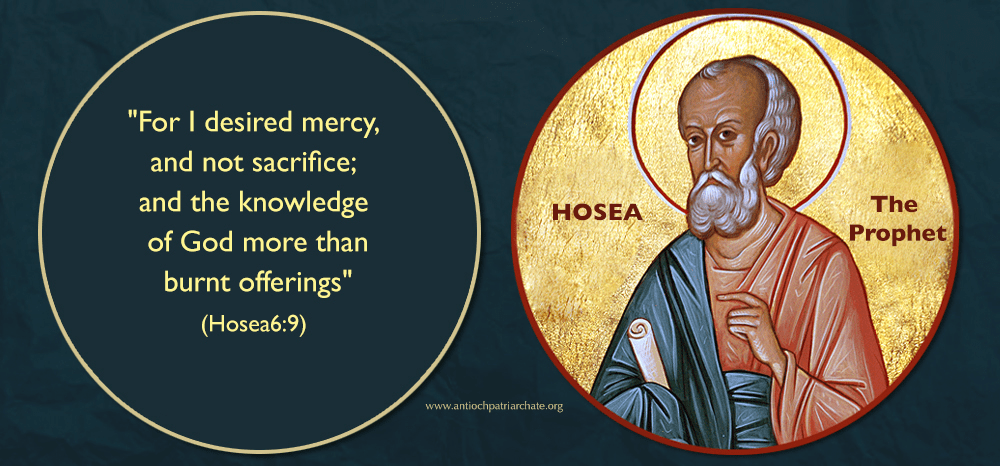
Hosea 6:1-10 – “I Want Mercy, Not Sacrifice”

“Come, let us return to the Lord.
He has torn us to pieces
    but he will heal us;
he has injured us
    but he will bind up our wounds.
After two days he will revive us;
    on the third day he will restore us,
    that we may live in his presence.
Let us acknowledge the Lord;
    let us press on to acknowledge him.
As surely as the sun rises,
    he will appear;
he will come to us like the winter rains,
    like the spring rains that water the earth.”

“What can I do with you, Ephraim?
    What can I do with you, Judah?
Your love is like the morning mist,
    like the early dew that disappears.
Therefore I cut you in pieces with my prophets,
    I killed you with the words of my mouth—
    then my judgments go forth like the sun.
For I desire mercy, not sacrifice,
    and acknowledgment of God rather than burnt offerings.
As at Adam, they have broken the covenant;
    they were unfaithful to me there.
Gilead is a city of evildoers,
    stained with footprints of blood.
As marauders lie in ambush for a victim,
    so do bands of priests;
they murder on the road to Shechem,
    carrying out their wicked schemes.
I have seen a horrible thing in Israel:
    There Ephraim is given to prostitution,
    Israel is defiled. (New International Version)

My favorite word in all of Holy Scripture is the Hebrew word חסד (“chesed” pronounced in English “kes-ed).  It is such a rich word that no one English word can capture its depth and import. 

So, chesed is translated in various ways across English translations of the Bible as:

  • Goodness (American Standard Version)
  • Faithful love (Common English Bible)
  • Loyalty (God’s Word Translation)
  • Constant love (Good News Translation)
  • Mercy (King James Version)
  • Love that lasts (The Message)
  • Faithfulness (New English Translation)
  • Loving-kindness (New Life Version)
  • Steadfast love (New Revised Standard Version)

Chesed is God’s committed, gracious, and loving covenant loyalty to people. The Lord’s very attributes are sheer Love.

Since chesed marks the character and activity of God, the Lord very much desires people to reflect this same stance toward one another. In other words, because God is merciful and kind, we, as people created in God’s image, are to be marked with this same character in all we do. 

In today’s Old Testament lesson, God is calling and wooing wayward people to return to a life of closeness with the Lord. God demonstrated chesed by not sending the people away, like a spouse outright divorcing an unfaithful partner. Instead, the Lord is committed to loving the Israelites even when they were unlovely.

At all times, the response God wants from people is not simply to go through the motions of outward worship. Ritual practices mean little if there is no heart behind them. The Lord longs for people to demonstrate both fidelity and fealty through mercy and a steadfast love to God and neighbor.

Both our work and our worship are to be infused with divine mercy. 

God deeply desires a close relationship with humanity. The Lord is deeply grieved when people whore after other gods to meet their needs for love and belonging. Hosea’s prophecy is an impassioned plea for all persons to find their true fulfillment and enjoyment in a committed loving divine/human union, like a marriage.

In Christian readings of Hosea’s prophecy, repentance means accepting God’s chesed through Jesus Christ.

The believer is to allow the character of God to rule and reign in their heart so that love and commitment come flowing out in words, actions, thoughts, and dispositions.

Mercy, in Christianity, finds its highest expression in the person and work of Jesus.

It is no wonder, then, that Jesus lifted Hosea’s prophecy as a treasured principle of operation when asked why he deliberately made connections with “questionable” people:

As Jesus continued on from there, he saw a man named Matthew sitting at a kiosk for collecting taxes. He said to him, “Follow me,” and he got up and followed him. As Jesus sat down to eat in Matthew’s house, many tax collectors and sinners joined Jesus and his disciples at the table.

But when the Pharisees saw this, they said to his disciples, “Why does your teacher eat with tax collectors and sinners?”

When Jesus heard it, he said, “Healthy people don’t need a doctor, but sick people do. Go and learn what this means: I want mercy and not sacrifice. I didn’t come to call righteous people, but sinners.” (Matthew 9:9-13, CEB)

And when confronted about “questionable” activities, Jesus appealed to the same source of Hosea’s prophecy:

“Look! Your disciples are doing something that is not right to do on the day of rest—a holy day.”

Jesus asked them, “Haven’t you read what David did when he and his men were hungry? Haven’t you read how he went into the house of God and ate  the bread of the presence? He and his men had no right to eat those loaves. Only the priests have that right. Or haven’t you read in Moses’ Teachings that on the day of rest—a holy day, the priests in the temple do things they shouldn’t on the day of rest yet remain innocent? I can guarantee that something  greater than the temple is here. If you had known what ‘I want mercy, not sacrifices’ means, you would not have condemned innocent people. (Matthew 12:2-7, GW)

One can never go wrong with mercy and grace. If in doubt between whether to judge another or show mercy, the Christian’s choice is clear.

Grace and love reconnects the disconnected. The heart of true Christian spirituality is a deep kinship with the divine. Whenever that relation is broken or severed, it is vital to restore it. The means of doing so is not judgment; it’s mercy.

Chesed is more than a word; it is a way of life.

God wants mercy. Grace is the Lord’s divine will. So, let us today receive the forgiveness of Jesus and devote ourselves to prayer and works of love which come from a heart profoundly touched by grace. 

May the result of our return to the Lord be healing of that which has been broken, and reconciled relationships with others.

Merciful and loving God, the One who shows amazing grace, forgive us for our wanderings away from the divine life. Return us, again, to the grace of Jesus Christ our Savior so that our hearts will be renewed and aflame with love for others. In the Name of the Father, Son, and Spirit, the Great Three in One. Amen.