Both Body and Soul (1 John 4:1-6)

Dear friends, don’t believe everyone who claims to have the Spirit of God. Test them all to find out if they really do come from God. Many false prophets have already gone out into the world, and you can know which ones come from God. His Spirit says that Jesus Christ had a truly human body. But when someone doesn’t say this about Jesus, you know this person has a spirit that doesn’t come from God and is the enemy of Christ. You knew this enemy was coming into the world and now is already here.

Children, you belong to God, and you have defeated these enemies. God’s Spirit is in you and is more powerful than the one who is in the world. These enemies belong to this world, and the world listens to them, because they speak its language. We belong to God, and everyone who knows God will listen to us. But the people who don’t know God won’t listen to us. This is how we can tell the Spirit that speaks the truth from the one that tells lies. (Contemporary English Version)

Sometimes, it’s not what in someone says, but in what they don’t say.

The Apostle John gave some spiritually sage advice to a group of his disciples. They were being influenced by people who claimed Christian faith yet were not the real deal. Lots of people make claims, but the real muster of a Christian is in embracing an embodied spirituality that truly meets the holistic needs of others.

For John, affirming Christ’s deity, while denying Christ’s humanity, is unacceptable; he had no room for the Platonic Greek dualism of body and spirit. 

Jesus was a real man with a very real body. To deny this was to deny the faith. Ethereal musings about the insignificance of the body were flatly rejected by John. The apostle was concerned that the supreme Christian ethic of love be practiced through attention to both body and soul. 

Words are important; they’re also insufficient. Actual demonstrations of love are needed, as well. To downgrade or deny a bodily Jesus is to pay little attention to the real bodily needs of people. Christianity is a religion of both body and soul; it’s not a Greek philosophy of life.

I will be the first guy to insist on some deep theological reflection on the great spiritual, cultural, and social issues of our day. Yet, if our theology does not lead to tangible acts of love based on that reflection, then we have not yet been called God’s friend. 

Correct doctrine – embracing body and soul – leads to loving actions of faith. Ideally, we glorify God with both speech and service, physically and spiritually. Words and actions, heart and hands, must work together for an authentic Christian ministry.

The Word became a human being and lived here with us. (John 1:14)

The early church councils condemned the denigration of Christ’s full humanity for good reason. Not only did Jesus have a real flesh and body experience while on this earth, but Jesus also healed actual bodies and performed real physical miracles.

Jesus Christ met both the spiritual needs of forgiveness and reconciliation, and the needs of the body. What’s more, Jesus had no ranking system, as if the spiritual needs were the real commitments whereas tangible needs were just a means to the end of meeting intangible obligations.

The Gospel involves both body and soul; they are equally significant. To exalt one above the other is, frankly, heresy. So, let’s put this in more practical terms: Love is more than an expression of good feelings and goodwill toward others; love has skin on, using both physical actions and words formed from our vocal chords to bring goodness to others.

Jesus has always maintained the connection between spiritual and physical needs; it’s us who separate them. It’s the spiritual charlatan, and the huckster preacher, who speak out of one side of their mouth about spiritual salvation with no bodily human help or uplift.

Those who are against Jesus, the spirit of the antichrist, talk a good line but when push comes to shove, they have no intention of paying attention to both body and soul.

Our gut knows that feeling we cannot quite shake when we are around someone. It has real meaning. The spirit within us is greater than the spirit of the world. Just because we may not be able to respond very well to another, or give clear voice to what is inside us, does not necessarily mean that the other person is okay or right.

A proper Christian response to others incorporates head, heart, and gut. The interaction and alignment of all our faculties is needed. If we draw upon our entire selves, both body and soul, we will overcome the spirit of the antichrist through loving words and actions toward those who need it most.

The Antichrist wants us to get caught up in putting all our focus fighting theological battles and debating philosophical ideas – while our neighbor next door is dying of cancer; our co-worker is experiencing covert racism; and, our friend is stuck in poverty.

Since Jesus is fully human, that fact alone ought to impel us toward meeting the needs of the body – without wondering if it is the spiritual thing to do, or not. You already know this to be true. So, don’t let some esoteric preacher or teacher tell you otherwise.

Almighty God, Creator and Preserver of all humanity, I humbly ask: Make your ways known to everyone, and your saving health to all nations. May your church everywhere be guided and governed by your good spirit, so that all who profess and call themselves Christians may be led into the way of truth, and hold the faith in unity of spirit, in the bond of peace, and in righteousness of life.

Caring God, in your parental goodness, lift up those who are afflicted or distressed, in mind, body, or spirit. Comfort them and meet their every need, giving them patience under their sufferings, and a good outcome of all their afflictions. This we ask for the sake Jesus Christ your Son, our Lord, who with you and the Holy Spirit reign forever. Amen.


Believe, Love, and Obey (1 John 5:1-12)

Everyone who believes that Jesus is the Christ is born of God, and everyone who loves the father loves his child as well. This is how we know that we love the children of God: by loving God and carrying out his commands. In fact, this is love for God: to keep his commands. And his commands are not burdensome, for everyone born of God overcomes the world. This is the victory that has overcome the world, even our faith. Who is it that overcomes the world? Only the one who believes that Jesus is the Son of God.

This is the one who came by water and blood—Jesus Christ. He did not come by water only, but by water and blood. And it is the Spirit who testifies because the Spirit is the truth. For there are three that testify: the Spirit, the water and the blood; and the three agree. We accept human testimony, but God’s testimony is greater because it is the testimony of God, which he has given about his Son. 

Whoever believes in the Son of God accepts this testimony. Whoever does not believe God has made him out to be a liar, because they have not believed the testimony God has given about his Son. And this is the testimony: God has given us eternal life, and this life is in his Son. Whoever has the Son has life; whoever does not have the Son of God does not have life. (New International Version)

Faith, love, and obedience are words so tightly woven together, that to pull one of them out, is to unravel the whole bunch. 

To believe, love, and obey are the true marks of a Christian; and they are vital to living the Christian life and overcoming the dark forces of the world.

Let’s talk some grammar – because it will help us better understand the Apostle John’s message….

The main verb is the main thing

One of the dominant main verbs throughout these verses: “is.” And the verb tense is key, grammatically describing a past action of God which people need to receive. In other words, the grammar dictates that God has given us new birth. 

We do not give ourselves spiritual birth any more than we can tell our mothers that it was us who gave birth to ourselves.

The participles describe the main thing

God saves us from sin and grants us forgiveness. The action is from God to us; we are recipients of God’s good grace toward us.

There are three participles connected to the main verb, “is:”

  1. Believe
  2. Love
  3. Obey

A participle is a word which is connected to the verb’s action. 

Our actions are a result of God’s action toward us.

Simply put, a person born from God will believe, love, and obey.

Just as a newborn baby first breathes, then learns to eat, sleeps, grows-up, learns to walk, and over time develops into an adult just like their mother and father, so the Christian who is born again from God exhibits faith, learns to love, and grows up developing the skills of obeying Jesus and following him, learning to walk in his ways, becoming just like him.

Overcoming the world

In the same way a child must grow and mature to have the necessary skills for facing the world in all its trials and temptations, so the Christian must develop the requisite abilities of faith, love, and obedience, to overcome the world.

To “overcome” is to experience the victory the Lord Jesus has achieved on the cross. 

Through being spiritually born again by God, it sets us on a course requiring faith, love, and obedience in overcoming the world. As we learn to apply these three spiritual characteristics to our lives, we experience practical victory over the world.

The term “world” is used by the Apostle John as the patterns, systems, and operations of the world, which are in direct contrast to how God operates. For example:

  • The world engages in revenge and payback when wronged, whereas the Christian learns to believe God will be the Judge, loves the person who has offended them through prayer for their enemy, and obeys God through good works that seeks the welfare of the other. 
  • The world uses other people as either objects of their pleasure or to get ahead in life, whereas the Christian believes God will take care of their needs, will seek to love the other person instead of use them, and would rather obey God by cutting off their right hand off than being selfish. 
  • The world thinks nothing of lying, cheating, and stealing, if they can get away with it, whereas the Christian believes Jesus is the way, the truth, and the life, loves being a person of integrity, and obeys God even when it hurts.

This in no way suggests we avoid or belittle the world. In overcoming the world, we must have principled civility. Using faith, love, and obedience, we respect another’s viewpoint through allowing our spirits to grow in faith, expanding our hearts in love, and learning obedience through interaction with others for whom we disagree.

Faith, love, and obedience

We need faith in God:

Trust in the Lord with all your heart,
    and do not rely on your own insight.
In all your ways acknowledge him,
    and he will make straight your paths. (Proverbs 3:5-6, NRSV)

We need love for God and others:

Don’t love the world’s ways. Don’t love the world’s goods. Love of the world squeezes out love for the Father. Practically everything that goes on in the world—wanting your own way, wanting everything for yourself, wanting to appear important—has nothing to do with the Father. It just isolates you from him. The world and all its wanting, wanting, wanting is on the way out—but whoever does what God wants is set for eternity. (1 John 2:15-17, MSG)

We need obedience to the call of God:

The commandment that God has given us is: “Love God and love each other!” (1 John 4:21, CEV)

When faith, love, and obedience are working together, as intended, we overcome the world and all its crud; and keep ourselves from being polluted and stained by it.

Overcoming the world is a high calling from God. 

Faith means putting aside fear and taking the kind of risk God wants you to take.

Love means putting aside hate and serving others, even when it hurts.

Obedience means putting aside selfishness and choosing to do what is best for another person’s welfare.

Being characterized by these three Christian virtues will have the effect of overcoming the world. It is not a burdensome or heavy way to live. It’s the way of Jesus.

Blessed God – Father, Son, and Spirit – the Lord whom we serve: Sometimes our hearts and minds are flooded with fears. Sometimes we are paralyzed and overwhelmed and feel unable to go on. Yet, we hold onto the victory you have accomplished through the cross of Jesus Christ. You have told us not to fear, for you have overcome the world. In moments of crippling fear, we choose to hold your hand and believe; to love as we have been loved; and, to obey even in the most fearful places because we know that you have risen again.

Holy Spirit, we invite you and all your ministry within us. Holy God of all, we offer you our heart, mind, body, soul, spirit, hopes, plans and dreams. We surrender to you our past, present and future problems, habits, character defects, attitudes, livelihood, resources, finances, medical coverage, occupation and all relationships. We give you our health, physical appearance, disabilities, disorders, family, marriage, children, grandchildren, and friendships.

Loving Lord Jesus, we surrender to you all our hurt, pain, worry, doubt, fear and anxiety, and ask you to wash us clean. We release everything into your compassionate care. Open our ears to hear your voice. Open our hearts to commune with you more deeply. Open the doors that need to be opened and close the doors that need to be closed. Set our feet upon the straight and narrow road that leads to everlasting life. Amen.

1 John 2:7-11 – Love, Not Hate

Dear friends, I am not writing you a new command but an old one, which you have had since the beginning. This old command is the message you have heard. Yet I am writing you a new command; its truth is seen in him and in you, because the darkness is passing, and the true light is already shining.

Anyone who claims to be in the light but hates a brother or sister is still in the darkness. Anyone who loves their brother and sister lives in the light, and there is nothing in them to make them stumble. But anyone who hates a brother or sister is in the darkness and walks around in the darkness. They do not know where they are going, because the darkness has blinded them. (New International Version)

It ought to be abundantly clear that hate has absolutely no place in the Christian’s life. Hate is never justified for any individual or group of people. There are no exceptions.

Love, however, is the consummate Christian virtue. The highest of all truth in Christianity is the grace that is bestowed on us through the love of God in Christ. We, in turn, reflect our Lord’s grace by loving others, no matter their gender, race, creed, or ethnicity.

Yet, we are all familiar with hate. Everyone has hated another, and others have hated us. Unfortunately, hate is ubiquitous throughout the world.

Let’s face it: You and I have people we just don’t like. And maybe for good reason. After all, if you are being gaslighted by someone, or have been abused, mistreated, or oppressed by a person or group, then it takes no effort in disliking them, even to the point of despising them in your heart.

As much as other people need to change, the Apostle John places the burden of change to fall on us who claim the name of Christ. Love must begin somewhere. Let it begin with me.

The bald fact of the matter is that we cannot change another person. We can only control ourselves, and a lot of us don’t do a very good job with that. Christians are to learn to speak and act in the loving ways passed on to us through the gospel. We are to become skilled in the ways of Jesus, which is the way of love.

I fully understand this is not easy. In fact, it is downright hard. Forgiving another, even ourselves, can be a long painful process. Making the choice to love again, or love my enemy, is no small thing. Love must always be our default and de facto response to everyone. Otherwise, our hearts will grow cold and hard. And we will become the very people we despise.

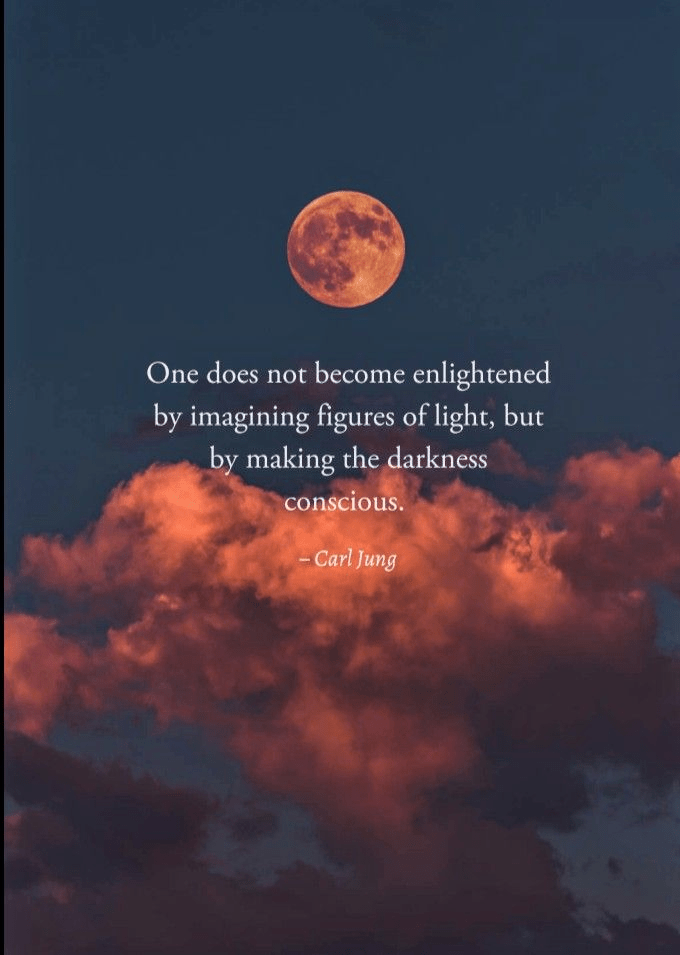
There is a shadow self, dwelling within us all. There are murky places in our hearts where darkness resides. We cannot afford to ignore those places. If we pretend there is no shadow self and keep up appearances, then we actually give the darkness power to come out of us through hateful speech and actions.

The “shadow” is a concept first coined by the Swiss psychiatrist, Carl Jung (1875-1961). Jung describes the shadow self as those aspects of our personality we choose to reject and/or repress. In other words, we all have parts of ourselves we don’t like—or that we think others won’t like—so we stuff those parts down into our unconscious psyche.

So then, the shadow self is a collection of things we toss into the closet of our hearts, lock the door, and forget about them. But they’re still there. And they still exert a great deal of influence from inside that dark closet.

We must be willing to face the shadowy parts of ourselves, to face the dark thoughts and feelings of secretly harming another (or ourselves), nursing a grudge, harboring bitterness, or holding onto an offense, as if it were a security blanket.

Whereas some may believe all our unwanted emotions, thoughts, feelings, and experiences are tightly hidden, they are not. Instead, the telltale sign of the darkness slipping out sideways into the world is hate. And that insidious hate typically takes the following forms:

  • Harshly judging or criticizing others by taking a superior posture over another. The critic, however, doesn’t know they are really castigating themselves.
  • Rebuking others as a common practice. Pointing out another’s “sins” is only a projection of one’s inner darkness onto the other.
  • Having a quick temper. Getting angry and belittling those who cannot fight back or respond is really self-loathing slathered onto someone else.
  • Being the victim in every bad situation. Victimization is a terrible thing. And when someone who isn’t really a victim claims to be one, it diminishes and invalidates the help that true victims need. This is the shadow self’s insecurity coming out – needing attention so that the incessant pounding from the inside of the heart is silenced.
  • Doing whatever is needed to get what you want. If that entails being mean, nasty, and hateful to achieve a desire outcome, then that is what is done.
  • Expressing implicit biases and prejudices. Anyone different is a threat to the shadow self. That other person might expose what’s inside me. So, the other gets treated with subtle digs, demeaning behaviors, and discouraging speech to keep them from getting close.

We need healing from this awful malady of hate.

The good news is that light is also available, and within us. Even in the blackest of hearts, there still remains the little spark of God’s image, way down in there. And it only takes a small Bic lighter to penetrate the darkness.

God’s glory is brighter than the brightest sun. A mere glimpse of such glory is more than enough to lay any heart bare and dispel the darkness.

The love of God in Christ is meant to be received, and then given to others. Fortunately, God has an inexhaustible storehouse of grace, mercy, and love – which means we can keep receiving and keep giving. We’ll never run out.

The shadow self sees only scarcity, so it holds onto resources in the belief there may not be enough. The true self, however, living into the grace and mercy of Christ, rightly discerns that God’s kingdom is a place of abundance. We are enhanced, not diminished, whenever we do the opposite behaviors of the shadow’s propensity to hate:

  • Encouraging and helping others. Pointing out another’s strengths and affirming their good behavior is a liberal practice in God’s kingdom.
  • Showing empathy. Being able to put oneself in another’s shoes, along with the willingness to sit with another’s pain, are common practices of the loving Christian person.
  • Doing whatever is needed to build up the community for the common good of all persons.
  • Including others, especially those who are different than me, by making room for them at the Table and giving them a voice.
  • Forgiving others, just as Christ forgave us.

The believer need not be blinded by hate but can love from a place of healthy self-awareness.

Loving heavenly Father, I thank you for looking beyond my faults and loving me unconditionally. Forgive me when I fail to love others in the same way. Give me eyes to see the needs of the difficult people in my life and show me how to meet those needs in a way that pleases you and glorifies the name of Jesus Christ. Amen. 

1 John 2:1-6 – Live as Jesus Did

Photo by RODNAE Productions on Pexels.com

My dear children, I write this to you so that you will not sin. But if anybody does sin, we have an advocate with the Father—Jesus Christ, the Righteous One. He is the atoning sacrifice for our sins, and not only for ours but also for the sins of the whole world.

We know that we have come to know him if we keep his commands. Whoever says, “I know him,” but does not do what he commands is a liar, and the truth is not in that person. But if anyone obeys his word, love for God is truly made complete in them. This is how we know we are in him: Whoever claims to live in him must live as Jesus did. (New International Version)

Jesus is our advocate, the one who speaks on our behalf, our mediator, who stands in the gap between heaven and earth, standing-up for us when we have no leg to stand on. 

Christ has atoned for all our sin, guilt, and shame through his “propitiation” which means that his death satisfied all demands of justice and put to rest the sin issue once for all through his blood. Christ’s gracious intervention has saved us from ourselves. 

Jesus Christ has made it possible for us to experience forgiveness, restoration, and new life. Whenever we are so broken and so full of tears that we cannot even speak words at all, Jesus steps in and speaks on our behalf with words that mean something because they have been backed up with the action of the cross.

“But” as the late Ron Popeil used to say on the old commercials, “that’s not all!” Not only do we have deliverance from sin, death, and hell, Christ’s followers have both the means and the opportunity to give back and be a blessing to one another and the world. The Spirit enables us to obey God’s commands and is the continuing presence of Jesus to us and on this earth.

Christians are called to be little advocates, practicing the ministry of coming alongside and interceding for one another before God. We can agents of spiritual healing in a world of brokenness. Our gospel proclamation, a message of grace and forgiveness, gets to the very root of human problems and travails.

  • Anyone who harms and hurts others as a matter of habit in the name of Christ, and does not heal, is no follower of Jesus but is a victimizer.
  • Any person who talks a good talk, and walks a bad walk, is not living as Jesus did, and is a spiritual pettifogger.
  • Anybody who claims the name of Christ and avoids reading and studying and praying over the New Testament Gospels, is a slovenly lout, no matter whether they have prayed a “sinners prayer.”

Whoever claims to live for Christ must live as Jesus did. So, how did Jesus live?

“If any of you wants to be my follower, you must give up your own way, take up your cross, and follow me.”

Jesus (Matthew 16:24, NLT)

“You know that the rulers of the non-Jewish people love to show their power over the people. And their important leaders love to use all their authority. But it should not be that way among you. Whoever wants to become great among you must serve the rest of you like a servant. Whoever wants to become first among you must serve the rest of you like a slave. In the same way, the Son of Man did not come to be served. He came to serve others and to give his life as a ransom for many people.” (Matthew 20:25-28, NCV)

He came to tell about the light and to lead all people to have faith.

John 1:7, CEV

“You call me Teacher and Lord—and you are right, for that is what I am. So if I, your Lord and Teacher, have washed your feet, you also ought to wash one another’s feet. For I have set you an example, that you also should do as I have done to you.” (John 13:13-15, NRSV)

Your life must be controlled by love, just as Christ loved us and gave his life for us as a sweet-smelling offering and sacrifice that pleases God.

Ephesians 5:2, GNT

Adopt the attitude that was in Christ Jesus:

Though he was in the form of God,
        he did not consider being equal with God something to exploit.
But he emptied himself
        by taking the form of a slave
        and by becoming like human beings.
When he found himself in the form of a human,
        he humbled himself by becoming obedient to the point of death,
        even death on a cross. (Philippians 2:5-8, CEB)

Don’t be angry with each other but forgive each other. If you feel someone has wronged you, forgive them. Forgive others because the Lord forgave you.

Colossians 3:13, ERV

But if you suffer for doing good and you endure it, this is commendable before God. To this you were called, because Christ suffered for you, leaving you an example, that you should follow in his steps.

“He committed no sin,
    and no deceit was found in his mouth.”

When they hurled their insults at him, he did not retaliate; when he suffered, he made no threats. Instead, he entrusted himself to him who judges justly. (1 Peter 2:20-23, NIV)

This is how we know love: Jesus laid down his life for us, and we ought to lay down our lives for our brothers and sisters.

1 John 3:16, CEB

Christians inhabit unlovely places for the purpose of putting sacrificial love there. This is what it means to live as Jesus did.

O Lord, you have taught us that without love whatever we do is worth nothing. Send your Holy Spirit and pour into my heart your greatest gift, which is the love of God in Christ, the true source of healing and the real bond of peace. Amen.