All Saints Day (Psalm 149)

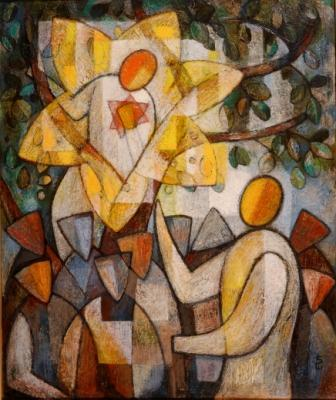
All Saints Day I, Wassily Kandinsky, 1911

Praise the Lord!

Sing a new song to the Lord;
    sing his praise in the meeting of his people.

Let the Israelites be happy because of God, their Maker.
    Let the people of Jerusalem rejoice because of their King.
They should praise him with dancing.
    They should sing praises to him with tambourines and harps.
The Lord is pleased with his people;
    he saves the humble.
Let those who worship him rejoice in his glory.
    Let them sing for joy even in bed!

Let them shout his praise
    with their two-edged swords in their hands.
They will punish the nations
    and defeat the people.
They will put those kings in chains
    and those important men in iron bands.
They will punish them as God has written.
    God is honored by all who worship him.

Praise the Lord! (New Century Version)

Most of us are aware and in touch with how imperfect we are. Sometimes we view our imperfections as failure, weakness, or sin. But how does God see us? In what way does the eternally perfect, infinitely strong, and sovereign Lord feel about us?

The Lord is happy with his people, he is pleased with us. And because God is delighted with people, the Lord saves the humble in heart, beautifies the unlovely, and turns the sinner into a saint.

Throughout the ages, the faithful have experienced the love of God. Even now, they are rejoicing, singing for joy, and celebrating the ways God changed them to make the world a better place.

On the Christian Calendar, November 1 is the day each year to remember the saints who have gone before us, to acknowledge that God has always taken pleasure in using imperfect broken people to impact the world.  

Today is meant to be a day of remembrance – a way of not forgetting the people, friends, and family, as well as the long-dead historical saints, who have made a significant difference in our spiritual lives.

All Saints Day is more than simply acknowledging extraordinary persons; today also highlights the work of ordinary Christians who faithfully lived their lives and persevered to the end. We give thanks for the gift of how they daily lived their faith.

We remember today that:

  • Christians everywhere and throughout time are united and connected to one another.
  • God’s good pleasure saves and redeems all sorts of people.
  • Underprivileged and underserved people are noticed by God and God’s saints.
  • Influential people in our lives, now in the presence of the Lord, can be honored through emulating their faith and perseverance.

“Remember your leaders, who spoke the word of God to you.  Consider the outcome of their way of life and imitate their faith.” (Hebrews 13:7, NIV)

The saints of the past are an inspiration to us in the present. They serve us as a model of faithfulness in persevering in our Christian lives. Through biblical stories of very human persons being used of God, as well as reading biographies of godly people who were dedicated to God in service, we gain motivation and patience until Jesus returns.

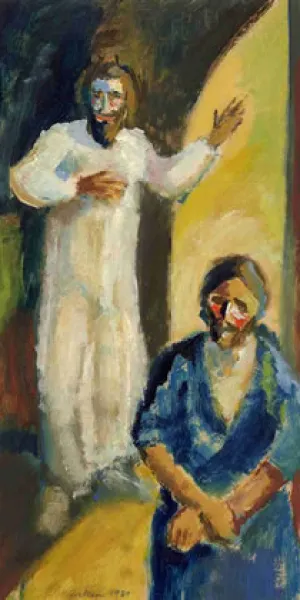
All Saints Day II, by Kandinsky, 1911

Who went out of their way to communicate God’s love to you with both words and actions? 

Who wrestled in prayer for you so that you and others might know God? 

If any of those persons are still around, and you know where they are, remember them. Drop them a note. Express to them a simple thank you for their influence in your life. You will not only encourage that person – it will help you remember and re-engage with something in your life you may have forgotten or have just taken for granted for too long.

We truly stand on the shoulders of faithful and wise people those who have gone before us. We will continue to persevere and thrive in faith by remembering them; and also by allowing people now, presently with us, to join us in our journey along the road of faith.

It is sage to recall events of rescue and pull them forward into the present so that all God’s worshipers can taste and see that the Lord is good.

Like newborn babies, crave pure spiritual milk, so that by it you may grow up in your salvation, now that you have tasted that the Lord is good. As you come to him, the living Stone—rejected by humans but chosen by God and precious to him—you also, like living stones, are being built into a spiritual house to be a holy priesthood, offering spiritual sacrifices acceptable to God through Jesus Christ. (1 Peter 2:2-5, NIV)

God uses symbols as a means of revelation and remembrance. We need both special days and ordinary events;  shared meals and silent fasting, tangible signs and necessary endings, active rituals and passive observances, iconic images and iconoclastic nonconformity.

We need both words and sacraments – to have days set apart for gathering together and expressing our verbal gratitude and love for each other, as well as giving our nonverbal gifts of food, fun, and friendship.

Our shared spiritual history connects us to God, to one another, and to all of God’s people who have gone before us. We remember that history by energizing our time together with words and symbols of care and redemption.

Christ told the disciples about his upcoming death and provided symbols which reinforced the words: 

“Take and eat – this is my body…. Take this cup – drink from it, all of you.” (Luke 22:7-20)

The taste of real bread reminds us of the physical incarnation of Christ, and Christ’s humiliation and death. Drinking from the tangible cup reminds us of the bodily sacrifice of Christ, the drops of blood which Jesus sweat in Gethsemane, and the beatings, floggings, nails, and crown of thorns that caused the bleeding. Tasting the bread and cup when celebrating communion reminds us that our sins are forgiven, we are united to Christ, and we are united together. 

There are past historical events which are now presently forgotten. Yet, there are also past actions that ripple and linger with continuing results into the present. The incarnation, life, death, resurrection, ascension, and glorification of the Lord Jesus are past redemptive events which continually exert powerful force into the here and now.

The saints throughout church history moved the message of Christ along and demonstrated for us that the past is alive in the person of Jesus Christ. Along with them, we proclaim:

Christ has died, Christ has risen, Christ is coming again.

And God has something planned for those who have gone before us, along with us, so that together we will experience the perfect righteousness of Christ forever. (Hebrews 11:39-40)

Remember and celebrate, eat and drink, taste and see, that the Lord is good.

May we remember the Lord’s people and never forget their example of godly living.

Our spiritual ancestors in faith continue to praise the Lord, to proclaim that God is our refuge and strength, our ever-present help. Let us follow in their footsteps.

Almighty God, you have knit together your elect in one communion and fellowship in the mystical Body of your Son: Give us grace to emulate your saints by living virtuous and godly lives so that we may share the joy you have prepared for those who truly love you, through Jesus Christ our Lord, who with you and the Holy Spirit lives and reigns as one God, in glory everlasting. Amen.

“I Want to See Jesus!” (Luke 19:1-10)

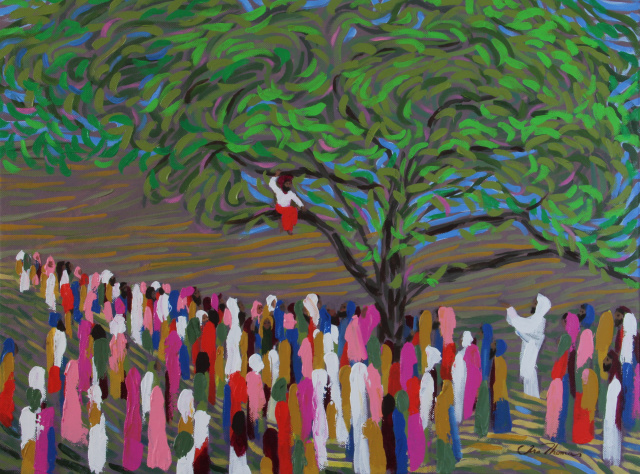
Zacchaeus, by Ira Thomas

Jesus entered Jericho and was passing through. A man was there by the name of Zacchaeus; he was a chief tax collector and was wealthy. He wanted to see who Jesus was, but because he was short he could not see over the crowd. So he ran ahead and climbed a sycamore-fig tree to see him, since Jesus was coming that way.

When Jesus reached the spot, he looked up and said to him, “Zacchaeus, come down immediately. I must stay at your house today.” So he came down at once and welcomed him gladly.

All the people saw this and began to mutter, “He has gone to be the guest of a sinner.”

But Zacchaeus stood up and said to the Lord, “Look, Lord! Here and now I give half of my possessions to the poor, and if I have cheated anybody out of anything, I will pay back four times the amount.”

Jesus said to him, “Today salvation has come to this house, because this man, too, is a son of Abraham. For the Son of Man came to seek and to save the lost.” (New International Version)

Every time I read this story about Zacchaeus climbing up the sycamore tree to see Jesus because he was a short man, I think of the old ‘70s song Short People by Randy Newman. The song was (and still is) criticized by some as being prejudiced against short people. 

Indeed, the criticism seems justified with lyrics such as “short people got no reason to live.” Yet, the song’s intended purpose was really the opposite – to be an attack on the pervasive prejudice of the day, and an attempt to “heighten” (pun intended) awareness of other people’s importance. 

“Short people are the same as you and I. All men are brothers until the day they die” are the lyrics containing the real message within the song.

At first glance, the story of the short Zacchaeus seems to be about his inability to see. Yet the real heart of the story is that:

Zacchaeus is unable to see because the other people are obstacles to his sight. 

In turns out that Jesus is the only person who truly sees Zacchaeus. No one else sees him. No one else seems to care. While everyone else is busy with their own line of sight, Jesus is concerned to see the one person who is unseen: Zacchaeus. 

And here’s the reason why Jesus had his radar attuned to picking up Zacchaeus: Because Jesus came to see people like Zacchaeus; Christ came to seek and to save the lost.

One of the most pertinent applications of this story for us, is that we must not be an obstacle for others coming to Jesus – and instead be a conduit for others to meet Jesus. For that to happen, we need a reformation of both attitude and our action.

Our chief obstacle to realizing a reformation is the sort of hindrance that Zacchaeus overcame in order to see Jesus and experience him:

Zacchaeus did not take himself so seriously.

A very serious Zacchaeus would not have been playful enough and much too respectable to climb a tree. Maybe he was used to living with short jokes all his life; I don’t know. I just see a rich businessman who was lighthearted enough to climb a tree; and who lightened up enough to give a big pile of money away.

As a tax collector, metrics and measurements and figures were his world. All of that accounting can create a serious and sterile environment – concerned with doing more, being more, and getting more.

Reformation – reforming oneself, one’s culture, and one’s institutions – comes through the disposition and willingness of not being so doggone serious all the time.

“Jesus and Zacchaeus” by Soichi Watanabe

Hanging one’s happiness and well-being on other people adopting my opinions, my plans, and my way is a surefire prescription for getting knocked down several pegs by both others and God.

A reformation comes through collegiality, cooperation, and collaboration with others. To acknowledge that God is God, and I am not, and that all people (even the ones I don’t like) are just as important as me, is to see with new eyes. This is the way of seeing Jesus because it’s the willingness to climb trees and to not care how it makes me look to do it.

People short on faith, short on hope, and short on love desperately need the love of God in the gracious person of Jesus Christ. 

Let us then, help, and not hinder, people’s ability to see Jesus.

Jesus said, “You are the light of the world. A town built on a hill cannot be hidden. Neither do people light a lamp and put it under a bowl. Instead they put it on its stand, and it gives light to everyone in the house. In the same way, let your light shine before others, that they may see your good deeds and glorify your Father in heaven.” (Matthew 5:14-16, NIV)

Let us not become discouraged when our expectations obscure our sight.

When John, who was in prison, heard about the deeds of the Messiah, he sent his disciples to ask him, “Are you the one who is to come, or should we expect someone else?”

Jesus replied, “Go back and report to John what you hear and see: The blind receive sight, the lame walk, those who have leprosy are cleansed, the deaf hear, the dead are raised, and the good news is proclaimed to the poor. (Matthew 11:2-5, NIV)

Let us have eyes to see and not be blinded by our own seriousness.

Jesus said, “For judgment I have come into this world, so that the blind will see and those who see will become blind.” (John 9:39, NIV)

Anyone who has seen me has seen the Father. (John 14:9, NIV)

Let us humble ourselves and stoop to see the incredible reality in front of us.

As they entered the tomb, they saw a young man dressed in a white robe sitting on the right side, and they were alarmed.

“Don’t be alarmed,” he said. “You are looking for Jesus the Nazarene, who was crucified. He has risen! He is not here. See the place where they laid him. But go, tell his disciples and Peter, ‘He is going ahead of you into Galilee. There you will see him, just as he told you.’” (Mark 16:5-7, NIV)

Let us see and believe.

“What is mankind that you are mindful of them,
    a son of man that you care for him?
You made them a little lower than the angels;
    you crowned them with glory and honor
    and put everything under their feet.”

In putting everything under them, God left nothing that is not subject to them. Yet at present we do not see everything subject to them. But we do see Jesus, who was made lower than the angels for a little while, now crowned with glory and honor because he suffered death, so that by the grace of God he might taste death for everyone. (Hebrews 2:6-9, NIV)

In God’s kingdom, the tall are short, and the short are tall. And there are plenty of trees to climb so that everyone can see Jesus.

Loving Lord Jesus, give me the grace to see you in all things throughout my days on this earth. Help me to see your benevolent kingdom come and see your ethical will be done, here on earth, as it is always done in heaven. Amen.

Live Into Your Calling (2 Peter 1:1-11)

Simon Peter, a servant and apostle of Jesus Christ,

To those who through the righteousness of our God and Savior Jesus Christ have received a faith as precious as ours:

Grace and peace be yours in abundance through the knowledge of God and of Jesus our Lord.

His divine power has given us everything we need for a godly life through our knowledge of him who called us by his own glory and goodness. Through these he has given us his very great and precious promises, so that through them you may participate in the divine nature, having escaped the corruption in the world caused by evil desires.

For this very reason, make every effort to add to your faith goodness; and to goodness, knowledge; and to knowledge, self-control; and to self-control, perseverance; and to perseverance, godliness; and to godliness, mutual affection; and to mutual affection, love. For if you possess these qualities in increasing measure, they will keep you from being ineffective and unproductive in your knowledge of our Lord Jesus Christ. But whoever does not have them is nearsighted and blind, forgetting that they have been cleansed from their past sins.

Therefore, my brothers and sisters, make every effort to confirm your calling and election. For if you do these things, you will never stumble, and you will receive a rich welcome into the eternal kingdom of our Lord and Savior Jesus Christ. (New International Version)

The deepest yearning in every human soul is to become whole again, to return to their spiritual source, to experience belonging and union with the Beloved.

In the beginning, all of creation was a vessel filled with divine light. Then, it broke, and the shards of holiness were strewn across the earth. Those broken pieces are all around us. Sometimes, maybe oftentimes, we don’t see them because of our own darkness.

My friends, we have a simple but profound task: To bend down, find the broken shards, and pick them up.

This work of making a real and lasting contribution to humanity confirms our vocational calling and is made possible by divine power.

And yet, so many of us feel like a tiny Who on a speck of dust, with such a small insignificant voice, that nobody can hear us.

But somebody does hear us – and that somebody has very large elephant ears which are attuned to listen.

A person’s a person, no matter how small. A person has light, no matter how dim.

A great deception which befalls humanity is the lie that we aren’t enough – that somehow we lack voice and light in our core personhood.

This leads to another deceitful thought: God is holding out on me; I got the short end of things; I was never given the sort of voice which can be heard, or the kind of light which can burn bright.

Those deceiving vampires only suck the life out of us. What we need, instead, is to imbibe deeply of robust theology which empowers us to live faithfully in this world of corruption.

We have everything we need to grow in grace; God’s provision for us is total and complete.

By grace, we can discern between truth and error; endure hostility and hardship; persevere with patience as we await the new heaven and new earth; and confront anything in this present life with confidence and hope. We can do it because we’ve been equipped for it all.

Core to all this provision is the very life of Christ. Jesus is the source of the power; and his is the grace needed to live life to the full. The same resurrection power which raised Christ from the grave is available and provided to us.

God’s supply for us is sufficient. It is enough. We have everything we need to walk with boldness through any dark alley. The believer’s confidence is in carrying the cross – which keeps the deceiving vampires of guilt, shame, doubt, and distrust at bay.

Sheer cognitive belief, however, is insufficient. It’s only half the equation. The other half is to let our light shine, be the salt of the earth, and take up the gifts given us by God and use them.

Therefore, put significant energy into your faith development through knowing your call to bless the world and not curse it.

Confidently using faith, fully participate in God’s divine power through the qualities of:

  • Goodness. Cultivation of moral excellence is both helpful and needed in all our relationships. Goodness is like a seed planted. It proper amounts of water and sun, as well as continual tending to keep the weeds away.
  • Knowledge. There are two words in the ancient Greek for knowledge: one is a reference to acquiring information; and the other refers to actively using the information provided. The Apostle Peter uses the latter – an experiential knowledge which is wise, discerning, and discreet.
  • Self-Control. This is the ability to get a grip on yourself, to avoid controlling others and focus on all things within your own control. Ultimate control belongs to God; self-control belongs to you and me.
  • Perseverance. To see the big picture, to look ahead and keep your eye on the goal, is the lived practice of endurance. Everyone has patience. The real issue is whether we will tap into it, or not.
  • Godliness. The heart of godliness is a growing awareness of self, others, and God – rightly relating to them all with wholeness and integrity.
  • Mutual Affection. Basic human kindness is the basis of any healthy community and every relationship.
  • Love. This is the Christian’s consummate virtue. Whereas affection is to be mutual, love can always be done whether someone loves us back, or not. Genuine love can be directed at the unlovely, even enemies.

Effectiveness in living a virtuous life is not a matter of more but better.

It doesn’t happen on an industrial scale with a mass production of spiritual resources for the busy Christian consumer.

Rather, it occurs in the soil of God’s grace, mostly below the surface of the ground, slowly but surely germinating with faith, rising in hope, and producing a harvest of love that blesses both church and world.

A little bit of Jesus is enough to turn the world upside-down. You don’t need a big loaf of bread; a miniscule communion wafer will do.

A tiny mustard seed of faith can move a mountain.

A kernel of goodness can produce a harvest of righteousness.

A bit of knowledge and awareness can uproot the weeds of bigotry and hate.

A grain of self-control can grow into a field of peace.

A simple insight can create a cascade of transformation.

A single act of kindness can alter the course of another’s life forever.

A few seconds of attention can change the world.

A teensy amount of love can feed everyone on the earth.

We have everything we need to realize the new society Christ has made possible. We are in want of nothing. We are enough because Christ is enough. So, live into your calling with courage and confidence.

Heavenly Father, you are the One ever-present on this earth in your only Son and through your Spirit:
May your Name be shown forth as holy through us, your people.
May your gracious and benevolent reign come, establishing peace and justice, hope and life; and may your moral and ethical will be done, here on earth, as it is always done in heaven.
Give us what we need for today; and adjust our vision into a clear 20/20 awareness of others’ needs.

Forgive us of our great and many sins, for the immoral and unethical things we have said and done, and for the good words and good deeds we have failed to say and do; forgive us, just as we forgive those who have egregiously sinned against us.

Don’t let us amble down a dark path of temptation, of hardening our hearts and closing our minds; but instead, deliver us from the machinations of evil, and set our feet upon the lighted path of righteousness.

To You, everlasting God, belongs all sovereign decrees of  justice and truth;
To You, almighty God, belongs all powerful deeds of righteousness and goodness;
To You, holy God, belongs all glorious displays of love and compassion;

Through Jesus Christ, your Son, our Lord, who with You and the blessed Holy Spirit are one God, now and forevermore. Amen.

A Parable On Being Right with God (Luke 18:9-14)

The Tax Collector and the Pharisee by Peter Gallen

To some who were confident of their own righteousness and looked down on everyone else, Jesus told this parable: “Two men went up to the temple to pray, one a Pharisee and the other a tax collector. The Pharisee stood by himself and prayed: ‘God, I thank you that I am not like other people—robbers, evildoers, adulterers—or even like this tax collector. I fast twice a week and give a tenth of all I get.’

“But the tax collector stood at a distance. He would not even look up to heaven, but beat his breast and said, ‘God, have mercy on me, a sinner.’

“I tell you that this man, rather than the other, went home justified before God. For all those who exalt themselves will be humbled, and those who humble themselves will be exalted.” (New International Version)

There’s a lot to observe in Christ’s parable for today. Notice six observations of the story….

1. We Cannot Make Ourselves Right with God

I’m convinced that most Gentile Christians, standing two millennia apart from Christ’s telling of this parable, are much too hard on the Jewish Pharisees: “Well, I’m certainly glad that I am not like the Pharisee in this story!” so many tell themselves. It seems to me the Pharisees get a bad rap because of our own predilection to justify ourselves.

After all, we can only really criticize something we are already familiar with.

A temptation which every individual and community faces is the seduction toward self-justification, instead of being justified by God.

Way back in the day, when I made treadmill belts for a living, I was in charge of quality control. It was my job to make sure that the quality department provided the shipping department with a finished product, free of defects, and could stand the test of continual use. I justified the belt as being a treadmill belt of integrity; the belt did not, nor could not, justify itself, hide or fix its flaws, or make itself right.

To think that a treadmill belt could justify itself is in the same sort of crazy that believes we can make ourselves right. No, it is God alone who justifies the sinner.

The paradox of Christ’s parable is that the real sinners are those who claim to be righteous, while the truly righteous are those who recognize they cannot justify themselves and need God to make them right.

2. We Need to Be Honest about the Right Thing

In order to hear the good news about God’s ability to justify and make right, we must also hear the bad news about why we need justification to begin with. An honest look into the mirror reveals that we have been hiding behind a cosmetic façade of self-justification.

Our illusions and delusions need to be confronted and shattered. Because only then can we receive grace and realize the peace and harmony of God’s justification.

Since God justifies, I don’t have to!

I don’t need to defend myself, make myself look better than I am, nor fool myself into believing that the false façade is the true self.

The parable of Jesus is a contrast between the Pharisee who justifies himself, and the tax collector who looks to God alone for his justification.

3. The Put-Together Guy Wants to Make Himself Right

Jesus uses a Pharisee as a character in the parable because the guy represented someone who everyone else looks up to as the model of a spiritual and religious person. Christ is inviting his hearers to look beyond the façade of what we see with our physical eyes.           

We need to use our spiritual eyes to notice below the surface. Look at the attitude. The smug self-justifying disposition is flat-out sin. What’s more, self-justification is a root of all sorts of sins.

Judging ourselves to be right means that others are wrong. That attitude creates division, separates people into bad and good, fosters disharmony, and is an affront to God. 

To try and obtain what is already provided by grace is plain old-fashioned sin.

4. We’re Obsessed with the Right Lines

Adam and Eve were told by God that they could eat from any tree in the garden but were given strict instructions not to eat of the tree of the knowledge of good and evil. (Genesis 2:15-17) So, why avoid that particular tree?

Because it was a tree which spiritually and socially blinds people. Adam and Eve ate from it and their eyes were “opened” to a different reality – which was actually a “closed” view of reality that changed the way humanity deals with one another. From that point forward, people began drawing lines down the middle and placing themselves on the “good” side while vilifying those on the other side, the “bad” side.

“Apple Picking,” the fall of Adam and Eve, by Vittorio Canta

Adam and Eve immediately began justifying their actions, their attitudes, and their behavior. (Genesis 3:8-13) Adam drew a line: “That woman, Eve, gave me the fruit; she’s on the other side; it’s her fault!” Eve drew a line: “The serpent made me do it; that wasn’t really me, I’m basically good….” And ever since, the quest of making ourselves right has never stopped….

Today, we draw all sorts of lines. A popular religious line is this: “We’re good; they’re bad. Our theology is right, everybody else’s is wrong. The Bible says….” (insert a kooky interpretation of Scripture, based in self-justification and separation of people into good and bad groups)

People draw class lines, race lines, gender lines, ethnic lines, economic lines. We want clean lines, vertical lines, horizontal lines, perpendicular lines, thick lines, thin lines, any kind of line; just give me a line! Let’s go line dancing. Maybe take an airline. There are offensive lines and defensive lines. By the way, what’s the line on the Packers? We even judge the lines themselves: Long lines, short lines, front lines, back lines, and DMV lines are clearly evil, right!?

Why are we so obsessed with drawing lines? So that we can take self-justifying sides. Violence, war, and most every other sin of the world comes from the original sin project of trying to make ourselves right: “I’m okay; you’re not.”

The Pharisee (really a representative of us all) drew a very clear line between himself and the despised sinful tax collector. Notice that self-justification always compares itself with others. Those who obsessively draw lines are compulsively concerned about other people; they believe they have a right to know what’s going on with them. They remain vigilant to keep the lines drawn and distinguish themselves from those on the other side.

5. God Is On the Other Side of the Right Line

The Pharisee found that every time he drew a line, God was on the other side with the “sinners.” That makes perfect biblical sense. If God alone justifies sinners and makes them right; and if Jesus identifies with them in his life, death, and resurrection; then God is to be found on the other side of our line-drawing.  

A self-justified person sees no need for God’s justification. Therefore, God is not on their side; God is on the other side, justifying sinners by making them right.

6. The Unraveled Guy Wants To Be Made Right

“O God, Be Merciful To Me, A Sinner,” by Ronald Raab

The tax collector’s only concern was for God to show him mercy because he is a sinner. In contrast to the proud attitude of the Pharisee, the tax collector, a sinner by anyone’s definition, humbled himself and sought justification from God alone.

  • Justification by God makes us right and:
  • Lifts the curse upon humanity and reverts everything back to its original design. (Revelation 22:1-5)
  • Erases the lines. (Romans 4:7-8)
  • Restores our souls are and strengthens our faith. (Acts 16:5; Romans 4:20)
  • Enables us to rest in Christ’s finished work. (John 19:28-30)
  • Does not condemn us. (Romans 8:1-2)
  • Eliminates comparisons because Christ is sufficient for us. (Colossians 2:13-14)
  • Replaces the anxiety and fear about how we look to others with the contentment and satisfaction of God’s love in Christ. (1 John 4:16-18)

Conclusion

Self-justification separates us from people and creates distance and division. But God’s justification connects people in love and crosses the arbitrary lines created by others.

The bad news: Many religious folk, when confronted with their self-justifying attitudes, do not change. Instead, they label the person as bad and place the offending person on the other side of their line so that they can maintain their façade of righteousness.

The good news: Jesus can be found on the other side of the line because justification is a gift. Yet, until we go to him, outside our little camp, we will continue in vain to make ourselves look good and be on the right side of everything while making others look bad.

The good and the right is to humbly – and with much flavor – cry out to God for mercy because only the Lord can save us from our plight.

Lord Jesus Christ, Son of God, have mercy on me, a sinner. 

Lord Jesus Christ, Son of God, have mercy on me, a sinner. 

Lord Jesus Christ, Son of God, have mercy on me, a sinner, and grant me your peace.

Just and right God, by your mercy we were created, and by your mercy you redeemed us through your Son, the Lord Jesus. Your mercy is the light by which all people – both sinner and saint – return to you. Your divine justice and your divine mercy exist together so that you refuse to punish us as we deserve.

Lord Jesus, it was not enough for you to take on our humanity; you died for us as well. So, we humbly and gratefully receive your gracious deliverance from sin, death, and hell. Amen.