Matthew 28:1-10 – Fear Not

Death Swallowed Up in Victory

After the Sabbath, at dawn on the first day of the week, Mary Magdalene and the other Mary came to look at the tomb. Look, there was a great earthquake, for an angel from the Lord came down from heaven. Coming to the stone, he rolled it away and sat on it. Now his face was like lightning and his clothes as white as snow. The guards were so terrified of him that they shook with fear and became like dead men. But the angel said to the women, “Don’t be afraid. I know that you are looking for Jesus who was crucified. He isn’t here, because he’s been raised from the dead, just as he said. Come, see the place where they laid him. Now hurry, go and tell his disciples, ‘He’s been raised from the dead. He’s going on ahead of you to Galilee. You will see him there.’ I’ve given the message to you.”

With great fear and excitement, they hurried away from the tomb and ran to tell his disciples. But Jesus met them and greeted them. They came and grabbed his feet and worshipped him. Then Jesus said to them, “Don’t be afraid. Go and tell my brothers that I am going into Galilee. They will see me there.” (CEB)

The Resurrection of Christ from death has changed everything – especially when it comes to fear.  In this season of Eastertide, we discover and explore the vast implications of what it means to possess a new life.  Because Christians serve a risen Savior, this newfound awareness brings courage and confidence.  Fear isn’t something we can simply exercise willpower over.  Rather, fear begins to give way to the presence of God among us.  Consider just a few of the many references to this in Holy Scripture:

“Be strong and courageous. Do not be afraid; do not be discouraged, for the Lord your God will be with you wherever you go.” (Joshua 1:9, NIV)

“Be strong and courageous. Do not be afraid or terrified because of them, for the Lord your God goes with you; he will never leave you nor forsake you.” (Deuteronomy 31:6, NIV)

“So do not fear, for I am with you;
do not be dismayed, for I am your God.
I will strengthen you and help you;
I will uphold you with my righteous right hand.” (Isaiah 41:10, NIV)

“God has said, ‘Never will I leave you;
never will I forsake you.” So, we say with confidence, ‘The Lord is my helper; I will not be afraid.
What can mere mortals do to me?’” (Hebrews 13:5-6, NIV)

Believe it, or not, the Bible tells us 365 times to not be afraid.  Maybe that’s not a coincidence that we can quote a verse every day of the year about our own fearfulness in the face of so much of the world’s cruel circumstances.

When it comes to fear and bravery, God does not so much command us to be courageous, as he wants us to draw from the great reservoir of bravery within.  That is, God has already created us strong, as creatures in his image.  We just need to get in touch with what is already there.  And the reality of Easter awakens and calls forth that life.

We can act with boldness and overcome fear because Jesus is the pioneer of our salvation.  He is the One which enables us to draw from the deep well of courage….

“So then, since we have a great High Priest who has entered heaven, Jesus the Son of God, let us hold firmly to what we believe. This High Priest of ours understands our weaknesses, for he faced all the same testing we do, yet he did not sin. So, let us come boldly to the throne of our gracious God. There we will receive his mercy, and we will find grace to help us when we need it most.” (Hebrews 4:14-16, NLT).

You and I really can face the fears in front of us.  You can surmount the adversity you are in the middle of – not because of some words I say, but because Christ has risen from death.  He’s alive, and his presence makes all the difference.

St John Chrysostom
“Let all therefore enter into the joy of our Lord. Let rich and poor dance with one another.” –St John Chrysostom

The following is an Easter homily from the fourth-century preacher St. John Chrysostom to the Church of Constantinople:

“Let no one grieve at his poverty,
for the universal kingdom has been revealed.
Let no one mourn that he has fallen again and again;
for forgiveness has risen from the grave.
Let no one fear death, for the Death of our Savior has set us free.
He has destroyed it by enduring it.

He destroyed Hades when He descended into it.
He put it into an uproar even as it tasted of His flesh.
Isaiah foretold this when he said,
“You, O Hell, have been troubled by encountering Him below.”

Hell was in an uproar because it was done away with.
It was in an uproar because it is mocked.
It was in an uproar, for it is destroyed.
It is in an uproar, for it is annihilated.
It is in an uproar, for it is now made captive.
Hell took a body, and discovered God.
It took earth, and encountered Heaven.
It took what it saw, and was overcome by what it did not see.
O death, where is thy sting?
O Hades, where is thy victory?

Christ is Risen, and you, o death, are annihilated!
Christ is Risen, and the evil ones are cast down!
Christ is Risen, and the angels rejoice!
Christ is Risen, and life is liberated!
Christ is Risen, and the tomb is emptied of its dead;
for Christ having risen from the dead,
is become the first-fruits of those who have fallen asleep.

To Him be Glory and Power forever and ever. Amen!”

Click Because He Lives sung by Guy Penrod as we are reminded that the living Christ makes all the difference today.

Matthew 9:18-34 – Faith

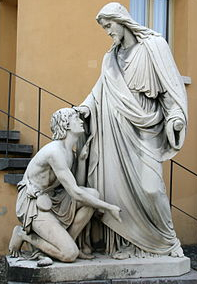
Jesus healing the blind
Jesus Healing the Blind by Johann Heinrich Stöver, 1861

As Jesus went on from there, two blind men followed him, crying loudly, “Have mercy on us, Son of David!” When he entered the house, the blind men came to him; and Jesus said to them, “Do you believe that I am able to do this?” They said to him, “Yes, Lord.” Then he touched their eyes and said, “According to your faith let it be done to you.” And their eyes were opened. Then Jesus sternly ordered them, “See that no one knows of this.” But they went away and spread the news about him throughout that district.

After they had gone away, a demoniac who was mute was brought to him. And when the demon had been cast out, the one who had been mute spoke; and the crowds were amazed and said, “Never has anything like this been seen in Israel.” But the Pharisees said, “By the ruler of the demons he casts out the demons.” (NRSV)

In these days of staring into the face of pandemic, I often find myself uttering the ancient prayer of the Church: “Lord have mercy.  Christ have mercy.  Lord have mercy and grant us your peace.”  For me, the COVID-19 virus is getting real, real fast.  I feel the heaviness of hospital staff, and of families experiencing the weight of concern for loved ones with the virus.

It is in such topsy-turvy times as these that I come back again and again to deep spiritual convictions which inform what I do each day.  One of those underlying creeds is this:

Jesus is trustworthy, no matter whether my faith or the faith of others is small or great.

In our Gospel lesson for today, two blind men were healed according to their faith in Jesus.  The diverse healing accounts of Jesus in the New Testament, whether the faith was large or small in those healed, leads me to the conclusion that:

It isn’t faith itself that heals, saves, or transforms – it is Jesus.

What the healing accounts have in common in the Gospels is that they are directed to Jesus as the object of faith.  It isn’t about the level of faith, but about where the faith is placed.  For the Christian, faith itself doesn’t mean much if it isn’t in Jesus.  If I place a large and sincere faith in an inanimate object such as money; in a position of power; or, even in my own independence, my faith isn’t worth much.  If I have a huge faith in a doctor or a psychiatrist to heal my body or my mind, I will quickly discover there are limits to their abilities.  If I have a confident faith that my family will meet all my needs, my faith will eventually run into failure when they let me down.  That’s because the ultimate object of my faith is Jesus.  If all my faith eggs are in the church basket, my faith will eventually face a crisis because it is a misplaced faith.  Furthermore, the answer I provide for others is not simply getting them to attend church or to adopt my moral code. I believe Jesus heals, transforms, and delivers people from sickness, sin, trouble, and overwhelming circumstances in his own good time.

Jesus is the same yesterday, today, and forever.  (Hebrews 13:8)

We know with certainty that circumstances change, as everyday seems to bring new levels and permutations of unprecedented alterations to our lives – and through it all, Jesus remains as the ever-present Savior, seated at the right hand of God ceaselessly interceding on behalf of those who offer even the slightest mustard seed of faith.

Almighty God, you know that we have no power in ourselves to help ourselves: Keep me both outwardly in my body and inwardly in my soul, that I may be defended from all adversities which may happen to the body, and from all evil thoughts which may assault and hurt the soul; through Jesus Christ our Lord, who lives and reigns with you and the Holy Spirit, one God, forever and ever.  Amen.

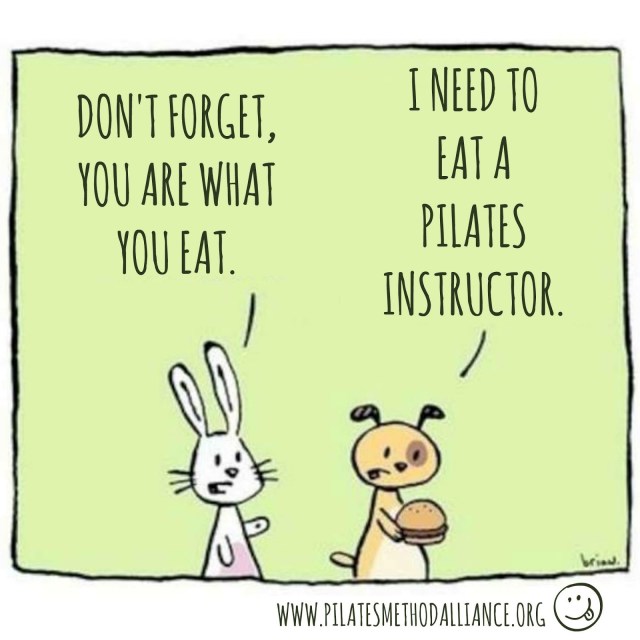
You Are What You Eat

O fear the Lord, you his holy ones,
    for those who fear him have no want.
The young lions suffer want and hunger,
    but those who seek the Lord lack no good thing.

Come, O children, listen to me;
    I will teach you the fear of the Lord.
Which of you desires life,
    and covets many days to enjoy good?
Keep your tongue from evil,
    and your lips from speaking deceit.
Depart from evil, and do good;
    seek peace, and pursue it.

(Psalm 34:9-14, New Revised Standard Version)

you are what you eat 2 

You’ve likely heard the phrase “you are what you eat.”  Of course, this doesn’t mean that when you look at me you see a delicious strip of bacon.  Rather, it’s meant to convey that the kind of food we ingest, whether it is physical groceries or spiritual sustenance, is of great importance and significance.  Eating unhealthy stuff makes you unhealthy.  Conversely, ingesting healthy things helps one to maintain proper health and vitality for functioning and thriving in life.

The psalmist encourages us to seek the LORD because in going after God we will be filled with goodness.  Using our tongues for good and not evil; our words for encouragement and not for forming lies; our constant verbiage for uplift and support and not with the poison phrases of evil; and, our voices for pursuing peaceful relations and not for disharmony; are all beautiful buffet foods of health and goodness to fortify our souls.

Back when I was in seminary (in a galaxy far, far away) it was difficult to keep up with the bills.  Finances were tight in our young family.  Despite working sometimes up to three jobs at a time, our budget had no budge to it.  In one unusually and particularly hard month, we were down to our last groceries.  In fact, on one summer evening we all had a bowl of Wheaties for supper.  The refrigerator was empty.  In our bedtime prayers with our girls, my wife and I voiced and expressed our need to God.

As Mary and I readied ourselves for bed, it was raining cats and dogs outside.  At 10pm, we heard a knock on our back patio door.  We looked at each other as if the other would know that we’re expecting someone.  We weren’t.  As I pulled back the curtain, there stood a sweet little Puerto Rican neighbor holding two large bags.  I quickly ushered her into our little apartment.  Her next words to us I will never forget:

“I went to bed at 9:00 and quickly fell fast asleep.  At 9:30 the Holy Spirit woke me up and told me to fill two bags with as many groceries as I could get in them; then, go and give them to the Ehrhardt’s.  So, here I am.”

All my wife and I could do was look at her and each other slack-jawed and simply say, “Thank you.”  No one knew our need.  We told no one about it; only God.

My family learned an invaluable lesson that stormy night, one you can’t learn any other way but being in a place of desperation.  The spiritual food that we eat is so important that Jesus put it this way:

One does not live by bread alone, but by every word that comes from the mouth of God” (Matthew 4:4).

Many years later after that rich spiritual feast, I told this same story in a congregation on a Sunday morning.  Afterwards, a middle-aged man came up to me and said something that initially took me aback: “So, how do you justify being in such a state of deprivation and not taking care of your family?”  After gathering my thoughts, I gave him this retort:

“You have asked me an honest question.  I will ask you one before I answer yours: Have your teenage kids, you, and your wife ever been in a situation where you needed God and cried out to him for something?”  Long pause…. “Well, no, not really.”  “Then, sir,” I replied, “I like the lessons my encounter with want and privation taught my kids better than the lessons your kids have never learned.”

You see, my friends, you are what you eat.  This obsession we have with being independent, self-sufficient, and our compulsions about money has spawned an entire generation of folks who just don’t know they need God.  Then, parents wonder why their kids abandon God.  God is simply irrelevant to them.  After all, why serve a God who has never touched my life in any significant way?  If we eat from a table of our own making, then the Table of the Lord becomes only a dusty piece of furniture in an empty church.

When we come and eat the bread which the Lord offers us we find satisfaction and fulfillment.  When we allow God to serve up a delicious spiritual meal we discover hospitality and joy.  When we accept the invitation to seek the Lord we find that little is much when God is in it.  In God’s upside-down kingdom, the poor are rich, and the rich are poor.

Good days of plenty don’t come because we ingeniously orchestrate it all.  Yes, of course, planning is both necessary and important.  Yet, all of our best laid plans are just that.  The outcomes belong to God, not us.  We have because God gives, and not because we figured out how to work harder, or smarter, or better.

you are what you eat

The one who truly fears the Lord has learned to first receive from Him.  Open-handed reception can only result from a heart posture of humility and need.  Close-fisted folks only know how to figure things out on their own and are not in the position to receive anything.

Whichever way you slice the Old Testament bread of poverty and the New Testament teaching on being poor in spirit, the rich are typically not in the best place – the poor are.  Being a spiritual beggar who recognizes his/her need for God, and who is desperate for Jesus is the one who has found the narrow entrance to where the Lord dwells.  And, upon entering, finds a lavish spread that is worthy of the marriage supper of the Lamb.

The Desert


footprints in the desert 2

Every one of us must take this journey.  No one is exempt.  It is a pilgrimage that takes us into uncharted territory.  Lack of certainty, the unknown, and mystery are the companions along the way of this nomadic travel.  The harrows of this trip might seem to be the outward troubles and circumstances which surround you, but the real test is the journey within – it is the walk across the desert and the aridity that seems to exist in the soul, as if there are no familiar resources to draw from.  There is only one way, and that way appears so fearful that you and I try and avoid it like the plague.  But we cannot.

When times are tough, and when we find ourselves in the midst of circumstances that we didn’t see coming or have no desire to experience become the desert journeys which both demonstrate and define who we are as people.  The rock hard vicissitudes of this fallen world are no respecter of persons.  They come to all, whether rich or poor, black or white, privileged or underprivileged, introverted or extroverted, hard working or the just-getting-by, as well as the young or the aged.  What truly separates one person from another is how they handle the inevitable desert journey with its dryness of soul and seemingly endless barrage of trouble.

You cannot avoid it.  Eventually, someone you love will die – maybe even several of them in a short amount of time.  If not now, there will come a time when your financial budget will no longer budge and you’ll wonder what in the world you are going to do.  Even if you have never known poverty or want, the prospect of what will happen in the future might occur, with its lost investments and/or the slow erosion of economic resources because of circumstances out of you control.  There will come a time when you will be betrayed, become the victim of a verbal hate crime, or lose your reputation.  If relationships are presently serene, there is coming a day when it will not always be this way.  Strained friendships, difficult relations with co-workers, marriage troubles, and family squabbles aren’t just things that happen to other people.

Perhaps at this point you no longer wish to stick with me on this journey of words.  It’s a downer.  Maybe there isn’t enough positive thinking and you’d like to break off this train of trouble.  That is your prerogative.  But it doesn’t negate the fact that there is either right now something going on under your nose that you’re ignoring or in denial about, or a turn in your life that is coming down the pike.  Then what will you do?  Will you have the inner resources to face it?  Is your soul in a state that can sustain a loss, even a minor one, tomorrow?  Are you ready for adversity?

If you have ever felt alone, lost, hopeless, empty, and in the dark, as if you are sinking in quicksand, I want you to know that this is a journey that we all must undergo.  It is tempting, when going through such a time, to look backward and long for the good ol’ days.  But those days are gone.  They aren’t coming back.  What worked for you back there probably won’t work for you now.  So, here is the thought that I’d like you to think:

The desert is the perfect place for transformation; the wilderness journey is the means to a new and better life.

The ancient Israelites were slaves in Egypt, hard pressed and in agony.  Through a series of miraculous events God redeemed them out of that place and sent them on a journey… into the desert.  Yes, that’s right.  It might have seemed to the Israelites that they were jumping out of the frying pan and into the fire.  Here they were out in the middle of nowhere without water, food, and basic necessities.  It’s endemic to the human condition to complain and seek to blame someone for your trouble.  Moses took a lot of crap from the people.  Yet, God had his own purposes and plans for the inner redemption of the people as well as outward freedom.

God put his people squarely in a place where they could not go back, couldn’t go around, and most definitely could not stay put where they were.  Nope.  They had to go through the desert.  There was no other way.  Moses made it through those years of living in the desert by reminding the people that there was a future for them, a better future than Egypt or the desert – a hope of the Promised Land.  God also shaped the way they were to think about the past through an annual rehearsal of the deliverance out of bondage, the Passover.  For the daily and ever present activity of desert living, God enabled Moses to delegate the practical situations of being together in a desert situation by gifting others to help and walk with him.  And this was all formed through the covenant experience of Sinai – the giving of the Law, the Promise that God would always have his loving loyalty upon the people.

Going through your own desert journey will require the same resources of Promised Land, Passover, and the Law of Promise.  That is, viewed through the lens of the Christian, God is forming within us a deep spirituality based in the promises of His Word, the sustenance of the Lord’s Table, and the confident expectation of Christ’s return and the hope of His reign to be manifested in everything from small family structures to large corporate systems, and humungous governments.  In short, the kingdom of God is near – if we have the eyes of faith to see and the ears of belief to hear.

It is imperative that you and I connect with Holy Scripture in a healthy and consistent rhythm of hearing God and responding back to him.  It is most necessary that our perspective of both the past (Christ’s cross and resurrection) and the future (Christ’s return and reign) is formed through regular spiritual practices which remind us of what is most important in life, not to mention how these spiritual resources can sustain us through dark times.

To survive the desert, one must walk through it – not around it, not going backward away from it, and not sticking our spiritual heads in the sand.  To make the trip, we must deliberately walk with others who will remind us of healthy ways of seeing ourselves, our past, and our coming future.  Faith, hope, and love are the practical necessities which need to be in our backpacks as we go forward.  They will be our food and our drink.

Travel well, my friend.  May the grace of the Lord Jesus be with you as the Spirit hurls you into the desert to experience the love of God in new and profound ways.