Thankful for Your Faith (1 Thessalonians 1:1-10)

Paul, Silas and Timothy,

To the church of the Thessalonians in God the Father and the Lord Jesus Christ:

Grace and peace to you.

We always thank God for all of you and continually mention you in our prayers. We remember before our God and Father your work produced by faith, your labor prompted by love, and your endurance inspired by hope in our Lord Jesus Christ.

For we know, brothers and sisters loved by God, that he has chosen you, because our gospel came to you not simply with words but also with power, with the Holy Spirit and deep conviction. You know how we lived among you for your sake. You became imitators of us and of the Lord, for you welcomed the message in the midst of severe suffering with the joy given by the Holy Spirit. And so you became a model to all the believers in Macedonia and Achaia. The Lord’s message rang out from you not only in Macedonia and Achaia—your faith in God has become known everywhere. 

Therefore we do not need to say anything about it, for they themselves report what kind of reception you gave us. They tell how you turned to God from idols to serve the living and true God, and to wait for his Son from heaven, whom he raised from the dead—Jesus, who rescues us from the coming wrath. (New International Version)

The Apostle Paul wrote to the Church in Thessalonica, essentially saying, “I really can’t say enough good about you!” I also echo the same about your faith. Paul had plenty of reasons to express thanks for them in his prayers. He was thoroughly convinced of God’s work in them, and acknowledged the good work of God in their spiritual transformation.

The background of Paul and the Thessalonians

Paul visited Thessalonica on his second missionary journey (Acts 17). Thessalonica was the capital of Macedonia, located on an inlet, and so, was a port city along an important trade route. Thessalonica was a very religious city, with a host of various deities that were worshiped. It was also a politically prominent city that prided themselves on embodying the ideals of the Roman Empire, including bravery, loyalty, piety, seriousness, respect and authority.

When the Thessalonians heard Paul’s message and accepted its call to worship the God of Israel exclusively, they faced rejection and possibly persecution from their polytheistic families and neighbors. To accept and worship Jesus took some solid faith, hope, and love, because to be a Christian was costly within the culture.

God loved and chose the Thessalonians

Paul could praise their faith because it lifted and upheld the gracious work of God on this earth. Before the Thessalonians chose God, God chose them. God didn’t have to do that. But the Lord was gracious, merciful, and kind, extending salvation and deliverance from an empty way of life to a group of people who didn’t deserve it. In fact, none of us do. God’s grace chooses to grant us faith and salvation. To be included amongst God’s people is an incredible privilege.

The good news of Jesus Christ came to the Thessalonians with power, assurance, and the Holy Spirit. They turned from their idols to God. Jesus redeemed and rescued them from darkness and judgment. The Thessalonian believers turned from their previous religious expressions in order to serve the living and true God. As a result, they began imitating Jesus and his apostles. And because of their Christian way of life, the Thessalonian Christians then became worthy of imitation themselves.

Because of God’s merciful intervention in their lives, Paul was grateful for the work of God for three specific elements and expressions about the Thessalonians’ Christian lives:

  1. Their work produced by faith
  2. Their labor prompted by love
  3. Their endurance inspired by hope

Indeed, for every Christian, the Christian life is lived with the essential tools of faith, hope, and love.

Endurance inspired by hope

It’s a standup quality to be characterized as people of hope. The Thessalonian believers were anticipating and waiting for the Lord’s return; they had no doubt Jesus will come again. The Christians just needed some reassurance about those who have already died without yet seeing Christ – which is why Paul wrote his letter to them. And the believers were good at encouraging each other with the hope of Christ’s return.

Labor prompted by love

Paul didn’t really even need to teach the Thessalonian Christians about loving each other because they were good students of God as their teacher. They had a reputation of hearing the Word of God, then doing it. Specifically, they learned to love, not only one another within their local church, but the whole of the family of God throughout Macedonia. So then, the Thessalonians excelled at expressing their faith through love. (Galatians 5:6)

Work produced by faith

The Thessalonian believers became well-versed and practiced in the Christian elements of hope and love. And their faith became known everywhere. Paul was thankful for their work produced by faith. Yet, as the rest of the letter bears out, along with the second letter to the Thessalonians, Paul will have much to say to them about the nature of faith.

Paul reminded the Christians of his example to them and the gospel which he proclaimed. Several times, Paul talked of the work he put into them on their behalf (1 Thessalonians 2:9; 3:5; 2 Thessalonians 3:8). On the topic of following godly examples, Paul also admonished them to respect those who have authority over them, who labor and work among them (1 Thessalonians 5:12-13).

The Apostle encouraged the Thessalonians to continue in their work, so that every need would be met within the church; and so that there would be a good witness to those outside the church (1 Thessalonians 4:11-12). Paul let them know that a very practical way they can express their love is by working with their hands so that none among them have any need.

Faith and work are not mutually exclusive. Even though the Thessalonian believers were transformed by their belief in Christ, they still needed to remember that they must carry on in their regular daily lives until Christ returns.

Imitating the faith and patience of solid believers

And we are all still responsible to be faithful, every day, no matter what the situation or circumstances are. We must carry on in our faith, hope, and love through obeying and living into the words and ways of Jesus. We do this through imitating the faith and patience of trusted Christians, like the Apostle Paul.

Remember your leaders, who spoke the word of God to you. Consider the outcome of their way of life and imitate their faith.

Hebrews 13:7, NIV

People can only experience the fullness of their humanity when they are in deep, trusting relationships with one another. Even more, relationships have more depth when experienced and centered in a relationship with Jesus Christ. Imitation then becomes an outgrowth of this strong relationship.

Far too often we seek excuses, or to find loopholes, in order to avoid the vulnerability that a close mentoring relationship demands. We may look for ways to justify not getting close, or simply distance ourselves from other believers.

Maybe we do not want to do the work — desiring to avoid being hurt. It could be that we are tired of doing the relational work necessary for closeness and walking with Christ and one another. Relationships get messy and they take lots of energy. But our spiritual growth is completely tied to relational growth. The Apostle Paul himself was vulnerable:  

Just as a nursing mother cares for her children, so we cared for you. Because we loved you so much, we were delighted to share with you not only the gospel of God but our lives as well. Surely you remember, brothers and sisters, our toil and hardship; we worked night and day in order not to be a burden to anyone while we preached the gospel of God to you. (1 Thessalonians 2:7-9, NIV)

This imitative relationship is important for the advancement of the gospel. The faith is passed on from generation to generation, from disciple to disciple, in one long progression stretching all the way back to Jesus and the original twelve disciples. For our own faith, hope, and love to be effective, it requires following the example of Paul, and of committed faithful believers in your own life, through close relationships with them.

God of all faith, hope, and love, we praise and give you thanks for the resurrection of your Son, Jesus Christ. We celebrate the joy of life in you, and are grateful for the privilege and opportunity to live into the reality and power of the resurrection.

Inspire us, by your grace, to live the life of intentionally following Jesus. We surrender ourselves to the life of Jesus, who called us to be faithful servants of God. We commit to living for Christ, our Savior and Lord, in whose name we are bold to pray. Amen.

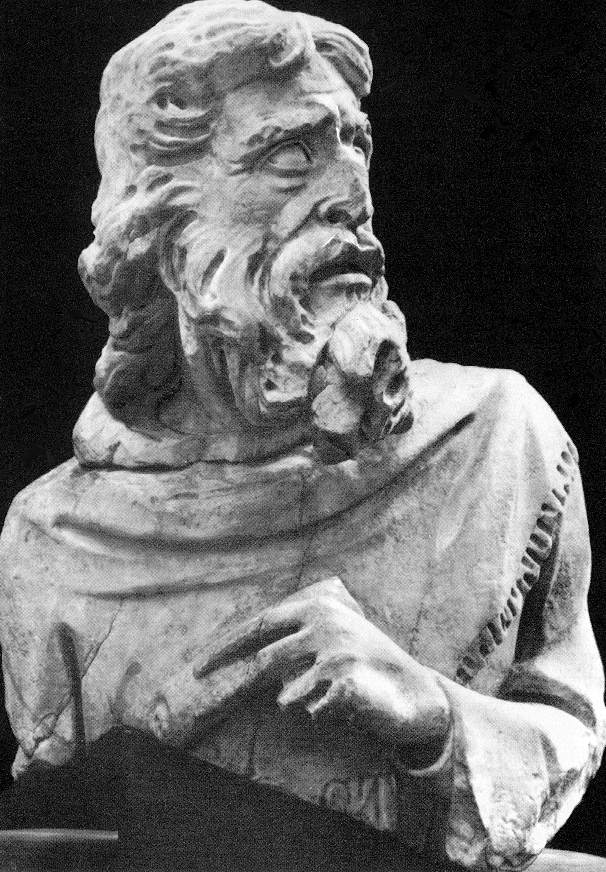
Build It Now! (Haggai 1:1-15a)

Statue of the prophet Haggai, by Giovanni Pisano, c.1290 C.E., Siena, Italy

In the second year of King Darius, on the first day of the sixth month, the word of the Lord came through the prophet Haggai to Zerubbabel son of Shealtiel, governor of Judah, and to Joshua son of Jozadak, the high priest:

This is what the Lord Almighty says: “These people say, ‘The time has not yet come to rebuild the Lord’s house.’”

Then the word of the Lord came through the prophet Haggai: “Is it a time for you yourselves to be living in your paneled houses, while this house remains a ruin?”

Now this is what the Lord Almighty says: “Give careful thought to your ways. You have planted much but harvested little. You eat, but never have enough. You drink, but never have your fill. You put on clothes but are not warm. You earn wages, only to put them in a purse with holes in it.”

This is what the Lord Almighty says: “Give careful thought to your ways. Go up into the mountains and bring down timber and build my house, so that I may take pleasure in it and be honored,” says the Lord. 

“You expected much, but see, it turned out to be little. What you brought home, I blew away. Why?” declares the Lord Almighty. “Because of my house, which remains a ruin, while each of you is busy with your own house. 

Therefore, because of you the heavens have withheld their dew and the earth its crops. I called for a drought on the fields and the mountains, on the grain, the new wine, the olive oil and everything else the ground produces, on people and livestock, and on all the labor of your hands.”

Then Zerubbabel son of Shealtiel, Joshua son of Jozadak, the high priest, and the whole remnant of the people obeyed the voice of the Lord their God and the message of the prophet Haggai, because the Lord their God had sent him. And the people feared the Lord.

Then Haggai, the Lord’s messenger, gave this message of the Lord to the people: “I am with you,” declares the Lord. So the Lord stirred up the spirit of Zerubbabel son of Shealtiel, governor of Judah, and the spirit of Joshua son of Jozadak, the high priest, and the spirit of the whole remnant of the people. They came and began to work on the house of the Lord Almighty, their God, on the twenty-fourth day of the sixth month. (New International Version)

Timing is everything.

There is a time to ponder and plan and there’s a time to move and act. If the time is ripe for action, then the lack of initiative is plain old procrastination. But how do you know when to act?

If the Lord says it’s time, well then, it’s time!

God’s people wouldn’t have described their inaction in rebuilding God’s house as dragging their feet. They perceived their inertia as a sensible delay.

Yet, the Lord saw the people’s approach as inexcusable enough to send a prophet with a specific message and call to action: Build the house now!

Let’s get a feel for why God’s call for immediacy comes when it does. In the ancient world, it had always been the practice of armies to assimilate conquered peoples into the culture of the conquering king. 

In the eighth century B.C.E., the Assyrian Empire conquered the northern kingdom of Israel. The Assyrians took most of the people into captivity, left the poorest of the people alone, and resettled the land with some of their own Assyrian people. The inevitable intermarriages resulted in their progeny being known as the Samaritans in the New Testament Gospels, as the Samaritans.

Two-hundred years after Assyria conquered Israel, Nebuchadnezzar besieged the southern kingdom of Judah and took over Jerusalem. He carried Daniel and all the other educated and professional people to Babylon. In the course of taking the city, Nebuchadnezzar tore down the wall and destroyed the temple that Solomon had made.

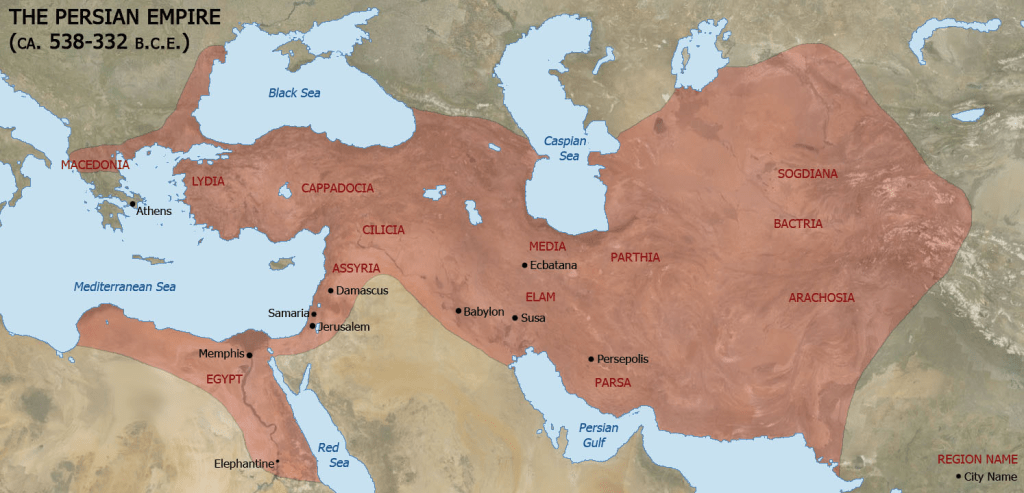
During the Babylonian exile, the Persians conquered Babylon and became rulers of a large geographical empire. Because the massive Persian Empire was in control of so many different kinds of people across such a vast territory, they were not able to operate as previous empires did by assimilation and resettlement. 

Instead, the Persians did something new and different: They encouraged and enabled their conquered peoples to keep their religion and their culture. The only caveat was that they had to give tribute and allegiance to the empire and pray for the king. This is why Nehemiah, Ezra, and Haggai were able to return to Jerusalem and given royal authority to rebuild the wall and the temple. 

But, from the git go, there was opposition to the rebuilding from the old Canaanite inhabitants of the land. After many years, the wall was rebuilt but the temple restoration bogged down. The people slowly became discouraged and lost enthusiasm to do the work. 

Understandably, the people got caught up in taking care of their own homes and just plain neglected working on the temple. Over time, they just forgot about the entire project. But God didn’t.

The prophet Haggai made it clear that the people’s mental distraction and physical neglect was taken as disrespect by the Lord. Haggai insisted that the reason the people were not experiencing blessing on their land was because they simply did not have their priorities straight. 

Thus, God sent the prophet Haggai to preach a sermon entitled: Build the house now! 

To the people’s credit, they responded to the call of God and started rebuilding God’s house. The work was completed. However, there seemed to be a problem. 

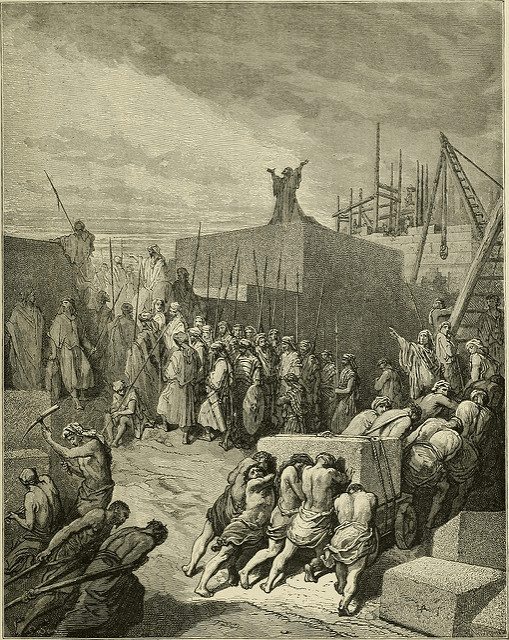
Rebuilding the Temple, by Gustave Doré, 1866

Moving into the rest of Haggai’s prophecy, the newly restored temple didn’t look anything like Solomon’s grand and glorious temple. Many of the older worshipers could still remember Solomon’s temple; to them, the rebuilt temple seemed like a bologna sandwich compared to the T-bone steak of the past. 

So, God sent Haggai again to encourage the people. The Lord will be with them. The restored temple may not look the same, but what makes the temple great is God’s glory.

An important takeaway from the prophecy of Haggai is that the Lord is a jealous God; God’s people are to worship the Lord with all of their heart, soul, mind, and strength. 

We also learn that the Lord is sovereign and supreme over all creation. God owns everything and will use it all to accomplish divine purposes on this earth. 

In addition, we see that God calls people to new work and fresh ministry. The Lord was behind the destruction of the old temple; and when the time was right, God called the people to build a new ministry.

And we learn something about ourselves, as well. God’s people need to hear and respond to God’s call. Haggai put a God-sized vision before the people; he helped them imagine what the new temple would be like – full of God’s glory.

God is doing a new thing. The Lord continues calling people to:

  • Seek first the kingdom of God. (Deuteronomy 4:29; Psalm 63:1; Matthew 6:33; Hebrews 11:6)
  • Love God with whole hearts. (Deuteronomy 6:5, 11:1-22, 19:9, 30:16-20; Matthew 22:37)
  • Love neighbor as we love ourselves. (Leviticus 19:18; Matthew 22:38; Romans 13:9; Galatians 5:14)
  • Make disciples of Christ from all nationalities. (Matthew 28:18-20)
  • Be witnesses to God’s glory in Christ. (Psalm 66:16; Acts 1:8; 2 Timothy 2:2)
  • Obey the Holy Spirit. (Acts 5:31-33; Romans 6:17; Hebrews 5:8-9)

It is good to remember and celebrate past ministries; and it is also good to throw ourselves into the new ministries which God calls us and to build them for God’s glory.

My friends, build it now.

Glory to you, O God, the One who is able to do far beyond all that we could ask or imagine by your divine power at work within us; glory to you, blessed God, in the church and in Christ Jesus for all generations, through the empowering Holy Spirit, forever and always. Amen.

1 Kings 18:1-18 – Faith at Work

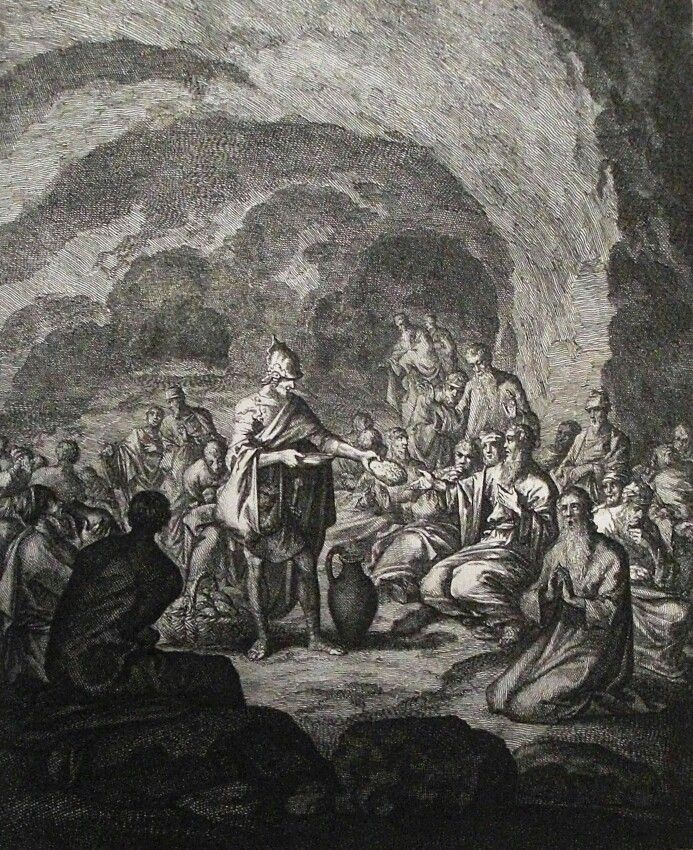
Obadiah Takes the Prophets to a Cave by Dutch engraver, Caspar Luyken (1672-1708)

For three years no rain fell in Samaria, and there was almost nothing to eat anywhere. The Lord said to Elijah, “Go and meet with King Ahab. I will soon make it rain.” So, Elijah went to see Ahab.

At that time Obadiah oversaw Ahab’s palace, but he faithfully worshiped the Lord. In fact, when Jezebel was trying to kill the Lord’s prophets, Obadiah hid one hundred of them in two caves and gave them food and water.

Ahab sent for Obadiah and said, “We have to find something for our horses and mules to eat. If we don’t, we will have to kill them. Let’s look around every creek and spring in the country for some grass. You go one way, and I’ll go the other.” Then they left in separate directions.

As Obadiah was walking along, he met Elijah. Obadiah recognized him, bowed down, and asked, “Elijah, is it really you?”

“Yes. Go tell Ahab I’m here.”

Obadiah replied:King Ahab would kill me if I told him that. And I haven’t even done anything wrong. I swear to you in the name of the living Lord your God that the king has looked everywhere for you. He sent people to look in every country, and when they couldn’t find you, he made the leader of each country swear that you were not in that country. Do you really want me to tell him you’re here?

What if the Lord’s Spirit takes you away as soon as I leave? When Ahab comes to get you, he won’t find you. Then he will surely kill me.

I have worshiped the Lord since I was a boy. I even hid one hundred of the Lord’s prophets in caves when Jezebel was trying to kill them. I also gave them food and water. Do you really want me to tell Ahab you’re here? He will kill me!

Elijah said, “I’m a servant of the living Lord All-Powerful, and I swear in his name that I will meet with Ahab today.”

Obadiah left and told Ahab where to find Elijah.

Ahab went to meet Elijah, and when he saw him, Ahab shouted, “There you are, the biggest troublemaker in Israel!”

Elijah answered:You’re the troublemaker—not me! You and your family have disobeyed the Lord’s commands by worshiping Baal.” (CEV)

Obadiah was the overseer in charge of King Ahab’s palace in Samaria of ancient Israel. To put it mildly, Ahab was a rascal. Old Testament stories frequently and purposefully contrast characters so that we will easily discern ethical differences between good and evil. Here we have a clear contrast between the godly and faithful Obadiah and the downright wicked royal couple of Ahab and Jezebel.

Whereas Obadiah was trying to preserve life and went to great lengths to do so, Ahab and Jezebel were doing everything in their sinister power to destroy life. The entire drama plays out like an episode of House of Cards. Ahab and Jezebel were a real king and queen who were thoroughly selfish and evil in all their dealings. Ahab, enabled and emboldened by his pagan wife, did away with the true worship of God and established the worship of Baal in the land of Israel. 

This did not mean, however, that God was absent or inactive. Rather, the Lord was working behind the scenes to undermine the systemic evil in the kingdom through his servant, Obadiah, who was devoted to God. Obadiah was neither a prophet nor a priest. He was simply a man working in an ungodly kingdom, doing the best he could to serve the Lord. 

Elijah may have had the prophetic voice and power, but Obadiah was the backstage administrator, daily cobbling together a living for hundreds of people without any support from the royal pain-in-the-butts.

Our ordinary everyday vocations and jobs have been ordained by God to use us where we are. Instead of lamenting our limitations or wishing the situation were different, we all have an opportunity for God to work through us in our current positions and stations in life. 

Every one of us has the daily opportunity to integrate our faith and our work through connecting biblical ethics to concrete applications at our jobs; seeing our workplaces as mission fields; interpreting our work through a Christian worldview; discerning our vocation as a calling from God; and, knowing our work is a means for God to transform and sanctify us.

So, how do you view your job?  How might you connect your faith and your work?  How does what you do reflect the nature and character of God?  In what ways do you think God wants to use you in your workplace?

Sovereign God, you cause nations and institutions to rise and fall; you set up leaders to rule and put them down.  Take my life and my work and use it in redemptive ways that glorify the name of Jesus and exemplify the power of the Holy Spirit.  Amen.

Work from a Christian Perspective


            With the Labor Day weekend upon us, it is good for us to reflect on the importance of our vocations.  One of the things that can often get lost in the rig-a-ma-roll of church ministry is the need for pastors to equip people for facing their jobs with a Christian perspective and worldview.  In other words, reflecting on the nature of work and the worship of God is not an ancillary enterprise, but a vitally necessary part of what the church can do for the world of business.
 
            How do you view your job?  How is work viewed in the Bible?  How can you connect your faith and your work?  Work itself is viewed positively throughout Scripture.  It was part of the creation mandate (Genesis 2:15); it ought to be respected (1 Thessalonians 5:12-15); and, it is a service to God (Colossians 3:22-25).  In other words, work itself is intrinsically good.
 
            Our faith commitments and our workaday jobs are meant to be integrated into a seamless unity.  They were never meant by God to be separate without one affecting the other.  There are opportunities every day for Christians to live out their faith in the marketplace.  Every job has its ethical challenges.  Not only do we have choices to make about steering clear of shady deals, avoiding cooking the books, and staying away from dishonesty, but we have the opportunity to help create policies that provide well for others, guide others into responsible work habits, and foster positive relations throughout the organization.
 
            Our jobs are also our mission fields.  God has sovereignly placed us where we are for the purpose of expanding his mission.  God desires to reach the lost, and he wants to use you to draw people to Jesus Christ.  This can be done in a myriad of ways, from speaking openly about your own faith commitment, to showing sensitive hospitality, to living above the fray of any company cultural muck around you.  Evangelism never has to be forced because we serve a God who has given his Spirit to do the kind of work that we cannot.
 
            Finding meaning and purpose in our own jobs and vocations is a must in today’s society.  Never has job satisfaction been so low throughout many American corporations and businesses.  A big reason for this is the paucity of interpreting our work through a Christian world and life view.  To see our particular vocations as a real calling from God, just like any calling that a pastor or missionary would have, is a must in today’s business environment.  Without this view we simply flounder and live for the weekends with no connection to what God is doing and wants to do on the weekdays of work.
 
            The work we do gives us the experience of personal transformation.  If you have never thought the thought that your Christian sanctification can come through your work, then I just now put it in your head.  Let it stay there and ruminate awhile.  When we work with a team of people in a common purpose in community and fellowship, it has the ability to change us for the better.  Learning new tasks, developing new relationships, and carving out new work disciplines helps foster personal change and brings fresh creativity to other spheres of life.


            One of the things that churches can do to help employees and employers is to highlight people within their congregations who are doing good work.  Feature such persons in a testimony about their work and what they do, or interview them so that others can see how God uses them on the job.  We all need help with our vocations because there are continual challenges, frustrations, conflicts, and moral decisions which need to be made on every job, no matter what or where it is.  It only makes sound spiritual sense for us to bring our jobs to the fore and give them the attention they need.  Let’s all work from a Christian perspective so that the church is built up, the world is blessed, and God is glorified.