Consider Carefully How You Listen (Luke 8:16-21)

“No one lights a lamp and hides it in a clay jar or puts it under a bed. Instead, they put it on a stand, so that those who come in can see the light. For there is nothing hidden that will not be disclosed, and nothing concealed that will not be known or brought out into the open. Therefore consider carefully how you listen. Whoever has will be given more; whoever does not have, even what they think they have will be taken from them.”

Now Jesus’ mother and brothers came to see him, but they were not able to get near him because of the crowd. Someone told him, “Your mother and brothers are standing outside, wanting to see you.”

He replied, “My mother and brothers are those who hear God’s word and put it into practice.” (New International Version)

In this chapter of Luke’s Gospel, Jesus had just finished offering his parable of the sower. Central to that parable is the message of true hearing. To really hear the word of God is to believe it, and put it into practice.

The verses for today are arranged by the Evangelist Luke to emphasize this very important need for listening well, and integrating the Word of God into every facet of our daily lives.

Listening and the Light

Christ communicated to his disciples that persons with a noble and good heart are the ones who truly hear the Word of God, retain it, and persevere in following through and doing what they have heard. This is how one produces a spiritual harvest of righteousness and peace.

The good listeners who receive the Word are the ones who have the Light of the World in their daily life. They allow their own little light within them to be seen. The Light is meant to bring illumination for others.

Jesus exhorts his disciples to share the light of revelation given to them – because the world needs to continually hear and see that God’s benevolent and gracious kingdom is breaking into their communities and neighborhoods, into their institutions and their families.

For the sake of the church’s life, individual believers, and even the life of the world, it is imperative that we continually hear that God’s victorious reign of justice, goodness, and righteousness is truly and presently entering this realm we inhabit.

Therefore, it is quite needful that we learn to listen well. To hear the Word of God, respond obediently to it, and then openly proclaim what we have heard and seen, is how the mighty works of God are spread across the world.

Throughout the history of Christianity, whenever the church devoted themselves to hearing the Word, it resulted in doing things which bring light to the world. Here are just a few examples of how believers have let their light shine into the darkest times of history:

  • Taking-in and adopting unwanted children who would otherwise be victims of infanticide, even though the believers own resources were limited
  • Moving toward the sick and dying and ministering to them during periods of plague and disease, while the rest moved away in order to avoid becoming sick themselves
  • Caring for prisoners who had no family to provide them with necessary food and clothing, as if those persons were their own kin
  • Giving benevolence and kindness to the poor – especially to immigrants, widows, and orphans

Listening and the Family

Jesus states that those who hear and do the Word of God are his family – a new family oriented around the spiritual, and not just biological bloodlines.

Many people today are uprooted from one’s family of origin. And there are a great many older persons who either live alone as widows or widowers, or are not geographically (nor relationally) close to their own biological children and/or grandchildren.

For a host of reasons, millions of persons around the world are estranged from family members.

Sometimes, religious beliefs and spiritual commitments lie at the heart of family estrangement. This is one significant reason why the church is important; it serves as the community of the redeemed, a group of people with like-minded values who support one another, much like a family is supposed to do.

One of the many metaphors of the church in the New Testament is of “the family of God.”

Now about your love for one another we do not need to write to you, for you yourselves have been taught by God to love each other. And in fact, you do love all of God’s family…. Yet we urge you, brothers and sisters, to do so more and more…

1 Thessalonians 4:9-10, NIV

The church is made up of a conglomeration of families who are meant to strengthen one another in faith, and are present with each other in times of change and loss.

We must continually keep in mind (and heart) that the church is not designed to be a mere collection of individuals or families; but rather to be a new family, brought together by the providence of God; to be a community of redeemed persons, living and loving Jesus together through supporting each other’s faith, and practicing love one to another.

The church is indeed the family of God.

And within any family – whether spiritual or biological – listening must be at the heart of relational dynamics with each other as members. Without truly hearing what each person is saying, as well as what the Word of God is saying to us collectively, it is difficult to experience unity, harmony, and love.

We listen, and then we act on what we hear – for the benefit of the family – both biological and spiritual. So, consider carefully how you listen and hear.

Generous and loving God, I come to you in thanksgiving, knowing that all I am and all that I have is a gift from you.

In faith and love, help me to do your good and benevolent will. Speak Lord, for I am listening. Let me hear your words in the depth of my soul, and let me hear them clearly.

I offer to you today every aspect of my life – no matter what is, or where I am. I seek to be patient, merciful, generous, and holy in all I say and do. Give me wisdom and insight to understand your will, and the energy to carry out my good intentions.

I offer to you my time, abilities, possessions – and even the lack thereof of them – to you as a true act of faith, to reflect my love for you and for my neighbor. Help me to reach out to others as you have reached out to me; through Jesus Christ my Lord, in the strength of the Holy Spirit.

Amen.

Consider Rahab (Joshua 2:15-24)

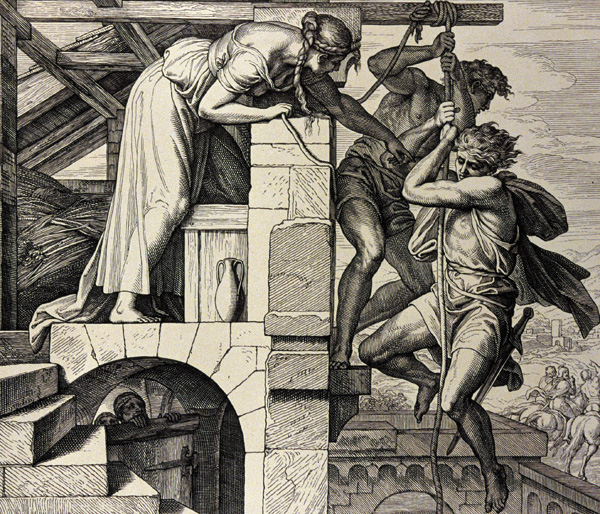
Rahab the harlot helps the Israelite spies escape from Jericho

So she [Rahab] let them [the Israelite spies] down by a rope through the window, for the house she lived in was part of the city wall [of Jericho]. She said to them, “Go to the hills so the pursuers will not find you. Hide yourselves there three days until they return, and then go on your way.”

Now the men had said to her, “This oath you made us swear will not be binding on us unless, when we enter the land, you have tied this scarlet cord in the window through which you let us down, and unless you have brought your father and mother, your brothers and all your family into your house. If any of them go outside your house into the street, their blood will be on their own heads; we will not be responsible. As for those who are in the house with you, their blood will be on our head if a hand is laid on them. But if you tell what we are doing, we will be released from the oath you made us swear.”

“Agreed,” she replied. “Let it be as you say.”

So she sent them away, and they departed. And she tied the scarlet cord in the window.

When they left, they went into the hills and stayed there three days, until the pursuers had searched all along the road and returned without finding them. Then the two men started back. They went down out of the hills, forded the river and came to Joshua son of Nun and told him everything that had happened to them. They said to Joshua, “The Lord has surely given the whole land into our hands; all the people are melting in fear because of us.” (New International Version)

A drama unfolded as the Israelites began entering and taking the Promised Land. Joshua, their leader, secretly sent two men as spies to look over the land and check out the prominent city of Jericho. The spies left and ended up in the house of a harlot named Rahab. They hid there because it had been found out they were in the city.

Rahab was able to divert and send away the pursuers who were looking for the spies, telling them that the men left, and that they should leave and go catch them. But she had actually hid them on the roof of her house.

Rahab took the spies into her home because she realized and affirmed that God was giving the land to the Israelites. Everyone in the city had heard the stories of how the Lord brought them out of Egyptian slavery and into the land of Canaan. In an insightful and beautiful confession of faith, Rahab told them:

“I know that God has given you the land. We’re all afraid. Everyone in the country feels hopeless. We heard how God dried up the waters of the Red Sea before you when you left Egypt, and what he did to the two Amorite kings east of the Jordan, Sihon and Og, whom you put under a holy curse and destroyed. We heard it and our hearts sank. We all had the wind knocked out of us. And all because of you, you and God, your God, God of the heavens above and God of the earth below.” (Joshua 2:8-11, MSG)

The men promised to show Rahab and her family mercy when they came to take the city, just as she had shown them grace in the face of trouble. So, today’s Old Testament lesson picks up the story from that point, as she sends the spies safely on their way.

That Rahab, a prostitute, is the heroine of the story is no accident or anomaly. Her profession of faith is central to the drama. She was living in the city wall, which is reflective of her status as being on the margins of society. And having strange men in her home would not have been weird in her neighborhood. It also made it rather easy to get the spies out of the city when trouble was brewing.

Most importantly, however, Rahab – the ultimate outsider in society – becomes the consummate insider. It is astonishing that a Gentile woman of disrepute has a story about her, and even told from her perspective – and not from the point of view of an Israelite man.

Rahab’s bold assertion of faith is both sincere and linked to God’s promise that the Israelites would take the land. Rahab is Exhibit A of the kind of person that inherits the kingdom of God. Rahab’s faith, not her works or reputation, is what spared her life and spared her from judgment.

Please ponder and consider that truth for a bit. Sit with it if you must – the reality that Rahab was judged neither by the spies nor God.

In far too many quarters of the Christian (and broadly religious world) judgment instead of mercy is levied to persons like Rahab. If there is anyone who should have a non-judgmental presence toward “sinners” it is Christians. And, if there is any institution which ought to consistently, both personally and through policy, display unflagging grace and forsake judgment, it is the Church.

Yet, unfortunately, as many have experienced, the Church has often fallen short of the glory of God’s grace in Christ by condemning people of ill repute. Perhaps we all need to rethink what faith truly is: not a checklist of doctrinal beliefs to sign-off on but a confident and bold action based solidly in the promises of God.

Knowing what those promises are, and living our lives appropriately in consideration of them, is the kind of faith that pleases God. Those who attempt to be judge, jury, and executioner need not apply as followers of God.

Genuine righteousness is never earned; it is given by the compassionate grace of God. So, lay hold of God’s promise of grace and mercy with gusto! Let the gracious God, who is full of steadfast love, affect the way we live our lives. Believe with a bold biblical belief that God always does what God has decreed and proclaimed to do.

Lord God, the gracious, almighty, and Holy One of all: I may have not always lived my life well, yet I trust you today that you can and will deliver me from all my troubles because you are with me. May your Holy Spirit give me the gift of faith to believe in such a way that forever impacts how I live my life in service to you and for the common good of all persons – no matter who they are. Amen.

The Blessing (Genesis 17:15-22)

By American artist Julie Lonneman

God said to Abraham, “Don’t call your wife by the name Sarai anymore. Instead, her name is Sarah [Princess]. I will bless her, and I will also give you a son by her. I will bless her, and she will become a mother of nations, and kings will come from her.” Immediately, Abraham bowed with his face touching the ground. He laughed as he thought to himself, “Can a son be born to a hundred-year-old man? Can Sarah, a ninety-year-old woman, have a child?” Then Abraham said to God, “Why not let Ishmael be my heir?”

God replied, “No! Your wife Sarah will give you a son, and you will name him Isaac [He Laughs]. I will make an everlasting promise to him and his descendants. I have heard your request about Ishmael. Yes, I will bless him, make him fertile, and increase the number of his descendants. He will be the father of 12 princes, and I will make him a great nation. But I will make my promise to Isaac. Sarah will give birth to him at this time next year.” When God finished speaking with Abraham, he left him. (God’s Word Translation)

Life can only be lived with faith. We all believe in something, in someone. It’s just a matter of what or whom we place our faith in. Whomever we direct our faith, that is where we give our allegiance and obedience.

As for Abraham and his wife Sarah, they had their faith in the God who called them from Ur of the Chaldees. They demonstrated their belief by doing exactly what the Lord said to do – they went West to the land God would show them. (Genesis 12:1-5)

Abraham and Sarah listened to God and acted accordingly.

I don’t want to cross over into TMI territory (Too Much Information) yet I want us to consider what had to take place when the Lord tells the old couple they will have a baby next year. Here’s where the faith and action comes in: It is highly unlikely that a 100-year-old man and a 90-year-old woman were sexually active. But the Lord essentially told them to get going on conceiving a child. So, they did!

I can’t speak for Abraham and Sarah, but I know as a grandfather that I am really glad I don’t have to raise kids anymore. It makes me exhausted just thinking about it, at my age, so I’ve got to believe it crossed their minds, too. Maybe that’s why Abraham sort of pleaded with God to let Ishmael be the son of promise; the reality of being responsible for a newborn was maybe the last thing on old Abe’s mind.

But faith they had, as the New Testament attests:

Even when Sarah was too old to have children, she had faith that God would do what he had promised, and she had a son. Her husband Abraham was almost dead, but he became the ancestor of many people. In fact, there are as many of them as there are stars in the sky or grains of sand along the seashore. (Hebrews 11:11-12, CEV)

Genuine belief results in decisive action. At Abraham and Sarah’s age, sex may likely have seemed a safety hazard. Yet, they were submissive to God’s plan that divine promises would come through Isaac – who was indeed born the next year, just as the Lord said.

Abraham and Sarah by Marc Chagall, 1956

All this is consistent with the names “Abraham” and “Sarah.” Names were (and still are in most of the world) important identifiers of personal character – particularly toward what sort of person one would become.

God made a name change for the old couple. “Abram,” meaning “exalted father,” was changed to “Abraham,” “father of many nations.” “Sarai” was altered to “Sarah,” yet both names have the same meaning: “Princess.” (Genesis 17:3-8, 15-16)

The change of names was meant to communicate the promise of divine blessing from God for the future. All the world will be blessed through the covenant made with Abraham. Sarah’s alteration of name, though only in form and not substance, brought to the fore that Sarah, too, had a special purpose along with her husband in blessing the world.

Today, this blessing is still unfolding. Throughout all history, since the time of Abraham and Sarah over four millennia ago (c.2100 B.C.E.), the divine ripples of God’s covenant with them have moved across the earth.

Their progeny, through Isaac, the son of the promise, the Jewish people, continue to exist as arguably the most resilient group on the planet. We, especially Christians and Muslims, owe a great debt to the Jews for persevering in faith for such a long stretch of time. They have much to teach us, if we have ears to hear and hearts receptive.

Since the time of Christ, the blessing has extended well beyond the physical descendants of Abraham and Sarah:

Is this blessedness only for the circumcised [Jews] or also for the uncircumcised [Gentiles]? We have been saying that Abraham’s faith was credited to him as righteousness. Under what circumstances was it credited? Was it after he was circumcised, or before? It was not after, but before! And he received circumcision as a sign, a seal of the righteousness that he had by faith while he was still uncircumcised. 

So then, Abraham is the father of all who believe but have not been circumcised, in order that righteousness might be credited to them. And he is then also the father of the circumcised who not only are circumcised but who also follow in the footsteps of the faith that our father Abraham had before he was circumcised….

Therefore, the promise comes by faith, so that it may be by grace and may be guaranteed to all Abraham’s offspring—not only to those who are of the law but also to those who have the faith of Abraham. He is the father of us all. As it is written: “I have made you a father of many nations.” He is our father in the sight of God, in whom he believed—the God who gives life to the dead and calls into being things that were not.

Against all hope, Abraham in hope believed and so became the father of many nations, just as it had been said to him, “So shall your offspring be.” Without weakening in his faith, he faced the fact that his body was as good as dead—since he was about a hundred years old—and that Sarah’s womb was also dead. 

Yet he did not waver through unbelief regarding the promise of God but was strengthened in his faith and gave glory to God, being fully persuaded that God had power to do what he had promised. This is why “it was credited to him as righteousness.” The words “it was credited to him” were written not for him alone, but also for us, to whom God will credit righteousness—for us who believe in him who raised Jesus our Lord from the dead. He was delivered over to death for our sins and was raised to life for our justification. (Romans 4:9-12, 16-25, NIV)

May you know the depth and breadth of your faith, that it stretches far beyond this time and place. And may the blessing of God almighty – Father, Son, and Spirit – be upon you and remain with you, now and forever. Amen.

Build It Now! (Haggai 1:1-15a)

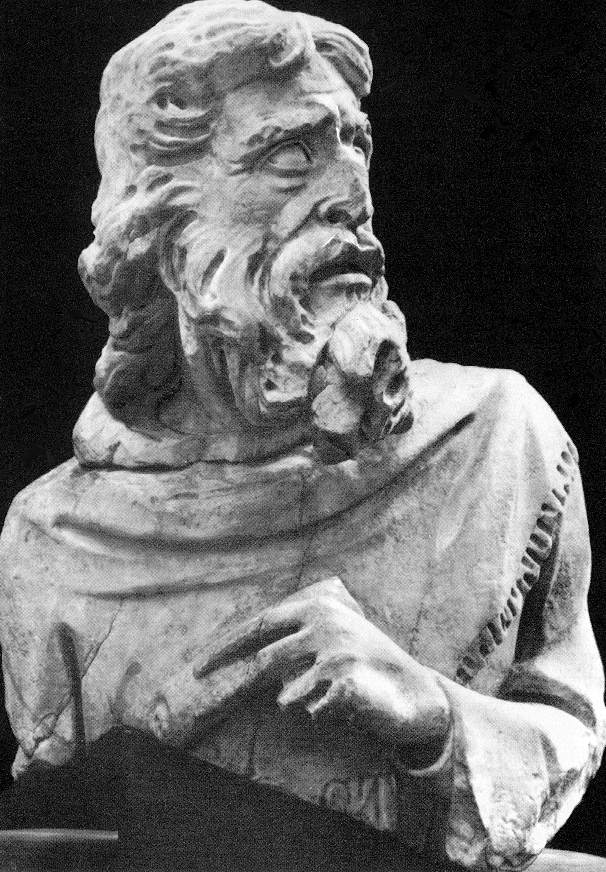
Statue of the prophet Haggai, by Giovanni Pisano, c.1290 C.E., Siena, Italy

In the second year of King Darius, on the first day of the sixth month, the word of the Lord came through the prophet Haggai to Zerubbabel son of Shealtiel, governor of Judah, and to Joshua son of Jozadak, the high priest:

This is what the Lord Almighty says: “These people say, ‘The time has not yet come to rebuild the Lord’s house.’”

Then the word of the Lord came through the prophet Haggai: “Is it a time for you yourselves to be living in your paneled houses, while this house remains a ruin?”

Now this is what the Lord Almighty says: “Give careful thought to your ways. You have planted much but harvested little. You eat, but never have enough. You drink, but never have your fill. You put on clothes but are not warm. You earn wages, only to put them in a purse with holes in it.”

This is what the Lord Almighty says: “Give careful thought to your ways. Go up into the mountains and bring down timber and build my house, so that I may take pleasure in it and be honored,” says the Lord. 

“You expected much, but see, it turned out to be little. What you brought home, I blew away. Why?” declares the Lord Almighty. “Because of my house, which remains a ruin, while each of you is busy with your own house. 

Therefore, because of you the heavens have withheld their dew and the earth its crops. I called for a drought on the fields and the mountains, on the grain, the new wine, the olive oil and everything else the ground produces, on people and livestock, and on all the labor of your hands.”

Then Zerubbabel son of Shealtiel, Joshua son of Jozadak, the high priest, and the whole remnant of the people obeyed the voice of the Lord their God and the message of the prophet Haggai, because the Lord their God had sent him. And the people feared the Lord.

Then Haggai, the Lord’s messenger, gave this message of the Lord to the people: “I am with you,” declares the Lord. So the Lord stirred up the spirit of Zerubbabel son of Shealtiel, governor of Judah, and the spirit of Joshua son of Jozadak, the high priest, and the spirit of the whole remnant of the people. They came and began to work on the house of the Lord Almighty, their God, on the twenty-fourth day of the sixth month. (New International Version)

Timing is everything.

There is a time to ponder and plan and there’s a time to move and act. If the time is ripe for action, then the lack of initiative is plain old procrastination. But how do you know when to act?

If the Lord says it’s time, well then, it’s time!

God’s people wouldn’t have described their inaction in rebuilding God’s house as dragging their feet. They perceived their inertia as a sensible delay.

Yet, the Lord saw the people’s approach as inexcusable enough to send a prophet with a specific message and call to action: Build the house now!

Let’s get a feel for why God’s call for immediacy comes when it does. In the ancient world, it had always been the practice of armies to assimilate conquered peoples into the culture of the conquering king. 

In the eighth century B.C.E., the Assyrian Empire conquered the northern kingdom of Israel. The Assyrians took most of the people into captivity, left the poorest of the people alone, and resettled the land with some of their own Assyrian people. The inevitable intermarriages resulted in their progeny being known as the Samaritans in the New Testament Gospels, as the Samaritans.

Two-hundred years after Assyria conquered Israel, Nebuchadnezzar besieged the southern kingdom of Judah and took over Jerusalem. He carried Daniel and all the other educated and professional people to Babylon. In the course of taking the city, Nebuchadnezzar tore down the wall and destroyed the temple that Solomon had made.

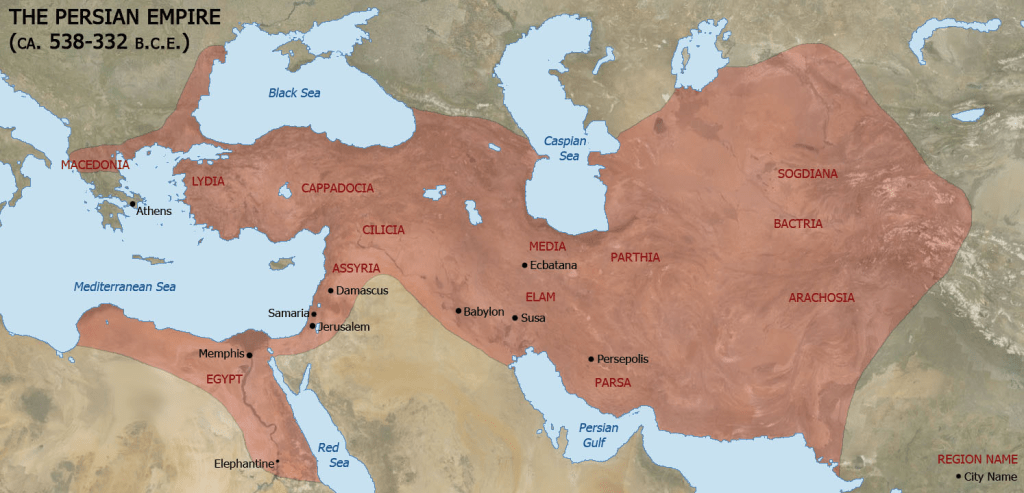
During the Babylonian exile, the Persians conquered Babylon and became rulers of a large geographical empire. Because the massive Persian Empire was in control of so many different kinds of people across such a vast territory, they were not able to operate as previous empires did by assimilation and resettlement. 

Instead, the Persians did something new and different: They encouraged and enabled their conquered peoples to keep their religion and their culture. The only caveat was that they had to give tribute and allegiance to the empire and pray for the king. This is why Nehemiah, Ezra, and Haggai were able to return to Jerusalem and given royal authority to rebuild the wall and the temple. 

But, from the git go, there was opposition to the rebuilding from the old Canaanite inhabitants of the land. After many years, the wall was rebuilt but the temple restoration bogged down. The people slowly became discouraged and lost enthusiasm to do the work. 

Understandably, the people got caught up in taking care of their own homes and just plain neglected working on the temple. Over time, they just forgot about the entire project. But God didn’t.

The prophet Haggai made it clear that the people’s mental distraction and physical neglect was taken as disrespect by the Lord. Haggai insisted that the reason the people were not experiencing blessing on their land was because they simply did not have their priorities straight. 

Thus, God sent the prophet Haggai to preach a sermon entitled: Build the house now! 

To the people’s credit, they responded to the call of God and started rebuilding God’s house. The work was completed. However, there seemed to be a problem. 

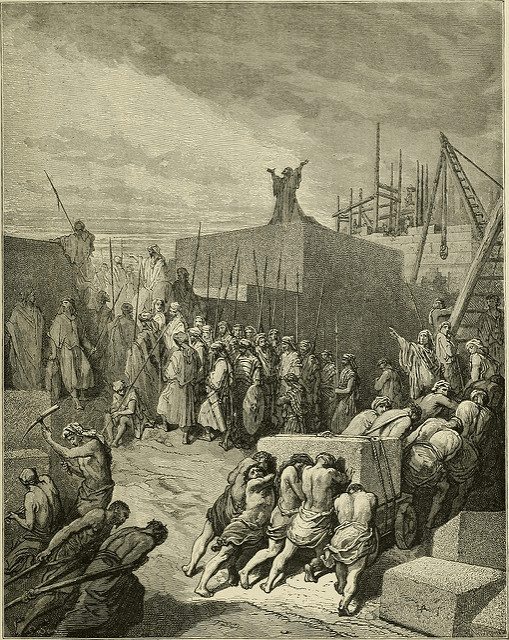
Rebuilding the Temple, by Gustave Doré, 1866

Moving into the rest of Haggai’s prophecy, the newly restored temple didn’t look anything like Solomon’s grand and glorious temple. Many of the older worshipers could still remember Solomon’s temple; to them, the rebuilt temple seemed like a bologna sandwich compared to the T-bone steak of the past. 

So, God sent Haggai again to encourage the people. The Lord will be with them. The restored temple may not look the same, but what makes the temple great is God’s glory.

An important takeaway from the prophecy of Haggai is that the Lord is a jealous God; God’s people are to worship the Lord with all of their heart, soul, mind, and strength. 

We also learn that the Lord is sovereign and supreme over all creation. God owns everything and will use it all to accomplish divine purposes on this earth. 

In addition, we see that God calls people to new work and fresh ministry. The Lord was behind the destruction of the old temple; and when the time was right, God called the people to build a new ministry.

And we learn something about ourselves, as well. God’s people need to hear and respond to God’s call. Haggai put a God-sized vision before the people; he helped them imagine what the new temple would be like – full of God’s glory.

God is doing a new thing. The Lord continues calling people to:

  • Seek first the kingdom of God. (Deuteronomy 4:29; Psalm 63:1; Matthew 6:33; Hebrews 11:6)
  • Love God with whole hearts. (Deuteronomy 6:5, 11:1-22, 19:9, 30:16-20; Matthew 22:37)
  • Love neighbor as we love ourselves. (Leviticus 19:18; Matthew 22:38; Romans 13:9; Galatians 5:14)
  • Make disciples of Christ from all nationalities. (Matthew 28:18-20)
  • Be witnesses to God’s glory in Christ. (Psalm 66:16; Acts 1:8; 2 Timothy 2:2)
  • Obey the Holy Spirit. (Acts 5:31-33; Romans 6:17; Hebrews 5:8-9)

It is good to remember and celebrate past ministries; and it is also good to throw ourselves into the new ministries which God calls us and to build them for God’s glory.

My friends, build it now.

Glory to you, O God, the One who is able to do far beyond all that we could ask or imagine by your divine power at work within us; glory to you, blessed God, in the church and in Christ Jesus for all generations, through the empowering Holy Spirit, forever and always. Amen.