Evicting Complaints (Exodus 16:1-8)

On the fifteenth day of the second month after the Israelites had escaped from Egypt, they left Elim and started through the western edge of the Sinai Desert in the direction of Mount Sinai. There in the desert they started complaining to Moses and Aaron, “We wish the Lord had killed us in Egypt. When we lived there, we could at least sit down and eat all the bread and meat we wanted. But you have brought us out here into this desert, where we are going to starve.”

The Lord said to Moses, “I will send bread down from heaven like rain. Tell the people to go out each day and gather only enough for that day. That’s how I will see if they obey me. But on the sixth day of each week they must gather and cook twice as much.”

Moses and Aaron told the people, “This evening you will know that the Lord was the one who rescued you from Egypt. And in the morning you will see his glorious power, because he has heard your complaints against him. Why should you grumble to us? Who are we?”

Then Moses continued, “You will know it is the Lord when he gives you meat each evening and more than enough bread each morning. He is really the one you are complaining about, not us—we are nobodies—but the Lord has heard your complaints.” (Contemporary English Version)

Every person on planet earth knows what a complaint is. That’s because we’ve all complained about something and we’ve all been the brunt of someone else’s complaining. To handle grumblers, we need to first deal with our own complaining spirit. 

Early in the book of Genesis, Adam and Eve disobeyed God. That caused their attitudes to change. Whereas their original reflex responses in the Garden of Eden were to enjoy God and be open, their automatic emotional reflexes after the fall were to hide, blame, and guard themselves. 

Adam’s first response to God after his disobedience was to point the finger at Eve: “The woman you put here with me – she gave me some fruit from the tree, and I ate it.”  And Eve’s initial reflex attitude was to shift the blame, as well: “The serpent deceived me, and I ate” (Genesis 3).

Ever since, people have had an automatic attitude of blaming, quarreling, and complaining. The heart drifts toward complaint as if by some gravitational pull because grumbling seems a reasonable response to disappointing events.
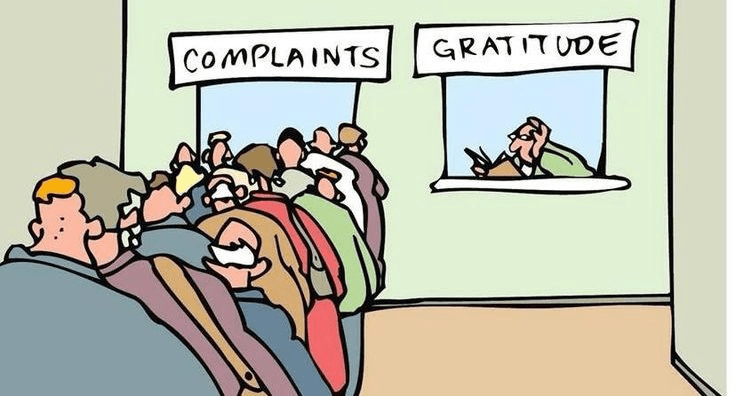
Generally, complaints show up as an uninvited guest. You return home from a frustrating day to discover that complaint has moved into your guest room, unpacked its luggage, started a load of laundry, and is rooting through your fridge.

Even as you work to evict complaint—as you move its bags to the curb and change the locks on your doors—it somehow crawls back into the guest room window. Complaint is highly resistant to eviction. 

Before you know it, over time, complaint becomes familiar, even right. With every struggle, we become like the Israelites murmuring in the desert (Exodus 16-17). Although God wants to prepare our faith for works of service in the world, we are hunkered down with complaint, watching TV together, and grumbling through every show and each conversation.

We can discourage complaint’s residency in our lives by inviting another guest to move in with us. That new guest is a prayerful attitude of trust and gratitude. When we choose to trust God and give thanks in the face of deep disappointment, complaint has less space to maneuver.

While attempting to unpack for an extended stay, complaint discovers that trust and gratitude have taken all the drawers in the guest room and already occupy the empty seat at the supper table. Faith and gratitude evict complaint because faith and a grumbling spirit are not able to live in the same house together. One inevitably pushes the other one out.

The ancient Israelites experienced a miraculous deliverance from harsh slavery in Egypt. The Lord parted the Red Sea so that they could walk across on dry ground and escape the Egyptian army’s pursuit. It’s easy to praise God when great things happen, and the Israelites had a whopper of a praise and worship service after that deliverance. Yet it’s quite another thing to praise and trust God when trouble happens – and when it keeps happening over and over again. 

Immediately after the praise and worship, Moses led the people into the desert. There was no water. God deliberately led the people into a difficult situation to test their faith. The Israelites quickly forgot the blessings and began grumbling about their situation. 

Their reflex response was to complain and ignore God’s direct commands. Maybe they did so because they spent four-hundred years of slavery in Egypt, and complaint had made such a home with them that it was second nature to murmur about their situation.

I keep a small c-clamp in my office to remind me that I am not in control, but God is. It isn’t my job to hold the universe together. The c-clamp also reminds me that I need to keep a clamp on my tongue when it comes to grumbling and complaining. Sins of the tongue are some of the most dominant forms of disobedience to God throughout Holy Scripture. 

All kinds of animals, birds, reptiles, and sea creatures can be tamed and have been tamed. But our tongues get out of control. They are restless and evil, and always spreading deadly poison. (James 3:7-8, CEV)

I wonder, can any of us go 24 hours without complaining about something or someone? 

Those who cannot answer “yes” must recognize that’s a real problem. If you cannot go 24 hours without drinking liquor, you are addicted to alcohol. And if you cannot go 24 hours without grumbling about something or someone, then you have lost control over your tongue and you are addicted to murmuring and have an adulterous relationship with complaint.

We must invite everlasting life to take up permanent residence. We need to evict the squatter of complaint. 

God is with us. Difficult circumstances, trouble, hard situations, problem people, and the seeming impossibility that things will not change doesn’t mean God moved out of your house. Instead, it’s evidence that the Lord wants us to exercise our faith.

Let God do it.

O God:
Give us all strength to live another day without grumbling, arguing, or complaining;
Let us not lose faith in other people and withdraw from them, or you, out of spite;
Keep our hearts tender in spite of the ingratitude, treachery, or meanness around us;
Help us to maintain purity of heart, and to live in faith and confidence, so that failure cannot dishearten us;
Open wide our spiritual eyes so that we may see the good in all things;
Inspire us with the spirit of joy and gladness;
and make us worthy and competent servants to suffering souls;

Impatience and Grumbling Are Poisonous (Numbers 21:4-9)

Moses and the Serpent on the Rod

The Israelites left Mount Hor and went on the road toward the Red Sea, in order to go around the country of Edom. But the people became impatient on the way and grumbled at God and Moses. They said, “Why did you bring us out of Egypt to die in this desert? There is no bread and no water, and we hate this terrible food!”

So the Lord sent them poisonous snakes; they bit the people, and many of the Israelites died. The people came to Moses and said, “We sinned when we grumbled at you and the Lord. Pray that the Lord will take away these snakes.” So Moses prayed for the people.

The Lord said to Moses, “Make a bronze snake, and put it on a pole. When anyone who is bitten looks at it, that person will live.” So Moses made a bronze snake and put it on a pole. Then when a snake bit anyone, that person looked at the bronze snake and lived. (New Century Version)

Impatience and irritability. Grumbling and complaining. Show me a person with ants-in-their-pants and I will show you a person who bellyaches and squawks like an old chicken. The antsy person sticks their hand in the glove of criticism, loudly griping about missed expectations for all to hear. Little do they realize that venomous snakes are slithering toward them, attracted by the continual vibrations of complaint.

The ancient Israelites were miraculously delivered from Egyptian bondage by the mighty hand of God. But the celebration soon turned sour. Millions of people were out in the desert, discovering they had no food or water.

There is no account of the people using their spiritual connection with God to ask for help. Instead, their reflexive response was to grumble against God and God’s appointed leader Moses.

God had enough of their constant complaints. The Lord had repeatedly shown mercy and committed love to the people over-and-over again. Yet, they kept putting on their grumpy faces any time something didn’t go their way.

God kept showing patience toward the people, but the people kept demonstrating impatience toward God.

A mosaic of the serpent in the desert in All Saints Church, London, England, by Matthew Digby Wyatt (1820-1877)

If you stop and think about the pathology of our own impatience and complaining (which we all do – come on, admit it) you’ll likely discover that at the heart of it all is a picture in your mind of how you think circumstances ought to go for you to be happy. 

The Israelites expected a nice clean break from Egypt with a smooth transition into the Promised Land. They didn’t sign up for hard circumstances and a bunch of adversity and trouble getting there.

We aren’t so different. Believers go to faith gatherings expecting to be fed and encouraged. Students expect that school will be enjoyable and that they’ll get a good paying job after graduation. Employees expect to go to work and have healthy working relationships and a good boss. Parents expect their kids to listen and obey. You expect your friend or spouse to give you focused attention, the weather to be better, the drivers on the road to be respectful, the little plastic things on the end of your shoelaces to last for the life of your shoes….

And it doesn’t happen, or at least fails to go as planned. So, what happens when all those expectations aren’t realized? 

In a perfect world, we would always respond in a reasoned, wise, and healthy manner. But if we’re feeling like we’re in an emotional place of insecurity out in the desert, our response is more likely to be an impatient and complaint-filled litany about how things are all screwed up.

A great deal of disobedience, bad behavior, angry speech, and poor decision-making has its origins in impatience.

The minute you become impatient, take a long deep breath before you make your next mental decision. Check-in with yourself. Be mindful of what your real expectations are for the circumstance or person in the present moment of becoming upset. Make the decision, from the very beginning, not to complain or argue. Instead, choose to say what you want without grumbling.

It is truly possible to stand for holiness, live for righteousness, and uphold the words and ways of Jesus without being a jerk about it through impatient sighs, annoying facial expressions, and terse words of carping at another person who is made in God’s image.

Monitor yourself throughout the day today. Notice the times you become annoyed. Stop and take a minute to analyze what you are expecting to unfold throughout the day. Instead of grumbling, ask God to strengthen your faith through your upcoming events and encounters. 

God is there to help you, and not to pick on you. If you find yourself having made a poor decision and are suffering the consequences of it, the way of dealing with it isn’t to avoid it. One of the reasons God instructed Moses to make a snake is to clearly demonstrate to the people that they must go through their problems and not try and get around them.

Fortunately, in Christianity, Jesus becomes our bronze snake of deliverance:

In the same way that Moses lifted the serpent in the desert so people could have something to see and then believe, it is necessary for the Son of Man to be lifted up—and everyone who looks up to him, trusting and expectant, will gain a real life, eternal life. (John 3:14-15, MSG)

Holy God, your patience is incredible in the face of human impatience. Yet, your boundaries are firm, and you will not put up with our petulant ways forever. Help me to live into the model of your Son, the Lord Jesus, who with you and the Holy Spirit are attentive to come alongside me to your own glory and honor. Amen.

Some Well-Ordered Wisdom (Psalm 37:1-17)

Don’t be worried on account of the wicked;
    don’t be jealous of those who do wrong.
They will soon disappear like grass that dries up;
    they will die like plants that wither.

Trust in the Lord and do good;
    live in the land and be safe.
Seek your happiness in the Lord,
    and he will give you your heart’s desire.

Give yourself to the Lord;
    trust in him, and he will help you;
he will make your righteousness shine like the noonday sun.

Be patient and wait for the Lord to act;
    don’t be worried about those who prosper
    or those who succeed in their evil plans.

Don’t give in to worry or anger;
    it only leads to trouble.
Those who trust in the Lord will possess the land,
    but the wicked will be driven out.

Soon the wicked will disappear;
    you may look for them, but you won’t find them;
but the humble will possess the land
    and enjoy prosperity and peace.

The wicked plot against good people
    and glare at them with hate.
But the Lord laughs at wicked people,
    because he knows they will soon be destroyed.

The wicked draw their swords and bend their bows
    to kill the poor and needy,
    to slaughter those who do what is right;
but they will be killed by their own swords,
    and their bows will be smashed.

The little that a good person owns
    is worth more than the wealth of all the wicked,
because the Lord will take away the strength of the wicked,
    but protect those who are good. (Good News Translation)

Today’s Psalm feels as if it could be in the book of Proverbs; it’s chocked full of wisdom sayings. And wisdom is most definitely something you, me, and the entire world needs. Indeed, we have enough fools around us running their mouths with a bunch of gobbledygook that’s nonsensical and meaningless.

We need helpful language and well-ordered words which reflect our ordered creation.

The underlying assumption of all biblical wisdom literature is that our world has been created by God with a material and moral order built into it.

That means that to buck this order is stupid and foolish. Somebody who walks off the roof of their house because they don’t believe in gravity will experience the harsh reality of that belief. Likewise, anyone who walks any old way they want in this world, without regard to the divine force operating within it, is going to experience a broken spirit.

Our human well-being depends on knowing the ordered creation we inhabit. There are social expectations which need to be realized in order to conform and be in sync with the natural (and supernatural!) universal rhythms all around us. Those expectations are framed for us as wisdom sayings.

Our actions and inactions have consequences. It’s our task to gain experiential knowledge as we move about this earth and interact with others. Notice I did not say we need to be perfect. No, instead, we are continually in a mode of improvement – seeking and learning to be better and do better.

And one of the things we all must discover is that our own personal actions and attitudes effects the entire surrounding community.

Biblical wisdom literature communicates how we receive blessing and how we hold onto it. True wisdom is to live in a responsible awareness of both Creator and creation – and then to make appropriate choices which will bless God and others.

So, in our Psalm for today, we have some wise choices to make that put us in the groove of how things are ordered and established:

  • Don’t worry about the evil simpletons around you. Why? Because in the Lord’s well-ordered world, the wicked cannot and will not survive; their end is certain, just as sure as death and taxes.

Those who are evil—
they are like straw
    blown by the wind.
Sinners won’t have an excuse
    on the day of judgment,
and they won’t have a place
    with the people of God.
The Lord protects everyone
    who follows him,
but the wicked follow a road
    that leads to ruin. (Psalm 1:4-6, CEV)

  • Trust the Lord. Everything changes. Everyone is fickle. Why trust? Because God, unlike everything and everyone else, is consistent, stable, and always true to character.

Trust God from the bottom of your heart;
    don’t try to figure out everything on your own.
Listen for God’s voice in everything you do, everywhere you go;
    he’s the one who will keep you on track. (Proverbs 3:5-6, MSG)

  • Be patient and wait on the Lord. Why? Because God is good, all the time, and has only good plans in mind for you and me. We short circuit what God is doing whenever we fail to have patience.

Be patient, then, brothers and sisters, until the Lord’s coming. See how the farmer waits for the land to yield its valuable crop, patiently waiting for the autumn and spring rains. You too, be patient and stand firm, because the Lord’s coming is near. (James 5:7-8, NIV)

The best things in life are internal, not external. One’s inner well-being, peace of mind, emotional awareness, and spiritual health are worth infinitely more than any title, position, wealth, or delusions of control.

A well-ordered life comes from tapping into the divine resources available to us.

Grant us patience, O Lord, to follow the road you have taken. Let our confidence not rest in our own understanding but in your guiding hand; let our desires not be for our own comfort, but for the joy of your kingdom; for your cross is our hope and our joy now and unto the day of eternity. Amen.

– A Prayer of St. Augustine

Build It Now! (Haggai 1:1-15a)

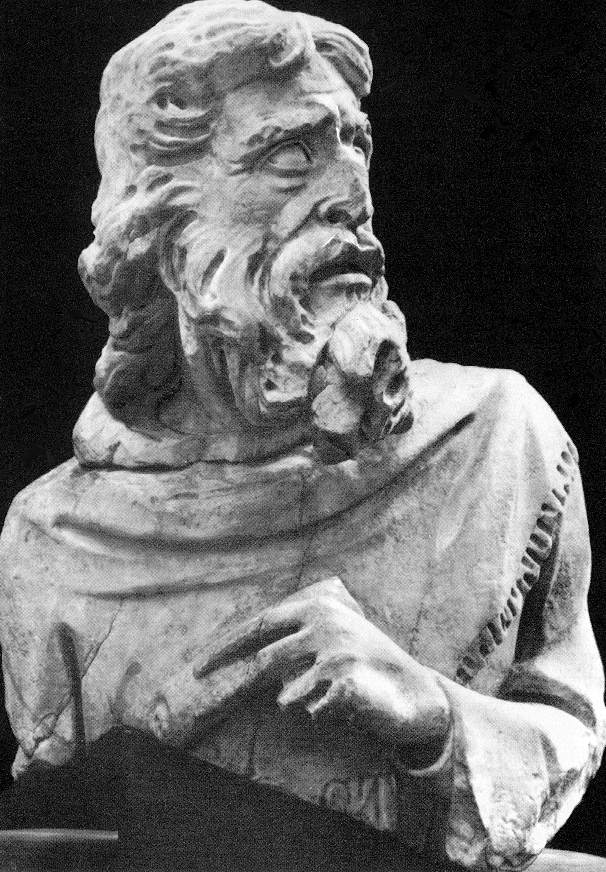
Statue of the prophet Haggai, by Giovanni Pisano, c.1290 C.E., Siena, Italy

In the second year of King Darius, on the first day of the sixth month, the word of the Lord came through the prophet Haggai to Zerubbabel son of Shealtiel, governor of Judah, and to Joshua son of Jozadak, the high priest:

This is what the Lord Almighty says: “These people say, ‘The time has not yet come to rebuild the Lord’s house.’”

Then the word of the Lord came through the prophet Haggai: “Is it a time for you yourselves to be living in your paneled houses, while this house remains a ruin?”

Now this is what the Lord Almighty says: “Give careful thought to your ways. You have planted much but harvested little. You eat, but never have enough. You drink, but never have your fill. You put on clothes but are not warm. You earn wages, only to put them in a purse with holes in it.”

This is what the Lord Almighty says: “Give careful thought to your ways. Go up into the mountains and bring down timber and build my house, so that I may take pleasure in it and be honored,” says the Lord. 

“You expected much, but see, it turned out to be little. What you brought home, I blew away. Why?” declares the Lord Almighty. “Because of my house, which remains a ruin, while each of you is busy with your own house. 

Therefore, because of you the heavens have withheld their dew and the earth its crops. I called for a drought on the fields and the mountains, on the grain, the new wine, the olive oil and everything else the ground produces, on people and livestock, and on all the labor of your hands.”

Then Zerubbabel son of Shealtiel, Joshua son of Jozadak, the high priest, and the whole remnant of the people obeyed the voice of the Lord their God and the message of the prophet Haggai, because the Lord their God had sent him. And the people feared the Lord.

Then Haggai, the Lord’s messenger, gave this message of the Lord to the people: “I am with you,” declares the Lord. So the Lord stirred up the spirit of Zerubbabel son of Shealtiel, governor of Judah, and the spirit of Joshua son of Jozadak, the high priest, and the spirit of the whole remnant of the people. They came and began to work on the house of the Lord Almighty, their God, on the twenty-fourth day of the sixth month. (New International Version)

Timing is everything.

There is a time to ponder and plan and there’s a time to move and act. If the time is ripe for action, then the lack of initiative is plain old procrastination. But how do you know when to act?

If the Lord says it’s time, well then, it’s time!

God’s people wouldn’t have described their inaction in rebuilding God’s house as dragging their feet. They perceived their inertia as a sensible delay.

Yet, the Lord saw the people’s approach as inexcusable enough to send a prophet with a specific message and call to action: Build the house now!

Let’s get a feel for why God’s call for immediacy comes when it does. In the ancient world, it had always been the practice of armies to assimilate conquered peoples into the culture of the conquering king. 

In the eighth century B.C.E., the Assyrian Empire conquered the northern kingdom of Israel. The Assyrians took most of the people into captivity, left the poorest of the people alone, and resettled the land with some of their own Assyrian people. The inevitable intermarriages resulted in their progeny being known as the Samaritans in the New Testament Gospels, as the Samaritans.

Two-hundred years after Assyria conquered Israel, Nebuchadnezzar besieged the southern kingdom of Judah and took over Jerusalem. He carried Daniel and all the other educated and professional people to Babylon. In the course of taking the city, Nebuchadnezzar tore down the wall and destroyed the temple that Solomon had made.

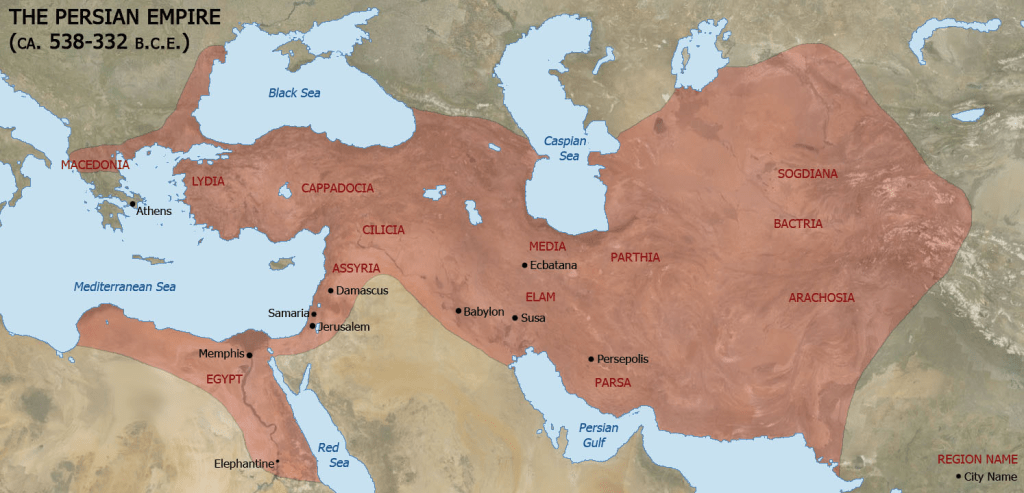
During the Babylonian exile, the Persians conquered Babylon and became rulers of a large geographical empire. Because the massive Persian Empire was in control of so many different kinds of people across such a vast territory, they were not able to operate as previous empires did by assimilation and resettlement. 

Instead, the Persians did something new and different: They encouraged and enabled their conquered peoples to keep their religion and their culture. The only caveat was that they had to give tribute and allegiance to the empire and pray for the king. This is why Nehemiah, Ezra, and Haggai were able to return to Jerusalem and given royal authority to rebuild the wall and the temple. 

But, from the git go, there was opposition to the rebuilding from the old Canaanite inhabitants of the land. After many years, the wall was rebuilt but the temple restoration bogged down. The people slowly became discouraged and lost enthusiasm to do the work. 

Understandably, the people got caught up in taking care of their own homes and just plain neglected working on the temple. Over time, they just forgot about the entire project. But God didn’t.

The prophet Haggai made it clear that the people’s mental distraction and physical neglect was taken as disrespect by the Lord. Haggai insisted that the reason the people were not experiencing blessing on their land was because they simply did not have their priorities straight. 

Thus, God sent the prophet Haggai to preach a sermon entitled: Build the house now! 

To the people’s credit, they responded to the call of God and started rebuilding God’s house. The work was completed. However, there seemed to be a problem. 

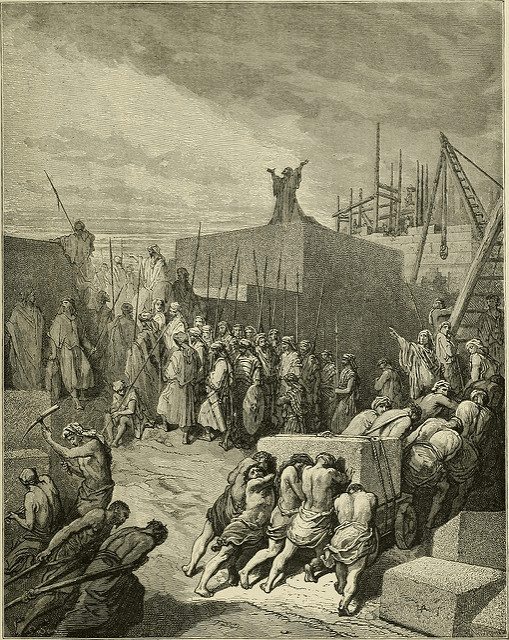
Rebuilding the Temple, by Gustave Doré, 1866

Moving into the rest of Haggai’s prophecy, the newly restored temple didn’t look anything like Solomon’s grand and glorious temple. Many of the older worshipers could still remember Solomon’s temple; to them, the rebuilt temple seemed like a bologna sandwich compared to the T-bone steak of the past. 

So, God sent Haggai again to encourage the people. The Lord will be with them. The restored temple may not look the same, but what makes the temple great is God’s glory.

An important takeaway from the prophecy of Haggai is that the Lord is a jealous God; God’s people are to worship the Lord with all of their heart, soul, mind, and strength. 

We also learn that the Lord is sovereign and supreme over all creation. God owns everything and will use it all to accomplish divine purposes on this earth. 

In addition, we see that God calls people to new work and fresh ministry. The Lord was behind the destruction of the old temple; and when the time was right, God called the people to build a new ministry.

And we learn something about ourselves, as well. God’s people need to hear and respond to God’s call. Haggai put a God-sized vision before the people; he helped them imagine what the new temple would be like – full of God’s glory.

God is doing a new thing. The Lord continues calling people to:

  • Seek first the kingdom of God. (Deuteronomy 4:29; Psalm 63:1; Matthew 6:33; Hebrews 11:6)
  • Love God with whole hearts. (Deuteronomy 6:5, 11:1-22, 19:9, 30:16-20; Matthew 22:37)
  • Love neighbor as we love ourselves. (Leviticus 19:18; Matthew 22:38; Romans 13:9; Galatians 5:14)
  • Make disciples of Christ from all nationalities. (Matthew 28:18-20)
  • Be witnesses to God’s glory in Christ. (Psalm 66:16; Acts 1:8; 2 Timothy 2:2)
  • Obey the Holy Spirit. (Acts 5:31-33; Romans 6:17; Hebrews 5:8-9)

It is good to remember and celebrate past ministries; and it is also good to throw ourselves into the new ministries which God calls us and to build them for God’s glory.

My friends, build it now.

Glory to you, O God, the One who is able to do far beyond all that we could ask or imagine by your divine power at work within us; glory to you, blessed God, in the church and in Christ Jesus for all generations, through the empowering Holy Spirit, forever and always. Amen.