Jeremiah 31:7-14 – A Restored People

Now this is what the Lord says:
“Sing with joy for Israel.
    Shout for the greatest of nations!
Shout out with praise and joy:
‘Save your people, O Lord,
    the remnant of Israel!’
For I will bring them from the north
    and from the distant corners of the earth.
I will not forget the blind and lame,
    the expectant mothers and women in labor.
    A great company will return!
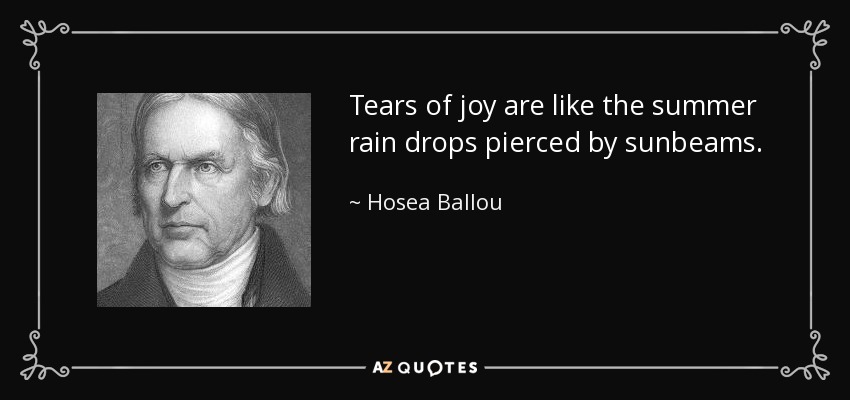
Tears of joy will stream down their faces,
    and I will lead them home with great care.
They will walk beside quiet streams
    and on smooth paths where they will not stumble.
For I am Israel’s father,
    and Ephraim is my oldest child.

“Listen to this message from the Lord,
    you nations of the world;
    proclaim it in distant coastlands:
The Lord, who scattered his people,
    will gather them and watch over them
    as a shepherd does his flock.
For the Lord has redeemed Israel
    from those too strong for them.
They will come home and sing songs of joy on the heights of Jerusalem.
    They will be radiant because of the Lord’s good gifts—
the abundant crops of grain, new wine, and olive oil,
    and the healthy flocks and herds.
Their life will be like a watered garden,
    and all their sorrows will be gone.
The young women will dance for joy,
    and the men—old and young—will join in the celebration.
I will turn their mourning into joy.
    I will comfort them and exchange their sorrow for rejoicing.
The priests will enjoy abundance,
    and my people will feast on my good gifts.
    I, the Lord, have spoken!” (New Living Translation)

Experiencing restoration is a beautiful thing. Sick and suffering bodies restored to health brings rejoicing. Estranged relationships brought together again elicits singing. Spirits broken by sin made whole again through restoring grace causes shouts of joy.

God is an expert in restoration. Dilapidated communities, broken individuals, and peoples in diaspora can find fresh hope amid challenging circumstances.

Take a look at the actions of God through the verbs in today’s Old Testament lesson:

  • “I will bring.” The Lord gathers scattered people together, as well as making the disparate parts of people into a unified whole again.
  • “I will not forget.” In the gathering action of God, no one is left behind. Attention is given to the stragglers, to those unable on their own strength or ability to journey on the road back to the Lord.
  • “I will turn.” The unfortunate are turned into the fortunate. The underprivileged become privileged. Grief, lament, and mourning give way to joy and a new lease on life.
  • “I will comfort.” A great reversal occurs with God’s intervention. Sorrow is transformed into praise. Goodness is found in abundance because the Lord is a good God.

God calls the people to action, to a response of experiencing the restorative powers of grace. The Lord encourages such behavior because it helps us never forget that no one and no circumstance is ever beyond the renewing grace of God. Notice the verbs which characterize that response:

  • “Sing.” No mumbling here, my friends. No timidity about being off tune. A lonely person, fragmented group, depressed community, polarized neighborhood, or scattered nation restored by God’s merciful grace becomes an exuberant people. Singing organically arises from them.
  • “Shout.” Even the rocks will cry out if the people don’t. A last second win in the sports stadium amongst thousands of fans doesn’t even hold a candle to celebrative shouts of believers gathered and restored.
  • “Listen.” Whenever hearing God’s voice results in restoration, then the desire and motivation to listen increases exponentially.
  • “Proclaim.” Proclaiming good news is a joy and privilege. And in anticipation of Epiphany, the gospel declared to Gentiles is a gracious message of inclusion and hope.

We are helped to picture the incredible restoration of people coming together and gathered by God with two metaphors:

  1. The Good Shepherd. Like a faithful shepherd over the flock of sheep, the Lord actively seeks the lost, brings them home, and continues to stand watch over them as a compassionate guardian.
  2. The Exodus. Just as God redeemed the people out of Egyptian slavery and took them to a good land of abundance, so the Lord shall return those persons exiled from that abundant place and restore them to the peace of settled rest.

The restoring action of God gathers the scattered. The lost are found. That which is fragmented is made whole. Those previously disabled become able. The weak become strong, the sick healed, the hungry fed, and the prisoner freed.

In times of famine, pandemic, poverty, hardship, and scant resources, there is hope. The Lord knows how to restore fortunes and bring untold abundance amid the most difficult of situations.

True joy comes through hard suffering. The pains of childbirth give way to unspeakable joy.

Today is the final day in the twelve days of the Christmas season. God, entering humanity through a woman, in the flesh, began the gracious work of ransoming, redeeming, and restoring a sinful world that had exiled itself from peace and abundance. In Christ, our lives are full of blessing.

Praise the God and Father of our Lord Jesus Christ for the spiritual blessings that Christ has brought us from heaven! (Ephesians 1:3, CEV)

“I am the gate. Those who come in by me will be saved; they will come in and go out and find pasture. The thief comes only in order to steal, kill, and destroy. I have come in order that you might have life—life in all its fullness. I am the good shepherd, who is willing to die for the sheep.” (John 10:9-11, GNT)

May you know and experience the restorative grace of God in Christ today and every day. Amen.

Exodus 19:16-25 – An Awesome God

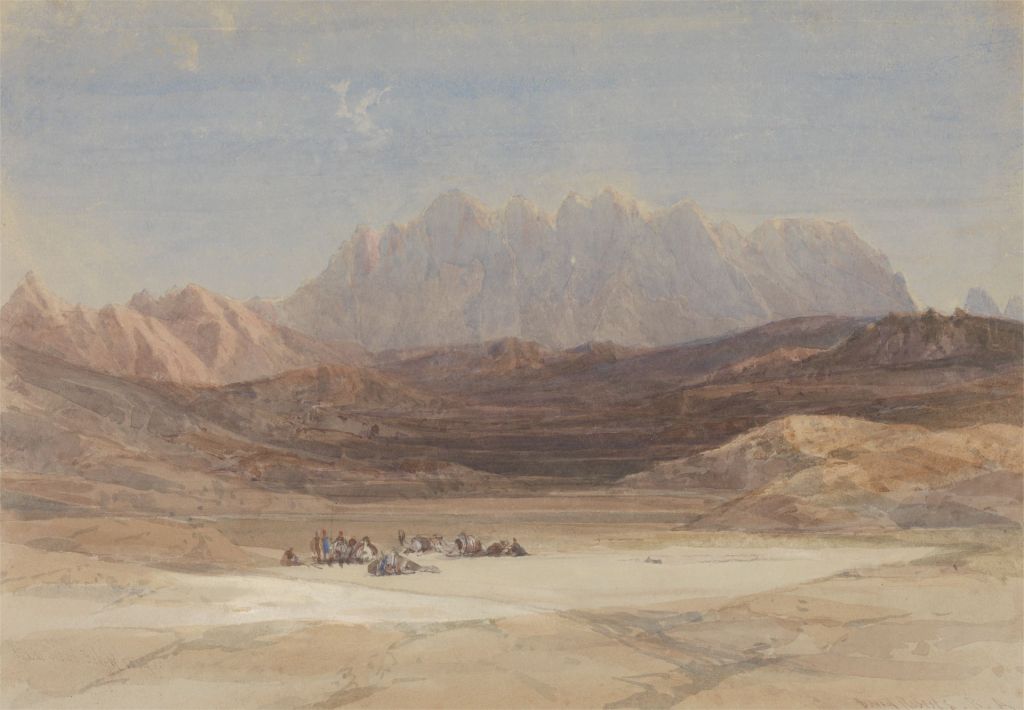
Mount Sinai by Scottish painter David Roberts (1796-1864)

On the morning of the third day, thunder roared, and lightning flashed, and a dense cloud came down on the mountain. There was a long, loud blast from a ram’s horn, and all the people trembled. Moses led them out from the camp to meet with God, and they stood at the foot of the mountain. All of Mount Sinai was covered with smoke because the Lord had descended on it in the form of fire. The smoke billowed into the sky like smoke from a brick kiln, and the whole mountain shook violently. As the blast of the ram’s horn grew louder and louder, Moses spoke, and God thundered his reply. The Lord came down on the top of Mount Sinai and called Moses to the top of the mountain. So, Moses climbed the mountain.

Then the Lord told Moses, “Go back down and warn the people not to break through the boundaries to see the Lord, or they will die. Even the priests who regularly come near to the Lord must purify themselves so that the Lord does not break out and destroy them.”

“But Lord,” Moses protested, “the people cannot come up to Mount Sinai. You already warned us. You told me, ‘Mark off a boundary all around the mountain to set it apart as holy.’”

But the Lord said, “Go down and bring Aaron back up with you. In the meantime, do not let the priests or the people break through to approach the Lord, or he will break out and destroy them.”

So, Moses went down to the people and told them what the Lord had said. (NLT)

As Christians await Easter and the resurrected Christ, the Revised Common Lectionary reminds us of another great anticipation from the Old Testament. The ancient Israelites were amazingly delivered from Egyptian slavery, miraculously walked through the Red Sea, and traveled with wondrous anticipation to Mount Sinai. Now, in today’s reading, they are about to meet with God!

The scene of this meeting is not exactly the romantic highland encounter of the Man from Snowy River (my wife’s all-time favorite movie). The landscape is much more akin to the dark and volcanic Mount Doom from The Lord of the Rings. The picture appears more foreboding than loving. The thing about mountain top experiences is that they are not all monolithic one-size-fits-all encounters with bright rainbows and happy skipping unicorns.

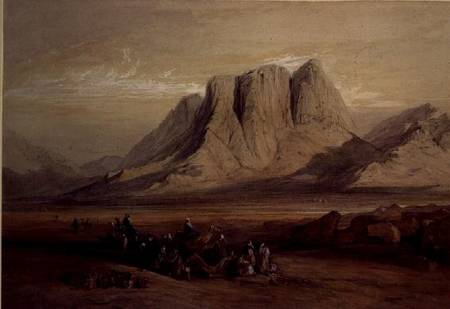
Mount Sinai by English painter Edward Lear (1812-88)

Mountain Top Experiences

Holy Scripture is replete with mountain experiences. Mountains serve as symbols for significant encounters with a mighty God. Whether it is Christ’s transfiguration on a mountain, or the giving of the law on a mountain, the awesome mountain serves as a tangible symbol of divine majesty, strength, and sovereignty. And, I might add, conversely, valleys in Scripture are symbolic of difficulty and suffering. Our God is Lord of both mountain and valley. The God of the Bible is both transcendent and immanent, ruling with power and might high above us on the holy mountain. Yet, the Lord also comes near to us in the valley of the shadow of death.

Leading up to the giving of the Ten Words (Commandments) in Exodus 20, Exodus 19 portrays an awesome scene of God in transcendent holiness and power. In fact, the experience was so otherworldly that the people were afraid to even come near the mountain. The Israelites needed limits placed on themselves because of God’s holy presence. Just like coming too near the immense power of the sun will destroy us, so getting near to God can ruin us if we do not respect divine holiness.

The Lord of the Mountain

Respecting God’s power and transcendence brings the reality of the Lord’s immanence into greater appreciation. God has gone to extreme lengths of self-revelation to people. For the Christian, it all culminates through the incarnation of Christ, the sending of the Son. In Jesus, the transcendence and immanence of God meet perfectly to bridge the chasm between humanity and the divine. Because of Jesus, the awesome sounds of thunder and trumpet do not lead to fear; they announce grace to those who approach God by faith.

You have not come to a mountain that can be touched and that is burning with fire; to darkness, gloom and storm; to a trumpet blast or to such a voice speaking words that those who heard it begged that no further word be spoken to them, because they could not bear what was commanded: “If even an animal touches the mountain, it must be stoned to death.” The sight was so terrifying that Moses said, “I am trembling with fear.” But you have come to Mount Zion, to the city of the living God, the heavenly Jerusalem. You have come to thousands upon thousands of angels in joyful assembly, to the church of the firstborn, whose names are written in heaven. You have come to God, the Judge of all, to the spirits of the righteous made perfect, to Jesus the mediator of a new covenant….

See to it that you do not refuse him who speaks. If they did not escape when they refused him who warned them on earth, how much less will we, if we turn away from him who warns us from heaven? At that time, his voice shook the earth, but now he has promised, “Once more I will shake not only the earth but also the heavens.” The words “once more” indicate the removing of what can be shaken—that is, created things—so that what cannot be shaken may remain. Therefore, since we are receiving a kingdom that cannot be shaken, let us be thankful, and so worship God acceptably with reverence and awe, for our “God is a consuming fire.” (Hebrews 12:18-29, NIV)

Our God is an awesome God. The divine dramas of God’s victory over Egypt and Christ’s victory over sin, death, and hell, have provided God’s people with spiritual power. Both the deliverance of the Israelites from Egyptian slavery by God and the deliverance secured on Mount Zion from spiritual slavery by Jesus are meant to free us to do the will of God. With God’s Word and God’s Spirit given to us, we are emancipated from an empty way of life to experience the fullness of Christ.

May the peace of God which surpasses all understanding, keep your hearts and minds in the knowledge and love of God, and of the Son, Jesus Christ, our Lord, and the blessing of God almighty. May Father, Son, and Spirit be among you and remain with you always. Amen.

Exodus 23:10-13 – The Primacy of Rest

“Sow your land for six years and gather in its crops, but in the seventh year leave it alone and give it a rest so that your poor may eat from it. What they leave, let the wildlife have. Do the same with your vineyards and olive groves.

“Work for six days and rest the seventh so your ox and donkey may rest, and your servant and migrant workers may have time to get their needed rest.

“Listen carefully to everything I tell you. Don’t pay attention to other gods—don’t so much as mention their names. (MSG)

One reason poverty exists and seems to continue unabated, is that it is inextricably tied to rest. Perhaps that seems counter-intuitive. However, it is not. Where work is exalted to such a degree that rest creates feelings of guilt, there you will find an entire class of poor folk who labor tirelessly without making ends meet. Those with power and wealth who eschew and denigrate rest are typically the ones who take advantage of the less fortunate and stereotype them as lazy.

Scriptural rest is not a luxury. An honest biblical sabbath rest is a vital necessity. It is important enough that God lovingly encouraged it and divinely commanded a day of rest to happen for everyone each week and a year of rest every seven, including both creature and creation. There were to be no exceptions.

Perhaps the best way to illustrate what God was thinking when he ordained his people for intentional times of rest comes from my time in a prayer chapel.  One morning I set aside a four-hour block to “rest,” get away, and pray.  I will be honest that I marched into it with a personal agenda of what I wanted God to do.  I had my list of prayer items and my thoughts of how I believed God should work. I was ready for anything but rest. I came to wrestle. Silly me.

It did not take long into my forceful striving at God to see I was on a misguided adventure in missing the point. In my desire to see prayer requests answered, I lost sight of why I was there: To simply be in presence of God and enjoy Jesus – without all the laborious work, as if simple rest and enjoyment were not enough. 

In our daily work-a-day world we poke and prod, push, cajole, and finagle to move forward and get our way on all kinds of things. To separate ourselves from our typical routine takes something of a withdrawal, and it is downright hard. Maybe that’s why many individuals are so tired, cranky, and negative all the time – we find all kinds of reasons not to rest, and even when we do, we’re still trying to impose our will on God. Silly us.

We simply need Jesus – to know Christ, be with him, and experience the depths of our wondrous and gracious union with him. And that will be difficult, unless we obey the command given by God to rest.  To rest means to relinquish our plans and agendas, just for a time, and come into God’s presence and enjoy each other’s company.

Our compulsions for performance and perfection are culprits to rest. We want to do everything right. We long to pray right, talk right, be right and live right – instead of simply coming to Jesus like a little child. Perhaps we are so profoundly dissatisfied with so many things because we are discontent with Christ. Just maybe the best or right prayer to pray is that we all may be content together no matter the circumstances. Only then might we find that our burdens are light and our life easy.

Jesus modeled the life of rest for us. If there was anyone who did not need to pull away and rest it was Jesus, and yet he continually did so. If Jesus needed a sacred space and place to commune and enjoy the Father, then how much more do we need a solid sabbath rest and a place to do it? Jesus rested and prayed to connect with his heavenly Father. There was no multi-tasking, keeping abreast of social media, or juggling other responsibilities.  There was merely the pursuit of intimate rest.

If we fail to rest and avoid sabbath, then we are expressing our confidence that money, hard work, and individual talent are really all we need rather than God. Rest is only secondarily about refueling our depleted resources; it is primarily about connecting intimately with the divine and becoming aware of our true thoughts and feelings. 

Just as we need a special room and a certain bed for sleep, so we need a consistent place and time to enjoy God.  Proper spiritual hygiene, just like proper sleep and health hygiene, includes setting aside a place to daily rest, pray, and be with God.

Real spiritual and biblical rest only “works” when we realize we are imperfect – that we are helpless and need Jesus. Apart from the rise Christ, the blind cannot see, Lazarus remains dead, and I am lost in my sin. I cannot “do” life without Christ in me and with me.

Maybe this old world is not experiencing grace and peace because God’s people have not yet learned the necessity of rest. If we try and manufacture results instead of relying on the Lord for refreshment and renewal, the good things of life will be elusive. 

Enjoy Jesus today, my friends, tap into the Holy Spirit, and allow your rest to spur you to love and good deeds for the poor and underprivileged of this world.

Glory to God in the highest, and on earth peace to people of goodwill. Amen.

Exodus 15:22-27 – On Grumbling

Then Moses led Israel from the Red Sea and they went into the Desert of Shur. For three days they traveled in the desert without finding water. When they came to Marah, they could not drink its water because it was bitter. (That is why the place is called Marah.) So, the people grumbled against Moses, saying, “What are we to drink?”

Then Moses cried out to the Lord, and the Lord showed him a piece of wood. He threw it into the water, and the water became fit to drink.

There the Lord issued a ruling and instruction for them and put them to the test. He said, “If you listen carefully to the Lord your God and do what is right in his eyes, if you pay attention to his commands and keep all his decrees, I will not bring on you any of the diseases I brought on the Egyptians, for I am the Lord, who heals you.”

Then they came to Elim, where there were twelve springs and seventy palm trees, and they camped there near the water. (NIV)

I like children’s books. I suppose its because I’m still a kid at heart. It’s fun to read to my grandchildren. One of the books I read to them is “Alexander and the Terrible, Horrible, No Good, Very Bad Day.” The book begins with Alexander recounting when he awoke one morning:

“I went to sleep with gum in my mouth and now there’s gum in my hair and when I got out of bed this morning, I tripped on the skateboard and by mistake I dropped my sweater in the sink while the water was running and I could tell it was going to be a terrible, horrible, no good, very bad day…. I think I’ll move to Australia.”

For the remainder of the story, Alexander’s day was a mishap of messes. Nothing seemed to go his way, and no one appeared to notice or even to care.

One of the reasons the book has been read so many times by so many children (and obviously adults, like me) is because we can all relate to the feelings of having a day where nothing seems to go right. In the middle of it we just feel like being somewhere else, like Australia.

In such times, when life is topsy-turvy and upside-down, it is so amazingly easy to grumble and complain. The ancient Israelites were having an Alexander-like day. Unlike having gum in your hair, not having water to drink is a big deal, a vital problem. So, we might understand why there was so much grumbling going on among the people. I am sure they were anxious, nervous, and scared.

Yet, complaining, unlike our emotions, is a volitional response. We choose to grumble. The problem with gripes and complaints is that it sets a person down a dark path. Oh, the criticisms and grievances begin easily and are seemingly harmless, at first. They are, however, anything but innocuous.

A mere grumble under the breath did not stop with finally getting water to drink. If we look ahead in the story of God’s people in the exodus event, the moaning and complaining quickly returned the minute something did not go their way. Then, the people became so disillusioned with their circumstances that they began longing for the “good old days” back in Egypt when they had plenty to eat and drink, forgetting about their cruel bondage in slavery. (Exodus 16:1-3)

The psychological progression continued with beginning to blame their situation on God, as if he were some mean malevolent deity. From that point, it was inevitable that the people would disobey God and eventually succumb to the idolatry of the golden calf. (Exodus 32:1-8)

Despite the grand celebration of leaving Egypt and experiencing a miraculous deliverance through the Red Sea, the people quickly forgot because of their present circumstance of lacking water. It is only logical and makes sense that the mighty God who saved them with incredible acts of power would care for the people in a desert. Yet, for many, there was no faith to be found in a new situation they had not faced before.

Failure of faith begins neither with ignorance nor an egregious sin. It begins with grumbling and complaining. And if allowed to run amok, complaints will bear the fruit of discouragement, disobedience, and eventually a disavowal of God.

The author of the New Testament letter to the Hebrews reflected on the grumbling of their forebears and had this to say in response:

See to it, brothers and sisters, that none of you has a sinful, unbelieving heart that turns away from the living God. But encourage one another daily, as long as it is called “Today,” so that none of you may be hardened by sin’s deceitfulness. We have come to share in Christ, if indeed we hold our original conviction firmly to the very end. As has just been said:

“Today, if you hear his voice,
    do not harden your hearts
    as you did in the rebellion.” (Hebrews 3:12-15, NIV)

Encouragement is the insecticide which eliminates the worm of complaints. If left alone, we stew in our own bitterness over missed expectations. Grumbling bores its way into our soul and eats away at our faith. We need the continual encouragement of one another to remember our collective deliverance and express gratitude for our salvation.

May it be so to the glory of God.

We give you thanks, Lord God, because you give food and drink to all, heal all, create wonders in this world, forge wisdom within us, and give refuge beneath the shadow of your wings. From your wisdom grant us wisdom, from your love grant us love, from your understanding grant us understanding. Feed us when we are hungry, give us strength when we are weak, raise us up when we are bent over, set us free when we are enslaved. Just as our spiritual ancestors were blessed – may you grant us the blessing of peace, strength, and gratitude. Amen.