Epiphany of the Lord (Isaiah 60:1-6)

Adoration of the Magi, Basilica of the National Shrine of the Immaculate Conception, Washington D.C.

“Arise, shine, for your light has come,
    and the glory of the Lord rises upon you.
See, darkness covers the earth
    and thick darkness is over the peoples,
but the Lord rises upon you
    and his glory appears over you.
Nations will come to your light,
    and kings to the brightness of your dawn.

“Lift up your eyes and look about you:
    All assemble and come to you;
your sons come from afar,
    and your daughters are carried on the hip.
Then you will look and be radiant,
    your heart will throb and swell with joy;
the wealth on the seas will be brought to you,
    to you the riches of the nations will come.
Herds of camels will cover your land,
    young camels of Midian and Ephah.
And all from Sheba will come,
    bearing gold and incense
    and proclaiming the praise of the Lord. (New International Version)

We are drawn to light. I don’t know if you have ever been in a situation with complete darkness surrounding you. When things are totally dark, we begin to fear and panic.

I grew up in a rural area in which there were no lights at night, other than the moon and the stars. More than once, I got myself into a situation, when the sky was overcast, in which I didn’t have a flashlight and could not see my hand in front of my face. I was groping to discern any little bit of light that I could see. Without the light, I was lost.

Our souls are also drawn to light. We no longer want to have darkness enveloping us; we cannot live with the darkness residing within our hearts. This is one reason why the Magi were attentive to the bright star over Bethlehem, and traveled toward it. We have a need for light because nobody can abide in darkness for too long.

The glory of the Lord is associated with bright light. Spiritually, we can find ourselves in such darkness that it’s impossible to discover light, unless God shows up displaying divine mercy and glory.

The Christian season of Epiphany has to do with this divine light. Each year on January 6, on the Church Calendar, and after the twelve days of Christmas, is the celebration of Epiphany. 
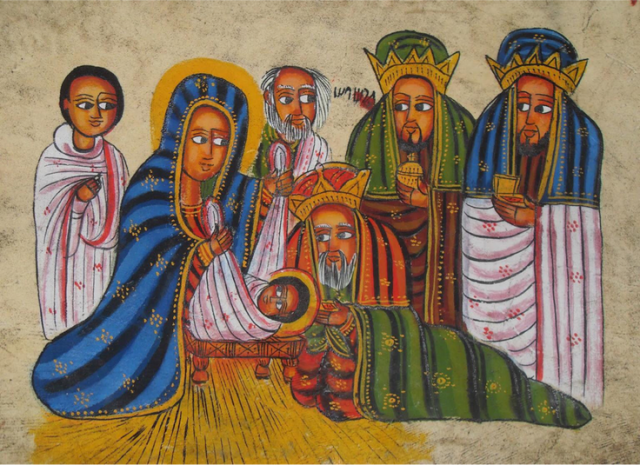
The Three Kings, Ethiopian Orthodox Church

It is a celebration of light – that Christ came to this earth as a child and became like us. Epiphany helps to bring a vision and understanding of God’s glory to all kinds of people in the world.

“Epiphany” literally means “manifestation” or “appearance.” The event most closely associated with this season is the visit of the Magi to Jesus. Included in this time of the year between the seasons of Christmas and Lent is a special emphasis on the teaching and healing ministry of Jesus. 

The people walking in darkness
    have seen a great light;
on those living in the land of deep darkness
    a light has dawned. (Isaiah 9:2; Matthew 4:16, NIV)

The great celebration and focus of these weeks is that salvation is not limited to Israel but extends to the Gentiles, as well.

“I will also make you a light for the Gentiles, that my salvation may reach to the ends of the earth.” (Isaiah 49:6; Luke 2:32; Acts 13:47, NIV)

In this season of Epiphany, the manifestation of God’s grace is one of the most scandalous truths of Christianity: God graces common ordinary people, who seem far from God, with the gift of Jesus. 

God grants repentance that leads to life for all kinds of people, no matter what their race, ethnicity, class, or background. It is a wondrous and astounding spiritual truth that God’s merciful concern is not limited to a certain type of person or a particular group of people.

Grace is (and ought to be) the guiding factor in how we interact with people. 

Losing sight of grace leads to being critical and defensive. Like King Herod of old, a graceless person becomes enamored with earthly power and control. But embracing grace, leads to humility, so that we see the image of God in people very different from ourselves. 

Like the Apostle Peter, who learned in a vision to bring the gospel to non-Jews, old legalisms begin to wear away so that people from all walks of life can have access to Jesus and his gracious saving and healing ministry. 

Grace brings down barriers and causes us to do away with unnecessary distinctions between others. And so, the appropriate response to such a grace is to glorify God for this marvelous and amazing work.

It is a gracious and merciful reality that the Magi, or Wise Men, who were really pagan astrologers, were directed to the Messiah. A light was provided to lead them to Jesus. Apart from God’s care and intervention they would have remained in darkness. 

And it is no less true for people today. This old broken world has a lot of shadowy places to it; there is darkness all around.  All kinds of people have no light at the end of the tunnel of their lives for hope and new life. But the gospel of Jesus Christ brings that light to those walking around with no ability to see. And Jesus exhorted his followers to be the reflectors of divine light for the world.

“Let your light shine before others, that they may see your good deeds and glorify your Father in heaven.”

Jesus (Matthew 5:16, NIV)

Sometimes, maybe oftentimes, the best way to bring resolution to our own troubles and problems is through helping others make sense of their lives through the gracious light of Christ so that they can see an appearance, an epiphany, of what their lives can be in the gracious rule of the kingdom of God. 

As we celebrate Epiphany and journey with Jesus through his earthly upbringing and into his gracious ministry to people, let us keep vigilance to not let our light grow dim. Instead, let us hunger and thirst after Christ’s righteousness so that our joy is full and our light is bright.

God of radiant light, your love illumines our hopes before we know them, and our needs before we ask. Kindle your flame within us, that in our prayers and service, we may know your transforming presence at work in the world around us. All this we ask through Jesus Christ, our Lord. Amen.

Epiphany of the Lord (Matthew 2:1-12)

After Jesus was born in Bethlehem in Judea, during the time of King Herod, Magi from the east came to Jerusalem and asked, “Where is the one who has been born king of the Jews? We saw his star when it rose and have come to worship him.”

When King Herod heard this he was disturbed, and all Jerusalem with him. When he had called together all the people’s chief priests and teachers of the law, he asked them where the Messiah was to be born. “In Bethlehem in Judea,” they replied, “for this is what the prophet has written:

“‘But you, Bethlehem, in the land of Judah,
    are by no means least among the rulers of Judah;
for out of you will come a ruler
    who will shepherd my people Israel.’”

Then Herod called the Magi secretly and found out from them the exact time the star had appeared. He sent them to Bethlehem and said, “Go and search carefully for the child. As soon as you find him, report to me, so that I too may go and worship him.”

After they had heard the king, they went on their way, and the star they had seen when it rose went ahead of them until it stopped over the place where the child was. When they saw the star, they were overjoyed. On coming to the house, they saw the child with his mother Mary, and they bowed down and worshiped him. Then they opened their treasures and presented him with gifts of gold, frankincense and myrrh. And having been warned in a dream not to go back to Herod, they returned to their country by another route. (New International Version)

The light exists; it’s there. But not everyone likes it.

While many celebrate the light, such as Christians on the day of Epiphany, others wrap themselves in the cloak of darkness. There are various responses to Jesus as the Light of the World; not all of them are the same.

King Herod responds with anger

Herod was distressed with the news of a potential King of the Jews being born; he saw this as a threat to his rule. Herod, ever the narcissistic person who always sought to wipe out any threat to his throne, went over the top in seeking destroy Jesus. 

At the time of Christ’s birth, Herod had been the reigning king for about 30 years. During that time, his paranoia about losing power led him to kill his wife and three of his own sons because he saw them as threats to his authority. Herod feigned a desire to worship Christ, but this was really a sinister façade in order to get rid of Jesus by any means possible.

Jerusalem responds with anxiety

The people of Jerusalem felt that Jesus was going to upset the status quo. He was, for them, a threat to their security; any change within the system might cause Herod to take it out on them (which he had done before). 

Although the people were looking for a deliverer, they did not want things to shake up too much and arouse the Romans to abuse them.

Whenever we get caught up in maintaining the status quo, out of fear, then we have no room in the inn for Mary and Joseph. 

Always trying to keep people happy and not upset them is a tenuous way to live. Such an agenda will typically result in missing Jesus when he shows up. That’s because we’re not really looking for him to start with. 

For example, if our task as parents is to just keep our kids out of trouble, they’re going to miss Jesus; and if they find him, it will be in spite of us and not because of us. Yet, if our truest desire for them is to know Christ, then our prayers, our words, and our actions will reflect the ethics of God’s kingdom.

Religious leaders respond with apathy

The chief priests and teachers of the law had all the right answers; and responded to Herod’s questions with the correct information.

The sad part is that the guys who knew the most about Scripture, who actually had a handle on God’s law, were simply satisfied with that knowledge and nothing more. They seemed  unconcerned with getting off their butts and getting on their knees to worship the Son of God.

If we know the truth, we must act on it. Jesus wants people to worship in spirit and in truth. He wants more than a mere recognition; Jesus desires us.

The Magi respond with adoration

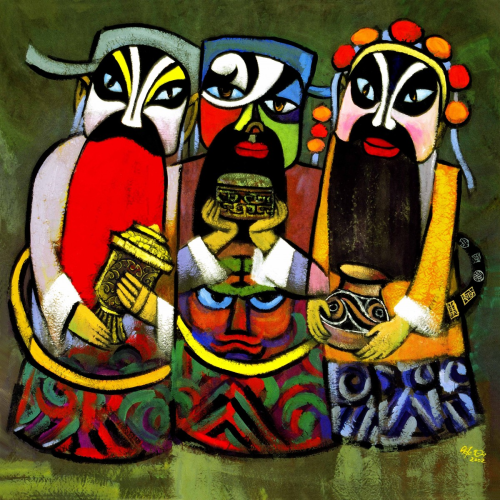
The Three Wise Men by He Qi

The Wise men, or Magi, were Gentiles and pagan astrologers (not kings). They devoted themselves to studying the stars and discerning what was happening. Because of this, they were often advisors and counselors to kings.

Some may find it scandalous that God used such persons, but that’s okay. The Lord typically uses the folks we believe are (or should be) unusable. Turns out it is the people such as the Magi that demonstrate their devotion and adoration through actual worship and giving of costly gifts.

Epiphany

Each year on January 6 in the Church Calendar, after the twelve days of Christmas, is the celebration of Epiphany. Christ’s coming to this earth as a child and becoming like us is much more than a baby in a manger.  Epiphany of the Lord helps to bring a vision and understanding of God’s glory to all kinds of people of the world.

The word “epiphany” means “manifestation” or “appearance” – which is exactly what happened with the Magi in visiting Jesus. The season of Epiphany has a special emphasis on the teaching and healing ministry of Jesus. The focus of these weeks is that salvation is not limited to Israel but extends to the Gentiles, as well.

With Epiphany’s light, we see that one of the most scandalous truths of Christianity is that God graces common ordinary people, who seem far from God, with the gift of Jesus. 

God grants life for all kinds of people – no matter their race, ethnicity, gender, class, or background. It’s a wondrous and astounding spiritual truth that God’s gracious concern is not limited to a certain type of person or a particular group of people.

Grace

Grace is and ought to be the guiding factor in how we interact with people. 

Losing sight of grace leads to being critical and defensive. Like King Herod of old, a graceless person becomes enamored with earthly power and control. But embracing grace leads to the humility of seeing the image of God in people quite different from us. 

Like the Apostle Peter, who learned in a vision to bring the gospel to non-Jews, old legalisms begin to wear away so that people from all walks of life can have access to Jesus and his gracious saving and healing ministry. (Acts 10-11:18)

Grace topples barriers and clears away unnecessary distinctions between others. Our appropriate response to such a grace is to glorify God for this marvelous and amazing work.

Light

A light was provided to lead the Magi to Jesus. Apart from God’s gracious intervention, they would have remained in darkness. 

This old broken world is enveloped in spiritual darkness. All kinds of people have no light at the end of the tunnel of their lives for hope and new life. Christ brings that light to those unable to see. And Jesus, in his teaching ministry, exhorted his followers not to hide their light but to let it shine for all to see. (Matthew 5:14-16)

Sometimes, maybe oftentimes, the best way to bring resolution to our own troubles and problems is through helping others make sense of their lives through the gracious light of Christ. Then, they can see an appearance, an epiphany, of what their lives could be in the gracious and benevolent rule and reign of God. 

In this season of Epiphany, let us journey with Jesus through his earthly upbringing, walk with him in his gracious ministry to people; and keep watch with him so that our own light does not grow dim.

Merciful God of life and light, you have gifted the Church through the goodness of your grace to be your hands; to do your work; to be your voice; to share your words; and to bring healing for broken lives. You have graciously gifted your people with the blessings of your Spirit, the power to transform lives and make all things new.

Now may our hearts receive, our mouths proclaim, our hands prepare for compassionate service so that the love we have will overflow into the hearts of others. May they receive your grace, your renewing Spirit, and your love, through Jesus Christ our Savior. Amen.

Matthew 2:1-12 – Epiphany of the Lord

The Three Wise Men by He Qi

In the time of King Herod, after Jesus was born in Bethlehem of Judea, wise men from the East came to Jerusalem, asking, “Where is the child who has been born king of the Jews? For we observed his star at its rising and have come to pay him homage.” When King Herod heard this, he was frightened, and all Jerusalem with him; and calling together all the chief priests and scribes of the people, he inquired of them where the Messiah was to be born. They told him, “In Bethlehem of Judea; for so it has been written by the prophet:

‘And you, Bethlehem, in the land of Judah,
    are by no means least among the rulers of Judah;
for from you shall come a ruler
    who is to shepherd my people Israel.’”

Then Herod secretly called for the wise men and learned from them the exact time when the star had appeared. Then he sent them to Bethlehem, saying, “Go and search diligently for the child; and when you have found him, bring me word so that I may also go and pay him homage.” When they had heard the king, they set out; and there, ahead of them, went the star that they had seen at its rising, until it stopped over the place where the child was. When they saw that the star had stopped, they were overwhelmed with joy. On entering the house, they saw the child with Mary his mother; and they knelt down and paid him homage. Then, opening their treasure chests, they offered him gifts of gold, frankincense, and myrrh. And having been warned in a dream not to return to Herod, they left for their own country by another road. (New Revised Standard Version)

“Truth, by which the world is held together, has sprung from the earth, in order to be carried in a woman’s arms.”

St. Augustine

Each year on January 6 in the Church Calendar, after the twelve days of Christmas, is the celebration of Epiphany. Christ’s coming to this earth as a child and becoming like us is much more than a baby in a manger.  Epiphany helps to bring a vision and understanding of God’s glory to all kinds of people of the world.

Epiphany means “manifestation” or “appearance.”

The event associated with this season is the visit of the Magi to Jesus. The season of Epiphany has a special emphasis on the teaching and healing ministry of Jesus. The great celebration and focus of these weeks is that salvation is not limited to Israel but extends to the Gentiles, as well.

Every season in the Christian Year has its unique angle of grace. With Epiphany, we see that one of the most scandalous truths of Christianity is that God graces common ordinary people who seem far from God with the gift of Jesus. 

God grants repentance that leads to life for all kinds of people no matter their race, ethnicity, gender, class, or background. It is a wondrous and astounding spiritual truth that God’s gracious concern is not limited to a certain type of person or a particular group of people.

Grace is and ought to be the guiding factor in how we interact with people. 

Losing sight of grace leads to being critical and defensive. Like King Herod of old, a graceless person becomes enamored with earthly power and control. But embracing grace leads to the humility of seeing the image of God in people quite different from ourselves. 

Like the Apostle Peter, who learned in a vision to bring the gospel to non-Jews, old legalisms begin to wear away so that people from all walks of life can have access to Jesus and his gracious saving and healing ministry. (Acts 10-11:18)

Grace brings down barriers and causes us to do away with unnecessary distinctions between others. Our appropriate response to such a grace is to glorify God for his marvelous and amazing work.

It is a merciful reality that the Magi, or Wise Men, pagan astrologers, were directed to the Messiah. A light was provided to lead them to Jesus. Apart from God’s care and intervention they would have remained in darkness. 

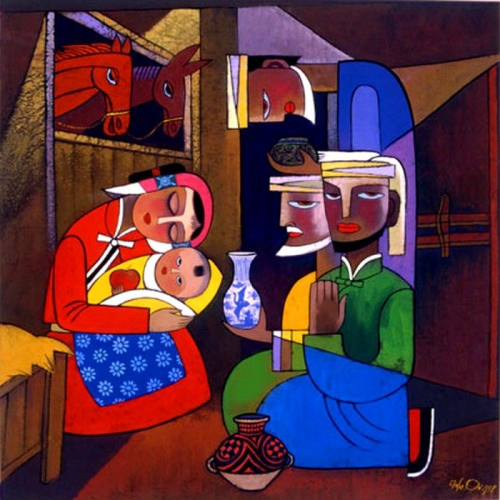
Adoration of the Magi by He Qi

It is still true for people today. This old broken world is wrapped in darkness. All kinds of people have no light at the end of the tunnel of their lives for hope and new life. The gospel of Jesus Christ brings that light to those unable to see. Jesus, in his teaching ministry, exhorted his followers not to hide their light but to let it shine for all to see. (Matthew 5:14-16)

Sometimes, maybe oftentimes, the best way to bring resolution to our own troubles and problems is through helping others make sense of their lives through the gracious light of Christ. Then, they can see an appearance, an epiphany, of what their lives could be in the gracious rule of the kingdom of God. 

As we celebrate Epiphany and journey with Jesus through his earthly upbringing and into his gracious ministry to people, let us keep vigilance to not let our light grow dim. Instead, let us hunger and thirst after Christ’s righteousness so that our joy is full, and our light is bright.

God of mercy, Lord of all, you have gifted the Church through the goodness of your grace to be your hands and do your work, to be your voice and share your words, to bring healing to broken lives. You have graciously gifted your people with the blessings of your Spirit, the power to transform lives and make all things new.

Now may our hearts receive, our mouths proclaim, our hands prepare for compassionate service so that the love we have may overflow into the hearts of others. May they receive your grace, your renewing Spirit, and your love, through Jesus Christ our Savior. Amen.

Matthew 2:1-12 – Epiphany of the Lord

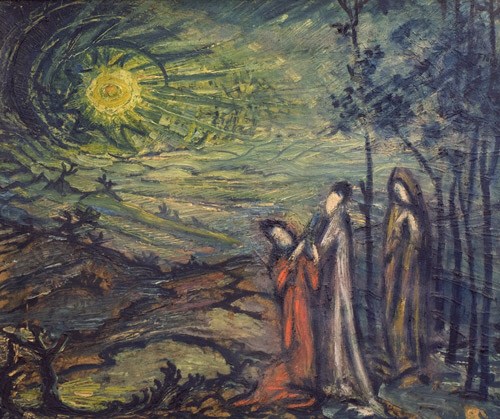
Star of Bethlehem by German painter Waldemar Flaig (1892-1932)

Jesus was born in Bethlehem in Judea, during the reign of King Herod. About that time some wise men from eastern lands arrived in Jerusalem, asking, “Where is the newborn king of the Jews? We saw his star as it rose, and we have come to worship him.”

King Herod was deeply disturbed when he heard this, as was everyone in Jerusalem. He called a meeting of the leading priests and teachers of religious law and asked, “Where is the Messiah supposed to be born?”

“In Bethlehem in Judea,” they said, “for this is what the prophet wrote:

‘And you, O Bethlehem in the land of Judah,
    are not least among the ruling cities of Judah,
for a ruler will come from you
    who will be the shepherd for my people Israel.’”

Then Herod called for a private meeting with the wise men, and he learned from them the time when the star first appeared. Then he told them, “Go to Bethlehem and search carefully for the child. And when you find him, come back, and tell me so that I can go and worship him, too!”

After this interview the wise men went their way. And the star they had seen in the east guided them to Bethlehem. It went ahead of them and stopped over the place where the child was. When they saw the star, they were filled with joy! They entered the house and saw the child with his mother, Mary, and they bowed down and worshiped him. Then they opened their treasure chests and gave him gifts of gold, frankincense, and myrrh.

When it was time to leave, they returned to their own country by another route, for God had warned them in a dream not to return to Herod. (NLT)

The Three Kings, Ethiopian Orthodox Church

Each year on January 6 in the Church Calendar, after the twelve days of Christmas, is the celebration of Epiphany. Christ’s coming to this earth as a child and becoming like us is much more than a baby in a manger.  Epiphany helps to bring a vision and understanding of God’s glory to all kinds of people in the world.

Epiphany means “manifestation” or “appearance.” The event which is associated with this season is the visit of the Magi to Jesus. Included in this time of the year between the seasons of Christmas and Lent is a special emphasis on the teaching and healing ministry of Jesus. The great celebration and focus of these weeks is that salvation is not limited to Israel but extends to the Gentiles, as well.

Every season in the Christian Year has its unique angle of grace. With Epiphany, we see that one of the most scandalous truths of Christianity is that God graces common ordinary people who seem far from God with the gift of Jesus. God grants repentance that leads to life for all kinds of people no matter their race, ethnicity, class, or background. It is a wondrous and astounding spiritual truth that God’s gracious concern is not limited to a certain type of person or a particular group of people.

Grace is and ought to be the guiding factor in how we interact with people. Losing sight of grace leads to being critical and defensive. Like King Herod of old, a graceless person becomes enamored with earthly power and control. But embracing grace leads to the humility of seeing the image of God in people quite different from ourselves. Like the Apostle Peter, who learned in a vision to bring the gospel to non-Jews, old legalisms begin to be worn away so that people from all walks of life can have access to Jesus and his gracious saving and healing ministry. (Acts 10-11:18)

Grace brings down barriers and does away with unnecessary distinctions between others. The appropriate response to mercy is to glorify God for such marvelous light and amazing work.

It is a merciful reality that the Magi, or Wise Men, pagan astrologers, were directed to the Messiah. A light was provided to lead them to Jesus. Apart from God’s care and intervention they would have remained in darkness.  And it is no less true for people today. This old broken world is wrapped in darkness. All kinds of people have no light at the end of the tunnel of their lives for hope and new life. The gospel of Jesus Christ brings that light to those walking around with no ability to see. Jesus, in his teaching ministry, exhorted his followers not to hide their light but to let it shine for all to see. (Matthew 5:14-16)

Sometimes, maybe oftentimes, the best way to bring resolution to our own troubles and problems is through helping others make sense of their lives through the gracious light of Christ so that they can see an appearance, an epiphany, of what their lives can be in the gracious rule of the kingdom of God. 

As we celebrate Epiphany and journey with Jesus through his earthly upbringing and into his gracious ministry to people, let us keep vigilance to not let our light grow dim. Instead, let us hunger and thirst after Christ’s righteousness so that our joy is full, and our light is bright.

God of mercy, Lord of all, you have gifted the Church through the goodness of your grace to be your hands and do your work, to be your voice and share your words, to bring healing to broken lives. You have graciously gifted your people with the blessings of your Spirit, the power to transform lives and make all things new. Now may our hearts receive, our mouths proclaim, our hands prepare for service so that the love that we have may overflow into the hearts of others, and receive your grace, your renewing Spirit, and your love, through Jesus Christ our Savior. Amen.