So, if the message that is preached says that Christ has been raised from the dead, then how can some of you say, “There’s no resurrection of the dead”? If there’s no resurrection of the dead, then Christ hasn’t been raised either. If Christ hasn’t been raised, then our preaching is useless, and your faith is useless. We are found to be false witnesses about God because we testified against God that he raised Christ, when he didn’t raise him if it’s the case that the dead aren’t raised. If the dead aren’t raised, then Christ hasn’t been raised either. If Christ hasn’t been raised, then your faith is worthless; you are still in your sins, and what’s more, those who have died in Christ are gone forever. If we have a hope in Christ only in this life, then we deserve to be pitied more than anyone else. But in fact, Christ has been raised from the dead. He’s the first crop of the harvest of those who have died. (CEB)
Christ’s resurrection is at the very heart and soul of what it means to be Christian. For followers of Jesus, the risen Christ is at the center of life. New life means freedom from sin, death, and hell. It means experiencing life without the shackles of our past indiscretions, present failures, and future anxieties. Christianity is grounded and dependent upon a very real physical rising from death. To put it another way, the new spiritual life which Christians experience in the here and now as a result of Christ’s crucifixion and resurrection is a foretaste of our own bodily resurrection.
If you are asking yourself, “Does this guy believe we are going to walk out of our graves like Jesus did?” the answer is a rollicking, “Yes!” Although Christians have been granted deliverance, our salvation is not yet here in its fullness. We still need to deal with systemic evil in the world, our old habits of sin which occasionally rear their ugly heads, and an Adversary who seeks to exploit it all to undermine God’s redemptive work in us. There is a time coming when Christ will return and the dead will be raised; and, this will not be merely an ethereal going into the clouds to strum on a harp. It will be a bona fide physical resurrection with a new body. Thus, just as we have been given a new spirit within us, a new body will follow at the end of the age.
The Apostle Paul insisted that if there was no bodily resurrection, then our faith is a sham and its worthless. One of the simple observations to make about today’s New Testament reading is that our faith and life are inextricably linked to the life of Jesus. Christ has purposefully joined himself to us. That link is so strong and vital that, in other places, Paul uses the metaphor of a head and a body – Christ is the head and we the body. Just as one cannot separate head from body and expect to have life, so nobody can separate Christ’s resurrection and our resurrection. We will have a new body to go with our new life because of Jesus Christ’s redemptive events. That new body will be as much real as the one you have right now – just without the residual effects of the curse which so stubbornly cling to it.
So, what does this mean for us? Glad you asked. Christian spirituality is also very much sacramental, that is, we inhabit a bodily faith which is firmly grounded in material reality. God’s grace is communicated to us both spiritually through the unseen world and sacramentally by means of the physical creation. We are to be reminded of that sacramental nature of our faith each time we approach the Lord’s Table and ingest the very real bread and imbibe from the tangible cup. Touch and taste help us to know our faith is meant for the creation of our five senses, as well as to impel us to labor in this world for real causes of alleviating poverty, disease, social injustice, and a myriad of ailments that bog this old fallen earth. In short, both body and soul are of great value to our God, and so, ought to be for us, as well.
What’s more, we have both a spiritual and a sacramental inheritance which awaits us at the end of the age when Christ returns to judge both the living and the dead. For the Christian, this is the basis of our hope – a confident expectation that God will make good on his promises.
Almighty God, through your Son, Jesus, death has been conquered and new life unlocked for us. We pray that all who hold to his bodily resurrection may, through the renewal brought by your Spirit, rise up both spiritually and sacramentally; through our Lord Jesus Christ, who lives and reigns with you in the unity of the Holy Spirit, one God, now and forever. Amen.
In this season of Eastertide, click Christ Arose and we’ll keep the celebration of Christ’s Resurrection coming.
“Jean Valjean, my brother, you no longer belong to what is evil but to what is good. I have bought your soul to save it from black thoughts and the spirit of perdition, and I give it to God.” ― Victor Hugo, Les Misérables
One of my favorite stories is Victor Hugo’s Les Miserables. It’s primarily a story of grace and new life. The main character, Jean Valjean, spends nineteen years in jail for stealing a loaf of bread for his starving family. The experience in prison caused him to become a bitter man. By the time he is released, he is hard, angry, cynical, with nowhere to go. In desperation, he seeks lodging one night at the home of a Catholic bishop, who treats him with genuine kindness, which Valjean sees only as an opportunity to exploit. In the middle of the night he steals the bishop’s silver and runs. The next day, however, he is caught by the police. When they bring Jean back to the bishop’s house for identification, the police are surprised when the bishop hands two silver candlesticks to Valjean, implying that he had given the stolen silver to him, saying, “You forgot these.” After dismissing the police, the bishop turns to Jean Valjean and says, “I have bought your soul for God.” In that moment, by the bishop’s act of mercy, Valjean’s bitterness is broken.
Jean Valjean’s forgiveness is the beginning of a new life. The bulk of Victor Hugo’s novel demonstrates the utter power of a regenerated and redeemed life. Jean chooses the way of mercy, as the bishop did. Valjean raises an orphan, spares the life of a parole officer who spent fifteen years hunting him, and saves his future son-in-law from death, even though it nearly cost him his own life. There are trials and temptations for Valjean throughout his life. What keeps him pursuing his new life is mercy. Whereas before, Valjean responded to mercy with a brooding melancholy and inner anger, now – after being shown grace – Valjean responds to each case of unjust suffering with both mercy and joy, deeply thankful for the chance to live a new life full of grace.
Followers of Jesus imitate their Savior through walking the way of suffering.
Suffering and joy. Those two words, at first glance, may seem to be opposites. Yet, Christianity views suffering as an occasion for joy, and not as empty meaningless grief. Followers of Jesus imitate their Savior through walking the way of suffering. We are told in Holy Scripture that these sufferings are trials to our faith, that is, they are the means by which our faith is developed, used, and strengthened. Just as gold is refined by being put through fire, so our faith is refined and proven genuine through the purging fires of life’s trials and troubles. Walking in the way of our Lord Jesus, adversity becomes our Teacher, helping us to know Christ better and appreciate the great salvation we possess in Jesus. (1 Peter 1:3-9)
Back in the first century, the Apostle Peter wrote a letter to Jewish Christians living in a Gentile society. They were strangers and aliens in the ancient world. These were people who responded to the preaching of Peter at Pentecost and gave their lives to the risen Christ. When persecution broke out after the stoning of Stephen, the church was scattered, and many Jewish Christians went to live in Gentile nations very different from their home in Jerusalem. In that Gentile environment, they were often looked down upon simply because they were Jewish. What’s more, they were alienated from their families because of their commitment to Jesus. They were alone and faced both the social and economic hardships that came with being Jewish Christians. So, Peter wrote to encourage these suffering believers in their hardship. He reminded them of what they possess and to use that precious possession rather than focus solely on their poverty and difficulty. Peter let them know that their adversity has the positive effect of making their faith genuine.
Every generation of Christians needs to see that their faith is not only a matter of confession with the lips; faith is also proven primarily through suffering. Faith is much like a new car – it is meant to be used. It’s not just something we own and possess – to only sit in the garage and be admired. A car is meant to be on the road, and if it does not perform well, we say it’s a lemon and we get another car. Cars are the vehicles that get us from point A to point B. And, hopefully, we enjoy the ride without being frustrated and having road rage. It is unrealistic, as drivers, to believe we will never have to drive in adverse road conditions. We recognize that it is silly to believe the weather must always conform to our driving habits. We will have to drive through snow and thunderstorms. We will need to deal with traffic and road construction. We will have to drive defensively and continually be vigilant to the other drivers on the road. We might always have a plan for how to get from point A to point B, yet, we must deal with whatever conditions we find along the way. This isn’t optional, unless we decide to let the car sit in the garage and never use it.
Mature Christians allow their faith to take them places, and have seen all kinds of adversity and suffering along the road of life.
Good drivers are good drivers because they drive a lot and have driven in nearly every type of road condition. Mature Christians are those followers of Jesus who allow their faith to take them places, have seen all kinds of adversity, trials, and suffering along the road of life. What makes them mature is that they have learned through all their troubles and trials to enjoy what God is doing in their lives instead of being frustrated and have faith-fury. Such Christians have the confidence that they are receiving the goal of their faith, the salvation of their souls. They understand that their faith grows and develops as they face the challenges of life every day with a firm commitment to their Lord Jesus.
The most miserable people are those who have not been taught by mercy, and, therefore, do not know the joy of extending mercy to others. Peter could praise God because his life was transformed by the grace and mercy of Jesus. Peter went from an impulsive and fearful fisherman who denied the Lord three times, to a confident and courageous witness of Christ because he was regenerated, restored, and renewed by grace. He joyfully endured suffering and opposition because his faith was precious to him.
There is a tendency for many Christians to show a stoic attitude through the trials of life. We try and keep a stiff upper lip and simply endure. Taking the approach of “It is what it is” only works for so long. Eventually “My God, my God, why have you forsaken me” is a more appropriate response to trouble. It is precisely during those times when human hope fades that we rejoice – even though the rejoicing is through tears – in the living hope kept for us. This gracious inheritance of hope is imperishable, undefiled, and unfading. That means we can live through a difficult day or week or month or even, dear God, a year or longer with spiritual endurance. We can do this, friends. We can persevere through our worldwide trial of pandemic. We can even do more than survive – we can thrive through having our faith muscle stretched and strengthened. We are not alone. We all suffer together.
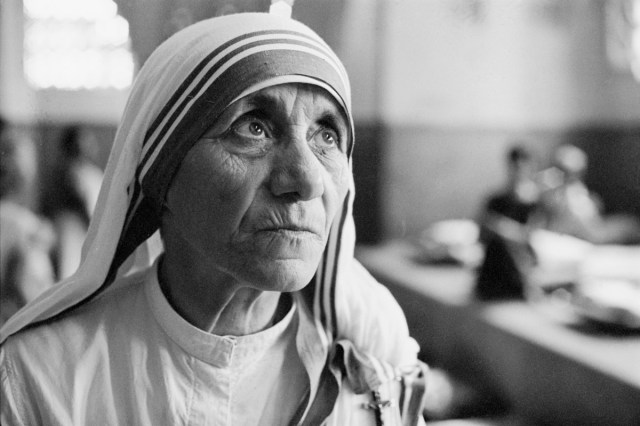
“Suffering, if it is accepted together, borne together, is joy.” –Mother Teresa
Our shared value of the risen Christ is the fuel that keeps our car of faith running. It is what transcends the stoic attitude of unfeeling endurance to a joyful flourishing of faith. Suffering is central to living for Jesus Christ. Suffering is not something to continually avoid, go around, or bemoan because it is God’s means of forming us spiritually to be like Jesus. I can say that the sufferings I’ve experienced in my own life I never want to go through again. I can also say that I would not change those experiences for anything because they have formed and shaped me in ways that would probably not have happened apart from adversity.
Our goal in this life is not to escape the world. There is a time coming when our salvation will be consummated, heaven comes down to earth, and both are joined forever.
“Then I saw a new heaven and a new earth, for the first heaven and the first earth had passed away, and there was no longer any sea. I saw the Holy City, the New Jerusalem, coming down out of heaven from God, prepared as a bride beautifully dressed for her husband. And I heard a loud voice from the throne saying, ‘Now the dwelling of god is with men, and he will live with them. They will be his people, and God himself will be with them and be their God. He will wipe every tear from their eyes. There will be no more death or mourning or crying or pain, for the old order of things has passed away” (Revelation 21:1-4).
This is our inheritance in Christ. First, however, we must come prepared for the future by undergoing grief in all kinds of sufferings in the present. These trials to our faith are a sort of pre-marital session that prepare us for our marriage with Jesus.
Eventually, suffering will have done its work and we will be with Christ forever. Until that day, let’s not stay in the garage of life. Let us explore all that God has for us, embracing both the meaning and the mystery of faith. Since our salvation is assured, let us live with confidence and run the race marked out for us. Let us not be complacent or slow in doing the will of God, but work for God’s kingdom purposes on this earth. And let us allow our trials to do their work in us, responding to them with joy knowing that our faith is being strengthened for the benefit of blessing the world. Even in suffering, God is good all the time; and, all the time, God is good. To him be the glory.
Brothers and sisters, I want to call your attention to the good news that I preached to you, which you also received and in which you stand. You are being saved through it, if you hold on to the message which I preached to you, unless somehow you believed it for nothing. I passed on to you as most important what I also received: Christ died for our sins in line with the scriptures, he was buried, and he rose on the third day in line with the scriptures. He appeared to Cephas, then to the Twelve, and then he appeared to more than five hundred brothers and sisters at once—most of them are still alive to this day, though some have died. Then he appeared to James, then to all the apostles,and last of all he appeared to me, as if I were born at the wrong time. I’m the least important of the apostles. I don’t deserve to be called an apostle, because I harassed God’s church. I am what I am by God’s grace, and God’s grace hasn’t been for nothing. In fact, I have worked harder than all the others—that is, it wasn’t me but the grace of God that is with me. So then, whether you heard the message from me or them, this is what we preach, and this is what you have believed. (CEB)
The Resurrection of Jesus Christ from death isn’t just a doctrine for Christians to believe; it is a powerful reality to live into.
Christianity is not a checklist of right beliefs to hold; it is a spirituality deeply concerned with the integration of Christ’s crucifixion and resurrection into the believer’s daily life – affecting everything she says and does.
Belief and action are to be a seamless whole. Christianity “works” when faith in the redemptive events of Jesus are woven into the daily fabric of our lives. Where there is a disparity between verbal confession and daily actions, there is need for integration.
To hold to the message of Christianity is to allow and actively practice applying and integrating Christ’s redemption into all of life.
The greatest tool in this work of integrity is grace. In Christianity, God graciously delivers people of all kinds from sin, death, and hell through the life, death, and resurrection of Christ. God graciously gives us the gift of faith, to believe. And God works throughout the duration of the Christian’s earthly life to graciously and patiently sew together a solid spirituality within the believer that effects holiness of life.
The Apostle Paul stated that “you are being saved through [the good news of Christ’s crucifixion and resurrection] if you hold on to the message.” That’s Paul’s way of expressing the need for this integrating work of belief throughout a person’s life.
Far too often, in many places of evangelical Christianity, salvation is looked upon as something static – a mere belief to possess. Again, I will say: The Resurrection of Jesus Christ from death involves belief and much more; it is a powerful reality to live into. Salvation is more expansive than a first glance can perceive. Three statements of salvation are true:
We have been saved (past historical redemptive events of Jesus).
We are being saved (present integration of Christ’s redemption into daily life).
We will be saved (future event of Christ coming again to bring salvation in its complete fullness).
In other words, faith is dynamic. It can be strengthened or weakened, has ability to grow or wither, and rarely sits idle.
Faith needs attention and exercise to develop a strong spiritual life.
Christianity is a practical boots-on-the-ground divine/human cooperative. When we put ourselves in a position to receive, then grace has no obstacles to generously give. And that’s not a one-time thing – it is to be a constant and healthy dynamic of receiving from God and giving to others. The bedrock belief for this to happen, according to Christianity, is that Jesus is alive. Because he lives, we live. He has ability to graciously and lovingly help those coming to God. That is some incredibly good news!
Lord God Almighty, the resurrection of your Son has given us new life and renewed hope. Help us to live as new people in pursuit of the Christian ideal. Grant us wisdom to know what we must do, the will to want to do it, the courage to undertake it, the perseverance to continue to do it, and the strength to complete it; through Jesus Christ in the power of the Holy Spirit. Amen.











 Rev. Tim Ehrhardt