Philippians 3:2-12

            I am in the position, as a pastor, of interacting with a wide variety of people.  No matter the age, the station in life, the family background, or the socio/economic situation, the biggest thing I see most people struggle with is letting go of something.  We, as human beings, have this nasty tendency to hold onto things we really need to let go of, and I’m not just talking about hoarders.  We hold onto our anger and nurse it as a grudge; we hold onto our past, as if our pedigree, of lack of it, has to be constantly brought up; we hold onto our bad habits of poor sleep patterns, unhealthy eating, and no time with God to the point that our bodies and our souls break; and, we hold onto our church traditions and our theological thinking with such ferocity that no one can pry them from our cold dead hearts.
 
            If this New Testament lesson from the Apostle Paul tells us anything today it is this:  For God’s sake, let it go!  “Whatever gain I had, I counted as loss for the sake of Christ.  Indeed, I count everything as loss because of the surpassing worth of knowing Christ Jesus my Lord.”  Paul died to his anger, his past religious zeal, his former theological thinking, his Jewish pedigree, and, quite frankly, everything.  He did it so that he could gain Jesus because Jesus was the highest value for Paul – so valuable that he was willing to die to his former life in order to embrace Christ.
 
            In this season of Lent we are to not only give up chocolate, or fast once a week, or take a break from social media; we are to die.  There cannot be new life without a death.  The death we need is to let go of all the emotional baggage, spiritual crud, and materialistic strivings that have played a more prominent role in our lives than knowing Jesus Christ, and him crucified.  What am I giving up for Lent?  I am going to follow Paul’s example and give up my life.  Will you join me?


            Blessed Lord Jesus, you are the ultimate value in life.  Help me to beware of people who would seek to draw me away and deplete my soul from this highest priority of knowing you.  I want to know you, the power of your resurrection, and the fellowship of sharing in your sufferings so that I can be more like you.  Amen.

Spiritual Growth


“I tell you the truth, unless a kernel of wheat falls to the ground and dies, it remains only a single seed.  But if it dies, it produces many seeds.  The man who loves his life will lose it, while the man who hates his life in this world will keep it for eternal life.  Whoever serves me must follow me; and where I am, my servant also will be” (Jesus in John 12:24-26).
 
This was the message of Jesus.  There is no wiggle room or fudge factor to it.  Jesus unequivocally said what people really need to do:  die to self.  To make his message clear and understandable, Jesus used the illustration of a seed that must die before it bears fruit.  Seeds wait to germinate until three needs are met: water; correct temperature (warmth); and a good location (such as in soil). During its early stages of growth, the seedling relies upon the food supplies stored with it in the seed until it is large enough for its own leaves to begin making food through photosynthesis. The seedling’s roots push down into the soil to anchor the new plant and to absorb water and minerals from the soil. And its stem with new leaves pushes up toward the light.
 
            This is exactly the kind of process that Jesus said needs to happen with people in the kingdom of God.  People must never settle for being seedy because that is not what we are designed for.  Jesus wants us to be transformed, to experience new life, and to bear righteous fruit.  To follow Jesus means to die to being a seed and growing into a fruit bearing plant with more seeds to have the whole process occur again (reproduction).  We are to push down and anchor ourselves firmly into the soil of God’s Word and pull vital nutrients from it.  At the same time, we are to push upward toward the light of Jesus Christ so that his warmth and grace can cause us to be spiritually formed into the disciples that he intends us to become.  The process is only complete when we reproduce ourselves in others as followers of Jesus.
 
            Jesus said that the person who “hates” his/her life will gain eternal life.  That is, the person who is willing to give up everything to follow Jesus will find true life in Christ.  The one who serves Jesus will follow him.  Hate is simply a biblical term that means we make the choice to avoid one path in favor of another.  My girls were all born in West Michigan.  When we lived there, my wife and I would take our three girls to the beautiful sandy beaches of Lake Michigan.  We loved being there on hot summer days.  The beaches are actual sand, not with any gravel or dirt, so it was difficult to walk on them.  I would tell Sarah, Charissa, and Mikaela to follow me and walk in my footprints.  I told them to follow me not only because it would be easier for them to walk, but so they would not stray from me. 
 
            We are to forsake all other paths that stray from Jesus, and are to follow him by walking in his footprints.  We are not to turn to the right or to the left.  We are to hate all other avenues that are not behind our Lord Jesus.  We are to love his path and his ways.
 
            Church ministry that focuses on anything else other than true Christian discipleship must be, without compromise, jettisoned.  We are to be about the business of spiritual growth, helping others to take root in God’s Word and bring them the light of Christ.  Evaluation of programs, procedures, and ministries are to center in the path of Jesus and nothing else.  Determining the effectiveness of ministry based on how many butts are in the pews, how much money gets put in the offering plates, and how pleased people are with the pastor are not biblical criteria for church ministry.


            Lent is a season that is designed for us to remember Jesus, to recognize that we belong to him, and to repent of anything that keeps us away from him.  This is to happen on the corporate church level, as well as the personal individual plane.  There cannot be the new life of Easter without the crucifixion of self.  There will not be spiritual growth without dying to ourselves.  Ministry can only be truly Christian when it follows in the way of Jesus.    

Dying to Our Plans


Most people are not much into personal change.  Change means adjusting to a different reality, and we would much rather prefer others adjusting to how we do things so that we don’t have to change.  We like how we do things. Routine, consistency, predictable outcomes are things we rely on for a sense of safety and stability in our lives. Even good change, like becoming debt-free or getting in shape is difficult, if for no other reason the effort and energy it takes to see our goals accomplished. In order to change something about ourselves, we have to be willing to admit we might have been doing it wrong and try to do something different.
 
            God’s love in Jesus Christ changes everything.  But the kind of change that Jesus talked about and died for is not just making a few alterations to our lives or re-arranging some of our schedule around.  It is not about exerting more effort or adding more to the to-do list.  Jesus, instead, loved us so that we would be completely transformed from the inside-out.  For that to happen, in order to have a new life, the old life must die.  What is more, Jesus does not want us half dead because then we are zombies who are not really living the life God intended for us to live.  No, if there is to be a resurrection and new life, there must be a death.  
 
            We must die to our plans.  Jesus had a crowd of people following him wherever he went.  He was interesting and compelling, even magnetic.  He taught like no other person before him, and healed all kinds of people.  In the first century, Jesus became the latest fad.  With his fame, there were people who looked to Jesus to further their own agenda and their plans about how things should go.
 
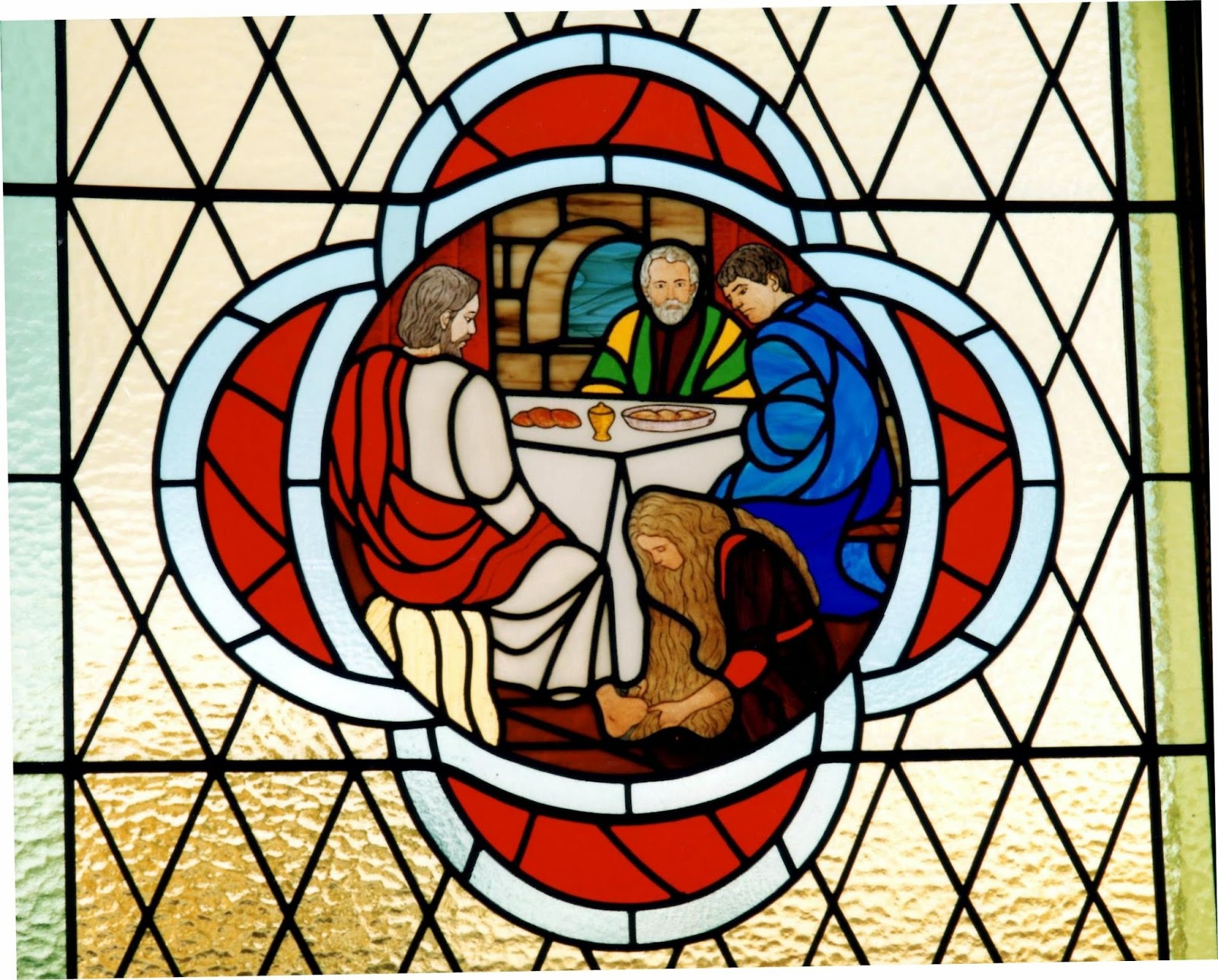
            The Apostle John recorded a contrast between two people, Mary and Judas (John 12:1-8).  Mary is a picture of dying to her own plans of how things should go.  Mary took some very expensive perfume, the kind that could have set her up for some needed financial security, and poured it all on Jesus’ feet.  In addition, she humbly wiped it on him with her hair.  It is a picture of giving herself completely and wholly to Jesus, no matter the cost, no concern with how it would look to others, with no strings attached and no other agenda other than total devotion.
 
            Judas, on the other hand, piously objected to Mary’s act of worship.  We might hear him rationally pushback on what Mary was doing:  “My friends, this is a lot of money – money that could be used for the poor instead of needlessly wasting it.  A little perfume is just fine, but to use the whole bottle is just too over the top – it isn’t fiscally responsible!”  Judas had a secret agenda.  He was not thinking of giving himself completely to Jesus, but of how he could use the cash for himself and his own purposes.  Judas is the picture of a zombie – half dead, walking around saying all kinds of spiritual things, but only devoted to Jesus and God’s kingdom when it agreed with him.  Judas had his own ideas of how the kingdom operation ought to go; and, when he became convinced that Jesus was not going to operate according to his agenda and plans, Judas betrayed him.
 
            When it comes to church ministry, every single member must be willing to die to self – to die to our own agendas of how we think things ought to go.  Conflict and contention exist because there are persons who tenaciously hold on to their pet programs or their ideas on how to proceed.  But what needs to occur is that each Christian must serve Jesus with the same attitude and action as did Mary.
 
            A church cannot be revitalized, revived, renewed, or resurrected apart from death.  Something or someone must die for new life to happen.  We must die to our plans so that God’s kingdom agenda can take over.  Believers in Jesus need to express the same devotion and dedication as did Mary.


            We all become frustrated and discouraged at times with the petty sinfulness of the church.  The answer is not to distance or detach, but to devote ourselves to dying to our plans and personal agendas.  When an entire group of believers does this, there is an abundance of grace and a mass transformation of heart.  May it be so, to the glory of Jesus Christ.