The Severe Mercy of the Easy Yoke (Matthew 11:16-19, 25-30)

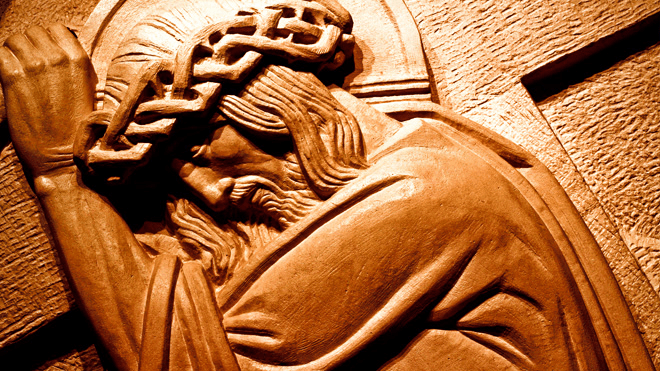
The Burden of Christ, a sculpture of Jesus Christ, in the Oratoire Saint-Joseph, Montreal, Quebec, Canada

“But to what will I compare this generation? It is like children sitting in the marketplaces and calling to one another,

‘We played the flute for you, and you did not dance;
    we wailed, and you did not mourn.’

“For John came neither eating nor drinking, and they say, ‘He has a demon’; the Son of Man came eating and drinking, and they say, ‘Look, a glutton and a drunkard, a friend of tax collectors and sinners!’ Yet wisdom is vindicated by her deeds….”

At that time Jesus said, “I thank you, Father, Lord of heaven and earth, because you have hidden these things from the wise and the intelligent and have revealed them to infants; yes, Father, for such was your gracious will.All things have been handed over to me by my Father, and no one knows the Son except the Father, and no one knows the Father except the Son and anyone to whom the Son chooses to reveal him.

“Come to me, all you who are weary and are carrying heavy burdens, and I will give you rest. Take my yoke upon you, and learn from me, for I am gentle and humble in heart, and you will find rest for your souls. For my yoke is easy, and my burden is light.” (New Revised Standard Version Updated Edition)

Exchanging one yoke for another is really a rather radical act. It is akin to dying to self, so that there can be new life in Christ.

In our anxiety-laden society, filled with multiple fears, worries, and frustrations, we are being invited by Jesus to lay it all down. In other words, every one of us must unequivocably die to self.

Perhaps this might best be illustrated by expressing my own struggle with the pharisaical yoke and the Jesus yoke:

A year-and-a-half ago, I abruptly had to leave my job as a hospital chaplain due to deteriorating health. I am now retired, not because I chose retirement, but because retirement chose me.

So, for the past eighteen months, I have struggled with this reality of no longer being a Chaplain. As hard as I thought and pondered, I’ve gained no understanding as to why I am no longer serving patients, their families, and hospital staff.

What’s more, I have no insight as to why – during my tenure as Chaplain – I experienced an awful time with a gaslighting boss for three of those years. This boss continually made nonsensical decisions, and defied any understanding, even though I sought it out. (I might add that it is super-creepy that the current U.S. President is so eerily like the former boss, as if I’m still under the abuse!).

If I was a good Chaplain doing good work (which I believe I was) then why was I treated so oppressively? Why did my employer turn a blind-eye to it all? Why would God almighty sideline me in such a loathsome health situation. Why must I keep experiencing the awful effects of incompetent political leadership? Why all of the nonsense? It is a terrible yoke for me to carry.

Likely, none of this has to do with me needing to understand any of it. It could be that it is more akin to Abraham being told to sacrifice the son of the promise, Isaac.

It was a completely nonsensical command from God. It defied any sort of understanding on Abraham’s part. And yet he quietly obeyed, with the text of Genesis 22 telling us nothing about any talk-back nor questioning from Abraham. Only obedience. It appears that Abraham was able to exchange yokes, from the oppressive one to the easy one.

In telling Abraham to sacrifice his son, the real death taking place was Abraham’s, not Isaac’s. Abraham was to die to anything that may compete or be likened to some sort of idolatry before God. For even the very good things, like families and jobs, can become idolatrous to us.

I don’t know about your situation, but maybe for me the point is that I must allow the old life to die, and to let a new life grow out of it. Maybe it’s time for a change of yokes. After all, one cannot have a new resurrected life without first experiencing a crucifying death to the old life.

Death is an integral part of life. To exchange yokes is to experience a death. I’ve wanted badly to return to chaplaincy in the hospital. But I am being commanded to sacrifice it on the altar of God. I am being told to die to myself, so that I may live a new life to God.

Any sort of mere earthly hope must die within us, that an unselfish and godly hope may arise anew. And that happens when we deliberately switch-out one yoke for another.

Chaplain Tim, in a way, is dead. I now accept that which is already true of me. It is a death to self. And I am now patiently awaiting my resurrection.

I do not understand this weird liminal space I’m inhabiting; and I need not understand it. I’m deprived of the object of my former job. And so, I let go of it. I will cling no longer to the old life.

What I seem to be currently experiencing is a severe mercy – the mercy from God to not make Christianity wholly understandable, nor boil it down to pharisaical laws of which I can clearly either follow, or not.

Instead, I allow following Christ and taking up his easy yoke to maintain it’s true mystery and grace. If I have died with Christ, I shall also live with him.

Only in hopelessness can we entertain hope. God loves me enough to let me feel the awful severity of Divine nonsense, so that I may experience the real nature of Christ.

I suppose, then, that I am really dead to having to understand everything, and am instead alive to hope. And hope will not disappoint me.

Through dreams and visions, O God, you broaden the horizon and hope of your people, so that they may discover the meaning of your covenant, even in the midst of trial and exile. Increase the number of those who believe in your word so that all people may joyfully respond to your call and share in your promises. Amen.

The Fruit of the Spirit

The fruit of the Spirit is love, joy, peace, patience, kindness, goodness, faithfulness, gentleness, and self-control. (Galatians 5:22-23, CEB)

It takes little effort to have a bad attitude; to slip a bit of gossip into the day; or to go along with the crowd in a divisive conversation. However, it takes a good deal of humility, energy, and commitment in order to live into the fruit of the Spirit.

On the one hand, the believer in Jesus Christ has been graciously given such fruit; we possess it by means of the Spirit. On the other hand, it feels as if we still need this fruit to be given to us, because our daily experience of it is such a struggle.

For me, experiencing the fruit of the Spirit is a bit like buying something from Ikea; I have it, but it needs to be put together. And I’m not so good at making sense of the directions and actually getting the thing in working condition.

Yes, there will be some frustration tapping into our spiritual reservoir and accessing the fruit provided for us. Yet, it’s totally worth it. In fact, the nine elements of spiritual fruit mentioned in the New Testament book of Galatians are experiences people really want to have – whether they are Christian, or not.

One of the reasons folks may become overwhelmed with the Spirit’s fruit is that they look at those nine words as nine different “fruits.” However, the grammar of the text is clearly not plural but singular. In other words, the “fruit” of the Spirit is one packaged piece.

It may be tempting to relieve ourselves of any responsibility or accountability with this fruit by saying, “I’m good at being kind and good, but I really have problems with patience and self-control.”

But the text doesn’t allow for such thinking. To not possess any one of the nine words is to not have the entire nine. The Holy Spirit of God is not divided; when the Spirit gives, it’s the whole kit-and-caboodle.

After all, the believer in Jesus seeks to be a person of integrity and wholeness, being aligned fully in all aspects of life around the person and work of Christ. Any fragmentation belies the reality that one, no matter how apparently peaceful or gentle, is attempting to manifest spiritual fruit on one’s own power.

There is a big difference  between trying to control the process of Christian sanctification (becoming holy) and exercising self-control. And there is an even wider chasm between accessing and using the accepted spiritual fruit, and trying to go on a self-improvement project that is disconnected from God’s given grace.

In truth, believers already have everything they need for life and godliness in this present evil age (2 Peter 1:3). The seed has been firmly planted within the soul. We possess the fruit. Yet, that fruit must grow and mature before it is ripe enough to eat. There is still the work of cultivating and nurturing to do, so that we might flower and flourish.

We only need the essential conditions to grow. Any seed – no matter what kind – will grow and produce a harvest if it has the proper amounts of sun, rain, and good soil. Then, we never need to wonder what will happen; the seed will grow.

As spiritual farmers, we need to be daily working in the field our soul, keeping the weeds and the critters out, so that there is no obstacle or impediment to the growth and maturity of our precious fruit.

If we need to build a fence, we build it. If we must buy or borrow a hoe, we do it. Whatever needs to happen to guard what we possess, we are committed to doing it.

None of us ever produces a seed. Not even in this modern age of genetically modified seeds can we do this. The scientist only manipulates what is already there; he cannot create a seed ex nihilo.

So, we have this tremendous spiritual fruit, graciously given to us by means of God’s Spirit. Perhaps the million dollar question is:

How do I access this grace? How can I realize the fruit of love, joy, peace, patience, kindness, goodness, faithfulness, gentleness, and self-control in my life?

We have no further to look than to the very words of the Lord Jesus himself:

Very truly I tell you, unless a kernel of wheat falls to the ground and dies, it remains only a single seed. But if it dies, it produces many seeds. Anyone who loves their life will lose it, while anyone who hates their life in this world will keep it for eternal life. Whoever serves me must follow me; and where I am, my servant also will be. (John 12:24-26, NIV)

We must die to ourselves. There is no other way. Christ demonstrated the way by dying and being placed in the earth. Only then could he rise from death. And only then could his disciples have their faith come to fruition, spreading gospel seed throughout the world.

For one cannot have a resurrection unless there is first a crucifixion. There must be suffering before glory.

That, my friend, is the cost of discipleship. It’s the cost of realizing the spiritual fruit that you and I long for in our lives. This is the struggle we must go through to experience the life that is truly life.

Heavenly Father, in you I live and move and have my being. I humbly pray You so to guide and govern me by your Holy Spirit, that in all cares and occupations of my life I may not forget You, but remember I am ever walking in Your sight, exhibiting Your fruit; through Jesus Christ my Lord. Amen.

Life Through Death (John 12:20-33)

Now among those who went up to worship at the festival were some Greeks. They came to Philip, who was from Bethsaida in Galilee, and said to him, “Sir, we wish to see Jesus.” Philip went and told Andrew, then Andrew and Philip went and told Jesus. Jesus answered them, “The hour has come for the Son of Man to be glorified. Very truly, I tell you, unless a grain of wheat falls into the earth and dies, it remains just a single grain, but if it dies it bears much fruit. Those who love their life lose it, and those who hate their life in this world will keep it for eternal life. Whoever serves me must follow me, and where I am, there will my servant be also. Whoever serves me, the Father will honor.

“Now my soul is troubled. And what should I say: ‘Father, save me from this hour’? No, it is for this reason that I have come to this hour. Father, glorify your name.” Then a voice came from heaven, “I have glorified it, and I will glorify it again.” The crowd standing there heard it and said that it was thunder. Others said, “An angel has spoken to him.” Jesus answered, “This voice has come for your sake, not for mine. Now is the judgment of this world; now the ruler of this world will be driven out. And I, when I am lifted up from the earth, will draw all people to myself.” He said this to indicate the kind of death he was to die. (New Revised Standard Version)

The fifth Sunday in Lent is now here. We are quickly approaching Jerusalem. Holy Week will be here before you know it. 

Why is this all significant? Because Jesus is important. By taking advantage of Lent with its focus on spiritual discipline, prayer, and repentance, we come face-to-face with the shadowy parts of our selves. We discover that within us there is the pull to hold-on to unhealthy rhythms and habits of life, as well as a push to arrange our lives with the fragmentation of disordered love.

Perhaps our reflexive response to things we do not like about ourselves is to either use sheer willpower to change or try to somehow manage our brokenness, as if we could boss our way out of darkness. The problem and the solution are much more radical than we often would like to admit.

We must die. 

Yes, you heard that right. This is the teaching of Jesus – to die to ourselves. Sin cannot be managed or willed away – it must be eradicated and completely cut out, like the cancer it is. Transformation can only occur through death. 

Jesus used the familiar example of a seed to communicate his point. A tiny little seed can grow, break the ground, and develop into something which provides sustenance for others. It does no good to remain a seed in the ground.

Christ was only telling others to do, what he himself was willing to do. Jesus is the ultimate example of the one who died to himself, and literally died for us. Through suffering and death, he secured deliverance for us from guilt and shame. 

By his wounds we are healed. Through his tortuous death a resurrection became possible – and we must always remember that there must be a death if there is to be a resurrection. Death always precedes life. There is suffering before glory.

Through dying to self, and following Jesus, there is the hope of transformative change which the world so desperately needs. If we persist in making puny attempts at trying to straddle the fence in dual/rival kingdoms, we will be spiritually schizophrenic and left with a divided soul. 

Following Jesus – leaving all to walk with him – is true repentance and authentic discipleship. The act of journeying with Christ is the means to a new life. Change is possible by letting Jesus Christ be the center from which all of life springs.

Maybe you think I’m being too forceful, too insistent about this Jesus stuff. 

Yes, you have perceived well. I am being quite single-minded about the need for dying to self and living for Christ. 

Somehow, within many corners of Christianity, this wrongheaded notion that suffering is not God’s will has made it into the life of the church. But I’m here to say, on the authority of God’s Holy Word (not to mention your own internal gut and conscience) that dying to ourselves is necessary. And it hurts. The epistle reading for today bears this out:

In the days of his flesh, Jesus offered up prayers and supplications, with loud cries and tears, to the one who was able to save him from death, and he was heard because of his reverent submission.  Although he was a Son, he learned obedience through what he suffered; and having been made perfect, he became the source of eternal salvation for all who obey him. (Hebrews 5:7-9, NRSV)

Christians are not above their Master. Even Christ’s life on this earth, before his death and resurrection, was marked with suffering. Even Jesus learned obedience through struggle and adversity. Jesus Christ did what he now asks of us. 

The Son gave up himself to do the Father’s will. So, we must give up ourselves in submission to King Jesus.  Jesus offered loud cries and tears, and submitted to what the Father wanted. His followers must do no less. 

We don’t get to choose which parts of Christ’s life and teaching we will adhere to, and which ones we won’t, as if Jesus were some spiritual buffet line. All who live for Jesus, follow him into the path of suffering, of death to self, and of new life through the power of his resurrection.

Those who love their life lose it, and those who hate their life in this world will keep it for eternal life.

How do we follow Jesus through dying to self? What does that mean for you and me on a practical daily basis?

Surrender

Every moment of every day is an opportunity for giving ourselves to Jesus. We have hundreds, maybe thousands, of small daily decisions with the use of our time, money, energy, and relationships. 

If we have tried to fix what is broken inside of us, we will likely just try to hastily fix the problems and the people in our lives – and then move on with getting things done on our to do list. 

Instead, there is a need to surrender ourselves – to create the sacred space for solitude and silence, prayer and repentance. 

Take the time to sit with a person in pain and listen. Reflect on how to use your money in a way which mirrors kingdom values. Begin to see your life as a holy rhythm of hearing God and responding to what he says. It takes intentional surrender to do that.

Sacrifice

Holding-on to our precious stuff and time is the opposite of sacrifice. 

Are we truly willing to give-up everything to follow Jesus? 

It is more than true that we are not Jesus. Our sacrifice and suffering are not efficacious, that is, it doesn’t deliver other people from sin. Only Christ’s death does that. Yet, we are still called to sacrifice. The Apostle Paul understood this, with a statement that I’ll let you wrestle with and mull over without comment on my part:

I am now rejoicing in my sufferings for your sake, and in my flesh I am completing what is lacking in Christ’s afflictions for the sake of his body, that is, the church. (Colossians 1:24, NRSV)

Happiness is important; but it isn’t the summum bonum of life. There is more to life than living for self. Jesus calls us to see our communities, neighborhoods, and families as a mission field of grace to a world who needs him. That takes sacrificial love on our part.

Christianity is not really a religion that’s for people who have put neat theological answers and tidy packaged certainties to all of life’s questions. 

Rather, Christianity is a dynamic religion of learning to follow Jesus, discovering how to die to self, and struggling to put Christ’s teaching and example into practice. 

Those who don’t struggle are in big trouble. But those who go through the pain of dying to themselves for the sake of their Lord, find that the fruit they harvest leads to eternal life.

May you struggle well, my friend.

Tussling with Trouble (Matthew 10:24-39)

“The student is not above the teacher, nor a servant above his master. It is enough for students to be like their teachers, and servants like their masters. If the head of the house has been called Beelzebul, how much more the members of his household!

“So do not be afraid of them, for there is nothing concealed that will not be disclosed, or hidden that will not be made known. What I tell you in the dark, speak in the daylight; what is whispered in your ear, proclaim from the roofs. Do not be afraid of those who kill the body but cannot kill the soul. Rather, be afraid of the One who can destroy both soul and body in hell. Are not two sparrows sold for a penny? Yet not one of them will fall to the ground outside your Father’s care. And even the very hairs of your head are all numbered. So don’t be afraid; you are worth more than many sparrows.

“Whoever acknowledges me before others, I will also acknowledge before my Father in heaven. But whoever disowns me before others, I will disown before my Father in heaven.

“Do not suppose that I have come to bring peace to the earth. I did not come to bring peace, but a sword. For I have come to turn

“‘a man against his father,
    a daughter against her mother,
a daughter-in-law against her mother-in-law—
    a man’s enemies will be the members of his own household.’

“Anyone who loves their father or mother more than me is not worthy of me; anyone who loves their son or daughter more than me is not worthy of me. Whoever does not take up their cross and follow me is not worthy of me. Whoever finds their life will lose it, and whoever loses their life for my sake will find it. (New International Version)

We can expect opposition and trouble from the world

Those who follow the words and ways of Jesus will experience hardship at the hands of others, because Christ’s values are often different than how the world’s systems typically operate. 

Being called the Devil (Beelzebul) isn’t exactly a term of endearment. There were those so upset with Jesus that they equated him with Satan. So, since Christ got this kind of verbal treatment, how much more will we be the brunt of false accusations, slander, and gossip? 

We are not above our Lord – we will be treated as he was. We cannot expect that we are above getting into trouble. Believers are promised deliverance from sin, death, and hell – and not from the meanness and ignorance of people in this present life.

Because of this reality, we need to be savvy to our situation of trouble and practice common sense, as well as have a mental disposition that thinks the best of people, and does not immediately judge and condemn others.

All of this requires us to avoid the two extremes of either simple assimilation into the culture, or rejection of the culture as evil. Both the blending into culture, and the separating from it, each share the same preferred outcome of trying to avoid opposition and trouble. 

Instead, there is a third way of being faithful to following the way of Jesus: Interact with and engage the culture as salt and light. (Matthew 5:13-16)

Assimilation causes us to lose our saltiness; and isolation hides our light. So, let’s find wise ways to understand truth and apply it in the concrete situations of life in this world. 

For example, we can discuss life issues about our jobs and school from a Christian perspective, so that we might speak into others’ lives, instead of just standing against something and complaining about it: How might we show both grace and truth in a particular situation? Are there ways we can give support without condoning something we oppose, and how?

We can expect that we are going to disrupt and upset our families and experience opposition from them

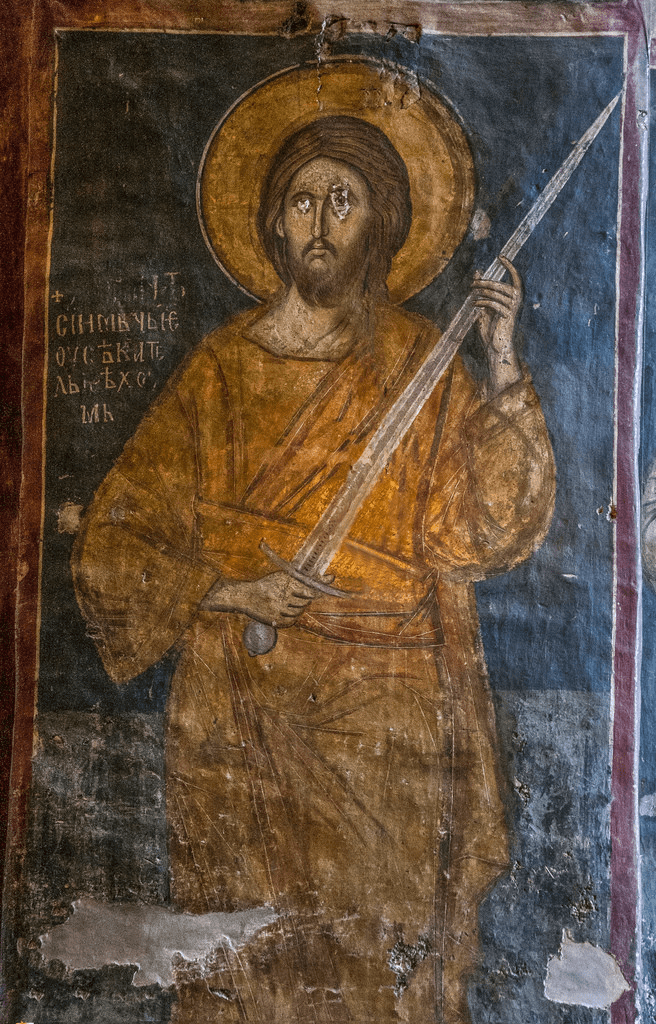
14th century fresco of Christ with a sword, in the Sacred Monastery of the Ascension of Christ Church, Kosovo

Unfortunately, opposition does not just come from the world, but within the very families and communities we love and rub shoulders with every day. Most persecution, hardship, and trouble for believers in Jesus come from family and those closet to us. 

Although I grew up in a church-going family, we never really discussed faith or Christianity. When I became serious about walking with Jesus, I faced a lack of support. I was often the brunt of teasing and verbal jabbing. My commitment to Christ had butted up against the family value of never rocking the boat. 

There was once a woman who experienced new life in Christ. When God grabbed ahold of her life, she had been on track to becoming the next Barbara Walters. But her newfound values of embracing the Beatitudes of Jesus rubbed the television broadcast world too much. 

So, she went into radio. Instead of looking toward a lucrative life on screen, she settled for less money and no fame behind the microphone of a Christian radio station. Her family didn’t understand this. And marrying a preacher didn’t help the situation any for her. To this day she still faces hardship and resentment for making decisions that did not get her the American dream.

Jesus said that anyone who wants to take the path of least resistance by not rocking the family boat with Christian love is not worthy of him. Anyone who does not take up their cross and follow Jesus in the way of trouble is not worthy of following him. 

We must die to self – which often means dying to avoidance of conflict – and become alive to the wonder of God’s mercy and love in the world.

We don’t need to be afraid of getting into trouble

Why? Because…

  1. Fear has to do with the unknown. So since we know opposition and trouble is expected, we will not live in dread of what might happen. The early Christians actually rejoiced in their suffering because they considered it a privilege to be walking in the way of Jesus. (Acts 5:27-42)
  2. You will receive special help. In times of persecution, we have a Helper, the Holy Spirit, given to us for such times as these. (John 3:34; 16:1-15)
  3. God isn’t surprised by your hardship. The Lord will eventually deal with all that is wrong in this world.
  4. The wrath of God is to be more feared than the wrath of people.
  5. God is watching over all the details of my life. If God cares for all the small details, how much more will the Lord take care of the big issues in my life?

Conclusion

It is a privilege to follow Jesus into trouble. This is what is called “upside-down” theology: 

  • In giving my life away to Jesus, I find it. 
  • In getting into trouble, I find peace. 
  • In serving and taking up our cross, there is happiness, not depression. 

Sometimes, things in the kingdom of God seem upside-down; and that is as it should be. Facing trouble is really not the worst thing to be experienced – being separated from God is. 

We are to expect opposition from the world, and from family. Yet, we need not be afraid, because tussling with trouble is part of what it means to follow Jesus – it is the way of the cross.

So, count the cost. Give your life away. In doing so, you will certainly not lose your reward from God.