Already Justified and Accepted (Romans 5:1-8)

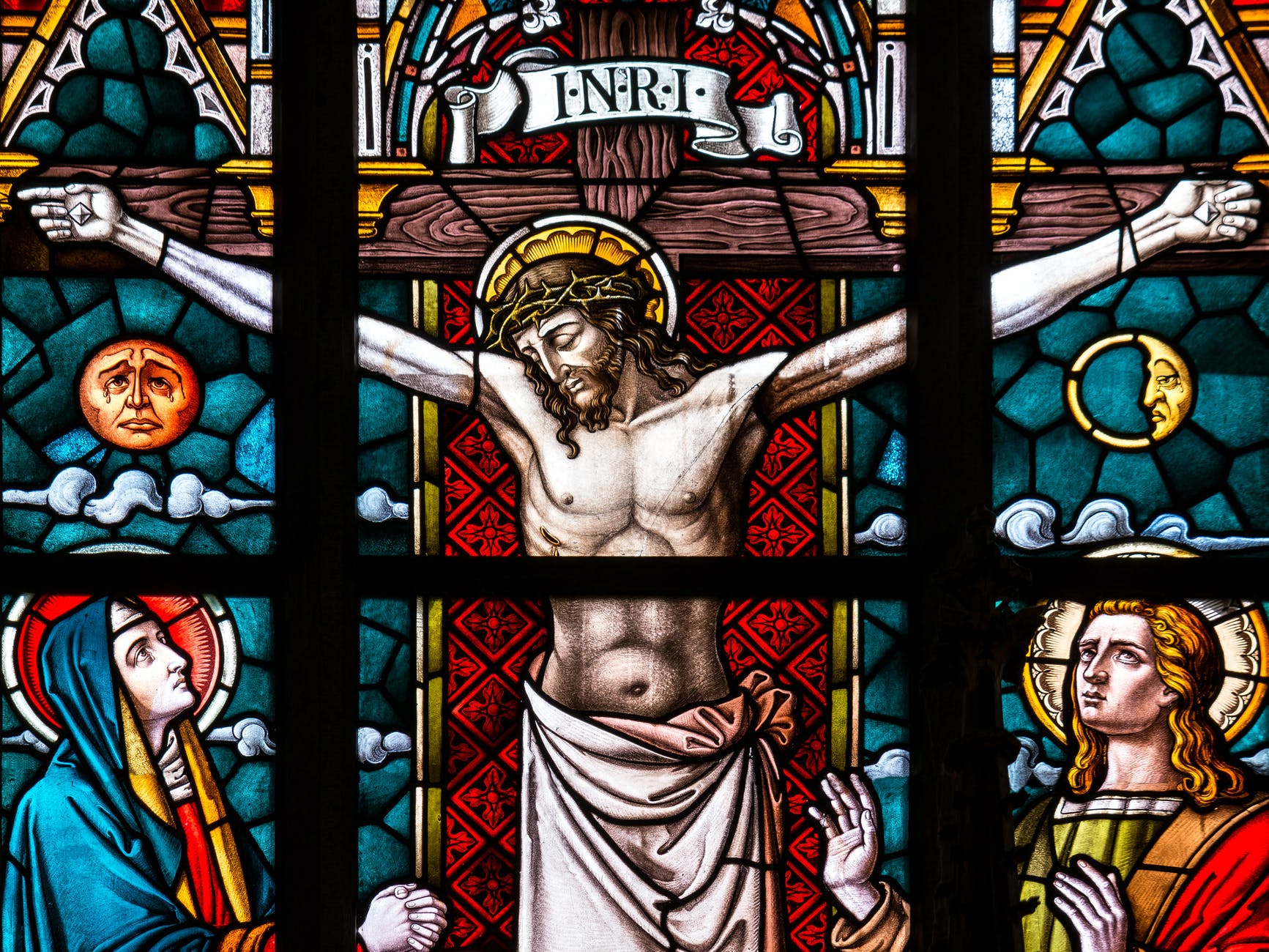
Crucifixion, by Natalya Rusetska

Therefore, since we are justified by faith, we have peace with God through our Lord Jesus Christ, through whom we have obtained access to this grace in which we stand, and we boast in our hope of sharing the glory of God. And not only that, but we also boast in our afflictions, knowing that affliction produces endurance, and endurance produces character, and character produces hope, and hope does not put us to shame, because God’s love has been poured into our hearts through the Holy Spirit that has been given to us.

For while we were still weak, at the right time Christ died for the ungodly. Indeed, rarely will anyone die for a righteous person—though perhaps for a good person someone might actually dare to die. But God proves his love for us in that while we still were sinners Christ died for us. (New Revised Standard Version Updated Edition)

Perhaps we have so many people filled with shame and regret today over their past poor decisions and the trajectory their lives, because there is such a profound lack of hope in the world.

Becoming confident in both the unseen realities and the stated promises of God can melt away both personal and corporate shame.

Long ago, the Apostle Paul reminded the Roman Church of their true standing before the God of all. Paul knew that if the people were secure in their identity, then resilience would arise; and if resilience rises, then a robust Christian character and identity will take root. Hope then becomes a central part of life.

Notice that the Apostle made it clear what is true of believers: They are justified, possessing the justification of God. In other words, the Christians have no reason to try and justify themselves to others (or to God) because they already have been justified by God.

There is great freedom in feeling no compunction whatsoever to prove oneself. Followers of Jesus Christ need not prove themselves, spending all sorts of social capital attempting to please others, out of some perceived need to demonstrate who they are.

If you want others to know who you are and what kind of God you serve, then know thyself, instead of constantly putting your finger to the wind in order to gauge which way the prevailing winds of society are blowing so that you can follow it.

In truth, all you need is the wind of the Spirit to carry you on into doing God’s will from a merciful, pure, and peaceful heart.

Since we are already justified, we have peace with God through our Lord Jesus Christ. Things are good between us and God. Not only do we have no need to prove ourselves to the world, but we especially have also absolutely no reason to try and prove ourselves to God.

The Lord already knows the score of everyone’s life. It is a silly venture to put on airs before the Sovereign of the universe, as if God must be convinced to love us and have our backs.

The grace of God is abundant and ever-present; grace is continually available. And there are no exceptions to this. One is never too far from God or too estranged from the good in order to receive the mercy of God.

God’s love has been already poured into our hearts. God is with us; divine love is intimately close to us. Rather than wondering or vacillating between whether God loves me or God loves me not, the objective spiritual reality of the moment is that you and I are surrounded by the God who rejoices over us.

The Lord your God is with you.
He is a hero who saves you.
He happily rejoices over you,
renews you with his love,
and celebrates over you with shouts of joy. (Zechariah 3:17, GW)

What’s more, God does not wait for anyone to get their lives straightened out before paying gracious attention to them. No, while we were still stuck in the darkness of our bad and misguided ways, Christ died for us. Jesus Christ died for the ungodly while they were still going on in their own selfish and oppressive way.

That, my friend, is the extent to which God’s love reaches. There is no pit too deep, no meanness too great, nor any unrighteous life too bad that God cannot reach the long divine arm of mercy and love into the muck, and snatch us out of a depressing existence.

And the world is not too filthy rotten that God is unable to cut through the filth. As far as the Lord is concerned, the earth is presently just a compost pile that will eventually become transformed from garbage to fertilizer for new life, in which love can grow, thrive, and flourish across this world.

Unhindered access to God has been granted to us.

Let us then approach God’s throne of grace with confidence, so that we may receive mercy and find grace to help us in our time of need. (Hebrews 4:16, NIV)

We now have the hope and the freedom to be active spiritual farmers who carefully and pastorally care for all creation by spreading the seeds of God’s love to the world.

Everything we have and all that we are, comes from the grace, mercy, and love of God. Therefore, we have no reason to boast in and of ourselves, but to boast extravagantly in what Christ has done for us. He has bought and brought  deliverance from all which hindered us from living a loving and hopeful life.

So then, the path to true self-acceptance comes from knowing that we are already accepted by God.

The very core of our identity is in the Creator, Savior, and Sustainer. Since we possess God’s love and acceptance, there is never a need for subjective feelings of trying to gin-up a sense of self-acceptance. You and I already have it. You are profoundly loved.

This, then, is the basis for peace and rest. Please understand that it is quite possible that later today or tomorrow or next week you will again feel unworthy of God’s love, unaccepted by God and others, and nervous to the point of peace becoming a bygone wish.

None of this, however, erases what is already real and true of you, or changes your identity in any way. You are still in the hollow of God’s hand; still the apple of God’s eye; and still in a place where there is no need to justify yourself. What there is, however, is abundant grace.

No matter how we are doing, feeling, or believing, there is always open access to God because of Jesus Christ.

The ground of our confidence allows us to view tribulations as opportunities for spiritual growth; and patient waiting as the privilege to hope in what is yet to come. I will yet see the glory of God face to face.

God in Christ has done for us what we could not do for ourselves. The Lord has granted us faith, and gifted us with a fresh new allegiance. Through recognition of our helpless state, and our distance from God (including a nasty tendency to ignore God) we discover that the love of God is with us. So, we may rely completely on the divine initiative of the love which never wavers.

In this state, guilt, shame, and regret is left in the dust – replaced by faith in the Son of God who loved me and gave himself for me.

Loving God, open our ears to hear your Word, and draw us closer to You, so that the whole world may be one with you as you are one with us in Jesus Christ our Lord. Amen.

What Must Come (Mark 9:9-13)

As they were coming down the mountain, Jesus gave them orders not to tell anyone what they had seen until the Son of Man had risen from the dead. They kept the matter to themselves, discussing what “rising from the dead” meant.

And they asked him, “Why do the teachers of the law say that Elijah must come first?”

Jesus replied, “To be sure, Elijah does come first, and restores all things. Why then is it written that the Son of Man must suffer much and be rejected? But I tell you, Elijah has come, and they have done to him everything they wished, just as it is written about him.” (New International Version)

Christ’s disciples, bless their wondering hearts, always seemed to be a few steps behind in following Jesus. And, truth be told, so are we, much of the time.

Since we know the end of the story, it’s easy for us to observe how clueless the original disciples of Jesus were, and how slow to the uptick they were on what their Lord was telling them.

The disciples were confused about Christ’s transfiguration on the mountain; puzzled about why they needed to keep their mouths shut about it; and betwixt about what the heck “rising from the dead” even means.

As they scratched their heads, trying to get a handle on things, they ended up asking about something they thought they knew about: Elijah. After all, if you don’t understand something, like a student in class, maybe you can ask about something else in order to get the teacher diverted from the thing you don’t understand. But bringing up Elijah only muddled their spiritual distraction.

The beauty of Christ is that he takes any discussion, any question, and turns it toward what must happen, what we must come to grips with.

What goes up, must come down

The disciples had the incredible experience of seeing a glorified Christ on the Mount of Transfiguration. There is a time for bright illumined mountain top encounters, but there is also a time to come down off the mountain and walk through the shadowy dark valley.

Christ’s exhortation to stay silent about the mountain top meeting may be a reminder that following Jesus is not all glory; it also involves the hard slog of dealing with adversity because of one’s spiritual commitment.

A fundamental truth about the nature of God is consistency and constancy, much like a mountain. And we can always look up, remember, and find strength in our time of need.

I raise my eyes toward the mountains.
    Where will my help come from?
My help comes from the Lord,
    the maker of heaven and earth.
God won’t let your foot slip.
    Your protector won’t fall asleep on the job. (Psalm 121:1-3, CEB)

What goes down, must come up

Just as life is not all mountain experiences, so it is not all about the valley. Jesus was letting his disciples know that they were about to face the darkest time of their lives. He would be rejected and suffer much – to the point of death. But the grave would not be able to hold him. A resurrection was coming; Christ would rise from death.

There cannot be a resurrection without a crucifixion – and the agony of the cross is not the final word. Resurrection, ascension, and glorification all result from the terrible suffering and ignominy of death. And since we have died with Christ, we will also be raised to life, as well.

For if we have been united with him in a death like his, we will certainly be united with him in a resurrection like his. (Romans 6:5, NRSV)

What goes first, must come last

Jesus linked the Old Testament prophet Elijah with John the Baptist. Just as Elijah put the Lord first and was God’s servant, so also John considered Jesus as first, and himself as last.

John testified concerning him [Jesus]. He cried out, saying, “This is the one I spoke about when I said, ‘He who comes after me has surpassed me because he was before me…

I baptize with water,” John replied, “but among you stands one you do not know. He is the one who comes after me, the straps of whose sandals I am not worthy to untie….”

The next day John saw Jesus coming toward him and said, “Look, the Lamb of God, who takes away the sin of the world! This is the one I meant when I said, ‘A man who comes after me has surpassed me because he was before me.” (John 1:15, 26-27, 29-30, NIV)

What goes around, must come around

I’m not referring to karma, nor to a circular view of history, but to the reality that suffering and death is a result of life, and paradoxically, glory and life come from death.

Christianity is, I believe, inherently paradoxical. The way up is down; in order to save our lives we must give them up; to be great is to be a servant; and the last shall be first, and the first, last.

We neither need to understand every jot and tittle of the Bible, nor have every word of Jesus fully comprehended in order to be a Christian and serve Christ’s Church. There is a great deal of mystery to faith, and so much yet to discover and learn. We will spend an eternity getting to know God and never plumb the breadth and depth of comprehending the Lord.

So, we need to learn to enjoy this awesome God and embrace the paradox of divine sovereignty and human responsibility so that we may worship, fellowship, and live in grace and freedom. In doing so, we are witnesses to a faith that transcends understanding, and allows us to serve within our churches, families, and communities without having every loci of theology nailed down.

All things shall eventually come back around to the Garden – a place of unhindered fellowship with God and one another without any sin or deceit to get in the way. Disaster, disease, and death are temporary; Love is permanent and shall come around to being the overwhelming and only force in this big universe.

We bless you, O God, for our creation, preservation, and all the blessings of this life; but above all for your immeasurable love in the redemption of the world by our Lord Jesus Christ; for the means of grace, and for the hope of glory.

Give us such an awareness of your mercies, that with truly thankful hearts, we may show forth your praise, not only with our lips, but in our lives, by giving up ourselves to your service, and by walking before you in holiness and righteousness all our days; through Jesus Christ our Lord, to whom, with you and the Holy Spirit, be honor and glory forever. Amen.

Hebrews 12:1-3 – Wednesday of Holy Week

As for us, we have this large crowd of witnesses around us. So then, let us rid ourselves of everything that gets in the way, and of the sin which holds on to us so tightly, and let us run with determination the race that lies before us. Let us keep our eyes fixed on Jesus, on whom our faith depends, from beginning to end. He did not give up because of the cross! On the contrary, because of the joy that was waiting for him, he thought nothing of the disgrace of dying on the cross, and he is now seated at the right side of God’s throne.

Think of what he went through; how he put up with so much hatred from sinners! So do not let yourselves become discouraged and give up. (Good News Translation)

“If there is a meaning in life at all, then there must be a meaning in suffering. Suffering is an ineradicable part of life, even as fate and death. Without suffering and death, human life cannot be complete.”

Viktor E. Frankl

We are moving, step by step, inexorably to the cross of Christ. Along the way we will face opposition, ridicule, misunderstanding, and betrayal. We will be befuddled and feel confused. The path of discipleship is not easy.

And yet, on this Holy Wednesday, today’s New Testament lesson informs us that all the suffering of Christ was motivated and animated because of joy. 

The road to the cross, along with the cross itself, is painful, in every sense of the word. None of this tortuous suffering seems joyful, at all! There’s no definition, in any dictionary, of joy including severe spiritual anguish, bodily harm, and emotional shame. Joy isn’t remotely mentioned when talking about betrayal from someone close to you.

Jesus did not relish the pain. He was no masochist. Pain with no purpose is nothing but tragic despair. Rather, Jesus clearly understood what the end of his suffering would accomplish: the saving of many lives.

It is most necessary that we do not try to sanitize Christ’s death.

Although many beautiful crosses can be found in stores, the cross of Jesus was anything but lovely to look at. It was bloody. The cross was a harsh implement of torture and execution, meant to expose the condemned to public shame.

Trying to make sense of this great sacrifice on our behalf can be difficult. No earthly illustration or word-picture can begin to adequately capture the idea of vicarious suffering. Perhaps, then, we may understand the necessity of discipline, effort, endurance, and yes, pain, in order to accomplish a goal. We know from agonizing experience that the realization of our most important goals requires a great deal of blood, sweat, and tears. 

In a former life I was a cross country runner (back far enough for Sherman to set the way-back machine). Whenever I was running on a road or a golf course, I would sometimes get that very nasty and sharp pain in my side while running. It is called a side cramp, or side stitch. 

If you have never experienced such a cramp, the pain feels like an intense stabbing, as if someone were taking a knife and twisting it inside you. Runners know there’s only one thing to do when this occurs: Keep running through the pain, and then it will subside in a few minutes. To stop running only exacerbates and prolongs getting over the hurt, not to mention losing a race.

Jesus endured the cross knowing he was going to experience terrible excruciating pain. He also knew that avoiding the shame and agony would only make things worse; it wouldn’t take care of the problem of sin. 

Jesus persevered through the foulness and degradation of the cross for you and me. All of the wretched pain was worth it to him. Christ did not circumvent the cross; he embraced it so that the result would be people’s deliverance from guilt and shame, death and hell. 

The end game of Christ’s redemptive work on the cross was joy over deposing the ruler of this dark world and obliterating the obstacles to people’s faith.

Suffering often does not fit into our equation of the Christian life. However, it needs to. No suffering, no salvation. Since Jesus bled and died for us, it is our privilege to follow him and walk with him along the Via Dolorosa, the way of suffering. 

Holy Week is a time to reflect and remember on such a great sacrifice, and to consider our Christian lives in the face of such great love. On this Wednesday, allow yourself to feel the bittersweet experience of simultaneous pain and joy – the very real bitterness of seeing the Lord crucified, along with the exultation of joy over being washed clean by the blood of the Lamb.

Gracious Lord Jesus, I give you eternal thanks for your mercy toward me through the cross. It is a small thing for me to follow you even it means great suffering on my part. My life is yours. Use it as you will, through the power of the Holy Spirit. Amen.

Life by Death

Photo by Pixabay on Pexels.com

A lot of people don’t like change. That is likely an understatement. Change means adjusting to a different reality and adjusting is not something we prefer doing. Many folks would much rather keep things the way they are. Routine, consistency, predictable outcomes—these are things we rely on for a sense of safety and stability in our lives.

Even good change is difficult, if for no other reason than what it takes to get there. Becoming debt-free, getting in shape, or starting a new job are all good changes to make, but to making them can take a lot of determination and effort on our part. In many cases, to change something about ourselves, we must be willing to admit what we are doing is not working and try something different.

God’s love in Jesus Christ changes everything. The kind of change Jesus talked about and died for was not making a few alterations to our lives or re-arranging some of our schedule. For Jesus, change is neither about exerting more effort nor adding things to an already full to-do list.

The change Jesus embraces is a complete transformation from the inside-out. For that to happen, to have a new life, the old life must die. What’s more, Jesus does not want us half dead because then we are only spiritual zombies, not really living the life God intended for us. No, if there is to be a resurrection and new life, there must be a death (John 12:20-33). There are three ways people need to die to live the life that God desires….

1.We need to die to our plans.

Jesus had a crowd of people following him wherever he went. He was interesting and compelling, even magnetic. Christ taught like no other person before him and healed all kinds of people. In the first century, Jesus became the latest fad.  With his fame, there were people who looked to Jesus to further their own agenda and their plans about how things should go.

Earlier in chapter twelve of John’s Gospel, the Apostle recorded a contrast between two people: Mary and Judas. Mary is a picture of dying to her own plans of how things should go. Mary took some expensive perfume, the kind that could have set her up for some needed financial security and poured it all on Jesus’ feet. Then, she humbly wiped it on him with her hair. It is a picture of giving herself completely and wholly to Jesus, no matter the cost, with no strings attached and no other agenda other than total devotion.

Judas, on the other hand, piously objected to Mary’s act of worship. We might hear him rationally pushback on what Mary was doing, saying to his fellow disciple, “My friends, this is a lot of money – money that could be used for the poor instead of needlessly wasting it. A little perfume is fine, but to use the whole bottle is over the top – it isn’t fiscally responsible!” Judas had a secret agenda. He was not thinking of giving himself completely to Jesus, but of how he could use the cash for himself and his own purposes. 

Judas is the picture of a spiritual zombie – half dead, walking around saying all kinds of spiritual things, but only devoted to Jesus and God’s kingdom when it agreed with him. Judas had his own ideas of how the kingdom operation ought to go. When he became convinced Jesus was not going to operate according to his agenda and plans, Judas betrayed him.

I have been crucified with Christ and I no longer live, but Christ lives in me. The life I now live in the body, I live by faith in the Son of God, who loved me and gave himself for me.

galatians 2:20, niv

In John 12:20-22, we have some Greeks (Gentiles) who want to see Jesus. They are interested in him. Unlike Judas and Mary, we are not told why they wanted to meet with him. But the fact that Jesus does not jump on the chance to interact with them probably says something about their motives. 

It is the nature of many people to want to observe whatever big thing is going on. They want to be in the know and talk about the latest happenings. Whenever we see “the crowd” in the Gospels, it is typically a negative connotation, a statement of by-standers, just looking on. 

Much of Christ’s ministry was to teach, heal, cajole, and do whatever he could to press the crowd, the by-standers, into not just following him as a novelty. Jesus wanted them to really follow him by dying to themselves and adopting a new life in the kingdom of God.

When I was a senior in high school the Pope came to Iowa, of all places! Never had that happened. 350,000 people came to see him. It was on a Friday, and we got two days off from school, mainly because trying to get around those two days was nearly impossible. Literally, everything shut down for the event. There were so many people that John Paul II got dropped in on one of Jimmy Carter’s presidential helicopters. 

I lived exactly thirteen miles from where the Pope spoke and had mass with the Catholic faithful. Protestants and Jews flocked to see him, as well. No car was allowed within a five-mile radius of the Pope. People had to park miles away and get shuttled-in. I knew several people from my small town that walked the thirteen miles one way just to see John Paul II. It was exciting and incredible, and is still talked about today in Iowa, forty years later.

Not everyone there that day in Iowa was a faithful Christ follower. Most people do not remember much about what John Paul II said, other than affirming the work of farmers as a needed vocation. Jesus was not at all interested in being a king in the conventional sense. He did not seek popularity or work to consolidate power through sheer force of will or personality. Instead, he died. And he calls us to die, as well – to die to our plans and to our perceived need to be in the know and hob-nob with a celebrity.

2. We must die to self.

This was the message of Jesus. There is no wiggle room to it. There are no walking dead zombies. Jesus responded to the request of the Greeks to see him by not even dealing with it but going on about what people really need to do: die to self.

To make his message clear and understandable, Jesus used the illustration of a seed that must die before it bears fruit.  Seeds wait to germinate until three needs are met: proper amounts of water, warm temperature, and good soil. During its early stages of growth, the seedling relies upon the food supplies stored within the seed until it is large enough for its own leaves to begin making food through photosynthesis. The seedling’s roots push down into the soil to anchor the new plant and to absorb water and minerals from the soil. And its stem with new leaves pushes up toward the light.

This is exactly the kind of process Jesus said needs to happen with people in the kingdom of God. People must never settle for remaining as seeds because that is not what we are designed for. Jesus wants us to be transformed, to experience new life, and to bear righteous fruit. To follow Jesus means to die being a seed and growing into a fruit bearing plant with more seeds to have the whole process occur again.

Jesus said that the person who “hates” their life will gain eternal life. That is, the person who is willing to give up everything to follow Jesus will find true life in Christ. The one who serves Jesus will follow him. Hate is simply a biblical term that means we make the choice to avoid one path in favor of another.

When living in West Michigan, my family enjoyed summers on the beaches of Lake Michigan. My girls loved being there on hot summer days. The beaches are actual sand, not with any gravel or dirt. I would tell my girls to follow me and walk in my footprints. I told them that not only because it would be easier for them to walk, but so they would not stray from me.

Lent is a season designed for us to remember Jesus, to remember we belong to God, and to repent of anything that keeps us away from the Lord.  This brings us to the third way we need to die….

3. We are to die to the world.

Now is the time for judgment on the world. The prince of this world is driven out. The death of Jesus means we can now die to the world. “World” is not the people of this world, in the sense of John 3:16 that God loves the world. This is “world” as the unjust systems that operate within it. Christ achieved victory over this world. He died so that we no longer need to be locked into the oppressive ways of bondage and evil.

Do not love this world nor the things it offers you, for when you love the world, you do not have the love of the Father in you. For the world offers only a craving for physical pleasure, a craving for everything we see, and pride in our achievements and possessions. These are not from the Father, but are from this world. And this world is fading away, along with everything that people crave. But anyone who does what pleases God will live forever.

1 John 2:15-17, NLT

Jesus lived in a vastly different manner than people expected. He was quite counter-cultural. Christ rarely submitted to the usual way of doing things. Jesus did not operate like a worldly king. He did not teach like a worldly instructor. He died not only to redeem individuals but also to redeem entire systems and transform them into instruments of godliness. 

God cares about systemic evil, about ways of operating which keep people in bondage. Jesus cares about politics, economics, and social structures. He cares about governments and municipalities. The Lord cares about school systems and family systems and, yes, even church systems. Jesus died so that we can die to the world’s broken systems. God desires all our institutional ways of operation come under the lordship of Jesus Christ.

It will not do to only focus on private spirituality because Jesus wants to redeem the entire planet, systems included. Jesus is the Judge, and he is currently about the business by means of the Holy Spirit of making all things new. Eventually, the new creation will completely take over when Jesus returns. Now, in the present time, we have this crazy mixture of good and evil everywhere we go. Christians are to follow Jesus personally and privately, as well as corporately and publicly.

For example, the “factory system” is an actual phrase. The factory system is designed to mass produce products with the greatest efficiency possible. And it works. However, in the process, people become extensions of the machines they operate. With efficiency and production as the highest priorities, people can be replaced like cogs in the machine. 

Walk into many American factories and you will see sagging morale and deep animosities between workers and management because the system itself is inherently flawed. Simply implementing some safety protocols and giving a few raises are merely zombie tactics. The system still needs redemption.

When we take seriously the call to follow Christ, we see that the world and its systems are fundamentally broken and in need of redemption. Jesus has deposed the ruler of this world, Satan, through crucifixion and resurrection. We need to die to this world and to systemic evil.

Conclusion

We all become frustrated and discouraged at times, either with ourselves and/or with the world’s evil that exists around us, making our lives hard and even unbearable. Jesus knows how you feel. His soul was troubled with all the sin of the world. And he faced agony beyond anything we will ever know by allowing himself to die. The kind of death Jesus died was awful. It was that way because that is how horrible sin and sinful systems are.

Today Jesus is calling us to die – die to our plans of how we think things should go; die to ourselves by following in his footsteps; and die to participating in the sinful structures and systems of this evil world. We are to live differently. We are to live new lives – which means not simply tweaking some things but completely re-orienting our lives to serve the Lord.

Jesus is drawing us to himself. He is making himself known. Let us not treat Jesus as a novelty, but as the rightful Ruler of the universe by dying to our plans, ourselves, and the world.