

The Ways of Wisdom (Proverbs 30:18-33)

There are four things that are too mysterious for me to understand:

an eagle flying in the sky,
a snake moving on a rock,
a ship finding its way over the sea,
and a man and a woman falling in love.

This is how an unfaithful wife acts: she commits adultery, takes a bath, and says, “But I haven’t done anything wrong!”

There are four things that the earth itself cannot tolerate:

a slave who becomes a king,
a fool who has all he wants to eat,
a hateful woman who gets married,
and a servant woman who takes the place of her mistress.

 There are four animals in the world that are small, but very, very clever:

Ants: they are weak, but they store up their food in the summer.
Rock badgers: they are not strong either, but they make their homes among the rocks.
Locusts: they have no king, but they move in formation.
Lizards: you can hold one in your hand, but you can find them in palaces.

There are four things that are impressive to watch as they walk:

lions, strongest of all animals and afraid of none;
goats, strutting roosters,
and kings in front of their people.

If you have been foolish enough to be arrogant and plan evil, stop and think! If you churn milk, you get butter. If you hit someone’s nose, it bleeds. If you stir up anger, you get into trouble. (Good News Translation)

If there is an overall theme in the wise sayings from this chapter in the Book of Proverbs, it is that we ought to renounce arrogant greed; while at the same time, we should uphold and embrace a humble life of contentment.

The four lists of wisdom address four observations of creaturely ways on this earth: mysterious ways, antisocial ways, instinctive ways, and impressive ways. We are meant to observe that each of these four numbered lists contain wisdom that is available to all of us, that is, if we will but apply the observational understanding to our own lived situations.

Mysterious Ways

The first list observes four invisible ways; the way of the eagle, snake, ship, and man, all leave no trace of where they have been and what they are up to. Thus, their ways are mysterious, causing us to wonder what is really going on with them.

Why is the eagle flying, the snake moving over the rock, the ship navigating the water, and the man interacting with the woman?

We are to apply wisdom to our circumstances, and discern that a single act of one being is, in reality, up for interpretation. We simply do not know why each is doing what they’re doing.

As wise persons, we understand that intentions and motivations vary from person to person, and from one observer to another.

The eagle may be enjoying the spread of his wings and the feel of the wind; or he might be the predator surveying the land to attack an unsuspecting fish or squirrel.

The snake may be seeking to warm himself in the sun, or he could be slithering with malevolent intent.

The ship may be hauling needed goods to bring into port; or it might be moving to pirate others and steal.

And the man may be intending to love a fair maiden; or he might be attempting to seduce her for his own advantage.

The point is that we must be wise and discerning, not always having a singular interpretation or belief about what we are seeing and observing. What at first glance may appear innocuous, may in fact come from a place in the heart of covetous greed, and vice versa.

Antisocial Ways

The second list, dealing with general societal roles, cites four instances of role reversal which turns the social order into antisocial ways that cause trouble in society.

A slave who becomes king may believe that he knows better than the ruler. He probably talked about how he could do a better job. Yet, when given such a responsible position, such a person is way out of their expertise and depth. Statecraft is a real thing; and if one hasn’t been duly trained in it, and had some experience in it, things will go south quickly.

A fool who has all he wants to eat is like the person without any self-control. He goes out to eat at an all-you-can-eat buffet; and it will not end well, especially if it’s done a regular basis.

A hateful woman who gets married is a train wreck waiting to happen. I’m not sure I need to comment on this, because likely you are already covering your eyes, imagining what will happen in such a relationship.

And a servant woman who takes the place of her mistress has perhaps had a fantasy about how easy it is to be in charge and simply tell others what to do. Little does she know how stressful it truly is to be in charge and be the administrator of an entire household. Like the slave becoming a king, she will soon learn that the role she coveted is not all it’s cracked up to be.

All four of these persons do not (yet) have the wisdom to fulfill a role; they need training, experience, and a proper character to do the job. Their limited perspectives, and their foolish character, will lead to disaster.

Instinctive Ways

The third list, dealing with natural instincts, cites four creatures who model survival because of their instincts and wisdom, not their strength.

An ant may be small, and not carry near as much as a bigger creature, yet they have sense enough to diligently work and have everything they need when it is needed.

Rock badgers compensate for any lack of strength by making their home a fortress where a much stronger creature cannot penetrate. They have sense enough to know how to live in safety.

Locusts are many. Even though they have no leader, and are small creatures, they know enough to move together and work together in order to accomplish thriving and flourishing on this earth.

And even though lizards are common, and not all that difficult to catch and possess, nevertheless they can be found in high places. They are taken care of by bigger and greater creatures than themselves.

When any creature lives into their true self, and doesn’t try to be something they are not, their needs are cared for. Humanity could take a big lesson from such small creatures about how to get along in life.

Impressive Ways

The fourth list, dealing with displays of majesty, cites four creatures who are stately in their appearance because of their position, design, and context.

Lions are majestic creatures. Their very appearance and the sound of the male’s roar elicits awe and fear in others. This is an important part of how the lion pride gets around in this world and is able to meet their own needs.

Goats and roosters strut around like the own the place. Their sense of presence and confidence is palpable. If you’re ever around them, you’ll need to match or exceed their level of acting in charge.

Which is precisely what a king does within his realm. Each of these four are an example of taking charge and acting the part that you ought to be playing.

Whereas the earlier list had examples of people who were trying to act a role they weren’t ready for, this list of examples are creatures who are living into the role they need to exhibit, no matter whether they feel brave or competent, or not.

Concluding Ways

The wise person takes the time to observe, listen, and learn from a variety of sources, including all of creation. Everything and everyone can teach us, that is, if we will but put ourselves in a position to learn from them.

The first two lists describe people who covet for more, and are discontent with their situation. The last two lists observe creatures who know their limits and weaknesses, yet nevertheless, have found resilient ways to meet their needs – ways that are consistent with who God created them to be.

So, which way will you go?

Almighty God, I humbly ask that You fill me with the Spirit of wisdom and revelation in the knowledge of You. Open the eyes of my heart to see Truth more clearly. Sharpen my spiritual discernment to distinguish good from evil, good from bad, better from best.

Help me not lean merely on my own finite understanding, but trust wholeheartedly in Your infinite wisdom given to me in creation. May divine wisdom from above flow through me each day in thought, word, and action. Amen.

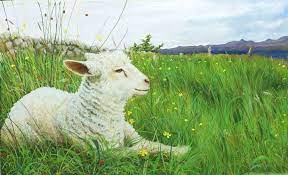
Luke 12:29-32 – Be Content

And do not set your heart on what you will eat or drink; do not worry about it. For the pagan world runs after all such things, and your Father knows that you need them. But seek his kingdom, and these things will be given to you as well.

“Do not be afraid, little flock, for your Father has been pleased to give you the kingdom. (New International Version)

If we’re honest with God, we acknowledge that we often worry a lot about tomorrow and how our needs will be met. 

Every day we send God moribund signals that our heads are not in the moment, and that our hearts are not into today. We fret about the future, leaving us profoundly discontent. So, we do busywork, distract ourselves with social media, and numb ourselves with spirits rather than turn to the Holy Spirit – all in the futile attempt to reduce the racing thoughts in our heads.

Far too many of us fail to enjoy the present moment. Our minds are someplace else. 

Contented people do not find their happiness in far-off places, in someday being able to acquire the things they desire, or in having a laser-like orientation to achieving a future goal. Instead, they find contentment in their present circumstances. 

Those living without fear and eschewing worry have discovered that happiness is not found in a new job, a new car, a new spouse, or a new anything.

“If I ever go looking for my heart’s desire again, I won’t look any further than my own backyard because if it isn’t there, I never really lost it to begin with.”

Dorothy, The Wizard of Oz

Focusing on the present does not mean ignoring the past or neglecting the future; it just means we are to put our primary attention on living in the here and now rather than on a romanticized future free of doubt, insecurity, and uncertainty. 

If we are not present to the here and now, we either get stuck in the past or continually worry about the future.  Everything then becomes either about recapturing some bygone era or of dreaming about some idyllic future state – buying into the wrongheaded notion that whenever I get out of school, or get married, or have kids, or get the job I want, or the kids leave home, or I retire, then all will be good, and I shall finally have contentment. 

Planning for the future is wise, good, and necessary; worrying about it and neglecting the present is bad.

Whenever we rush through the present to get to the future, we lose what God wants to do for us now.  It takes flow, mindfulness, and savor to fully engage the present.

“Flow” is a psychological term that means “being in the zone,” that is, to be actively involved in the present situation with focused attention. 

“Mindfulness” means to be aware of your present surroundings, and to especially be aware of your present state of mind and emotions; it is to pay attention to all that is within you and around you. 

To “savor” something is to enjoy it so much that you want it to last forever. It is to be slow, deliberate, and enjoyable. It’s about the journey, not just the destination.

Flow, mindfulness, and savor are what Jesus asked us to do. Christ wants us to stop and smell the roses. He wants us to give focused attention to what is currently in front of us; to be mindful of all the wonder of creation that presently surrounds us; and, to take the time to simply savor and enjoy it all. 

Once I was in a bible study with a group of people and the family’s dog kept licking a particular person to the point of distraction. Finally, I said to the group: “What do you think God is trying to tell us through the dog?”  We ended up having a very enlightening conversation on our own relationships with God and one another.

We are to be present to today. 

This is the day that the Lord has made;
    let us rejoice and be glad in it.

Psalm 118:24, NRSV

When we realize life is short, we will not waste it on worrying about the future. Although we don’t know about tomorrow, we do know about today. And today we are to enjoy God’s good gifts to us in the here and now.

So, teach us to consider our mortality,
so that we might live wisely. (Psalm 90:12, NET)

The wise way to live is one day at a time. That was God’s message through the prophet Jeremiah to the exiled Israelites. The ancient Jews kept spending their time reminiscing about the past and wishing for a better future.  So, God told them what to do in their exile:

“Build homes, and plan to stay. Plant gardens and eat the food they produce. Marry and have children. Then find spouses for them so that you may have many grandchildren. Multiply! Do not dwindle away! And work for the peace and prosperity of the city where I sent you into exile. Pray to the Lord for it, for its welfare will determine your welfare.” (Jeremiah 29:5-7, NLT)

Being content means to enjoy today, to savor the present moment God has you in, even if you don’t like where you are right now.

So go eat your food and enjoy it;
    drink your wine and be happy,
because that is what God wants you to do.
Put on nice clothes
    and make yourself look good.

Enjoy life with the wife you love. Enjoy all the useless days of this useless life God has given you here on earth, because it is all you have. So, enjoy the work you do here on earth. Whatever work you do, do your best, because you are going to the grave, where there is no working, no planning, no knowledge, and no wisdom. (Ecclesiastes 9:7-10, NCV)

Appreciate God’s simple gifts

Sometimes we look so hard for a future miracle, and want out from the circumstance we are in, that we fail to experience contentment in the present time. We are to enjoy the simple pleasures of life which God gives to us, even within our adversity.

I know what it is to be in need, and I know what it is to have plenty. I have learned the secret of being content in any and every situation, whether well fed or hungry, whether living in plenty or in want. (Philippians 4:12, NIV)

No matter what is going on in our lives, whether good or not, we can still appreciate a beautiful sunset, a good book, a walk on the beach, time with friends, good food, and a host of other simple gifts which God provides for us on a daily basis. Yet, we must stop long enough to experience and enjoy them.

Remember to celebrate

We are meant to celebrate life. The genuineness of Christianity is seen whenever Christians throw the best parties and have the most fun.

Someday we are all going to die. Rather than this being a downer, it is an opportunity to ponder an important question: Will you celebrate the time you have here on this earth and enjoy it? 

It’s not hedonistic (living for pleasure) to enjoy life and have a party. It’s actually a biblical thing to do. A spirit of celebration is a Christian spirit.

Work with enthusiasm

Dive in and enjoy your work. We end up worrying whenever our focus is on the destination. However, the real point of life is to enjoy the journey and the process. Be present to your work now and enjoy a job well done for the day, instead of looking forward to a fatter paycheck and a better job in the future.

My God will meet all your needs according to the riches of his glory in Christ Jesus.

Philippians 4:19, NIV

Engage in work with joyful abandon, and not with compulsive perfectionism (which is joyless and life-draining). Find ways of enjoyment within the kind of work that may be draining and not very exciting. Every job has mundane repetitive work to it. Yet, how we go about that work is significant.

If the here-and-now is not the best time of your life, then you and I need to be mindful to the words of Jesus because our focus is somehow misplaced. Contented people focus on the present, what is happening now, today, and they do not worry about tomorrow because that future state is the responsibility of God. 

Ever-present God, enlarge my heart to receive more of your grace and contentment. Rescue me from my small thoughts of your love and goodness. Free me from any unbelief and uncover my many fears. May I rest secure in the knowledge that you are good and everything you do is right, just, and fair. Amen. 

Philippians 4:10-15 – Generosity is Like a Warm Bowl of Grits

Jethro Bodine
Max Baer, Jr. playing the incomparable country as corn flakes Jethro Bodine on The Beverly Hillbillies

I rejoiced greatly in the Lord that at last you renewed your concern for me. Indeed, you were concerned, but you had no opportunity to show it. I am not saying this because I am in need, for I have learned to be content whatever the circumstances. I know what it is to be in need, and I know what it is to have plenty. I have learned the secret of being content in any and every situation, whether well fed or hungry, whether living in plenty or in want. I can do all this through him who gives me strength. Yet it was good of you to share in my troubles. Moreover, as you Philippians know, in the early days of your acquaintance with the gospel, when I set out from Macedonia, not one church shared with me in the matter of giving and receiving, except you only. (NIV)

In the English language, the words “you” and “your” can be either singular or plural. Unless, of course, we go with the southern “y’all.” But for a northerner like me, I’ve got to determine which by looking at the context that it’s in.  In the language of the New Testament, Greek, we know which words are singular and which are plural because, well, they’re different words which aren’t spelled the same.  It’s important to know in the book of Philippians that all the “you” pronouns are plural.  That’s important because the theme of unity and solidarity runs affectionately throughout the Apostle Paul’s letter to the Church in Philippi. In fact, for Paul, the reason he gibbers on so much about joy in his letter is because it’s only realized when unity is around. Unity really dills Paul’s pickles.

The entire Philippian church and not just those two really caring parishioners like Uncle Bundlejoy and Cousin Cozysweet, shared in Paul’s troubles with him. The whole kit-and-caboodle partnered with him through financial resources, prayer, and ministry.  Paul had confidence that every need the Philippians had would be supplied just as sure as God put worms in sour apples.

They learned a valuable lesson from Paul: that unity through generosity brings contentment in all circumstances and eases anxieties. The Philippian believers got a glimpse of the paradox that through giving they become rich. When tightwad believers are around, a church frets so much they could worry the horns off a billy goat. But when generosity settles in, people are more content than a flea on a pup.

Folks who only care about their personal needs and independent wealth aren’t right in the head – their cornbread’s not done in the middle. God wants everyone to know the blessing of working together in a worthy common cause.  Generosity and contentment go together like bacon and eggs. A charitable spirit in a group of people leads to more joy and happiness than a gopher in soft dirt.

Hoarding makes a church more nervous than a long-tailed cat in a room full of rocking chairs. If we want to be free of backbiting and worry, then we need to be wild about generosity. Give like the sun and the whole world grows tall.

Be generous with your money, generous with your words of encouragement toward others, and generous with your gratitude to God. Besides, giving is more fun than a sack full of kittens. And if you do give till you laugh, maybe you’ll see good ol’ Paul standing there grinning like a possum eating a sweet potato.

Generous God, your storehouse of grace and mercy is infinite and unending.  Help me to partner with you in a way that makes my generosity flow in the same direction yours does so that Jesus Christ is glorified, and his church is edified through the power of the Holy Spirit.  Amen.