Prayer Is the Heartbeat of the Church (Acts 1:12-17, 21-26)

“The Forerunners of Christ with Saints and Martyrs” by Italian painter Fra Angelico (1395-1455)

Then the apostles returned to Jerusalem from the hill called the Mount of Olives, a Sabbath day’s walk from the city. When they arrived, they went upstairs to the room where they were staying. Those present were Peter, John, James and Andrew; Philip and Thomas, Bartholomew and Matthew; James son of Alphaeus and Simon the Zealot, and Judas son of James. They all joined together constantly in prayer, along with the women and Mary the mother of Jesus, and with his brothers.

In those days Peter stood up among the believers (a group numbering about a hundred and twenty) and said, “Brothers and sisters, the Scripture had to be fulfilled in which the Holy Spirit spoke long ago through David concerning Judas, who served as guide for those who arrested Jesus. He was one of our number and shared in our ministry….”

Therefore it is necessary to choose one of the men who have been with us the whole time the Lord Jesus was living among us, beginning from John’s baptism to the time when Jesus was taken up from us. For one of these must become a witness with us of his resurrection.”

So they nominated two men: Joseph called Barsabbas (also known as Justus) and Matthias. Then they prayed, “Lord, you know everyone’s heart. Show us which of these two you have chosen to take over this apostolic ministry, which Judas left to go where he belongs.” Then they cast lots, and the lot fell to Matthias; so he was added to the eleven apostles. (New International Version)

So, what do you do when you don’t know what to do? And what do you do when you have a problem or challenge?

Good old American ingenuity, the Protestant work ethic, and fixing things is the reflexive response of many people. In the belief that we can solve anything, what typically gets left out of the equation is seeking God’s presence and power in order to rightly discern next steps.

But that wasn’t the response of the earliest church. When faced with their small numbers and a large mission to accomplish, they prayed. They more than prayed. They continually got together, just to pray. Prayer was the air they breathed. The believers understood they needed God (not simply to rubber stamp their plans) for moving forward in mission and ministry.

Christians need the vision and imagination that can only come through consistent daily prayer. Otherwise, they will not choose wisely and find themselves in a quandary of their own making.

Imagine not having to purchase what you need the most today.

Maybe you’re in a real pinch. Your financial budget isn’t budging. Perhaps you’re wondering what items you need to do without for a while. It could be that the bills aren’t all getting paid. Or maybe you’re concerned with how in the world you’re going to buy Christmas presents for the family.

Imagine having all the love you need today without working to earn it.

Maybe you have a strained relationship. It might be that you’re hurt from a marriage or a love that has gone sour. Perhaps a friendship is on the rocks, or a family member won’t talk to you. You’re wondering if it will ever be better, wondering if love will find you again.

Imagine continually having a church experience of being full of the grace of Jesus, the love of God the Father, and the power of the Holy Spirit.

Maybe your church has a legalistic bent. Perhaps the church is withdrawn into cliques and special interest groups. It could be that the Spirit hasn’t shown up since 1959. You’re tired, weary of the chronic sameness and status quo of a stagnant place.

For all these things, and so many more of life’s problems and situations, there is good news… really good news!

Prayer is the currency to what you need most, the means of receiving and giving love, and the path to a gracious and powerful Christian and Church life.

Prayer is the heartbeat of the church. The promise of prayer still stands. God gives. We receive. But we must ask!

You didn’t choose me, but I chose you. I have appointed you to go, to produce fruit that will last, and to ask the Father in my name to give you whatever you ask for. (John 15:16, GW)

Sometimes God just gives without us asking. That’s great. Yet, God wants so much more for you and me and our faith communities. God longs for us to be vitally connected to Christ, and that connection happens through prayer. We can bank on the answers to our prayers when we:

  • Stay joined to Jesus (John 15:4)
  • Let Christ’s teachings become part of you (John 15:7)
  • Remain faithful to Christ’s love for you (John 15:9)
  • Obey Jesus (John 15:10)

Imagine having your will align with the perfect will of God.

Stay joined to me and let my teachings become part of you. Then you can pray for whatever you want, and your prayer will be answered. (John 15:7, CEV)

Perhaps you are skeptical. You’ve prayed a long time with nothing happening. You’re discouraged and feel like prayer doesn’t work, or that something is wrong with you. 

There is a mysterious and mystical aspect to prayer that we will never quite understand. However, I do know that Jesus didn’t put a timetable on the answers – they will come when they come. And they will come. 

Maybe we’ll discover that what we want and need the most is to let God’s will and way be done in us, no matter what it is. Perhaps the point is to change us, and not always to change our circumstances.

We have an incredible privilege; we get to ask, without having to buy answers to prayer.

We don’t have to do backflips to get God’s attention. We simply ask. 

We don’t have to try and work to earn God’s favor. We don’t have to draw up detailed plans like some sort of architectural design to see a fruitful, loving, and powerful church. We just ask and remain closely connected to Jesus. 

O Lord, grant me to greet the coming of this day in peace. 

Help me in all things to rely upon Your holy will. 

In every hour of the day, reveal your good and holy will to me. 

Bless my dealings with all who surround me. 

Teach me to treat all that comes to me throughout the day with peace of soul and with the firm conviction that your will governs all. 

In all my deeds and words, guide my thoughts and feelings. 

In unforeseen events, let me not forget that all situations, no matter what, are sent by you. 

Teach me to act firmly and wisely, without embittering and embarrassing others. 

Give me the strength to bear the fatigue of this day with all that it shall bring. 

Direct my will; teach me to pray; pray you yourself in me. Amen.

 –A Prayer from St. Philaret of Moscow (1782-1867)

To the Family of God (2 John 1:1-16)

St. John the Apostle, by sculptor Thomas Ball (1819-1911)

From the Elder—

To the dear Lady and to her children, whom I truly love. And I am not the only one, but all who know the truth love you, because the truth remains in us and will be with us forever.

May God the Father and Jesus Christ, the Father’s Son, give us grace, mercy, and peace; may they be ours in truth and love.

How happy I was to find that some of your children live in the truth, just as the Father commanded us. And so I ask you, dear Lady: let us all love one another. This is no new command I am writing you; it is the command which we have had from the beginning. This love I speak of means that we must live in obedience to God’s commands. The command, as you have all heard from the beginning, is that you must all live in love.

Many deceivers have gone out over the world, people who do not acknowledge that Jesus Christ came as a human being. Such a person is a deceiver and the Enemy of Christ. Be on your guard, then, so that you will not lose what we have worked for but will receive your reward in full.

Anyone who does not stay with the teaching of Christ, but goes beyond it, does not have God. Whoever does stay with the teaching has both the Father and the Son. So then, if some come to you who do not bring this teaching, do not welcome them in your homes; do not even say, “Peace be with you.” For anyone who wishes them peace becomes their partner in the evil things they do.

I have so much to tell you, but I would rather not do it with paper and ink; instead, I hope to visit you and talk with you personally, so that we shall be completely happy.

The children of your dear Sister send you their greetings. (Good News Translation)

The Pastor

Tucked away near the back of the Bible is a short little letter from the Apostle John, identifying himself as “The Elder.” This is meant to convey both his venerable leadership and his affectionate relation as the grandfatherly old man who has something important to say. In other words, John was, in our terms, a Pastor responsible for shepherding the church with care.

The Church and Christians

“The dear Lady” is a metaphor for the church. Through personifying the church, John was assigning worth, respect, and dignity to the mother with spiritual progeny.

“Her children” are the believers within the church, spiritual offspring with the church as their mother. This has been an important motif for most of Christian history – an understanding that has gotten lost over the centuries in much of the Protestant world. Yet, one of the magisterial reformers, John Calvin, retained this view of the church and its members:

“The Church is the bosom which God is pleased to gather his children… who are guided by her motherly care until they mature and at last reach the goal of faith…. How useful, indeed how necessary, it is that we should know her. For there is no other way to enter into life unless this mother conceive us in her womb, give us birth, nourish us at her breast, and keep us under her care and guidance… Our weakness does not allow us to be dismissed from her school until we have been pupils all our lives.”

(Institutes of the Christian Religion, 4.1, 4)

Indeed, Calvin was merely upholding the words of St. Cyprian, Bishop of Carthage (c.200-258, C.E.)  who stated 1,300 years earlier than the reformer:

“No one can have God as Father who does not have the church as Mother.”

St. Cyprian (On the Unity of the Catholic Church, ch.vi)

Love and Truth

The relationship between the mother and her children is to be always characterized by familial love. Everything within Christianity rises and falls with love because God is love.

God extends loving words and actions because love is the stuff that God is made up of. The very character of God is love, through and through. There is never a time when God is not loving.

In fact, God’s anger and wrath are expressions of love – for God is opposed to all which is unloving. Therefore, God extends justice and confronts sin so that love will freely flow once again amongst humanity and all creation.

God is not okay with deceit, not at all alright with errant understandings of his Son, Jesus Christ, being made out as a mere phantom without a real flesh-and-blood body. He had to be made like us in every way. Otherwise, there is no deliverance from the deceitfulness of sin, the sting of death, and the agony of hell.

John, as the Apostle of love, consistently espoused the primacy and permanence of love whenever he had the chance. Truth and love go together, always, insisted John. Love is only really possible when there is truth in the heart.

The true muster of mother church and of individual believing children is their love. No matter what is done – whether outreach, fellowship, or worship – it is all to be done in love and in truth. It’s not enough to be right; the rightness must be applied with the generosity, grace, and liberality of love.

The telltale sign of the deceiver, the false teacher, is that he proclaims only one without the other, either truth or love, but never both together.  

A profound lack of love is the litmus test that belies a faulty and heretical doctrine of Jesus. The absence of love is a red flag that impure teaching is happening. The real enemy of Christ is the one who claims Christianity but does not love, neither in word nor deed. If we really want to love God, we will love one another, and vice-versa.

Love and truth always go together. A mother is a mother because of her children; and a child is a child because of the mother. You cannot have one without the other.

To embrace truth is to love a group of people wherever they are. It is to see them, listen to them, then act on their behalf. Far too often Christians are known for their hubris in superimposing on others what those others need – believing they already know the truth of both Bible and them.

Love abides with the truth of a people. Genuine love seeks the truth and responds accordingly. Love is willing to find out what the issues are of a people. Assuming others need our money, our plans, our service, or our solutions, assumes we already understand their situation without hearing from them.

Love is longsuffering. It is willing to sit with folks for as long as it takes. Love finds itself by carefully applying biblical truth to the truth of a people. And that takes a great deal of time and effort. There are no shortcuts to love.

Love must have its way, or it isn’t love.

Since God is love, God must have his way in us first.

Hope and Happiness

Hope is a confident expectation that promises will be kept and realized.

Happiness is the result.

Hope and happiness go together like bacon and eggs, Tom and Jerry, the moonwalk and Michael Jackson, Friday and fish fry, Harry Potter and Hogwarts, salt and pepper, Adam and Eve, Jesus and the Spirit, and well, I think you get the picture.

Unhappiness is the inevitable result of feeling hopeless. Hope and happiness are both relational terms. They come from having good relations based in love and truth.

Love and truth are very much relational terms, being realized because of mother church’s nurturing.

And the chosen mother came into being because of the Father’s gracious will.

So, tell me, what is your takeaway from this quite brief reflection on John’s little letter?…

On the Need for Humble Leaders (1 Peter 5:1-11)

I appeal to your spiritual leaders. I make this appeal as a spiritual leader who also witnessed Christ’s sufferings and will share in the glory that will be revealed. Be shepherds over the flock God has entrusted to you. Watch over it as God does: Don’t do this because you have to, but because you want to. Don’t do it out of greed, but out of a desire to serve. Don’t be rulers over the people entrusted to you but be examples for the flock to follow. Then, when the chief shepherd appears, you will receive the crown of glory that will never fade away.

Young people, in a similar way, place yourselves under the authority of spiritual leaders.

Furthermore, all of you must serve each other with humility because God opposes the arrogant but favors the humble. Be humbled by God’s power so that when the right time comes he will honor you.

Turn all your anxiety over to God because he cares for you. Keep your mind clear and be alert. Your opponent the devil is prowling around like a roaring lion as he looks for someone to devour. Be firm in the faith and resist him, knowing that other believers throughout the world are going through the same kind of suffering. God, who shows you his kindness  and who has called you through Christ Jesus to his eternal glory, will restore you, strengthen you, make you strong, and support you as you suffer for a little while. Power belongs to him forever. Amen. (God’s Word Translation)

“The most powerful weapon to conquer evil is humility. For evil does not know at all how to employ it, nor does it know how to defend itself against it.”

St. Vincent DePaul

The real mettle of a person, especially a leader, is not seen in their very visible public service. Rather, solid spiritual leadership is forged in the invisible places, in the daily mundane tasks which no one ever sees.

It is in our most unguarded times that we really demonstrate who we are. This is the sacred space where humility is learned and developed. Therefore, to know a genuinely humble leader, one must follow that person in the common course of daily life.

Leaders without such a foundation of daily and consistent faithfulness will eventually crack. Ministry gradually becomes more duty than delight. Service to others is eventually measured by church attendance, monetary offerings, and public image. The soul shrinks over a long stretch of time, almost imperceptibly.

In a slow drift, faith fades, and anxiety fills the emptiness; glory grows dim, and greed grows destructively. Safety and security are ensconced as primary values to mitigate the nagging sense of worry. The original adventure of confident faith, conviction of purpose, and compassionate ministry becomes a bygone era.

Thus, it is most necessary to return to the queen of all virtues, the ideal Christian ethic for all followers of Christ: humility.

God opposes the proud but gives grace to the humble (Proverbs 3:34; James 4:6-7). With humility, our eyes are filled with spiritual sight, seeing and honoring the larger realities of the universe. Without humility, there is blindness, an inability to recognize the need for God’s grace.

The sinister approach of sinful pride is revealed in the wrongheaded thought, “I’m fine. I can do it on my own. I don’t need you, thank you very much.” 

So, how’s that been working for you lately? Are you frustrated, worried, despondent? 

“Do you wish to rise? Begin by descending. Do you plan a tower that will pierce the clouds? Lay first the foundation of humility.”

St. Augustine

Humility opens to us the wide vistas of God’s love and mercy. It is neither weakness nor a cenobite self-abnegation into denying my personhood. Instead, a humble spirit:

  • Renews hope. Spiritually and emotionally healthy leaders make for spiritually and emotionally healthy congregations. Humility discerns that all Christian ministry rests with the sufficiency of Christ, not me, thus kindling a future hope in realities bigger than me.
  • Relieves anxiety. Humility knows and rests in the hands of a good and merciful God, rather than a perceived need to “look out for number one.”
  • Resists the devil. A robust faith always has a strong foundation of humility, helping us see that Satan has nothing we want. 
  • Remains steady. Humility is willing and privileged to share in the sufferings of Christ, and so, can persevere through both bad circumstances and boredom.

As individuals, we all need to gain and maintain a humble spirit. Humility really is the virtue to which everyone must aspire. It delivers what we need the most: To rest secure in the merciful arms of God. 

In this old fallen world, every family, neighborhood, organization, institution, corporation, and government is in desperate need of humility. We’ve already made quite enough mess of things with our human pride.

Within the church, and inside of every religious community, it is most necessary to reinforce all leadership appointments and staffing with humility. No amount of human intelligence, skill, and hard work can make up for a lack of humility. 

God is sovereign and in control. So, the sooner we sync our lives with this truth, the better off we will be.

Sovereign God, you cause people and nations to rise and to fall. I place my complete trust and devotion in you. With all the humility I can muster, I bow to you and submit to your gracious work in my life and in the life of the world. 

Shoo all sinful pride far from me, create in me a pure and humble heart, and let me share in your sufferings so that I might share in your glory, through Jesus Christ, your Son, my Lord, who with you and the Holy Spirit are one God, now and forever. Amen.

The Necessity of Mentoring Relationships: Paul, Tom, and Timothy (2 Timothy 3:10-15)

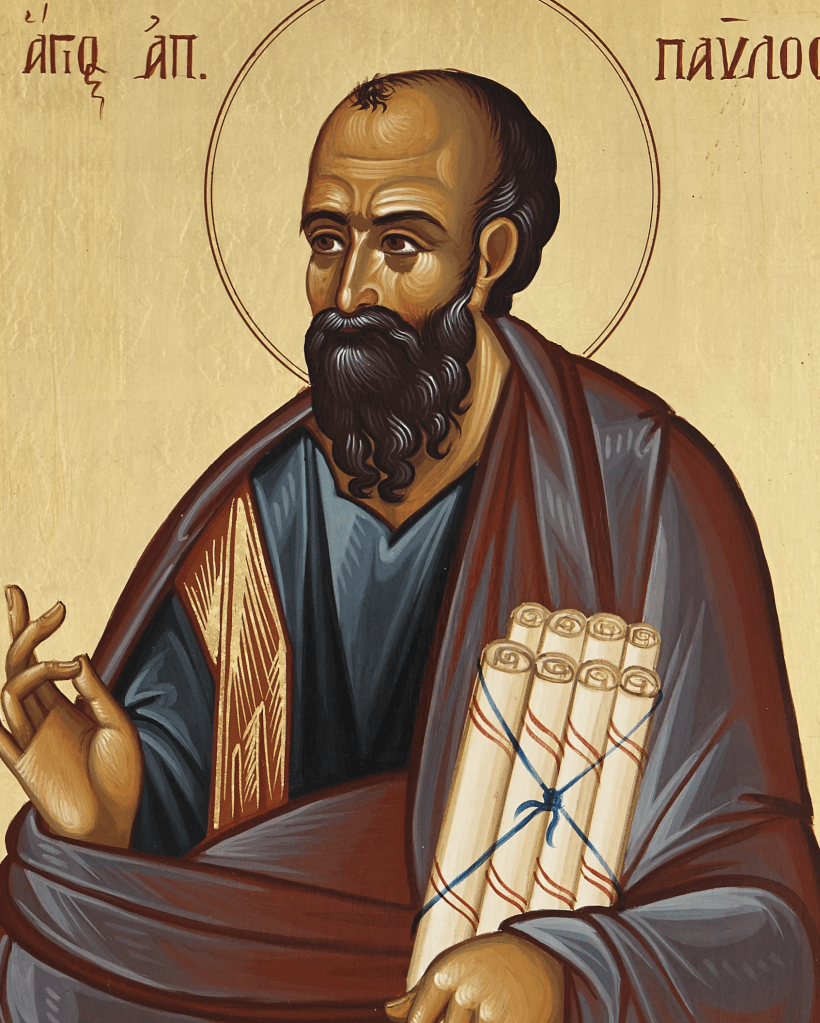
Orthodox icon of St. Paul
Orthodox icon of St. Timothy

You’ve been a good apprentice to me, a part of my teaching, my manner of life, direction, faith, steadiness, love, patience, troubles, sufferings—suffering along with me in all the grief I had to put up with in Antioch, Iconium, and Lystra. And you also well know that God rescued me! Anyone who wants to live all out for Christ is in for a lot of trouble; there’s no getting around it. Unscrupulous con men will continue to exploit the faith. They’re as deceived as the people they lead astray. As long as they are out there, things can only get worse.

But don’t let it faze you. Stick with what you learned and believed, sure of the integrity of your teachers—why, you took in the sacred Scriptures with your mother’s milk! There’s nothing like the written Word of God for showing you the way to salvation through faith in Christ Jesus. (The Message)

Paul and Timothy had a special relationship. Paul, the Apostle and mentor in the faith; and Timothy, the apprentice.

Together, they saw it all – and experienced it all. And through it all, the Christian tradition was passed on because of Paul’s purposeful mentoring of others, especially Timothy, by both verbal teaching and life example. In this, Paul helped set Christianity on a trajectory of modeling the words and ways of Jesus.

Faith is a gift given by God through Scripture and faithful people – and then received by us. Christianity is designed for community; it is not merely a solitary affair between the individual and God. Anyone trying to go it alone in the Christian life will soon discover they are overwhelmed and in over their heads with trouble.

Contemporary pastoral ministry still needs to follow in the footsteps of the Apostle Paul. Just one of the many reasons why churches in the West are in such decline is that Christian leaders are not intentionally focused to passing-on a solid body of teaching, along with a consistent example of how to put it into practice, through close relationships.

Anyone who has been in the pastoral ministry gig for a long time, remaining consistent and faithful, has most certainly had a good spiritual teacher and guide shepherding them through their Christian experience. A good long ministerial life isn’t happenstance; it’s the result of a solid foundation through a Paul-and-Timothy sort of relationship.

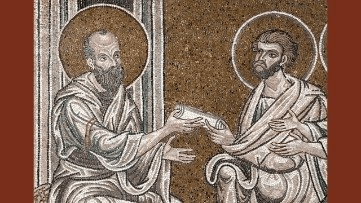
Mosaic of Paul and Timothy, Cathedral of Monreale, Sicily, Italy

By God’s grace, I’ve had several persons influence my life in profound ways in such a relationship. One of the earliest and longest was with Tom – a campus minister on my university who built into my life as an undergraduate and a very young Christian. We remained connected and became good friends for nearly four decades until his untimely death.

Tom knew what he was doing with me. To this day, even with multiple academic degrees and many professional ministry experiences, I attribute most of what I know about Christian faith and practice as simply saying and doing what I saw Tom say and do. And, I might add, Tom consistently saw my true self, even when I didn’t see it myself.

A good model in the faith has the same qualities and insights as the Apostle Paul of old. For example, here are just a few of the important things I learned from Tom:

  • Christian ministry is interpersonal; time must be spent with others, getting to know them and building relationships. Doing pastoral ministry from afar is an oxymoron. From what we know of Paul, at times he had a team of up to seventy persons following him around on missionary endeavors.
  • There are always going to be charlatans and bad apples around. Don’t simply ignore them. Confront them in grace and truth. I still remember a time when I went along with Tom, not knowing where we were going or what he was up to. In retrospect, he probably knew I would bolt if I caught wind of what he was about to do. We went to the dorm room of a believer whom Tom flat-out confronted on his talking and living being inconsistent with his professed Christianity. My eyes got huge when Tom said, “In the name of Jesus Christ I rebuke you and I call you to repent.” This was said in a gracious and conversational tone, not in anger, which communicated concern and love for this individual student.
  • Develop relationships. And the best way of doing this is by having the Timothy tag along with the Paul. Tom continually brought me along to whatever he was doing, whether it was a weekend retreat he was leading, or going to the grocery store. We cannot learn from others if we aren’t around them, and Tom understood this better than most. As a result, I learned more than lessons; I learned a life.
  • It’s not about me. Tom never took himself too seriously. And because of that, I observed him never becoming overwhelmed or obsessing over the trouble he would sometimes get into. In fact, he typically welcomed the trouble whenever he saw it was not of his own making.
  • Openness and vulnerability are necessary. More than once, Tom strolled into a bible study with me and some other guys, flopped down and said, “Man, I really blew it today…” and then went on to explain some boneheaded thing he did. We unpacked the entire situation together. Not once do I ever recall Tom trying to look like the perfect Christian leader. He embraced who he was and was always willing to shine the light on the shadowy places of his heart.
  • Holy Scripture is central to Christian life and ministry. Inevitably, Tom’s question to us, after describing his bonehead move, was to ask, “What are you learning in God’s Word? Do you have any encouragement for me?” On a daily basis, without fail, Tom asked this question of me: “So, what is God teaching you in the Word?”

Through both Holy Scripture and the significant relationships I’ve had throughout my life, I can confidently state that there are two indispensable elements to effective Christian ministry:

  1. It must be firmly grounded in objective theory derived from God’s Word.
  2. It must be intentionally practiced with subjective experience derived from interpersonal relationships.

Objective theory without lived practice leads to being puffed-up with knowledge and no love – because love requires people. And subjective experience without a grounded theory is nothing but a form of spiritual A.D.D. in which whatever shiny thing we see grabs our attention.

I always considered Tom as my spiritual father (and his wife as a dear spiritual mother!). They have shown me not only how to live the faith, but also how to be a spiritual father myself. And as a result, my own dear wife and I have many spiritual children scattered throughout the country.

This is the consummate Christian: Coming to faith by God’s grace, mediated to us through actual flesh-and-blood people; being taught and mentored in that faith by proven Christians; and then, simply saying and doing what you have seen and heard from holy leaders and Holy Scripture.

It’s not rocket science. It’s not abstract art. It’s a life. It’s relationships. And it’s absolutely necessary in order for both the church and the world to be blessed.

But he’s already made it plain how to live, what to do,
    what God is looking for in men and women.
It’s quite simple: Do what is fair and just to your neighbor,
    be compassionate and loyal in your love,
And don’t take yourself too seriously—
    take God seriously. (Micah 6:8, MSG)

Soli Deo Gloria. Amen.