Healing the Outsiders (Matthew 8:1-13)

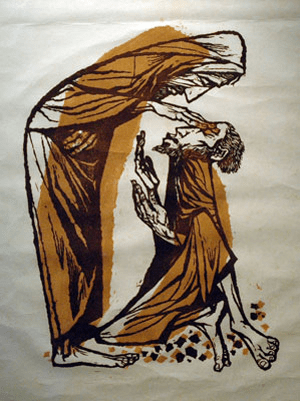
Jesus Healing, by Arthur Robins, 2020

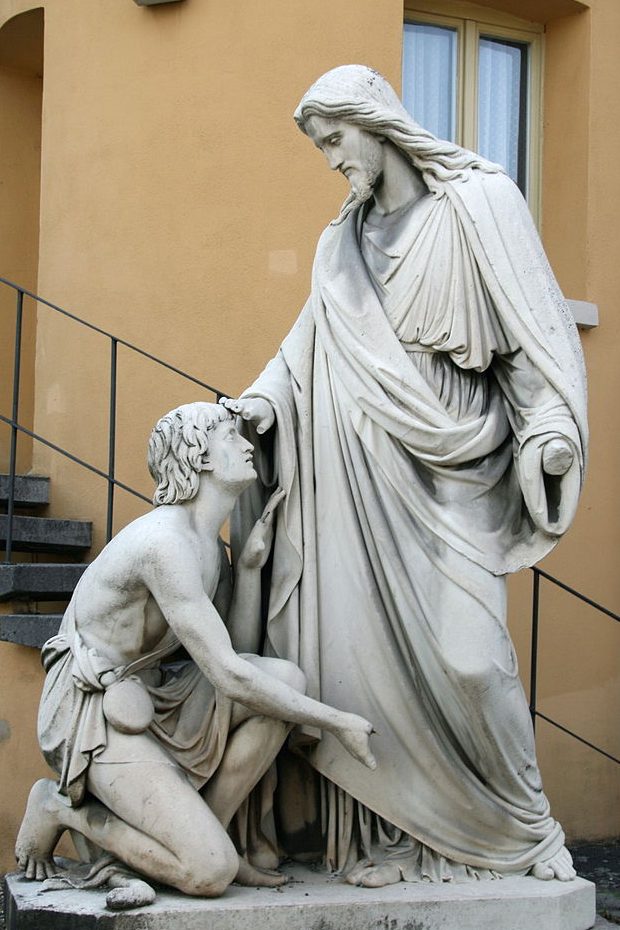
When Jesus came down from the mountainside, large crowds followed him. A man with leprosy came and knelt before him and said, “Lord, if you are willing, you can make me clean.”

Jesus reached out his hand and touched the man. “I am willing,” he said. “Be clean!” Immediately he was cleansed of his leprosy. Then Jesus said to him, “See that you don’t tell anyone. But go, show yourself to the priest and offer the gift Moses commanded, as a testimony to them.”

When Jesus had entered Capernaum, a centurion came to him, asking for help. “Lord,” he said, “my servant lies at home paralyzed, suffering terribly.”

Jesus said to him, “Shall I come and heal him?”

The centurion replied, “Lord, I do not deserve to have you come under my roof. But just say the word, and my servant will be healed. For I myself am a man under authority, with soldiers under me. I tell this one, ‘Go,’ and he goes; and that one, ‘Come,’ and he comes. I say to my servant, ‘Do this,’ and he does it.”

When Jesus heard this, he was amazed and said to those following him, “Truly I tell you, I have not found anyone in Israel with such great faith. I say to you that many will come from the east and the west, and will take their places at the feast with Abraham, Isaac and Jacob in the kingdom of heaven. But the subjects of the kingdom will be thrown outside, into the darkness, where there will be weeping and gnashing of teeth.”

Then Jesus said to the centurion, “Go! Let it be done just as you believed it would.” And his servant was healed at that moment. (New International Version)

On a few occasions, my computer picked up a nasty virus that hijacked every file and function I have. The most frustrating thing about those events is that there was nothing I could do by myself to fix it or make it better.

I had to humble myself and ask a computer geek to get into my system and take care of the problem. It’s a weird feeling to look at my screen and have a stranger work inside my personal computer. But if I failed to get help, my computer was worthless – unless I let someone with authority fix the blasted thing.

Kingdom Values

Jesus is Lord of all. Since Christ has authority over everything, we are to live our lives in submission to his will and way. Only through humble resignation to Christ can we experience the healing and deliverance we seek.

Jesus preached his famous Sermon on the Mount (Matthew 5-7) and taught the people as one who had authority. In that Sermon, Jesus laid out the values of God’s kingdom: humility, sorrow over sin, meekness, purity, mercy, and peacemaking. In today’s Gospel lesson, we see the power of those values evidenced and expressed in two stories of healing and deliverance. 

The world needs saving, and that’s exactly what Jesus is up to. Christ’s authority is total – coming from his moral authority – as the very embodiment of the Beatitudes he taught. Grace always has the last word, as Jesus healed showing neither favoritism nor discrimination.  

Healing a Leper
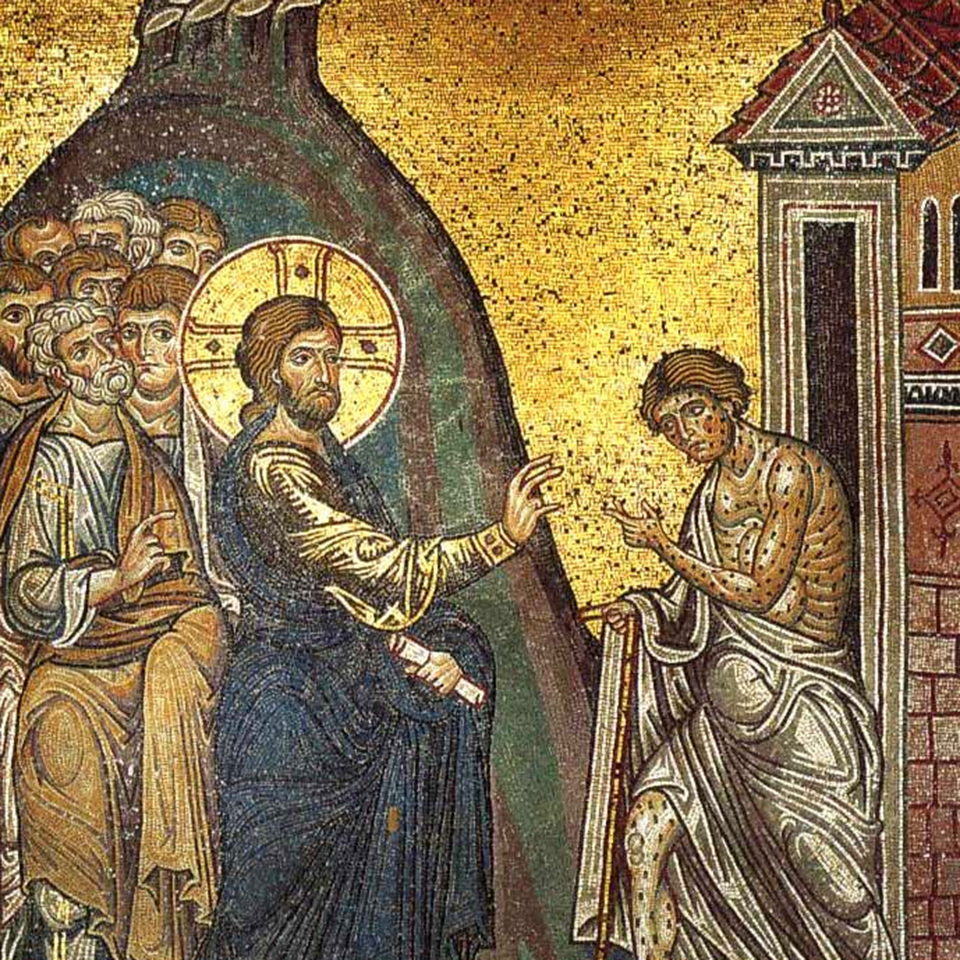
Jesus healing a leper, Cathedral of Santa Maria Nuova, Florence, Italy

In the first story, Jesus used his authority to heal and transform a leper. Leprosy was a feared disease in the ancient world. There was no known cure, and lepers were forced to live apart from everyone else. The Old Testament book of Leviticus says that a leper must wear torn clothes, let his hair be unkempt, cover the lower part of his face and cry out “unclean! unclean!” (Leviticus 13:45-46).  Lepers were the ultimate outsiders.

A leper came to Jesus with a humble profession of faith: “Lord, if you want to, you can make me clean.” It was a clear case of genuine need, and poverty of spirit. Jesus responded by doing the unthinkable: He touched him.  In a great and wonderful reversal, Jesus did not become unclean by touching the leper; but instead, the leper was made clean. 

Still today, the world needs to be touched. It’s an important way of following Jesus and changing the world. This requires us, God’s people, to get up-close and personal with outsiders and marginalized persons and groups. Christian service requires Christian touch.

Authentic Christian ministry communicates love through contact and identification with others. A thousand years after Christ’s earthly ministry, St. Francis of Assisi met a leper on the road:

“Though the leper caused him no small disgust and horror, he nonetheless, got off the horse and prepared to kiss the leper. But when the leper put out his hand as though to receive something, he received money along with a kiss”

Life of St. Francis, by Thomas of Celano

Francis did what seemed humanly impossible because he was filled with the love and compassion of Christ. The love of Jesus allows us to touch others with compassionate care, especially to those who have been rejected and mistreated.

Healing a Roman Officer’s Servant
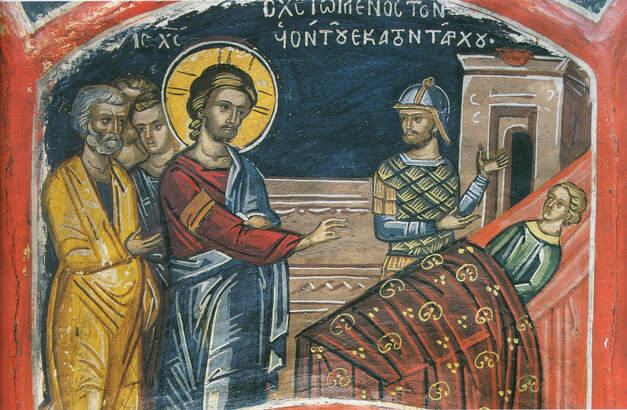
Fresco of Jesus healing the Centurion’s servant, Dionysiou Monastery, Mount Athos, Greece

The second story was equally eye-popping and unbelievable to the people in Christ’s day. Jesus used his authority to heal and transform a Gentile – and what’s more – a hated Roman army officer.

We see the values of the Beatitudes expressed in a Roman Centurion who felt unworthy to even have the Lord Jesus come into his house. The Centurion’s profession of faith amazed even Jesus: “Just say the word,” he said in recognition of Christ’s authority, which is big enough to heal without even being present. 

Although Centurions were the backbone of the Roman military machine and hated by the Jews, yet Jesus responded to the Centurion’s request, and he also affirmed his faith as greater than any Jew.

Grace answers to need, and not to smug self-confidence.

The Roman Centurion requested healing. Jesus listened and answered. The Centurion did not use his position to order Jesus or demand healing; he came in a spirit of humility and asked with confidence that Jesus could heal his servant if he wanted to. The Centurion threw himself on God’s mercy. So, Jesus upheld the Centurion as a model of faith for us all.

Healing Doesn’t Happen with the Independent

In affirming the Roman officer’s faith, Jesus also gave a solemn warning to the self-righteous: Their lack of humility and genuine faith would land them outside the kingdom. In another great reversal, the insiders will become the outsiders, and the outsiders become the insiders.

Independently proud folk do not experience healing and transformation because they don’t even know they are sin sick. They see no need for an intervention by Jesus because they already have their righteous deeds to boast about. Such persons are more concerned about looking good and saving face, than perceiving their own unworthiness. 

The self-righteous and self-sufficient approach to handling problems and difficult situations is to come up with good ideas and clever strategies, relying on sheer personal effort and willpower. Prayer may or may not happen; there is no honest beseeching of God. 

Delusional thoughts of personal autonomy only separate us from the grace of God that we so desperately need. 

There is a spiritual dimension to every situation and trouble we face – including sickness. If we only examine the medical and biological end of physical problems, we may be dealing with symptoms instead of the root issue that plagues us.

Are you hurting? Pray. Do you feel great? Sing. Are you sick? Call the church leaders together to pray and anoint you with oil in the name of the Master. Believing-prayer will heal you, and Jesus will put you on your feet. And if you have sinned, you will be forgiven—healed inside and out. Make this your common practice: Confess your sins to each other and pray for each other so that you can live together whole and healed. (James 5:13-16, MSG)

Conclusion

Jesus healed and transformed outsiders. Followers of Christ, dependent upon God, ask themselves:

  • Who are the outsiders among us?
  • Where are the strangers? 
  • How can we get close enough to touch aliens and immigrants? 
  • Will you help us intercede in prayer for foreigners? 
  • When can we search for and pursue those on the periphery of society? 

Believe that the risen and ascended Jesus can and will heal, deliver, and transform people of all kinds.

Jesus cannot be domesticated into some figurehead that suits our desires and conforms to our ideas about how things ought to be. Jesus is portrayed in these stories as eager to heal, wanting to show grace to the least and the lowly among society.

So, let us participate in the world’s healing, beginning with the Lord’s Prayer:

Our Father in heaven,
    may your name be kept holy.
May your Kingdom come soon.
May your will be done on earth,
    as it is in heaven.
Give us today the food we need,
and forgive us our sins,
    as we have forgiven those who sin against us.
And don’t let us yield to temptation,
    but rescue us from the evil one. Amen. (Matthew 6:9-13, NLT)

A Lot of Hurting, Touching, and Healing (Luke 6:12-19)

Jesus calls his twelve disciples, by Sadao Watanabe

One of those days Jesus went out to a mountainside to pray, and spent the night praying to God. When morning came, he called his disciples to him and chose twelve of them, whom he also designated apostles: Simon (whom he named Peter), his brother Andrew, James, John, Philip, Bartholomew, Matthew, Thomas, James son of Alphaeus, Simon who was called the Zealot, Judas son of James, and Judas Iscariot, who became a traitor.

He went down with them and stood on a level place. A large crowd of his disciples was there and a great number of people from all over Judea, from Jerusalem, and from the coastal region around Tyre and Sidon, who had come to hear him and to be healed of their diseases. Those troubled by impure spirits were cured, and the people all tried to touch him, because power was coming from him and healing them all. (New International Version)

Pain is a lot

Touch is important. Humanity needs touch. It’s also one of those things that we likely take for granted. 

Philip Yancey and Dr. Paul Brand co-authored a book, originally published in 1982, entitled “Pain: The Gift Nobody Wants.” It’s largely a biography of Dr. Brand, who pioneered both the diagnosis and prognosis of leprosy. 

He discovered that leprosy occurs because of a lack of feeling – an inability to sense touch. The delicate nerve endings we all have in our fingers and toes are numb to the leper. The lack of sensing pain in the extremities leads to small cuts or injuries, which would be immediately treated by someone who feels pain, becoming gangrene with the losing of fingers and toes.

The ability to feel, to reach out and touch another person, is vitally important to our spiritual and emotional lives. Without touch, the calloused heart and unfeeling soul does not realize the damage that is being done to it.           

One of the gifts we have as people is the ability to feel guilt, sorrow, disappointment, and pain – to be touched mentally, emotionally, and spiritually – as well as physically. And in our ability to feel pain, it brings about attention to prayer and addressing the situation.

Many people are troubled in either mind or spirit, or experience chronic ailments of the body, day in and day out. They just want relief, to be at peace in both body and soul.

Jesus prays… a lot

In today’s Gospel lesson, Luke puts together two stories: one of Jesus choosing and calling his twelve disciples; and then one of Jesus being among the people and healing them of their diseases and their troubles. Let’s observe the relationship between them.

Jesus often withdrew to lonely, isolated places in order to pray (Luke 5:16). On this particular occasion, he went out and spent the entire night in prayer to God. When morning came, we discover the reason for the all-night prayer meeting: Christ chose the people who would be closest to him in his earthly ministry. He called the twelve to follow him and be his disciples.

I find it highly instructive that Jesus spent so much time in prayer before making such big decisions about his ministry. If anyone could size up somebody as a potential follower, it seems to me it would be Jesus. And yet, there was a lot of deliberation and interaction with the Father. Since the Lord Jesus found it necessary to pray with an extending time, and consult with the heavenly Father, I would say that our own prayer life and reaching out to consult and collaborate could probably use an upgrade.

Jesus heals… a lot of people

Then, Jesus and his disciples, together enter the fray of the crowd. And the disciples get their first lesson in following Jesus: Christ-centered ministry is about healing – it’s about restoring people to physical, mental, emotional, and spiritual health.

Healing is at the heart of all real Christian ministry. And healing is really what everyone is to be about, whether they identify as Christian, or not. To be healed is to experience a holistic restoration of body, mind, emotions, and spirit.

Touch is a big part of healing. Physical touch is important, and it’s powerful. Sometimes, bodily healing is needed because a person has been physically abused, or experienced some sort of physical trauma. And it can be very difficult to have others touch them, after such experiences. Yet, part of the healing will be in experiencing redemptive touch – either by surgeons, family, friends, or trusted others. The answer to bad touch and bad pain is to experience good touch and the good pain of healing.

Non-physical touch is no less important. And, I believe, Jesus understood this perhaps more than most. He routinely “touched” people in ways that changed their lives. Christ sought to not only bring physical healing, but also to heal the mental, emotional, and spiritual wounds.

Jesus touches… a lot of lives

Jesus touched a lot of lives through his healing ministry:

  • In healing lepers of their disease, Christ made sure that they were no longer ostracized from the community but were restored to full function in society.
  • In curing persons demonized and tormented by evil spirits, Jesus was concerned to restore them to their right mind and ensure they were included as members of society, as well as restored to their families.
  • In bringing salvation from guilt and shame, Jesus brought reconciliation and restoration between God and sinners.
  • In all his relational interactions, Jesus was intentional about making connections to the lonely and the lost, to those who were emotionally cut off from the mass of society.

So, whenever we feel pain – whether in body, mind, emotion, or spirit – this experience lets us know that we need to pay attention to something. As we do that, it can drive us to the source of healing, wholeness, and restoration. We go to prayer – not out of duty – but because we are convinced that there are divine resources only God can provide.

And we can come, again and again, finding the grace to help us in our time of need. For God’s mercy is inexhaustible; the grace of God will never run out or run dry.

Therefore, let followers of Jesus everywhere be aqueducts of grace, angels of mercy, and agents of healing in a world which so desperately needs the love, care, and attention we can give them.

May God the Father bless you; God the Son heal you; and God the Holy Spirit give you strength. May God the holy and undivided Trinity guard your body, save your soul, protect your mind, and bring you safely to his heavenly country; where he lives and reigns for ever and ever. Amen.

Dealing with Spiritual Blindness (John 9:1-41)

Coptic Church depiction of Jesus healing the man born blind

As he went along, he saw a man blind from birth. His disciples asked him, “Rabbi, who sinned, this man or his parents, that he was born blind?”

“Neither this man nor his parents sinned,” said Jesus, “but this happened so that the works of God might be displayed in him. As long as it is day, we must do the works of him who sent me. Night is coming when no one can work. While I am in the world, I am the light of the world.”

After saying this, he spit on the ground, made some mud with the saliva, and put it on the man’s eyes. “Go,” he told him, “wash in the Pool of Siloam” (this word means “Sent”). So the man went and washed, and came home seeing.

His neighbors and those who had formerly seen him begging asked, “Isn’t this the same man who used to sit and beg?” Some claimed that he was.

Others said, “No, he only looks like him.”

But he himself insisted, “I am the man.”

“How then were your eyes opened?” they asked.

He replied, “The man they call Jesus made some mud and put it on my eyes. He told me to go to Siloam and wash. So I went and washed, and then I could see.”

“Where is this man?” they asked him.

“I don’t know,” he said.

They brought to the Pharisees the man who had been blind. Now the day on which Jesus had made the mud and opened the man’s eyes was a Sabbath. Therefore the Pharisees also asked him how he had received his sight. “He put mud on my eyes,” the man replied, “and I washed, and now I see.”

Some of the Pharisees said, “This man is not from God, for he does not keep the Sabbath.”

But others asked, “How can a sinner perform such signs?” So they were divided.

Then they turned again to the blind man, “What have you to say about him? It was your eyes he opened.”

The man replied, “He is a prophet.”

They still did not believe that he had been blind and had received his sight until they sent for the man’s parents. “Is this your son?” they asked. “Is this the one you say was born blind? How is it that now he can see?”

“We know he is our son,” the parents answered, “and we know he was born blind. But how he can see now, or who opened his eyes, we don’t know. Ask him. He is of age; he will speak for himself.” His parents said this because they were afraid of the Jewish leaders, who already had decided that anyone who acknowledged that Jesus was the Messiah would be put out of the synagogue. That was why his parents said, “He is of age; ask him.”

A second time they summoned the man who had been blind. “Give glory to God by telling the truth,” they said. “We know this man is a sinner.”

He replied, “Whether he is a sinner or not, I don’t know. One thing I do know. I was blind but now I see!”

Then they asked him, “What did he do to you? How did he open your eyes?”

He answered, “I have told you already and you did not listen. Why do you want to hear it again? Do you want to become his disciples too?”

Then they hurled insults at him and said, “You are this fellow’s disciple! We are disciples of Moses! We know that God spoke to Moses, but as for this fellow, we don’t even know where he comes from.”

The man answered, “Now that is remarkable! You don’t know where he comes from, yet he opened my eyes. We know that God does not listen to sinners. He listens to the godly person who does his will. Nobody has ever heard of opening the eyes of a man born blind. If this man were not from God, he could do nothing.”

To this they replied, “You were steeped in sin at birth; how dare you lecture us!” And they threw him out.

Jesus heard that they had thrown him out, and when he found him, he said, “Do you believe in the Son of Man?”

“Who is he, sir?” the man asked. “Tell me so that I may believe in him.”

Jesus said, “You have now seen him; in fact, he is the one speaking with you.”

Then the man said, “Lord, I believe,” and he worshiped him.

Jesus said] “For judgment I have come into this world, so that the blind will see and those who see will become blind.”

Some Pharisees, who were with him, heard him say this and asked, “What? Are we blind too?”

Jesus said, “If you were blind, you would not be guilty of sin; but now that you claim you can see, your guilt remains. (New International Version)

Jesus healing blind Bartimaeus by Johann Heinrich Stöver, 1861. St John’s Church, Hesse, Germany

Assuming Blindness

Behind everything we believe and talk about, there are pre-suppositions or assumptions. The disciples had an assumption about blindness: its sin – not just a result of living in a fallen world, but personal sin. That is, an individual sinner whom we can point the finger to. The disciples demonstrated they were just as blind as the physically blind man.

Jesus had a clear and concise response to that assumption: nobody is at fault here, nobody. Which, to me, begs the question:

Have you considered that your thoughts are subjective, not objective?

Too many people treat their thoughts, ideas, and beliefs as if they were pure gospel truth (which is probably why they feel justified in assuming they are always right and are arbiters of truth!). Reality check: You, nor I, have the corner on truth. Jesus is the truth, not anybody else.

Healing Blindness

Since Jesus is the way, the truth, and the life, he has the power and authority to heal, making the blind to see. Sin wasn’t the issue; the true issue was an opportunity to showcase the gracious work of God. So, Jesus healed the man’s eyes so that he could see again. Healing is not a one-size-fits-all, which is why Jesus did something unique with the blind man, and then gave specific instructions on what to do.

Therefore, we must not assume that we know how a healing is supposed to happen. There’s no codifying a particular process or prayer in order to leverage God into performing one.

Investigating Blindness

The religious leaders always seem to have a problem about something. They, like the disciples, assumed sin was at the core of the man’s blindness. The leaders were befuddled that a sinner like Jesus (who doesn’t keep the Sabbath properly) could ever heal another sinner (a blind man). That’s a conundrum they couldn’t live with, and so, the questions kept getting heaped on the poor guy who was healed.

The religious leaders were trying to make sense out of what they thought was a nonsensical situation. It’s only nonsensical to them because they didn’t have any good sense to begin with. Their interaction with the healed man, and then with Jesus, only demonstrated their profound lack of awareness resulting in spiritual blindness.

Remaining in Blindness 

Many of the religious leaders, heretics in the early church, and spiritual phonies of today are not deliberately trying to deceive or lead others astray; they think they are doing the right thing when they are actually not. 

An eye-opening reality I discovered when I first studied church history is that the early heresies, condemned at church councils, were doctrines promoted by men who were not evil – they were just sincerely misguided. The heretics believed they were helping the church better understand the nature of God and Christ. However, they were unaware and blind to the actual nature of their teachings. 

Back when I wrote my master’s thesis in nineteenth century American Religious History, I read hundreds of sermons from southern preachers before the American Civil War. They had a “biblical” defense of Black chattel slavery. Many of them were influential pastors of large churches who led many people to Christ, that is, white people. Yet, at the same time, they were blind to how they slammed the door of God’s kingdom in the faces of Black folk, were complicit in slaveholder abuse, and fueled antagonisms between North and South.

Churches and Christians may be unaware and blind to how they keep people out of God’s kingdom by saying God’s grace is for all, and then avoid certain people; by having explicit written statements or rules that exclude people from service; or by binding people to human traditions and practices instead of Holy Scripture.

Our Eyes

“The eye is the lamp of the body. If your eyes are healthy, your whole body will be full of light. But if your eyes are unhealthy, your whole body will be full of darkness. If then the light within you is darkness, how great is that darkness! (Matthew 6:22-23, NIV)

In the ancient world, the eye represented what you fixed your gaze on, or what your focus was. In our culture, we could replace the word “eye” with the word “goal.” The word “body” represents the entirety of one’s life.  So, we might interpret Christ’s words in this way: 

A goal is the focus of a life. If your goals are good, your whole life will be full of proper focus. But if your goals are bad, your whole life will be full of blindness. If then, the focus within you is only really blindness, how great is that darkness!

If goals and dreams are toward earthly treasure, one will blindly move in that direction and have misplaced values. Today’s Gospel story portrays the need to be self-aware as individual Christians and as a church. We can choose to:

  1. Be open to new information
  2. Entertain the notion that you might be wrong
  3. Embrace a full range of knowing (head, heart, and gut)
  4. Allow the light of Christ to shine on every person and each situation
  5. Stick to your experience of others and events
  6. Consider how your words and actions affect others
  7. Keep accountable to others and ask for feedback

Monitoring ourselves and our own emotional landscape will help us to become aware of what’s happening inside us. And then, in turn, having our eyes opened enables us to truly see others and be aware of their needs.

Lord, Have Mercy (Mark 10:46-52)

“Christ Healing the Blind Man” by Robert Hodgell

Then they came to Jericho. As Jesus, his disciples, and many people were leaving Jericho, a blind beggar named Bartimaeus, son of Timaeus, was sitting by the road. When he heard that Jesus from Nazareth was passing by, he began to shout, “Jesus, Son of David, have mercy on me!”

The people told him to be quiet. But he shouted even louder, “Son of David, have mercy on me!”

Jesus stopped and said, “Call him!” They called the blind man and told him, “Cheer up! Get up! He’s calling you.” The blind man threw off his coat, jumped up, and went to Jesus.

Jesus asked him, “What do you want me to do for you?”

The blind man said, “Teacher, I want to see again.”

Jesus told him, “Go, your faith has made you well.”

At once he could see again, and he followed Jesus on the road. (God’s Word Translation)

“I’d like to live my life so close to the bottom that when the system collapses I don’t have far to fall.” Dorothy Day

This is one of my very favorite stories in the entirety of Holy Scripture. And I will tell you why….

Because Jesus listens with ears of mercy

Jesus was headed to Jerusalem and had a lot on his mind and his heart. He knew what was coming, that his passion and death awaited him. No one would fault Jesus for not hearing a blind man shouting. But Jesus was listening so that he might hear someone just like the needy blind man. Rather than being distracted and lost in his head, Jesus was just the opposite – being attentive and aware of the humble folk right in front of him.

The Lord is always and continually listening for honesty and vulnerability. His ears of mercy are specially tuned, even today, for those who cry out to him from a place of genuine openness and humility.

Because Jesus speaks with words of mercy

Once Jesus listened, he responded by asking a question. I am impressed with Jesus throughout the Gospels. Christ gave people the gift of choice. He acknowledged people and respected them by not simply and indiscriminately healing, as if he were some fix-it guy. Jesus Christ bestowed on the lowliest of people the human dignity of choice by empowering them to answer a question.

Whereas everyone around Bartimaeus was looking down on him, both literally and figuratively, Jesus granted him the gift of dignity and basic human kindness – which are gifts we can all bestow on one another.

Because Jesus pays attention with a divine appointment of mercy

Our Lord took the time to heal blind Bartimaeus. Jesus could have simply healed him without even stopping his journey. He could have just waved his hand and the man would be healed. What’s more, Jesus could have even started a healing factory where everyone with a need got healed: bring ‘em in, move ‘em out, and keep the line moving!

Jesus was doing more than giving sight; he was giving a man the blessing of time and personal attention. The Gospel is never impersonal, which is why we ought to resist being non-relational in ministry to others. Christian ministry isn’t simply about meeting a need; it’s about blessing other people with the gift of relationship.

Coptic Church icon of Christ healing the blind man

Because Jesus reaches out with the touch of mercy

Jesus touched the man’s eyes (included in Matthew 20:29-34). He didn’t have to do that. The Lord of all most certainly could have healed without touching. In fact, it most likely may have been downright gross. A lot of people had eye diseases with runny pussy eyes in the ancient world.

Because the blind man didn’t listen to the crowd

I really love that! Maybe it’s the rebel in me. I just believe it is such a beautiful thing whenever someone refuses to be shamed by another and embraces their need. That is exactly what the blind man did. He not only refused to give-in to peer pressure, but he also responded to them by shouting all the louder. May his tribe increase!

Blind Bartimaeus teaches us that, when we know Love is there, we can freely acknowledge our needs, our wants, and our pain. With Jesus, who is Love incarnate, it doesn’t matter what anyone else thinks around us; there is no pretense, no propping up a false self to present for others to see. The true self is able to express what is really on the inside.

Because the blind man could actually see

In truth, Bartimaeus already had sight – not physical sight but spiritual eyes which could see better than anyone else in the crowd. One of the great ironies throughout the Gospels is that the sighted crowd seems to never see who Jesus really is, while blind folk see Christ clearly for who he is: the Son of David, the rightful king, the Savior of all.

It matters not how much faith one possesses; but it very much matters in whom that faith is placed. A thimble-full of faith is enough to move mountains, whereas a water tower full of misplaced faith in someone else cannot even provide a single glass of refreshment.

Because the blind man followed Jesus

Throughout the healing ministry of Jesus, there were plenty of persons who simply walked away and went about their lives after receiving what they desired. Yet, Bartimaeus, now given the gift of physical sight, immediately started following Jesus on the road.

This account feels a lot like my own testimony of experiencing the love of God in Christ and not ever wanting to leave it. So, I’ve been following Jesus for over forty years, still profoundly grateful in my heart for the One who loves and heals.

Because one lowly non-descript blind man made a difference

I don’t think Bartimaeus ever set out to change the world. And yet, he did. Here we are reading his testimony all these millennia later. One person, becoming a simple follower of Jesus and living a life of discipleship, changes a crowd from being a group of shushing church ladies to a robust throng of worshipers.

One individual makes a difference. Don’t let anyone tell you otherwise.

Lord Jesus Christ, Son of God, have mercy on me, a sinner.

Lord Jesus Christ, Son of David, heal me, a broken person.

Lord Jesus Christ, Son of Man, help me, a lost and lonely individual.

Lord have mercy, Christ have mercy, Lord have mercy on my love-starved soul and grant me your peace.

Amen.