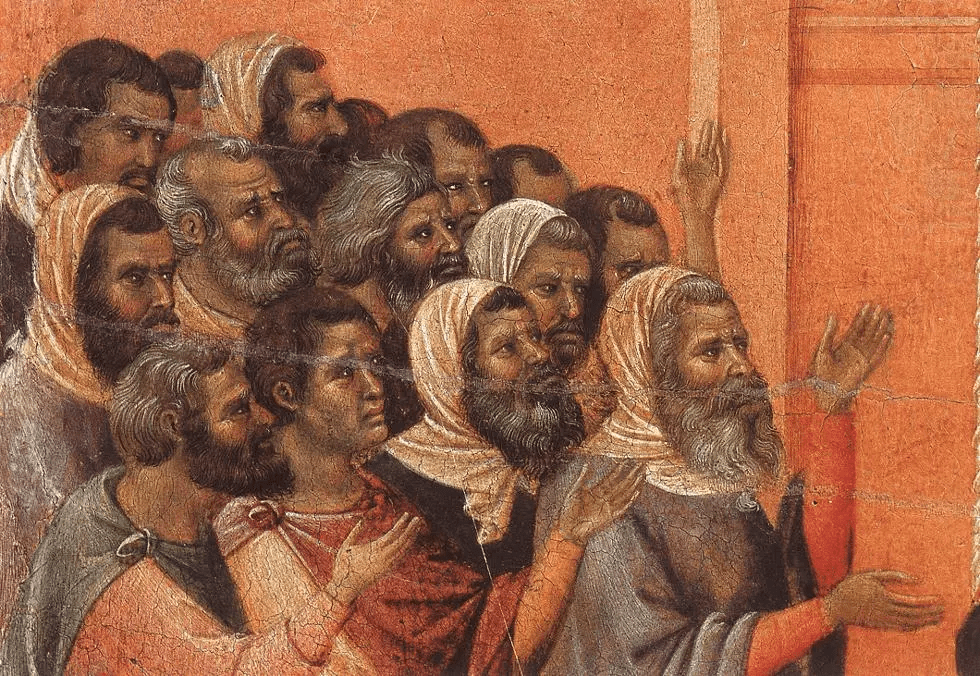
Submission Is an Attitude (1 Peter 2:13-17)

For the sake of the Lord submit yourselves to every human authority: to the Emperor, who is the supreme authority, and to the governors, who have been appointed by him to punish the evildoers and to praise those who do good. For God wants you to silence the ignorant talk of foolish people by the good things you do. Live as free people; do not, however, use your freedom to cover up any evil, but live as God’s slaves. Respect everyone, love other believers, honor God, and respect the Emperor. (Good News Translation)

Submission is a word a lot of people would like to do without. And that’s understandable. We’ve all likely had the experience of being under the authority of someone who either didn’t know what they were doing, or who gaslighted us, took advantage of us, and maybe was even downright mean and nasty toward us. What’s more, it’s hard to obey someone or some institution who we aren’t quite sure has our best interests at mind.

And then there’s an association with the word “submission” as being forced to do something you don’t want to do. That sort of understanding of submission is actually slavery and oppression, not submission.

Simply put, to submit is the informed and willing choice to place oneself under the authority of another. If it isn’t a willing and informed choice, then it’s either manipulation or coercion by another.

The Apostle Peter was referring to submitting to human authority by a volitional choice of our will. And what he was encouraging believers to do was no small thing.

The Roman Empire was an ancient behemoth. At the time of Peter’s writing, the Romans were firmly in charge of Palestine – Gentile rule in a Jewish land – and they did not take kindly to any ideas of rebellion. The Jews wanted their own autonomy and rule. To be subject to the Romans was, for many, humiliating and unacceptable.

So, why in the world should anyone willingly choose to submit to an empire that doesn’t align with their values, aspirations, and goals in life?

Peter made it clear why: Submission helps clear away the obstacles to freedom (both personal and corporate) and doesn’t give the persons in authority a reason to speak or act foolishly.

It’s hard to submit; it’s not an easy thing to do. Yet, if we will continually connect submission with why we are doing it, this helps us persevere, especially under leadership which is less than stellar.

The real issue is how we deal with unwanted circumstances in our lives. Although we didn’t ask for many of the unfortunate situations in life, our response to them is critical, and makes all the difference.

“Evil is changed into good when it is received in patience through the love of God; while good is changed into evil when we become attached to it through the love of self. True good lies only in detachment, and abandonment to God. You are now in the trial; put yourself confidently and without reserve into his hand.”

François Fénelon, Let Go: To Get Peace and Real Joy

Admittedly, it is maddening when an injustice is done to us, or we observe someone else experiencing something they don’t deserve. Unjust actions and words perpetrated against us are out of our control. What is, however, within our control is our response. We can choose how to react in each and every situation we face.

“Forces beyond your control can take away everything you possess except one thing, your freedom to choose how you will respond to the situation.”

Viktor Frankl, Man’s Search for Meaning

We, indeed, have a range of responses we may choose from: We can react in passive-aggressive anger, become sullen and morose, stuff all our emotions down and ignore them, lash out and verbally attack; or we can choose to accept the situation for what it is (and not what we want it to be) and submit ourselves to God.

All of you must put on the apron of humility, to serve one another; for the scripture says, “God resists the proud, but shows favor to the humble.” Humble yourselves, then, under God’s mighty hand, so that he will lift you up in his own good time. Leave all your worries with him, because he cares for you. (1 Peter 5:5-7, GNT)

Submission to God often comes in the form of submitting to the human authorities in our lives – even when those persons and institutions over us are imperfect. Systemic evil isn’t changed by our response of perpetrating even more evil back upon them. Rather, unjust structures are transformed through godly persons choosing to work within the system to do good, not harm, and to love, not hate.

Christian freedom is never a matter of simply doing whatever the heck you want to do, regardless of how it impacts anyone else. Our freedom is in the ability to make choices about what sort of attitude we are going to have in all the circumstances of life we encounter.

Don’t do anything from selfish ambition or from a cheap desire to boast, but be humble toward one another, always considering others better than yourselves. And look out for one another’s interests, not just for your own. The attitude you should have is the one that Christ Jesus had:

He always had the nature of God,
    but he did not think that by force he should try to remain equal with God.
Instead of this, of his own free will he gave up all he had,
    and took the nature of a servant.
He became like a human being
    and appeared in human likeness.
He was humble and walked the path of obedience all the way to death—
    his death on the cross. (Philippians 2:3-8, GNT)

Therefore, what we’re left with is the willing choice to alter our own life, instead of continually trying to make everyone else change. It comes down to showing respect for all humanity, honoring God with our attitudes, and loving our sisters and brothers in the faith who face the same sorts of challenges we do.

“When we are no longer able to change a situation, we are challenged to change ourselves.”

Viktor Frankl

Be safe. Be strong. Be spiritual. We are all in this life together.

Access to God (Exodus 24:1-11)

Moses on Mount Sinai, by Jean-Leon Gerome, Moses on Mount Sinai, 1895

Then the Lord said to Moses, “Come up to the Lord, you and Aaron, Nadab and Abihu, and seventy of Israel’s elders, and worship from a distance. Only Moses may come near to the Lord. The others shouldn’t come near, while the people shouldn’t come up with him at all.”

Moses came and told the people all the Lord’s words and all the case laws. All the people answered in unison, “Everything that the Lord has said we will do.” Moses then wrote down all the Lord’s words. He got up early in the morning and built an altar at the foot of the mountain. He set up twelve sacred stone pillars for the twelve tribes of Israel. He appointed certain young Israelite men to offer entirely burned offerings and slaughter oxen as well-being sacrifices to the Lord. Moses took half of the blood and put it in large bowls. The other half of the blood he threw against the altar. Then he took the covenant scroll and read it out loud for the people to hear. They responded, “Everything that the Lord has said we will do, and we will obey.”

Moses then took the blood and threw it over the people. Moses said, “This is the blood of the covenant that the Lord now makes with you on the basis of all these words.”

Then Moses and Aaron, Nadab and Abihu, and seventy elders of Israel went up, and they saw Israel’s God. Under God’s feet there was what looked like a floor of lapis-lazuli tiles, dazzlingly pure like the sky. God didn’t harm the Israelite leaders, though they looked at God, and they ate and drank. (Common English Bible)

Mount Sinai, by Shlomo Katz (1937-1992)

We all know the experience of taking something for granted. Over time, we might fail to appreciate what we truly have and the privilege we enjoy – particularly when it comes to the spiritual life.

In Christianity, believers are invited to come boldly before God in order to receive grace and help in a time of need, because we have been granted access by means of Christ’s blood. (Hebrews 4:16)

What we may, however, lose sight of is that the ability to do this was achieved at a great cost.

For anyone to approach God, there are some things which need to be in place. Getting near to the Lord, without provision for it to happen, is like looking directly into the sun on a cloudless day and expecting to observe it. Some major filtering needs to occur if we’re going to gaze at the sun.

In today’s Old Testament lesson, God makes it possible for the ancient Israelites to come near and enjoy a special relationship with the divine by establishing a covenant. The Lord put everything in place which was needed for an ongoing divine/human connection.

There was a ratification ceremony of this covenant relationship, involving blood, pledges to obey the moral and ethical Law, and a singular devotion and commitment to God alone. It was all topped-off with a meal, eating and drinking in the presence of Yahweh their God. Every ritual was highly symbolic of establishing a tight link between God and God’s covenant people.

Who may ascend the mountain of the Lord?
    Who may stand in his holy place?
The one who has clean hands and a pure heart,
    who does not trust in an idol
    or swear by a false god. (Psalm 24:3-4, NIV)

The trouble is that we cannot make ourselves pure in order to approach a perfectly pure and holy Being. God comes to humanity in waves – over the years, centuries, and millennia – so that we might become ever more close and intimate, as in the original relationship in the Garden.

All of the Law, the sacrifices, and the experiences at the mountain, pointed forward to a much greater fulfillment of the divine/human relationship.

“The days are coming,” declares the Lord,
    “when I will make a new covenant
with the people of Israel
    and with the people of Judah.
It will not be like the covenant
    I made with their ancestors
when I took them by the hand
    to lead them out of Egypt,
because they broke my covenant,
    though I was a husband to them,”
declares the Lord.
“This is the covenant I will make with the people of Israel
    after that time,” declares the Lord.
“I will put my law in their minds
    and write it on their hearts.
I will be their God,
    and they will be my people.
No longer will they teach their neighbor,
    or say to one another, ‘Know the Lord,’
because they will all know me,
    from the least of them to the greatest,”
declares the Lord.
“For I will forgive their wickedness
    and will remember their sins no more.” (Jeremiah 31:31-34, NIV)

This new covenant finds its focus, according to the New Testament, in the person and work of Jesus Christ. Now, the ultimate access and approachability is accomplished by means of the suffering, death, burial, and resurrection of Christ.

Mount Calvary, by William H. Johnson, 1944

Christ did not enter by means of the blood of goats and calves; but he entered the Most Holy Place once for all by his own blood, thus obtaining eternal redemption. The blood of goats and bulls and the ashes of a heifer sprinkled on those who are ceremonially unclean sanctify them so that they are outwardly clean. How much more, then, will the blood of Christ, who through the eternal Spirit offered himself unblemished to God, cleanse our consciences from acts that lead to death, so that we may serve the living God!

For this reason Christ is the mediator of a new covenant, that those who are called may receive the promised eternal inheritance—now that he has died as a ransom to set them free from the sins committed under the first covenant….

When Moses had proclaimed every command of the law to all the people, he took the blood of calves, together with water, scarlet wool and branches of hyssop, and sprinkled the scroll and all the people. He said, “This is the blood of the covenant, which God has commanded you to keep.” In the same way, he sprinkled with the blood both the tabernacle and everything used in its ceremonies. In fact, the law requires that nearly everything be cleansed with blood, and without the shedding of blood there is no forgiveness.

It was necessary, then, for the copies of the heavenly things to be purified with these sacrifices, but the heavenly things themselves with better sacrifices than these. For Christ did not enter a sanctuary made with human hands that was only a copy of the true one; he entered heaven itself, now to appear for us in God’s presence. Nor did he enter heaven to offer himself again and again, the way the high priest enters the Most Holy Place every year with blood that is not his own. Otherwise Christ would have had to suffer many times since the creation of the world. 

But he has appeared once, for all, at the culmination of the ages to do away with sin by the sacrifice of himself. Just as people are destined to die once, and after that to face judgment, so Christ was sacrificed once to take away the sins of many; and he will appear a second time, not to bear sin, but to bring salvation to those who are waiting for him. (Hebrews 9:12-15, 19-28, NIV)

Believers in Jesus remember this covenant each time they gather at the Table, partaking of bread and cup, imbibing deeply of the grace given us.

We have no hoops to jump through; there are no gymnastics we need to perform in order to approach God. The way has been opened. The curtain has been torn. Access to God is available.

I arise early each morning, but it’s not to offer a blood sacrifice. Rather, I have the wonderful privilege of drawing near to God, and offering a sacrifice of praise. Doing this daily routine helps me to remember, and not take for granted, the incredible privilege I have of entering the Lord’s presence.

Gracious and merciful God, forgive me in any way that I have taken you for granted. I thank you for salvation and the spiritual blessings of your presence and power in my life. Help me to always be aware and grateful for Jesus Christ, who with you and the Holy Spirit are one God, now and forever. Amen.

It’s About Love (1 Peter 1:17-23)

Statue of Christ the Redeemer, Rio de Janeiro, Brazil

Since you call on a Father who judges each person’s work impartially, live out your time as foreigners here in reverent fear. For you know that it was not with perishable things such as silver or gold that you were redeemed from the empty way of life handed down to you from your ancestors, but with the precious blood of Christ, a lamb without blemish or defect. He was chosen before the creation of the world, but was revealed in these last times for your sake. Through him you believe in God, who raised him from the dead and glorified him, and so your faith and hope are in God.

Now that you have purified yourselves by obeying the truth so that you have sincere love for each other, love one another deeply, from the heart. For you have been born again, not of perishable seed, but of imperishable, through the living and enduring word of God. (New International Version)

Love makes the world go round. The cycle of life brings an end to all things. Yet, the permanence of love has always existed, and will never cease to exist. (1 Corinthians 13:8-13)

Biblical godly love comes not because we first loved God, but because God first loved us and gave his Son, Jesus Christ, as an atoning sacrifice for our sins. (1 John 4:7-12)

So, the Christian’s faith and hope are completely grounded in the person and finished work of Jesus. People are so valuable to God that we were purchased from the slavery auction block with the costliest price ever: the precious blood of Jesus. 

To know this love of God in Christ, to be thoroughly captured and enraptured by it, results in a profound and deep love for others. And I’m not only referring to a nice touchy-feely love, but also a steadfast love which is committed to love regardless of what another person says or does.

Love is wonderful. But that doesn’t mean it’s easy. Being on the receiving end of love is a beautiful thing. Giving love, however, can sometimes get dicey.

Although we Christians really do believe that everything in life and ministry centers around the grace and love of God in Christ, our boots-on-the-ground loving sometimes seems compromised and conditional. That’s because it’s easy to love those who love us back. Yet, what if our love is not reciprocated or requited?

This situation brings us face-to-face with our own selves. The painful reality is that we all discover that our love is sometimes, maybe oftentimes, dependent on an assurance that we will be loved in return.

Mutual love is a beautiful thing, but what happens when only one of the persons is able to give love?

What do we do when grace is our only option, when we must choose to love, knowing that love won’t have a response?   

Christians are supposed to give the same kind of love that God shows to us in Christ – which means we need to decide that grace is going to be our lifestyle. It comes down to this: It simply doesn’t matter what condition the other person is in. It doesn’t matter what another is going to say, or not say. Nothing on the other party’s side matters. It…just… doesn’t… matter.

What really matters is our own loving another person deeply from the heart, regardless and in spite of everything else. That, my friends, is real Christian love.         

Since we are redeemed people; have acknowledged the truth of Christ’s redemptive events of crucifixion and resurrection; are recipients of God’s great love to us in Jesus; we must choose to live our lives full of grace and love, no matter what. 

As God’s redeemed people, purchased by the precious blood of Christ, our default response to others is to be this: We will love one another unconditionally.

Unfortunately, over time, many Christians slowly become disconnected from this fountain of grace and love. It is likely that, at some past point, they were deeply touched by a gracious encounter with Jesus Christ. They found peace, love, and joy. Minds were swept up in the awe and wonder of God. Hearts were deeply moved for a few hours, days, or weeks. 

But then, there was a return to the routine grind of daily existence. Gradually, the demands of life took over. Jesus began to be treated like an old friend from another town whom we dearly loved in years past, but have just lost track of. 

Of course, it was unintentional. We simply allowed circumstances to drift us apart. We became preoccupied with something else. Now, we find ourselves with a low level of irritation, frustrated with others and unable to love as we ought. We become what the late author Brennan Manning called “Christian agnostics,” that is, people who do not deny Jesus, but just ignore him.

If your days are trivial and/or hectic…

If the clock determines what you do…

If you are numb to the news and headlines around you…

If you are all jangled and jittered by life’s circumstances…

If phones and computers and gadgets rule your day…

If there is little room for responding to humanity humanely…

If you have settled into a comfortable piety and a well-fed virtue…

If you have grown complacent and lead a practical life…

Then you need to be touched again by the grace and love of God in Christ by treating Jesus as if he were your very best friend as well as the awesome Son of God. 

We are all still here walking on this earth because none of our failures and lack of faith have proved terminal; we are here today because of grace and love. 

The forgiveness of God is a liberation from guilt and regret. It is an extreme amnesty. Through looking in the mirror, and seeing personal sinfulness, we amazingly end up encountering the merciful love of the redeeming God. 

The grace of God says to us, “Hush, child, I don’t need to know where you’ve been or what you’ve been up to; just let me love you.” 

When we have experienced that kind of love, we are then finally able to love one another deeply from the heart. It’s a new life of love, the kind that comes from God – an unconditional love that’s permanent and will never go away.

Therefore, as Christians loved by Christ and belonging to God, we make the following affirmations of love:

  • We will love, no matter whether we are loved in return.
  • We will take the initiative to love, not just waiting for others to love first.
  • We will love, even when we are imperfect and feel unworthy to do so.
  • We will give love with the love we received from Jesus.
  • We will love with a gracious, sacrificial, vulnerable, and desperate kind of love. 

Many years ago, I spent some time with someone in a hospital waiting room after her brother had been severely burned in a farm accident. In that place, we were all strangers. Yet, there was a loving vulnerability to our being together. I sat watching and waiting with anguished people, listening to their urgent questions: Will my husband make it? Will my child walk again, even if she survives? How do you live without your companion of thirty years? 

Burn unit and intensive care unit waiting rooms are places. And the people who wait are different. They can’t do enough for each other. No one is rude. The distinctions of race and class melt away. Each person pulls for everyone else. Vanity and pretense vanish. No one is embarrassed about crying or asking tough questions. In that moment their whole world is focused on the doctor’s next report. If only it will show improvement.

Everyone intuitively knows that loving someone else is what life is all about. By God’s amazing grace we will all learn to live like that without having to learn it the hard way in a place of intense anxiety and suffering.

Christ’s resurrection is not some flash-in-a-pan – it has staying power – it is real and permanent. Christ is the Christian’s hope of living a new life of gracious unconditional love. 

Jesus actually expects more failure from you than you expect from yourself. And he gives grace. So, all of our failures to love as we ought can be laid before Jesus because there is grace that covers it all – a deep love that forgives, redeems, and makes new.

God of goodness and grace, we your people are aware of our human frailties and foibles, and yet are overwhelmed by your love for us. We give you praise that there is no human experience we might walk through where your love cannot reach us. If we climb the highest mountain you are there, and if we find ourselves in the darkest valley, you are there. Continually teach us to love you and others, through Jesus Christ our Lord. Amen.

A Mountain of Good News (Isaiah 25:6-9)

On this mountain the Lord of hosts will make for all peoples
    a feast of rich food, a feast of well-aged wines,
    of rich food filled with marrow, of well-aged wines strained clear.
And he will destroy on this mountain
    the shroud that is cast over all peoples,
    the covering that is spread over all nations;
    he will swallow up death forever.
Then the Lord God will wipe away the tears from all faces,
    and the disgrace of his people he will take away from all the earth,
    for the Lord has spoken.
It will be said on that day,
    “See, this is our God; we have waited for him, so that he might save us.
    This is the Lord for whom we have waited;
    let us be glad and rejoice in his salvation.” (New Revised Standard Version)

Mountains are a prominent and symbolic part of Holy Scripture.

Abraham sojourned to a mountain where he exhibited the pinnacle of faith in radical obedience to God’s command to sacrifice his son Isaac. (Genesis 22:1-19)

The Law was given to Moses on a mountain. (Exodus 19:1-20:17)

Elijah traveled 40 days and nights to meet God on a mountain. (1 Kings 19:11-18)

Jesus preached the most famous sermon ever on a mountain. (Matthew 5-7)

Because of such references, we routinely refer to extraordinary events as “mountaintop experiences.”

Your steadfast love, O Lord, extends to the heavens,
    your faithfulness to the clouds.
Your righteousness is like the mighty mountains;
    your judgments are like the great deep;
    you save humans and animals alike, O Lord. (Psalm 36:5-6, NRSV)

The mountain is a contrast and antithesis to the valley of death below. It signifies God’s power and reign over all earthly rulers. On the mountain we enjoy a great feast of the soul, not to mention an actual meal full of celebration. After all, food and celebration always go together in God’s kingdom.

Whenever healing and/or emancipation happen, it’s time for a celebration. To celebrate significant events, and ritualize them so we remember them, is wise and much needed.

For the Christian, Jesus is the fulfillment of all God’s good promises. In Christ, we have deliverance from guilt, shame, death, and hell. Because Jesus Christ is risen from death and has conquered the grave, our salvation is assured and made possible. And so, along with the prophet Isaiah, we proclaim the good news of peace through the crucifixion and resurrection of Christ.

How beautiful upon the mountains
    are the feet of the messenger who announces peace,
who brings good news,
    who announces salvation,
    who says to Zion, “Your God reigns.” (Isaiah 52:7, NRSV)

Celebration of the good news keeps any sort of spiritual amnesia at bay; and when future difficulties arise, because of our joy in salvation, we are able to recall the mighty acts of God and embrace hope for the future.

If we consistently practice celebration, the redemption experienced in the past is constantly fresh, like a sumptuous meal before us in an endless buffet of goodness. We can eat anytime we want.

Banquets are rightly associated with hospitality, generosity, and fellowship. Meals in the ancient Near East culture were much more than utilitarian; eating together was (and, frankly, still is in most parts of the world) a deeply spiritual event which communicates acceptance, encouragement, and love to one another.

God is the ultimate host. He throws the best parties. God ensures that there is plenty of food, fellowship, and fun. God’s joy knows no bounds. In the middle of a world beset with sadness, loss, and grief, God’s boundless generosity swallows up people’s disgrace and mourning.

At God’s Table, no one cries alone; everyone is comforted; nobody walks away hungry; and, every person is waited upon, no matter who they are or where they have come from. Indeed, there is always room at the Table.

Through Christ’s resurrection, death has been swallowed up in victory. (1 Corinthians 15:54)

Death no longer has any power to control, humiliate, or shame us into submission. Death’s threats are empty.

The Grim Reaper’s teeth have been pulled and his scythe has been broken. He is the party-pooper who is barred from entry.

There is life and abundance for all who ascend the mountain and feast with God at his Table. The invitation has gone out. The Table is spread. We need only to come.

In the joy of your Son, Jesus Christ, through his mighty resurrection and in expectation of his coming again, we offer ourselves to you, Almighty God, as holy and living sacrifices. Together with all your people everywhere and in every age, we proclaim the mystery of the faith:

Christ has died!

Christ is risen!

Christ will come again!

Send your Holy Spirit upon us, we pray, that the bread which we break and the cup which we bless may be to us a sacred communion, a holy celebration of Christ’s body, blood, and victory over death. We declare:

God has spoken!

God has acted!

God has provided!

May you gather all into your hospitable and abundant kingdom; through Jesus Christ, your Son, our Lord, who lives and reigns with you and the Holy Spirit, One benevolent God, now and forever. Amen.