If you see any brother or sister commit a sin that does not lead to death, you should pray, and God will give them life. I refer to those whose sin does not lead to death. There is a sin that leads to death. I am not saying that you should pray about that. All wrongdoing is sin, and there is sin that does not lead to death.
Dear children, keep yourselves from idols. (New International Version)
In a world of constant change, the need for people to experience meaning and stability in their lives is more pronounced than ever.
COVID-19 currently grips the world in a terrible reality of disease, death, and disruption. Just when we think there might be a light at the end of the tunnel, new strains of the virus arise. Meanwhile, life goes on with all it’s typical changes, losses, and devastating natural disasters.
There are people wondering if they will have a job tomorrow – or if they will ever get called back to one. Many parents are anxious about what kind of world their kids will have when they become adults. Others feel adrift in a fast-paced society, glutted with so much news and information that they have little sense of what is real or true. Discouragement and/or depression may seem to never end.
Whenever there are uncertainties all around us, it’s necessary to return to the knowable, to hang our hat on some solid bedrock certainties we are convinced are always there. That’s why the Apostle John wrote his letter, to remind the church of the known and the knowable:
“I write these things to you who believe in the name of the Son of God so that you may know that you have eternal life.”
“If we know that he hears us—whatever we ask—we know that we have what we asked of him.
“We know that anyone born of God does not continue to sin.”
“We know that we are children of God.”
“We know also that the Son of God has come and has given us understanding, so that we may know him who is true.”
In English, we have only one word for “know.” Yet, in the ancient Greek of the New Testament there are two different words for “know.” Throughout today’s lesson, the Apostle consistently uses one of those words, then shifts to another at the end.
All of the “knows” John used refer to an objective knowledge – an information-based understanding which anyone could discover, learn, or know. Then, the Apostle switched to a different word at the end – to know him (Christ) who is true. That particular word has to do with a subjective or experiential knowledge. In other words, it is an inner witness and knowing of objective knowledge.
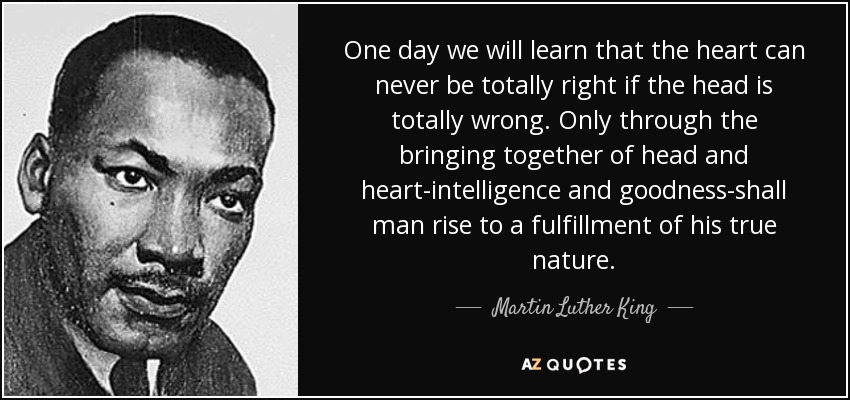
In American society, we frame the distinction between the two words by saying we need to know something in our heart (subjective knowledge) and not only in our head (objective knowledge).
Cerebral understanding, combined with heartfelt experience, results in a new confidence in prayer, a new attitude toward the world, and a new awareness of God. These are the impact of knowing Jesus Christ, and him crucified, risen, ascended, and coming again.
Knowing God takes both the head and the heart. Only being concerned for sound doctrine creates theological eggheads who dispassionately connect with God and others as if they were merely brains on a stick figure. Conversely, only being concerned for how religion makes us feel causes a kind of spiritual schizophrenia which is unstable and constantly seeks for a new or better experience in worship.
Love and obedience are the sacred pathways to personal and corporate knowledge and peace. Whenever the supreme ethic of love takes place in the believer’s life, through receiving it from God and giving it to others, it brings a sense of divine assurance in a sea of worldly uncertainty.
Security in God will always outdo the insecurities of life.
Loving God, I know that you listen to me. I pray your love and assurance will fill me to such a place that I have peace amidst the vicissitudes of this life. May I rest in Jesus Christ through the work of your Holy Spirit. Amen.
Be very careful, then, how you live—not as unwise but as wise, making the most of every opportunity, because the days are evil. Therefore, do not be foolish, but understand what the Lord’s will is. Do not get drunk on wine, which leads to debauchery. Instead, be filled with the Spirit, speaking to one another with psalms, hymns, and songs from the Spirit. Sing and make music from your heart to the Lord, always giving thanks to God the Father for everything, in the name of our Lord Jesus Christ. (New International Version)
As you likely well know, an inebriated person tends to say and do things that they do not typically say or do when they’re sober. The Apostle Paul’s point about being filled with the Spirit is that, instead of doing and saying stupid things, we are so filled with God that we do things and say things that we would not typically do and say if we were not filled with God – that is, good things.
Apart from being full of God’s Spirit, we tend toward mumbling, not singing; worry, not making music in our hearts; and complaining and arguing, not giving thanks. Half-filled Christians practice a half-hearted Christianity. They’re only half-baked in their service and devotion to Christ.
Why sing?
Because singing is part of being filled with the Spirit of God. Singing happens when we experience God’s overflowing grace in our lives through the blessings of being chosen, adopted, and redeemed into God’s new community. (Ephesians 1:3-11)
Music is powerful. It’s not only a means of expressing praise and commitment to Christ and each other, it is also a powerful means of being impressed. For example, when we first teach kids the alphabet, we teach it in a song. Trying to teach letters in a rote fashion typically doesn’t work well for pre-school kids. Words set to music is why we still remember words from old TV shows, because those words were set to a catchy tune. Music is why an Alzheimer’s patient cannot remember her daughter’s name but can flawlessly sing all four verses of Amazing Grace.
Singing is an offering and a sacrifice of praise to God (Hebrews 13:15). And singing is also a vehicle whereby we are taught, encouraged, and built up in the community of believers. We sing to God, one another, and even ourselves.
Church music, then, is to be both a means of praising God and a practice of encouraging each other. We do it through psalms, hymns, and spiritual songs.
Psalms
The word “psalm” helps us rightly think of the biblical book of Psalms. Singing the psalms is an ancient practice, going all the way back to the Israelites singing psalms in the temple and synagogue. The early church maintained this practice, especially as a means of being faithful to praying without ceasing.
However, over time, medieval congregations began neglecting the practice. In fact, the congregations eventually gave up most singing altogether. Almost all the singing was done by church choirs and professional musicians employed by the state (no separation of church and state) to write, compose, and perform in worship services.
Five-hundred years ago, with the Reformation, Martin Luther reinstituted congregational singing. He gave music back to the people. One of the results of this change was putting the book of psalms to song – the Psalter. For many Protestant denominations, the Psalter became the primary means of singing. The Psalter chiefly set prayers to song. It was both a means of expressing prayer to God and learning Scripture.
Hymns
There have always been hymns in the church. Yet, it was not until the Reformation that hymns began to be written and sung by congregations. For the Reformers, hymns were used to teach sound doctrine and theology, as well as a means of confessing the faith together
Spiritual Songs
Spiritual songs are the present day equivalent of praise and worship choruses, or what some refer to as contemporary songs. These are songs purposefully designed to be emotional expressions of praise to God and to give powerful testimony for what God has done or is doing.
So, what?
Quick review:
Psalms are used to pray and learn Scripture.
Hymns are used to teach us sound doctrine and confess the faith together.
Spiritual songs are an important way of expressing praise to God and being encouraged in the faith.
Therefore, church music is to serve as both a revelation from God, and as a response from God’s people.
There are two important deductions from this verse:
A variety of songs is inferred and expected.
Paul commanded their use.
The reason worship style is such a hot topic in a lot of churches is because we all have our personal preferences. And yet, if we are to be faithful to today’s New Testament lesson, we will not just lock in on what I want.
Truth be told, we are selfish people when it comes to music. We want what we want, and we don’t care what somebody else wants. And we will persist in that self-absorbed spirit until somebody calls us on it. That somebody is the Apostle Paul. The Word of God calls us to encompass psalms, hymns, and spiritual songs – all three of them – in our worship.
I have a good friend who is an accomplished church musician and worship pastor. I once asked him how I can lead a worship service among such a variety of preferences concerning music. He answered my question with a question: “How highly do people, including and especially your musicians, value the unity of the church? Do they love each other so much that they can allow for a wider range of style, and do so without vocally complaining about it?”
My friend went on to say, “When I arrived at one church as their pastor, some people were in a rather bad habit of saying very openly, ‘Oh I hate that song,’ or, ‘If I hear this song one more time I’m walking out.’ What I tried to do was teach people that this is not the most loving or mature approach and does little to build up the rest of the Body of Christ.”
If a group of people are being faithful to Scripture, and doing their best musically, then – if the music seems lifeless, dull, or strange to us – the real issue isn’t style but our hearts.
Is that heart filled with the Spirit of God? If it is, then we will speak to one another using the Psalter, using time-honored hymns, and utilizing fresh contemporary praise songs. And the result will be the Body of Christ, the Church, built up in the faith.
Gracious God, give us grace to take to heart the great dangers we are in by our unhappy divisions about music. Take away all hatred and prejudice, and whatever else may hinder us from godly union and concord; that, as there is but one body and one Spirit, one hope of our calling, one Lord, one faith, one baptism, one God and Father of us all, so we may from this time forward be all of one heart and of one soul, united in one holy bond of peace, and may with one mind and one mouth glorify you, through Jesus Christ our Lord. Amen.
“I am the way, the truth, and the life.” –Jesus (John 14:6)
So, I tell you this, and insist on it in the Lord, that you must no longer live as the Gentiles do, in the futility of their thinking. They are darkened in their understanding and separated from the life of God because of the ignorance that is in them due to the hardening of their hearts. Having lost all sensitivity, they have given themselves over to sensuality so as to indulge in every kind of impurity, and they are full of greed.
That, however, is not the way of life you learned when you heard about Christ and were taught in him in accordance with the truth that is in Jesus. You were taught, with regard to your former way of life, to put off your old self, which is being corrupted by its deceitful desires; to be made new in the attitude of your minds; and to put on the new self, created to be like God in true righteousness and holiness.
Therefore, each of you must put off falsehood and speak truthfully to your neighbor, for we are all members of one body. “In your anger do not sin”: Do not let the sun go down while you are still angry, and do not give the devil a foothold. Anyone who has been stealing must steal no longer, but must work, doing something useful with their own hands, that they may have something to share with those in need.
Do not let any unwholesome talk come out of your mouths, but only what is helpful for building others up according to their needs, that it may benefit those who listen. And do not grieve the Holy Spirit of God, with whom you were sealed for the day of redemption. Get rid of all bitterness, rage and anger, brawling and slander, along with every form of malice. Be kind and compassionate to one another, forgiving each other, just as in Christ God forgave you. Follow God’s example, therefore, as dearly loved children. (New International Version)
Where is truth?
Truth is ultimately not found in a system. It is supremely discovered in a person. At the beginning of this Christian Epiphany season, we are reminded that Christ embodied truth. “I am the truth,” Jesus said. (John 14:6)
Jesus modeled a life of truth. He lived and spoke in love. He had a handle on the appropriate use of anger. He never evidenced a wagging gossipy slanderous tongue. There was no bitterness in his heart. He forgave others and was consistently compassionate.
Following Jesus in this way of life can often be difficult and challenging. Why, despite knowing better, do we have such a doggone hard time following Christ’s example of holy speech, pure words, and radical forgiveness?
If there was a simple answer/solution to the acerbic tongues of others, it would be easy to avoid using our words like a hot knife through butter, toasting others with subtle digs and cranky words. Simply telling ourselves (or others) to stop their bellyaching is only a manifestation of our own belligerent spirit running amok.
Gentle words are a tree of life; a deceitful tongue crushes the spirit.
Proverbs 15:4, NLT
Rather, we need a solid practical approach to those nagging white lies we keep putting out there and the bending of truth to suit our own selfish purposes. Neither sheer willpower nor hackneyed homebrewed prescriptions will get the job done.
When we go to the doctor, we want them to be honest with us about our true condition and health. If we have a clean bill of health, we are glad for that truth. If, however, we have something wrong, we want to know what it is and how to deal with it. Doctors who avoid the truth so to not make us feel bad or hurt our feelings are performing malpractice, not healing. We need a solid diagnosis and prognosis framed in a caring way. Trying to grow spiritually without hearing the truth about ourselves from a spiritual doctor is like trying to do heart surgery on yourself.
The truth will set us free. Yet, it will make us uncomfortable. We all have a real need to hear the truth spoken in love and to wrap our heads and hearts around it. This can only happen if we are open, honest, and real with each other. We are to stop being dishonest, and start being truthful.
What is truth?
The Christian tradition teaches that Jesus is the way, the truth, and the life. Life together is shaped around the person and work of Christ. Since Christians share a common confession of Jesus, we are to share a common life together. That life revolves around the truth of Jesus.
As God’s chosen ones, holy and beloved, clothe yourselves with compassion, kindness, humility, meekness, and patience.
Colossians 3:12, NRSV
Therefore, we will put off non-Christian ways of relating to each other and put on a Christian way of relating to each other. We will speak truthfully because we belong to each other. Just as Jesus closely identified with us in his life, death, and resurrection, so we are to so closely identify with each other so that we take responsibility for each other. My problems are your problems – your issues are my issues. This is a stance of connection, not division.
We are to put off lying and put on truth. Too often, we are in the habit of pretending and being plastic. Acting as if we are okay when we are not, or even pretending life is hard, when it is not, is an untruthful presentation – it is a lie. Secrecy and deception are tools of Satan, not God. Therefore, we must put off the bad habit of pretention, and put on the good habit of speaking truthfully to each other.
Why don’t we speak truth?
Habits of lying come from the enemy of our souls who whispers in our ears that being truthful and transparent is too traumatic – we can’t do it. Buying into that snake oil thinking believes we cannot be open, honest, real, vulnerable, and genuine because it’s not worth the risk.
We might become convinced we’ll be rejected, lose face with others, or be a victim of gossip. Shame then takes the steering wheel instead of speaking truthfully to one another. So, we avoid the truth and, so, end up avoiding others.
Why are we to speak truth?
Because we are responsible to one another. We are not meant to hide in the shadows but to step into the light and forsake all fakery and be truthful. When Ananias and Sapphira lied to the Apostle Peter, they were judged severely because they betrayed the community (Acts 5:1-11). Lying undermines and erodes true community.
How do we speak truth?
We speak truthfully by making and keeping promises to each other. That is what God does with us. Communities which love truth will make a safe place for the awkwardness of confession, forgiveness, and healing. There is assurance that members will not abandon one another as they reveal their sins and weaknesses and fumble forward toward maturity and holiness.
Truthful communities are sacred spaces of encouragement and hospitality where we are safe to be real. No one should ever have to suffer in silence, cry alone, or wonder whether they will be forsaken. We must have a refreshing openness with each other since we belong to one another.
“Yes, somewhere people still make and keep promises. They choose not to quit when the going gets rough because they promised once to see it through. They stick to lost causes. They hold on to a love grown cold. They stay with people who have become pains in the neck. They still dare to make promises and care enough to keep the promises they make. I want to say to you that if you have a ship you will not desert, if you have people you will not forsake, if you have causes you will not abandon, then you are like God. What a marvelous thing a promise is! When a person makes a promise, she reaches out into an unpredictable future and makes one thing predictable: she will be there even when being there costs her more than she wants to pay. When a person makes a promise, he stretches himself out into circumstances that no one can control and controls at least one thing: he will be there no matter what the circumstances turn out to be. With one simple word of promise, a person creates an island of certainty in a sea of uncertainty.”
Lewis Smedes, The Power of Promises
Where do we go from here with truth?
I harbor no delusions: Being transparent and real is scary. Yet, if we are to be the true humanity we are designed to be by our Creator, we will speak truthfully and not put up a false front. We will neither hide nor hurl. We will neither pretend everything is okay when it is not, nor project our problems onto others using untruthful accusations. We will do the hard work of learning to communicate by speaking the truth in love.
There are two tendencies that may plague us going forward: complacency and mediocrity.
When it comes to relationships, we are too easily satisfied with a minimum amount of effort, words, and commitment. We need to make and keep promises to God and to each other; live into our baptisms; and renew our covenant of care and commitment to each other. This means we will allow God to invade our hearts; we will let our mouths say what needs to be said; and be open enough to let others in.
Though there are many of us, we are one body in Christ, and individually we belong to each other.
Romans 12:5, CEB
Some folks have putrid spiritual abscesses from either hiding the truth or hurling truth without love. Spiritual healing comes through spiritual surgery. God the Father sent God the Son to die on a cruel cross for all our unhealthy ways of relating to each other – and together sent God the Holy Spirit, the Spirit of Truth, to form a new community of believers around truth.
Putting off and putting on – that is the prescription for realizing truthful speech and life. It is not easy. It’s hard as hell. And it takes us all as a human community to do it. Sometimes things are messy before there can be order and peace. That is the price of authenticity and truth – and that’s okay.
Creator of all that is good and true, help me so to put aside falsehood and put on truthful living and speaking that love and compassion shine in and through me to the glory of Jesus Christ, your Son, my Savior, who with you and the Holy Spirit live and reign forever together in a Holy Trinity of Truth. Amen.
In the time of King Herod, after Jesus was born in Bethlehem of Judea, wise men from the East came to Jerusalem, asking, “Where is the child who has been born king of the Jews? For we observed his star at its rising and have come to pay him homage.” When King Herod heard this, he was frightened, and all Jerusalem with him; and calling together all the chief priests and scribes of the people, he inquired of them where the Messiah was to be born. They told him, “In Bethlehem of Judea; for so it has been written by the prophet:
‘And you, Bethlehem, in the land of Judah, are by no means least among the rulers of Judah; for from you shall come a ruler who is to shepherd my people Israel.’”
Then Herod secretly called for the wise men and learned from them the exact time when the star had appeared. Then he sent them to Bethlehem, saying, “Go and search diligently for the child; and when you have found him, bring me word so that I may also go and pay him homage.” When they had heard the king, they set out; and there, ahead of them, went the star that they had seen at its rising, until it stopped over the place where the child was. When they saw that the star had stopped, they were overwhelmed with joy. On entering the house, they saw the child with Mary his mother; and they knelt down and paid him homage. Then, opening their treasure chests, they offered him gifts of gold, frankincense, and myrrh. And having been warned in a dream not to return to Herod, they left for their own country by another road. (New Revised Standard Version)
“Truth, by which the world is held together, has sprung from the earth, in order to be carried in a woman’s arms.”
St. Augustine
Each year on January 6 in the Church Calendar, after the twelve days of Christmas, is the celebration of Epiphany. Christ’s coming to this earth as a child and becoming like us is much more than a baby in a manger. Epiphany helps to bring a vision and understanding of God’s glory to all kinds of people of the world.
Epiphany means “manifestation” or “appearance.”
The event associated with this season is the visit of the Magi to Jesus. The season of Epiphany has a special emphasis on the teaching and healing ministry of Jesus. The great celebration and focus of these weeks is that salvation is not limited to Israel but extends to the Gentiles, as well.
Every season in the Christian Year has its unique angle of grace. With Epiphany, we see that one of the most scandalous truths of Christianity is that God graces common ordinary people who seem far from God with the gift of Jesus.
God grants repentance that leads to life for all kinds of people no matter their race, ethnicity, gender, class, or background. It is a wondrous and astounding spiritual truth that God’s gracious concern is not limited to a certain type of person or a particular group of people.
Grace is and ought to be the guiding factor in how we interact with people.
Losing sight of grace leads to being critical and defensive. Like King Herod of old, a graceless person becomes enamored with earthly power and control. But embracing grace leads to the humility of seeing the image of God in people quite different from ourselves.
Like the Apostle Peter, who learned in a vision to bring the gospel to non-Jews, old legalisms begin to wear away so that people from all walks of life can have access to Jesus and his gracious saving and healing ministry. (Acts 10-11:18)
Grace brings down barriers and causes us to do away with unnecessary distinctions between others. Our appropriate response to such a grace is to glorify God for his marvelous and amazing work.
It is a merciful reality that the Magi, or Wise Men, pagan astrologers, were directed to the Messiah. A light was provided to lead them to Jesus. Apart from God’s care and intervention they would have remained in darkness.
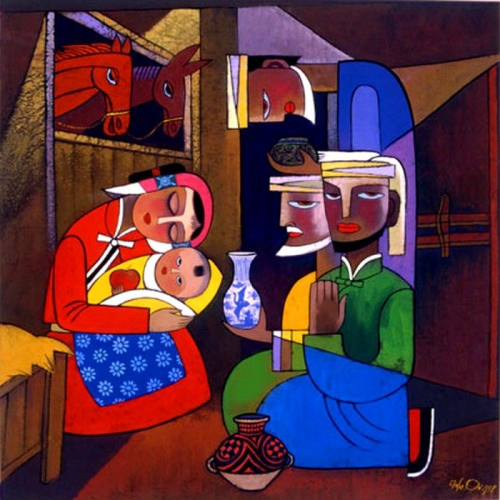
Adoration of the Magi by He Qi
It is still true for people today. This old broken world is wrapped in darkness. All kinds of people have no light at the end of the tunnel of their lives for hope and new life. The gospel of Jesus Christ brings that light to those unable to see. Jesus, in his teaching ministry, exhorted his followers not to hide their light but to let it shine for all to see. (Matthew 5:14-16)
Sometimes, maybe oftentimes, the best way to bring resolution to our own troubles and problems is through helping others make sense of their lives through the gracious light of Christ. Then, they can see an appearance, an epiphany, of what their lives could be in the gracious rule of the kingdom of God.
As we celebrate Epiphany and journey with Jesus through his earthly upbringing and into his gracious ministry to people, let us keep vigilance to not let our light grow dim. Instead, let us hunger and thirst after Christ’s righteousness so that our joy is full, and our light is bright.
God of mercy, Lord of all, you have gifted the Church through the goodness of your grace to be your hands and do your work, to be your voice and share your words, to bring healing to broken lives. You have graciously gifted your people with the blessings of your Spirit, the power to transform lives and make all things new.
Now may our hearts receive, our mouths proclaim, our hands prepare for compassionate service so that the love we have may overflow into the hearts of others. May they receive your grace, your renewing Spirit, and your love, through Jesus Christ our Savior. Amen.