Acts 7:44-53 – Don’t Be a Church Curmudgeon

Muppets Statler and Waldorf

“Our ancestors carried the Tabernacle with them through the wilderness. It was constructed according to the plan God had shown to Moses. Years later, when Joshua led our ancestors in battle against the nations that God drove out of this land, the Tabernacle was taken with them into their new territory. And it stayed there until the time of King David.

“David found favor with God and asked for the privilege of building a permanent Temple for the God of Jacob. But it was Solomon who actually built it.However, the Most High doesn’t live in temples made by human hands. As the prophet says,

‘Heaven is my throne,
    and the earth is my footstool.
Could you build me a temple as good as that?’
    asks the Lord.
‘Could you build me such a resting place?
    Didn’t my hands make both heaven and earth?’

“You stubborn people! You are heathen at heart and deaf to the truth. Must you forever resist the Holy Spirit? That’s what your ancestors did, and so do you! Name one prophet your ancestors didn’t persecute! They even killed the ones who predicted the coming of the Righteous One—the Messiah whom you betrayed and murdered. You deliberately disobeyed God’s law, even though you received it from the hands of angels.” (New Living Translation)

On this eleventh day in the twelve days of the Christmas season, perhaps there are people who have moved on from the yearly celebration to daily complaints. A big reason why I personally hold to the Christian Calendar with its liturgical seasons is that it helps shape me spiritually so that I can avoid being a cranky old church curmudgeon.

It seems like some believers have been baptized in pickle juice. They have something negative to say about everything. And even when they acknowledge they don’t really understand something, they’ll still give a stony faced retort of “I’m against it.”

The liturgical calendar, when properly observed, keeps us grounded in faith, hope, and love. There are plenty of things in this old fallen world which can take our eyes off our calling as Christians. Pandemics, politics, poverty, and pain can mess with us. If we aren’t on solid spiritual ground, all the misfortunes of this life can take a significant toll on us. Then, like a stubborn old mule, we just sit down and don’t budge.

Like the ancient Israelites for whom Stephen railed against in our New Testament lesson for today, we might become hard-headed, and inflexible. We get lost in doing things our own way to the neglect of what God wants. 

Whenever that happens, there is damage to God’s people, God’s name, and God’s law. Rather than tongues being used for praising the Lord and encouraging others, God’s prophets who are calling us to holiness are verbally decapitated. Ironically, those who speak and act in the name of the Lord are resisting him.

“Pettiness of mind, ignorance and presumption are the cause of stubbornness, because stubborn people only want to believe what they themselves can imagine, and they can imagine very few things.”

Madeleine de Souvre

Anytime someone believes they have piously figured out everything, they will soon find themselves fighting against God. The Lord of All has not called us to figure out every mystery and nail down each uncertainty. Those who claim to have done it are living in a delusional world. Perhaps they will eventually discover how large and immense God really is – much bigger than our puny thoughts and misguided practices. 

How then shall we live?

Quit digging your heals in.

Let go of your illusions of power and privilege. Walking around like you’re King Lactose the Intolerant only looks weird and causes too many trips to the bathroom.

Submit afresh to the Lord for whom we must bow in all things. If we can do that, then we are well on our way to seeing the only true God in all his immensity. Humble ourselves under the mighty hand of God and set aside self-righteous pride so that he may exalt and honor us at the appropriate time of his choosing, not ours (1 Peter 5:6).

Take up our holy calling as Christ’s ambassadors, having become new people and knowing the reconciling power of the cross, through the proper spiritual tools of faith, hope, and love (2 Corinthians 5:17-21; 1 Corinthians 13).

The following practices can help us become more spiritually flexible and open to the Spirit’s work:

  • Stretch. If we are rarely or never in positions which work our faith, then that faith will diminish and eventually atrophy. Faith is not static, but dynamic. It needs to be worked ands stretched. And your face won’t break if you crack a smile now and then.
  • Breathe. Fear, worry, and anxiety cause us to have shallow breathing and unable to think straight. When we are amped-up about something, focus on doing some breath prayers, i.e., breathing in saying, “More of you,” and breathing out saying, “Less of me.”
  • Relax. A hyperextended faith will not support extreme positions which alienate people and put God to the test. Some folks just need to get off their high horse before God knocks them off. Nobody is helped by another’s forced beliefs.
  • Move. Faith is mostly lived in the mundane daily decisions of life. Consistently taking small steps of faith each day will go a long way toward our spiritual health and vitality – not to mention helping us see a big God at work.
  • Listen. Two ears. One mouth. Get the clue. Many people would be better served if they would just listen rather than incessantly talking. Behind all the bluster is typically an issue of wanting the kind of control God possesses.

To do the will of God, we must have a growing awareness and knowledge of a big unlimited God, and a small, limited self. This will take loosening up on the stubbornness and opening to greater flexibility.

If you are not in the habit of following the Christian Calendar through the year, now is a good time to start. After all, nobody wants to smell like they just crawled out of a pickle barrel.

Holy God, heaven is your throne and the earth your footstool. You cannot be kept within any one church or any single place.  You are much too big for that!  Forgive me for my small thoughts of you and my weak faith. I humble myself before you so that you can live in and through me for the sake of Jesus. Amen.

Ephesians 1:3-14 – We Are Blessed

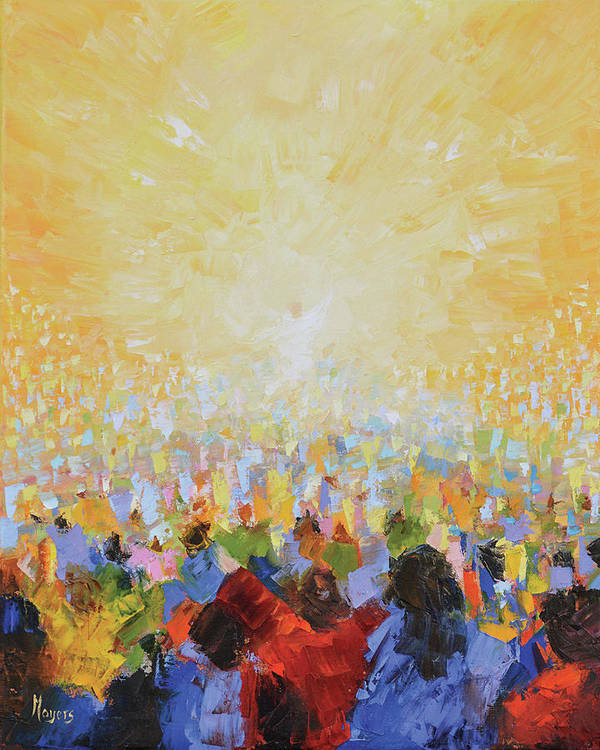
Hallelujah by Mike Moyers

Praise be to the God and Father of our Lord Jesus Christ, who has blessed us in the heavenly realms with every spiritual blessing in Christ. For he chose us in him before the creation of the world to be holy and blameless in his sight. In love he predestined us for adoption to sonship through Jesus Christ, in accordance with his pleasure and will— to the praise of his glorious grace, which he has freely given us in the One he loves. In him we have redemption through his blood, the forgiveness of sins, in accordance with the riches of God’s grace that he lavished on us. With all wisdom and understanding, he made known to us the mystery of his will according to his good pleasure, which he purposed in Christ, to be put into effect when the times reach their fulfillment—to bring unity to all things in heaven and on earth under Christ.

In him we were also chosen, having been predestined according to the plan of him who works out everything in conformity with the purpose of his will, in order that we, who were the first to put our hope in Christ, might be for the praise of his glory. And you also were included in Christ when you heard the message of truth, the gospel of your salvation. When you believed, you were marked in him with a seal, the promised Holy Spirit, who is a deposit guaranteeing our inheritance until the redemption of those who are God’s possession—to the praise of his glory. (New International Version)

God has blessed us. The word “blessing” comes from the same word for “giving thanks.”  So, when, we consider the ways God has spiritually blessed us, it leads us to effusive gratitude and praise.  And this was exactly the case for the Apostle Paul.

In writing these words, Paul was so excited to share with the church at Ephesus about the blessings of God that he could not stop. In our English translations we have broken these verses up into several sentences and two paragraphs. But Paul originally penned this as one sentence!

More than anything, Paul wanted the church to know the wonderful blessings of God to them. Throughout the book of Ephesians, Paul’s constant theme to the church is reconciliation and restoration. In fact, that is the end game for God. God has cares about reconciling people to himself, and others. The Lord deeply cares about restoring the entire world to the lordship of Jesus Christ.

To accomplish this gigantic feat, God intervened into humanity by giving the church three main blessings: election, redemption, and inheritance.

Election 

The word “chose” and “chosen” in some English translations is the Greek word ἐκλεκτός (eklektos) or “election.” This is where it all begins for us. Even before the creation of the world, God had the end of the story in mind. Divine decisions were made about outcomes and results. 

This approach, by the way, is how we are to engage ministry in the church. That is, we begin with the end in mind of what we want to accomplish. Then, we gather the people and begin making the needed decisions to see that end purpose realized. Too often, churches begin with a group of people and wonder about what they should do – which is backwards from how God does it. 

In eternity past, in love, God predestined us to be adopted as his children. You and I are so loved by God that we were special to him before we were even ever born! Election means God has a purpose for us. On the human level, we elect candidates so that they may serve the common good and put their energies into accomplishing some noble cause. 

Likewise with God. We were not elected or chosen by God solely to go to heaven when we die.  Although that is true and shall happen, the reason we were chosen by God was for us to be holy and blameless, to be for the praise of God’s glory. We are not in some sort of holding pattern on earth, impatiently waiting for the afterlife. Rather, we are to be active in accomplishing God’s purposes for our election. And what is that purpose?

We are to participate with God in the grand scheme of reconciling and restoring all of creation back to the original design. Therefore, every act of forgiveness, grace, love, and kindness; every overture of faith and communication of the gospel to others; and all steps of obedience are small movements toward the great restoration story God is writing. 

For example, the book of Acts ends on a dramatic note with no resolution to it. That’s because the story is still being written. We are chosen to be a part of it.

Redemption 

To be redeemed means to be delivered by a payment of a price. In the ancient world, slavery was an entrenched part of the society. The picture of the slave market provided a means for Paul to communicate a spiritual blessing: We have been redeemed from the slave market of sin through the payment of Christ’s blood, and so now, we enjoy the freedom from and forgiveness of sin. 

This is not just redemption from something (sin, death, and hell); it is also redemption to reconciliation and restoration. God elected us to receive redemption so that the grand design of bringing all the earth under the lordship of Christ will happen. God has and is creating a new society, the community of the redeemed, that will realize the original design of unhindered connection with God and others. 

Inheritance

We are receiving an inheritance. It will be put into effect when God’s timing and purpose is accomplished – and Paul spells the purpose out: To bring all things in heaven and on earth together under one head, Jesus Christ. 

Here is how Paul envisions what is coming: The chosen and redeemed of God will one day die, then they will go to be with Christ. But that is not yet the end because the entire world still needs redemption. This is why the preacher of Hebrews could say about the great heroes of the faith:  

These were all commended for their faith, yet none of them received what had been promised.  God had planned something better for us so that only together with us would they be made perfect. (Hebrews 11:39-40, NIV)

There is not just life after death; there is life after life-after-death. All those people of faith, including our believing friends and relatives who have gone before us to be with Jesus, are waiting. They, along with us, have not yet received all the promised blessings of our inheritance. 

We are waiting for the reconciliation and restoration of all things, a new heaven and a new earth in which we will be together as sons and daughters in the kingdom of God with Jesus as King over us. The possession of the Holy Spirit is the guarantee that this is the case, and it will happen. 

Conclusion

Our blessings of election, redemption, and inheritance are all activated by faith. Belief is the switch that turns on the blessings to us in a real and actual way. The electricity is there in the person of the Holy Spirit. The light bulb is there, and it is us. 

So, the question for us today is: Are we turned on and shining brightly, or is the switch off?  We must access our blessings by belief in the Son of God who loved us and gave himself for us.

God is on a mission to reconcile and restore the world. Our salvation is part of God’s plan to make that happen. God is a missionary. The Lord has chosen us to be emissaries to a world that needs redemption and restoration. 

The church is like no other institution on earth – existing for the life of the world, and not for itself. Like a mighty army, we are to train ourselves for godliness so that we can engage an invisible enemy and see the kingdom of God come and the will of God done here on earth as it is always done in heaven. 

The camaraderie we enjoy as fellow soldiers is not the end purpose – restoring enemy territory back to its original government is. So, we care for our wounded and do everything we can for them. There are yet more spiritual battles to be won and hearts captured for King Jesus. 

May you and I, then, give thanks with grateful hearts for the great spiritual blessings of election, redemption, and inheritance so that God’s benevolent and merciful rule might spread everywhere to everyone.

God our Savior, you desire that none should perish, and you have taught us through your Son that there is great joy in heaven over every sinner who repents: Grant that our hearts may ache for a lost and broken world. May your Holy Spirit work through our words, deeds, and prayers, that the lost may be found and the dead made alive, and that all your redeemed may rejoice around your throne, through Jesus Christ our Lord. Amen.

1 Corinthians 3:10-17 – Being a Holy Temple

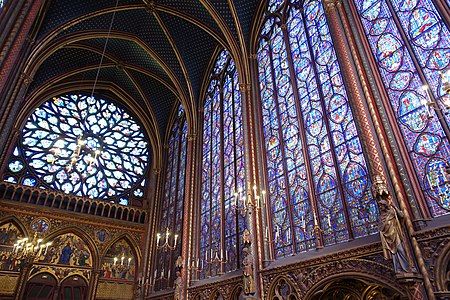
Albi Cathedral in Sainte-Chapelle, France

By the grace God has given me, I laid a foundation as a wise builder, and someone else is building on it. But each one should build with care. For no one can lay any foundation other than the one already laid, which is Jesus Christ. If anyone builds on this foundation using gold, silver, costly stones, wood, hay or straw, their work will be shown for what it is, because the Day will bring it to light. It will be revealed with fire, and the fire will test the quality of each person’s work. If what has been built survives, the builder will receive a reward. If it is burned up, the builder will suffer loss but yet will be saved—even though only as one escaping through the flames.

Don’t you know that you yourselves are God’s temple and that God’s Spirit dwells in your midst? If anyone destroys God’s temple, God will destroy that person; for God’s temple is sacred, and you together are that temple. (New International Version)

God is holy, pure, beautiful, and completely separated from all that is evil. 

However, there is a problem; but it isn’t with God. 

Ever since the fall of humanity into guilt, shame, and impurity, people cannot be near or approach a perfect Being. Just as we will surely go blind by looking directly at the sun – or be totally disintegrated by getting too close to it – so humans cannot be with such a holy God.

In the Old Testament, God graciously devised a system whereby people could approach the divine. A temple was built. It had very detailed and strict prescriptions about how it was to be built. There needed to be curtains, walls, and borders everywhere to shield the people from being destroyed by the sheer holiness of God.

Entering the New Testament, Jesus is the exact representation of God’s holy being and presence. In Christ, God became intimately close to people. Through the redemptive events of Jesus, humanity is delivered from the vexing problem of being far away from God. 

If that were not enough, God the Father and Son sent God the Holy Spirit to be the continuing presence of Jesus on this earth. 

In today’s New Testament lesson, the Apostle Paul tells us that, as the church, we are a holy temple which is graciously, patiently, and with great care being built into a spiritual house that can be the place where God meets with humanity.

The triune God has conspired and gone out of the way to be with us. The Lord has bended the arc of history for good purposes to be with us. Like a lover separated from his beloved, God has pulled out all the stops to make us holy so that we can abide with him in divine holiness.

From the solid foundation of Jesus Christ as the chief cornerstone, we take care to build a spiritual infrastructure worthy of holiness.

As he who called you is holy, be holy yourselves in all your conduct;for it is written, “You shall be holy, for I am holy.” (1 Peter 1:15-16, NRSV)

God’s will is for you to be holy… God has called us to live holy lives, not impure lives. (1 Thessalonians 4:3, 7, NLT)

Some Christians mistakenly believe that holiness means to exclusively separate as far from everything and everyone who is impure. Any hint or smell of unsound dogma or nonconformity with established rules results in separation. Yet, this predilection for separation is really a form of division – which is contrary to the holiness of God. Because the Lord bends over backwards to accommodate the sinner’s ability to approach the divine presence.

Indeed, holiness involves a separation from all that is evil so that we can attach ourselves to God and others. Holiness isn’t simply an end in itself. To be holy means we are prepared and ready to engage in the highest of aims: Love.

Now that you have purified yourselves by obeying the truth so that you have sincere love for each other, love one another deeply, from the heart. For you have been born again, not of perishable seed, but of imperishable, through the living and enduring word of God. (1 Peter 1:22-23, NIV)

Holiness without a clear trajectory toward love is like putting a new collar on a dead dog. It just doesn’t make any sense.

Yet, too many folks have put a leash on that shiny new collar and are dragging the deceased around – much to the chagrin and revulsion of the world – who rightly sees this behavior as both downright crazy and plain stupid.

Paul would say that kind of behavior will be shown for what it is: Building on the wrong spiritual foundation.

It’s really all about Jesus. Christians bear the name of Christ because we (ideally) center our entire existence – past, present, and future – on the redemption provided through Jesus.

And that’s what this Christian season of the year is about: We celebrate the birth of Christ, God’s breaking into this world, to bridge the great divide between divinity and humanity.

The incarnation of Jesus Christ is our foundation.

Being a holy temple means being a sacred space large enough to hold love for all people.

From that strong support, there is no limit to the breadth and height of God’s kingdom. So, may you, along with the Apostle Paul pray:

I’m asking God to give you a gift from the wealth of his glory. I pray that he would give you inner strength and power through his Spirit. Then Christ will live in you through faith. I also pray that love may be the ground into which you sink your roots and on which you have your foundation. This way, with all of God’s people you will be able to understand how wide, long, high, and deep his love is. You will know Christ’s love, which goes far beyond any knowledge. I am praying this so that you may be completely filled with God. (Ephesians 3:16-19, GW)

Amen.

Revelation 21:1-7 – Making Everything New

Making All Things New by James Janknegt

Then I saw a new heaven and a new earth; for the first heaven and the first earth had passed away, and the sea was no more. And I saw the holy city, the new Jerusalem, coming down out of heaven from God, prepared as a bride adorned for her husband. And I heard a loud voice from the throne saying,

“See, the home of God is among mortals.
He will dwell with them;
they will be his peoples,
and God himself will be with them;
he will wipe every tear from their eyes.
Death will be no more;
mourning and crying and pain will be no more,
for the first things have passed away.”

And the one who was seated on the throne said, “See, I am making all things new.” Also, he said, “Write this, for these words are trustworthy and true.” Then he said to me, “It is done! I am the Alpha and the Omega, the beginning and the end. To the thirsty I will give water as a gift from the spring of the water of life. Those who conquer will inherit these things, and I will be their God and they will be my children. (New Revised Standard Version)

The world as we now know it will someday pass away. 

We have a future hope – and it will literally be heaven on earth.

God will descend to dwell with us, and, so, will bring us to humanity’s original design God in the Garden – an unhindered relationship between God and people in which we are no longer dogged by a sinful nature, a sinful world system, and all the temptations a sinful devil uses to exploit for malevolent purposes. 

Tears, death, sorrow and pain will be a thing of the past. Our struggle with sin will be over.

The Apostle John’s revelation to the early church was a very encouraging message. The believers faced all kinds of trouble and persecution due to their commitment to Christ. To know that these problems are temporary, and that Christ’s changes are permanent, was a great comfort and boon to their faith.

One of the problems we experience in this present age is our chronic impatience. We want what we want, and we want it now! 

Throughout history God’s people have looked ahead in hope for the ultimate fulfillment of divine promises. John did not really give a brand new revelation to the church but upheld and anticipated, for Christians, what was true for Israel.   

“Look! I am creating new heavens and a new earth,
    and no one will even think about the old ones anymore.
Be glad; rejoice forever in my creation!
    And look! I will create Jerusalem as a place of happiness.
    Her people will be a source of joy.
I will rejoice over Jerusalem
    and delight in my people.
And the sound of weeping and crying
    will be heard in it no more.” (Isaiah 65:17-19, NLT)
     

In Christ’s first advent, God’s people believed all these promises would be fully and finally realized. But, like a young couple in their engagement period, the promises of God were initiated but not yet realized or consummated. 

People throughout the centuries have struggled with patience, wondering if all this talk of renewal, restoration, and revival would ever happen.

“Where is this ‘coming’ he promised? Ever since our ancestors died, everything goes on as it has since the beginning of creation….”  But do not forget this one thing, dear friends: With the Lord a day is like a thousand years, and a thousand years are like a day. The Lord is not slow in keeping his promise, as some understand slowness. Instead, he is patient with you, not wanting anyone to perish, but everyone to come to repentance. (2 Peter 3:4, 8-9, NIV)

God is even now in the process of moving history to its final stage. Can we be patient, letting God work until that final day comes? 

We live in an amazing time. Although the earth is a big place, we can traverse it by plane in less than two days. It used to be that a ship going across the Atlantic Ocean took three months from Europe to America. Now, we fly across the ocean in a matter of hours. Yet, we freak out whenever we have to be to the airport two hours before a flight and grump about standing in a twenty minute line to board a plane.

It used to be that communication moved at the same pace as a ship. Knowing about a significant event that happened in Europe took months to find out. Now we can know what kind of bread some Frenchman ate for breakfast almost instantly after he eats it because he posted it on social media. Yet, we complain about waiting a few extra seconds for something to load on our computers or smartphones, as if the world were about to end. 

Well, actually, the world is about to end.

Until that day comes, we are not to spend our remaining time trying to figure out exactly the day and hour of Christ’s second advent. We properly anticipate Jesus coming again when we let God change our hearts and lives, our neighborhoods and workplaces, our families and churches, to be like Christ.

God is presently preparing for Christ’s return by doing away with the old to make room for the new. With every changed life, there is the reminder that God is not slow in keeping promises but is active in transforming lives for good.

If anyone belongs to Christ, there is a new creation. The old things have gone; everything is made new!

2 Corinthians 5:17, NCV

The New Testament book of Revelation helps us break our fixation with the past and holding onto the ways we have always done things. We are reminded of God’s capacity and action for renewal. We can walk, right now, in newness of life. 

So, what do we do? Keep on sinning so God can keep on forgiving? I should hope not! If we’ve left the country where sin is sovereign, how can we still live in our old house there? Or didn’t you realize we packed up and left there for good? That is what happened in baptism. When we went under the water, we left the old country of sin behind; when we came up out of the water, we entered into the new country of grace—a new life in a new land!

That’s what baptism into the life of Jesus means. When we are lowered into the water, it is like the burial of Jesus; when we are raised up out of the water, it is like the resurrection of Jesus. Each of us is raised into a light-filled world by our Father so that we can see where we’re going in our new grace-sovereign country. (Romans 6:1-5, MSG)

To overcome impatience and embrace perseverance, we need a better perspective.

In the fall of 1991, a car driven by a drunk driver jumped its lane and smashed headfirst into a minivan driven by a man named Jerry Sittser. Sittser and three of his children survived, but Sittser’s wife, four-year-old child, and mother died in the crash.

In his book, A Grace Revealed, Sittser shares the following interaction some months after the accident with his son, David, who was one of the children who survived:

“Do you think Mom sees us right now?” he suddenly asked.

I paused to ponder. “I don’t know, David. I think maybe she does see us. Why do you ask?”

“I don’t see how she could, Dad. I thought Heaven was full of happiness. How could she bear to see us so sad?”

Could Lynda, my wife, witness our pain in Heaven? How could that be possible? How could she bear it?

“I think she does see us,” I finally said. “But she sees the whole story, including how it all turns out, which is beautiful to her. It’s going to be a good story, David.”

When all is stripped from our lives, and the world as we know it is done away with, what are we left with? 

We are left with God. And a participation with Christ in the renewal of all things. We do that through alleviating and doing away with the evils and troubles of this world. Whenever we seek to eradicate things like global poverty and sex-trafficking; help others come to grips with the evil of this world; change old devilish ways of living; or come alongside others in their trouble; then, God is using us to make everything new.

The end is coming.

But it’s not yet here. 

What’s here right now is God patiently bringing salvation to all kinds of people. 

So, let’s allow God to be God. And let’s allow the Lord to use us in proclaiming the good news that all things are being made new.

Amen.