Spiritual Dementia (Deuteronomy 30:1-9)

Now, once all these things happen to you, the blessing and the curse that I’m setting before you, you must call them to mind as you sit among the various nations where the Lord your God has driven you; and you must return to the Lord your God, obeying his voice, in line with all that I’m commanding you right now—you and your children—with all your mind and with all your being. 

Then the Lord your God will restore you as you were before and will have compassion on you, gathering you up from all the peoples where the Lord your God scattered you. Even if he has driven you to the far end of heaven, the Lord your God will gather you up from there; he will take you back from there. 

The Lord your God will bring you home to the land that your ancestors possessed; you will possess it again. And he will do good things for you and multiply you—making you more numerous even than your ancestors!

Then the Lord your God will circumcise your hearts and the hearts of your descendants so that you love the Lord your God with all your mind and with all your being in order that you may live. 

The Lord your God will put all these curses on your enemies and on those who hate you and chase you. But you will change and obey the Lord’s voice and do all his commandments that I’m commanding you right now. 

The Lord your God will help you succeed in everything you do—in your own fertility, your livestock’s offspring, and your land’s produce—everything will be great! Because the Lord will once again enjoy doing good things for you just as he enjoyed doing them for your ancestors. (Common English Bible)

The mind is a vast, glorious, and (un)explored territory. Although there is much we know about it, there’s even more we don’t know about the human mind.

The mind can be both a blessing and a curse. Anyone with depression, anxiety, or other mental disorders and diseases can tell you that, especially family members who have loved ones with dementia.

Dementia is a general term for a decline in mental ability severe enough to interfere with daily life. Professionally, I visit patients with dementia nearly every day. Personally, I watched my own mother’s faculties slowly erode and decline in the last few years of her life. In her final months, my Mom rarely remembered my name, only knew me once in a while, and never recalled the conversation we had thirty seconds ago. It was difficult to watch, this woman who once cared for me, needing to be cared for.

The biblical book of Deuteronomy is the retelling of Israel’s story as they were about to enter the Promised Land. It’s a book completely dedicated to memory care. If the people were to forget who they are, they would not know what they’re supposed to be doing. The Israelites strayed from the blessings into the curses of God’s covenant life because their collective mind slowly slipped into spiritual dementia.

The mind’s need to remember is not a new issue; it’s endemic to the human condition. The constant refrain of the author of Deuteronomy is to recall and to remember where the people came from, where they are going, and why. 

Moses reiterated the covenant and the law for the people before they entered the land. It was a fresh re-hashing, nothing really new, of what God had already communicated to them. God’s people were to remember that they were once slaves in Egypt and that God had delivered to be a people for his name. They were not to forget that they had provoked the Lord in the desert – with the result of an entire generation of people being lost because they had neglected and forgotten what God told them.

Memory issues continue into the Gospels. Jesus miraculously fed a great crowd of people not once, but twice. The second time, he called his disciples to remember what had happened the first time in order to understand the second. 

In the New Testament Epistles, Paul kept reminding the Jews in the churches that they should remember the ancient covenant, and called the Gentiles to remember that they were once estranged from that very same covenant. Both Jew and Gentile together needed to collectively remember the death of Christ that united them into a new covenant community. Like them, we are to “Remember Jesus Christ, raised from the dead, descended from David.” (2 Timothy 2:8)

Like the ancient Israelites, Christians are to remember who they are and what they are about: blood-bought people of God, belonging to Christ, and given a mission to make disciples and participate with God in the redemption of all creation through remembering the poor, seeking justice, and being peacemakers in the church and the world. 

Think about where you have fallen from, and then turn back and do as you did at first. (Revelation 2:5, CEV)

There’s a difference between the disease of dementia and the church’s spiritual dementia. Folks inflicted with dementia will not recover but only worsen, whereas the church can recover its collective memory by listening again to the ancient Word of God and being constantly refreshed with the promises and covenant of God.

  • Why do you and the church exist? 
  • How do God’s words inform and influence your identity? 
  • Does the mission and practice of your church intentionally remember the risen and ascended Christ? 
  • Are disciples being formed around collective remembering of God’s covenant and promises? 
  • Are ministries, spiritual practices, and policies being established based on Christ and his commission, or on something else? 

Let’s continually work through answers to those questions so that we are not cursed but blessed, and continually built up in the faith.

May the Lord bless you and keep you.
May the Lord show you his kindness
    and have mercy on you.
May the Lord watch over you
    and give you peace. Amen.

Remember Your Baptism (Matthew 3:13-17)

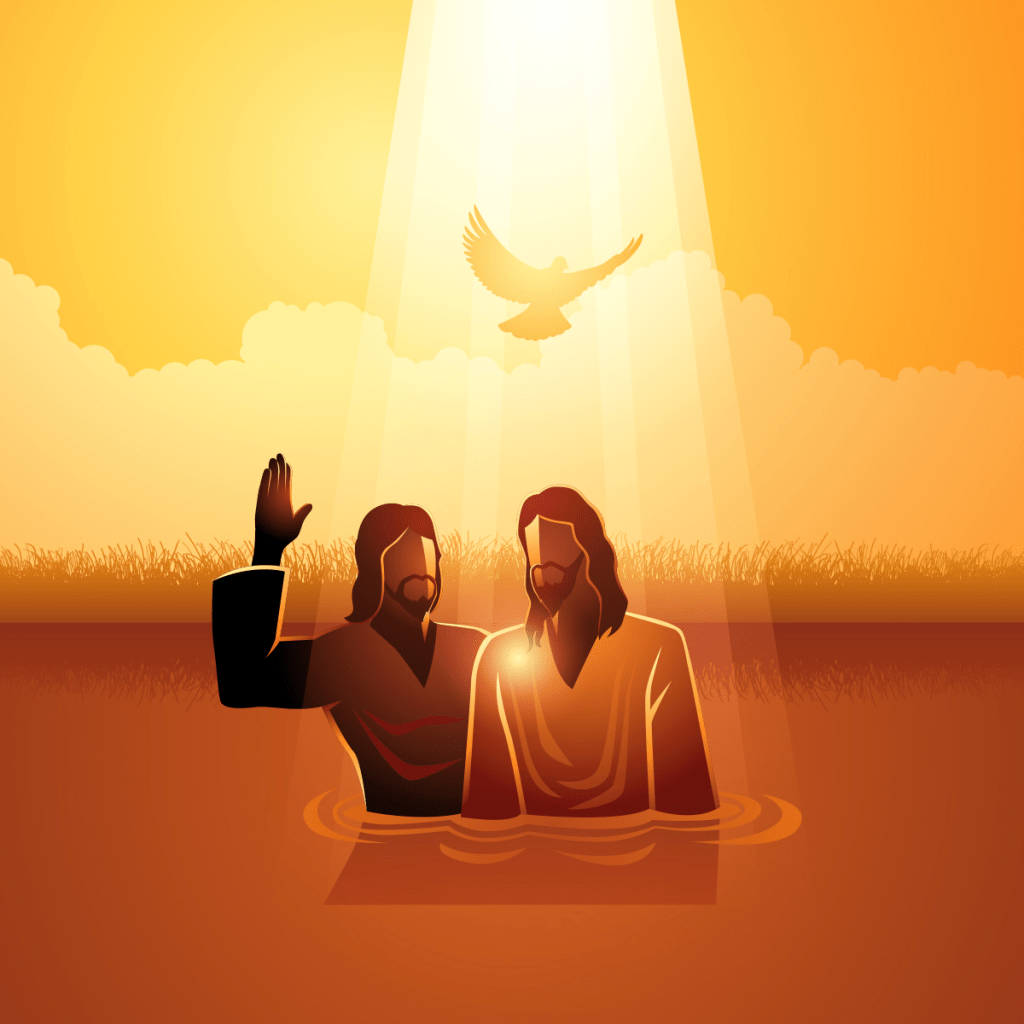
John baptizing Jesus with the Holy Spirit’s affirmation

Then Jesus came from Galilee to the Jordan to be baptized by John. But John tried to deter him, saying, “I need to be baptized by you, and do you come to me?”

Jesus replied, “Let it be so now; it is proper for us to do this to fulfill all righteousness.” Then John consented.

As soon as Jesus was baptized, he went up out of the water. At that moment heaven was opened, and he saw the Spirit of God descending like a dove and alighting on him. And a voice from heaven said, “This is my Son, whom I love; with him I am well pleased.” (New International Version)

Baptism is important. Remembering is important. Put together, remembering our baptism is highly important. Here’s why….

Baptism is important to Jesus

Baptism is the distinguishing mark or symbol of being a Christian. 

The New Testament actually knows nothing of an unbaptized Christian. That’s because the practice is tied to our identity as believers. Our baptisms are based in the baptism of the Lord who, in his Great Commission, told us to baptize in the name of the Father, Son, and Spirit (who were all present at Christ’s baptism). 

The absence of baptism is like a bride without a wedding ring; a football player not wearing a uniform; a motorcycle gang without tattoos; or like an Iowa farmer without a Pioneer seed corn hat!

Baptism is the outward sign that we belong to God. It is the distinguishing symbol that we have been adopted by God and will receive all the promises of salvation in Christ.

Christ’s baptism fulfilled all righteousness through identification with repentant people

John the Baptist was understandably hesitant to baptize Jesus; he knew Jesus had no need of repentance. Although Jesus had no sin to confess, his baptism is a powerful symbol of his humility. It anticipates his ministry to people who recognize their need for God. 

It was necessary for Jesus to be baptized in order to communicate solidarity with people who are coming to God. “Righteousness” means having a right relationship with both God and other people. By being baptized, Jesus is proclaiming that a renewed and right relationship with God will become a reality through himself. Baptism is the sign that we belong to God and that our righteousness is tied to our union with Jesus.

It was important for Jesus to identify with sinners; it is important for us, as well. We remember our baptism – that we belong to God – by identifying with “sinners.” Here are 7 ways of doing it:

  1. Practicing hospitality (love of strangers)
  2. Using our spiritual gifts of speaking and serving on their behalf
  3. Getting to know people very different from ourselves
  4. Meeting people on their turf (not just ours)
  5. Showing respect and upholding dignity
  6. Asking thoughtful and caring questions
  7. Listening with focused attention

It isn’t what we “do” for people that’s as important as affirming our shared humanity with them; thus leading folks to the ultimate person who can address the needs of their heart:  Jesus.

Christ’s baptism fulfilled all righteousness through the affirmation of witnesses

Before Jesus began his ministry, it was necessary to receive validation of what he was about to teach and do. In ancient Judaism, one of the protections guaranteeing that Scripture would be taught according to the way of God, was through an ordination, of sorts. In order for a new rabbi to become a new rabbi, he needed the laying on of hands from two other rabbis who had authority to do so. 

That’s why Christ’s baptism is important. John the Baptist was a powerful teacher and prophet who was recognized by the people as such. John publicly said he wasn’t worthy to carry Jesus’s sandals, that Jesus is the Lamb of God that takes away the sin of the world. So, a baptism by John validated Jesus and inaugurated his ministry. 

Baptism of Christ by Dave Zelenka

A second voice – another witness from heaven – affirmed Jesus: “This is my Son, the one I love. I am very pleased with him.” And then, the Holy Spirit, in the form of a dove, came upon Jesus. This further affirmed that Jesus would save people, not through arm-twisting and great shows of power, but through humility and gentleness.

Baptism was Christ’s first recorded act as an adult. In some ways, it was his first miracle – the miracle of humility in identifying with sinners.

Remember your baptism

Baptism is a sign and seal of God’s grace. Just as Christ’s baptism focused all the promises of God in salvation as being fulfilled in one person, so in our baptism we claim all the promises of God as found in Jesus. Water symbolizes new life, God identifying with us – Immanuel, God with us.

In baptism, God promises and seals to us our union with Jesus so that identity is not found in my past and my profession of faith, but in Christ’s past of bringing redemption to us.  Baptism does not so much express faith as call one to a life of faith and sets us apart as belonging to God.

Baptism is a visible declaration of an invisible reality: union with Christ. Just as circumcision was the outward visible sign of the old covenant, so baptism is the sign of the new covenant in Christ – available to both male and female – thus opening the way for women to participate fully in the ministry of the gospel.

In particular, infant baptism confirms that salvation is not initiated by us, but by God. It affirms that one is betrothed to God. As a child, then an adult, grows into the faith, it is our task to remember our baptism, to be reminded that God’s mark is upon us, that we belong to the Lord. 

God has set us apart to be a holy people, given to Jesus to live as he did. We must never forget that baptism is God’s identifying mark upon us; that our union and solidarity with Jesus is affirmed through this practice.

We are not solitary Christians; we belong Christ and to one another. Baptism is the initiation rite that takes a lifetime to complete. Therefore, we must struggle together in working out our salvation.

Because of our union with Jesus Christ, we must remember:

  • I do not belong to the world. So, I will not live selfishly, only seeking my own comfort agenda. Instead, I will give and serve others from a pure and humble heart.
  • I do not belong to sin. So, I will not give myself over to shameful words or actions, to bullying or manipulating people, to throwing fits and pity parties to get my way, nor using my tongue to speak gossip, slander, or suck-up to others. Instead, I will use my speech wisely, building up others through thoughtful and heartfelt encouragement.
  • I do not belong to the devil. So, I will not seek his agenda of lying, cheating, stealing, and being bitter. 

I belong to Jesus, so therefore:

  • I will uphold biblical justice by championing the cause of the fatherless and the widow, the poor and the needy, the least and the lost among us.
  • I will love others with all the grace God gives me.
  • I will forgive others because Christ has forgiven me.
  • I will consider others better than myself by embracing the humility of Christ.
  • I will hunger and thirst for righteousness.
  • I will seek peace and pursue it.
  • I will, give myself to my Lord and Savior Jesus Christ my Savior and Lord – completely and thoroughly, unabashedly and unreservedly.
  • I will live into my baptism and remember it always because I belong to Jesus!

Live Into Your Calling (2 Peter 1:1-11)

Simon Peter, a servant and apostle of Jesus Christ,

To those who through the righteousness of our God and Savior Jesus Christ have received a faith as precious as ours:

Grace and peace be yours in abundance through the knowledge of God and of Jesus our Lord.

His divine power has given us everything we need for a godly life through our knowledge of him who called us by his own glory and goodness. Through these he has given us his very great and precious promises, so that through them you may participate in the divine nature, having escaped the corruption in the world caused by evil desires.

For this very reason, make every effort to add to your faith goodness; and to goodness, knowledge; and to knowledge, self-control; and to self-control, perseverance; and to perseverance, godliness; and to godliness, mutual affection; and to mutual affection, love. For if you possess these qualities in increasing measure, they will keep you from being ineffective and unproductive in your knowledge of our Lord Jesus Christ. But whoever does not have them is nearsighted and blind, forgetting that they have been cleansed from their past sins.

Therefore, my brothers and sisters, make every effort to confirm your calling and election. For if you do these things, you will never stumble, and you will receive a rich welcome into the eternal kingdom of our Lord and Savior Jesus Christ. (New International Version)

The deepest yearning in every human soul is to become whole again, to return to their spiritual source, to experience belonging and union with the Beloved.

In the beginning, all of creation was a vessel filled with divine light. Then, it broke, and the shards of holiness were strewn across the earth. Those broken pieces are all around us. Sometimes, maybe oftentimes, we don’t see them because of our own darkness.

My friends, we have a simple but profound task: To bend down, find the broken shards, and pick them up.

This work of making a real and lasting contribution to humanity confirms our vocational calling and is made possible by divine power.

And yet, so many of us feel like a tiny Who on a speck of dust, with such a small insignificant voice, that nobody can hear us.

But somebody does hear us – and that somebody has very large elephant ears which are attuned to listen.

A person’s a person, no matter how small. A person has light, no matter how dim.

A great deception which befalls humanity is the lie that we aren’t enough – that somehow we lack voice and light in our core personhood.

This leads to another deceitful thought: God is holding out on me; I got the short end of things; I was never given the sort of voice which can be heard, or the kind of light which can burn bright.

Those deceiving vampires only suck the life out of us. What we need, instead, is to imbibe deeply of robust theology which empowers us to live faithfully in this world of corruption.

We have everything we need to grow in grace; God’s provision for us is total and complete.

By grace, we can discern between truth and error; endure hostility and hardship; persevere with patience as we await the new heaven and new earth; and confront anything in this present life with confidence and hope. We can do it because we’ve been equipped for it all.

Core to all this provision is the very life of Christ. Jesus is the source of the power; and his is the grace needed to live life to the full. The same resurrection power which raised Christ from the grave is available and provided to us.

God’s supply for us is sufficient. It is enough. We have everything we need to walk with boldness through any dark alley. The believer’s confidence is in carrying the cross – which keeps the deceiving vampires of guilt, shame, doubt, and distrust at bay.

Sheer cognitive belief, however, is insufficient. It’s only half the equation. The other half is to let our light shine, be the salt of the earth, and take up the gifts given us by God and use them.

Therefore, put significant energy into your faith development through knowing your call to bless the world and not curse it.

Confidently using faith, fully participate in God’s divine power through the qualities of:

  • Goodness. Cultivation of moral excellence is both helpful and needed in all our relationships. Goodness is like a seed planted. It proper amounts of water and sun, as well as continual tending to keep the weeds away.
  • Knowledge. There are two words in the ancient Greek for knowledge: one is a reference to acquiring information; and the other refers to actively using the information provided. The Apostle Peter uses the latter – an experiential knowledge which is wise, discerning, and discreet.
  • Self-Control. This is the ability to get a grip on yourself, to avoid controlling others and focus on all things within your own control. Ultimate control belongs to God; self-control belongs to you and me.
  • Perseverance. To see the big picture, to look ahead and keep your eye on the goal, is the lived practice of endurance. Everyone has patience. The real issue is whether we will tap into it, or not.
  • Godliness. The heart of godliness is a growing awareness of self, others, and God – rightly relating to them all with wholeness and integrity.
  • Mutual Affection. Basic human kindness is the basis of any healthy community and every relationship.
  • Love. This is the Christian’s consummate virtue. Whereas affection is to be mutual, love can always be done whether someone loves us back, or not. Genuine love can be directed at the unlovely, even enemies.

Effectiveness in living a virtuous life is not a matter of more but better.

It doesn’t happen on an industrial scale with a mass production of spiritual resources for the busy Christian consumer.

Rather, it occurs in the soil of God’s grace, mostly below the surface of the ground, slowly but surely germinating with faith, rising in hope, and producing a harvest of love that blesses both church and world.

A little bit of Jesus is enough to turn the world upside-down. You don’t need a big loaf of bread; a miniscule communion wafer will do.

A tiny mustard seed of faith can move a mountain.

A kernel of goodness can produce a harvest of righteousness.

A bit of knowledge and awareness can uproot the weeds of bigotry and hate.

A grain of self-control can grow into a field of peace.

A simple insight can create a cascade of transformation.

A single act of kindness can alter the course of another’s life forever.

A few seconds of attention can change the world.

A teensy amount of love can feed everyone on the earth.

We have everything we need to realize the new society Christ has made possible. We are in want of nothing. We are enough because Christ is enough. So, live into your calling with courage and confidence.

Heavenly Father, you are the One ever-present on this earth in your only Son and through your Spirit:
May your Name be shown forth as holy through us, your people.
May your gracious and benevolent reign come, establishing peace and justice, hope and life; and may your moral and ethical will be done, here on earth, as it is always done in heaven.
Give us what we need for today; and adjust our vision into a clear 20/20 awareness of others’ needs.

Forgive us of our great and many sins, for the immoral and unethical things we have said and done, and for the good words and good deeds we have failed to say and do; forgive us, just as we forgive those who have egregiously sinned against us.

Don’t let us amble down a dark path of temptation, of hardening our hearts and closing our minds; but instead, deliver us from the machinations of evil, and set our feet upon the lighted path of righteousness.

To You, everlasting God, belongs all sovereign decrees of  justice and truth;
To You, almighty God, belongs all powerful deeds of righteousness and goodness;
To You, holy God, belongs all glorious displays of love and compassion;

Through Jesus Christ, your Son, our Lord, who with You and the blessed Holy Spirit are one God, now and forevermore. Amen.

Don’t Be Stupid (2 Timothy 2:14-26)

Keep reminding God’s people of these things. Warn them before God against quarreling about words; it is of no value, and only ruins those who listen. Do your best to present yourself to God as one approved, a worker who does not need to be ashamed and who correctly handles the word of truth. 

Avoid godless chatter because those who indulge in it will become more and more ungodly. Their teaching will spread like gangrene. Among them are Hymenaeus and Philetus, who have departed from the truth. They say that the resurrection has already taken place, and they destroy the faith of some. Nevertheless, God’s solid foundation stands firm, sealed with this inscription: “The Lord knows those who are his,” and, “Everyone who confesses the name of the Lord must turn away from wickedness.”

In a large house there are articles not only of gold and silver, but also of wood and clay; some are for special purposes and some for common use. Those who cleanse themselves from the latter will be instruments for special purposes, made holy, useful to the Master and prepared to do any good work.

Flee the evil desires of youth and pursue righteousness, faith, love and peace, along with those who call on the Lord out of a pure heart. Don’t have anything to do with foolish and stupid arguments because you know they produce quarrels. And the Lord’s servant must not be quarrelsome but must be kind to everyone, able to teach, not resentful. 

Opponents must be gently instructed, in the hope that God will grant them repentance leading them to a knowledge of the truth, and that they will come to their senses and escape from the trap of the devil, who has taken them captive to do his will. (New International Version)

Stupidity doesn’t have to do with intellect; it is a matter of character. A fool is stupid. A wise person is smart. One can be a “genius” yet still be as dumb as a bowling ball. And someone who never gets a “A” in school just might be the most knowledgeable person in the room.

Whoever loves discipline loves knowledge, but whoever hates correction is stupid.

Proverbs 12:1, NIV

The Apostle Paul understood this – which is why he put the focus on cultivating and communicating character instead of sheer intelligence. Anytime we purposefully neglect and forget this, we land into Paul’s “stupid” category of people.

Much of church ministry needs to be a memory care unit experience. That’s because too much spiritual dementia happens. There must be continual reminders about the importance of Christian character. It seems believers in Jesus too easily forget their identity and what they are supposed to be doing. This is most certainly not a new issue; it is one that has been endemic throughout the ages. It’s a problem as old as sin itself.

In the Gospels, Jesus miraculously fed a great crowd of people not once, but twice. The second time he called his disciples to remember what had happened the first time in order to understand the second. 

In the Epistles, Paul kept on reminding the Jewish believers to remember the ancient covenant; and he called the Gentile believers to keep in mind that they were once estranged from that very same covenant. Both Jews and Gentiles together needed to collectively remember the death of Christ that unites them into a new covenant community. And much like them, we are to remember Jesus Christ, raised from the dead, descended from David. (2 Timothy 2:8)

Whenever we forget who we are, whose we are, and what it is we are really all about, we get downright stupid. We get lost majoring on the minors and wagging our tongues like a bunch of foolish simpletons.

It’s stupid to say bad things
    about your neighbors.
If you are sensible,
    you will keep quiet.
A gossip tells everything,
but a true friend
    will keep a secret. (Proverbs 11:12-13, CEV)

Christians are blood-bought people of God, belonging to Jesus Christ, and given a mission to make disciples and participate with God in the redemption of all creation through remembering the poor, seeking justice, and being peacemakers in the church and the world. 

And what’s more, we are not to put up with letting others stand around and endlessly argue about lesser things, making every doctrine and dogma a battleground – as if the fine China and paper plates were exactly the same.

“Remember the height from which you have fallen!  Repent and do the things you did at first.” (Revelation 2:5, NIV)

There is a difference between the brains of dementia patients and Christian folk – the mind overtaken by dementia will only worsen, yet the church can recover its collective memory by listening again to the ancient Word of God; any and every congregation can be constantly refreshed with the promises and covenant of God. 

We must neither rely on mere pragmatism nor doing things the way we always have done them without any understanding of why we do it. 

Yet, we must understand that even when we point out what to remember and why we are to remember it to others, they aren’t always going to respond like we want them to – which is why instruction needs to be gentle so that another does not stumble on the messenger instead of the message.

A person of great understanding is patient, but a short temper is the height of stupidity. (Proverbs 14:29, GW)

It takes no effort to be stupid; but it takes a great deal of will and energy to keep learning and growing in the Christian life. Too many persons have unwittingly fallen into the trap of the devil, believing themselves to be godly because of their defense of the faith. Sadly, they’ve been defending their own interpretation of faith instead of the actual faith itself.

Please, don’t do that. Don’t be stupid. Better to focus on having a pure heart of your own rather than always pointing out the impurities of others.

Almighty God, to you all hearts are open, all desires known, and from you no secrets are hid. Cleanse the thoughts of our hearts by the inspiration of your Holy Spirit, that we may perfectly love you, and worthily magnify your holy Name, through Jesus Christ our Lord. Amen.