Ephesians 1:3-14 – We Are Blessed

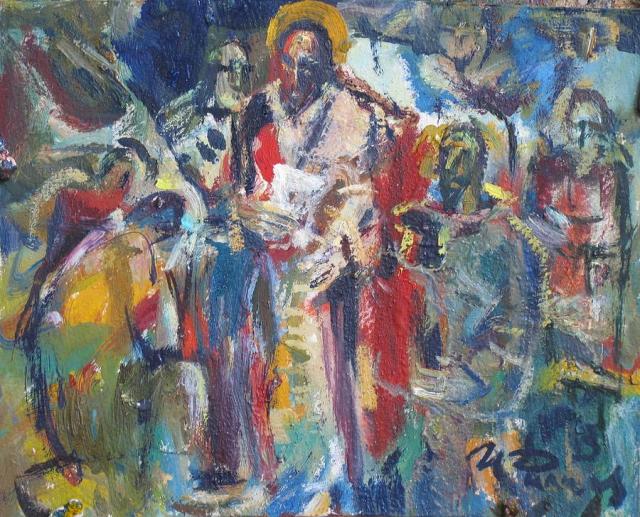
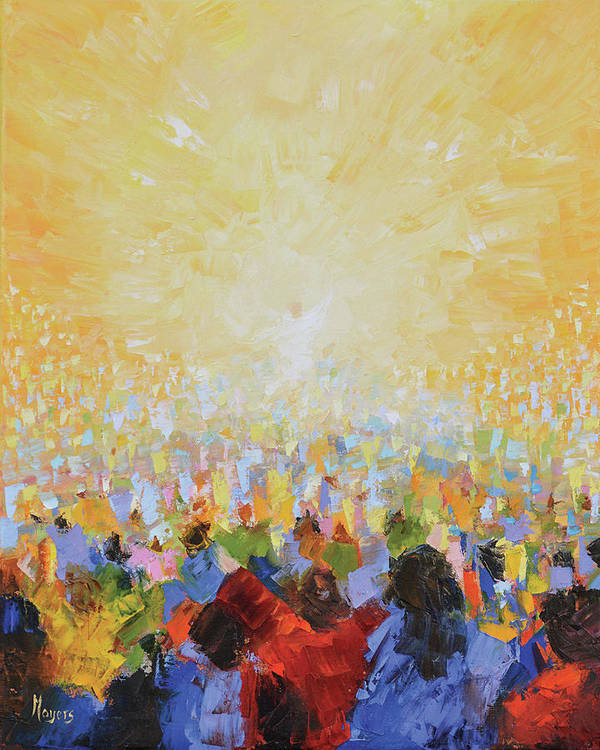
Hallelujah by Mike Moyers

Praise be to the God and Father of our Lord Jesus Christ, who has blessed us in the heavenly realms with every spiritual blessing in Christ. For he chose us in him before the creation of the world to be holy and blameless in his sight. In love he predestined us for adoption to sonship through Jesus Christ, in accordance with his pleasure and will— to the praise of his glorious grace, which he has freely given us in the One he loves. In him we have redemption through his blood, the forgiveness of sins, in accordance with the riches of God’s grace that he lavished on us. With all wisdom and understanding, he made known to us the mystery of his will according to his good pleasure, which he purposed in Christ, to be put into effect when the times reach their fulfillment—to bring unity to all things in heaven and on earth under Christ.

In him we were also chosen, having been predestined according to the plan of him who works out everything in conformity with the purpose of his will, in order that we, who were the first to put our hope in Christ, might be for the praise of his glory. And you also were included in Christ when you heard the message of truth, the gospel of your salvation. When you believed, you were marked in him with a seal, the promised Holy Spirit, who is a deposit guaranteeing our inheritance until the redemption of those who are God’s possession—to the praise of his glory. (New International Version)

God has blessed us. The word “blessing” comes from the same word for “giving thanks.”  So, when, we consider the ways God has spiritually blessed us, it leads us to effusive gratitude and praise.  And this was exactly the case for the Apostle Paul.

In writing these words, Paul was so excited to share with the church at Ephesus about the blessings of God that he could not stop. In our English translations we have broken these verses up into several sentences and two paragraphs. But Paul originally penned this as one sentence!

More than anything, Paul wanted the church to know the wonderful blessings of God to them. Throughout the book of Ephesians, Paul’s constant theme to the church is reconciliation and restoration. In fact, that is the end game for God. God has cares about reconciling people to himself, and others. The Lord deeply cares about restoring the entire world to the lordship of Jesus Christ.

To accomplish this gigantic feat, God intervened into humanity by giving the church three main blessings: election, redemption, and inheritance.

Election 

The word “chose” and “chosen” in some English translations is the Greek word ἐκλεκτός (eklektos) or “election.” This is where it all begins for us. Even before the creation of the world, God had the end of the story in mind. Divine decisions were made about outcomes and results. 

This approach, by the way, is how we are to engage ministry in the church. That is, we begin with the end in mind of what we want to accomplish. Then, we gather the people and begin making the needed decisions to see that end purpose realized. Too often, churches begin with a group of people and wonder about what they should do – which is backwards from how God does it. 

In eternity past, in love, God predestined us to be adopted as his children. You and I are so loved by God that we were special to him before we were even ever born! Election means God has a purpose for us. On the human level, we elect candidates so that they may serve the common good and put their energies into accomplishing some noble cause. 

Likewise with God. We were not elected or chosen by God solely to go to heaven when we die.  Although that is true and shall happen, the reason we were chosen by God was for us to be holy and blameless, to be for the praise of God’s glory. We are not in some sort of holding pattern on earth, impatiently waiting for the afterlife. Rather, we are to be active in accomplishing God’s purposes for our election. And what is that purpose?

We are to participate with God in the grand scheme of reconciling and restoring all of creation back to the original design. Therefore, every act of forgiveness, grace, love, and kindness; every overture of faith and communication of the gospel to others; and all steps of obedience are small movements toward the great restoration story God is writing. 

For example, the book of Acts ends on a dramatic note with no resolution to it. That’s because the story is still being written. We are chosen to be a part of it.

Redemption 

To be redeemed means to be delivered by a payment of a price. In the ancient world, slavery was an entrenched part of the society. The picture of the slave market provided a means for Paul to communicate a spiritual blessing: We have been redeemed from the slave market of sin through the payment of Christ’s blood, and so now, we enjoy the freedom from and forgiveness of sin. 

This is not just redemption from something (sin, death, and hell); it is also redemption to reconciliation and restoration. God elected us to receive redemption so that the grand design of bringing all the earth under the lordship of Christ will happen. God has and is creating a new society, the community of the redeemed, that will realize the original design of unhindered connection with God and others. 

Inheritance

We are receiving an inheritance. It will be put into effect when God’s timing and purpose is accomplished – and Paul spells the purpose out: To bring all things in heaven and on earth together under one head, Jesus Christ. 

Here is how Paul envisions what is coming: The chosen and redeemed of God will one day die, then they will go to be with Christ. But that is not yet the end because the entire world still needs redemption. This is why the preacher of Hebrews could say about the great heroes of the faith:  

These were all commended for their faith, yet none of them received what had been promised.  God had planned something better for us so that only together with us would they be made perfect. (Hebrews 11:39-40, NIV)

There is not just life after death; there is life after life-after-death. All those people of faith, including our believing friends and relatives who have gone before us to be with Jesus, are waiting. They, along with us, have not yet received all the promised blessings of our inheritance. 

We are waiting for the reconciliation and restoration of all things, a new heaven and a new earth in which we will be together as sons and daughters in the kingdom of God with Jesus as King over us. The possession of the Holy Spirit is the guarantee that this is the case, and it will happen. 

Conclusion

Our blessings of election, redemption, and inheritance are all activated by faith. Belief is the switch that turns on the blessings to us in a real and actual way. The electricity is there in the person of the Holy Spirit. The light bulb is there, and it is us. 

So, the question for us today is: Are we turned on and shining brightly, or is the switch off?  We must access our blessings by belief in the Son of God who loved us and gave himself for us.

God is on a mission to reconcile and restore the world. Our salvation is part of God’s plan to make that happen. God is a missionary. The Lord has chosen us to be emissaries to a world that needs redemption and restoration. 

The church is like no other institution on earth – existing for the life of the world, and not for itself. Like a mighty army, we are to train ourselves for godliness so that we can engage an invisible enemy and see the kingdom of God come and the will of God done here on earth as it is always done in heaven. 

The camaraderie we enjoy as fellow soldiers is not the end purpose – restoring enemy territory back to its original government is. So, we care for our wounded and do everything we can for them. There are yet more spiritual battles to be won and hearts captured for King Jesus. 

May you and I, then, give thanks with grateful hearts for the great spiritual blessings of election, redemption, and inheritance so that God’s benevolent and merciful rule might spread everywhere to everyone.

God our Savior, you desire that none should perish, and you have taught us through your Son that there is great joy in heaven over every sinner who repents: Grant that our hearts may ache for a lost and broken world. May your Holy Spirit work through our words, deeds, and prayers, that the lost may be found and the dead made alive, and that all your redeemed may rejoice around your throne, through Jesus Christ our Lord. Amen.

Hebrews 10:10-18 – Out with the Old, In with the New

Because Jesus Christ did what God wanted him to do, we are all purified from sin by the offering that he made of his own body once and for all.

Every Jewish priest performs his services every day and offers the same sacrifices many times; but these sacrifices can never take away sins. Christ, however, offered one sacrifice for sins, an offering that is effective forever, and then he sat down at the right side of God. There he now waits until God puts his enemies as a footstool under his feet. With one sacrifice, then, he has made perfect forever those who are purified from sin.

And the Holy Spirit also gives us his witness. First he says,

“This is the covenant that I will make with them
    in the days to come, says the Lord:
I will put my laws in their hearts
    and write them on their minds.”

And then he says, “I will not remember their sins and evil deeds any longer.”So, when these have been forgiven, an offering to take away sins is no longer needed. (Good News Translation)

As I sit at my computer, easily keyboarding my thoughts, it is almost inconceivable to me that I made it through my undergraduate college days in the early 1980s with a manual typewriter and notetaking with the old-fashioned pen and spiral notebook.  No cell phone, no tablet, no electronic devices aiding me through my education. Typewriters are now obsolete, along with corded dial telephones and wringer washers.

Yet even more incredible is the complete replacement of an old mundane system of ritual sacrifice to a religion of the heart in which God remembers the people’s sins no more. This is such a radical change that it would be like having self-cleaning dishes or total speech-to-text “writing” of “papers.” 

The new order of things described in Hebrews is so much more than a labor-saving device; it is a completely different system that leaves the old system obsolete forever. That is what Jesus Christ’s once-for-all sacrifice did on our behalf.

We live in a New Covenant era in which God has put divine laws on our hearts and written them on our minds. No typewriter, no computer, no keyboard necessary, because the blood of Christ has introduced a seminal change in how we relate to God. 

There is now a thorough forgiveness that no longer requires any labor, ritual, or work. Indeed, it is finished. Now, we have the privilege and opportunity of living into the new reality graciously provided for us. It is an era of great peace, joy, and goodwill.  It is so good that it would be absolutely ridiculous to go back to the old way.

So, slow down enough in this season to connect or re-connect with a most wonderful truth: Jesus Christ came to save sinners. Gratitude for our salvation from sin, death, and hell, recognized and acknowledged each day, helps to stave off living in the past.

Continually looking at a bygone era as the good old days probably wasn’t, in reality, near as great as it’s remembered. That’s because when things are hard in the present, we often reflexively retreat into the past, cherry-picking some good memories, then constructing a mental narrative without all the bad stuff which actually went along with it.

Instead, in this Advent season, Christians purposely focus upon and remember God’s merciful descent to live among humanity. Christ lived, died, rose from death, and is alive – interceding for us continually. Past and present come together in the person of Jesus.

The Word became flesh and blood,
    and moved into the neighborhood.
We saw the glory with our own eyes,
    the one-of-a-kind glory,
    like Father, like Son,
Generous inside and out,
    true from start to finish. (John 1:14, MSG)

The good news of Christianity is that we are gloriously forgiven and redeemed because of Christ, given for us, the once for all sacrifice for sin.

May this season be full of grace and wonder for you, as you pilgrim to the manger and adore Christ the newborn king.

Saving God, you have completely taken care of the sin issue once and for all through the blood of your Son.  Forgive me for my predilection to retreat into old obsolete ways of trying to earn peace and joy, instead of adopting the new, which sometimes seems almost too good to be true.  Thank you for deliverance and new life in Jesus Christ.  Amen.

Acts 28:23-31 – Focused on Mission

Apostle Paul by Ivan Filichev

They arranged to meet Paul on a certain day and came in even larger numbers to the place where he was staying. He witnessed to them from morning till evening, explaining about the kingdom of God, and from the Law of Moses and from the Prophets he tried to persuade them about Jesus. Some were convinced by what he said, but others would not believe. They disagreed among themselves and began to leave after Paul had made this final statement: “The Holy Spirit spoke the truth to your ancestors when he said through Isaiah the prophet:

“‘Go to this people and say,
“You will be ever hearing but never understanding;
    you will be ever seeing but never perceiving.”
For this people’s heart has become calloused;
    they hardly hear with their ears,
    and they have closed their eyes.
Otherwise they might see with their eyes,
    hear with their ears,
    understand with their hearts
and turn, and I would heal them.’

“Therefore, I want you to know that God’s salvation has been sent to the Gentiles, and they will listen!”

For two whole years Paul stayed there in his own rented house and welcomed all who came to see him. He proclaimed the kingdom of God and taught about the Lord Jesus Christ—with all boldness and without hindrance! (New International Version)

The Apostle Paul took quite a licking throughout his Christian life. Incredibly, Paul not only physically survived whippings, beatings, stoning, arrests, shipwreck, and imprisonment – he also came through it all with a robust spirit and a dogged determination to live his life with purpose and mission.

Acts 28 is the final chapter in the book. Paul is in Rome under house arrest. Even in this situation, he kept finding ways to engage others. Since he couldn’t go to them, he had others come to him – lots of them.

Paul described to the visitors his own experience of encountering the risen Christ. He reasoned with his fellow Jews and vigorously debated with them from the Scriptures. It was always the deep desire and hope of Paul that his own people come to faith in Christ, just as he had. Although some did, most didn’t.

Many decades ago, my grandfather was approached by one of his friends about investing in a new insurance company startup. For a lot of reasons, grandpa ended up not participating in his friend’s venture. So, the friend asked others. Eventually, the startup happened and steadily grew. Today, Nationwide Insurance has over 250 billion dollars of assets. Good old gramps just didn’t know what he was rejecting.

The good news of Jesus Christ, I believe, is worth infinitely more than an insurance company. Christian mission, I believe, is worth investing my life into. I’m glad the gospel was proclaimed to Gentiles because I am a recipient of such grace. And I’m grateful that Paul tenaciously kept interacting with people for the last two years of his life under arrest.

Despite, and even because of, Paul’s sufferings and his house arrest, the message of faith and forgiveness in Christ was confidently and consistently presented to a steady flow of people, including the highest heads of state. Difficulties are no problem for God. The Lord bends all circumstances to divine and good purposes, creating new avenues of faith, hope, and love that wouldn’t be possible under “normal” times.

“He is no fool who gives what he cannot keep to gain that which he cannot lose.”

Jim Eliot

In fact, Paul endured five years of imprisonment: two in a Caesarea jail; two under house arrest in Rome; and nearly a year in transport between the two cities. For a personality like Paul, we might imagine this would drive him nuts. Yet, several letters to the churches, now contained in the New Testament, were written during that time.

Whether we like it, or not, nothing proves, affirms, and grows our faith quite like our willingness to endure suffering for the gospel. Witness, suffering, and martyrdom are inextricably bundled together in God’s economy. When suffering is viewed as a necessary means to an altruistic and noble end, then, although the pain is no less real, there is the opportunity for both willing endurance and genuine joy.

Paul was willing to labor on behalf of people who were very different from himself. His concern was for all people everywhere – both his own people, the Jews, as well as Gentiles. Paul never gave in and never gave up. He had a magnanimous spirit and even greater spiritual gifts. He willingly and gladly used that spirit and gifts for the benefit of humanity.

In 64 C.E. Paul was condemned and executed. Before his death, he wrote that he had fought the good fight, finished the race, and kept the faith. Now, the next generations of new believers must follow in his footsteps and continue the work

This is precisely why the book of Acts ends so abruptly, with no resolution, no tidy conclusion – because the work is still being done and will carry on until Christ returns.

Gracious and loving God, you work everywhere reconciling, loving, and healing your people and your creation. In your Son Jesus, and through the power of your Holy Spirit, you invite each of us to join you in your work. We ask you to form us more and more in your image and likeness, through our prayer and worship of you and through the study of Holy Scripture so that our eyes will be fully opened to your mission in the world. Then, God, into our communities, our nation, and the world, send us to serve with Christ, taking risks to give life and hope to all people and all of your creation, through Jesus Christ our Lord.. Amen.

2 Peter 1:2-15 – We Have Everything We Need

May grace and peace be yours in abundance in the knowledge of God and of Jesus our Lord.

His divine power has given us everything needed for life and godliness, through the knowledge of him who called us by his own glory and goodness. Thus, he has given us, through these things, his precious and very great promises, so that through them you may escape from the corruption that is in the world because of lust and may become participants of the divine nature. For this very reason, you must make every effort to support your faith with goodness, and goodness with knowledge, and knowledge with self-control, and self-control with endurance, and endurance with godliness, and godliness with mutual affection, and mutual affection with love. For if these things are yours and are increasing among you, they keep you from being ineffective and unfruitful in the knowledge of our Lord Jesus Christ. For anyone who lacks these things is short-sighted and blind and is forgetful of the cleansing of past sins. Therefore, brothers and sisters, be all the more eager to confirm your call and election, for if you do this, you will never stumble. For in this way, entry into the eternal kingdom of our Lord and Savior Jesus Christ will be richly provided for you.

Therefore, I intend to keep on reminding you of these things, though you know them already and are established in the truth that has come to you. I think it right, as long as I am in this body, to refresh your memory, since I know that my death will come soon, as indeed our Lord Jesus Christ has made clear to me. And I will make every effort so that after my departure you may be able at any time to recall these things. (New Revised Standard Version)

One of the greatest deceptions which befall humanity is the lie that we aren’t enough – that somehow we lack something in our core personhood. Another great deception is that God is holding out on us – that we’ve gotten the short end of things.

It is my hope and prayer that today’s New Testament lesson puts a stake through the heart of those twin deceiving vampires. Erroneous beliefs only suck the life out of us. Instead, we must imbibe deeply of sound theology which enables us to live robustly in this old fallen world.

The Lord is my shepherd;
   I have all that I need.

Psalm 23:1, NLT

We have everything we need to grow in grace. God’s provision for us is total and complete. By grace, we can discern between truth and error; endure hostility, hardship, even persecution; live with patience as we await the new heaven and new earth; and face anything in this present life with confidence and hope because we’ve been equipped for it all.

Core to all this provision is the very life of Christ. Jesus is the source of the power and grace needed to live this incredible life. The same resurrection power which raised Christ from the grave is available and provided to us.

Believers are not in some weird holding pattern, like a plane circling the airport waiting to land, twiddling our thumbs until Christ returns. No! This present life is to be fully engaged with the tools given us of faith, hope, and love. And those spiritual implements are sufficient to walk with boldness through the valley of the shadow of death.

It continually must be borne in mind that we are to take up the gifts given us and use them in our present sojourn on this earth. Let us put significant energy into our faith development through knowing our call to holiness; and knowing Christ Jesus our Lord, his power and suffering.

Carefully and confidently using our faith, we are to fully participate in God’s divine power through the qualities of:

  • Goodness. Cultivation of moral excellence is both helpful and needed in all our relationships. Goodness is like a seed planted. We need to give it proper amounts of water and sun and keep the weeds away.
  • Knowledge. There are two words in the ancient Greek for knowledge: one is a reference to acquiring information; and the other refers to actively using the information provided. The Apostle Peter uses the latter – an experiential knowledge which is wise, discerning, and discreet.
  • Self-Control. This is the ability to get a grip on yourself, to avoid controlling others and focus on all things within your own control. Ultimate control belongs to God; and we are called to self-control.
  • Endurance. To see the big picture, to look ahead and keep your eye on the goal, is the lived practice of endurance or perseverance. Everyone has patience. It’s rather a matter of whether we will tap into it, or not.
  • Godliness. The heart of godliness is awareness of self, others, and God – rightly relating to them all with wholeness and integrity.
  • Mutual Affection. Basic human kindness is imperative between two people, especially with fellow believers.
  • Love. This is the Christian’s consummate virtue. Whereas affection is to be mutual, love can always be done whether someone loves us back, or not. Genuine love can be directed at the unlovely, even enemies.

We are to be effective and productive in adding divine virtues to our lives. It’s not a matter of more but better.

Even a smidge of faith can move a mountain.

A kernel of goodness can produce a harvest of righteousness.

A little bit of knowledge can be turned into love.

Small self-control can develop into immense self-control.

Keeping our head up for a few seconds can help us see the goal and endure to the end.

One insight can create a cascade of godliness.

A single act of kindness can change a life forever.

Love, no matter how big or small, can change the world.

We possess all these qualities and are in want of nothing. We are enough because Christ is enough.

Lord, make us instruments of your peace. Where there is hatred, let us sow love; where there is injury, pardon; where there is discord, union; where there is doubt, faith; where there is despair, hope; where there is darkness, light; where there is sadness, joy. Grant that we may not so much seek to be consoled as to console; to be understood as to understand; to be loved as to love. For it is in giving that we receive; it is in pardoning that we are pardoned; and it is in dying that we are born to eternal life. Amen. – A Prayer of St. Francis of Assisi