Remember God, for God Has Remembered Us (Psalm 105:1-11, 45b)

Give thanks to the Lord;
    call upon his name;
    make his deeds known to all people!
Sing to God;
    sing praises to the Lord;
    dwell on all his wondrous works!
Give praise to God’s holy name!
    Let the hearts rejoice of all those seeking the Lord!
Pursue the Lord and his strength;
    seek his face always!
Remember the wondrous works he has done,
    all his marvelous works, and the justice he declared—
    you who are the offspring of Abraham, his servant,
        and the children of Jacob, his chosen ones.

The Lord—he is our God.
    His justice is everywhere throughout the whole world.
God remembers his covenant forever,
    the word he commanded to a thousand generations,
        which he made with Abraham,
        the solemn pledge he swore to Isaac.
God set it up as binding law for Jacob,
    as an eternal covenant for Israel,
    promising, “I hereby give you the land of Canaan
    as your allotted inheritance….”

Praise the Lord! (New Revised Standard Version)

Human thoughts and actions respond to divine thoughts and actions. We remember because God remembers. We act because God acts in history. We give because the Lord first gave to us.

The psalmist calls us to act and to think – and it’s all a response to God’s merciful attention to God’s people. Notice the imperative verbs which call us to use our words, emotions, and actions, so that we press spiritual truth into our minds and hearts, and do not forget our experiences. They all, from a Christian perspective, have their fulfillment in the person and work of Jesus.

Give thanks to the Lord

Give thanks in all circumstances; for this is God’s will for you in Christ Jesus. (1 Thessalonians 5:18, NIV)

Make known God’s deeds

“Righteous Father, though the world does not know you, I know you, and they know that you have sent me. I have made you known to them, and will continue to make you known in order that the love you have for me may be in them and that I myself may be in them.” (John 17:25-26, NIV)

Sing praises to the Lord

For I tell you that Christ has become a servant of the Jews on behalf of God’s truth, so that the promises made to the patriarchs might be confirmedand, moreover, that the Gentiles might glorify God for his mercy. As it is written:

“Therefore I will praise you among the Gentiles;
    I will sing the praises of your name.”

Again, it says,

“Rejoice, you Gentiles, with his people.” (Romans 15:8-10, NIV)

Dwell on God’s works

Let the message of Christ dwell among you richly as you teach and admonish one another with all wisdom through psalms, hymns, and songs from the Spirit, singing to God with gratitude in your hearts. (Colossians 3:16, NIV)

Give praise to God’s holy name

Now on his way to Jerusalem, Jesus traveled along the border between Samaria and Galilee. As he was going into a village, ten men who had leprosy met him. They stood at a distance and called out in a loud voice, “Jesus, Master, have pity on us!”

When he saw them, he said, “Go, show yourselves to the priests.” And as they went, they were cleansed.

One of them, when he saw he was healed, came back, praising God in a loud voice. He threw himself at Jesus’ feet and thanked him—and he was a Samaritan.

Jesus asked, “Were not all ten cleansed? Where are the other nine? Has no one returned to give praise to God except this foreigner?” Then he said to him, “Rise and go; your faith has made you well.” (Luke 17:11-19, NIV)

Pursue the Lord

Flee the evil desires of youth and pursue righteousness, faith, love and peace, along with those who call on the Lord out of a pure heart. (2 Timothy 2:22, NIV)

Seek God’s face

And without faith it is impossible to please God because anyone who comes to him must believe that he exists and that he rewards those who earnestly seek him. (Hebrews 11:6, NIV)

Remember God’s works and God’s justice

“Why do you look for the living among the dead? He is not here; he has risen! Remember how he told you, while he was still with you in Galilee: ‘The Son of Man must be delivered over to the hands of sinners, be crucified and on the third day be raised again.’” (Luke 24:5-7, NIV)

We are to remember because God remembers. The Lord has an ongoing reminder in the divine day timer: Fulfill the promises I made. Keep the covenant I initiated with the people, even when they are stinkers and forget who I am.

God does not forget. The Lord keeps divine promises.

For the Christian, all God’s promises are remembered and fulfilled in the person and work of Jesus Christ.  Deliverance from sin, death, and hell; the gift of the Holy Spirit; and, ongoing divine presence and provision are given to us graciously and freely by the God who loves and cares for people. 

For Christians everywhere, remembering means coming to the Lord’s Table, entering into the once for all loving sacrifice of Christ on our behalf. It is here that we remember to give thanks and praise, seek and sing. In doing so, we make invisible realities visible, and the divine character of God known to amongst the nations.

God and Father of all, and of Jesus Christ our Lord, as you remember your dear Son, remember us. Grant us peace in our time and a longing for the day when people of every language, race, and nation will be brought into the unity of Christ’s kingdom, where there shall be endless praise, singing, thanksgiving, and joy in the Holy Spirit. This we ask in your holy Name, because of your great glory, and for the sake of Christ’s rule and reign over the earth, now and forever. Amen.

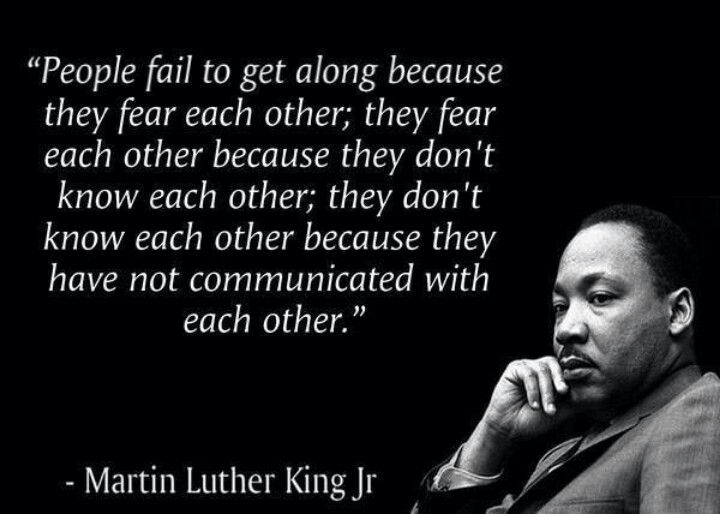
Get Along with Each Other (Romans 2:12-16)

All who have sinned apart from the law will also perish apart from the law, and all who have sinned under the law will be judged in accordance with the law. For it is not the hearers of the law who are righteous in God’s sight but the doers of the law who will be justified. When gentiles, who do not possess the law, by nature do what the law requires, these, though not having the law, are a law to themselves. They show that what the law requires is written on their hearts, as their own conscience also bears witness, and their conflicting thoughts will accuse or perhaps excuse them on the day when, according to my gospel, God through Christ Jesus judges the secret thoughts of all. (New Revised Standard Version)

Every single person on planet earth has been created by a good Creator in the image and likeness of God, without exception.

Because we are all stamped with the Lord’s divine image deep within us, there is a universally inherent sense of justice, rightness, fairness, integrity, morality, and love. Particulars of ethics may differ from culture to culture, yet all persons and societies have a broadly similar innate understanding of right and wrong.

Within the ancient Roman Church were a mix of Jews (the historical people of God who were given the law and the covenant through Moses) and Gentiles (non-Jewish persons). The Apostle Paul wrote his lengthy and probing letter to them because the two groups of Jew and Gentile were at odds with one another.

The Gentile Christians could not understand the Jewish Christian fondness and insistence on ancient rules and particular commands, and so, they looked down on their brothers and sisters in the faith as being hopelessly locked into outdated traditions and practices.

Conversely, the Jewish Christians could not understand the Gentile Christian affinity for a freedom that seemed to not care about the religious importance of food and eating, seasons and holy days, and outward signs of Christianity, and so, they tended to look down on their brothers and sisters in the faith as ignorant, immature, and in need of ritual practices.

The Church back then was almost like putting a group of people with O.C.D. (Obsessive-Compulsive Disorder) with a group of people with A.D.D. (Attention-Deficit Disorder). At the least, it’s going to very interesting to watch them try to live and worship together; at the worst, it’s going to spark an all-out battle for supremacy.

Paul was intervening somewhere in the middle between the interesting situation and the pitched battles so that the Church would not turn into total war. The last thing he wanted was two churches: one Jewish and one Gentile. No, there is one church, just as there is one God. Paul was determined that these knuckleheads are going to have to learn to get along.

For he himself is our peace, who has made the two groups one and has destroyed the barrier, the dividing wall of hostility, by setting aside in his flesh the law with its commands and regulations. His purpose was to create in himself one new humanity out of the two, thus making peace, and in one body to reconcile both of them to God through the cross, by which he put to death their hostility. He came and preached peace to you who were far away and peace to those who were near. For through him we both have access to the Father by one Spirit.

The Apostle Paul (Ephesians 2:14-18, NIV)

Since Paul himself was a Jewish Christian, he tended to get pretty testy with his fellow Jews. Although Paul often went back-and-forth throughout his letter to the Romans, addressing Jews, then Gentiles, he most often had more to say to the Jewish brothers and sisters.

And that is what’s happening in today’s New Testament lesson. The Apostle Paul is directing his words chiefly toward the Jewish believers. He is lifting the Gentile believers and placing them on the same level as the Jews. Although the Gentiles weren’t the ones who received the law, they’ve always had that law deep inside them.

Not only ought the Gentile Christians to be respected because of their inherent sense of God’s law, but this also makes them accountable for their own words and actions. In other words, there’s no excuse for any sinful talk or behavior.

What’s more, the real issue isn’t whether one group has the law, or not. The rub is whether one actually obeys and does the will of God. It doesn’t matter whether one hears the law read aloud in a Jewish synagogue or whether one hears the law spoken in the individual conscience. All are responsible for acting on that voice and engaging in deeds of justice, peace, and love. All must connect with the stamped image of God within us.

I’m not sure what is worse: committing overt sins or observing the sin and saying or doing nothing about it. Indifference is at the core of most sin – both for the perpetrator and the passive spectator seeing it. Each one is living against both their conscience and by what they’ve heard and been taught.

The Word of God has not been truly received until it is put into practice. This is a consistent theme in the New Testament: 

Jesus said, “The people who are really blessed are the ones who hear and obey God’s message!” (Luke 11:28, CEV)

Obey God’s message! Don’t fool yourselves by just listening to it. If you hear the message and don’t obey it, you are like people who stare at themselves in a mirrorand forget what they look like as soon as they leave. But you must never stop looking at the perfect law that sets you free. God will bless you in everything you do, if you listen and obey, and don’t just hear and forget. (James 1:22-25, CEV)

Listening to the Word without obedience is just that – it is mere hearing. Profession of faith in Jesus means nothing without a practice of that faith; learning the Bible is useless without living it; and acceptance of the Word is nothing more than a mental exercise without action to back it up. Profession, knowledge, and acceptance alone does not satisfy God’s plan for our lives. 

The danger is that we have the potential to deceive ourselves into thinking we are okay just because we know the right things and believe the right things. Christianity is a vital love relationship with Jesus, and, so, is not merely a matter of hearing and affirming orthodox truth; it also involves orthopraxy, that is, having right practice, the doing of truth.

Whenever the Gentile Christians in Rome refused to love the Jewish Christians, they were neither hearing God nor obeying God’s law. Whenever the Jewish Christians listened to law and gospel, but then had no intention of changing to accommodate the Gentile Christians, they were being disobedient. And whenever we hear about how God forgives us in Jesus’ name, but then we insist on not forgiving another person, we are not being doers of the Word.

So, let’s take a lesson from the ancient Roman Church: Be attentive to all persons in the Body of Christ. Include them and care for them. Pay attention to God’s Word. Include it and engraft into your life. Because care of the Body and care of the Word go hand-in-hand together.

May the God who created a world of diversity and vibrancy,
Go with us as we embrace life in all its fullness.

May the Son who teaches us to care for stranger and foreigners,
Go with us as we try to be good neighbors in our communities.

May the Spirit who breaks down our barriers and celebrates community,
Go with us as we find the courage to create a place of welcome for all. Amen.

Both Body and Soul (1 John 4:1-6)

Dear friends, don’t believe everyone who claims to have the Spirit of God. Test them all to find out if they really do come from God. Many false prophets have already gone out into the world, and you can know which ones come from God. His Spirit says that Jesus Christ had a truly human body. But when someone doesn’t say this about Jesus, you know this person has a spirit that doesn’t come from God and is the enemy of Christ. You knew this enemy was coming into the world and now is already here.

Children, you belong to God, and you have defeated these enemies. God’s Spirit is in you and is more powerful than the one who is in the world. These enemies belong to this world, and the world listens to them, because they speak its language. We belong to God, and everyone who knows God will listen to us. But the people who don’t know God won’t listen to us. This is how we can tell the Spirit that speaks the truth from the one that tells lies. (Contemporary English Version)

Sometimes, it’s not what in someone says, but in what they don’t say.

The Apostle John gave some spiritually sage advice to a group of his disciples. They were being influenced by people who claimed Christian faith yet were not the real deal. Lots of people make claims, but the real muster of a Christian is in embracing an embodied spirituality that truly meets the holistic needs of others.

For John, affirming Christ’s deity, while denying Christ’s humanity, is unacceptable; he had no room for the Platonic Greek dualism of body and spirit. 

Jesus was a real man with a very real body. To deny this was to deny the faith. Ethereal musings about the insignificance of the body were flatly rejected by John. The apostle was concerned that the supreme Christian ethic of love be practiced through attention to both body and soul. 

Words are important; they’re also insufficient. Actual demonstrations of love are needed, as well. To downgrade or deny a bodily Jesus is to pay little attention to the real bodily needs of people. Christianity is a religion of both body and soul; it’s not a Greek philosophy of life.

I will be the first guy to insist on some deep theological reflection on the great spiritual, cultural, and social issues of our day. Yet, if our theology does not lead to tangible acts of love based on that reflection, then we have not yet been called God’s friend. 

Correct doctrine – embracing body and soul – leads to loving actions of faith. Ideally, we glorify God with both speech and service, physically and spiritually. Words and actions, heart and hands, must work together for an authentic Christian ministry.

The Word became a human being and lived here with us. (John 1:14)

The early church councils condemned the denigration of Christ’s full humanity for good reason. Not only did Jesus have a real flesh and body experience while on this earth, but Jesus also healed actual bodies and performed real physical miracles.

Jesus Christ met both the spiritual needs of forgiveness and reconciliation, and the needs of the body. What’s more, Jesus had no ranking system, as if the spiritual needs were the real commitments whereas tangible needs were just a means to the end of meeting intangible obligations.

The Gospel involves both body and soul; they are equally significant. To exalt one above the other is, frankly, heresy. So, let’s put this in more practical terms: Love is more than an expression of good feelings and goodwill toward others; love has skin on, using both physical actions and words formed from our vocal chords to bring goodness to others.

Jesus has always maintained the connection between spiritual and physical needs; it’s us who separate them. It’s the spiritual charlatan, and the huckster preacher, who speak out of one side of their mouth about spiritual salvation with no bodily human help or uplift.

Those who are against Jesus, the spirit of the antichrist, talk a good line but when push comes to shove, they have no intention of paying attention to both body and soul.

Our gut knows that feeling we cannot quite shake when we are around someone. It has real meaning. The spirit within us is greater than the spirit of the world. Just because we may not be able to respond very well to another, or give clear voice to what is inside us, does not necessarily mean that the other person is okay or right.

A proper Christian response to others incorporates head, heart, and gut. The interaction and alignment of all our faculties is needed. If we draw upon our entire selves, both body and soul, we will overcome the spirit of the antichrist through loving words and actions toward those who need it most.

The Antichrist wants us to get caught up in putting all our focus fighting theological battles and debating philosophical ideas – while our neighbor next door is dying of cancer; our co-worker is experiencing covert racism; and, our friend is stuck in poverty.

Since Jesus is fully human, that fact alone ought to impel us toward meeting the needs of the body – without wondering if it is the spiritual thing to do, or not. You already know this to be true. So, don’t let some esoteric preacher or teacher tell you otherwise.

Almighty God, Creator and Preserver of all humanity, I humbly ask: Make your ways known to everyone, and your saving health to all nations. May your church everywhere be guided and governed by your good spirit, so that all who profess and call themselves Christians may be led into the way of truth, and hold the faith in unity of spirit, in the bond of peace, and in righteousness of life.

Caring God, in your parental goodness, lift up those who are afflicted or distressed, in mind, body, or spirit. Comfort them and meet their every need, giving them patience under their sufferings, and a good outcome of all their afflictions. This we ask for the sake Jesus Christ your Son, our Lord, who with you and the Holy Spirit reign forever. Amen.

Keep Your Conscience Clear (Acts 24:10-23)

When the governor motioned for him to speak, Paul replied:

“I know that for a number of years you have been a judge over this nation; so I gladly make my defense. You can easily verify that no more than twelve days ago I went up to Jerusalem to worship. My accusers did not find me arguing with anyone at the temple or stirring up a crowd in the synagogues or anywhere else in the city. And they cannot prove to you the charges they are now making against me. 

However, I admit that I worship the God of our ancestors as a follower of the Way, which they call a sect. I believe everything that is in accordance with the Law and that is written in the Prophets, and I have the same hope in God as these men themselves have, that there will be a resurrection of both the righteous and the wicked. So I strive always to keep my conscience clear before God and man.

After an absence of several years, I came to Jerusalem to bring my people gifts for the poor and to present offerings. I was ceremonially clean when they found me in the temple courts doing this. There was no crowd with me, nor was I involved in any disturbance. 

But there are some Jews from the province of Asia, who ought to be here before you and bring charges if they have anything against me. Or these who are here should state what crime they found in me when I stood before the Sanhedrin—unless it was this one thing I shouted as I stood in their presence: ‘It is concerning the resurrection of the dead that I am on trial before you today.’”

Then Felix, who was well acquainted with the Way, adjourned the proceedings. “When Lysias the commander comes,” he said, “I will decide your case.” He ordered the centurion to keep Paul under guard but to give him some freedom and permit his friends to take care of his needs. (New International Version)

Without exception, everyone has a conscience. It is our internal moral compass, an intangible guidance system.

Conscience is humanity’s hard-wired epistemic sense of knowing what and what not to do, beyond the five senses. The still small voice inside us continually gives discernment that transcends objective facts – even though we may not be able to articulate or explain why we know something is right or wrong.

Our conscience keeps us from being morally empty, bereft of direction, and aimless in this world. Paying attention to our conscience serves us quite well. The conscience is the angel on our shoulder, directing us to do and be better; it is the inner compunction to live a beautiful, good, and ethical life.

By allowing the conscience to chart for us a course forward, we can then avoid inaction in the face of stress, as well as immoral words and actions. The conscience tempers our inbred fight-or-flight syndrome so that we might respond wisely to adverse situations. 

The Apostle Paul, as was usual with him, was in a pickle. Yet, Paul never seemed to be shaken with circumstances which most of us would probably consider so distressing as to fall into despair.

In today’s New Testament lesson, Paul is in custody. While standing trial before Governor Felix, Paul used the opportunity to give a clear and rather relaxed testimony to his Christian faith. 

I suggest that the Apostle was able to give a cogent apologetic for his life and ministry – not because he was trying to get off the hook or because he thought it was his duty – but because of his well-attuned inner compass. That inner guidance system led him to say:

“I have committed myself to maintaining a clear conscience before God and with all people.” (Acts 24:16, CEB)

Statue of St. Paul in St. Peter’s Square, the Vatican, Rome

Living with an awareness of the conscience, and carefully listening to it, creates the ability to speak from that place of insight.

There’s no need to do all sorts of mental gymnastics or spin-doctoring. Although Paul gave a clear defense of his actions and attitudes, he did it without having an insecure defensiveness. Because of his conscience, he could articulate truth and steer clear of white lies and propping-up his ego.

I also suggest that the Apostle Paul’s effective engagement with others came from his God-given inner conscience. So, I wonder: 

  • How might my life be different if I shared the same concern as Paul to always have my conscience clear before both God and others? How might the world be different if this was a dedicated commitment?
  • What would happen if I sought to continually be in dialogue with my conscience and make decisions based on that connection? And what if I consistently brought before God the musings and inklings of my conscience?

The human conscience is not static but dynamic. It can be strong or weak. If it doesn’t get regular use, the conscience withers, eventually becomes calcified, and results in a hardening of the heart.

The following are just a few ways of gaining a healthy conscience and keeping it clear and clean:

Acknowledge

Make an acknowledgment of God. The Lord gave us an internal conscience of law and also an external code of law. They are both meant to operate together. The conscience needs to be formed from God’s revelation, that is, God’s written and natural laws; and then, we live life as God intends. 

The conscience is like a law written in the human heart. And it will show whether we are forgiven or condemned. (Romans 2:15, CEV)

“Conscience is like God’s herald and messenger; it does not command things on its own authority, but commands them as coming from God’s authority, like a herald when he proclaims the edict of the king. This is why conscience has binding force.”

St. Bonaventure

Let us draw near to God with a sincere heart and with the full assurance that faith brings, having our hearts sprinkled to cleanse us from a guilty conscience and having our bodies washed with pure water. (Hebrews 10:22, NIV)

Affirm

Let your own good deeds and the works of others be affirmed. Have realistic expectations. The lack of affirmation slowly and imperceptibly poisons the soul and infects the conscience.

“I give thanks to God, whom I serve with a clear conscience, as my ancestors did. I thank him as I remember you always in my prayers night and day.” (2 Timothy 1:3, GNT)

Ask

Petition God for help. Pray for divine resources to assist you. Divine wisdom guides human affairs. Divine authority governs human community. Divine love gives shape to the human conscience.

Pray for us. Our consciences are clear, and we always try to live right. (Hebrews 13:18, CEV)

Allow

Let other people into your life, whether Christian, or not. Sharing thoughts and ideas, feelings and emotions, concerns and celebrations, are all a path toward a healthier spirit, a better awareness of self and others, and a stronger conscience.

If someone who isn’t a believer asks you home for dinner, accept the invitation if you want to. Eat whatever is offered to you without raising questions of conscience. (But suppose someone tells you, “This meat was offered to an idol.” Don’t eat it, out of consideration for the conscience of the one who told you. It might not be a matter of conscience for you, but it is for the other person.). (1 Corinthians 10:27-28, NLT)

Acquire

Develop the necessary spiritual skill set of wisdom and holiness to feed the conscience. Let grace be the primary teacher.

We can say with confidence and a clear conscience that we have lived with a God-given holiness and sincerity in all our dealings. We have depended on God’s grace, not on our own human wisdom. That is how we have conducted ourselves before the world, and especially toward you. (2 Corinthians 1:12, NLT)

Pay attention to your conscience. Keep it clean and clear. It’s there to serve you well. So, let it.

Gracious God, you provide everything we need for life and godliness in this world. Help me to keep my conscience clear in all my words and actions; and keep it tender toward your will so that, through me, others might experience through the life-giving message of Jesus Christ, in the power of the Holy Spirit. Amen.