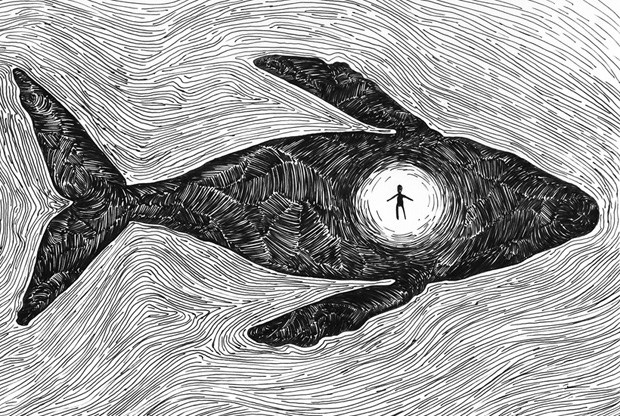
Exodus 10:21-29 – From Darkness to Light

Darkness

Then the Lord said to Moses, “Stretch out your hand toward the sky so that darkness spreads over Egypt—darkness that can be felt.” So, Moses stretched out his hand toward the sky, and total darkness covered all Egypt for three days. No one could see anyone else or move about for three days. Yet all the Israelites had light in the places where they lived.

Then Pharaoh summoned Moses and said, “Go, worship the Lord. Even your women and children may go with you; only leave your flocks and herds behind.”

But Moses said, “You must allow us to have sacrifices and burnt offerings to present to the Lord our God. Our livestock too must go with us; not a hoof is to be left behind. We have to use some of them in worshiping the Lord our God, and until we get there, we will not know what we are to use to worship the Lord.”

But the Lord hardened Pharaoh’s heart, and he was not willing to let them go. Pharaoh said to Moses, “Get out of my sight! Make sure you do not appear before me again! The day you see my face you will die.”

“Just as you say,” Moses replied. “I will never appear before you again.” (NIV)

The ancient Israelites were in bondage to the mighty Egyptian empire. After four-hundred years of bondage, God called Moses to lead them out from Egypt to the Promised Land. The only kink was the Egyptian Pharaoh’s outright reluctance. As the most powerful human on the planet at the time, Pharaoh was used to getting his way on everything. God knew it would be a process of deliverance, and not just a sudden event.

So, a series of ten wonders or miracles occurred that struck at the heart of Egyptian power and religion. A discernible pattern quickly developed in which Pharaoh refused cooperation; God sent an incredible devastation on the land; Pharaoh relented with a half-repentance; God lifted the devastation; and, with things “back to normal” Pharaoh’s heart was hardened and he would not let God’s people go. Rinse and repeat a lot more times.

Today’s Old Testament lesson recounts the ninth wonder done by God, using Moses. Although the miracle of complete and total darkness lasted a full three twenty-four-hour long days without harming any human or animal, the sheer fear and terror it brought to the Egyptians left them in a three-day state of suspense. Living on the edge in anxious apprehension is psychologically overwhelming. At least with the other plagues, you could see what you were up against.

Fear in the dark

In the land known as the “eternally rising sun,” the uncertainty of the perpetual darkness was meant to humble Egypt and put it in its place. Yet, with nine strong and full wonders from God, Pharaoh remained intransigent and stubborn. He was not going to let all that slave labor walk away while he was in charge.

I “wonder” what it takes for most of us to make a major change in our lifestyle – what we need to go through before we cry “uncle” and let go. The more power and control we have, the harder it is to do so. Humans are creatures of habit, and wherever there are long standing routines there you will find great difficulty in changing those practices.

No one simply wakes up in the morning and decides to be a jerk. Instead, it is likely that one day a person will arise, look in the mirror, and not recognize who is looking back at them. A series of choices and habits over a long stretch of time eventually formed the undistinguished blockhead. The Apostle James once described the pathology behind the person in the mirror:

You are tempted by the evil things you want. Your own desire leads you away and traps you. Your desire grows inside you until it results in sin. Then the sin grows bigger and bigger and finally ends in death. (James 1:14-15, ERV)

By reading today’s story Christologically we have a clue as to the remedy and reformation needed to form newer and better habits. Just as all Egypt was in three days of darkness due to sin, so Jesus was three days in the dark grave because of the world’s sin. And just as the ancient Israelites were delivered from their cruel bondage from Egypt and entered the Promised Land, so in Jesus Christ humanity is liberated from their power-hungry, money-grubbing, control-obsessing ways of being insensitive dolts to forming new habits of humility, justice, and love. The Apostle Peter said:

You are a chosen race, a royal priesthood, a holy nation, God’s own people, in order that you may proclaim the mighty acts of him who called you out of darkness into his marvelous light. (1 Peter 2:9, NRSV)

It is the aim of the Christian to look out at the world and bring love where love is not; to discover it is more blessed to give than to receive; and, to have a deep sense of justice which works for egalitarian ways and the equity of all people, not just people of privilege.

So, may we gain a proper perspective of ourselves, others, and the world. And, may we resist the Pharaoh’s among us, while championing the needs of the downtrodden of this old fallen world. May we be like Christ and see Jesus in each person we encounter.

God, you have given all peoples one common origin. It is your will that they be gathered as one family in yourself. Fill the hearts of humanity with the fire of your love and with the desire to ensure justice for all. By sharing the good you give us, may we secure an equality for all our brothers and sisters throughout the world. May there be an end to division, strife, and war. May there be a dawning of a truly human society built on love and peace. We ask this in the name of Jesus, our Lord, through the might of the Holy Spirit. Amen.

Genesis 31:1-21 – On the Move

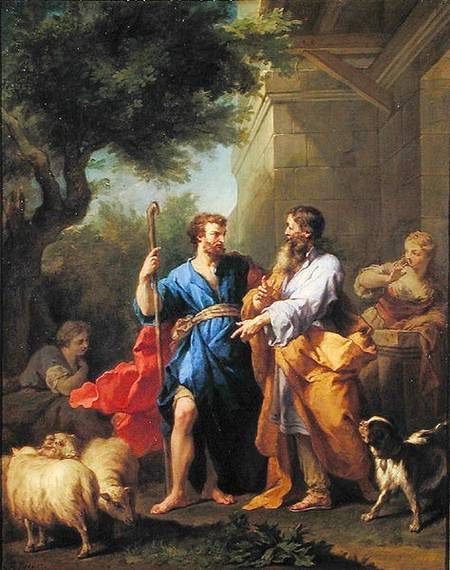
Jacob and Laban by Jean Restout
Jacob and Laban by French artist Jean Restout (1692-1768)

Jacob heard that Laban’s sons were saying, “Jacob has taken everything our father owned and has gained all this wealth from what belonged to our father.” And Jacob noticed that Laban’s attitude toward him was not what it had been.

Then the Lord said to Jacob, “Go back to the land of your fathers and to your relatives, and I will be with you.”

So, Jacob sent word to Rachel and Leah to come out to the fields where his flocks were. He said to them, “I see that your father’s attitude toward me is not what it was before, but the God of my father has been with me. You know that I have worked for your father with all my strength, yet your father has cheated me by changing my wages ten times. However, God has not allowed him to harm me. If he said, ‘The speckled ones will be your wages,’ then all the flocks gave birth to speckled young; and if he said, ‘The streaked ones will be your wages,’ then all the flocks bore streaked young. So, God has taken away your father’s livestock and has given them to me.

“In breeding season, I once had a dream in which I looked up and saw that the male goats mating with the flock were streaked, speckled or spotted. The angel of God said to me in the dream, ‘Jacob.’ I answered, ‘Here I am.’ And he said, ‘Look up and see that all the male goats mating with the flock are streaked, speckled, or spotted, for I have seen all that Laban has been doing to you. I am the God of Bethel, where you anointed a pillar and where you made a vow to me. Now leave this land at once and go back to your native land.’”

Then Rachel and Leah replied, “Do we still have any share in the inheritance of our father’s estate? Does he not regard us as foreigners? Not only has he sold us, but he has used up what was paid for us. Surely all the wealth that God took away from our father belongs to us and our children. So do whatever God has told you.”

Then Jacob put his children and his wives on camels, and he drove all his livestock ahead of him, along with all the goods he had accumulated in Paddan Aram, to go to his father Isaac in the land of Canaan.

When Laban had gone to shear his sheep, Rachel stole her father’s household gods. Moreover, Jacob deceived Laban the Aramean by not telling him he was running away. So, he fled with all he had, crossed the Euphrates River, and headed for the hill country of Gilead. (NIV)

Moving and changing are inevitable. Change and movement are built into all creation, from the seasons of the year to our physical bodies. Some changes and moves we deem as good, and others, not so much. Yet, whether good or bad, any switch or shift in life can be difficult to cope with.

Whatever the circumstance, God stands behind everything, working out his purposes. There are times and seasons in our lives in which we can get lost in our own stories. Ultimately, however, our transitions from one place to another are much more about our individual stories fitting into the larger story of God. Whenever we are unable to see how our own story and the story of God fit together, it is an opportunity to exercise our faith and trust God. Listening to God and responding to his call to move and change will at times be difficult due to the uncertainty of our future.

In today’s Old Testament lesson, Jacob has served his father-in-law Laban for twenty years. Now, he hears the call of God to move. The principal actor and center of the story is not Jacob, but God.  The primary point of the narrative is a revelation of who God is, with Jacob as the supporting actor in the story. God was watching over and protecting Jacob. The Lord was following through on his promise given to Jacob’s grandfather, Abraham, to go to the land he would show him – to make Abraham into a great nation so that all people-groups on earth would be blessed through him.  So, this story of Jacob is one piece in the unfolding drama of God’s redemption which would ultimately find its fulfillment in the person and work of Jesus.

Jacob had in-law issues. His relationship with his father-in-law was morphing into trouble. Laban’s attitude had changed toward his son-in-law, probably due to Jacob’s increasing wealth, and Laban’s decreasing assets. So, God showed up and told Jacob to return to the land of his fathers. Along with the call to make a change came a promise of God’s continued presence with Jacob. The grace given to Abraham when calling him out of Ur was renewed with more grace when calling Jacob back to the land of his father and grandfather.  It is in God’s nature to be gracious and to heap grace upon grace.

Jacob Fleeing Laban by Filippo Lauri
Jacob Fleeing Laban by Italian painter Filippo Lauri (1623-1694)

Jacob heeded call of the Lord and began laying plans to move back to Canaan. But how to tell his family about this? What are his wives going to say? After all, he is talking about moving away with kids and teenagers still in the tent. So, with some anxiety, Jacob called his wives, Rachel and Leah, out to the fields to talk.  Jacob laid out the story of himself and Laban, which he framed more as a contrasting story between God and Laban:

Laban’s attitude changed – God’s attitude does not change. God is not fickle.

Laban was unreliable, reneging on promises – God is reliable and trustworthy, keeping his promises.

Laban kept changing his mind – God stays the same, yesterday, today, and forever.

Laban saw only self-interest – God sees everyone and shows solidarity with the oppressed.

This same God is concerned for us and will not renege on his promises. God is providentially working out his agenda and concern for this earth, and we can bank on it.

The response from Jacob and Rachel to Laban was some tricky thievery. Jacob stealthily took his family and ran away from the situation. Rachel straight up stole Laban’s household gods. (Note: Old Testament narratives do not usually tell us whether something is bad or good but instead lets the story unfold and speak for itself so that we can see the ethics working itself out).  Jacob and Rachel had a less than stellar response to God’s grace. We do not know exactly what the household gods are, or why Rachel stole them. What we do know is that there was a bit of pagan practice mixed in with worship of the one, true God.

God wants to be our everything – the faithful, gracious, and present God – because God is good all the time. Our circumstances will forever be changing, and God may ask us to move and go do something somewhere else. Yet, no matter the situation and how different our surroundings may become, God does not change, and he is here with us; and, at the same time, is continually moving to accomplish his purposes.

Loving God, you have made the whole of human life in your image; each one of us shaped in love. Your goodness is ever-present within us all. Yet, there is so much evil and pain in our world; it comes at us from every direction. Teach us how to rediscover your love within us and to use that love as a force for good. Help us to turn our hearts toward the world in hope, praying for each other and regarding each other as a treasure. Join us all together in prayer so that we might be the light which darkness can never overcome, through Jesus Christ our Lord. Amen.

Matthew 12:38-42 – The Sign

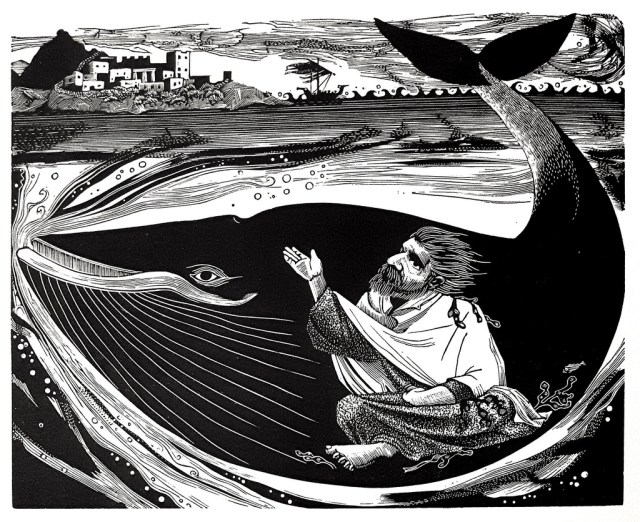
Jonah in the belly

One day some teachers of religious law and Pharisees came to Jesus and said, “Teacher, we want you to show us a miraculous sign to prove your authority.”

But Jesus replied, “Only an evil, adulterous generation would demand a miraculous sign; but the only sign I will give them is the sign of the prophet Jonah. For as Jonah was in the belly of the great fish for three days and three nights, so will the Son of Man be in the heart of the earth for three days and three nights.

“The people of Nineveh will stand up against this generation on judgment day and condemn it, for they repented of their sins at the preaching of Jonah. Now someone greater than Jonah is here—but you refuse to repent. The queen of Sheba will also stand up against this generation on judgment day and condemn it, for she came from a distant land to hear the wisdom of Solomon. Now someone greater than Solomon is here—but you refuse to listen. (NLT)

We often must unlearn before we learn. We need to let go so that we can take on. Repentance is the key to transformation. To repent is to change; and, change involves the humility to admit when we are lost, ask for help, and go in a different direction. The greatest miracle, the best evidence of God’s work in the world, is a changed life – both personal and corporate transformation. Genuine change is not a minor tweak of habits; it is a wholesale reorientation of the heart. New life is not re-branding oneself but is akin to being born again.

For many folks, when it comes to change and transformation, the focus is on others changing – other people need to bend their lives and organizations to how I believe things need to be. As you can tell, this sounds an awful lot like pride and hubris. And, it is.

Repentance and new life is for everyone, not just a select few or others for whom we believe need to change.

Jesus made waves with lots of people by hobnobbing with the least, the lost, and the lowly. Christ actively sought such people out, and healed many of them from sickness, disease, and sin so that they would be united with God and no longer remain on the fringes of society.

Some within the religious establishment of the day did not take the healing ministry of Jesus into consideration because they themselves were not in the transformation business. So, healing miracles which created new life meant nothing for them. For them, Jesus was not flexing any real Messiah muscle and improving their designs to see Gentiles kicked out of Palestine. They even went so far as to ascribe the healing ministry as the work of the devil. They wanted a sign from heaven that would authenticate proper Messiah credentials.

Jonah sign

Jesus said there is already an existing sign: Jonah. As Jonah was three days and three nights in the belly of a whale, so Jesus would be in the earth for three days and nights. The death and resurrection of Jesus is needed, and when faced with this information, the only appropriate response is repentance, a complete U-turn, to a changed life.

Jesus mentioned the Queen of the South to make the same point. When the ancient Ninevites, who were a sinful people, encountered the person of Jonah, they repented; when the Queen encountered the person of Solomon, she changed.  Therefore, how much more ought we to change when encountering the person of Christ?

Jesus himself is the sign. Jonah was in the belly of a whale. He was all but dead. But God caused the whale to belch up Jonah, and he went out as a changed man. The experience of having stomach fluids work on a person for three days and nights would have changed a person both spiritually and physically – bleached completely white and an incredible sight to see!

The whole point of bringing up Jonah was to communicate the great need for repentance when faced with Jesus, his life, his teaching, his ministry. The appropriate response to Jesus is a changed life. Jesus was looking for status quo malcontents, and a desire for transformation and new life. The process of change is hardwired into all creation – from seasons of the year to the seasons of people’s lives – all are designed for a sustained process of time to renew and revolutionize us.

Jesus modeled this for us. He switched his address of heaven and moved into our neighborhood to bring us new life. As the Master of conversion, Jesus extends the invitation to change. All he asks is to let God do the work of change within us, be patient with the construction of the soul he is doing and persist with daily routines of faith individually and with one another.

It pleases Jesus and it is the heart of God to realize new life. Change for change’s sake is not the point. Change that reflects the values of God is. So, we must hear the Scriptures, and we must pray to seek the mind and heart of God.

God Almighty, we desire to be transformed by you and allow the life of Jesus to be expressed through us. We desire to walk in the light of your spirit. Reveal to us those things in our life that need to be made anew. Allow us to discern between flesh and spirit so that we can choose a healthy holy path. Continue to give us spiritual awareness. Transform us into something new altogether. May our old life and way disappear, and our new life emerge for the blessing of the world, through Jesus Christ our Lord in the power of the Holy Spirit. Amen.

Matthew 12:38-42 – A Changed Life

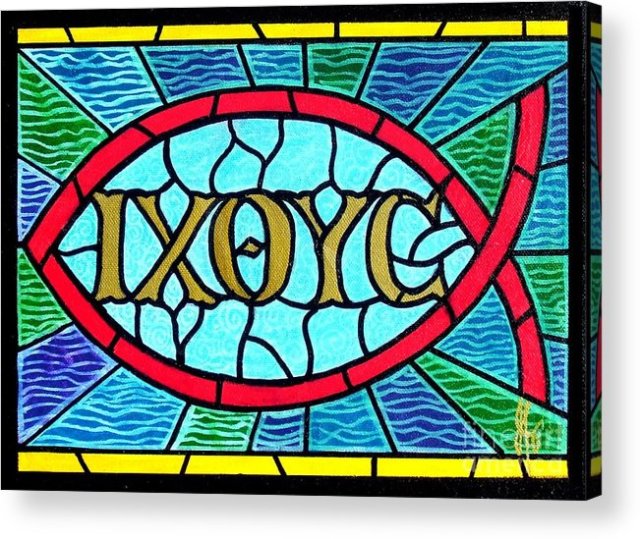
Ichthys
The ichthys (pronounced ick-thoos) is an early Christian symbol of new life in Jesus Christ.

Then some of the Pharisees and teachers of the law said to him, “Teacher, we want to see a sign from you.”

He answered, “A wicked and adulterous generation asks for a sign! But none will be given it except the sign of the prophet Jonah. For as Jonah was three days and three nights in the belly of a huge fish, so the Son of Man will be three days and three nights in the heart of the earth. The men of Nineveh will stand up at the judgment with this generation and condemn it; for they repented at the preaching of Jonah, and now something greater than Jonah is here. The Queen of the South will rise at the judgment with this generation and condemn it; for she came from the ends of the earth to listen to Solomon’s wisdom, and now something greater than Solomon is here. (NIV)

I say at the outset:

The greatest miracle, the best evidence of God’s work in the world, is a changed life.

Yes, both personal and corporate transformation – not a rearranging or a tweeking of habits – but a wholesale change of heart. New life is new life, and not a reconstituted life.

For many folks, when it comes to any discussion of change and transformation, it is a focus on others changing. Other people need to see things rightly; others who must bend their lives and organizations to how I believe things need to be. As you can tell, putting it in writing and laying it bear sounds an awful lot like pride and hubris. And, it is.

The need for repentance is for everyone, not just a select few or others for whom we believe need to change.

Jesus made waves with many people by hob-nobbing with the least, the lost, and the lowly. Christ actively sought such people out, and healed many of them from sickness, disease, and sin so that they would be united with God and no longer remain on the fringes of society.

Some within the religious establishment of the day did not take the healing ministry of Jesus into consideration because they were not in the transformation business. So, healing miracles which created new life did nothing for them. Jesus was not flexing any real Messiah muscle for them and improving their designs to see Gentiles get beat up and kicked out of Palestine. They even went so far as to ascribe Jesus’ healings as the work of the devil. They wanted a sign from heaven that would authenticate proper Messiah credentials.

Jesus responded by essentially saying there is already a sign that exists, the sign of Jonah. As Jonah was three days and three nights in the belly of a whale, so Jesus would be in the earth for three days and nights. The death and resurrection of Jesus is needed, and when faced with this information, the only appropriate response is repentance, a complete U-turn, to a changed life. Jesus brought up the Queen of the South to make the same point: When the ancient Ninevites, who were a sinful people, encountered the person of Jonah, they repented; when the Queen encountered the person of Solomon, she changed.

Therefore, how much more should we change when encountering the person of Christ?

Jesus himself is the sign. Jonah was in the belly of a whale. He was all but dead. But God caused the whale to belch up Jonah, and he went out as a changed man. The experience of having stomach fluids work on a person for three days and nights, some scholars point out that Jonah would have been both spiritually and physically different – bleached completely white and an incredible sight to see!

The whole point of bringing up this sign of Jonah was to communicate the great need for repentance when faced with Jesus, his life, his teaching, his ministry. The appropriate response to Jesus is a changed life.

Jesus was looking for status quo malcontents, and a desire for transformation and new life.

The process of change is hardwired into all creation – from seasons of the year to the seasons of people’s lives – all are designed for a sustained process of time to revolutionize us.

Jesus modeled this for us. He switched his address of heaven and moved into our neighborhood in order to bring us new life. As the Master of conversion, Jesus always extends the invitation to change. All he asks is to let God do the work of change within us, be patient with the construction of the soul he is doing and persist with daily routines of faith individually and with one another.

It pleases Jesus and it is the heart of God to realize new life. Change for change’s sake is not the point. Change that reflects the values of God is the point. And in order to know that, we must hear the Scriptures, and we must pray to seek the mind and heart of God.

God Almighty, we desire to be transformed by you and allow the life of Jesus to be expressed through us. We desire to walk in the light of your spirit. Reveal to us those things in our life that need to be made anew. Allow us to discern between flesh and spirit so that we can choose a healthy holy path. Continue to give us spiritual awareness. Transform us into something new altogether. May our old life and way disappear, and our new life emerge for the blessing of the world, through Jesus Christ our Lord in the power of the Holy Spirit. Amen.

Click I Will Rise by Chris Tomlin as we continue in this season of Eastertide with its focus on new life.