Good News for All (Acts 8:26-40)

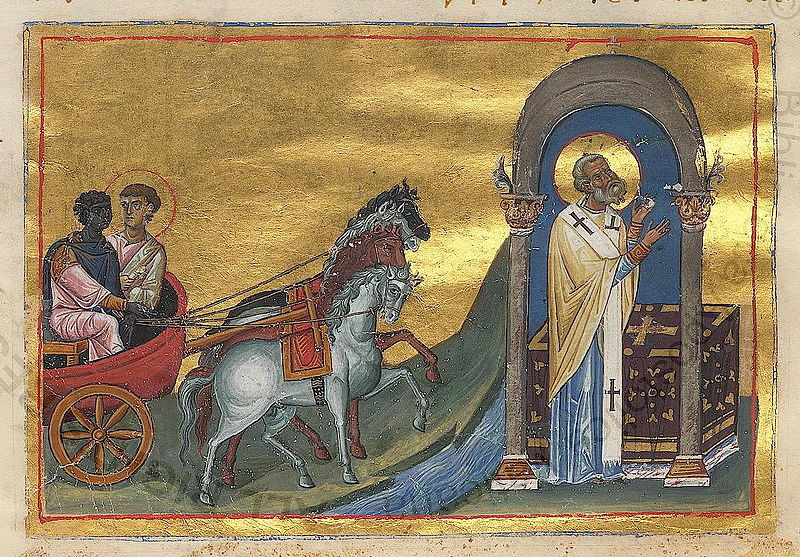
11th century Byzantine depiction of Philip and the Ethiopian eunuch

An angel from the Lord said to Philip, “Get up, and take the desert road that goes south from Jerusalem to Gaza.” So Philip went.

An Ethiopian man who had come to Jerusalem to worship was on his way home. The man was a eunuch, a high-ranking official in charge of all the treasures of Queen Candace of Ethiopia. As the official rode along in his carriage, he was reading the prophet Isaiah out loud.

The Spirit said to Philip, “Go to that carriage, and stay close to it.”

Philip ran to the carriage and could hear the official reading the prophet Isaiah out loud. Philip asked him, “Do you understand what you’re reading?”

The official answered, “How can I understand unless someone guides me?” So he invited Philip to sit with him in his carriage.

This was the part of the Scriptures that the official was reading:

“He was led like a lamb to the slaughter.
He was like a sheep that is silent
when its wool is cut off.
He didn’t open his mouth.
When he humbled himself,
he was not judged fairly.
Who from his generation
will talk about his life on earth being cut short?”

The official said to Philip, “I would like to know who the prophet is talking about. Is he talking about himself or someone else?” Then Philip spoke. Starting with that passage, Philip told the official the Good News about Jesus.

As they were going along the road, they came to some water. The official said to Philip, “Look, there’s some water. What can keep me from being baptized?”  The official ordered the carriage to stop. He and Philip stepped into the water, and Philip baptized him. When they had stepped out of the water, the Spirit of the Lord suddenly took Philip away. The official joyfully continued on his way and didn’t see Philip again.

Philip found himself in the city of Azotus. He traveled through all the cities and spread the Good News until he came to the city of Caesarea. (God’s Word Translation)

We are in the Christian season of Epiphany – a time of celebrating that the light of the Lord has been given not only to Jews but to Gentiles, as well. The good news of mercy, forgiveness, salvation, and peace in Jesus Christ is for everyone, and not just some.

So, we have a very appropriate story in today’s New Testament lesson illustrating God’s grace for those who have been typically the “outsiders” when it comes to the worship of God.

God’s grace is really a merciful divine intervention into another’s life, providing something a person or group needs, yet cannot obtain on their own.

Philip, one of the original twelve disciples of Jesus, received instructions from the angel of the Lord. Take a certain road. That’s it. No other explanation. The command is, however, full of grace. Most of us don’t do all that well with multiple instructions given at once. We do much better with a single imperative at a time.

And so, the next piece of guidance came as Philip was taking the road from Jerusalem south to Gaza. Go hang out around a certain carriage. Philip needed no more direction after that; he took to what was happening.
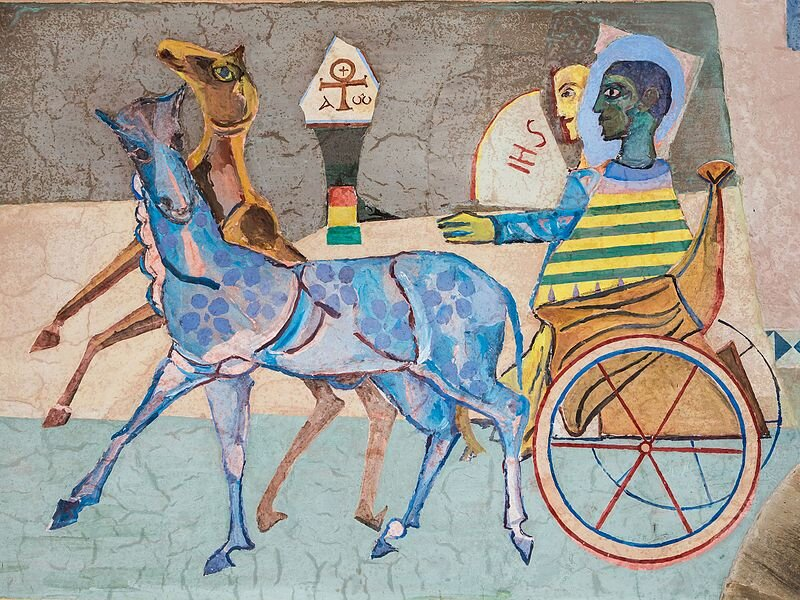
Philip and the Ethiopian Eunuch by Herbert Boeckl

Maybe reading the story from our contemporary perspective hinders us from seeing just how scandalous and unthinkable the story was for people in the first century. Jews and Gentiles didn’t hang out with each other; and, if they did, there were all sorts of rules regulating how the interaction would go.

We really don’t have any of this with Philip. He simply emulates his Lord and ignores societal and cultural mores to meet the need of someone very different than himself.

An Ethiopian man was in Jerusalem and heading back home. He was an official in the Queen of Ethiopia’s court, and a eunuch (a castrated official). He was a person of color with a mutilated body and could have very well been of a different gender than Philip was used to. In other words, he was about as foreign from Philip as one can get.

Yet, what better way to communicate that the gospel is for everyone? Philip had learned from Jesus not to adopt the divisions of race, religion, and gender that others did. See, instead, with spiritual eyes to the heart of a person.

And this Ethiopian eunuch had a heart curious about God, a mind trying to understand God’s words, and a gut that told him this guy approaching me for whom I don’t know and isn’t from my country is perhaps God’s messenger to me.

That’s what I call a divine appointment.

Those divine encounters always result in changed lives. I believe both the Ethiopian and Philip were changed that day. The only way that any of us truly changes is through the interaction with others different from ourselves.

The good news of Jesus is for all. If, however, we remain in a closed system which is not open to others of differing cultures and communities, then we harden into believing the gospel is for us, and not them.

Christianity is not, therefore, an exclusive club made up of insiders who demonize outsiders as not looking, acting, or thinking like we do. We already have plenty of that insidious junk in the world. At its inception, Christianity was different. And, I believe, it needs to keep that edge of reaching out to all persons with a life-giving message of salvation and peace – not a death-dealing sermon of Christian cultural hegemony.

Good news for all people everywhere means that proclamation of the gospel of Jesus Christ needs to occur for all nations and ethnic peoples. It’s a message of grace, not judgment; of mercy, not threats; of open love, not closed hate.

Philip and the Ethiopian show us the way through their sensitivity to the divine, their open dialogue with one another, and their shared commitment to doing what is right and serving the Lord. Philip was a guide, not a conqueror. And the Ethiopian became a follower of Jesus, not Philip.

Let’s make sure to keep it straight; and to keep reaching out.

Lord God, thank you that in love and mercy, you reached out to us – and that when we were dead in our sins, you sent Jesus to make us alive. Thank you that you have a heart that seeks the lost. Thank you for saving us.

Give us hearts that care for the people who are in darkness and need the light of Christ. Teach us to care for them as you do. Grow us to care for the common good of all humanity. 

Help your Church everywhere to know and love you; and to invite others into your divine dance. May our conversations with others be seasoned with salt and full of grace; may our relationships show people the love of Jesus. May our hearts reflect your own heart, through Jesus Christ our Lord, in the strength of the Holy Spirit. Amen.

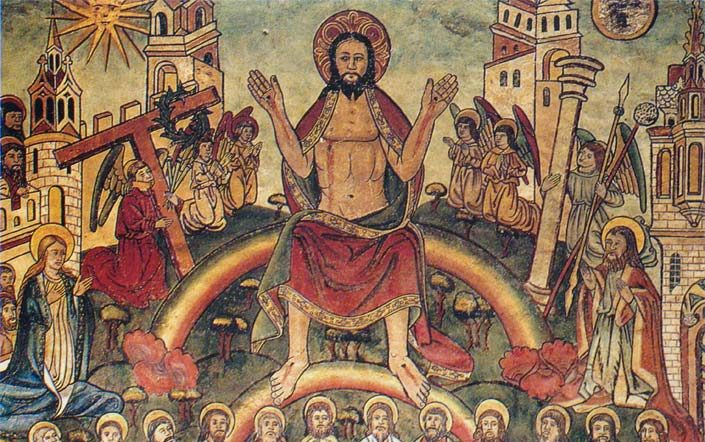
Learn the Lesson of Christ’s Coming (Matthew 24:23-35)

“He ascended to heaven and is seated at the right hand of God the Father almighty. From there he will come to judge the living and the dead.” Apostles’ Creed

Then if anyone says to you, ‘Look! Here is the Messiah!’ or ‘There he is!’—do not believe it. For false messiahs and false prophets will appear and produce great signs and wonders, to lead astray, if possible, even the elect. Take note, I have told you beforehand. So, if they say to you, ‘Look! He is in the wilderness,’ do not go out. If they say, ‘Look! He is in the inner rooms,’ do not believe it. For as the lightning comes from the east and flashes as far as the west, so will be the coming of the Son of Man. Wherever the corpse is, there the eagles will gather.

“Immediately after the suffering of those days

the sun will be darkened,
    and the moon will not give its light;
the stars will fall from heaven,
    and the powers of heaven will be shaken.

“Then the sign of the Son of Man will appear in heaven, and then all the tribes of the earth will mourn, and they will see ‘the Son of Man coming on the clouds of heaven’ with power and great glory. And he will send out his angels with a loud trumpet call, and they will gather his elect from the four winds, from one end of heaven to the other.

“From the fig tree learn its lesson: as soon as its branch becomes tender and puts forth its leaves, you know that summer is near. So also, when you see all these things, you know that he is near, at the very gates. Truly I tell you, this generation will not pass away until all these things have taken place. Heaven and earth will pass away, but my words will not pass away. (New Revised Standard Version)

I live in the upper Midwest of the United States. The summers can be brutally hot and humid. The winters can be incredibly frigid and full of snow. Having worked with college students for many years, every Fall there’s always at least one international student, or a student from the South, that has never experienced a Midwest winter and snow. 

I can tell them over and over again that they need a sturdy winter coat before the snow flies. But, having never known sub-zero and sub-freezing temperatures, it’s difficult to imagine such cold when the weather is currently warm. I, or someone else, usually have to help them get a suitable coat. And even then, they shake all winter and never take their scarves off.

It might be difficult to imagine that someday Jesus is coming back to judge the living and the dead. Having never been through an apocalypse, it’s hard to imagine that everything will change.

That’s why Jesus told his disciples to learn a lesson from the fig tree (fig trees were abundant in ancient Palestine). When you see the tree beginning to change, know that something is about to happen. The tree will become altogether different than how you see it now. 

Sometimes, even for myself who has lived through so many hard winters, it is incredible to know that the weather and landscape as it is right now will be completely different in January and February.

The trees, the grass, the mountains, the valleys, the waterways, the oceans, the sky, and the earth won’t last forever – as it now exists. Yet, the words of Jesus Christ will endure for all time. 

Whenever circumstances are a particular way for so long, of course it’s hard to believe that seeing everything as it is right now is not how it is going to be forever. However, know that a time is coming when it will all cataclysmically change. If we are attentive and alert, we will be ready. And we won’t be left out in the cold with no warm winter coat. 

We are to be ready for Christ’s return. That means taking off the old clothes of fear, insecurity, hopelessness, and hate, and putting on the new clothes of righteousness, peace, and love in the Holy Spirit. 

You were taught, with regard to your former way of life, to put off your old self, which is being corrupted by its deceitful desires; to be made new in the attitude of your minds; and to put on the new self, created to be like God in true righteousness and holiness. Therefore each of you must put off falsehood and speak truthfully to your neighbor, for we are all members of one body. (Ephesians 4:22-25, NIV)

Concerning the great change that is about to occur with the entire earth changing…

Since everything will be destroyed in this way, what kind of people ought you to be? You ought to live holy and godly lives as you look forward to the day of God and speed its coming. That day will bring about the destruction of the heavens by fire, and the elements will melt in the heat.But in keeping with his promise we are looking forward to a new heaven and a new earth, where righteousness dwells. (2 Peter 3:11-13, NIV)

Learn the lesson of Christ’s coming. Winter is nearly here. Are you ready?

O God our King, by the crucifixion, death, and resurrection of your Son Jesus Christ, you conquered sin, put death to flight, and gave us the hope of everlasting life. Redeem all our days by this victory; forgive our sins, banish our fears, make us bold to praise you and to do your will; and steel us to wait for the consummation of your kingdom on the last great Judgment Day, through Jesus Christ our Lord. Amen.

Stop the Bad, Start the Good (Ephesians 4:25-5:2)

We are part of the same body. Stop lying and start telling each other the truth. Don’t get so angry that you sin. Don’t go to bed angry and don’t give the devil a chance.

If you are a thief, quit stealing. Be honest and work hard, so you will have something to give to people in need.

Stop all your dirty talk. Say the right thing at the right time and help others by what you say.

Don’t make God’s Spirit sad. The Spirit makes you sure that someday you will be free from your sins.

Stop being bitter and angry and mad at others. Don’t yell at one another or curse each other or ever be rude. Instead, be kind and merciful, and forgive others, just as God forgave you because of Christ.

Do as God does. After all, you are his dear children. Let love be your guide. Christ loved us and offered his life for us as a sacrifice that pleases God. (Contemporary English Version)

All of us have a hard time breaking bad habits, even and especially destructive habits which damage us and/or others. Why, despite knowing better, is it so doggone hard to change? And why, even though having the best of intentions, does that person in my life never change because I tell them to?

Probably because our approach to change dooms us from the beginning. Here are a few approaches which, frankly, do not work:

  • Telling ourselves (or others) to stop. Barking commands may alter speech or behavior for a while but it won’t stick. That’s because people need affirmation, encouragement, and love in order to change – and not by mandated rules. Judgmentalism or shaming others never effects any sort of positive change. Neither our brains nor our souls operate that way.
  • Relying on willpower. This is really an over-reliance on thinking. Yes, it’s necessary to change our thinking. It isn’t, however, enough. That’s because we are not brains-on-a-stick. We also have a body, emotions, and a spirit which needs activation, as well. What’s more, our thinking doesn’t change by sheer force of the will. Our brains are literally not wired that way.
  • Believing in positive thinking. “I think I can, I think I can, I think I can….” “Dream it and do it.” “I believe in myself.” “Nothing is impossible.” I am not suggesting we indulge negative thinking or let a bad attitude take root. I’m saying that positive thinking has its limits. It’s helpful but is not the true agent of behavioral change.
  • Pursuing self-help. Yes, we must all help ourselves. After all, we are responsible for our own behavior. However, self-help alone doesn’t bring lasting change. By only going it alone, individuals come up with hackneyed homebrewed prescriptions that will not get the job done. That’s because we are hard-wired for community and any sort of effective change of habit happens with others.

To stop doing or saying something is only half the equation. We also need to start doing and saying something else altogether.

Change always involves both putting off and putting on, laying down and picking up, removing and replacing, starting and stopping.

The Christian tradition holds that Jesus is the way, the truth, and the life. Life together is to be shaped around the person and work of Christ. Since Christians share a common confession of Jesus together, we are to share a common life together.

Therefore, we will stop non-Christian ways of relating to each other and start a Christian way of relating to each other – because we belong to one another and are inextricably connected as the community of the redeemed.

Stop lying and start speaking the truth

Too often, we put up a plastic false front. Pretending we are okay, when we are not, or even acting like life is hard, when it isn’t, is an untruthful presentation – it’s a lie. Secrecy and deception are tools of Satan, not God. Therefore, we must put off the bad habit of pretention, and put on the good habit of speaking truthfully to each other. 

Buying into the devil’s snake oil salesmanship leads one to believe we cannot be open, honest, real, vulnerable, and genuine; it’s not worth the risk. We worry about being rejected, losing face, or becoming a victim of gossip. Shame then takes the steering wheel of one’s life, instead of speaking truthfully.

We speak the truth in love because we are responsible to one another – not hiding in the shadows or avoiding the dark places of the heart – but stepping into the light and forsaking all fakery for the benefit of everyone’s needs. The only thing lying does is undermine and erode true community.

Stop stealing and start being generous

Thievery takes many forms: petty theft, identity theft, stealing intellectual property (copywrites, patents, trade secrets, etc.), fraud, plagiarism, robbery, burglary, embezzlement, shoplifting, and more. Gossip, slander, and defamation robs another person of their dignity and reputation. Likely the most insidious theft of all is the stealing and kidnapping other human beings.

Stealing will always be a way of life unless it is replaced wholesale with generosity. Learning to give back is the surest path to real change. And there a lot of ways of doing it.

We can give back to the community through donating our time, participating in charity events, volunteering at a school, hospital, or senior center, and even recycling or planting a tree, or giving blood.

Whatever it is you choose to do, connect it with the penchant toward stealing you may have. For example the one prone to gossip might replace it with gratitude; or the one who chronically steals another’s time might join an altruism group.

Stop the dirty useless talk and start encouraging others

Locker room talk and dirty jokes aren’t helpful. There’s also a lot of speech that’s just downright useless, such as: a preacher who pads the sermon with lots of unnecessary words; a relative who is vague and not specific with their words; a boss who always points out, with many words, what is wrong but barely says one word of affirmation to an employee.

Instead of tearing down others with words, replace those words with encouragement. Going out of your way to write an encouraging card or note to someone, bending down to look a child in the eye to say, “hi,” expressing sincere condolences to someone who lost a loved one, or just having a kind word for the harried cashier behind the counter or the waitress at the restaurant, are simple ways of embracing encouragement as a lifestyle.

Stop being so bitter and angry and start forgiving people

Many people either cannot or will not forgive because they want to hold onto their anger and bitterness. Somehow, in their twisted and darkened thinking, they believe that, unless they maintain their grudge-bearing, the offending person or group will get off the hook.

Please, lay down that crushing load of mental vengeance; and pick up the light backpack of grace and forgiveness.

Chances are, if you’ve been in the habit of being angry for a long time, you have a cardiologist you see on a regular basis. Do yourself a favor by changing yourself and saving your health, instead of expecting others to change and blaming them for your issues.

If you are not the person you want to be, then take a lesson from the Apostle Paul: don’t just try and stop something you don’t like but also start doing just the opposite of it, in helpful ways that are a blessing to others.

And if ever in doubt, love is always the best choice.

May the God of peace make you pure and faultless, belonging only to what is right, just and good. And may your whole self—spirit, soul, mind, body, and emotions—be kept safe and be blameless when our Lord Jesus Christ comes. Amen.

Build It Now! (Haggai 1:1-15a)

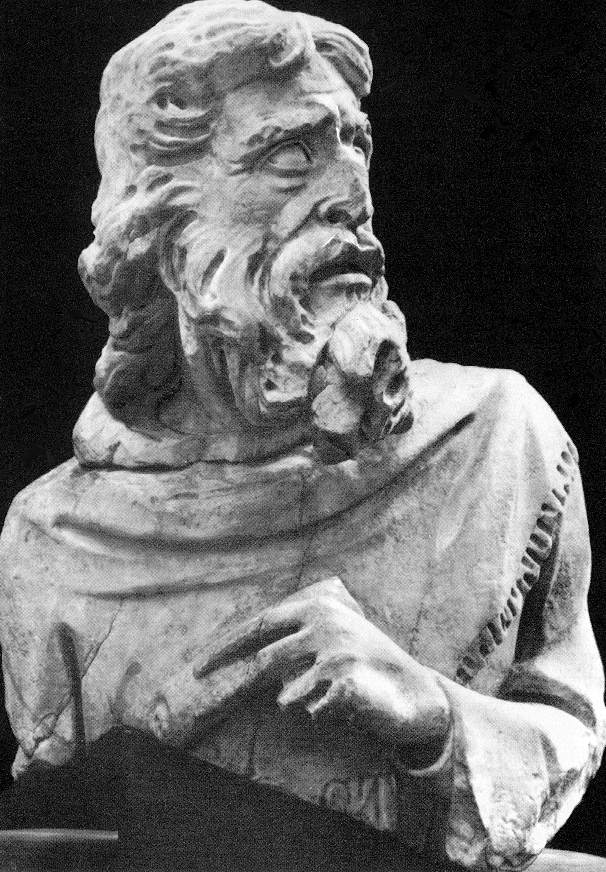
Statue of the prophet Haggai, by Giovanni Pisano, c.1290 C.E., Siena, Italy

In the second year of King Darius, on the first day of the sixth month, the word of the Lord came through the prophet Haggai to Zerubbabel son of Shealtiel, governor of Judah, and to Joshua son of Jozadak, the high priest:

This is what the Lord Almighty says: “These people say, ‘The time has not yet come to rebuild the Lord’s house.’”

Then the word of the Lord came through the prophet Haggai: “Is it a time for you yourselves to be living in your paneled houses, while this house remains a ruin?”

Now this is what the Lord Almighty says: “Give careful thought to your ways. You have planted much but harvested little. You eat, but never have enough. You drink, but never have your fill. You put on clothes but are not warm. You earn wages, only to put them in a purse with holes in it.”

This is what the Lord Almighty says: “Give careful thought to your ways. Go up into the mountains and bring down timber and build my house, so that I may take pleasure in it and be honored,” says the Lord. 

“You expected much, but see, it turned out to be little. What you brought home, I blew away. Why?” declares the Lord Almighty. “Because of my house, which remains a ruin, while each of you is busy with your own house. 

Therefore, because of you the heavens have withheld their dew and the earth its crops. I called for a drought on the fields and the mountains, on the grain, the new wine, the olive oil and everything else the ground produces, on people and livestock, and on all the labor of your hands.”

Then Zerubbabel son of Shealtiel, Joshua son of Jozadak, the high priest, and the whole remnant of the people obeyed the voice of the Lord their God and the message of the prophet Haggai, because the Lord their God had sent him. And the people feared the Lord.

Then Haggai, the Lord’s messenger, gave this message of the Lord to the people: “I am with you,” declares the Lord. So the Lord stirred up the spirit of Zerubbabel son of Shealtiel, governor of Judah, and the spirit of Joshua son of Jozadak, the high priest, and the spirit of the whole remnant of the people. They came and began to work on the house of the Lord Almighty, their God, on the twenty-fourth day of the sixth month. (New International Version)

Timing is everything.

There is a time to ponder and plan and there’s a time to move and act. If the time is ripe for action, then the lack of initiative is plain old procrastination. But how do you know when to act?

If the Lord says it’s time, well then, it’s time!

God’s people wouldn’t have described their inaction in rebuilding God’s house as dragging their feet. They perceived their inertia as a sensible delay.

Yet, the Lord saw the people’s approach as inexcusable enough to send a prophet with a specific message and call to action: Build the house now!

Let’s get a feel for why God’s call for immediacy comes when it does. In the ancient world, it had always been the practice of armies to assimilate conquered peoples into the culture of the conquering king. 

In the eighth century B.C.E., the Assyrian Empire conquered the northern kingdom of Israel. The Assyrians took most of the people into captivity, left the poorest of the people alone, and resettled the land with some of their own Assyrian people. The inevitable intermarriages resulted in their progeny being known as the Samaritans in the New Testament Gospels, as the Samaritans.

Two-hundred years after Assyria conquered Israel, Nebuchadnezzar besieged the southern kingdom of Judah and took over Jerusalem. He carried Daniel and all the other educated and professional people to Babylon. In the course of taking the city, Nebuchadnezzar tore down the wall and destroyed the temple that Solomon had made.

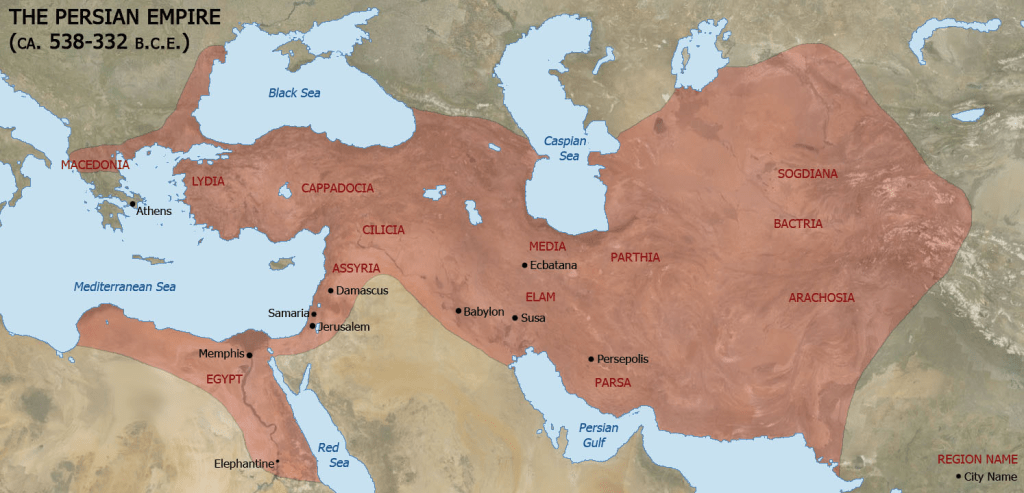
During the Babylonian exile, the Persians conquered Babylon and became rulers of a large geographical empire. Because the massive Persian Empire was in control of so many different kinds of people across such a vast territory, they were not able to operate as previous empires did by assimilation and resettlement. 

Instead, the Persians did something new and different: They encouraged and enabled their conquered peoples to keep their religion and their culture. The only caveat was that they had to give tribute and allegiance to the empire and pray for the king. This is why Nehemiah, Ezra, and Haggai were able to return to Jerusalem and given royal authority to rebuild the wall and the temple. 

But, from the git go, there was opposition to the rebuilding from the old Canaanite inhabitants of the land. After many years, the wall was rebuilt but the temple restoration bogged down. The people slowly became discouraged and lost enthusiasm to do the work. 

Understandably, the people got caught up in taking care of their own homes and just plain neglected working on the temple. Over time, they just forgot about the entire project. But God didn’t.

The prophet Haggai made it clear that the people’s mental distraction and physical neglect was taken as disrespect by the Lord. Haggai insisted that the reason the people were not experiencing blessing on their land was because they simply did not have their priorities straight. 

Thus, God sent the prophet Haggai to preach a sermon entitled: Build the house now! 

To the people’s credit, they responded to the call of God and started rebuilding God’s house. The work was completed. However, there seemed to be a problem. 

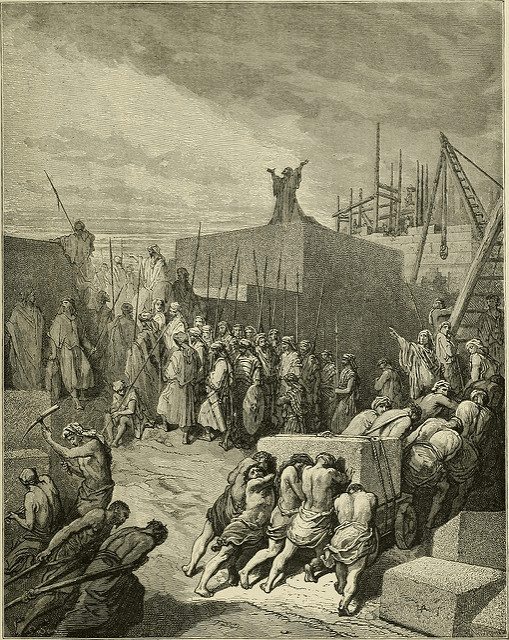
Rebuilding the Temple, by Gustave Doré, 1866

Moving into the rest of Haggai’s prophecy, the newly restored temple didn’t look anything like Solomon’s grand and glorious temple. Many of the older worshipers could still remember Solomon’s temple; to them, the rebuilt temple seemed like a bologna sandwich compared to the T-bone steak of the past. 

So, God sent Haggai again to encourage the people. The Lord will be with them. The restored temple may not look the same, but what makes the temple great is God’s glory.

An important takeaway from the prophecy of Haggai is that the Lord is a jealous God; God’s people are to worship the Lord with all of their heart, soul, mind, and strength. 

We also learn that the Lord is sovereign and supreme over all creation. God owns everything and will use it all to accomplish divine purposes on this earth. 

In addition, we see that God calls people to new work and fresh ministry. The Lord was behind the destruction of the old temple; and when the time was right, God called the people to build a new ministry.

And we learn something about ourselves, as well. God’s people need to hear and respond to God’s call. Haggai put a God-sized vision before the people; he helped them imagine what the new temple would be like – full of God’s glory.

God is doing a new thing. The Lord continues calling people to:

  • Seek first the kingdom of God. (Deuteronomy 4:29; Psalm 63:1; Matthew 6:33; Hebrews 11:6)
  • Love God with whole hearts. (Deuteronomy 6:5, 11:1-22, 19:9, 30:16-20; Matthew 22:37)
  • Love neighbor as we love ourselves. (Leviticus 19:18; Matthew 22:38; Romans 13:9; Galatians 5:14)
  • Make disciples of Christ from all nationalities. (Matthew 28:18-20)
  • Be witnesses to God’s glory in Christ. (Psalm 66:16; Acts 1:8; 2 Timothy 2:2)
  • Obey the Holy Spirit. (Acts 5:31-33; Romans 6:17; Hebrews 5:8-9)

It is good to remember and celebrate past ministries; and it is also good to throw ourselves into the new ministries which God calls us and to build them for God’s glory.

My friends, build it now.

Glory to you, O God, the One who is able to do far beyond all that we could ask or imagine by your divine power at work within us; glory to you, blessed God, in the church and in Christ Jesus for all generations, through the empowering Holy Spirit, forever and always. Amen.