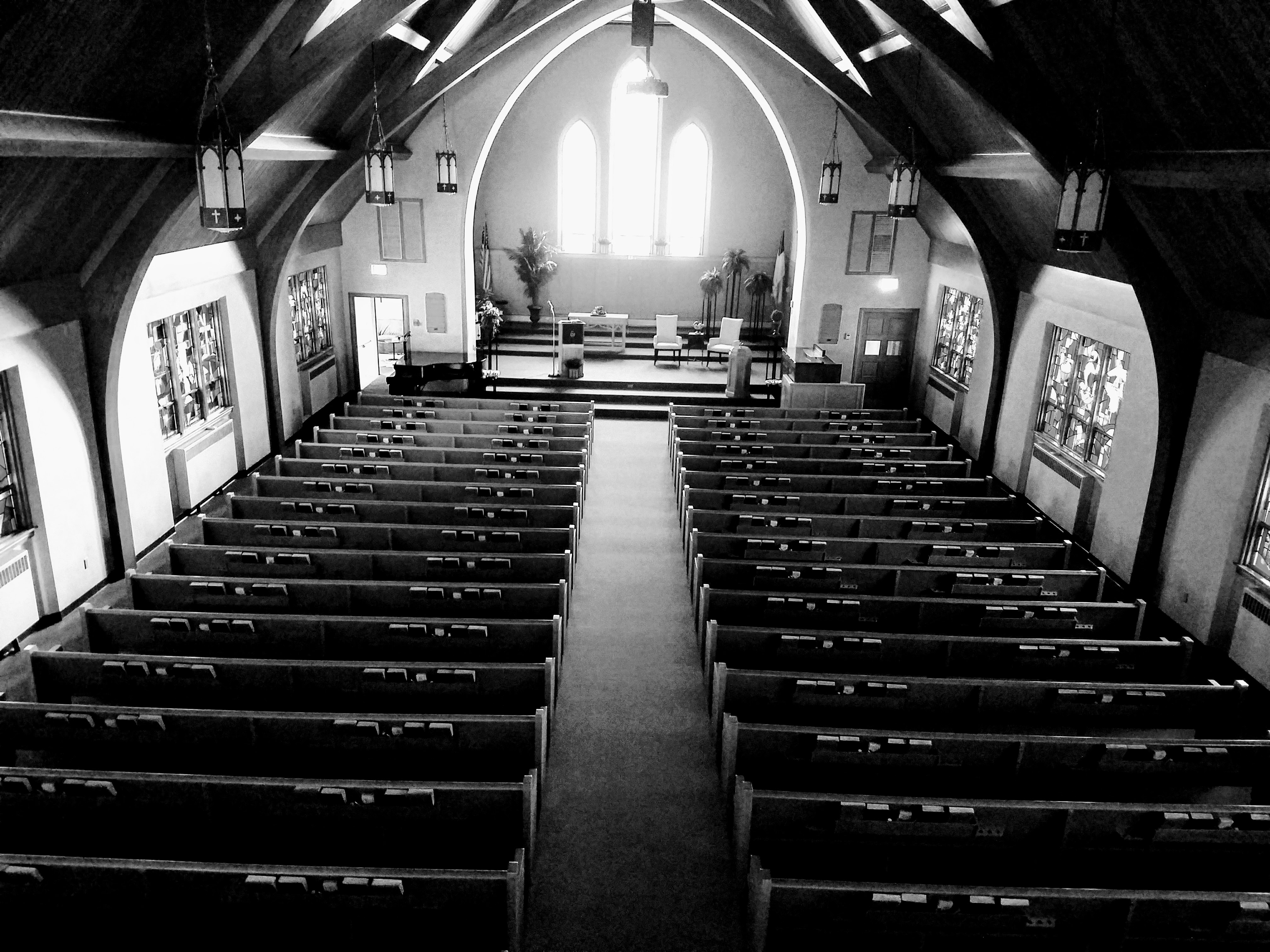
Be Holy (1 Peter 1:13-16)

God chose us, in love, to be a holy people. (Ephesians 1:4)

Therefore prepare your minds for action; discipline yourselves; set all your hope on the grace that Jesus Christ will bring you when he is revealed. Like obedient children, do not be conformed to the desires that you formerly had in ignorance. Instead, as he who called you is holy, be holy yourselves in all your conduct, for it is written, “You shall be holy, for I am holy.” (New Revised Standard Version)

The Christian season of Eastertide is a time to focus on new life in Jesus Christ. God did more than save us for a future life; we are also delivered from sin, death, and hell to be a holy people.

Humanity, created in God’s image, is to reflect God’s character in all things. For example, unity, harmony, love, and peace always exists within the triune God. Therefore, we, too, are to be characterized with these same qualities. We are to be holy because God is holy.

Just as God is separated from evil, wickedness, impurity, and all that is wrong in the world – so, we are to live a holy life separate from everything that fosters division, hate, abuse, oppression, violence, pride, greed, theft, gluttony, avarice, adultery, and the host of human sins which bedevil the world.

God is not at all okay with racism, favoritism, gaslighting, bullying, selfishness, hubris, and all kinds of crimes against humanity which destroy both creature and creation. It goes against God’s holy Being.

Thus, a holy life involves both a separation from immoral and unethical thoughts, words, and practices; and a connection with integrity and right relationships. Holiness is to be thoroughly grafted into daily life.

The Israelites of the Old Testament had a clear understanding of holiness. In fact, an entire biblical book is devoted to holiness: Leviticus. The Apostle Peter drew from Levitical law when addressing the expectation of a holy life:

“I am the Lord your God; sanctify yourselves therefore, and be holy, for I am holy.” (Leviticus 11:44, NRSV)

“Speak to all the congregation of the people of Israel and say to them: You shall be holy, for I the Lord your God am holy.” (Leviticus 19:2, NRSV)

“Set yourselves apart for a holy life. Live a holy life, because I am God, your God. Do what I tell you; live the way I tell you. I am the God who makes you holy.” (Leviticus 20:7-8, MSG)

The ancient Israelites, through a series of regulations about what to wear and not wear, what to eat and not eat, how to relate to one another, etc. were continually reminded of God’s holiness. The importance of a pure life freed people from the drag of unholy living. Rather than following the crowd into mob action that damages people and property, holy living goes against the grain of popularity and seeks purity of life.

Jesus said, “Blessed are the pure in heart, for they will see God.” (Matthew 5:8, NIV)

Holiness means finding creative ways of connecting to one another, making a living, and promoting the common good of all persons. Holiness doesn’t involve impatience, tunnel vision, and allowing our shadow selves to call the shots. Holiness does involve expressions of love, peace, and unity – the very qualities that characterize God himself.

Confidence is born of trust in God’s kindness. Clarity of thought comes from immersing ourselves in God’s non-anxious presence. A holy life arises with the awareness and acknowledgment that God is with us.

Holiness can and must be an integral piece of meeting our basic human needs:

Safety

A significant part of holiness is being set apart from things which will harm us. To be holy means to avoid the stuff that separated us from God.

It is obvious what kind of life develops out of trying to get your own way all the time: repetitive, loveless, cheap sex; a stinking accumulation of mental and emotional garbage; frenzied and joyless grabs for happiness; trinket gods; magic-show religion; paranoid loneliness; cutthroat competition; all-consuming-yet-never-satisfied wants; a brutal temper; an impotence to love or be loved; divided homes and divided lives; small-minded and lopsided pursuits; the vicious habit of depersonalizing everyone into a rival; uncontrolled and uncontrollable addictions; ugly parodies of community. I could go on. (Galatians 5:19-21, MSG)

Satisfaction

Holiness really isn’t a downer. It helps bring contentment to our lives. Not only do we avoid the bad stuff, but we also prepare our minds for action and discipline ourselves to practice the good.

But what happens when we live God’s way? He brings gifts into our lives, much the same way that fruit appears in an orchard—things like affection for others, exuberance about life, serenity. We develop a willingness to stick with things, a sense of compassion in the heart, and a conviction that a basic holiness permeates things and people. We find ourselves involved in loyal commitments, not needing to force our way in life, able to marshal and direct our energies wisely. (Galatians 5:22-23, MSG)

Support

We need relationships, to give and receive love, to have connection with others and God. A holy life is the strong supporting foundation on which we can build solid relationships.

You’re no longer wandering exiles. This kingdom of faith is now your home country. You’re no longer strangers or outsiders. You belong here, with as much right to the name Christian as anyone. God is building a home. He’s using us all—irrespective of how we got here—in what he is building. He used the apostles and prophets for the foundation. Now he’s using you, fitting you in brick by brick, stone by stone, with Christ Jesus as the cornerstone that holds all the parts together. We see it taking shape day after day—a holy temple built by God, all of us built into it, a temple in which God is quite at home. (Ephesians 2:19-22, MSG)

Breathe in me, O Holy Spirit, that all my thoughts may be holy, as yours are holy.
Act in me, heavenly Father, that my actions, too, may be holy, as yours is holy.
Draw my heart to you, Lord Jesus, so that I love only what is holy, as you love what is holy.
Strengthen me, Mighty God, to defend all that is holy, as you are just and holy.
Guard me, triune God, that I may always be holy, as you are always holy.
Amen.

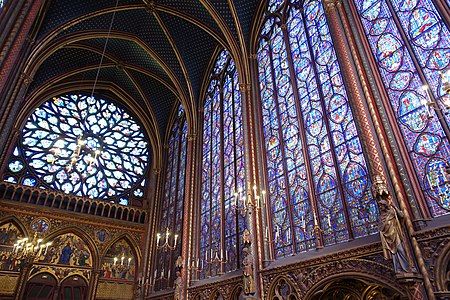
1 Corinthians 3:10-17 – Being a Holy Temple

Albi Cathedral in Sainte-Chapelle, France

By the grace God has given me, I laid a foundation as a wise builder, and someone else is building on it. But each one should build with care. For no one can lay any foundation other than the one already laid, which is Jesus Christ. If anyone builds on this foundation using gold, silver, costly stones, wood, hay or straw, their work will be shown for what it is, because the Day will bring it to light. It will be revealed with fire, and the fire will test the quality of each person’s work. If what has been built survives, the builder will receive a reward. If it is burned up, the builder will suffer loss but yet will be saved—even though only as one escaping through the flames.

Don’t you know that you yourselves are God’s temple and that God’s Spirit dwells in your midst? If anyone destroys God’s temple, God will destroy that person; for God’s temple is sacred, and you together are that temple. (New International Version)

God is holy, pure, beautiful, and completely separated from all that is evil. 

However, there is a problem; but it isn’t with God. 

Ever since the fall of humanity into guilt, shame, and impurity, people cannot be near or approach a perfect Being. Just as we will surely go blind by looking directly at the sun – or be totally disintegrated by getting too close to it – so humans cannot be with such a holy God.

In the Old Testament, God graciously devised a system whereby people could approach the divine. A temple was built. It had very detailed and strict prescriptions about how it was to be built. There needed to be curtains, walls, and borders everywhere to shield the people from being destroyed by the sheer holiness of God.

Entering the New Testament, Jesus is the exact representation of God’s holy being and presence. In Christ, God became intimately close to people. Through the redemptive events of Jesus, humanity is delivered from the vexing problem of being far away from God. 

If that were not enough, God the Father and Son sent God the Holy Spirit to be the continuing presence of Jesus on this earth. 

In today’s New Testament lesson, the Apostle Paul tells us that, as the church, we are a holy temple which is graciously, patiently, and with great care being built into a spiritual house that can be the place where God meets with humanity.

The triune God has conspired and gone out of the way to be with us. The Lord has bended the arc of history for good purposes to be with us. Like a lover separated from his beloved, God has pulled out all the stops to make us holy so that we can abide with him in divine holiness.

From the solid foundation of Jesus Christ as the chief cornerstone, we take care to build a spiritual infrastructure worthy of holiness.

As he who called you is holy, be holy yourselves in all your conduct;for it is written, “You shall be holy, for I am holy.” (1 Peter 1:15-16, NRSV)

God’s will is for you to be holy… God has called us to live holy lives, not impure lives. (1 Thessalonians 4:3, 7, NLT)

Some Christians mistakenly believe that holiness means to exclusively separate as far from everything and everyone who is impure. Any hint or smell of unsound dogma or nonconformity with established rules results in separation. Yet, this predilection for separation is really a form of division – which is contrary to the holiness of God. Because the Lord bends over backwards to accommodate the sinner’s ability to approach the divine presence.

Indeed, holiness involves a separation from all that is evil so that we can attach ourselves to God and others. Holiness isn’t simply an end in itself. To be holy means we are prepared and ready to engage in the highest of aims: Love.

Now that you have purified yourselves by obeying the truth so that you have sincere love for each other, love one another deeply, from the heart. For you have been born again, not of perishable seed, but of imperishable, through the living and enduring word of God. (1 Peter 1:22-23, NIV)

Holiness without a clear trajectory toward love is like putting a new collar on a dead dog. It just doesn’t make any sense.

Yet, too many folks have put a leash on that shiny new collar and are dragging the deceased around – much to the chagrin and revulsion of the world – who rightly sees this behavior as both downright crazy and plain stupid.

Paul would say that kind of behavior will be shown for what it is: Building on the wrong spiritual foundation.

It’s really all about Jesus. Christians bear the name of Christ because we (ideally) center our entire existence – past, present, and future – on the redemption provided through Jesus.

And that’s what this Christian season of the year is about: We celebrate the birth of Christ, God’s breaking into this world, to bridge the great divide between divinity and humanity.

The incarnation of Jesus Christ is our foundation.

Being a holy temple means being a sacred space large enough to hold love for all people.

From that strong support, there is no limit to the breadth and height of God’s kingdom. So, may you, along with the Apostle Paul pray:

I’m asking God to give you a gift from the wealth of his glory. I pray that he would give you inner strength and power through his Spirit. Then Christ will live in you through faith. I also pray that love may be the ground into which you sink your roots and on which you have your foundation. This way, with all of God’s people you will be able to understand how wide, long, high, and deep his love is. You will know Christ’s love, which goes far beyond any knowledge. I am praying this so that you may be completely filled with God. (Ephesians 3:16-19, GW)

Amen.

1 Peter 1:13-16 – Be Holy

ChurchLight

Therefore, your minds must be clear and ready for action. Place your confidence completely in what God’s kindness will bring you when Jesus Christ appears again. Because you are children who obey God, don’t live the kind of lives you once lived. Once you lived to satisfy your desires because you didn’t know any better. But because the God who called you is holy, you must be holy in every aspect of your life. Scripture says, “Be holy, because I am holy.” (GW)

 This is the Christian season of Eastertide. It is a time with a focus on new life in Jesus Christ. God did not save us only for a future life; believers are delivered from sin, death, and hell to also be holy in all we say and do in the here-and-now. The life of the Christian is to be characterized by holiness.

Everything comes down to God. As God’s image bearers we are to reflect God’s character in all things. Unity, harmony, love, and peace always exists within the triune God. Therefore, we, too, are to be characterized with these same qualities. We are to be holy because God is holy. Just as God separates himself from evil, wickedness, impurity, and all that is wrong in the world – so, we are to live a holy life separate from everything that creates and fosters division, hate, abuse, oppression, violence, pride, greed, theft, gluttony, avarice, adultery, and the host of human sins which bedevil the world. God is not at all okay with racism, favoritism, gaslighting, bullying, selfishness, hubris, and all kinds of crimes against humanity which destroy both creature and creation.

Thus, holiness of life involves both a separation from immoral and unethical thoughts, words, and practices; and, a connection with integrity and righteousness which becomes thoroughly grafted into daily life.

The Israelites of the Old Testament had a clear understanding of holiness. In fact, an entire book is devoted to holiness of life: Leviticus. The Apostle Peter drew from Levitical law when addressing the expectation of a holy life:

“I am the Lord your God; sanctify yourselves therefore, and be holy, for I am holy.” (Leviticus 11:44, NRSV)

“Speak to all the congregation of the people of Israel and say to them: You shall be holy, for I the Lord your God am holy.” (Leviticus 19:2, NRSV)

“Set yourselves apart for a holy life. Live a holy life, because I am God, your God. Do what I tell you; live the way I tell you. I am the God who makes you holy.” (Leviticus 20:7-8, MSG)

The ancient Israelites, through a series of regulations about what to wear and not wear, what to eat and not eat, how to relate to one another, etc. were continually reminded of God’s holiness. The importance of a pure life free from the drag of unholy living is the Levitical aim. Rather than following the crowd into mob action that damages people and property, holy living goes against the grain of popularity to seek purity of life.

Jesus said, “Blessed are the pure in heart, for they will see God.” (Matthew 5:8, NIV)

We are not to slide away from our new life in Christ when the going gets hard. That means holiness involves Stay at Home orders, to be separate, even though it is a rough economic hit. It means maintaining social distancing, to have separation between each other, even though it goes against how we have always operated. Holiness means finding creative ways of connecting to one another, making a living, and promoting the common good of all persons. Holiness doesn’t involve impatience, tunnel vision, and allowing our shadow selves to call the shots. Holiness does involve expressions of love, peace, and unity – the very qualities that characterize God himself.

Confidence is born of trust in God’s kindness. Clarity of thought comes from immersing ourselves in God’s non-anxious presence. A holy life arises with the awareness and acknowledgment that God is with us.

Breathe in me, O Holy Spirit, that all my thoughts may be holy, as yours are holy.
Act in me, heavenly Father, that my actions, too, may be holy, as yours is holy.
Draw my heart to you, Lord Jesus, so that I love only what is holy, as you love what is holy.
Strengthen me, Mighty God, to defend all that is holy, as you are just and holy.
Guard me, triune God, that I may always be holy, as you are always holy.
Amen.

Click Take My Life by Scott Underwood as we express our desire to be holy.