

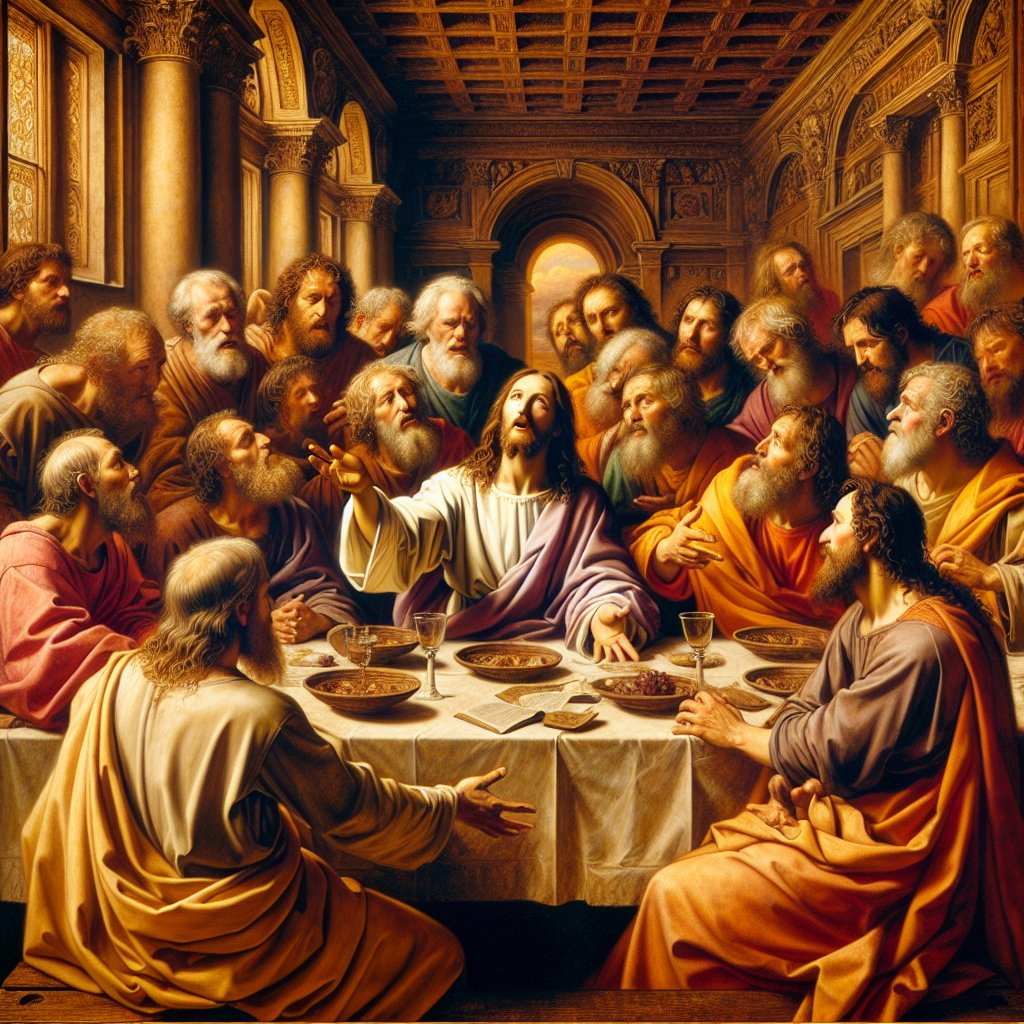
Theophilus, I first wrote to you about all that Jesus did and taught from the very first until he was taken up to heaven. But before he was taken up, he gave orders to the apostles he had chosen with the help of the Holy Spirit.
For 40 days after Jesus had suffered and died, he proved in many ways that he had been raised from death. He appeared to his apostles and spoke to them about God’s kingdom. While he was still with them, he said:
Don’t leave Jerusalem yet. Wait here for the Father to give you the Holy Spirit, just as I told you he has promised to do. John baptized with water, but in a few days you will be baptized with the Holy Spirit. (Contemporary English Version)
One of the unshakable and foundational convictions I have is that the earth revolves on an axis of grace. Apart from grace, we wouldn’t even exist.
If God’s grace in Christ was only an undeserved gift, that would be incredibly wonderful and more than enough for us. Yet, it is even more.
The word “grace” doesn’t need to be in every verse of the Bible for the reality of grace to be embedded within every verse of the Bible.
Grace is the answer to every question that humankind can ask. Grace not only forgives and loves unconditionally, but it also infuses us with freedom and power within our souls.
Grace is the ultimate game-changer. And grace is evident everywhere in Holy Scripture, powering its message and mission. It’s evident in today’s New Testament lesson…
The Grace of God Choosing People
In this biblical passage of Christ’s imminent ascension to heaven, Jesus intentionally made gracious provision so that his apostles could carry on without his bodily presence.
First of all, and priority above the ability to be and to do anything, is the gracious reality that Jesus chose his apostles; they did not choose him. In fact, every disciple of Christ was chosen by God before we made our choice. That, my friend, is grace.
Christ deliberately chose twelve Jewish men to be his intimate followers on this earth during his ministry. No follower and disciple of Christ is ever self-appointed to anything, nor are they really appointed by any committee or by some human means.
What’s more, every church pastor, elder, deacon, and leader of any sort is providentially chosen and appointed by Christ himself well before being chosen by a body of believers in a church, synod, or board.
The Lord’s intentions in choosing people for a specific purpose (and especially for salvation) is first of all a tremendous act of divine grace. This ought to be of great encouragement to us, that Christ who builds the Church, sees us and chooses us.
The Grace of Seeing Jesus
Second, God showed his infinite grace by having Jesus shown to his apostles after his resurrection. The twelve, along with many other disciples, were eyewitnesses to the bodily resurrection of Christ.
After his sufferings, the risen Lord revealed his presence to his apostles. He gave them many convincing and decisive proofs that he was truly alive. And if that wasn’t enough, Jesus kept it up for 40 days until his ascension.
Jesus talked to them about the kingdom of God, about God’s gracious rule and reign upon this earth. He prepared them for the ascension, and helped them make sense of all the nonsensical things happening in their lives. Jesus showed them that he was no ghost, but could be touched, hugged, and enjoy a meal with.
The entire post-resurrection experience was a time of amazing grace in getting to see, feel, and listen to Jesus.
The Grace of Christ’s Commissioning
Third, Jesus not only spoke with his apostles, but he also commissioned them by giving them instructions to proclaim gracious good news of forgiveness and new life with God.
The word “apostle” means to be a herald, an envoy or messenger; being an ambassador sent out with the authority to boldly proclaim good news for the nations. Disciples are to have a ministry of proclaiming peace and reconciliation between God and humanity, and between one another. Indeed, it is all about grace.
Therefore, if anyone is in Christ, the new creation has come: The old has gone, the new is here! All this is from God, who reconciled us to himself through Christ and gave us the ministry of reconciliation: that God was reconciling the world to himself in Christ, not counting people’s sins against them. And he has committed to us the message of reconciliation.
We are therefore Christ’s ambassadors, as though God were making his appeal through us. We implore you on Christ’s behalf: Be reconciled to God. God made him who had no sin to be sin for us, so that in him we might become the righteousness of God. (2 Corinthians 5:17-21, NIV)
The Grace of Having the Holy Spirit
Finally and ultimately, Jesus promised his apostles the greatest grace gift of all: the very Holy Spirit of God. The Advocate, the Spirit of Truth, would remind them and teach them of all things concerning God’s gracious and benevolent kingdom. (John 16:12ff)
The Holy Spirit is the battery, the power source, of the Christian life. Apart from the Spirit we can do nothing.
The Need For Grace Today
It is imperative that we continually remember grace, and keep grace in the forefront of our minds and our hearts. It’s especially needed in this day and age.
We live in a time in which ungracious and unjust words and actions are in front of our faces continually. The biblical witness is adamant that life is not about having earthly power and wielding it for our own earthly purposes.
Grace is what gives and sustains life. Grace is the real power operative in the world. And if we fail to realize this, and do not tap into grace, then we are truly doomed and are to be pitied above all persons.
So, let us keep bearing in mind that:
- God’s grace is why we have Jesus and the Holy Spirit
- The purpose of Jesus is to alert people the presence and eventual fulfillment of God’s gracious realm and reign
- The Spirit’s presence among us equips us to be Salt to ICE by melting injustice and a lack of mercy; and Light to those blinded by greed by showing the world how to live a different way.
Lord, we pray that your grace may always precede and follow us, so that we may continually be given to good works; through Jesus Christ our Lord, who lives and reigns with you and the Holy Spirit, one God, now and forever. Amen.





 Rev. Tim Ehrhardt