Follow My Example (2 Timothy 1:12-14)

This is why I am suffering now. But I am not ashamed! I know the one I have faith in, and I am sure he can guard until the last day what he has trusted me with. Now follow the example of the correct teaching I gave you, and let the faith and love of Christ Jesus be your model. You have been trusted with a wonderful treasure. Guard it with the help of the Holy Spirit, who lives within us. (Contemporary English Version)

Offense and defense are both equally important in sports. And the same is true for Christianity. A good offense includes confident proclamation of the gospel in word and deed. And a solid defense involves holding our ground through following the example of apostolic teaching passed down to us.

The Apostle Paul set himself up as a both a model of Christian character and an example of Christian action. That isn’t pride or arrogance; it’s the confidence of knowing you have something of value to offer the church and the world.

Everyone needs training and mentoring – and that is especially true for the Christian life. Christianity is a team sport. Believers must work together to survive, thrive, flourish, and be faithful in daily life. We all need good models of faith to learn from. Paul was just such an example for Timothy. And the essence of spiritual formation and maturity is found in imitating sound teaching through trusted leaders.

Brothers, join in imitating me, and keep your eyes on those who walk according to the example you have in us.

The Apostle Paul (Philippians 3:17, NIV)

We do not want you to become lazy, but to imitate those who through faith and patience inherit what was promised. (Hebrews 6:12, NIV)

Remember your leaders, who spoke the word of God to you. Consider the outcome of their way of life and imitate their faith. (Hebrews 13:7, NIV)

It’s wise and necessary to imitate Christian leaders who have a proven character. They’ve demonstrated persevering in the faith through suffering; and have done it with great humility. Such leaders also have a track record of preserving the faith through consistent teaching of sound doctrine.

This does not necessarily mean that we emulate those who are erudite speakers, have superior gifts and abilities, and enjoy ministry success. What it does mean is that we ought to have as mentors in the faith those persons who imitate Christ and are not self-promoting peacocks who go after being admired and praised.

Paul chose Timothy as a mentee, and eventually as the leader of the Ephesian Church, because he had proven himself as being genuinely concerned for others, and not for making decisions that would simply further his ministry career. (Philippians 2:19-23)

Timothy learned from his mentor, Paul, how to cultivate a life of service to others rather than to be self-serving; and to teach others with sound instruction in love.

We are to imitate those who have proved themselves in hardship. A Christian leader who has not undergone the purgative fires of trials in this life may more easily become seduced by their own importance.

However, leaders who have seen their share of hard circumstances, pain, and suffering, and have come through it loving God and serving others out of grace and humility, are leaders worth imitating and listening to. 

Put in this light, the choosing and electing of church deacons and elders is important. Simply getting a warm body willing to serve is not really an option. Perhaps it could be that many young people are leaving the church, and even the faith, because they have not seen genuine Christianity lived-out with passion and integrity among those who hold leadership positions in the church.
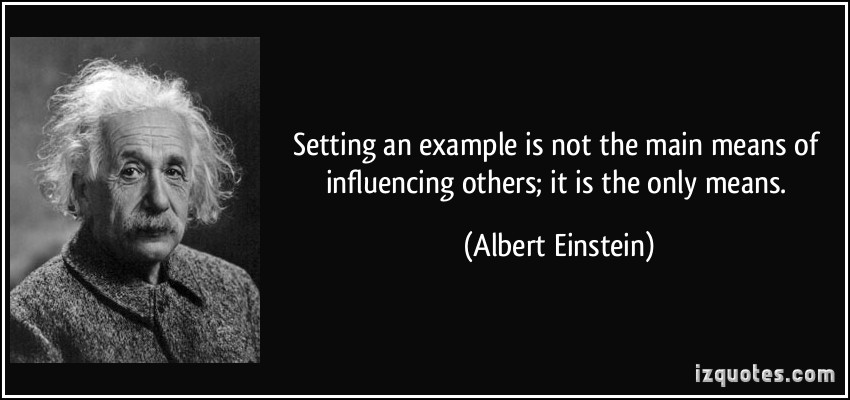
No matter who we are, people are watching; they see what you do, what you say, how you act, and your attitude toward most things. Maybe you don’t think of yourself as an example to others, or believe that ordinary people have much influence. Yet leadership isn’t really about having a position or possessing power; it’s about the actions and/or inactions you take.

All this is to say that we have to take responsibility for the quality of our Christian life. We need to be careful about which post we’ll hitch our horse to – which leaders we’ll follow – and what sort of teaching we will learn from.

It takes time and effort to learn anything, including how to live the Christian life. That life must be developed and honed. We can only guard the message and a particular way of life if we know what it is and how to communicate it to others. We’ve got to put the work in.

We don’t just get zapped by the Spirit like some divine magic trick and become automatically great Christians and church leaders. God calls, molds, develops, mentors, and shapes individuals of all kinds for his purposes. That’s why there are so many exhortations in Scripture to be an example, follow godly examples, and mimic sound doctrine. 

Making disciples isn’t like making microwave popcorn. It’s much more like the outdoor smoker; go low and slow and let the meat cook just right.

The Christian message of good news, and the Christian life, are learned. And living this life is both a skill and an art. Because of that, failure is inevitable. 

We practice anything to get better at it. That’s why we work on engrafting spiritual practices into our lives. We do it, blow it, learn from our mistakes then try it again – over and over and over again. Grace comes into the equation because we must allow people the freedom to try and fail without beating them up over their mistakes. 

No one wants to even try if they know they’ll get slapped if they fail. Of all the places on planet earth, the church really ought to be a place where folks can experiment, try, implement ideas, and learn from their failures. The fact that we don’t typically think of the church this way says a lot.

Intelligence is helpful; talking a good line never hurts; confidence is beneficial; but taking the time to practice the skill and art of Christian living takes having a model, a mentor, an example – and being an example to others.

Gracious God, you prepared your disciples for the coming of the Spirit through the teaching of your Son Jesus Christ: Make the hearts and minds of your people ready to receive the blessing of the Holy Spirit so that they may be filled with the strength of his presence, and empowered for service to the church and the world, through Jesus Christ our Lord. Amen.


Not Ashamed (2 Timothy 1:8-12)

So never be ashamed to tell others about our Lord. And don’t be ashamed of me, either, even though I’m in prison for him. With the strength God gives you, be ready to suffer with me for the sake of the Good News. 

For God saved us and called us to live a holy life. He did this, not because we deserved it, but because that was his plan from before the beginning of time—to show us his grace through Christ Jesus. 

And now he has made all of this plain to us by the appearing of Christ Jesus, our Savior. He broke the power of death and illuminated the way to life and immortality through the Good News. And God chose me to be a preacher, an apostle, and a teacher of this Good News.

That is why I am suffering here in prison. But I am not ashamed of it, for I know the one in whom I trust, and I am sure that he is able to guard what I have entrusted to him until the day of his return. (New Living Translation)

Guilt and Shame

Shame is a nasty feeling. Whereas guilt is a function of the conscience, and helps steer us toward making things right with others, shame lays an unnecessary heavy burden on the soul. Guilt says that I did or said something that wasn’t good. But shame says we did or said something because I am a failure.

The Apostle Paul insisted to his young protégé, Timothy, that there’s no basis for shame when it comes to proclamation of the gospel. In fact, the Good News confronts shame by putting a wooden stake through its heart.

Shame is a vampire that lives in the shadows and feeds on secrets. But the light of the Gospel penetrates life, disintegrating shame and putting it to death.

God’s word is alive and powerful! It is sharper than any double-edged sword. God’s word can cut through our spirits and souls and through our joints and marrow, until it discovers the desires and thoughts of our hearts. Nothing is hidden from God! He sees through everything, and we will have to tell him the truth. (Hebrews 4:12-13, CEV)

Not a Failure

From a particular perspective, Paul would seem like a failure to many. He was an up and coming star in Judaic circles, but gave it all up to follow Jesus. And then, his life was marked by continual hardship, even persecution. To top it off, he landed in prison. Ironically, Paul found himself in a bad place just for being a preacher of good. He never left his imprisonment, and was eventually killed.

Yet Paul had no shame about any of it. Rather, he embraced the suffering, the difficulty, and all the circumstances that went sideways. Why? Because he had complete faith in who he was serving and what he was doing.

A lot of people, especially church pastors, struggle with shame. Most of them don’t have “successful” ministries when looked at from a certain angle. They see themselves as failures, and end up leaving the ministry and never going back.

Our strength and our help, however, no matter whether we’re clergy or laity, is in the name of the Lord who made heaven and earth; our assistance is found in the Good News we proclaim, in Jesus Christ, who himself was not ashamed of being tortured and killed.

Let us also lay aside every weight and the sin that clings so closely, and let us run with perseverance the race that is set before us, looking to Jesus, the pioneer and perfecter of faith, who for the sake of the joy that was set before him endured the cross, disregarding its shame, and has taken his seat at the right hand of the throne of God. (Hebrews 12:1-3, NLT)

No More Shame

Christ has defanged the vampire of shame. And because of the work achieved on the Cross, we can now live in confidence, knowing who we believe, and trusting that the shame-busting Good News of grace will have it’s penetrating way in the world.

Salvation entails being delivered from something so that we can live for something else. We have been saved from the terrible grip of shame – which then allows us to live a vulnerable and confident faith in Jesus through the power of the Spirit.

Deliverance from shame enables us to respond to our holy calling from God.

For he chose us in him before the creation of the world to be holy and blameless in his sight. (Ephesians 1:4, NIV)

God chose us to be holy. He does not want us to live in sin. (1 Thessalonians 4:7, ERV)

“Salvation” is a wonderful word which needs to be reclaimed as so much more than going to heaven someday. In reality, it is the divine purpose by which God makes us just, right, and holy, forgiving our offenses and transforming us by the Spirit into the image of Christ.

Christ, in his incarnation, life, ministry, death, burial, resurrection, and ascension has redeemed us. Jesus has torn down every wall, removed each barrier, and built bridges in connecting us to a life without shame and with everything we need to live well.

Christians embody the life of Christ within them by living a holy life, free of the weight of shame, and boldly proclaiming a message of grace, forgiveness, and freedom from the dark secrets we all carry.

This isn’t merely an ethereal gospel; it is Good News of great joy that has real impact for the nitty-gritty of our everyday lives.

O God, the author of peace and lover of harmony, to know you is eternal life and to serve you is deliverance and freedom: Defend us, your humble servants, in all assaults of our enemies; that we, surely trusting in your defense, may not fear the power of any adversaries, through the might of Jesus Christ our Lord. Amen

A (Needed) Perspective on the Christian Life (Acts 27:39-44)

Paul’s Shipwreck, by Ludolf Backhuysen (1630–1708)

When daylight came, they did not recognize the land, but they saw a bay with a sandy beach, where they decided to run the ship aground if they could. Cutting loose the anchors, they left them in the sea and at the same time untied the ropes that held the rudders. Then they hoisted the foresail to the wind and made for the beach. But the ship struck a sandbar and ran aground. The bow stuck fast and would not move, and the stern was broken to pieces by the pounding of the surf.

The soldiers planned to kill the prisoners to prevent any of them from swimming away and escaping. But the centurion wanted to spare Paul’s life and kept them from carrying out their plan. He ordered those who could swim to jump overboard first and get to land. The rest were to get there on planks or on other pieces of the ship. In this way everyone reached land safely. (New International Version)

Saul was an up and rising star among the Jewish Pharisees. He was committed to his religion to the point of approving the death of the first Christian martyr, Stephen. Saul saw followers of Jesus as an aberration to Judaism, and did whatever he could to stamp out the sect.

During one of his travels to do just that, he was confronted by a vision of Christ himself, who said to Saul, “Why do you persecute me?” (Acts 9:4-5) For days Saul was blind, mimicking his spiritual blindness. Both his physical and spiritual eyesight were restored when he came to faith in Christ and began following the words and ways of Jesus. His name changed from Saul to Paul the Apostle.

Paul’s conversion was a complete transformation of life. Yet, this in no way meant that the rest of his life was all rainbows and butterflies. Just the opposite. Saul the Persecutor ended up becoming Paul the Persecuted One.

With the same drive and desire that he once had to do away with Christians altogether, so now the Apostle Paul put all that energy into proclaiming the good news of grace and forgiveness in Jesus Christ his Savior and Lord. And, as one might expect, this put Paul in the crosshairs of his former partners, the Jewish Pharisaical leadership. They now despised Paul.

The Jewish religious authorities hated Paul so much that they made sure to stir up trouble for him everywhere he went, even when it was way out in the Gentile sticks of Galatia and the Gentile strongholds of Greece. And that is essentially why Paul landed in prison. He was portrayed as a rebel and a troublemaker, an enemy of the social order (even though Paul himself was actually a citizen of Rome).

As a Roman citizen, Paul invoked his right to appeal to Caesar. And so, he was put on a Roman prison ship, bound from Palestine to Italy. And that is where we pick up today’s New Testament lesson.

Paul had been through an awful lot of adversity, hardship, and persecution. His faith had become so robust that a terrible storm and a shipwreck could not at all wreck his commitment to Christ. In fact, it only strengthened it.

It’s not always easy to see, but Paul’s words to the Roman Christians are true, even for us today:

And we know that God causes everything to work together for the good of those who love God and are called according to his purpose for them.

The Apostle Paul (Romans 8:28, NLT)

This is an understanding of God, a deep theological perspective, which is informed by years of walking with Jesus in the crucible of suffering and difficulty. It discerns the Lord as caring and loving, even when it appears on the surface that God is mean and capricious.

Many Christians today tend to believe that the redemption which Christ secured is a mere life insurance policy for heaven. And, if it has anything to do with the here-and-now, it means we ought to have all our desires met for earthly peace and abundance. If that were true, both Jesus and Paul were miserable failures as godly people.

God, however, cares about our salvation, our wholeness and integrity as people on this earth. Yes, we have eternal life, yet that life has already begun, and we are to live into it now.

Christianity is a paradoxical faith. The way to gain your life is to lose it. The path to glory is through suffering.

This, my friends, means that we do not gain a good and blessed life by attempting to make everything in life go our way, without any difficulty. Instead, the good life comes by acknowledging the grit and grist of life. It is in the full acceptance of suffering, persecution, illness, death, and our own psychological infirmities that leads us into becoming who God wants us to be – and thus more open to what joy really is.

On the practical level, this means that our failures, our missed expectations, and our dashed hopes are very important pieces to our faith and it’s development. All of this is what awakens us to compassion – both for others and ourselves.

So then, Paul’s perspective on all the difficulties in his life is that they are significant spiritual incubators of faith for him. Paul accepted his sufferings and hardships – and more than that – he valued them for the ways they developed his faith in God and ability to minister to others.

As one old Rabbi once put it:

“There are many rooms in God’s castle. There is, however, one key that opens every room, and that key is a broken heart.”

Ba’al Shem Tov (1698-1760)

Sovereign God, let our love be genuine; help us to hate what is evil, and to hold on to what is good; and empower us to love one another with mutual affection. Strengthen our spirits so that we might serve our Lord Jesus. With you as our faith, we choose to rejoice in hope; be patient in affliction; and persevere in prayer, by means of your blessed Holy Spirit. Amen.

Faith, Hope, and Love (Acts 27:13-38)

When a gentle south wind began to blow, they saw their opportunity; so they weighed anchor and sailed along the shore of Crete. Before very long, a wind of hurricane force, called the Northeaster, swept down from the island. The ship was caught by the storm and could not head into the wind; so we gave way to it and were driven along. 

As we passed to the lee of a small island called Cauda, we were hardly able to make the lifeboat secure, so the men hoisted it aboard. Then they passed ropes under the ship itself to hold it together. Because they were afraid they would run aground on the sandbars of Syrtis, they lowered the sea anchor and let the ship be driven along. 

We took such a violent battering from the storm that the next day they began to throw the cargo overboard. On the third day, they threw the ship’s tackle overboard with their own hands. When neither sun nor stars appeared for many days and the storm continued raging, we finally gave up all hope of being saved.

After they had gone a long time without food, Paul stood up before them and said: “Men, you should have taken my advice not to sail from Crete; then you would have spared yourselves this damage and loss. But now I urge you to keep up your courage, because not one of you will be lost; only the ship will be destroyed. Last night an angel of the God to whom I belong and whom I serve stood beside me and said, ‘Do not be afraid, Paul. You must stand trial before Caesar; and God has graciously given you the lives of all who sail with you.’ So keep up your courage, men, for I have faith in God that it will happen just as he told me. Nevertheless, we must run aground on some island.”

On the fourteenth night we were still being driven across the Adriatic Sea, when about midnight the sailors sensed they were approaching land. They took soundings and found that the water was a hundred and twenty feet deep. A short time later they took soundings again and found it was ninety feet deep. 

Fearing that we would be dashed against the rocks, they dropped four anchors from the stern and prayed for daylight. In an attempt to escape from the ship, the sailors let the lifeboat down into the sea, pretending they were going to lower some anchors from the bow. Then Paul said to the centurion and the soldiers, “Unless these men stay with the ship, you cannot be saved.” So the soldiers cut the ropes that held the lifeboat and let it drift away.

Just before dawn Paul urged them all to eat. “For the last fourteen days,” he said, “you have been in constant suspense and have gone without food—you haven’t eaten anything. Now I urge you to take some food. You need it to survive. Not one of you will lose a single hair from his head.” After he said this, he took some bread and gave thanks to God in front of them all. Then he broke it and began to eat. They were all encouraged and ate some food themselves. Altogether there were 276 of us on board. When they had eaten as much as they wanted, they lightened the ship by throwing the grain into the sea. (New International Version)

An engraving of the Roman prison ship, by Henry Adlard (1799-1893)

Keeping your courage in the face of an intense stressor is more than challenging. Yet, the Apostle Paul did it. Not only that, but he also had the wherewithal to help keep up the spirits of the people around him – even though he was on a prison ship in the middle of storm.

How did Paul do it? How did he remain encouraged himself, while also encouraging others? What’s the answer? Three words which are essential to the Christian life: faith, hope, and love.

Every believer knows from experience how difficult it is to practice these in daily life, especially the crucible of multiple stressors. One reason it’s so doggone hard, even when we want to please the Lord, is due to the confusion between our inner feelings and our outer actions. Yet once we understand the incongruence, and how to evaluate our inner experience, then it’s a whole lot easier to make daily decisions of faith, hope, and love.

In the beginning God created humans in the divine image. Humanity’s relationship to God was central to daily life (Genesis 1:26; 2:16-25). And God created people with the capacity to interact with the divine through our ability to think and reason. (Ephesians 4:24; Colossians 3:10)

Before there were broken relationships between Creator and creature, our original ancestors had complete self-control, along with unity and harmony between one another and God. (Genesis 1:31; 2:7, 16-25). 

It’s vital for us to recognize the distinction between human being and human doing; there’s a difference in who we are and what we do. (Romans 1:21-32; 6:16-22; 1 Corinthians 9:27; Ephesians 4:21-32)

And if we fail to grasp this distinction, we’re going to have some big stress in living as Christians.

In Adam and Eve’s disobedience toward God, humanity took on its own authority, and started making decisions independent of God. In other words, the source of authority switched, and we began relying upon ourselves.

The problem with this is that our brokenness has left us in disparate parts, badly in need of integration. The fall of humanity compromised our integrity, and so, we have a messed up sense of what to do, how to feel, and how and what to think.

This is why rational people do irrational things, and why fear, stress, and anxiety rule so much of our lives. Many a church pastor, not understanding this dynamic, is forever frustrated and flabbergasted that parishioners do not simply take what has been taught them, and go do it. (If it were that simple there would be no place for the Holy Spirit!)

There’s more. In our fallen state, we lost control of our capacity to function well – and are now vulnerable to manipulation from others, and from Satan. (Ephesians 2:2-3; Galatians 5:16-21)

As a result, our inner conscience has become confused. We are not always certain of right and wrong, or what needs to happen whenever we’re distressed. We end up misunderstanding what life is really supposed to be about. We’re disconnected from our original source of faith, hope, and love.

However, the good news of Christianity is that through the redeeming work of Jesus, and a new birth, the bondage of shame and disconnection is reinstated. God once again becomes central to daily life. The Lord’s gracious authority is restored.

In this renewed relationship, we can again receive truth through the Holy Spirit and the Holy Scriptures. Our daily practical experience of this relationship brings freedom, joy, assurance, peace, and self-control. Yet, even though one is redeemed by Jesus Christ and believes in him, it is still possible to regress into conflict, doubt, fear, anxiety, frustration, disappointment, and confusion. (Romans 7:14-25; 1 Corinthians 3:1-4)

We must, therefore, make daily decisions of faith, hope, and love based in our identity as God’s image-bearers:

  • Recognize you have the ability to function in faith, hope, and love as God’s beloved child.(2 Corinthians 7:1; Romans 8:14-17)
  • Understand the difference between your being and doing. Evil thoughts and emotions do not make you evil. What you do with your feelings and thoughts is what’s vital. (See how Jesus handled this in Matthew 4:1-11).
  • Know that you can take charge of your thoughts, feelings, and actions. (Galatians 5:22-23)
  • Know also that you can reject whatever is harmful and out of sync with your basic identity. (Ephesians 4:22; Colossians 3:5-9; Titus 2:11-12)
  • Respond to God and God’s Word by daily obedience. Learn to think and act on the basis of truth. (Acts 27:25)
  • Discern that practicing the truth will result in freedom, and a re-patterning of thinking and functioning. (John 8:32; Titus 2:11-14; Philippians 2:12-16)

Supportive communities help one another live into shared values and commitments. Faith, hope, and love exists and grows in the context of community.

Paul had faith by believing what he heard; hope by looking ahead to the end of God’s promise; and love by reaching out to his fellow prisoners and the ship’s crew. Whereas stress moved to distress for most on the ship, Paul found strength, within that same stress, by practicing faith, hope, and love.

Almighty God, give us true faith, and make that faith grow in us day by day. Also give us hope and love, so that we may serve our neighbors according to your will; through your Son, Jesus Christ our Lord, who lives and reigns with you and the Holy Spirit, one God, now and forever. Amen.