Both Body and Soul (1 John 4:1-6)

Dear friends, don’t believe everyone who claims to have the Spirit of God. Test them all to find out if they really do come from God. Many false prophets have already gone out into the world, and you can know which ones come from God. His Spirit says that Jesus Christ had a truly human body. But when someone doesn’t say this about Jesus, you know this person has a spirit that doesn’t come from God and is the enemy of Christ. You knew this enemy was coming into the world and now is already here.

Children, you belong to God, and you have defeated these enemies. God’s Spirit is in you and is more powerful than the one who is in the world. These enemies belong to this world, and the world listens to them, because they speak its language. We belong to God, and everyone who knows God will listen to us. But the people who don’t know God won’t listen to us. This is how we can tell the Spirit that speaks the truth from the one that tells lies. (Contemporary English Version)

Sometimes, it’s not what in someone says, but in what they don’t say.

The Apostle John gave some spiritually sage advice to a group of his disciples. They were being influenced by people who claimed Christian faith yet were not the real deal. Lots of people make claims, but the real muster of a Christian is in embracing an embodied spirituality that truly meets the holistic needs of others.

For John, affirming Christ’s deity, while denying Christ’s humanity, is unacceptable; he had no room for the Platonic Greek dualism of body and spirit. 

Jesus was a real man with a very real body. To deny this was to deny the faith. Ethereal musings about the insignificance of the body were flatly rejected by John. The apostle was concerned that the supreme Christian ethic of love be practiced through attention to both body and soul. 

Words are important; they’re also insufficient. Actual demonstrations of love are needed, as well. To downgrade or deny a bodily Jesus is to pay little attention to the real bodily needs of people. Christianity is a religion of both body and soul; it’s not a Greek philosophy of life.

I will be the first guy to insist on some deep theological reflection on the great spiritual, cultural, and social issues of our day. Yet, if our theology does not lead to tangible acts of love based on that reflection, then we have not yet been called God’s friend. 

Correct doctrine – embracing body and soul – leads to loving actions of faith. Ideally, we glorify God with both speech and service, physically and spiritually. Words and actions, heart and hands, must work together for an authentic Christian ministry.

The Word became a human being and lived here with us. (John 1:14)

The early church councils condemned the denigration of Christ’s full humanity for good reason. Not only did Jesus have a real flesh and body experience while on this earth, but Jesus also healed actual bodies and performed real physical miracles.

Jesus Christ met both the spiritual needs of forgiveness and reconciliation, and the needs of the body. What’s more, Jesus had no ranking system, as if the spiritual needs were the real commitments whereas tangible needs were just a means to the end of meeting intangible obligations.

The Gospel involves both body and soul; they are equally significant. To exalt one above the other is, frankly, heresy. So, let’s put this in more practical terms: Love is more than an expression of good feelings and goodwill toward others; love has skin on, using both physical actions and words formed from our vocal chords to bring goodness to others.

Jesus has always maintained the connection between spiritual and physical needs; it’s us who separate them. It’s the spiritual charlatan, and the huckster preacher, who speak out of one side of their mouth about spiritual salvation with no bodily human help or uplift.

Those who are against Jesus, the spirit of the antichrist, talk a good line but when push comes to shove, they have no intention of paying attention to both body and soul.

Our gut knows that feeling we cannot quite shake when we are around someone. It has real meaning. The spirit within us is greater than the spirit of the world. Just because we may not be able to respond very well to another, or give clear voice to what is inside us, does not necessarily mean that the other person is okay or right.

A proper Christian response to others incorporates head, heart, and gut. The interaction and alignment of all our faculties is needed. If we draw upon our entire selves, both body and soul, we will overcome the spirit of the antichrist through loving words and actions toward those who need it most.

The Antichrist wants us to get caught up in putting all our focus fighting theological battles and debating philosophical ideas – while our neighbor next door is dying of cancer; our co-worker is experiencing covert racism; and, our friend is stuck in poverty.

Since Jesus is fully human, that fact alone ought to impel us toward meeting the needs of the body – without wondering if it is the spiritual thing to do, or not. You already know this to be true. So, don’t let some esoteric preacher or teacher tell you otherwise.

Almighty God, Creator and Preserver of all humanity, I humbly ask: Make your ways known to everyone, and your saving health to all nations. May your church everywhere be guided and governed by your good spirit, so that all who profess and call themselves Christians may be led into the way of truth, and hold the faith in unity of spirit, in the bond of peace, and in righteousness of life.

Caring God, in your parental goodness, lift up those who are afflicted or distressed, in mind, body, or spirit. Comfort them and meet their every need, giving them patience under their sufferings, and a good outcome of all their afflictions. This we ask for the sake Jesus Christ your Son, our Lord, who with you and the Holy Spirit reign forever. Amen.


1 John 2:1-6 – Live as Jesus Did

Photo by RODNAE Productions on Pexels.com

My dear children, I write this to you so that you will not sin. But if anybody does sin, we have an advocate with the Father—Jesus Christ, the Righteous One. He is the atoning sacrifice for our sins, and not only for ours but also for the sins of the whole world.

We know that we have come to know him if we keep his commands. Whoever says, “I know him,” but does not do what he commands is a liar, and the truth is not in that person. But if anyone obeys his word, love for God is truly made complete in them. This is how we know we are in him: Whoever claims to live in him must live as Jesus did. (New International Version)

Jesus is our advocate, the one who speaks on our behalf, our mediator, who stands in the gap between heaven and earth, standing-up for us when we have no leg to stand on. 

Christ has atoned for all our sin, guilt, and shame through his “propitiation” which means that his death satisfied all demands of justice and put to rest the sin issue once for all through his blood. Christ’s gracious intervention has saved us from ourselves. 

Jesus Christ has made it possible for us to experience forgiveness, restoration, and new life. Whenever we are so broken and so full of tears that we cannot even speak words at all, Jesus steps in and speaks on our behalf with words that mean something because they have been backed up with the action of the cross.

“But” as the late Ron Popeil used to say on the old commercials, “that’s not all!” Not only do we have deliverance from sin, death, and hell, Christ’s followers have both the means and the opportunity to give back and be a blessing to one another and the world. The Spirit enables us to obey God’s commands and is the continuing presence of Jesus to us and on this earth.

Christians are called to be little advocates, practicing the ministry of coming alongside and interceding for one another before God. We can agents of spiritual healing in a world of brokenness. Our gospel proclamation, a message of grace and forgiveness, gets to the very root of human problems and travails.

  • Anyone who harms and hurts others as a matter of habit in the name of Christ, and does not heal, is no follower of Jesus but is a victimizer.
  • Any person who talks a good talk, and walks a bad walk, is not living as Jesus did, and is a spiritual pettifogger.
  • Anybody who claims the name of Christ and avoids reading and studying and praying over the New Testament Gospels, is a slovenly lout, no matter whether they have prayed a “sinners prayer.”

Whoever claims to live for Christ must live as Jesus did. So, how did Jesus live?

“If any of you wants to be my follower, you must give up your own way, take up your cross, and follow me.”

Jesus (Matthew 16:24, NLT)

“You know that the rulers of the non-Jewish people love to show their power over the people. And their important leaders love to use all their authority. But it should not be that way among you. Whoever wants to become great among you must serve the rest of you like a servant. Whoever wants to become first among you must serve the rest of you like a slave. In the same way, the Son of Man did not come to be served. He came to serve others and to give his life as a ransom for many people.” (Matthew 20:25-28, NCV)

He came to tell about the light and to lead all people to have faith.

John 1:7, CEV

“You call me Teacher and Lord—and you are right, for that is what I am. So if I, your Lord and Teacher, have washed your feet, you also ought to wash one another’s feet. For I have set you an example, that you also should do as I have done to you.” (John 13:13-15, NRSV)

Your life must be controlled by love, just as Christ loved us and gave his life for us as a sweet-smelling offering and sacrifice that pleases God.

Ephesians 5:2, GNT

Adopt the attitude that was in Christ Jesus:

Though he was in the form of God,
        he did not consider being equal with God something to exploit.
But he emptied himself
        by taking the form of a slave
        and by becoming like human beings.
When he found himself in the form of a human,
        he humbled himself by becoming obedient to the point of death,
        even death on a cross. (Philippians 2:5-8, CEB)

Don’t be angry with each other but forgive each other. If you feel someone has wronged you, forgive them. Forgive others because the Lord forgave you.

Colossians 3:13, ERV

But if you suffer for doing good and you endure it, this is commendable before God. To this you were called, because Christ suffered for you, leaving you an example, that you should follow in his steps.

“He committed no sin,
    and no deceit was found in his mouth.”

When they hurled their insults at him, he did not retaliate; when he suffered, he made no threats. Instead, he entrusted himself to him who judges justly. (1 Peter 2:20-23, NIV)

This is how we know love: Jesus laid down his life for us, and we ought to lay down our lives for our brothers and sisters.

1 John 3:16, CEB

Christians inhabit unlovely places for the purpose of putting sacrificial love there. This is what it means to live as Jesus did.

O Lord, you have taught us that without love whatever we do is worth nothing. Send your Holy Spirit and pour into my heart your greatest gift, which is the love of God in Christ, the true source of healing and the real bond of peace. Amen.

1 John 2:12-17 – Where Is Your Love Aimed?

I am writing to you, dear children,
    because your sins have been forgiven on account of his name.
I am writing to you, fathers,
    because you know him who is from the beginning.
I am writing to you, young men,
    because you have overcome the evil one.

I write to you, dear children,
    because you know the Father.
I write to you, fathers,
    because you know him who is from the beginning.
I write to you, young men,
    because you are strong,
    and the word of God lives in you,
    and you have overcome the evil one.

Do not love the world or anything in the world. If anyone loves the world, love for the Father is not in them. For everything in the world—the lust of the flesh, the lust of the eyes, and the pride of life—comes not from the Father but from the world. The world and its desires pass away, but whoever does the will of God lives forever. (New International Version)

The true measure of one’s Christian belief and commitment is the direction of their love.

We all love. Its part of being a human. Where our love is oriented is the real issue. The trajectory of love is the best measurement of faith and belief.

To love our fellow humanity, our brothers and sisters in Christ, and the neighbors around us, is to live in the light. It is the distinguishing mark of following Jesus. To hate humanity, to downplay love and dismiss it amongst believers, and to ignore the neighbors God placed us around, is to live in darkness.

A Christian is one who has received the love of God in Christ. Because of Divine Love, they know they are forgiven and have eternal life. They know, experience, and feel the permanence of godly love flowing powerfully in and through them to the glory of God.

Christians trust their gut, informed by the conscience testifying to the importance of love, and the Spirit sanctifying them with the primary tool of love.

So, when some folks come along and place a heavy emphasis on cognitive belief, eschewing the heart and the gut, it ought to raise some saved and sanctified eyebrows. To merely affirm a doctrinal statement, then turn around and aim love in the wrong direction, is to affirm a wrong belief. To hate people and love the world is just plain heretical.

The term “world” in the New Testament has differing meanings according to the context. Jesus stated that God so loved the “world” that he gave his only Son. That’s a reference to people, the entire mass of humanity on this planet. John, however, typically uses “world” as the antonym to the church, as if it were an evil opposite.

In our New Testament lesson for today, the term “world” are the patterns, systems, and operations of the world which are in direct contrast to how God operates and how the church ought to function. To love humanity is to hate the world and do God’s will. To love the world is to hate others and adopt a devilish agenda. For example:

  • The world engages in revenge and payback when wronged, whereas the Christian learns to believe God as the Judge, loves the person who has offended them through prayer for their enemy, and obeys God through good works that seeks the welfare of the other. 
  • The world uses other people as either objects of their pleasure or to get ahead in life, whereas the Christian believes God will take care of their needs, will seek to love the other person instead of use them, and would rather obey God than be selfish. 
  • The world thinks nothing of lying, cheating, and stealing, if they can get away with it, whereas the Christian believes Jesus is the way, the truth, and the life, loves being a person of integrity, and obeys God even when it hurts.

Love in the Bible always begins with God’s love for people. This is the fundamental starting point for love because without God’s love, our love doesn’t get very far.

The world hates. God loves. Many people in this cruel and calloused world are unloving and unkind because they lack knowing that God loves them. If we do not believe or know that God infinitely loves us, then our words and our actions will reflect more hate than love.

The Lord your God is with you, he is mighty to save. He will take great delight in you, he will quiet you with his love, he will rejoice over you with singing.”  (Zephaniah 3:17, NIV)

Christianity does not come into existence by knowing some belief statements about Jesus. Rather, Christianity exists when individuals experience the white-hot burning love of God in Jesus Christ. Jesus came not only for those who skip church and only occasionally read their Bibles, but also came for the hard-hearted prick, the immoral adulterer, the strung-out addict, the terrorist, the murderer, and for all those caught up in bad choices and failed relationships. 

God’s love is not based on our performance, how good we look to others, nor conditioned by our moods. The love of God only looks longingly at you and me with the potential of what we can become in Christ and cares for us as we are.

God demonstrates his own love for us in this: While we were still sinners, Christ died for us. (Romans 5:8, NIV)

Christianity never begins with what we do for God to make ourselves lovely for him. Instead, Christianity always starts with what God has done for us, the great and wonderful love that exists for us in Christ Jesus.

But when the kindness and love of God our Savior appeared, he saved us, not because of righteous things we had done, but because of his mercy. (Titus 3:4, NIV)

All the wrong turns in the past, the mistakes and the moral lapses, everything that is ugly or painful all melts in the light of God’s acceptance and love for us. It makes loving the world seem distasteful, like trying to eat sand. Love for God and neighbor is the true source of doing God’s will and the true measure of Christian belief.

In what direction is your love aimed today?

O Lord, you have taught us that without love, whatever we do is worth nothing. Send your Holy Spirit and pour into my heart your greatest gift, which is love, the true bond of peace and of all virtue, without which whoever lives is accounted dead before you. Grant this for the sake of your only Son Jesus Christ, who lives and reigns with you and the Holy Spirit, one God, now and forever. Amen.

1 John 5:13-21 – We Know

I write these things to you who believe in the name of the Son of God so that you may know that you have eternal life. This is the confidence we have in approaching God: that if we ask anything according to his will, he hears us. And if we know that he hears us—whatever we ask—we know that we have what we asked of him.

If you see any brother or sister commit a sin that does not lead to death, you should pray, and God will give them life. I refer to those whose sin does not lead to death. There is a sin that leads to death. I am not saying that you should pray about that. All wrongdoing is sin, and there is sin that does not lead to death.

We know that anyone born of God does not continue to sin; the One who was born of God keeps them safe, and the evil one cannot harm them. We know that we are children of God, and that the whole world is under the control of the evil one. We know also that the Son of God has come and has given us understanding, so that we may know him who is true. And we are in him who is true by being in his Son Jesus Christ. He is the true God and eternal life.

Dear children, keep yourselves from idols. (New International Version)

In a world of constant change, the need for people to experience meaning and stability in their lives is more pronounced than ever. 

COVID-19 currently grips the world in a terrible reality of disease, death, and disruption. Just when we think there might be a light at the end of the tunnel, new strains of the virus arise. Meanwhile, life goes on with all it’s typical changes, losses, and devastating natural disasters.

There are people wondering if they will have a job tomorrow – or if they will ever get called back to one. Many parents are anxious about what kind of world their kids will have when they become adults. Others feel adrift in a fast-paced society, glutted with so much news and information that they have little sense of what is real or true. Discouragement and/or depression may seem to never end.

Whenever there are uncertainties all around us, it’s necessary to return to the knowable, to hang our hat on some solid bedrock certainties we are convinced are always there. That’s why the Apostle John wrote his letter, to remind the church of the known and the knowable:

  • “I write these things to you who believe in the name of the Son of God so that you may know that you have eternal life.”
  • “If we know that he hears us—whatever we ask—we know that we have what we asked of him.
  • “We know that anyone born of God does not continue to sin.”
  • “We know that we are children of God.”
  • “We know also that the Son of God has come and has given us understanding, so that we may know him who is true.” 

In English, we have only one word for “know.” Yet, in the ancient Greek of the New Testament there are two different words for “know.” Throughout today’s lesson, the Apostle consistently uses one of those words, then shifts to another at the end. 

All of the “knows” John used refer to an objective knowledge – an information-based understanding which anyone could discover, learn, or know. Then, the Apostle switched to a different word at the end – to know him (Christ) who is true. That particular word has to do with a subjective or experiential knowledge. In other words, it is an inner witness and knowing of objective knowledge.

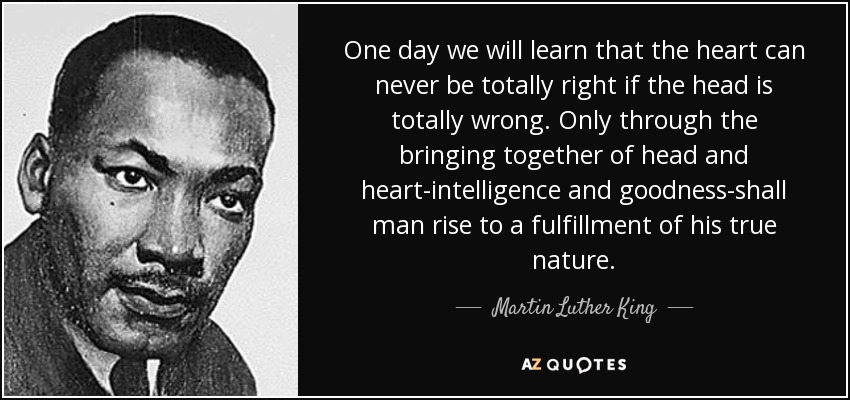
In American society, we frame the distinction between the two words by saying we need to know something in our heart (subjective knowledge) and not only in our head (objective knowledge).

Cerebral understanding, combined with heartfelt experience, results in a new confidence in prayer, a new attitude toward the world, and a new awareness of God. These are the impact of knowing Jesus Christ, and him crucified, risen, ascended, and coming again.

Knowing God takes both the head and the heart. Only being concerned for sound doctrine creates theological eggheads who dispassionately connect with God and others as if they were merely brains on a stick figure. Conversely, only being concerned for how religion makes us feel causes a kind of spiritual schizophrenia which is unstable and constantly seeks for a new or better experience in worship.

Love and obedience are the sacred pathways to personal and corporate knowledge and peace. Whenever the supreme ethic of love takes place in the believer’s life, through receiving it from God and giving it to others, it brings a sense of divine assurance in a sea of worldly uncertainty. 

Security in God will always outdo the insecurities of life.

Loving God, I know that you listen to me. I pray your love and assurance will fill me to such a place that I have peace amidst the vicissitudes of this life. May I rest in Jesus Christ through the work of your Holy Spirit. Amen.