The Desert


footprints in the desert 2

Every one of us must take this journey.  No one is exempt.  It is a pilgrimage that takes us into uncharted territory.  Lack of certainty, the unknown, and mystery are the companions along the way of this nomadic travel.  The harrows of this trip might seem to be the outward troubles and circumstances which surround you, but the real test is the journey within – it is the walk across the desert and the aridity that seems to exist in the soul, as if there are no familiar resources to draw from.  There is only one way, and that way appears so fearful that you and I try and avoid it like the plague.  But we cannot.

When times are tough, and when we find ourselves in the midst of circumstances that we didn’t see coming or have no desire to experience become the desert journeys which both demonstrate and define who we are as people.  The rock hard vicissitudes of this fallen world are no respecter of persons.  They come to all, whether rich or poor, black or white, privileged or underprivileged, introverted or extroverted, hard working or the just-getting-by, as well as the young or the aged.  What truly separates one person from another is how they handle the inevitable desert journey with its dryness of soul and seemingly endless barrage of trouble.

You cannot avoid it.  Eventually, someone you love will die – maybe even several of them in a short amount of time.  If not now, there will come a time when your financial budget will no longer budge and you’ll wonder what in the world you are going to do.  Even if you have never known poverty or want, the prospect of what will happen in the future might occur, with its lost investments and/or the slow erosion of economic resources because of circumstances out of you control.  There will come a time when you will be betrayed, become the victim of a verbal hate crime, or lose your reputation.  If relationships are presently serene, there is coming a day when it will not always be this way.  Strained friendships, difficult relations with co-workers, marriage troubles, and family squabbles aren’t just things that happen to other people.

Perhaps at this point you no longer wish to stick with me on this journey of words.  It’s a downer.  Maybe there isn’t enough positive thinking and you’d like to break off this train of trouble.  That is your prerogative.  But it doesn’t negate the fact that there is either right now something going on under your nose that you’re ignoring or in denial about, or a turn in your life that is coming down the pike.  Then what will you do?  Will you have the inner resources to face it?  Is your soul in a state that can sustain a loss, even a minor one, tomorrow?  Are you ready for adversity?

If you have ever felt alone, lost, hopeless, empty, and in the dark, as if you are sinking in quicksand, I want you to know that this is a journey that we all must undergo.  It is tempting, when going through such a time, to look backward and long for the good ol’ days.  But those days are gone.  They aren’t coming back.  What worked for you back there probably won’t work for you now.  So, here is the thought that I’d like you to think:

The desert is the perfect place for transformation; the wilderness journey is the means to a new and better life.

The ancient Israelites were slaves in Egypt, hard pressed and in agony.  Through a series of miraculous events God redeemed them out of that place and sent them on a journey… into the desert.  Yes, that’s right.  It might have seemed to the Israelites that they were jumping out of the frying pan and into the fire.  Here they were out in the middle of nowhere without water, food, and basic necessities.  It’s endemic to the human condition to complain and seek to blame someone for your trouble.  Moses took a lot of crap from the people.  Yet, God had his own purposes and plans for the inner redemption of the people as well as outward freedom.

God put his people squarely in a place where they could not go back, couldn’t go around, and most definitely could not stay put where they were.  Nope.  They had to go through the desert.  There was no other way.  Moses made it through those years of living in the desert by reminding the people that there was a future for them, a better future than Egypt or the desert – a hope of the Promised Land.  God also shaped the way they were to think about the past through an annual rehearsal of the deliverance out of bondage, the Passover.  For the daily and ever present activity of desert living, God enabled Moses to delegate the practical situations of being together in a desert situation by gifting others to help and walk with him.  And this was all formed through the covenant experience of Sinai – the giving of the Law, the Promise that God would always have his loving loyalty upon the people.

Going through your own desert journey will require the same resources of Promised Land, Passover, and the Law of Promise.  That is, viewed through the lens of the Christian, God is forming within us a deep spirituality based in the promises of His Word, the sustenance of the Lord’s Table, and the confident expectation of Christ’s return and the hope of His reign to be manifested in everything from small family structures to large corporate systems, and humungous governments.  In short, the kingdom of God is near – if we have the eyes of faith to see and the ears of belief to hear.

It is imperative that you and I connect with Holy Scripture in a healthy and consistent rhythm of hearing God and responding back to him.  It is most necessary that our perspective of both the past (Christ’s cross and resurrection) and the future (Christ’s return and reign) is formed through regular spiritual practices which remind us of what is most important in life, not to mention how these spiritual resources can sustain us through dark times.

To survive the desert, one must walk through it – not around it, not going backward away from it, and not sticking our spiritual heads in the sand.  To make the trip, we must deliberately walk with others who will remind us of healthy ways of seeing ourselves, our past, and our coming future.  Faith, hope, and love are the practical necessities which need to be in our backpacks as we go forward.  They will be our food and our drink.

Travel well, my friend.  May the grace of the Lord Jesus be with you as the Spirit hurls you into the desert to experience the love of God in new and profound ways.

The Power of a Name

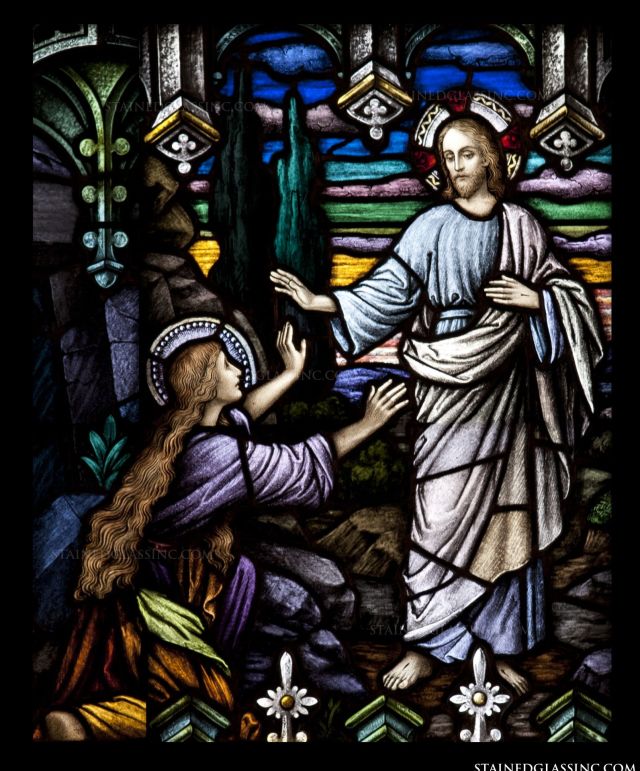
jesus and mary magdalene

It is more than ironic that one of the most powerful emotions on the planet is a feeling that is simply overlooked and often not recognized: the sense of being forgotten.  I’m not talking about rejection, but just being looked past by another, neglected, or an afterthought.  The sense that you are on no one’s radar can be more than disappointing – it can be devastating and destructive.  Yet, there is a way in which you and I can push back on this reality for the benefit of others and ourselves.  And on the other side of it, there is immense joy and satisfaction.

Notice that I didn’t mention the feeling of rejection along with the sense of being forgotten.  Rejection is certainly something you don’t like to experience.  It’s not a pleasurable emotion.  But it isn’t the same as being overlooked.  At least with getting a repudiating brush-off you are acknowledged by another.  That is, someone noticed you enough to even give a rebuff your way.  But with being neglected and forgotten, there is nothing.  If you have ever gotten the silent treatment from a parent, a co-worker, or a parishioner, then you likely know that getting any kind of words, even harsh ones, can seem better than being ignored altogether.

Sometimes neglect is a life and death issue.  There was an occasion when Greek-speaking widows in the book of Acts were overlooked.  They were not given their share when the food supplies were handed out each day (Acts 6:1).  When this came to the Apostles attention, it was a serious enough situation to warrant a major overhaul to the ministry system.  Deacons were formed, roles were clarified, and a group of women received much needed food.  In our society today, elder abuse is real.  Sometimes we might forget (again with the irony) that leaving senior citizens alone and ignoring them is also a potent form of abuse.

Then, there is the situation of Mary Magdalene.  She had a “past.”  This Mary was immoral and influenced by the darkness (Mark 16:9; Luke 8:2).  She was only a nameless person to be used for the benefit of others.  Then, she met Jesus and her world changed.  The darkness turned to light.  Jesus treated her like no other before.  Mary was as much a follower, maybe even more, than the twelve disciples.  It was she who poured the expensive perfume on Christ’s feet and applied it with her hair and her tears (John 12:1-8).  If there was anyone who loved Jesus, it was Mary.

So, you can imagine Mary’s grief when she saw her Lord tortured, crucified, and dead.  The one person on earth who looked at Mary and saw something more than an immoral woman, who looked beyond the infiltration of demonic influence and observed a woman who needed to be seen and truly loved was now gone.  But the story doesn’t end there….

“Mary stood outside near the tomb, crying. As she cried, she bent down to look into the tomb. She saw two angels dressed in white, seated where the body of Jesus had been, one at the head and one at the foot.  The angels asked her, ‘Woman, why are you crying?’  She replied, “They have taken away my Lord, and I don’t know where they’ve put him.” As soon as she had said this, she turned around and saw Jesus standing there, but she didn’t know it was Jesus.  Jesus said to her, ‘Woman, why are you crying? Who are you looking for?’ Thinking he was the gardener, she replied, ‘Sir, if you have carried him away, tell me where you have put him, and I will get him.’  Jesus said to her, ‘Mary.’ She turned and said to him in Aramaic, ‘Rabboni’ (which means Teacher).  Jesus said to her, ‘Don’t hold on to me, for I haven’t yet gone up to my Father. Go to my brothers and sisters and tell them, ‘I’m going up to my Father and your Father, to my God and your God.’”  Mary Magdalene left and announced to the disciples, ‘I’ve seen the Lord.’ Then she told them what he said to her.” (John 20:11-18, CEB)

Take note of how Jesus dealt with Mary.  He asked her two questions: “Woman, why are you crying?” and “Who are you looking for?”  Jesus didn’t ignore Mary.  He didn’t immediately get on with the business of prepping for ascension and overlook her grief.  Jesus also didn’t talk down to Mary.  By asking questions, our Lord entered her grief and was present to Mary in her sheer lament over not knowing where Jesus was.  What Jesus did instead is, I believe, one of the most powerful things which can happen and is clearly the antidote to all feelings of being overlooked, forgotten, and neglected.  Jesus said one word: “Mary.” He said her name.

Nameless people are forgotten people.  But those with names are real.  Saying someone’s name acknowledges, recognizes, and even validates another person.  That’s why when we are upset and mad at someone, we often don’t like to say their name.  Instead, they get referred to with some other moniker such as “his mother” or “that pastor” or “some guy.”  But when we use a name, it opens to us all a realm of grace, love, and compassion.  It’s easy to ignore another if they have no name.  Knowing a name and using it is the secret superpower which is available to everyone.  Even those without academic degrees and special training have ability to change the world with only the knowledge of one word: a person’s name.

Mary’s immense grief was turned upside-down in a moment to exuberant joy – through the power of her name being spoken by the Lord who cared enough to say it.

Jesus knows your name.  What’s more, he is pleased to say it.  Even now, Jesus sits at the right hand of his Father in heaven interceding for you by using your name.

If there is a skill which is worth developing, it is the ability to know people’s names and to say them.  Sometimes folks remark to me that they can’t believe my memory with names.  Um, not so much.  My memory is not really very good anymore.  It’s just that, if I want to know someone’s name I use it as often as I possibly can without sounding weird about it.  Repetition sinks it into my pea brain, not intelligence or some gift.

Which gets us back to the feeling of being forgotten, unnoticed, and/or ignored.  Acknowledging a person through using their name shoos away those negative feelings for others as well as helps give us connection with others.  In other words, it’s more than good sense to use people’s names – it is the very stuff of healthy relationships.  Relations don’t sour because of differences; they go south when we stop using given names.

Those who care don’t have a special caring gene.  They just know the power of a name.  And it matters to them to liberally validate others with the grace which comes with knowing and using another’s name.  And speaking of names, the Scriptures tell us that there is only one “Name” under heaven by which we are saved: The Name of Jesus (Acts 4:12).  There is such power in naming, that it is truly a life and death affair.  In the name of Jesus Christ there is no overlooking, no neglect, no being forgotten.  With Jesus, there is connection, relationship, attention, and remembrance.

Discovering Yourself in the Bible

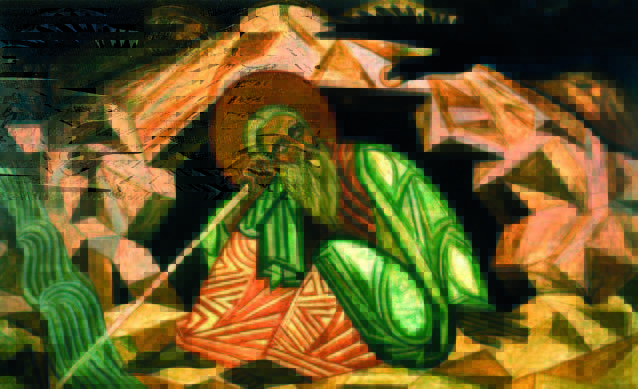
Elijah

The Holy Scriptures are timeless.  All kinds of people throughout the ages have been drawn to discover it.  One of the reasons we are interested in the Bible and become tethered to its contents is that we often resonate deeply with many of its characters.

A good and healthy spiritual exercise is to connect and project yourself into the pages of God’s Word.  To relate, express, and find a common human condition with ancient believers is a means of strengthening your faith, uncovering your own spiritual journey, and paying attention to the soundings of your soul.

Let me demonstrate what I’m talking about through speaking of my own life and the life of a famous biblical character….

I feel like Elijah.  Elijah was an Old Testament prophet who acted with unusual faith, single-handedly took on the ungodly Queen Jezebel, sparked a national revival, fell into a dark depression, allowed God to extend him pastoral care and comfort, learned to not journey alone in his faith through mentoring another great prophet of Israel, Elisha, and was taken up to heaven in a chariot of fire.

As far as prophets go, we have a great deal of information on Elijah in the biblical accounts.  Our introduction to him goes as follows: “Elijah was a prophet from Tishbe in Gilead.  One day he went to King Ahab and said, ‘I’m a servant of the living LORD, the God of Israel.  And I swear in his name that it won’t rain until I say so.  There won’t even be any dew on the ground.” (1 Kings 17:1). And it happened just as Elijah said it would.

I’m a believer in making simple observations of the Bible.  What stands-out to me foremost is Elijah’s solitary behavior.  He initiated and acted alone.  Elijah saw the systemic evil of Ahab and Jezebel’s reign in Israel and he boldly spoke truth to power.  Whether Elijah had thought through the consequences of his words or not, we don’t know.  But we are aware that this was understandably not received well, at all.

If Elijah was alone before, now he is driven to a life of solitude with only ravens for company (1 Kings 17:5-6).  I resonate deeply with Elijah on this.  I tend to think in organization and order.  When I see systems in place which oppress, hurt, and damage people instead of helping them to succeed, thrive, and flourish, it disturbs me.  Elijah was a solitary kind of guy, that is, until a system of injustice was in power.  Then, he used his speech to agitate for what is right.

In many jobs I have had throughout my life, I’ve had a kind of “Elijah” experience.  I see systemic issues which keep marginal people on the outside. Meanwhile, those on the inside enjoy the perks of power.  Sometimes I’ve been fired for calling-out corporate owners and vice-presidents, church elders, and denominational leaders for their exclusive policies and procedures which only benefit themselves.

This might sound commendable, except for the fact that I almost always acted alone on my own initiative without building a coalition of other concerned people.  Instead, I tended to think that I was the only one who cared and stepped forward, making myself a target that people couldn’t miss.  I wonder if Elijah, like me, was thoughtful and introverted with a close relationship with his God, yet with a fear of human relationships.

The event in Elijah’s life which defined him as a great prophet was the showdown with the four-hundred fifty prophets of Baal, of whom the Israelites had religiously prostituted themselves.  You don’t get any more John Wayne than one person versus four-hundred fifty.  In one of the best sarcastic statements you’ll find anywhere, Elijah said to the prophets of Baal who spent the entire morning trying to get their god to respond: “Pray louder! Maybe Baal is daydreaming or using the toilet or traveling somewhere.  Or maybe he’s asleep, and you have to wake him up.” (1 Kings 18:27, CEV)

Elijah on Mt Carmel

Elijah statue on Mount Carmel

Sometimes, for me, it seems easier to confront four-hundred fifty people than have an intimate encounter with one person.  I often find it more effortless to preach to thousands of people (of which I’ve done many times) than to connect meaningfully with one of them.  To me, Elijah sometimes seems like a contradiction, having within himself a great capacity for faith along with an equally large expanse of fear.

This bundle of contradiction is seen in the aftermath of the national revival Elijah helped to spark.  Through a miraculous display of the living God responding to Elijah’s sacrifice, the prophets of Baal were done away with (literally) and the worship of Israel’s God was immediately returned.  Queen Jezebel, the chief architect of establishing Baal worship in Israel, was not having this revival of Israelite religion.  A deeply symbolic heavy rain came with it, ending three years of drought, which only made Jezebel angry and on a mission.

Jezebel got a message straightaway to Elijah: “You killed my prophets.  Now I’m going to kill you!  I pray that the gods will punish me even more severely if I don’t do it by this time tomorrow.” (1 Kings 19:2).  The prophet who took on an entire establishment and saw the miraculous done right in front of his eyes had this response to the wicked queen: he was afraid, ran away, and said to God, “I’ve had enough.  Just let me die!  I’m no better off than my ancestors.” (1 Kings 19:3-4)

Elijah was, in contemporary terms, burned-out and exhausted – and he became terribly depressed.  It’s as if Elijah had identified himself with taking down the establishment for so long that when it happened, he was lost.  Who was he now?  The scaffolding of prophetic witness was gone, and Elijah was left face-to-face with his naked self.

I feel Elijah’s pain.  I know the sense of laboring to do good and being spiritually and emotionally spent to the point of just wanting to die and be done with all the brokenness of this old fallen world.  I have felt the awkwardness of identifying with a role, and when that role is gone there is only my true self and the God I serve.

But God, the ultimate spiritual caregiver, sent his angel to help Elijah in his broken state.  He fed him, let him sleep, and sent him on a sacred journey to growth as a transformed person.  Rather than exhort Elijah in his penchant for solitary action, God simply asked him a question: “Why are you here?”  After listening to Elijah express his narrow thinking on how the world works, God simply asked him again: “Elijah, why are you here?” (1 Kings 19:9-14)

That simple question lingered with Elijah and changed him.  From that point forward, Elijah seems to move with a quiet confidence that doesn’t come from a place of acting alone.  He doesn’t carry the world on his shoulders.  He isn’t quick to identify himself as a prophet.  His zeal for God remains yet is focused into including others.  Elijah goes from his sacred encounter with God and finds Elisha, who, by all appearances, is just a plain non-descript Israelite farmer.  No longer does Elijah walk alone.  His protégé, Elisha, is with him until the end of his life here on this earth.  And when Elijah is gone, Elisha inherits a double-portion of his mentor’s spirit and goes on to be a powerful prophet in his own right.

One of the best decisions I ever made in my life was, after going through a debilitating depression, I made it my aim and goal to mentor others in the faith.  I never went for a solo pastorate, always looked to build into the lives of younger ministers and found the value of traveling with companions in my pilgrimage of faith.

Unlike Elijah, I’m still on this earth and not likely to be swept up in a chariot of fire anytime soon.  I’m still figuring out who Tim Ehrhardt really is underneath the academic degrees, ministry successes and failures, and all the roles and responsibilities in my life.  There’s both faith and fear wrapped up in it all.  I still struggle with the old lies that my identity is in what I have, what I do, and in the attention and accolades of others.  I continue to wrestle with the compulsion to reform church and society and find it difficult to savor what is already present.

I see Elijah as a prophet with a deep faith that influenced everything he said and did. Yet, at the same time, he was a flawed man who was often characterized and paralyzed by fear and maybe acted from a place of self-righteousness more than he realized. What is clear to me, however, is that Elijah saw himself transformed as he allowed his God to care for him in ways that changed his life forever.  And that is the kind of spirit I’d like to inherit from my spiritual ancestor.

Crisis Caring

black valentine background, black and white starburst with heart

Here are just a few of the people I’ve encountered in the past week….

A man who went for a routine doctor’s visit was examined, then rushed to the hospital where he had his left leg amputated….

A woman who witnessed her son attempt to kill his wife by stabbing her multiple times….

A pastor’s wife who is overwhelmed with the depth of human need and emotional trauma she sees every Sunday in her urban congregation….

A man who is bitter and hard-hearted, refusing any sort of spiritual care or assistance in the face of death….

A family who watches on, while their beloved mother and grandmother is slowly slipping into eternity….

A pregnant mother who is on total bed rest, downright frightened by not knowing what will happen, and if her baby will live or die….

We live in a fundamentally broken world.  Everything is askew and awry, with people feeling the brunt of the things which are neither right, nor fair.  The examples are all of good people who have found themselves in the crosshairs of circumstances beyond their control.  Their situations left them feeling a range of emotions: abject horror, terrible sorrow and sadness, shocking denial, sheer panic, and crippling shame.  The sense of confusion, fragility, and powerlessness are palpable.

So, what in God’s name do we do when we are faced with trauma, either in ourselves or in people we care about?

A crisis or trauma turns our world upside-down.  It is a turning point.  Things will never be the same again.  Yet, it’s a unique opportunity for healing and growth.  Whether you care for someone, or need care yourself, there are three questions that have arisen for me as I have gone through my own crises and talk with folks facing trauma.

Who are you?

A crisis situation turns everything on its head.  It’s only human to question who we are.  Who is a man if he doesn’t have a literal leg to stand on?  Who is a mother when her son commits an atrocity?  Who is the pastor’s wife when she seems unable to meet needs?  Who is the bitter man when his expectations are not met?  Who is the family when their matriarch is gone?  Who is a mother if she doesn’t have a child?

It’s not a simple question.  It can’t be quickly answered.  Trauma throws doubt on who we thought we were before the crisis.  It can expose the shadowy parts of our lives we didn’t know were there, or bring light to the reality that our lives were built on things which don’t last.

Suppose you are a caregiver, trying to offer help.  If you’re goal is to make the person feel better, you’ll quickly find out you are not God.  You don’t fix people’s pain.  Who are you if you can’t repair broken people and solve their problems?  More than once I’ve felt like I’m in a Star Wars movie saying, “The compulsion is strong in this one.”  Until we learn to let go of trying to “force” others to feel better, we shall not be offering anything of genuine spiritual care.

What do I do?

Indeed, what do you do?  If you are a caregiver, you take action – not by changing feelings – but through attending to the basic needs of the one in trauma.  A crisis situation isn’t the time to explore emotions; it’s the time to feel them.  While a person is experiencing grief on a monumental scale, offering thoughtful assistance with decision-making, organizing the mundane things of life, and handling necessary details for them can be a loving way of bringing care and concern.

For those of you facing trauma and/or crisis, please hear me when I say:  Your task is to grieve, period.  Let compassionate people do things for you. You have no need of offering an apologetic for your emotion, tears, and trouble.  If you have been the kind of person that has been there for others, let them now be there for you.

How can I move on?

We move on through hope.  We continue the journey of life with the confident expectation that it can be good again, even though it might not look like it now.

“Then I saw a new heaven and a new earth; for the first heaven and the first earth had passed away, and the sea was no more. And I saw the holy city, the new Jerusalem, coming down out of heaven from God, prepared as a bride adorned for her husband. And I heard a loud voice from the throne saying,

“See, the home of God is among mortals.
He will dwell
with them;
they will be his peoples,
and God himself will be with them;
he will wipe every tear from their eyes.
Death will be no more;
mourning and crying and pain will be no more,
for the first things have passed away.”

And the one who was seated on the throne said, “See, I am making all things new.” Also he said, “Write this, for these words are trustworthy and true.” Then he said to me, “It is done! I am the Alpha and the Omega, the beginning and the end. To the thirsty I will give water as a gift from the spring of the water of life. Those who conquer will inherit these things, and I will be their God and they will be my children. (Revelation 21:1-7, NRSV)

We offer hope.  And it must come from a place of genuine care and not from the posture of trying to hurry a person along in their emotions because we are unsettled with their grinding grief.

Some people are very uncomfortable with seeing their loved one or friend in a state of extreme vulnerability.  So they withdraw, or try and get them to short-circuit their grief and get over it sooner than they really should be doing.  There is strength in weakness, and power in vulnerability.  True love is a mystery.  Sometimes we must all give up our analysis of events and people, and simply appreciate what is right in front of us.  Letting go of control can open to us a whole new world of possibility, creativity, and hope.

Faith is the ability to look ahead and see hope on the horizon.  When a community of people strengthen faith in one another through the spiritual means of listening, prayer, active compassion, thoughtful words, and healing presence, then that group of persons has discovered what it means to share the human condition.