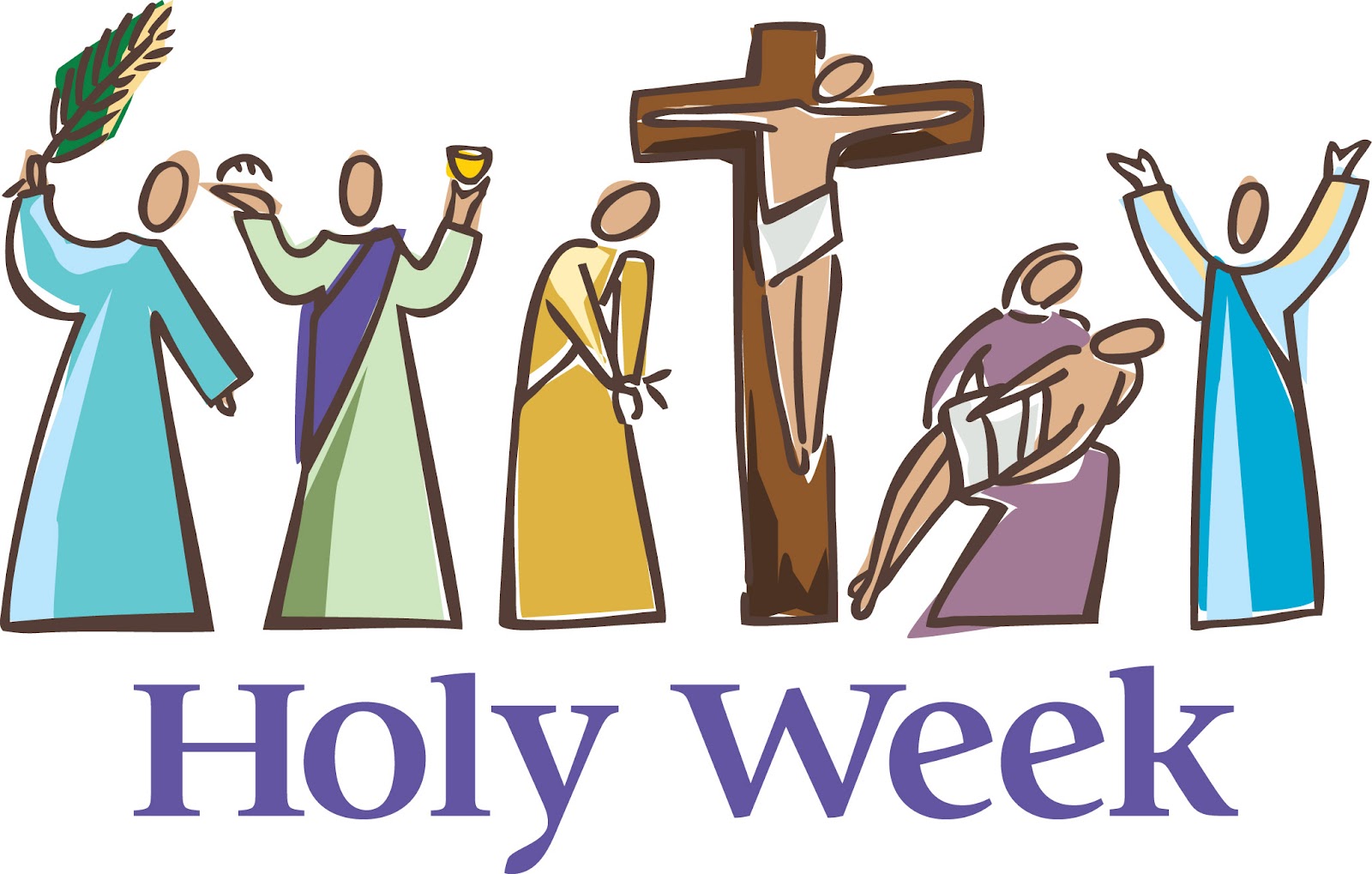
Holy Week


            Each year at this time I go through a bit of lamenting about the timing of the Christian observance of Holy Week, that eight day stretch from Palm Sunday to Easter Sunday in which we especially remember the significance of Christ’s redemptive events.  In my locale, Spring Break always occurs during Holy Week which means that a chunk of families are typically gone.  What is more, March Madness is happening in which an even bigger slice of people are glued to their televisions watching or their smartphones live-streaming the games.  As a pastor, sometimes I feel a bit like a voice crying out in the wilderness wondering if anyone can hear me.
 
            Yet, the reality is that remembering the person and work of Jesus, observing his teachings, and seeking to follow him in all things is an uphill climb throughout the entire year when faced with the rest of the culture’s manner of keeping time and observing life-habits.  For most people, it is not the popular thing to do to be on fire for Jesus; it is not the easy to do to radically observe Jesus in everything.  But maybe this isn’t such a bad thing, after all.  Maybe all of this helps us to be quite intentional about living for Jesus and remembering him.  Perhaps it is a unique opportunity to follow Christ each day equipped with a plan and a prayer to seek God through our work, our families, and even our churches.
 
            Observing Holy Week is certainly not commanded in Scripture.  Yet it is a wonderful opportunity to swim against the current of cultural values and fully embrace the biblical values of journeying with Jesus through life.  Just as birthday and anniversary celebrations allows us a different rhythm for a time, or as holidays provide us with certain family traditions, so Holy Week can be for us an expected time of contemplation and reflection resulting in a great celebratory feast and joy.  As we journey with Jesus, consider these special days:
 
Palm Sunday is a focus on the entry of Christ into Jerusalem to shouts of “Hosanna! Blessed is he who comes in the name of the Lord!”
 
Maundy Thursday marks three significant events in Christ’s last week:  his washing of the disciples’ feet; his institution of the Lord’s Supper; and, his new commandment to love one another.
 
Good Friday marks the death of Jesus Christ.  It is “good” because his death means redemption for the world.  We especially remember why the cross is so very important, that it is the once for all sacrifice to end all sacrifices.  There is now eternal forgiveness.
 
Easter Sunday is the culmination of all the expectations of God’s people, and the fulfillment of all God’s promises to them in Christ.  We rejoice, celebrate, and renew our love and commitment to God for raising Jesus from death.  His resurrection means new life for us.
 
            Observing Holy Week can take the form of attending special church services; the opportunity to read through one of the Gospels over the course of the week with other believers; or focus on the passion narratives in each Gospel.  For the Christian, these are the fundamentals of our faith, the base upon which our lives are constructed.  We return to these again and again so that for the entirety of the year we can live in careful devotion to the Savior who has brought us salvation from sin and offers new life.


            Holy Week is an opportunity for the church to remember and give thanks with both quiet gratitude and loud shouts of praise, with solemn reflection and expressive response.  There is no time like it in the year.

Hebrews 9:11-15

            Imagine being an ancient worshiper and going to the temple, bringing an animal for a sacrifice, and having its blood sprinkled on the altar by the priest.  Imagine doing it again… and again… and again… and again.  Somewhere along the line you might think, “Wouldn’t it be great if I didn’t need to keep offering animals again and again for a sacrifice?  Wouldn’t it be great if there could be one sacrifice that would end all sacrifices?”  This is, in fact, what was inherently designed into the sacrificial system.  These sacrifices, repeated over and over, were to point to a lasting and permanent sacrifice. 
 
            Enter Jesus.  He came “once for all into the holy places, not by means of the blood of goats and calves but by means of his own blood, thus securing eternal redemption.”  Once for all – what a beautiful statement!  No longer is there any need to keep offering sacrifices.  No longer is there a reason to try and somehow clear my conscience through a ritual act.  No longer do I need to wonder if I have brought enough sacrifices to cover my sin.  It is finished.  It is done.  Christ has secured deliverance from sin, death, and hell through the singular sacrifice of himself.
 
            In this Holy Week we journey with Jesus, remembering his once for all redemptive event of deliverance on our behalf.  If there ever was a time for contemplation, now is it.  Allow the phrase “once for all” to seep ever more into your soul.  Let it bring healing and rest to all of our frivolous striving toward earning deliverance on our own.  Let it slide comfort into your spiritual bones.  Let it settle contentment and confidence to a life filled with insecurity and dissatisfaction.  Let the death of Christ do its intended work.
 

Precious Lord Jesus, I believe that you are the hope of my life and of the whole world.  Your once for all sacrifice has decisively taken care of the sin issue.  I am now forgiven and purified in your holy name.  Praise God!  Amen.

Psalm 31:9-16


            David of old knew first-hand about suffering through hard circumstances.  There were times when he felt completely overwhelmed by evil people who were trying to take his life.  If we could put ourselves in David’s sandals we might totally understand why he was worn-out to the point of not sleeping, not eating well, even with a hint of paranoia.  David entrusted himself to God, and truly believed he was in the Lord’s hands – and that fact was his go-to truth.
             There are times when we all struggle with why afflictions happen to us, in whatever form they might take in us.  Yet, it is in the times of being forgotten by others that we are most remembered by God; it is in the situations of trouble that God is the expert in deliverance; it is when people revile us, say terrible things about us, and talk behind our backs that God comes alongside and whispers his grace and steadfast love to us.  In other words, it is only when life is downright hard that we can see a soft-hearted God standing to help us and hold us.
             So, the psalms are the consummate place to run when we are most in need.  They provide the means to lift up heartfelt prayers when our own words fail us.  The psalms give us structure and meaning when the world around us makes no sense.  The psalms do not always give us answers to our most vexing questions, but they do point us to the God who can do something about the sin of this fallen world – Jesus Christ, our Savior and Lord.
             Sovereign God, life can often treat me poorly, yet you are always good to me.  Work in me a heart of faith and devotion to the point where my anxieties melt away, and trust takes over through the power of the Spirit.  Amen.

Hebrews 2:1-9

            Here we are at the end of another Lenten season with Spring upon us and Holy Week’s near arrival.  For many people this is simply old hat.  The redemptive events of Jesus are so familiar to some of us that it runs the risk of being, well, boring.  After all, we know this stuff already – why keep doing this continual Church Calendar thing? 
 
            While some might cry out that lectionaries, the Christian Year, Holy Week, and liturgies are just vain repetition, I would argue otherwise:  we are in grave danger of not paying attention to what we have heard, lest we drift away from it.  Like a beach-goer out on the lake drifting on her flotation device far out from shore, we are unaware of how far we have strayed from our spiritual moorings.  If the passion and death of Jesus can only get a shoulder shrug and a “meh” out of us, there is a real problem.  We have ignored Lent’s emphasis on repentance and want the destination without the time it takes to get there.
 
            “How shall we escape if we neglect such a great salvation?” protests the author of Hebrews.  The events and services of Holy Week are designed to help us pay attention, to remember, to give thoughtful reflection and due diligence to the incredible work of salvation that Jesus has pioneered and achieved for us through the cross.  The sin which we must turn from is not the overt commission of having done something really bad, but the negligent omission of not doing anything, of treating Holy Week just like any other old week.  Lord, have mercy.  Christ, have mercy.


            Gracious Lord Jesus, you went to the greatest lengths possible to redeem us from sin’s terrible bondage.  As I contemplate your passion in this next week, lead me to fresh appreciation and a depth of gratitude that goes beyond comprehension.  Amen.