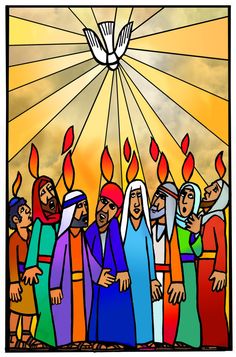
1 Corinthians 12:12-27 – The Same Spirit

20180522_133138

“The body of Christ has many different parts, just as any other body does.  Some of us are Jews, and others are Gentiles. Some of us are slaves, and others are free. But God’s Spirit baptized each of us and made us part of the body of Christ. Now we each drink from that same Spirit.” (Contemporary English Version)

As you well know, it’s easy to take things for granted.  For instance, we don’t typically think too much about our toes… until we stub them, drop something on them, break them, or need a podiatrist to operate on them.  Then, we not only know they’re still there, but our entire body (along with the mind and emotions!) feels the need to give a lot of attention to lowest end of our body that enables us to stand and walk without thinking much about it.

The body is an apt metaphor for how to think about humanity and its various systems and institutions.  We might see the face of any church or organization, but there are scads of people behind the scenes doing all kinds of good work.  For example, the golfing profession understands the importance of caddies; lawyers know the need of paralegal persons; healthcare facilities and organizations rely not only on nurses and social workers, but also on cooks and housekeepers; schools need the coordination of teachers, parents, students, volunteers, and the entire community to effectively realize the education of children.

Also, as you well know, it’s easy to take for granted services we receive… until we don’t receive them, or in a way to our liking.  Then, we pay attention.  We want action and resolution.  We want our food now and to our exact specifications.  Sometimes we might even forget that we are dealing with people, not cogs in a machine or parts in a system.  Millions of people labor every single day, sometimes even seven days a week, just to make ends meet and provide for their families.  When we neglect to understand this, or see it right in front of our eyes, we have done our fellow human beings a disservice.

It’s also awfully easy to forget how extremely radical the Apostle Paul’s words were for 1st century folks, especially in religious circles.  Throughout the Old Testament, the Hebrew community was God’s people.  If you wanted to worship the one true God, you came to Jerusalem and learned from Jews.  But Pentecost and the giving of the Holy Spirit changed things in such a profound and organic way that the world would never be the same again.

It was firmly established by the early church, and preached with fervor and flavor by Paul, that there would not be a separate Jewish church and Gentile church.  They have become one Body of Christ through the redemptive events of Jesus.  Both Jews and Gentiles have the same Spirit – not different Spirits for each group.  Jesus Christ did not die so that people could be fragmented from each other; He was crucified to end once for all the segregation, discrimination, and ostentation of one group of people above another.

The cross was the ultimate radical act of justice against the powers of this dark world that seek to rank people according to their relative importance and worth.

The power of the resurrection is the energy of God raising Christ from death to triumph over the realm and system of evil throughout the earth.  All kinds of people everywhere are to rise with Christ in a great demonstration of God’s power to subvert the status quo of discriminatory racism, extreme individualism, gender inequality, social and economic class-ism, and any kind of “ism” which places one group of people in subjection to another in misguided notions of superiority.

The church is to be a community of redeemed people that reflects the diversity of God’s big world.  No two groups of people could have been more different than Middle-Eastern Jews and Greek Gentiles.  Yet, Paul insisted that they together, not separate, make up the one Body of Christ.  It isn’t easy listening to another group of people who think and act differently than you and me.  But listen we must.  And respond we must.  It is our responsibility as believers in the way of Christ.

“God put our bodies together in such a way that even the parts that seem the least important are valuable. He did this to make all parts of the body work together smoothly, with each part caring about the others. If one part of our body hurts, we hurt all over. If one part of our body is honored, the whole body will be happy. Together you are the body of Christ. Each one of you is part of his body.” (Contemporary English Version)

There is no ability to look down your nose on another person if you are already kneeling on the ground in humble prayer at the foot of the cross.  There is only the chance to look up.  There is even the opportunity to allow someone less privileged and fortunate to assist you.  Yes, we all need one another – even if it doesn’t seem that way at first.  It isn’t our job to colonize other people’s culture and society to make it more like our own.  It is our duty to share the Gospel, make room at the Table, extend love in the Name of Jesus, and work together as the one people of God, formed by the Spirit.

Almighty God of all creation, I understand that we don’t struggle merely against flesh and blood but against powers and principalities – those institutions and systems that keep separations alive by perpetuating the lie that some members of the family are inferior and others superior.  Create in us a new mind and heart that will enable us to see brothers and sisters in the faces of those divided by human constructed categories of power disparities.  Give us the grace and strength to rid ourselves of stereotypes that oppress some of us while providing entitlements to others.  Help us to create a Church and nation that embraces the hopes and fears of oppressed people everywhere we live, as well as those around the world.  Heal your family, God, and make us one with you, in union with our Lord Jesus, and empowered by your Holy Spirit.  Amen.

1 Corinthians 12:4-11 – For the Common Good

Pentecost

“Now there are varieties of gifts, but the same Spirit; and there are varieties of services, but the same Lord; and there are varieties of activities, but it is the same God who activates all of them in everyone. 

To each is given the manifestation of the Spirit for the common good. 

To one is given through the Spirit the utterance of wisdom, and to another the utterance of knowledge according to the same Spirit, to another faith by the same Spirit, to another gifts of healing by the one Spirit, to another the working of miracles, to another prophecy, to another the discernment of spirits, to another various kinds of tongues, to another the interpretation of tongues. All these are activated by one and the same Spirit, who allots to each one individually just as the Spirit chooses.” (New Revised Standard Version)

A gift is meant to be unpacked.  No one is graciously given a gift, then lets it set unopened.  We dive into the gift and express gratitude for it.  Then, we use it.

It is really no different with the Holy Spirit.  The Spirit has been marvelously given to God’s people.  Each and every individual Christian is given a special gift to be opened, unpacked, activated, and used.  The kinds of gifts we are talking about are for the common good.  And this is where the gift is different than Christmas or birthday presents.

Spiritual gifts provided to us are designed by God to be used and dispersed for the benefit of others.  They are not solely meant for personal satisfaction.  In other words, if a person’s spiritual gift is teaching, he/she doesn’t stand in a mirror and talk at themselves.  Rather, they jump into the fray of learning and explaining, and do it in such a gracious and loving way that the enablement of the Spirit is evident.

If a person’s gift is faith, that person doesn’t merely step out and act with unusual courage for the purpose of personal betterment in a holy belief from God.  Instead, that person shows and demonstrates godly faithfulness to God’s people and to God’s world.  The gift is used for the common good of all persons.

The accumulation of wisdom and knowledge is meant for the strengthening of faith in others.  Spiritual gifts are intended by God to be shared freely for the common good of all people so that souls are buttressed and supported for the rigors of daily life in the world.

Therefore, we are to take the initiative in identifying our gift(s), unpacking them, and indiscriminately using them.  Spiritual health and wholeness can only be truly realized through everyone actively participating in the distribution of their God-given abilities.  Spiritual gifts are neither to be hoarded, nor miserly dealt to only people I like or my own little world of groupies and friends.  Any and every ability comes from God, and is, therefore given for the common good of all persons.  Underprivileged groups need the giftedness of others, as well as discovering their own resources to be used so that everyone is built up in a society of redeemed persons.

Whatever it is you do well, do it well through allowing God to activate it for his glory and for the prevailing needs of a church and a world which is desperately in want of seeing the manifestation of the Holy Spirit among them.

O Lord, you have taught us that without love, whatever we do is worth nothing.  Send your Holy Spirit and pour into my heart your greatest gift, which is love, the true bond of peace and of all virtue, without which whoever lives is accounted dead before you.  Grant this for the sake of your only Son Jesus Christ, who lives and reigns with you and the Holy Spirit, one God, now and forever.  Amen.

What My Dementia Residents Teach Me

20180513_084304_resized

It can be uncommonly hard to live in this day and age.  Bills to pay and mouths to feed; kids to shuttle; work stuff that never seems to end; sickness and disease to navigate; retirement to plan for; family junk to deal with; hobbies you want to do; and, seemingly, a thousand other things vie for your time and attention to the point of having difficulty sleeping or even sitting still.  The problem is that you and I can become so busy and so concerned about tomorrow that worry, anxiety, and fear can attach themselves to us like ticks on a dog.

I minister to a group of people living in a memory unit of a care facility.  They’re there because of a diagnosis of dementia or Alzheimer’s.  You haven’t lived until you’ve had Bible study with 32 memory care residents in a healthcare facility.  It’s a trip, a hoot, and a challenge all at the same time.  Sometimes it’s difficult to know if what you’re doing or saying has any meaning or significance.  But let’s flip this around.  Maybe it isn’t all about the “normal” (and I use the term very loosely) guy like me coming in and doing his mentally attuned thing for some folks who have problems with disconnection.  Perhaps the dementia men and women have something to teach me and you.  Methinks they do.  I’ll let you in on a few of the things I’m learning from my dear brothers and sisters in the memory unit wing….

They live in the moment.

Whereas you might think it is sad that Aunt Bessie or Uncle Frank doesn’t remember what you just said to them two minutes ago, or where you were together a few hours ago, I think there is something amazing such folks have to teach me.  You see, when they eat a strawberry, or watch I Love Lucy, or have a conversation with you as if they have eaten, watched a comedy, and engaged a relationship for the very first time, it can be astounding.  Some of these folks just don’t remember that they have always loved strawberries, sit-coms, and their family.  And when they partake – as if they have never done it before – their joy, laughter, and endearing qualities come through like the beautiful wonderment of a child.

Oh, my goodness, if I could only learn to live in the moment taking the example of my blessed memory residents!  Their worries are limited.  Yes, they have them – and they can revisit decades-old worries like they were yesterday – but their own reassurances from the past are still at the tip of their tongues.  When we say The Lord’s Prayer together, I believe God takes a break from maintaining His creation to sit-in on the beautiful voices lifting an ancient prayer to Him.  The Prayer is so firmly inside them that they don’t realize that what they are uttering is routine.  It has new meaning for them.  They look at it differently.  They ask questions and make comments, as if this Prayer is the most wonderful thing they have ever heard.  I’ve beheld more than one person who does not talk at all, but when prompted with The Lord’s Prayer, bellows it out like a professional orator.

Perhaps no other group of people live into Christ’s teaching about avoiding worry more than the person who truly lives in the moment and doesn’t think about tomorrow.  Dementia and Alzheimer’s patients can teach us to live like the believers in Jesus we were meant to be:

“So don’t worry about these things, saying, ‘What will we eat? What will we drink? What will we wear?’ These things dominate the thoughts of unbelievers, but your heavenly Father already knows all your needs.  Seek the Kingdom of God above all else, and live righteously, and he will give you everything you need.  So don’t worry about tomorrow, for tomorrow will bring its own worries. Today’s trouble is enough for today.” (Matthew 6:31-34)

They keep short accounts with others.

Rivalries and animosities don’t really exist with my memory men and women.  If they had them at one time, they aren’t there anymore.  They are forgotten.  Yes, that can be a great consternation to the one who was at the other end of the old animosity.  But a new relationship can be forged.  One that is fresh and can start with a clean slate.

What’s more, my residents are quick to let me know what they think, where they are at the moment, and how they want something to go.  I, personally, find it refreshing to have someone say exactly what’s on their mind or heart.  The very first resident I met on the memory unit said her name to me, and then, with all seriousness, looked me in the eye and said, “If you mispronounce my name, I’ll punch you right in the face!”  I laughed out loud.  She laughed with me.  We laughed together.  She couldn’t even ball up her arthritic hand enough to punch, let alone raise her frail arm to do it.  So, there we sat laughing, with joy amidst the ravages of a disintegrating mind.

You know what?  In the days and weeks to come, I mispronounced her name.  She didn’t really care (at least, most of the time).  She forgot her own name sometimes.  And we would laugh about it.  At one point, I couldn’t help but note the juxtaposition between one woman in a former congregation who never forgot that I misspoke her daughter’s name and continually held it against me.  The woman never adopted the teaching of Jesus to “settle your differences quickly” (Matthew 6:25) and the instruction of Paul to “don’t let the sun go down while you are still angry” (Ephesians 5:26).  But here, in this time and at this moment, are two people in a non-descript nursing home experiencing a relationship free from the elephant-thinking that never forgets.

They have no inhibitions about expressing their emotions.

For a guy like me who tends to be emotionally constipated, it is good to be around a group of people that lets their feelings be known.  Just because a person’s mind begins to forget; and just because someone loses large swaths of memory (especially the short term stuff); doesn’t mean they have lost the ability to feel.  Sometimes all they have is their emotion.  Maybe some of them were stuffers of feelings back in the day, but now it comes out.  And you never know what it will be from hour to hour, sometimes even minute to minute.

I realize this is hard for family members or friends who have been close to the resident for years and years.  This isn’t the same person they knew in the past.  Yet, this is an opportunity to re-engage on a different level.  If expressing feelings and emotions were foreign to the relationship, now it can be engrafted into the friendship and become new and even healing.

Confessing your own emotions and feelings is on the table for you, as well.  After all, what are they really going to remember after you leave?  And even if they repeat it to someone, is that someone really going to believe what they’re saying?  Yes, I’m being a bit facetious, but you get what I’m saying.  You see, there is tremendous emotional freedom to be had, if you are willing to take it.  You might even realize that taking the risk to share your emotions and feelings with others is worth doing.  It would be a tragedy and a travesty if you moved through life always hiding how you really feel.  You have much to offer.

And that is the point I want to get across to you today, my friend.  Memory unit residents; dementia and Alzheimer’s patients; and, a host of other people we typically think always need us, it turns out that we really need them, too.  Every person, no matter who they are, is precious and carries within them the image of God.  To discover that God-likeness within is a journey worth taking.

Allowing Your Pain to Make a Difference

Resized_20170617_114022

There’s a reason I do what I do, and am what I am.  Through nearly 33 years of marriage my wife and I have been through a lot – more than I could ever share with you.  One of our big challenges came from the year 2014.  In the space of nine months, Mary had three spine surgeries.  I went from not only having the role of husband, but that of caregiver, as well.  It took months of daily physical and occupational therapy, not to mention the endless doctor visits, for my wife to learn to walk again and do simple tasks that most of us take for granted.

The good news is that Mary is upright and walking.  She can mostly get around and do things on her own.  The bad news is that she lives with chronic pain every single day.  Some days aren’t too bad, and Mary can accomplish a fair amount of what she wants to do.  But there are other days when she can’t get out of bed; days when taking a shower and getting dressed is all she can get done; and, days when the pain becomes so problematic that discouragement and depression sandwiches her like two evil slices of bread.

Yet, even on the worst of days Mary is an amazing wife.  She is tough and resilient, as well as compassionate and caring.  I’ve learned most of what I know about caring ministry from her.  I don’t talk a lot about her on this website.  Yet, Mary is behind each word I craft and every phrase I smith.  She is always on my mind and in my heart.  Mary has taught me how to care through the example of her own life, and given me the opportunity to show how much I care for her.

Mary maintains a Facebook page about her journey with pain called “Joy in the Mourning.”  Because she lives with chronic pain, her posts come neither regularly nor easily.  It is a labor of love, some days being a whole lot more labor than love.  Recently, Mary was able to return to a job.  By no means able to hold a full-time job, she has found meaningful work doing what she does best: caring for people as a companion to folks with dementia.

The following is her most recent post.  I hope you are encouraged in your own journey of faith.  Whether you face chronic physical or emotional pain, care for someone who does, or just want to live-out your faith in ways that make sense, I trust you find some joy in your life through whatever circumstances you may face today:

Friends, I’ve got great news!  I have completed the first 90 days at my job!  It’s been a long time since I have been able to say that.  I’m sore today from working. Usually, I say that I hurt today due to getting dressed or showering, walking the dog, or getting out of bed.  It has taken over 3 years, post-surgeries, to be able commit to a regular schedule of working.  

In my healing journey, I had to commit /submit myself to physical therapy, yoga stretching, strength training, biofeedback, acupuncture, massage therapy, weekly counseling with a pain psychologist, daily prayer, journaling, meditation, and even sought out healing through the laying on of hands from godly healers, as well as nutrition, essential oils and music therapy.  All very helpful, but…

I have to admit a foundational piece to getting to where I am today: I mourned. 

I gave myself permission to mourn my loss.  I admitted my anger… no, I wrestled with my anger is a better phrase; and, I embraced my sadness, and let myself feel the loneliness of disability. I asked the hard questions: WHY!? How long? I cried… a lot. In my darkest times a little spark of light invaded my space.  A gentle and soft comfort hugged my heart. A warm sprinkle of hope powdered my soul.  I began to discover a new kind of joy.

No matter what your specific suffering is, I believe that mourning your loss, and allowing yourself to walk through the valley of the shadow will lead you to a path where you can experience comfort, hope and even joy.  For me, this part of the journey has been life-giving. Christ understands suffering. He will walk with us through this experience.  

I never told you what I’m doing now. I am a companion for those who suffer – mostly Alzheimer’s patients, and those who are suffering life-altering afflictions.  I’m working 2-6 hours each day, sharing some of the comfort I received, and being real and open while allowing my pain to make a difference.  May you be blessed, my friends.